The Alchemy of Geometry (کیمیاگری هندسه)
The Alchemy of Geometry (کیمیاگری هندسه) transforms point (نقطه) and line (خط) into infinite patterns (بینهایت) that dissolve mass (جرم) into perception. Through brickwork (آجرکاری), tilework (کاشیکاری), and stucco (گچبری), geometry becomes material, turning walls into luminous, rhythmic surfaces where light (نور) and pattern create harmony (نظم کیهانی) and visual permeability (نفوذپذیری بصری).
-
The Alchemy of Geometry (کیمیاگری هندسه).
In Iranian architecture, geometry (هندسه) is not an abstract diagram imposed upon form—it is a generative force that transforms matter into order, and order into perception. The architect, as Kimiyāgar (کیمیاگر), works with the simplest elements—point (نقطه) and line (خط)—to construct systems that extend beyond the finite, unfolding into patterns that suggest infinity (بینهایت) and cosmic harmony (نظم کیهانی).
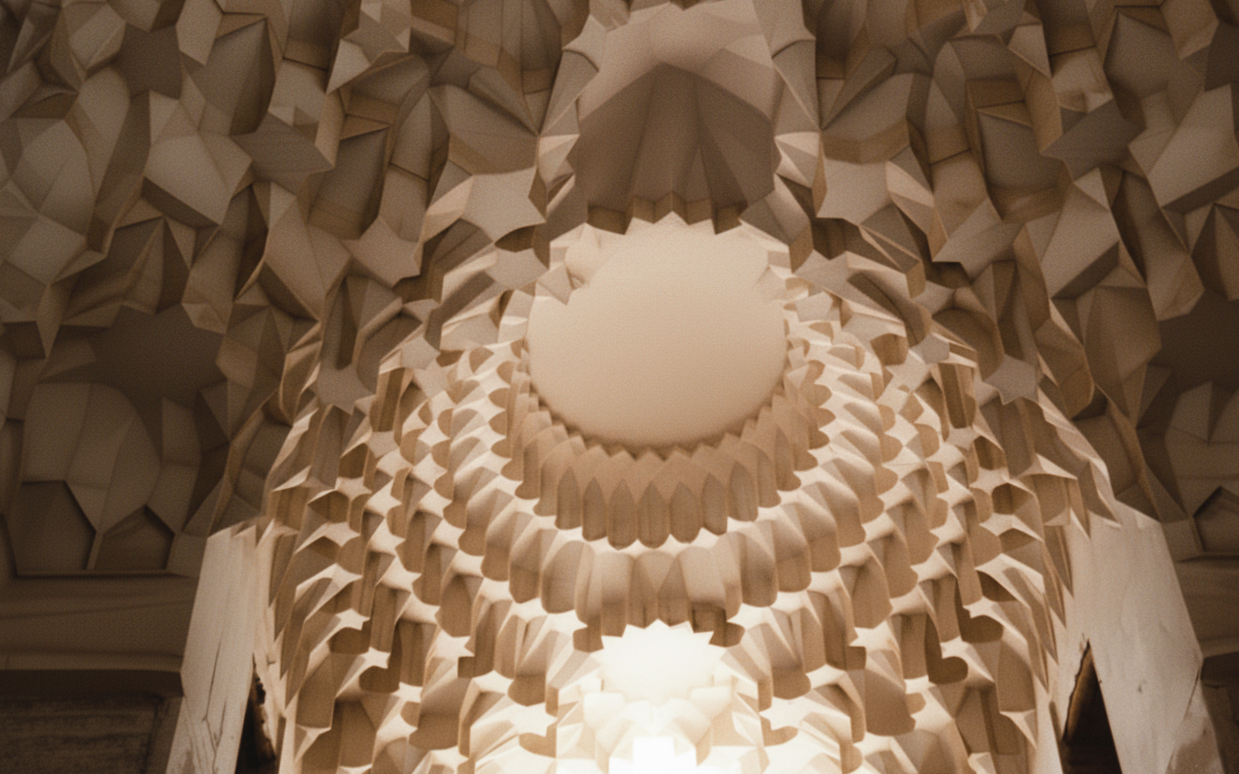
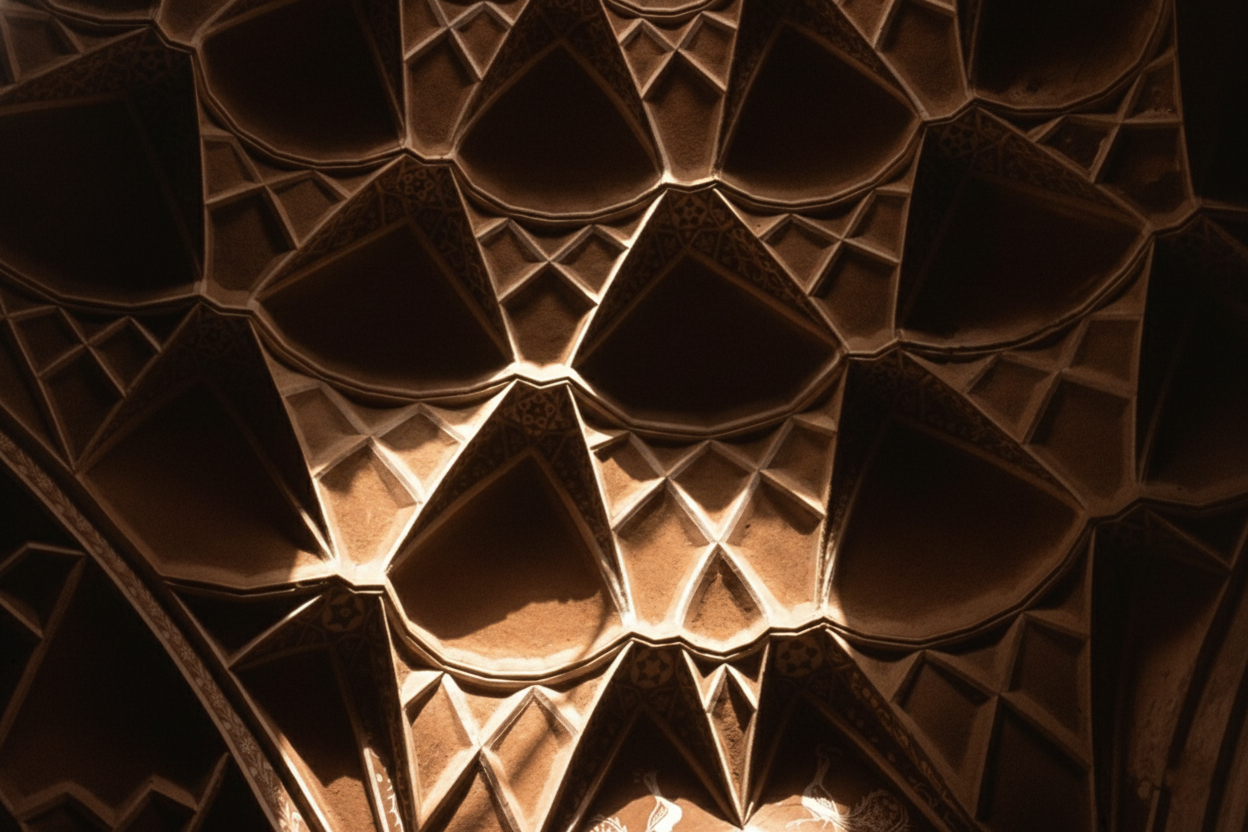
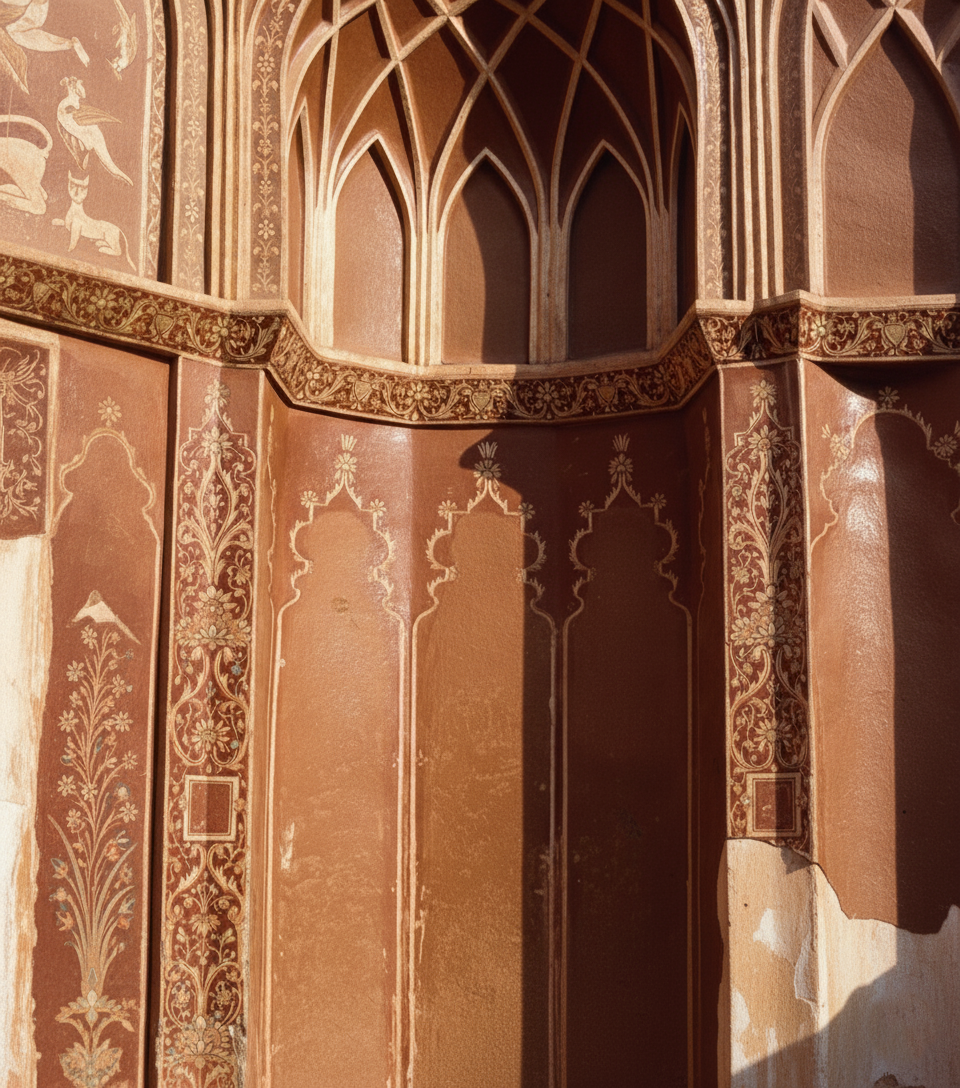
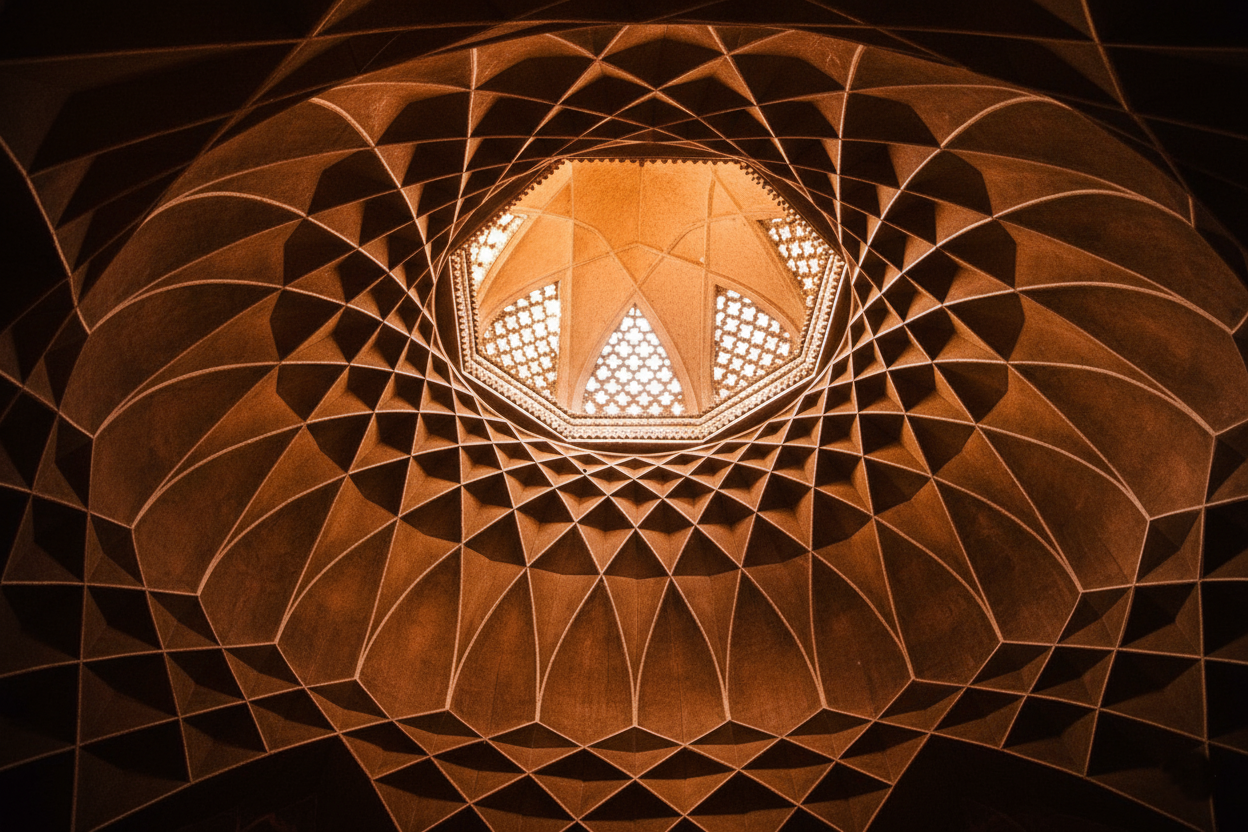
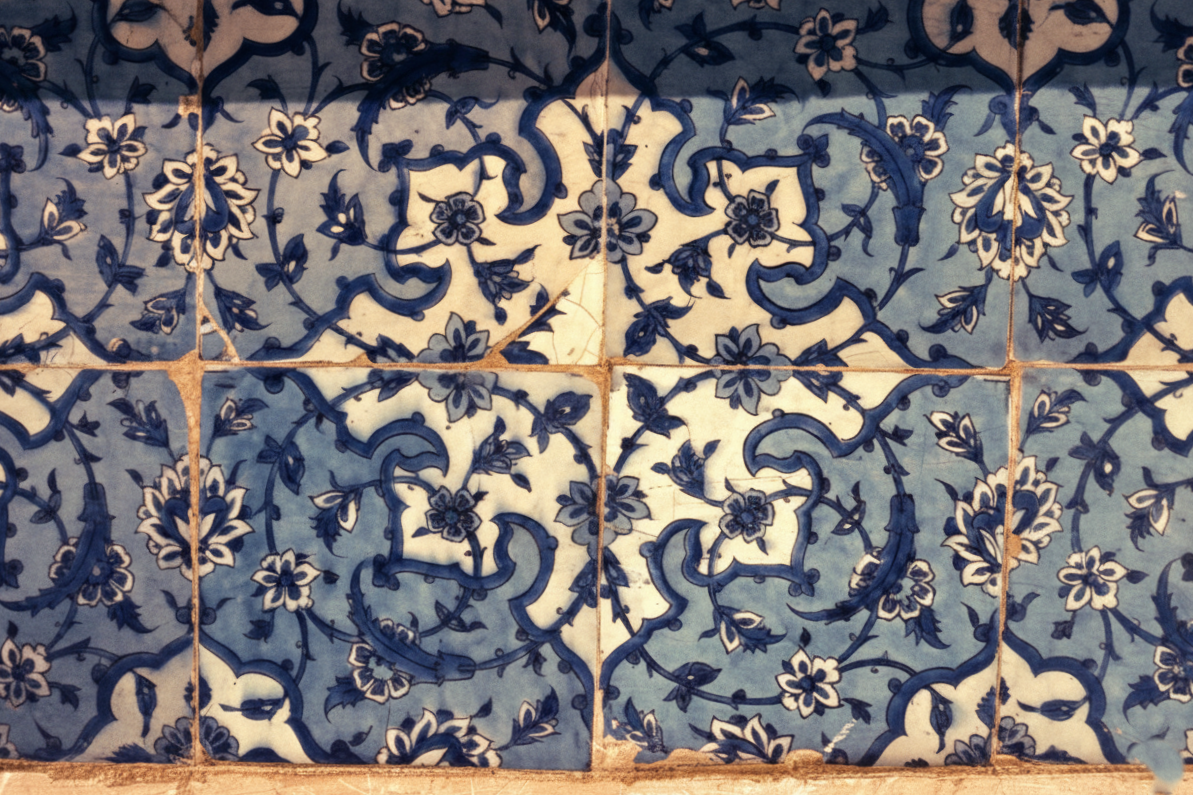
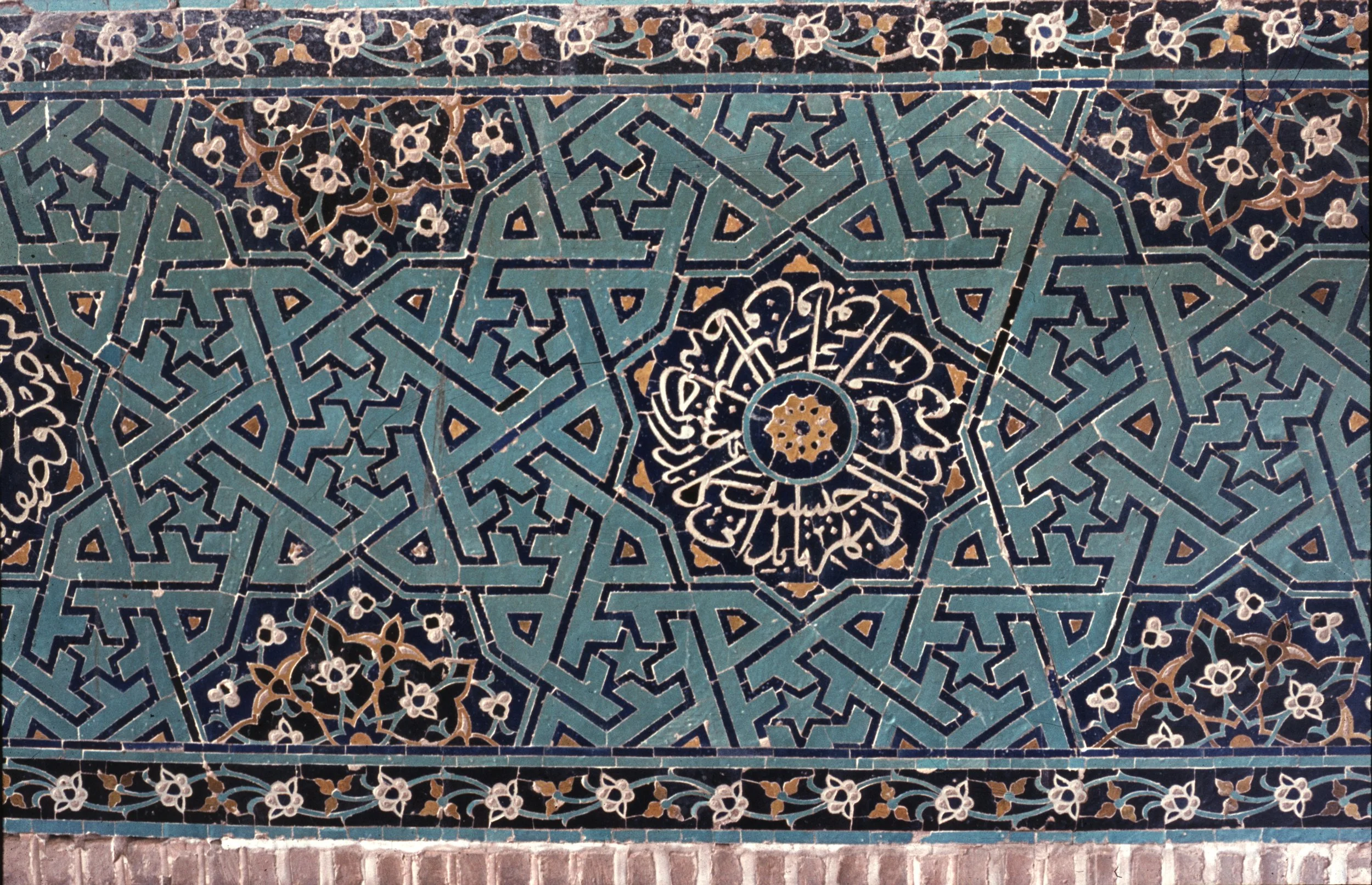
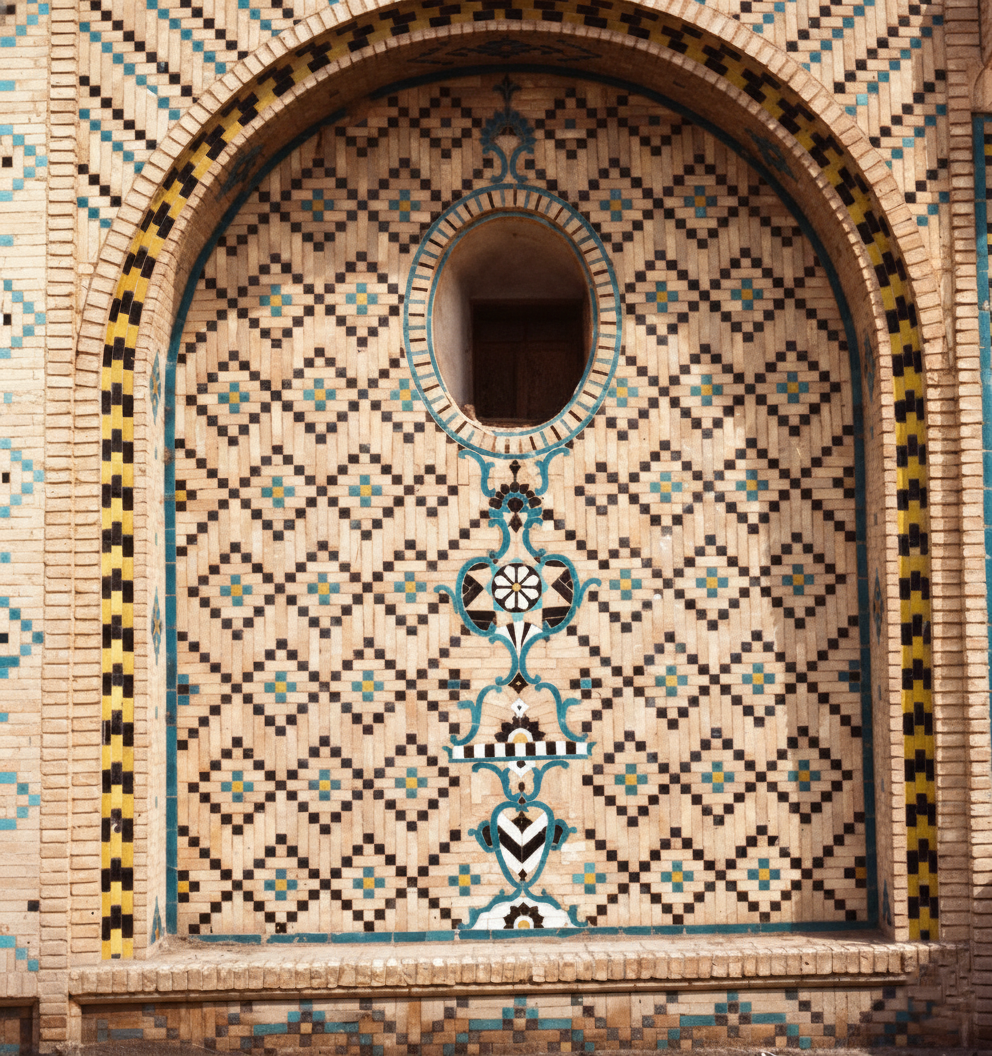
This alchemy becomes visible through craft. In brickwork (آجرکاری), tilework (کاشیکاری), and stucco (گچبری), geometry is not applied as ornament, but embedded within the material itself. Patterns organize construction, guiding the placement of each unit, each joint, each سطح (surface). Walls are no longer read as continuous mass (جرم), but as articulated fields—fragmented, layered, and rhythmically composed. Through this process, solidity begins to dissolve, giving way to lightness (سبکی), depth, and visual permeability (نفوذپذیری بصری).
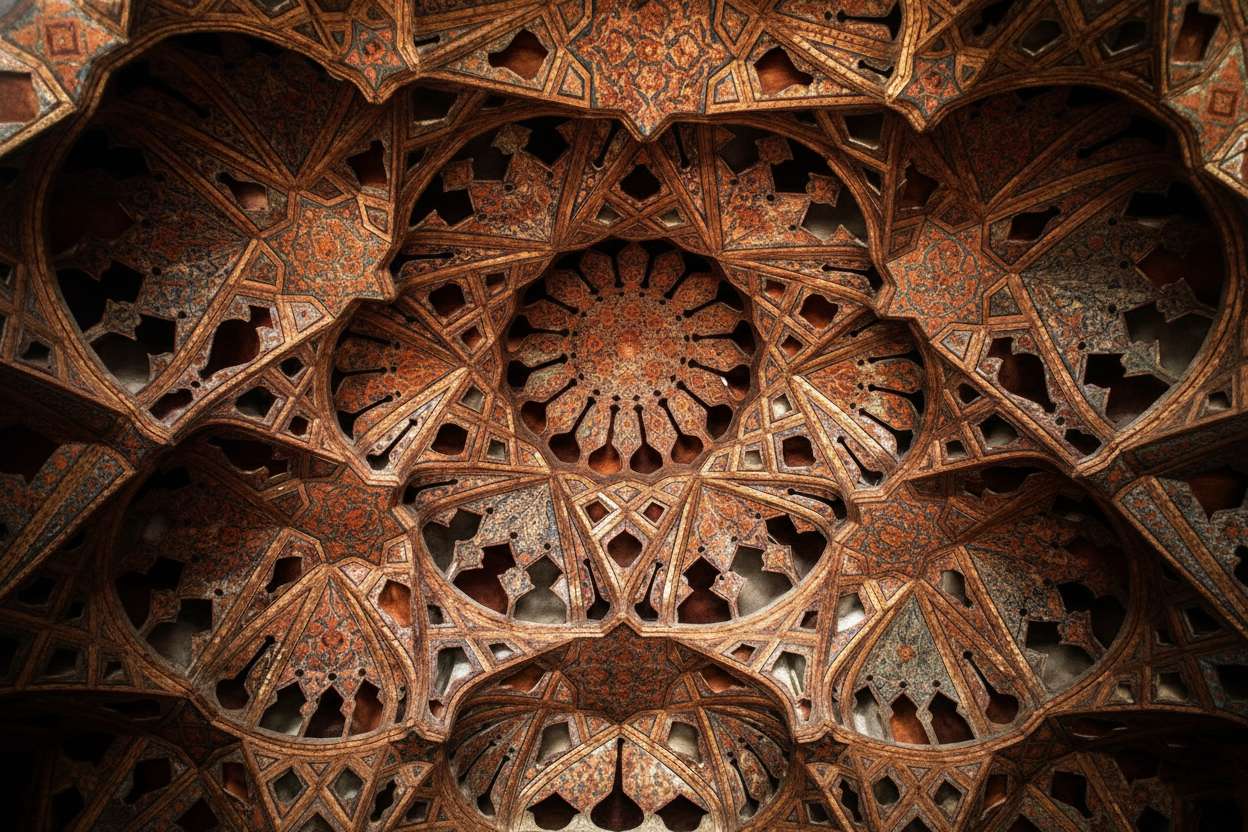
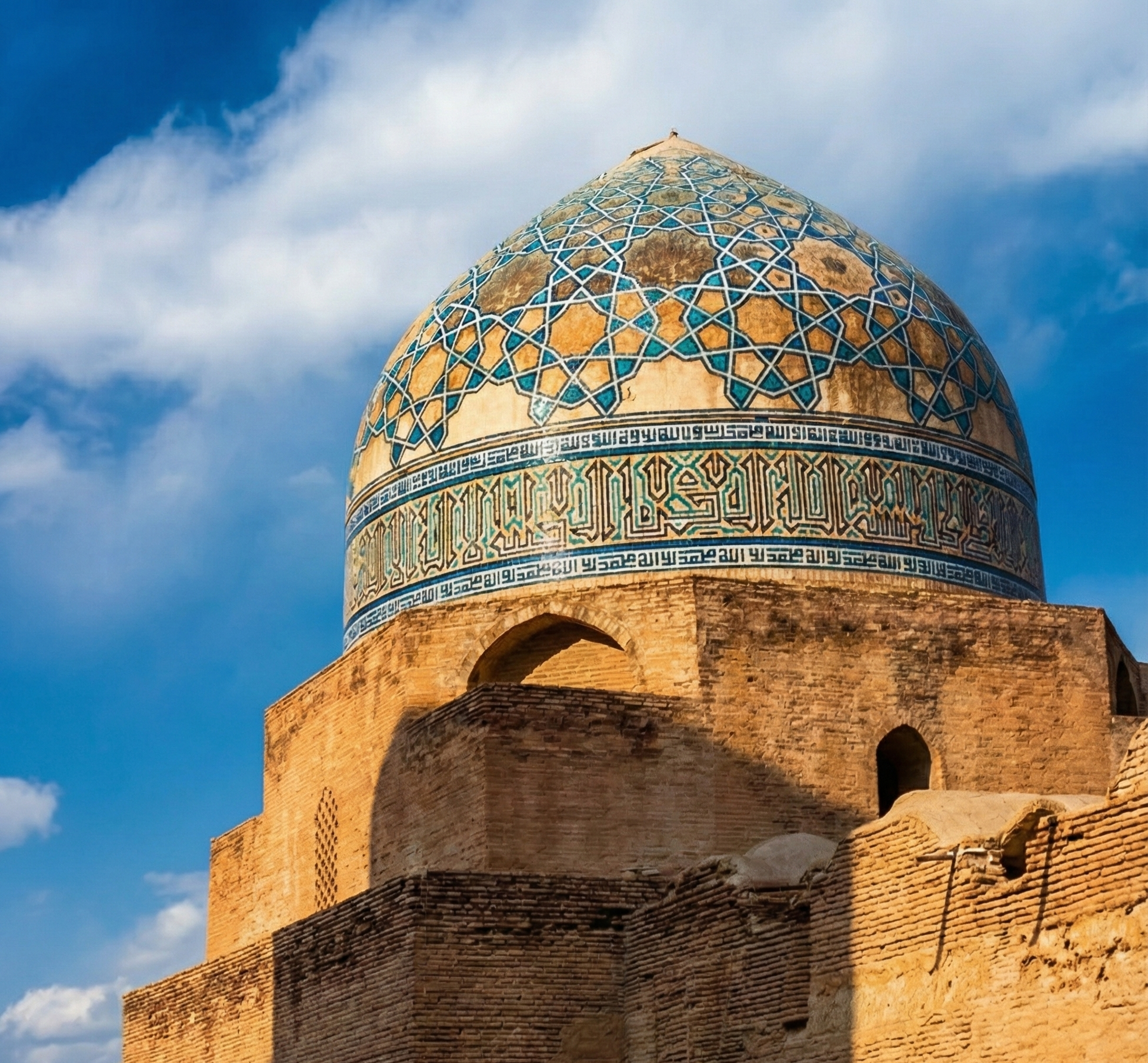
Within the Sheikh Lotfollah Mosque (مسجد شیخ لطفالله) in Isfahan, this transformation reaches a state of near immateriality. The dome (گنبد) is enveloped in intricate girih patterns (گره), composed through tile mosaic (کاشی معرق) of extraordinary precision. These geometries do not sit upon the surface—they grow from it, guided by the curvature of the dome itself. As light (نور) moves across the glazed tiles, the surface shimmers and dissolves, transforming heavy masonry into a radiant, continuous field that seems to hover between structure and illusion.
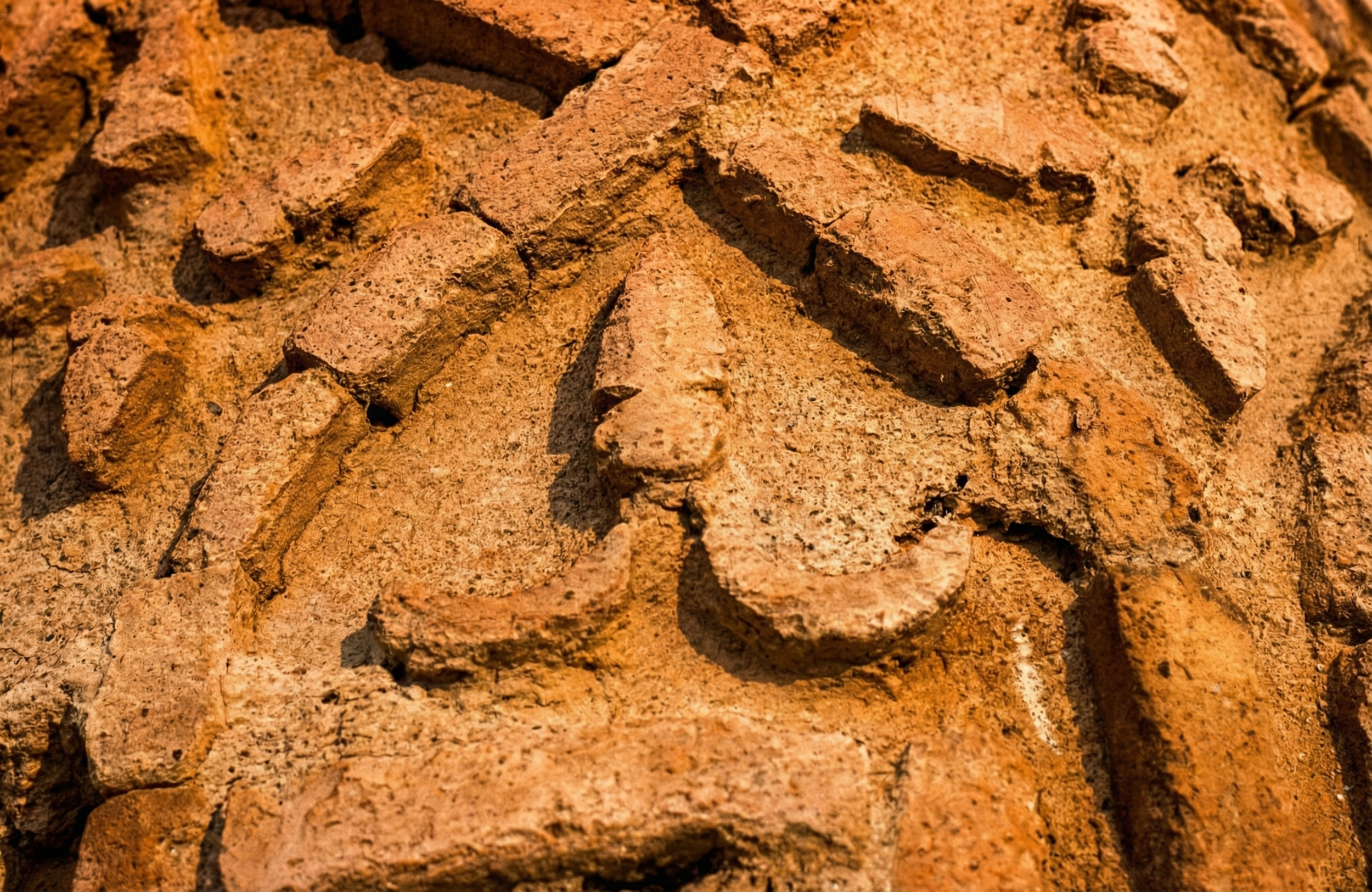
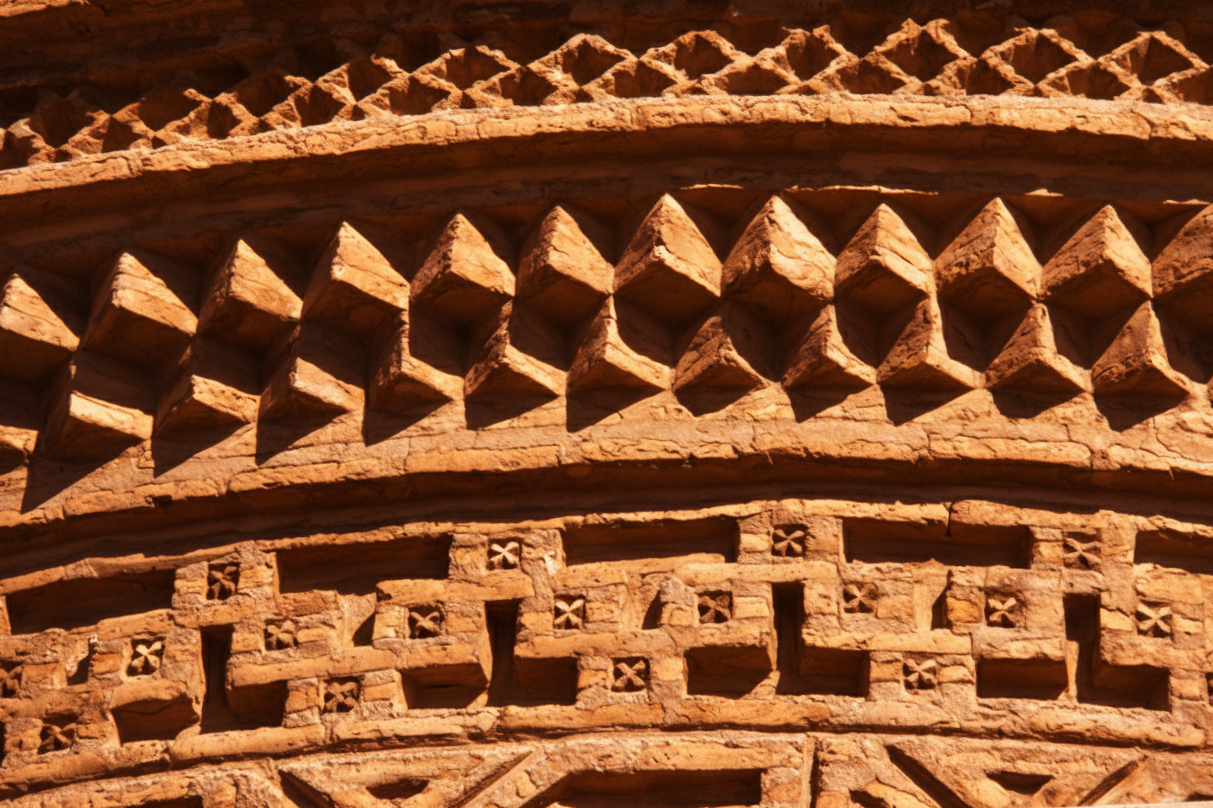
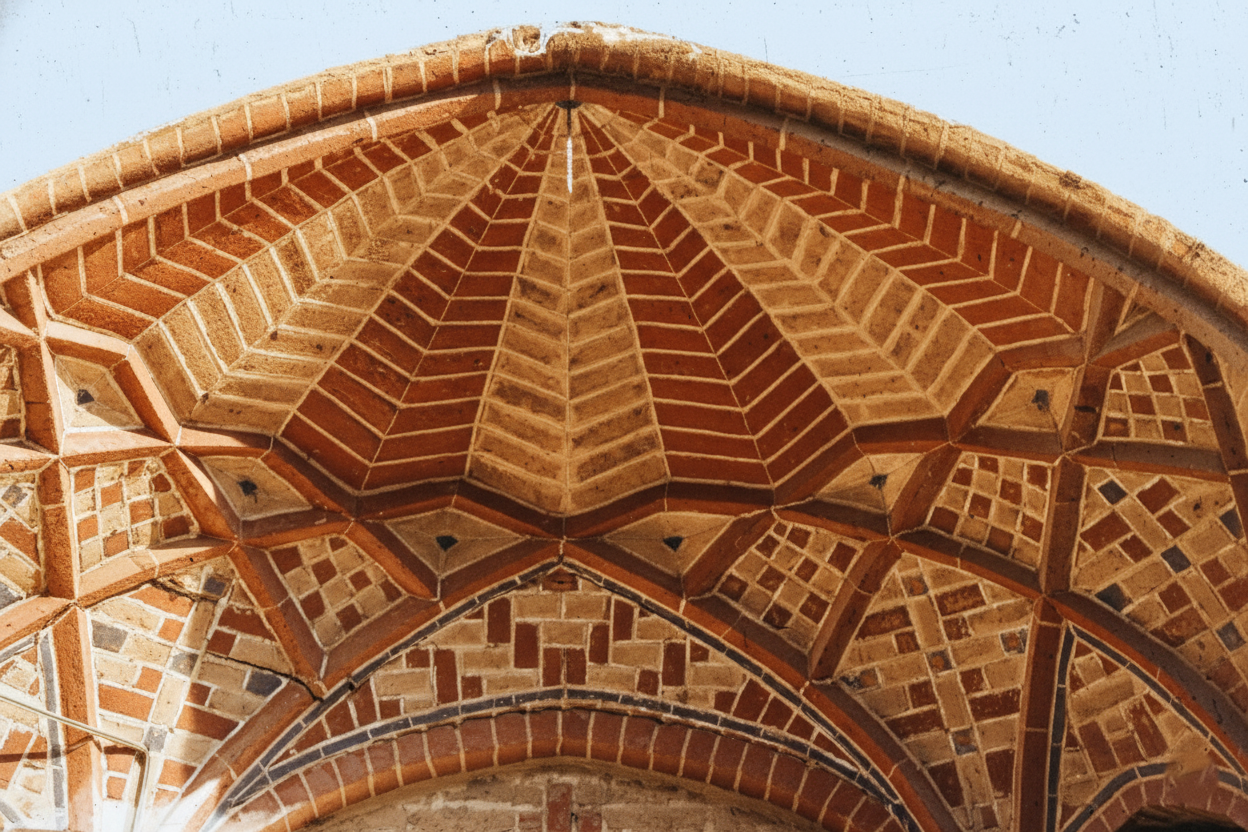
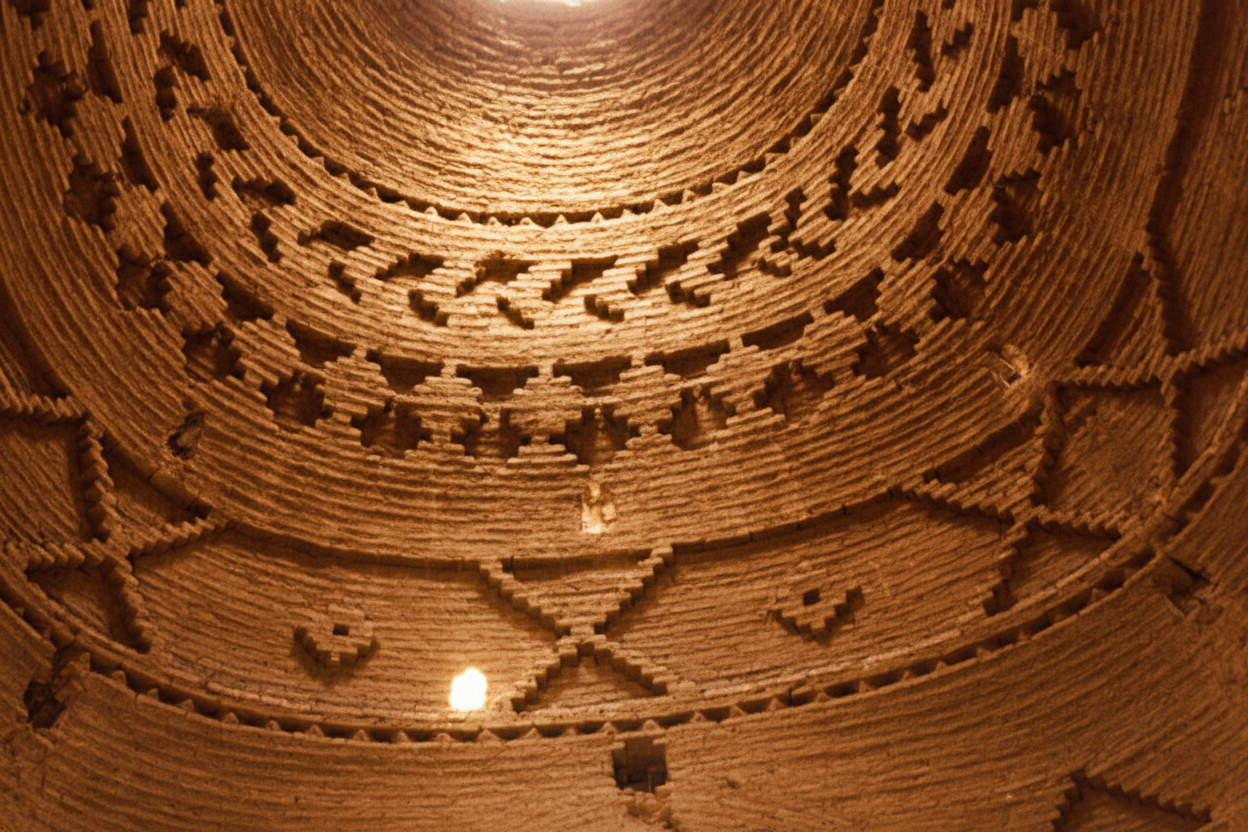
A similar logic unfolds in brick architecture (معماری آجری), where geometry is constructed through the manipulation of the brick itself. In monuments such as the Gonbad-e Qabus (گنبد قابوس) or the Jameh Mosque of Isfahan (مسجد جامع اصفهان), craftsmen vary orientation, depth, and bonding to produce intricate decorative brick patterns (نقوش آجری). Through techniques of projection and recession (برجسته و فرو رفته), the wall becomes both structure and ornament—its surface animated by shadow (سایه) and light (نور), its mass optically reduced.
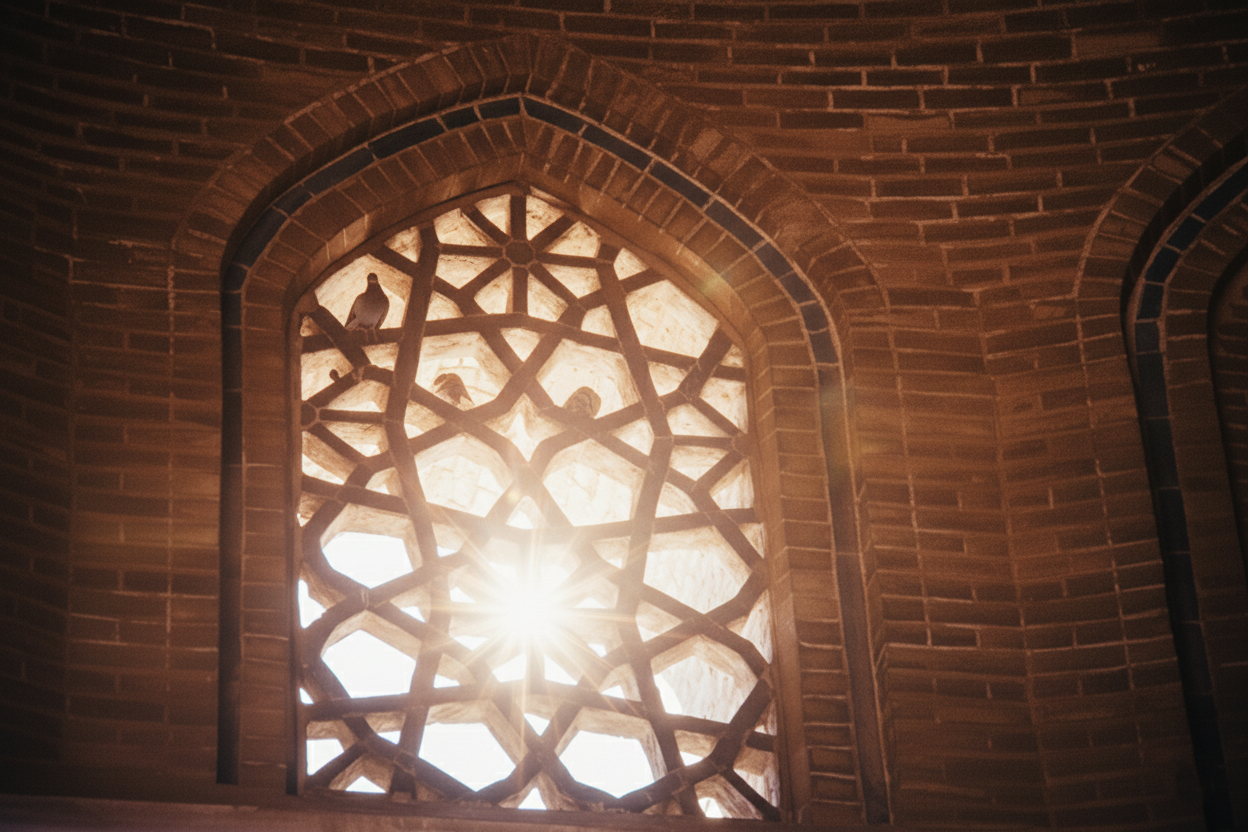
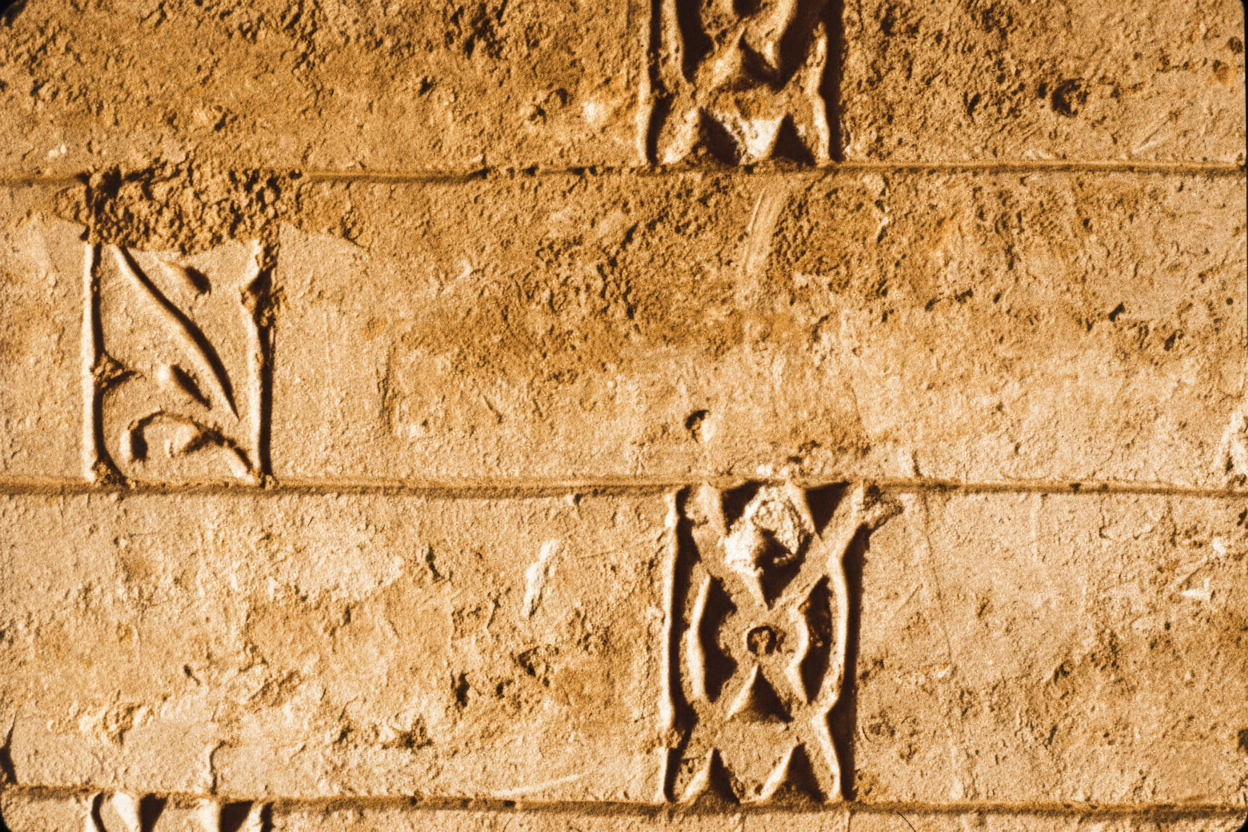
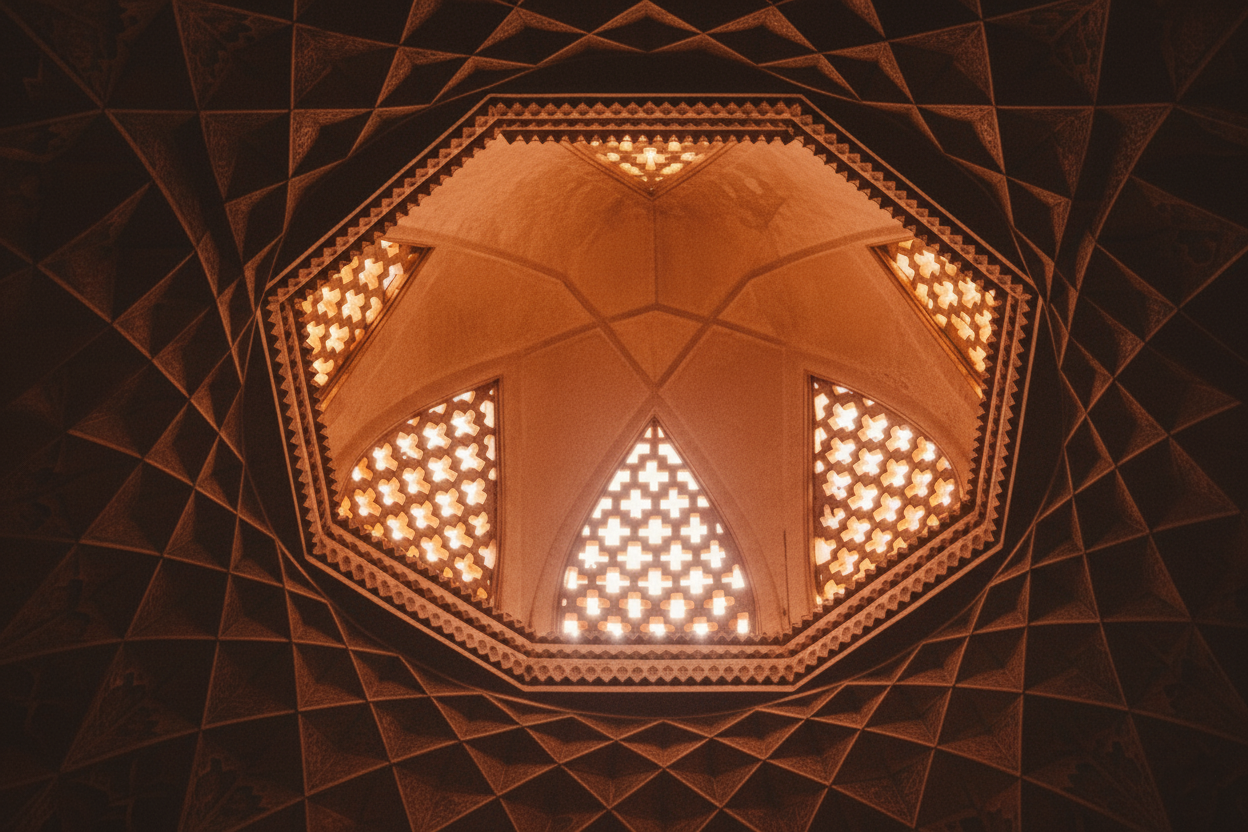
In stucco work (گچبری), geometry is carved into delicate, lattice-like compositions (مشبککاری), where surface dissolves into intricacy. Light penetrates these fine reliefs, softening the weight of the wall and transforming it into something almost textile—woven, porous, and ephemeral.
Through this synthesis, geometry, craft (فن), and ornament (تزئینات) become inseparable. The architectural surface emerges as a living skin (پوسته معماری)—not merely covering the building, but redefining it. In this alchemical process, heavy materials are transfigured into patterned fields of light and rhythm, where structure gives way to perception, and matter approaches the immaterial.