Ma‘qelī (معقلی), or bannā’ī (بنّایی، “of the builder”)
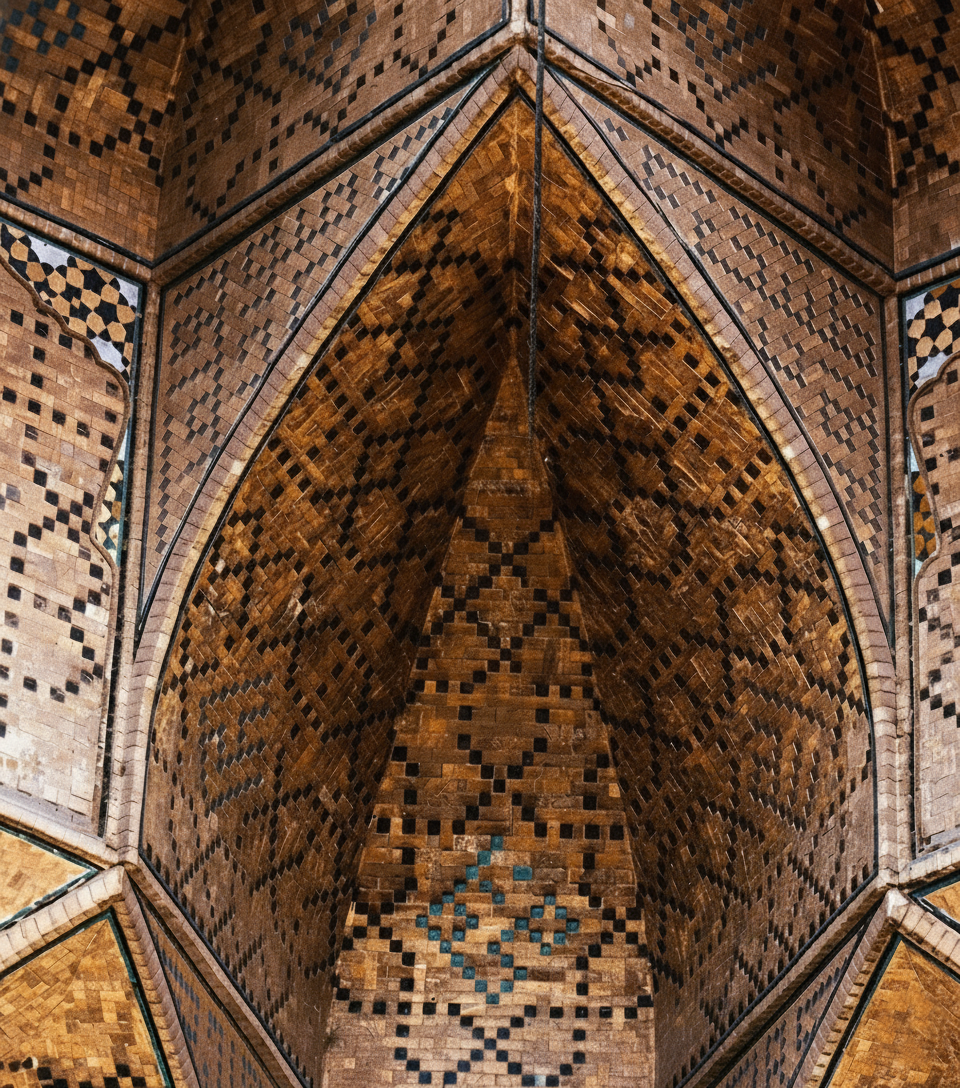
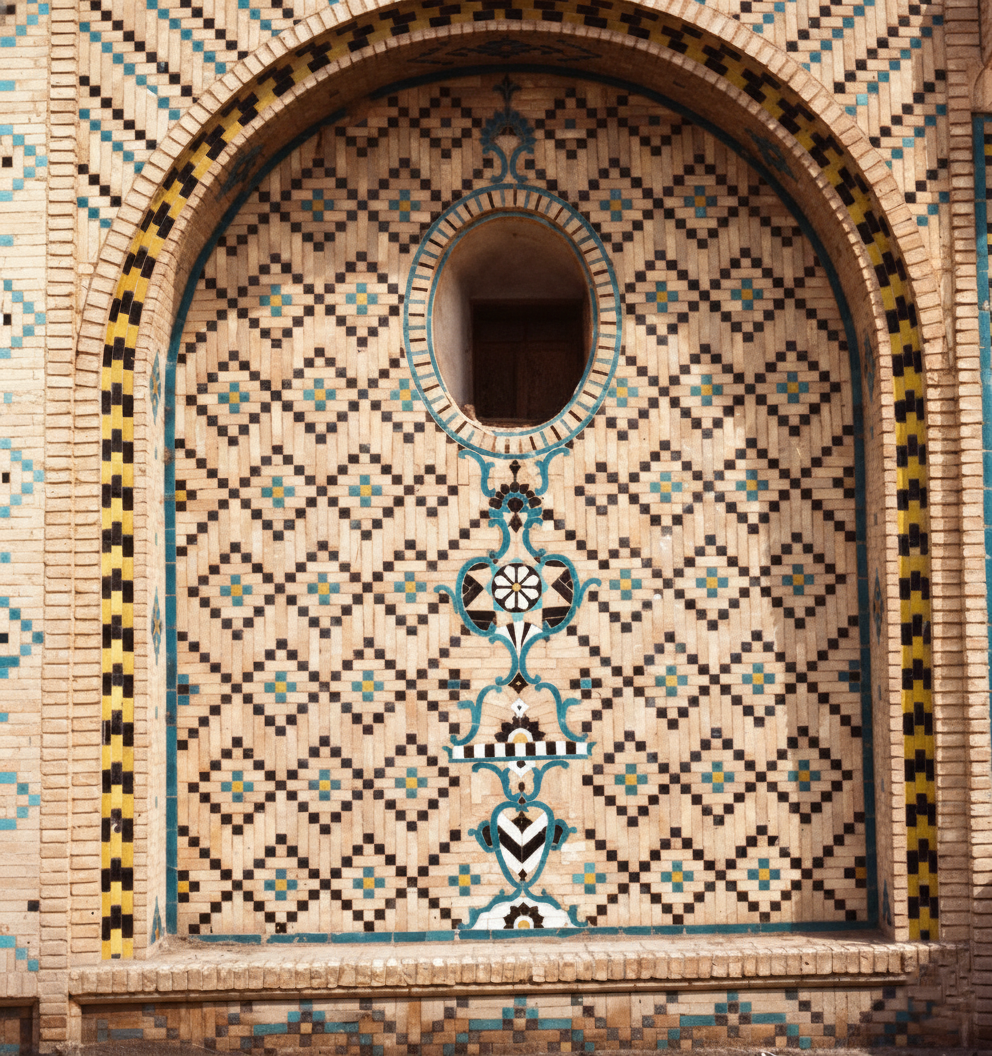
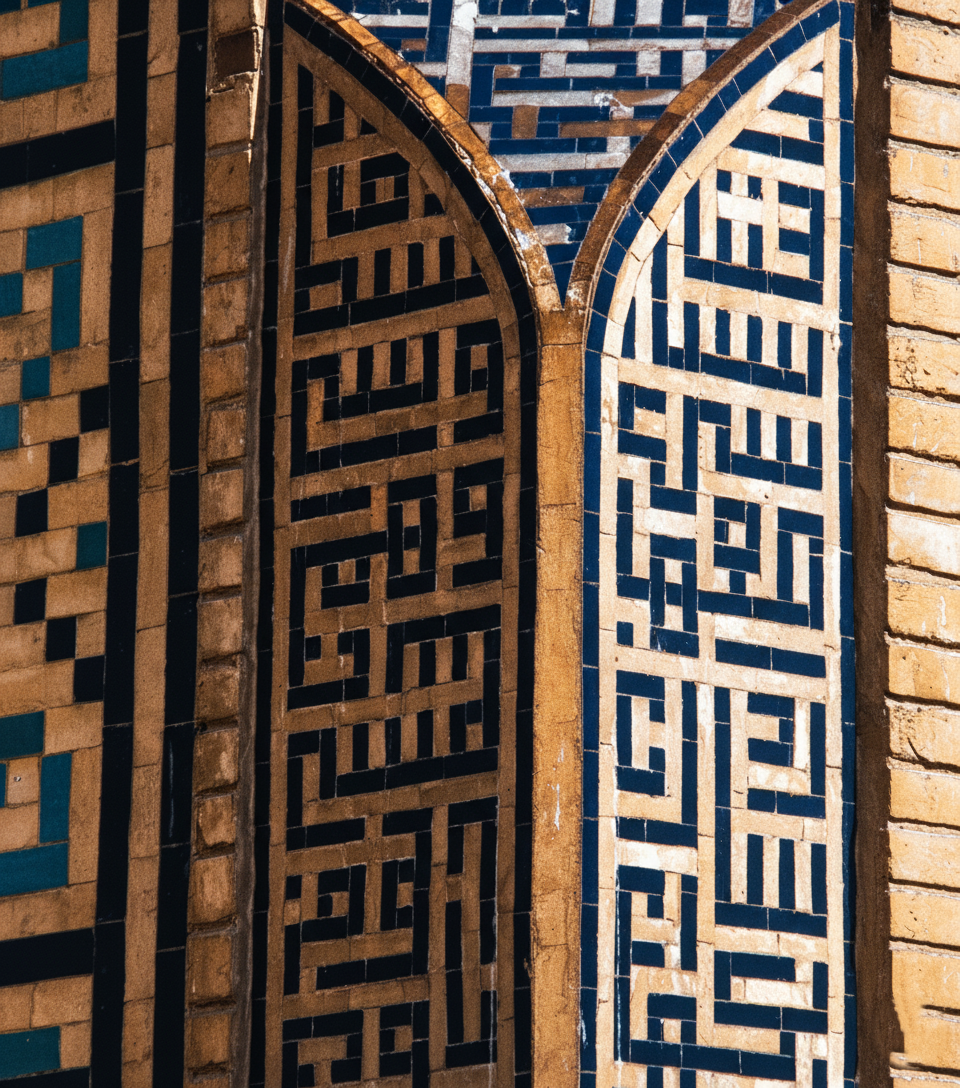
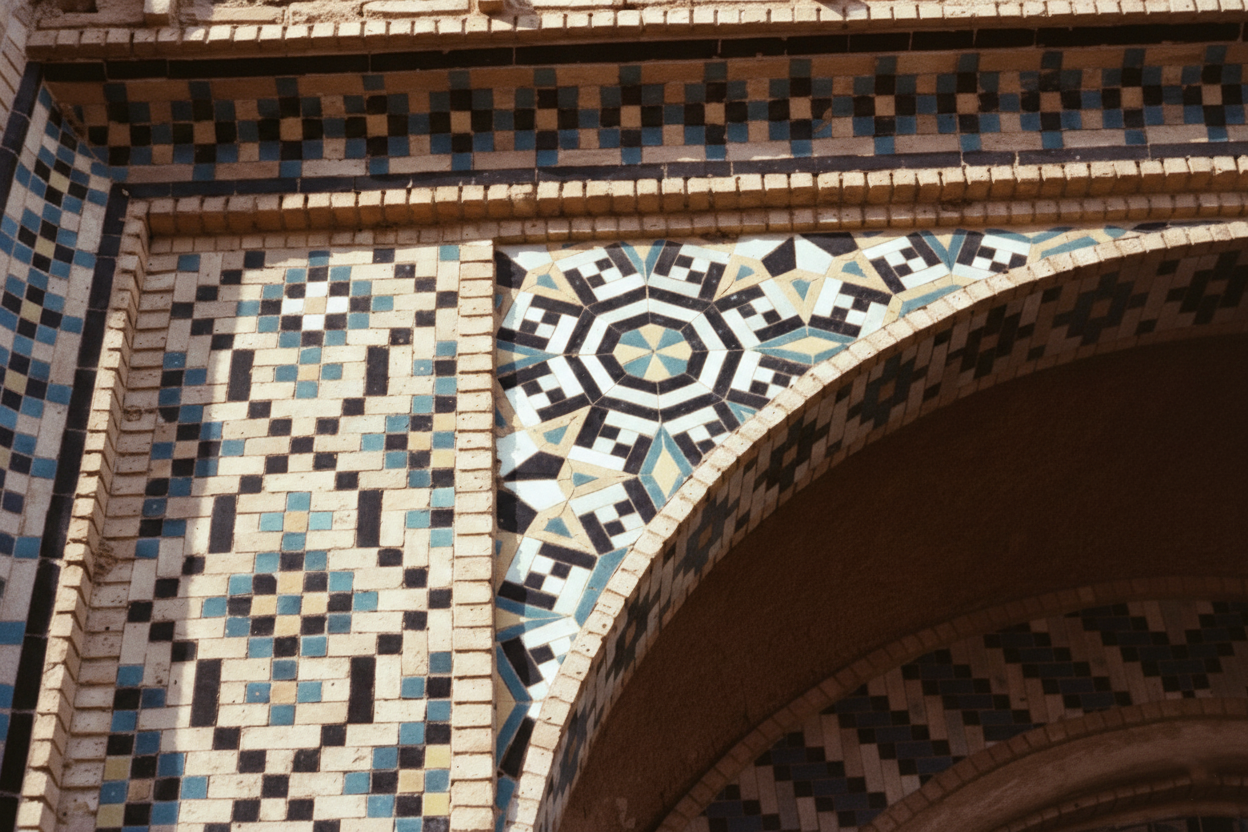
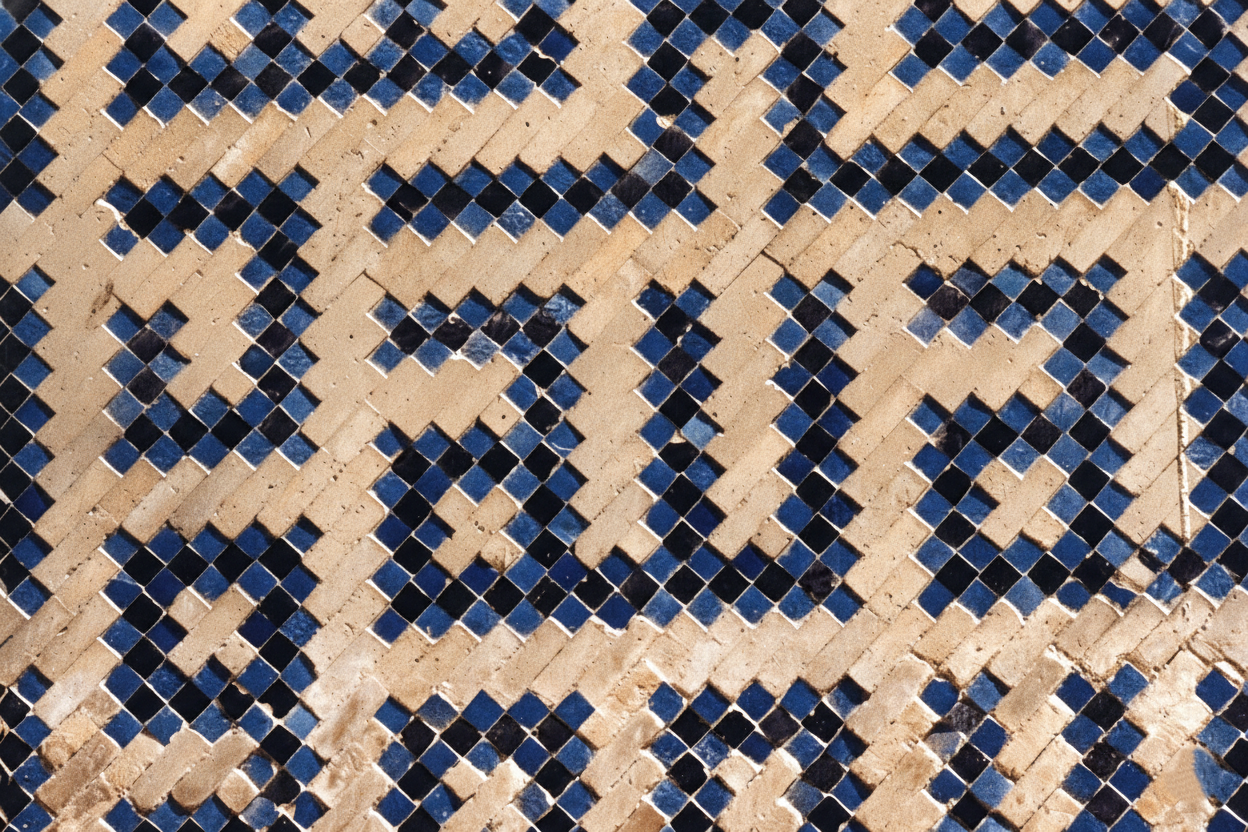
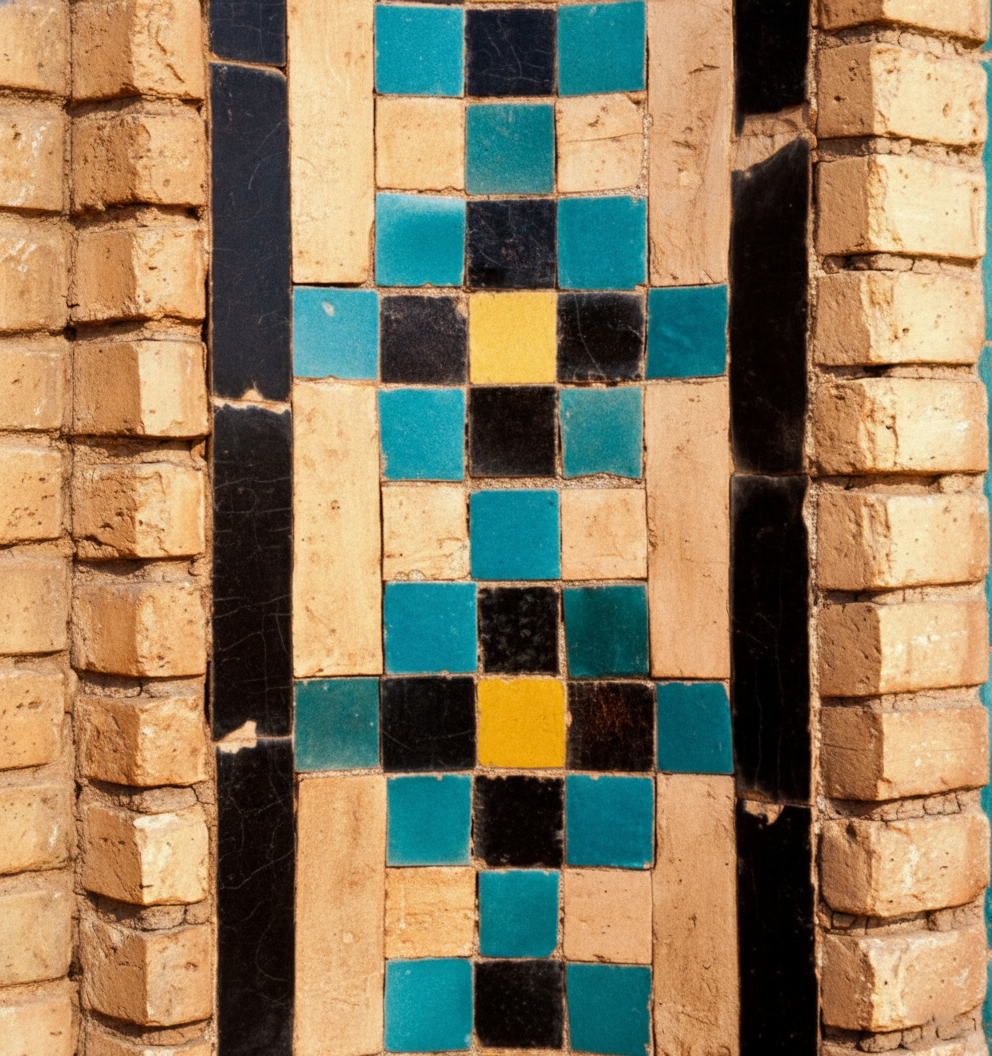
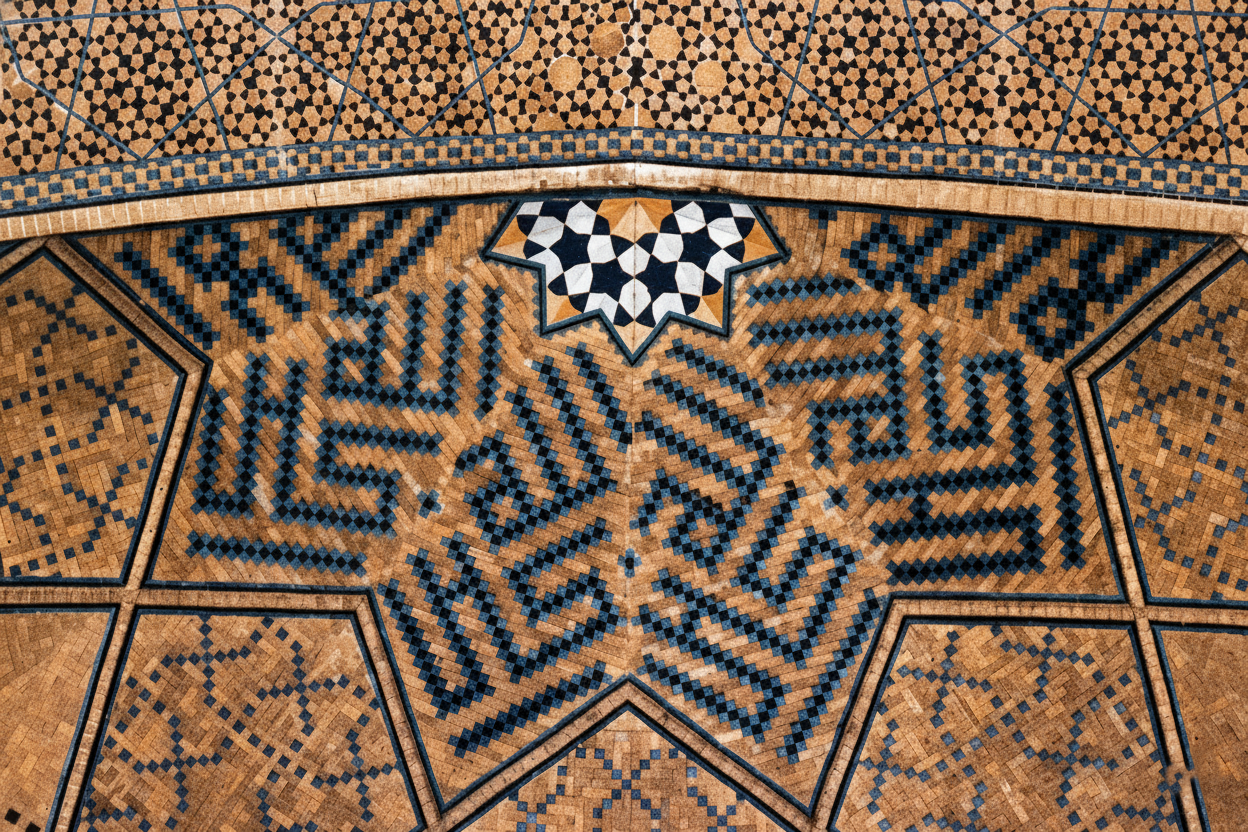
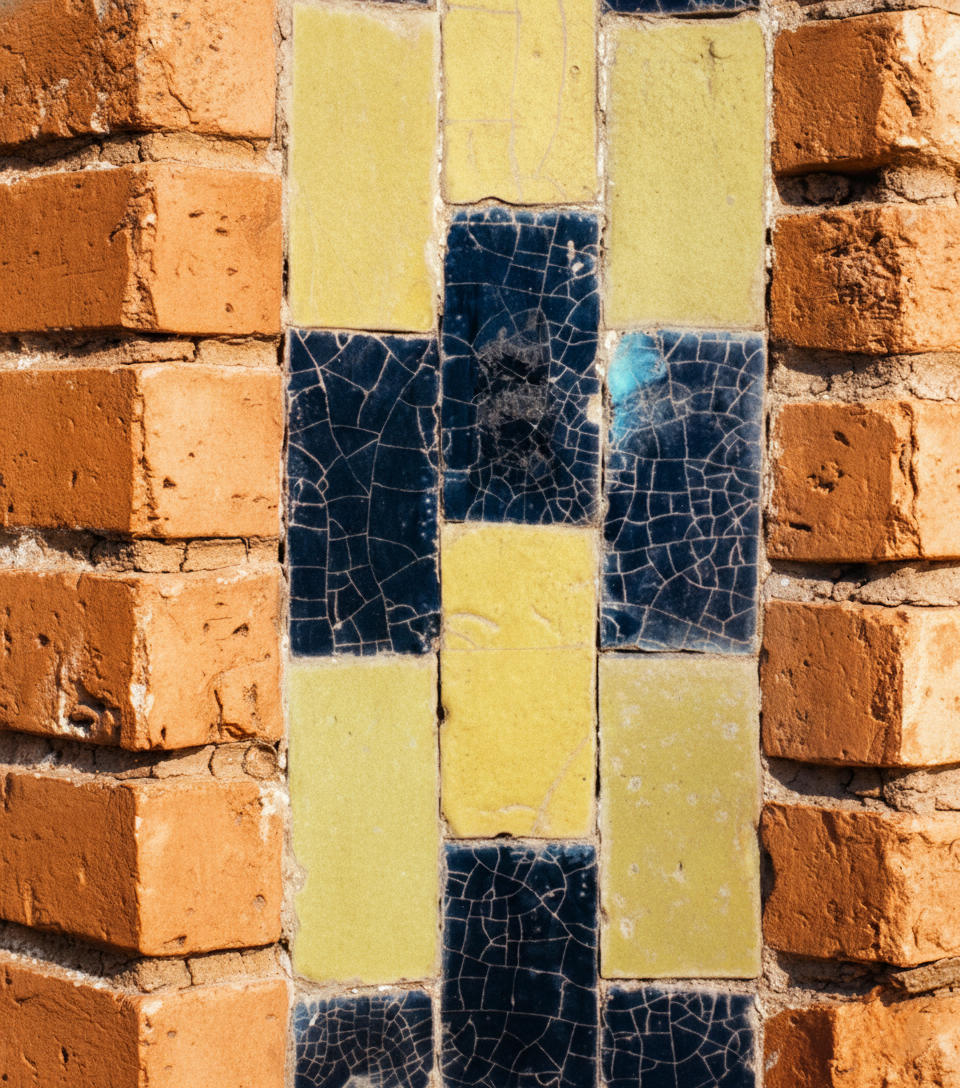
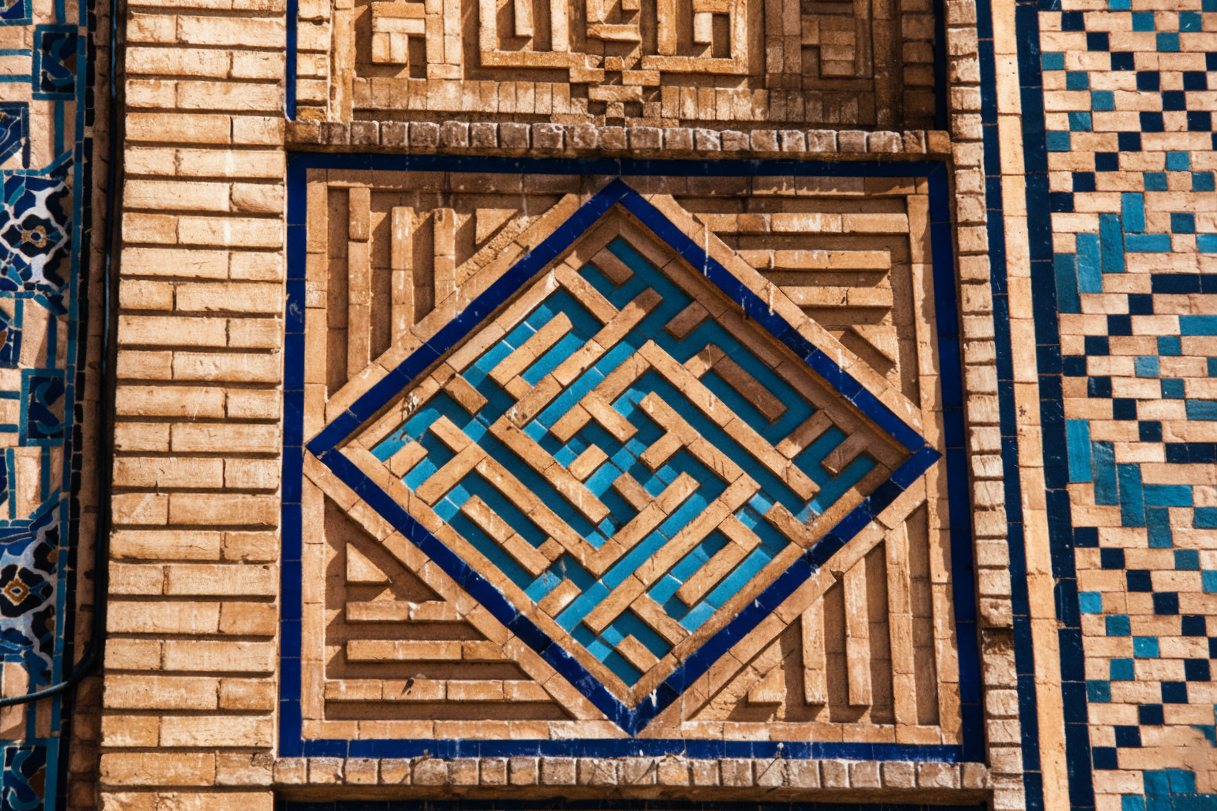
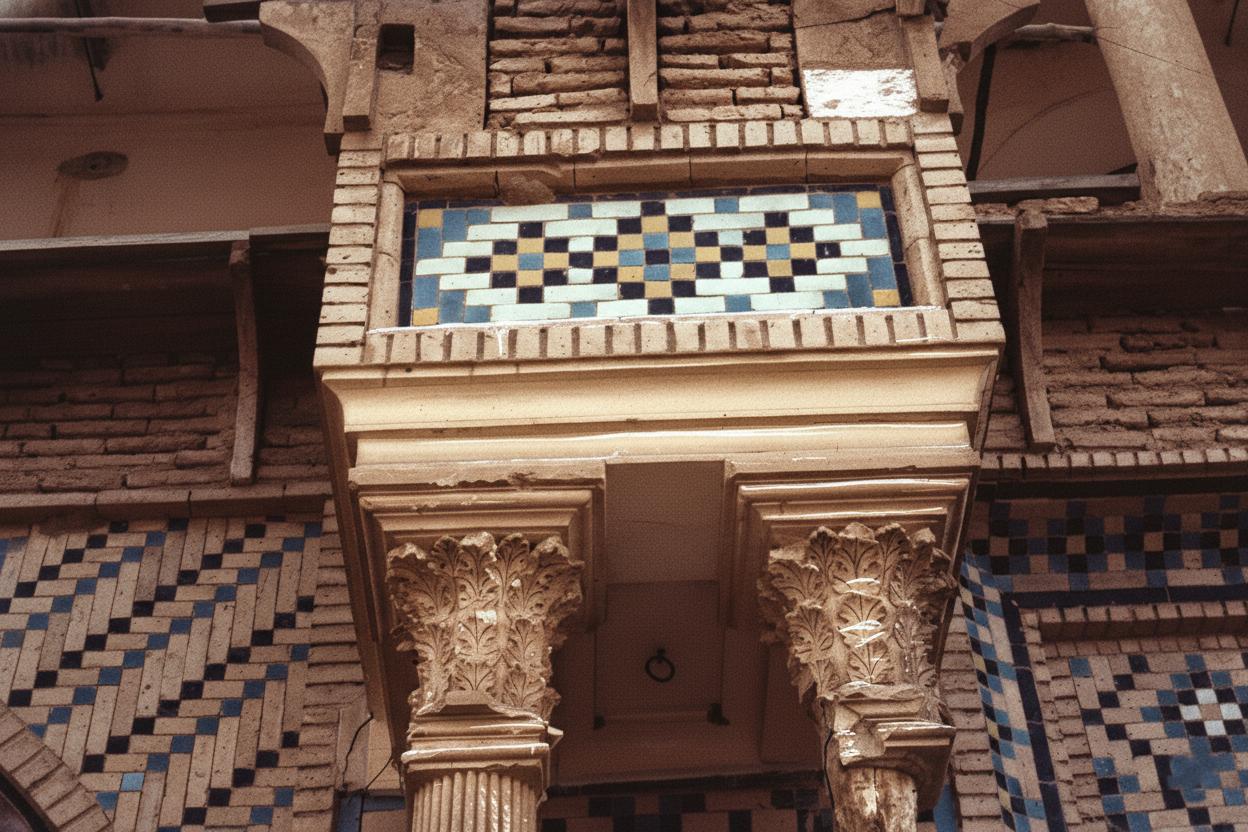
Bagh-e Shazdeh in Kerman, where the gate structure leads to the garden with disciplined geometric brick and tilework, and in the layered fabric of the Jameh Mosque of Isfahan, whose centuries of construction embed these patterns directly into its structures as part of an evolving architectural whole, exemplify Ma‘qelī’s fusion of structure and ornament, where geometry emerges from masonry logic itself.
-
Ma‘qelī (معقلی), or bannā’ī (بنّایی، “of the builder”), derives its distinctive geometry from the fact that its ornament is not applied to the surface but embedded directly within the structural fabric of the wall, forcing pattern to obey the same rules as masonry itself. Each glazed unit (khesht-e la‘ābdār خشت لعابدار) must conform to the fixed dimensions and bonding logic of the brick module (ājer آجر), transforming geometry into a disciplined, orthogonal system where curves and diagonals are resolved through stepped, incremental shifts rather than continuous lines. The interplay of glazed and unglazed bricks establishes a binary matrix in which pattern emerges through substitution rather than drawing—an approach historically used to create geometric fields and even inscriptions through alternating brick and tile. Structural constraints—coursing, joint staggering, and load continuity—govern what forms are possible, producing a crisp, angular language of interlocking hazarbāf patterns (هزارباف) and Square Kufic (kufī-ye mo‘aqqal کوفی معقلی) inscriptions, where script, structure, and surface are inseparable. This logic is vividly expressed in the monumental entrance of the Bagh-e Shazdeh in Kerman, where the gate structure leads to the garden with disciplined geometric brick and tilework, and in the layered fabric of the Jameh Mosque of Isfahan, whose centuries of construction embed these patterns directly into its structures as part of an evolving architectural whole. Unlike applied tilework (kāshi-kāri کاشیکاری), which permits fluid, painterly freedom, Ma‘qelī operates as a premeditated, rule-based system in which scale, proportion, and design are intrinsically tied to construction, yielding a geometry that is not imposed upon the wall but generated from within it—an architecture of pattern whose beauty arises from the logic of its making.
