Dematerialization
-
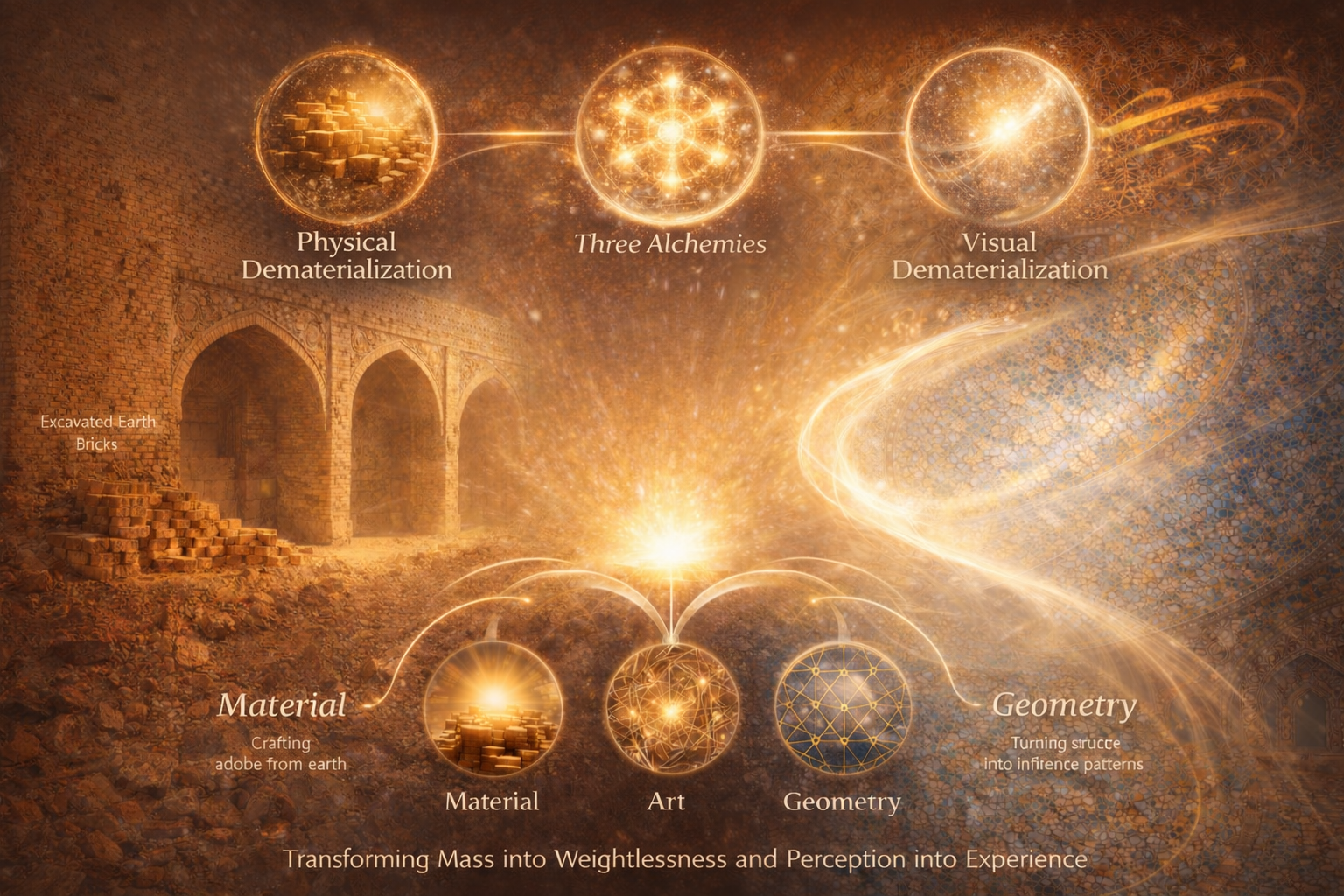
Dematerialization in Iranian architecture operates across two intertwined dimensions: ecological pragmatism and metaphysical expression. Together, they form a sophisticated architectural philosophy that minimizes material presence while amplifying experiential and spiritual depth.
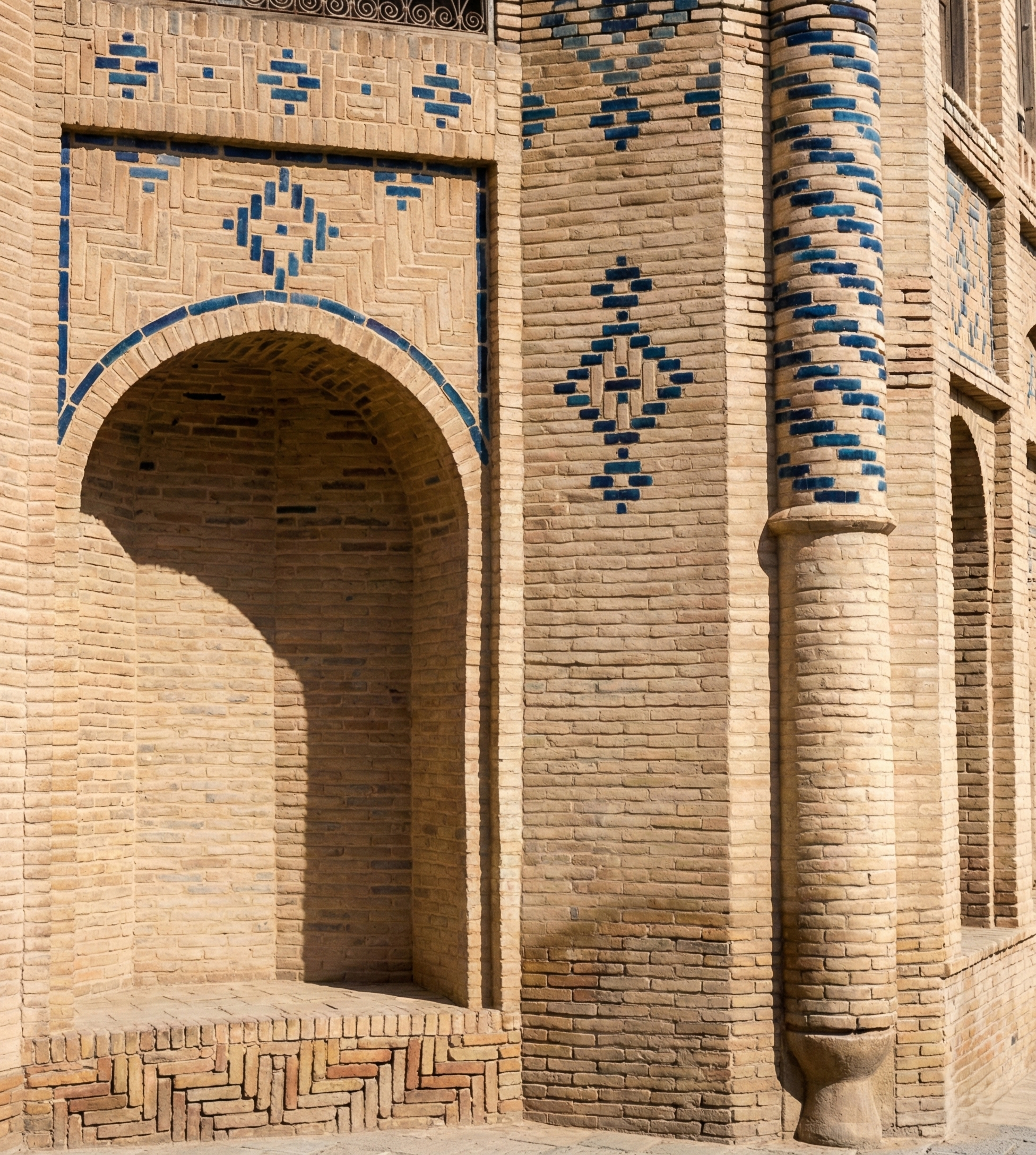
At the ecological level, dematerialization is a strategy of efficiency and sustainability. Traditional techniques reduce material consumption and optimize structural performance. A prime example is the sunken courtyard (Godal-Baghcheh / گودالباغچه), where excavated earth is reused to produce adobe bricks. This closed-loop system exemplifies resource consciousness: the void generates the solid. Additional techniques, such as recessed blind arches, further decrease masonry volume, thereby lowering embodied energy and improving seismic stability by reducing mass and lowering the center of gravity.
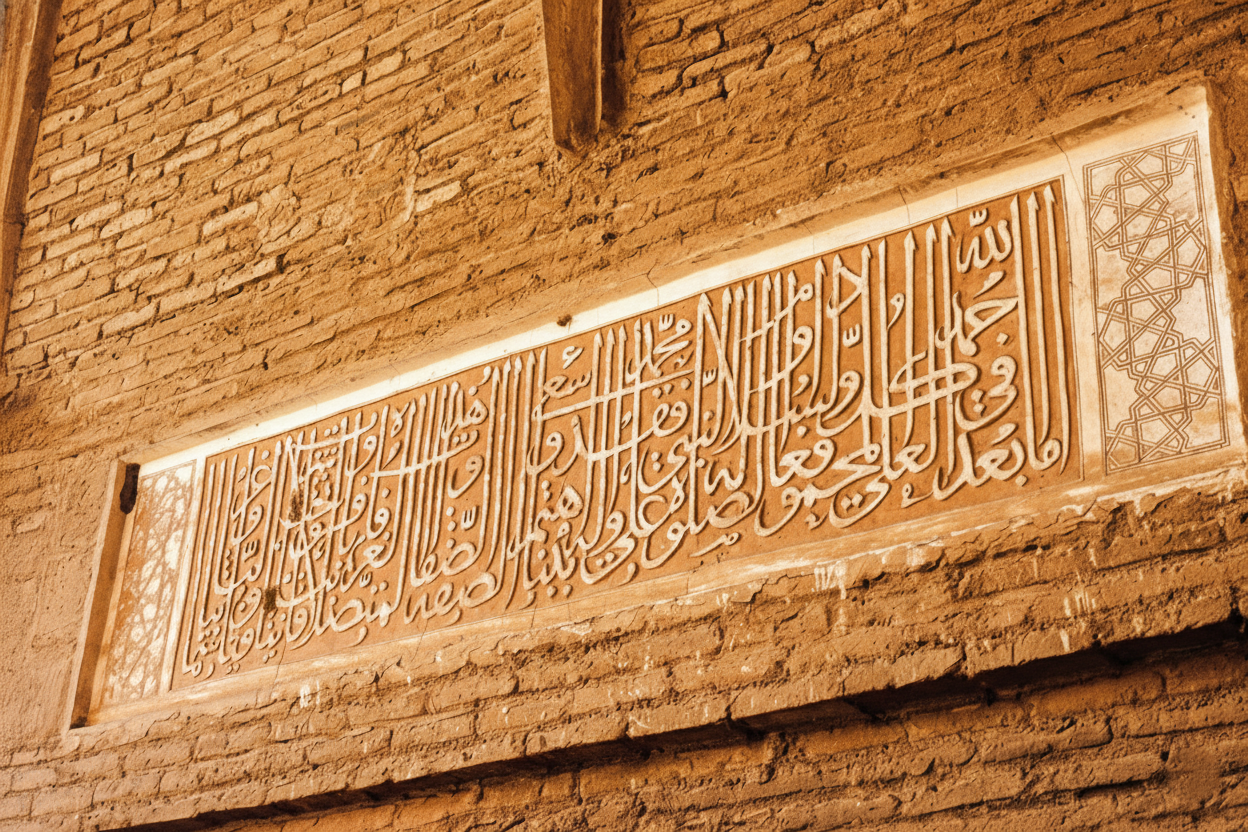
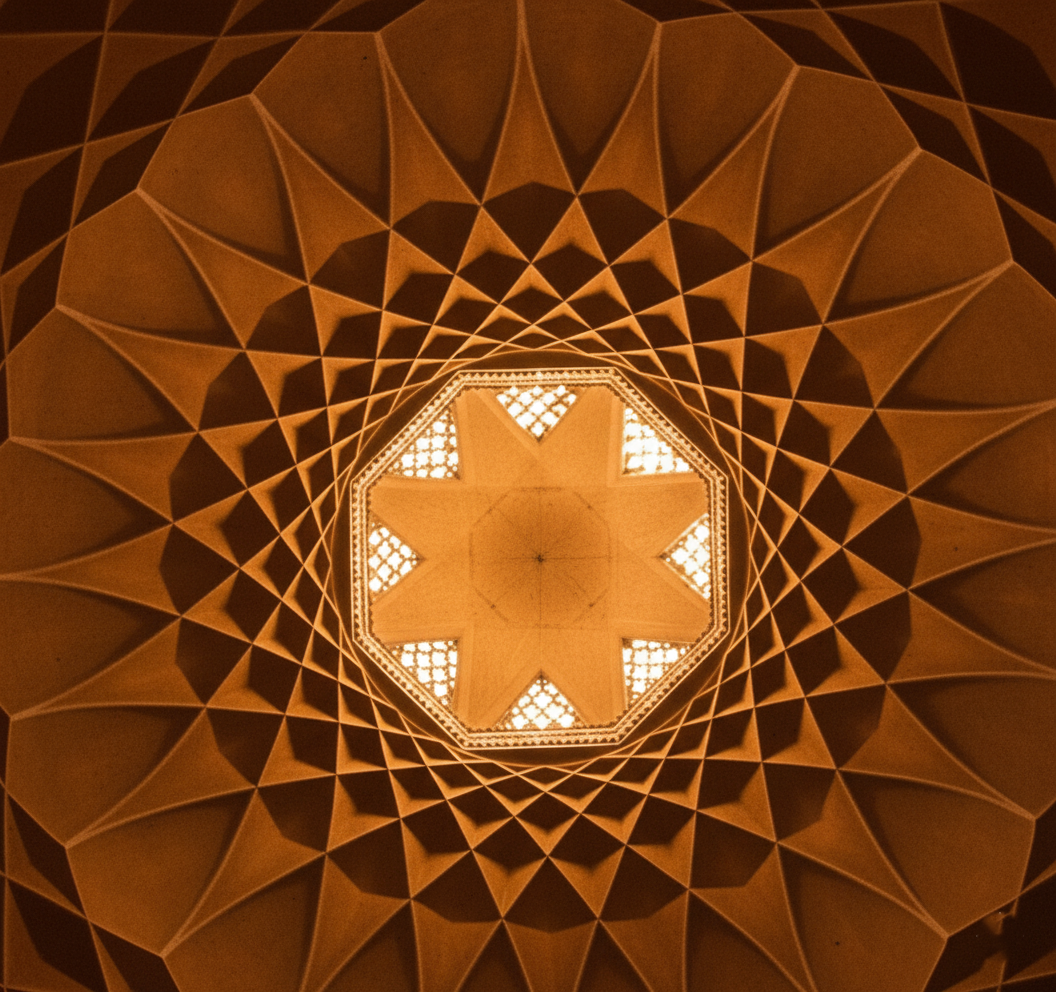
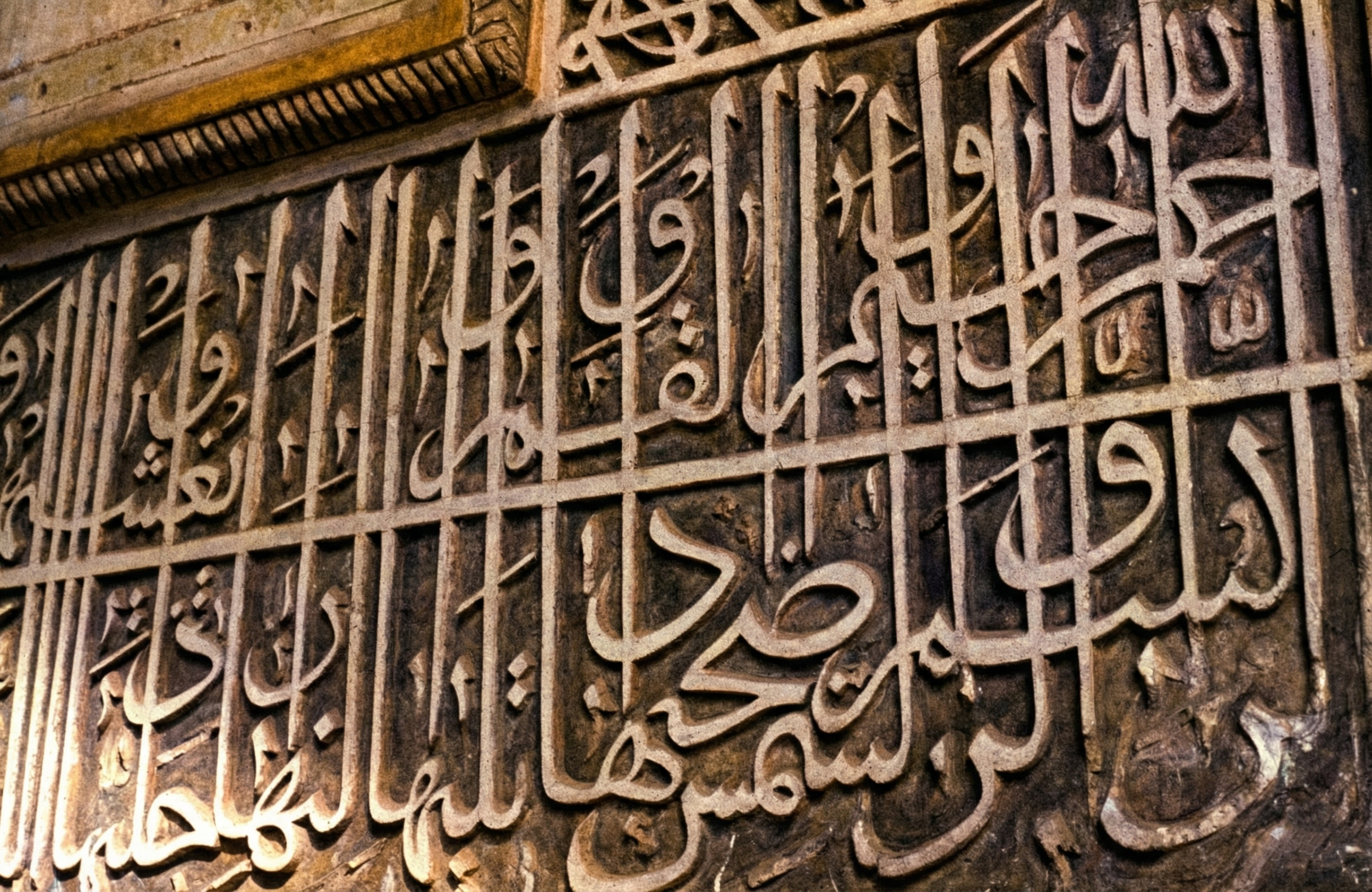
In contrast, visual dematerialization addresses perception rather than physical substance. It seeks to dissolve the apparent weight of materials—brick, stone, and earth—transforming them into mediums of light, pattern, and meaning. Through intricate brickwork (Ajor Kari / آجرکاری), surfaces become dynamic fields of shadow and relief. Tilework (Kashi Kari / کاشیکاری) reflects and refracts light, evoking celestial imagery, while calligraphy (Khatati / خوشنویسی) overlays architecture with sacred text, shifting focus from structure to symbolism.
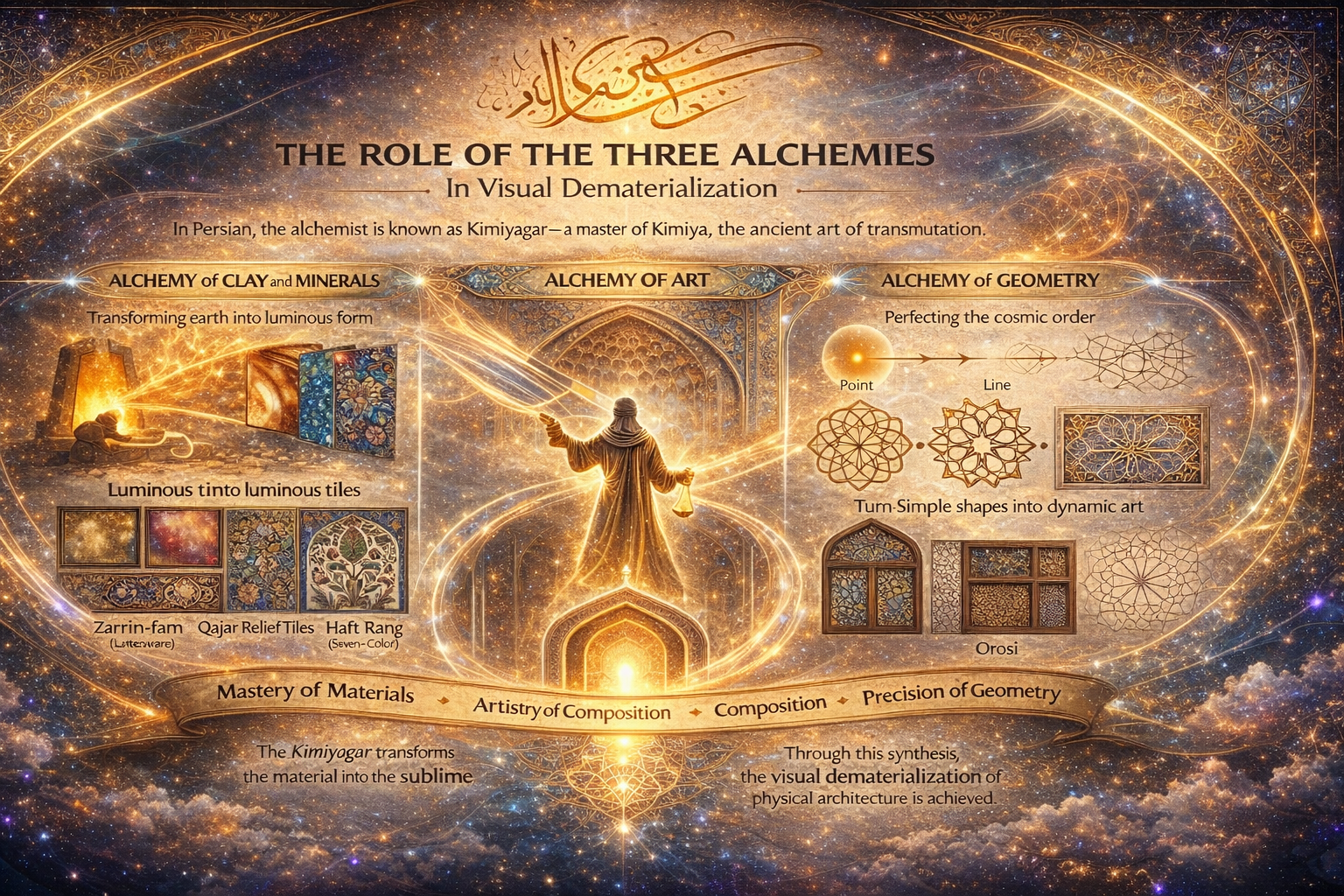
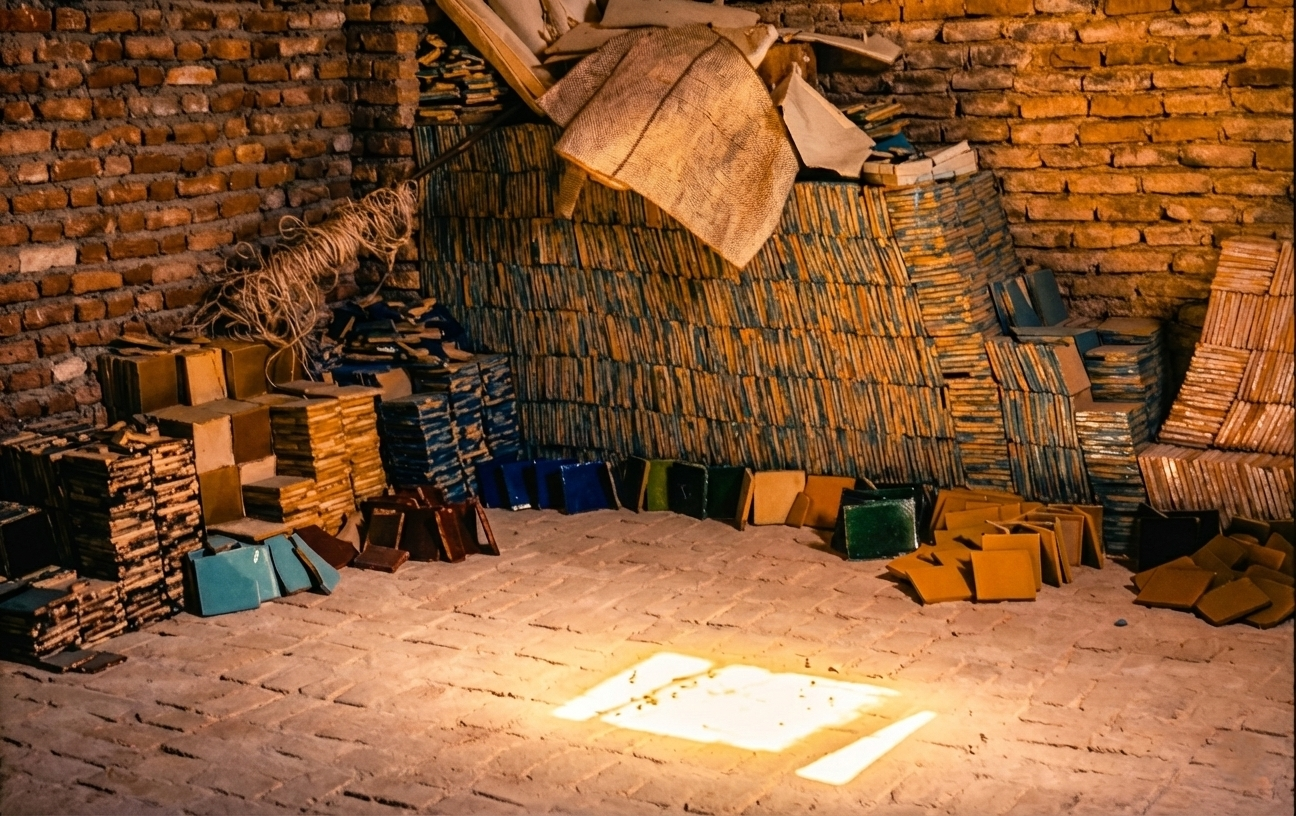
This transformation is guided by three forms of architectural “alchemy” (Kimiya / کیمیا). The Alchemy of Clay and Minerals transforms raw earth into luminous tiles. The Alchemy of Art organizes form, color, and light into cohesive compositions. Finally, the Alchemy of Geometry (Handaseh / هندسه) transforms simple elements into infinite patterns.
Through this synthesis, Iranian architecture achieves its ultimate aim: the transcendence of materiality into a poetic and spiritual experience.