The Elements
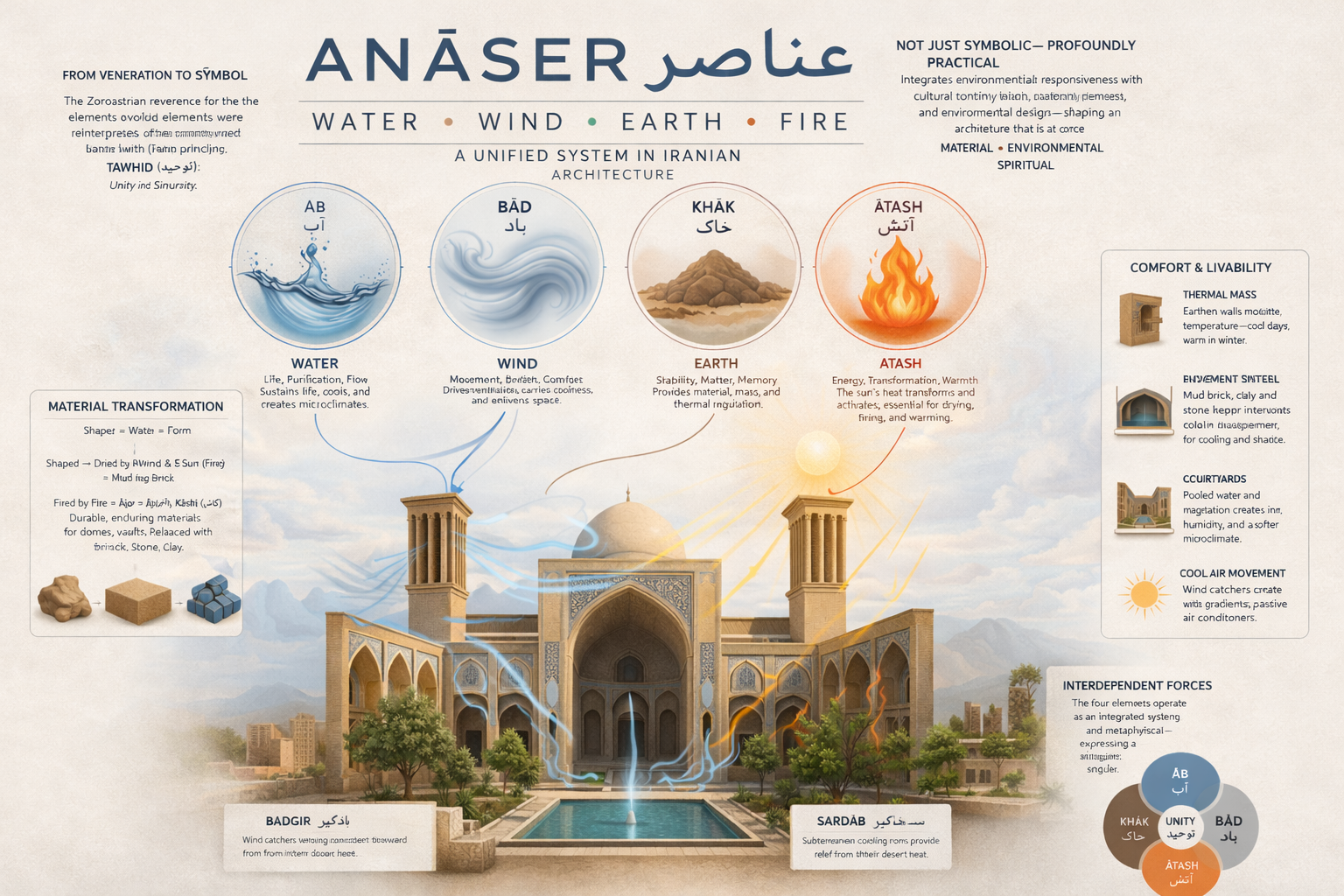
The four elements (Anāser عناصر)—Water (آب), Wind (باد), Earth (خاک), and Fire (آتش)—form the foundation of Iranian architecture, guiding material transformation, climate responsiveness, and spatial design. From clay to brick, from qanats to wind catchers, these forces shape a coherent environmental system, where traditional knowledge integrates natural elements into a unified approach to comfort, construction, and urban life.
-
In Iranian urban design and architecture, the four elements (Anāser عناصر)—Water (Āb آب), Wind (Bād باد), Earth (Khāk خاک), and Fire (Ātash آتش)—have long functioned as more than physical phenomena; they are understood as generative forces that shape spatial order, material logic, and the spiritual character of the built environment. From the urban fabric to the organization of domestic space and the articulation of public realms, these elements inform both form and meaning. With the transition from the pre-Islamic (Zoroastrian) worldview to the Islamic era, this elemental framework was not abandoned but reinterpreted—shifting from direct veneration toward a symbolic system aligned with the principle of Tawḥīd (توحید), or unity, in which diverse forces are understood as expressions of a singular order.
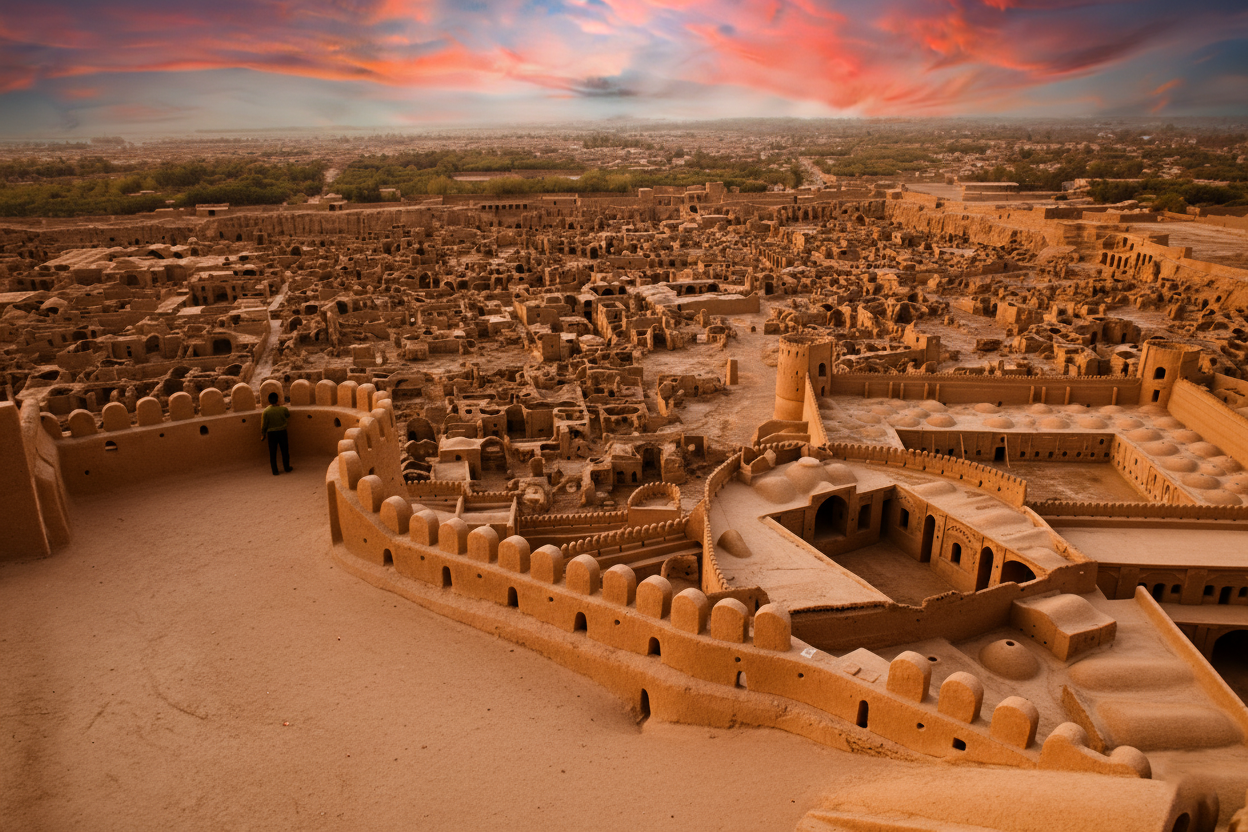
Although often dismissed today as pre-scientific, the four elements historically provided a pragmatic and material foundation for construction. The union of Water and Earth produces clay, the essential ماده (material) of Iranian building culture. Shaped into bricks and dried by Wind and the heat of the sun—an expression of Fire—this clay becomes mud brick, the پایه (foundation) of traditional architecture. When fired, it transforms into more durable materials such as ājor (آجر) and kāshi (کاشی), enabling the construction of enduring domes, vaults, and arches, while also forming protective, weather-resistant building envelopes. In this sense, even if not scientifically framed, the four elements underpin a deeply rational process of material transformation and architectural production.
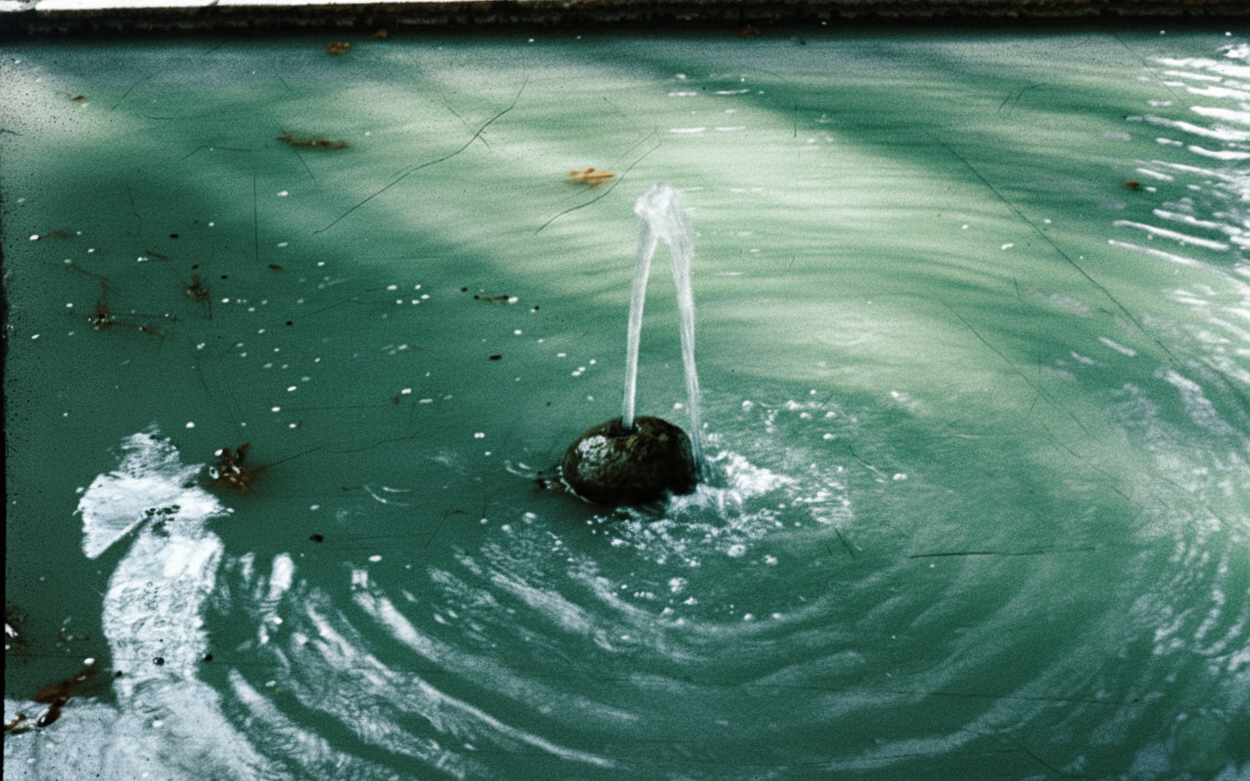
Beyond construction, Iranian masters skillfully engaged the inherent properties of each element to enhance comfort and livability, particularly in harsh desert climates. The thermal mass of earthen walls and roofs moderates temperature fluctuations, delaying heat transfer during the day and releasing stored warmth during cold nights. Water systems such as qanats (قنات) and āb-anbār (آبانبار) sustain urban life by transporting and ذخیره (storing) water, often extending beneath buildings to cool adjacent spaces. In central courtyards, pooled water and vegetation create localized microclimates, introducing رطوبت (humidity) and shade that soften the شدت (intensity) of the desert environment.
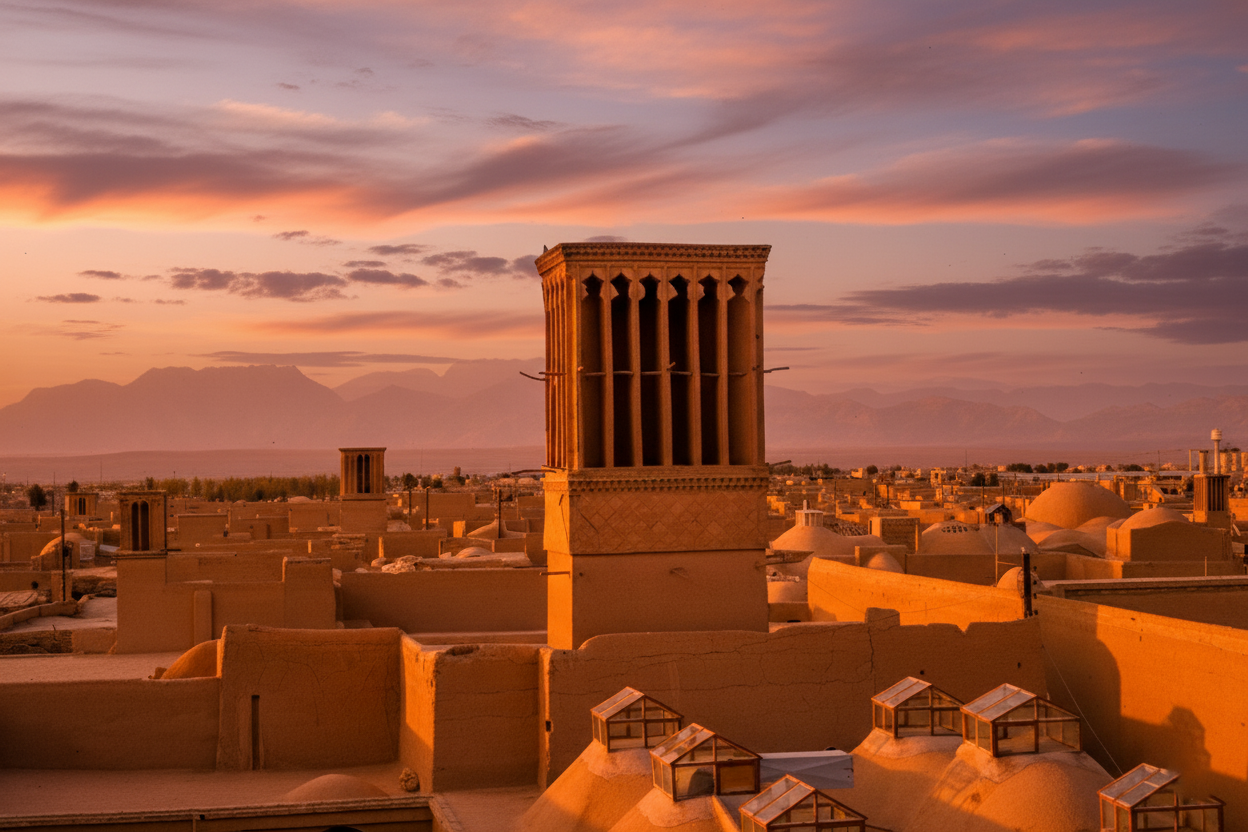
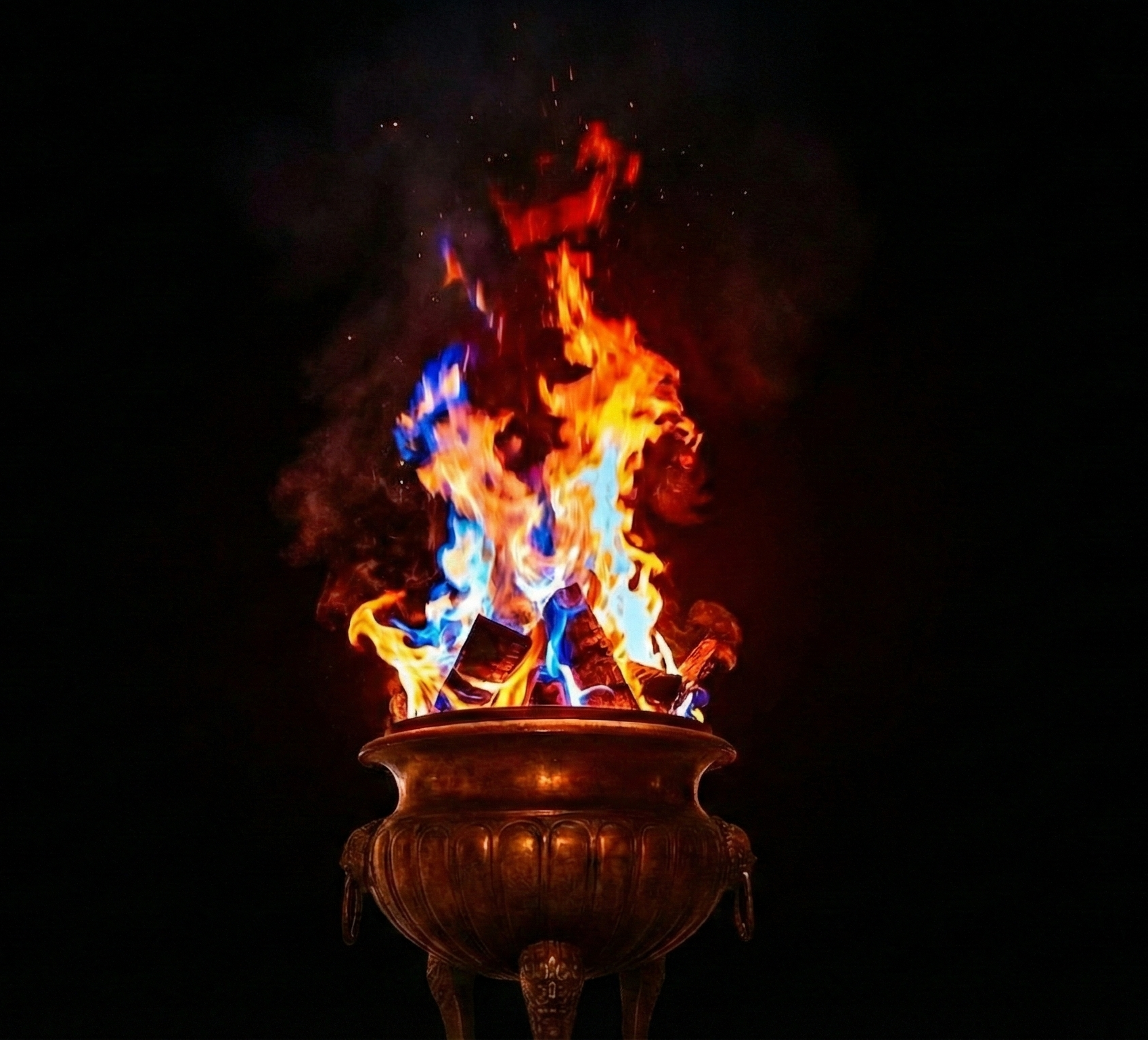
Fire, manifesting as solar radiation, interacts with mass and shadow to generate spatial gradients of heat and comfort. The heated exterior walls and roofs contrast with shaded areas, producing differences in air pressure that set Wind in motion. This movement is harnessed through bādgir (بادگیر, wind catchers), which channel breezes downward—often across subterranean water reservoirs such as the sardāb (سرداب)—cooling the air before distributing it into living spaces. Through this integrated system, the four elements operate not as abstract ideas but as interdependent agents, shaping an architecture that is simultaneously environmental, material, and metaphysical.