Water (Āb آب)
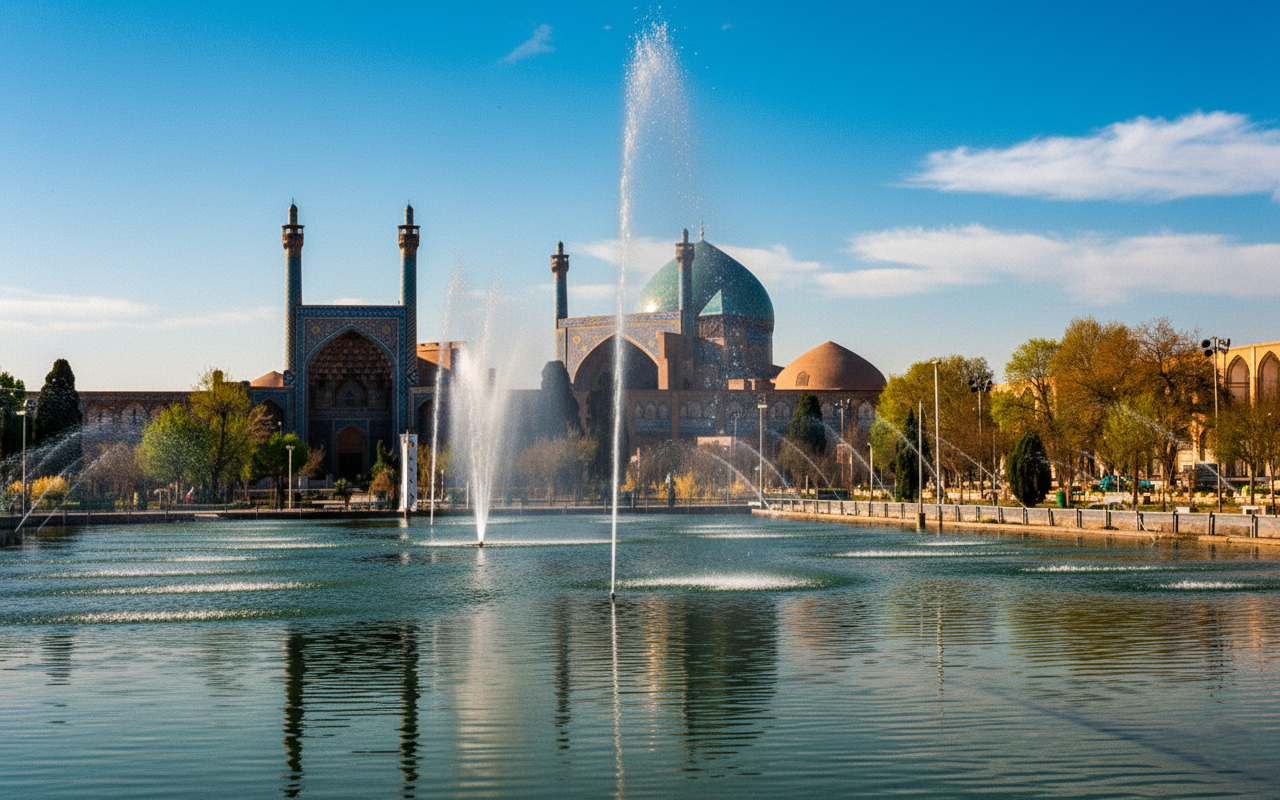
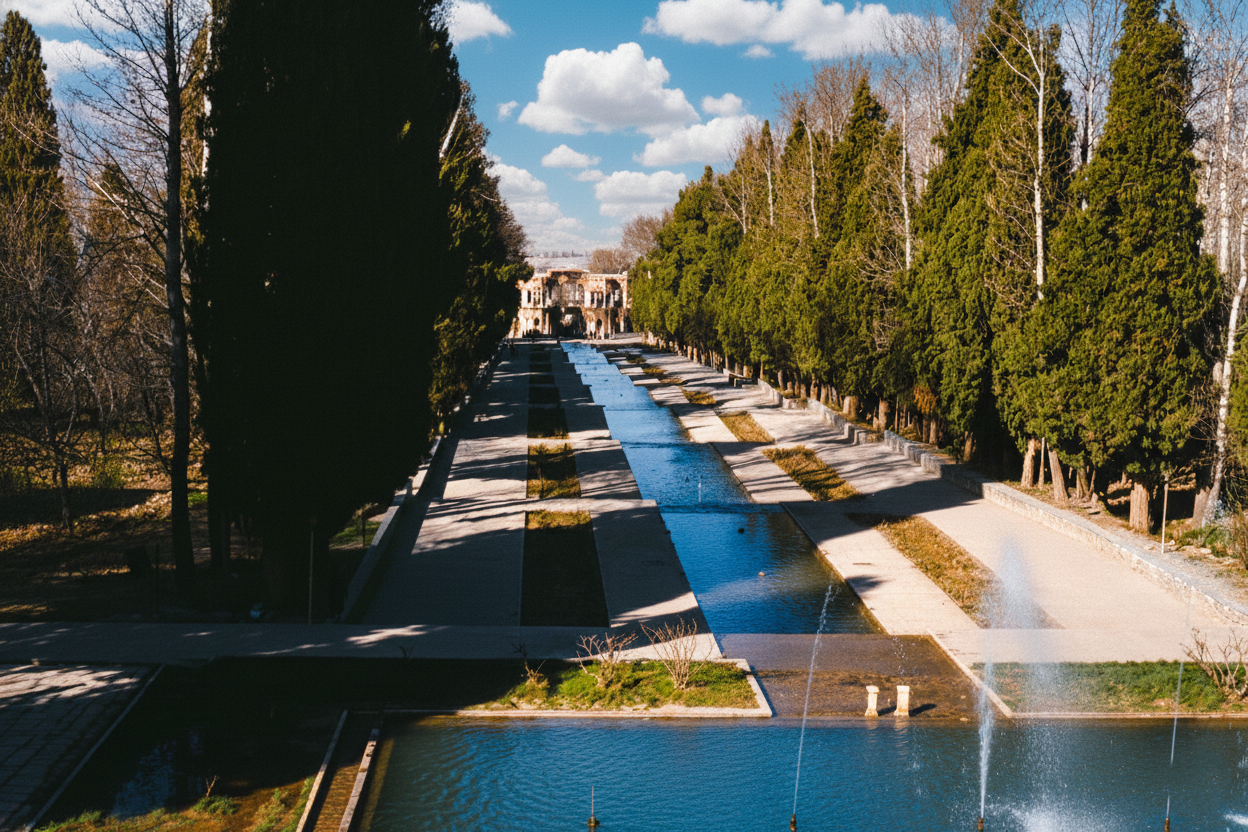
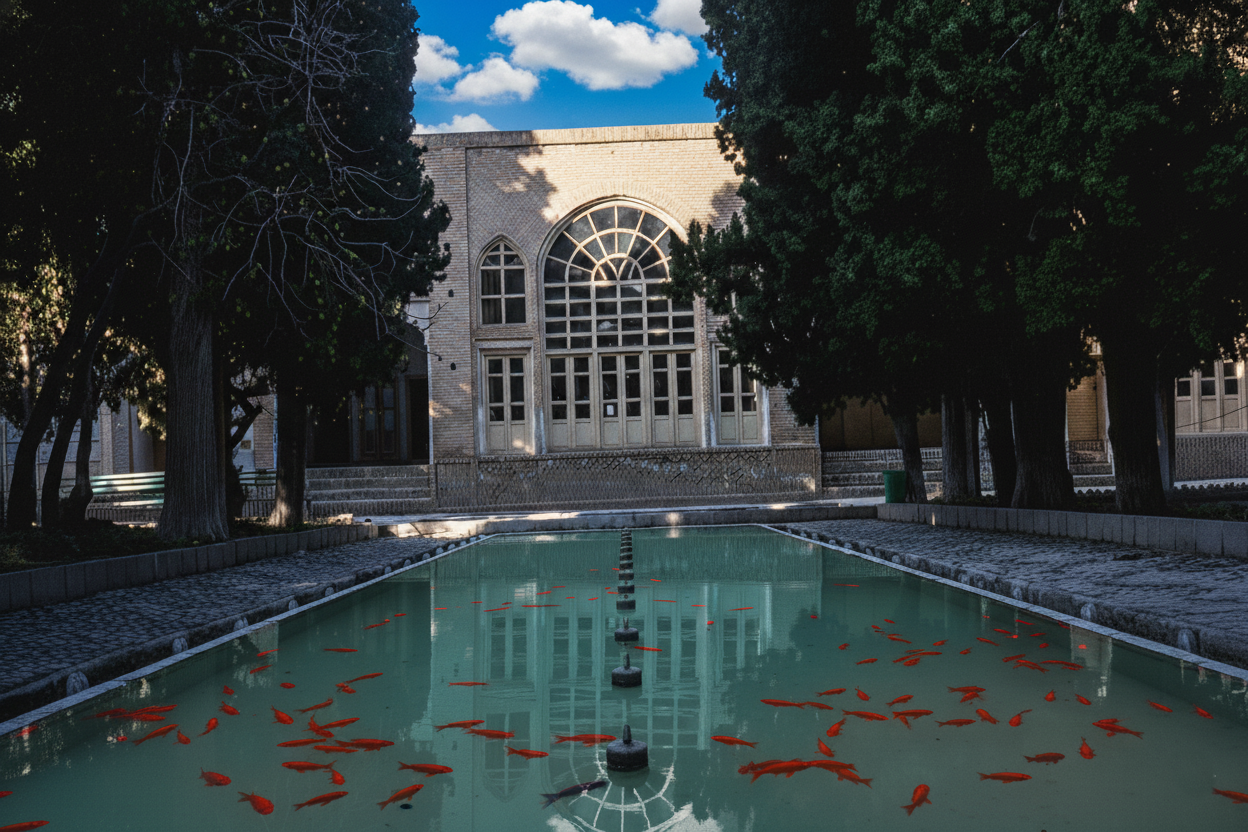
Naqsh-e Jahan Square (میدان نقش جهان) in Isfahan, Bagh-e Shazdeh (باغ شاهزاده) in Kerman, and Fin Garden (باغ فین) in Kashan exemplify how water structures space, movement, and meaning. Through qanats, pools, and flowing channels, these landscapes embody the Persian garden ideal—where water generates microclimate, reflects architecture, and symbolizes paradise within a carefully ordered urban and natural system.
-
Water (Āb آب) stands as the most vital عنصر (element) in the arid geography of the Iranian plateau, functioning simultaneously as a شرط (condition) for survival and a medium of spiritual meaning. In pre-Islamic Iran, particularly within Zoroastrian thought, water was sacred and associated with the goddess Anahita (ناهید), and its contamination—especially in flowing streams—was considered a grave transgression. The importance of water was so profound that the very conception of Pardis (پردیس, Paradise) on Earth depended upon its presence; without water, paradise could not exist—yet wherever water could be brought, paradise could be made. This belief became the conceptual foundation of the Persian garden, a prototype that has influenced garden design worldwide and has been abstracted into the ordered geometry of Persian carpets.
This reverence translated directly into architectural and urban strategies: settlements were organized around subterranean water systems such as qanats (قنات), shaping patterns of پراکندگی (urban dispersion) across the landscape. Iconic examples such as Naqsh-e Jahan Square (میدان نقش جهان) in Isfahan, Bagh-e Shazdeh (باغ شاهزاده) in Kerman, and Fin Garden (باغ فین) in Kashan demonstrate how water structures space, movement, and perception through channels, pools, and باغ layouts. With the advent of Islam, water retained its sanctity while acquiring new symbolic dimensions, becoming a central image of Paradise (Jannah جنه), described as gardens beneath which rivers flow, and playing a key role in rituals such as wudu (وضو), reflected in the integration of howz (حوض) in mosques and homes.
The Chahār-Bāgh (چهارباغ) typology, defined by intersecting water axes, embodies both cosmological symbolism and environmental intelligence, while the labor of moqannis (مقنّی) sustained entire cities by channeling water from distant منابع (sources). Within architectural space, the howz acts as both reservoir and mirror, reflecting sky and structure, symbolizing the اتصال (connection) between زمین (earth) and آسمان (heaven). Through these layered roles, water becomes not only a resource but the generative principle through which Iranian architecture constructs life, order, and the very image of paradise on earth.
