The Enigma, the Body, the Garment, and the Spirit
-
The Enigma
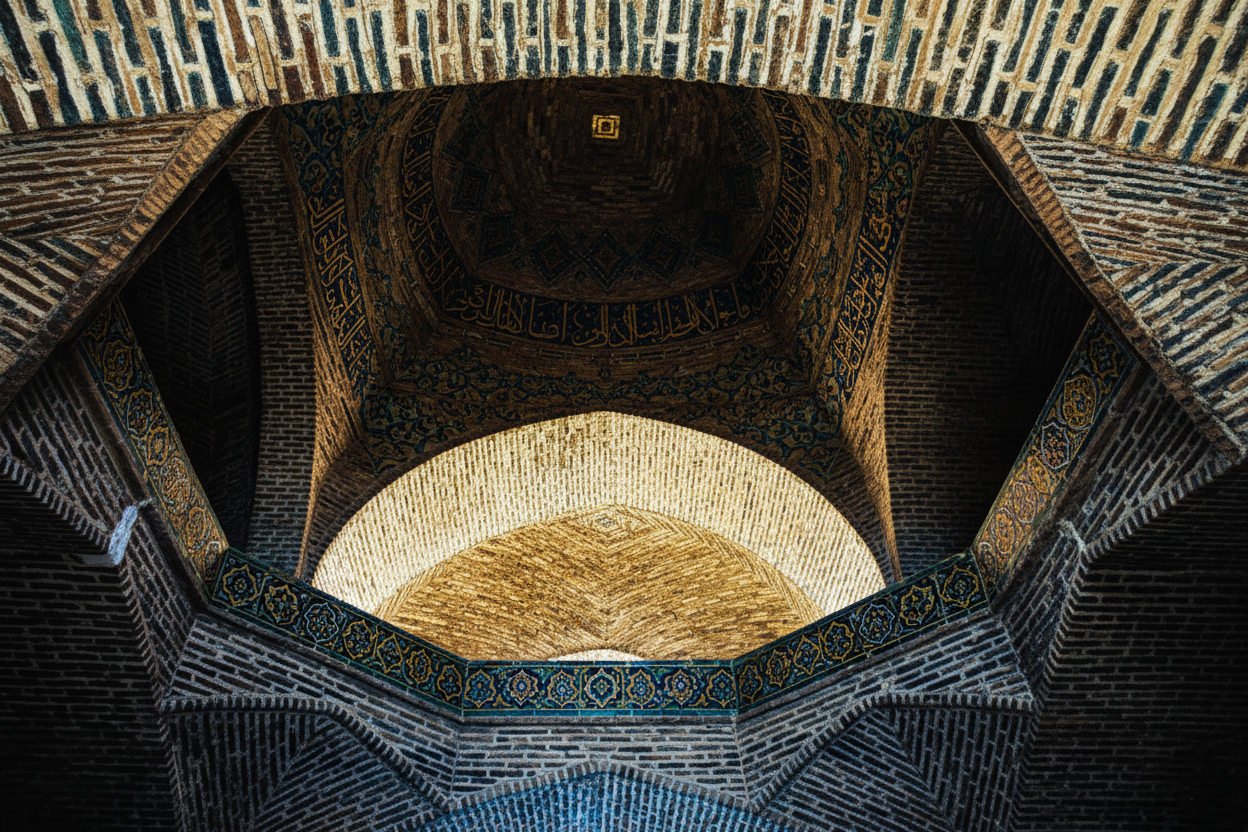
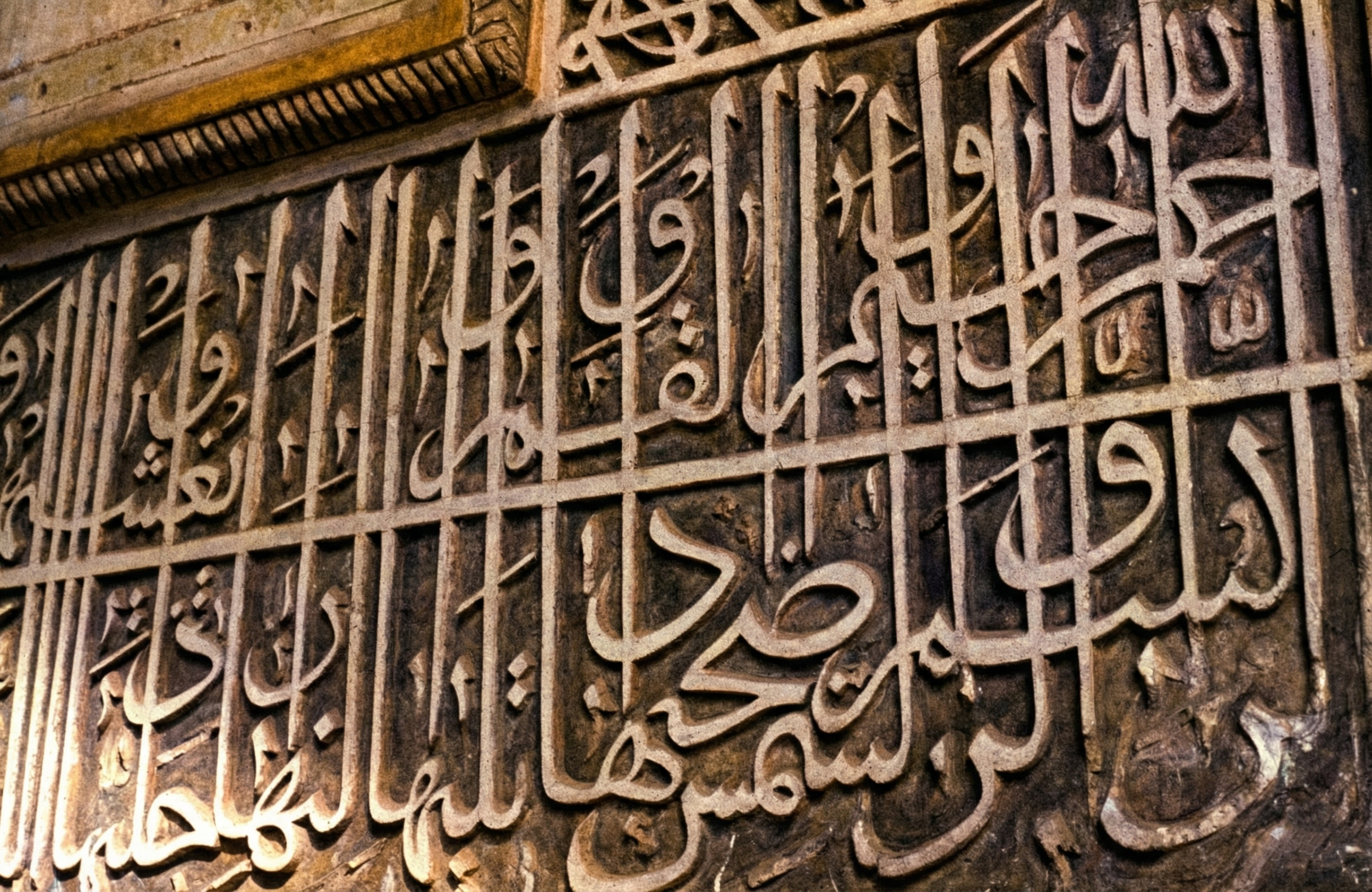
Beneath the brick and tile of Persian architecture lies a quiet order shaped by three intertwined forces: geometry, pattern, and calligraphy. Geometry forms the structure—the body—giving proportion, balance, and coherence. Pattern drapes this structure like a garment, softening its weight through rhythm, color, and light. Calligraphy completes the composition as the soul, carrying meaning, voice, and spirit. Together, they create more than ornament; they establish a unified language that elevates architecture from the physical to the contemplative. To photograph these spaces is to pause an ongoing dialogue between structure, surface, and meaning.
Geometry in Iranian architecture began as both a necessity and a symbol. In the pre-Islamic era, particularly under the Parthians and Sasanians, it ensured structural stability while reflecting a cosmic order. The square, associated with the earth, and the circle, associated with the heavens, governed the design of sacred and civic spaces. Innovations such as the squinch allowed domes to rise from square foundations, bridging earth and sky in both engineering and symbolism.
With the advent of Islam, geometry evolved into a more abstract and philosophical language. As figural imagery receded, architects turned to mathematics to express unity and infinity. Complex systems such as girih (interlaced geometry) and muqarnas (stalactite vaulting) emerged, dissolving solid form into layered patterns of light and shadow. Geometry no longer served only to support a building—it became a visual meditation on the infinite.
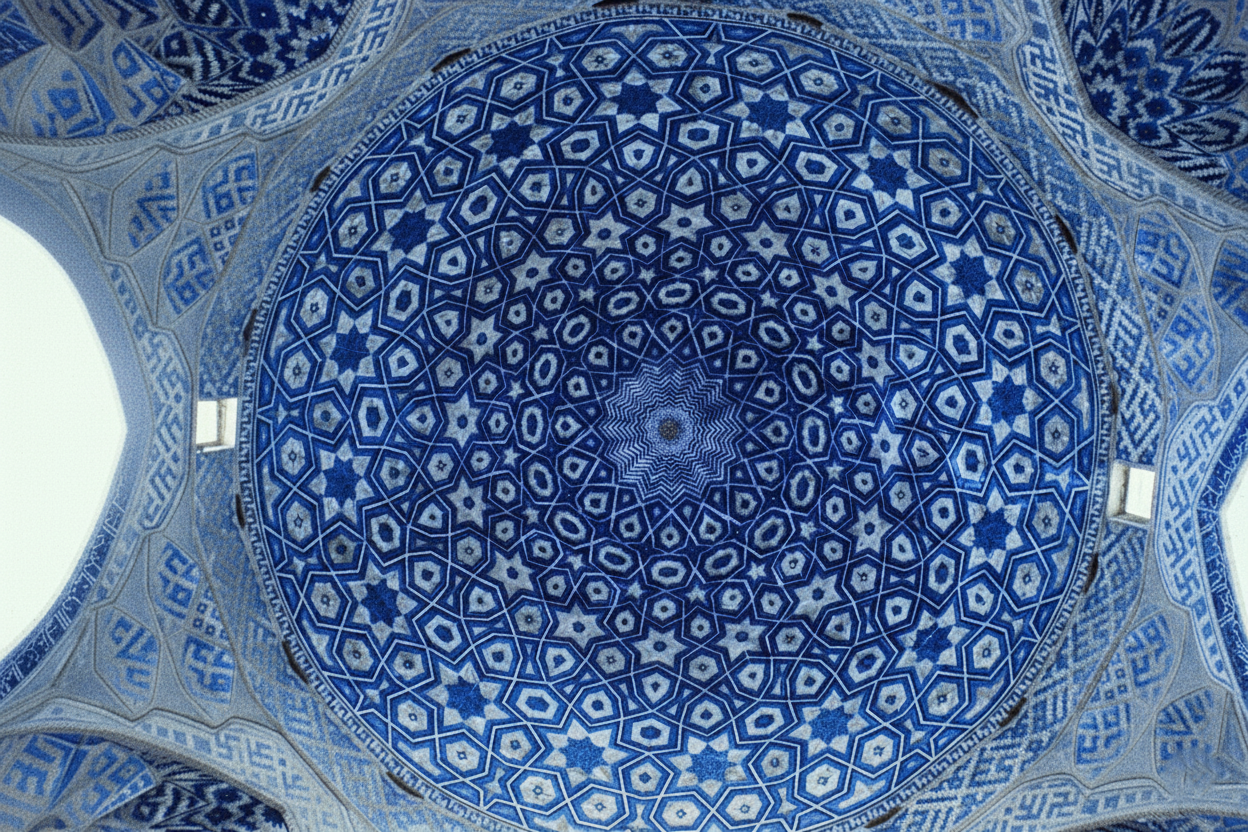
Pattern, in turn, transforms mass into presence. Tilework, brick, and stucco clothe heavy structures in surfaces that shimmer and shift, dissolving solidity into texture and color. This “garment” reflects a deeper idea: that material form can be elevated through beauty. The interplay between outer appearance and inner essence—zāher and bāten—guides the viewer beyond the weight of construction toward a more luminous experience. Nowhere is this more evident than in the dome of the Sheik Lotfollah Mosque, where the interior unfolds like a radiant textile, expanding outward in light.