Wind (Bād باد)
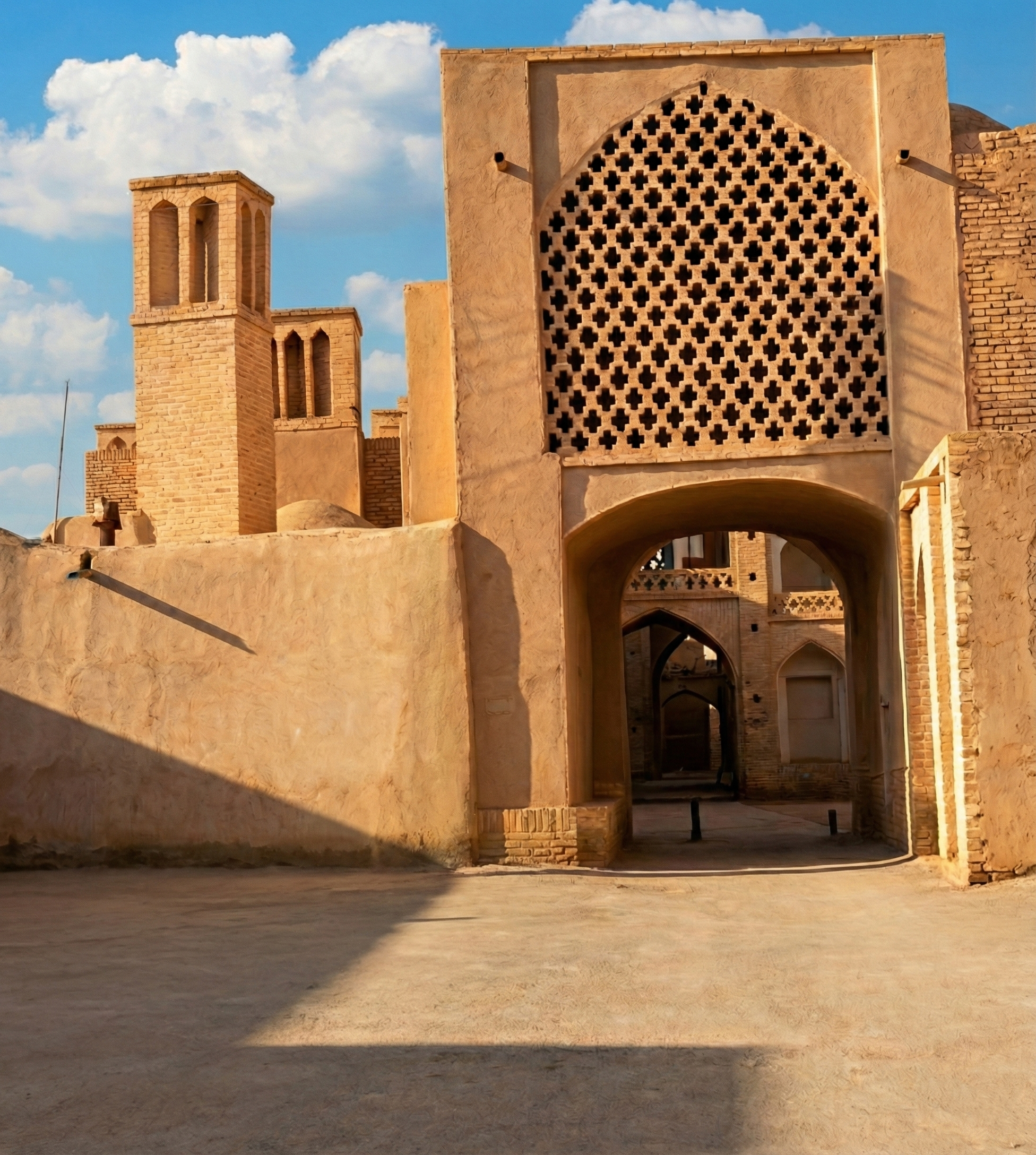
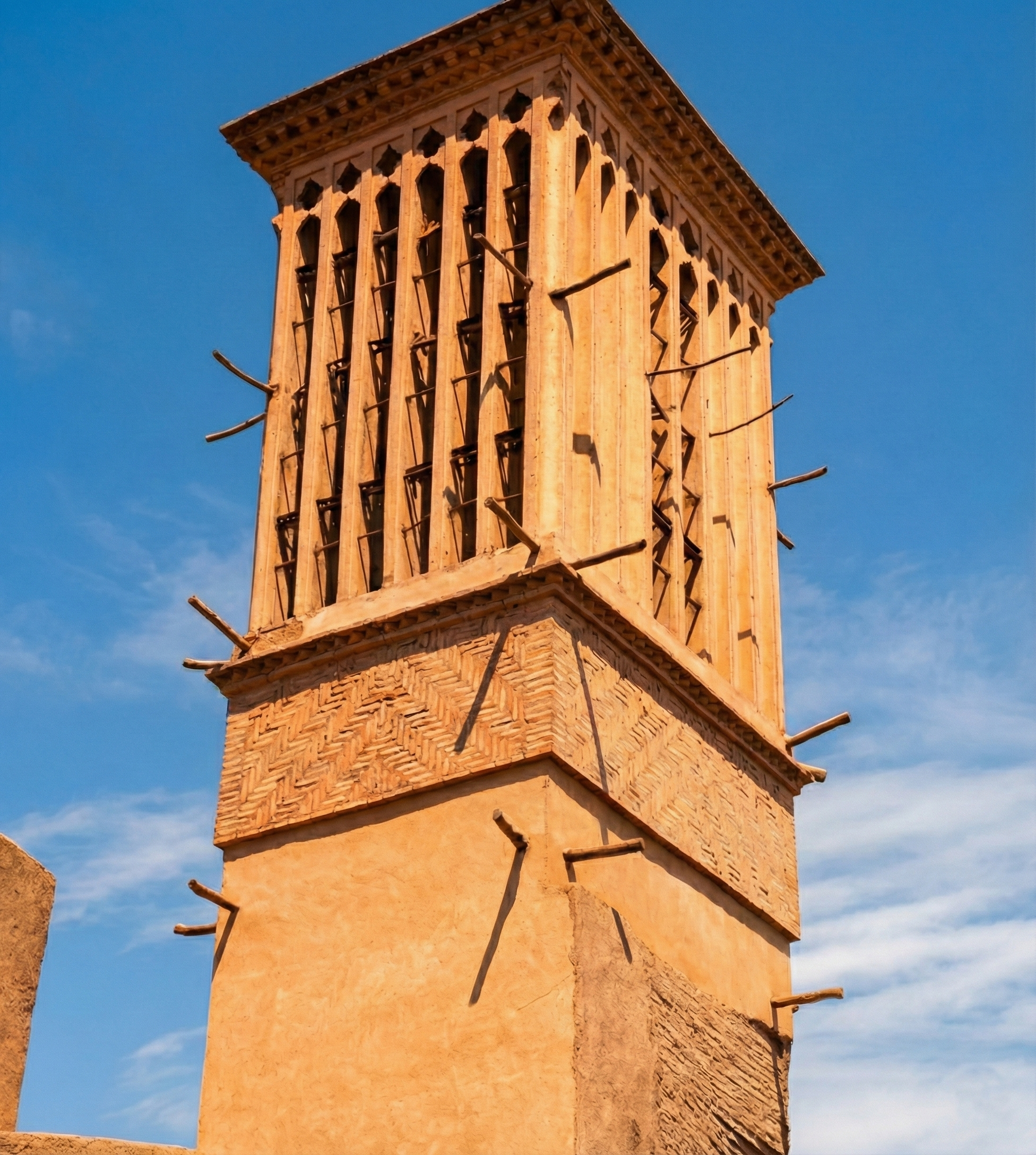
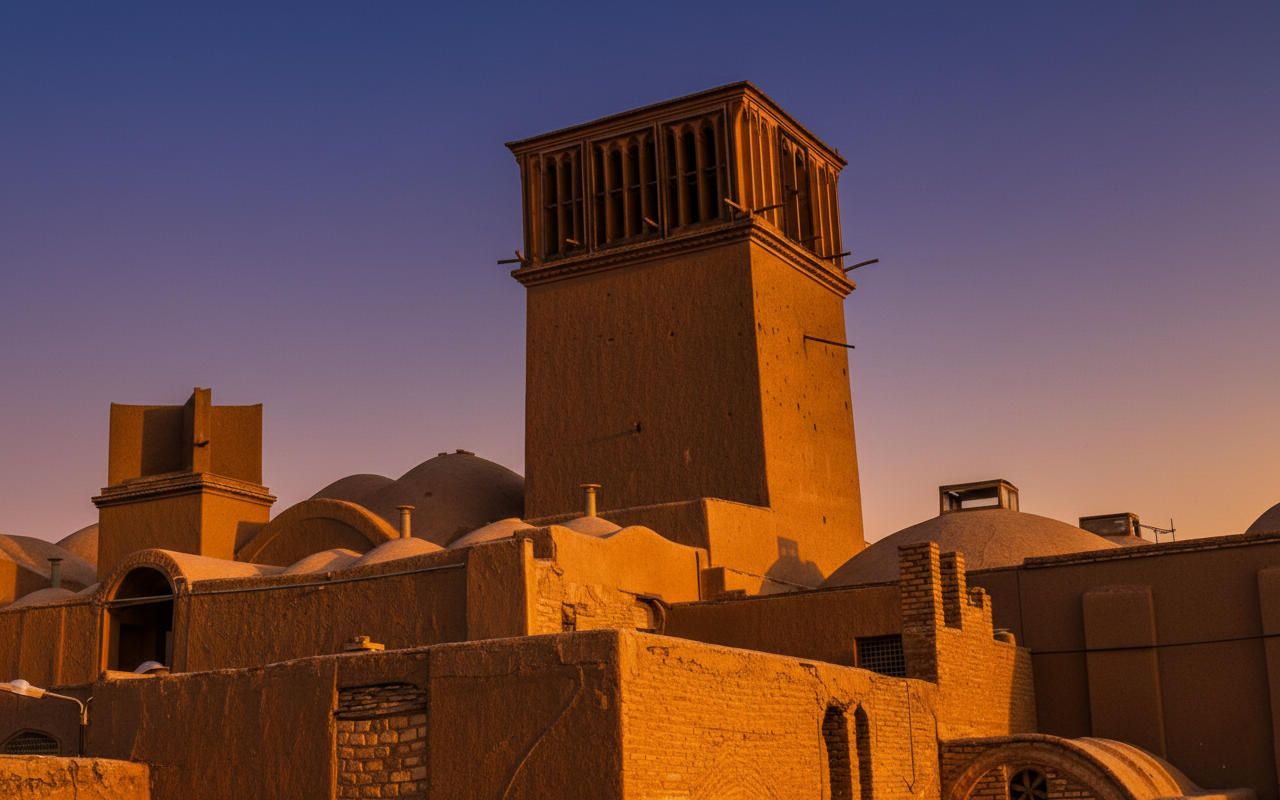
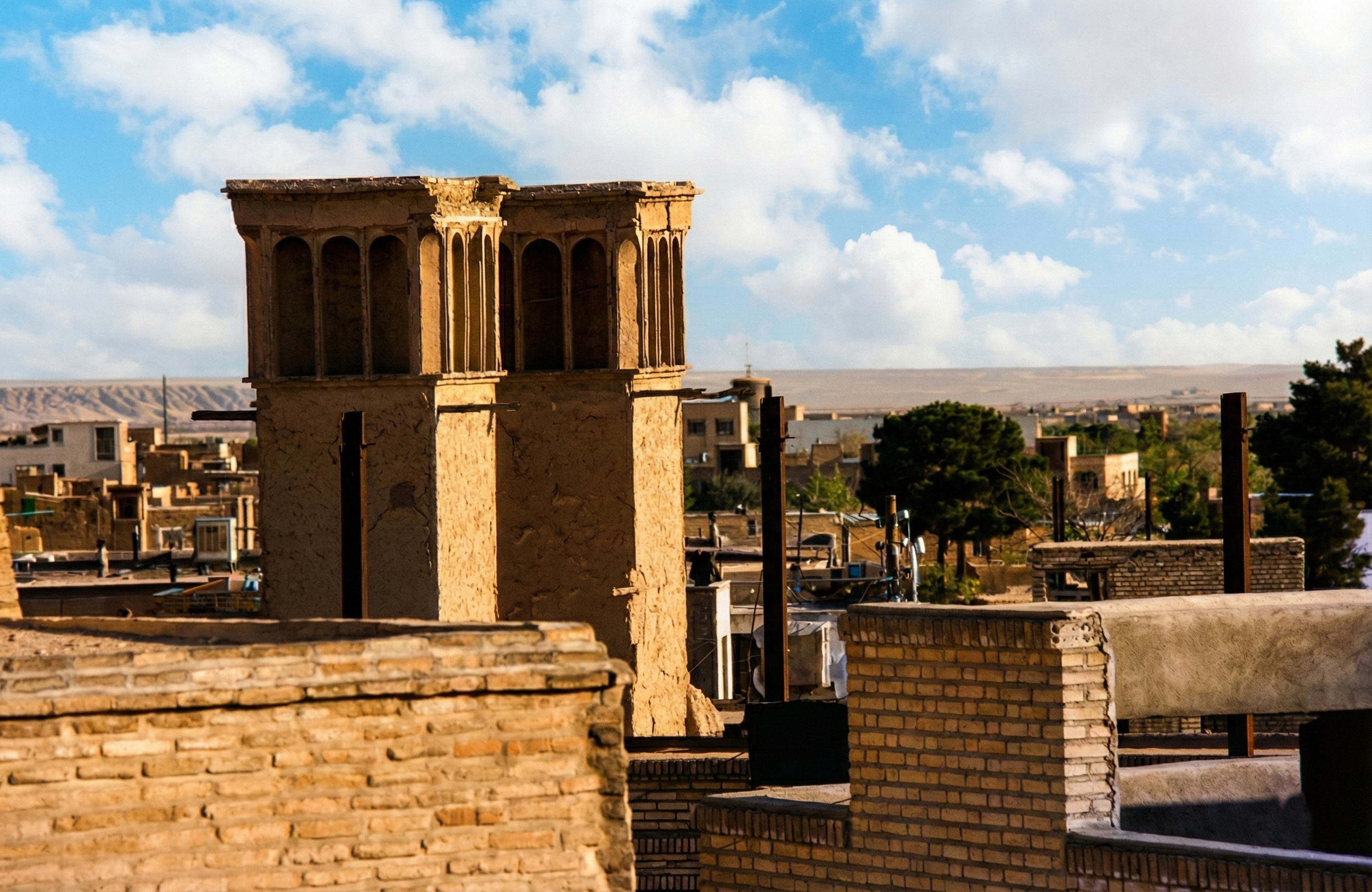

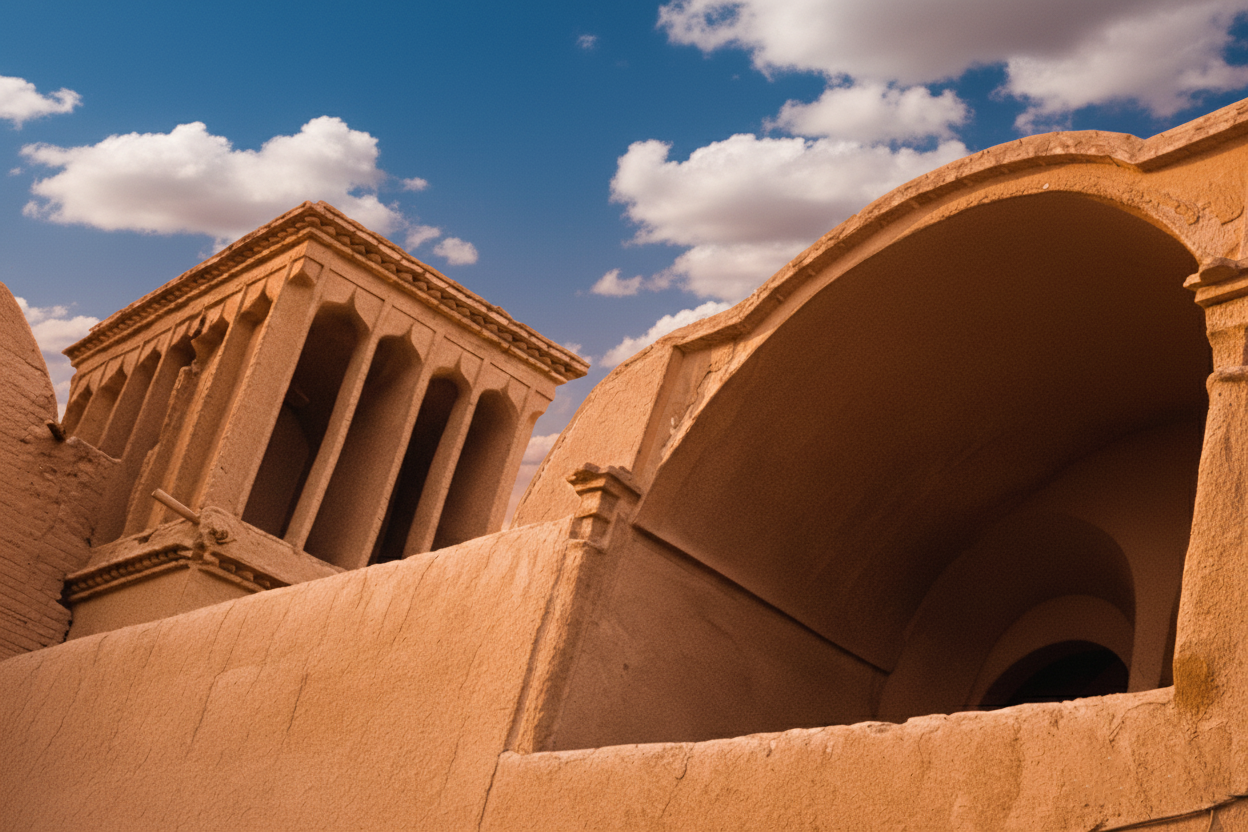
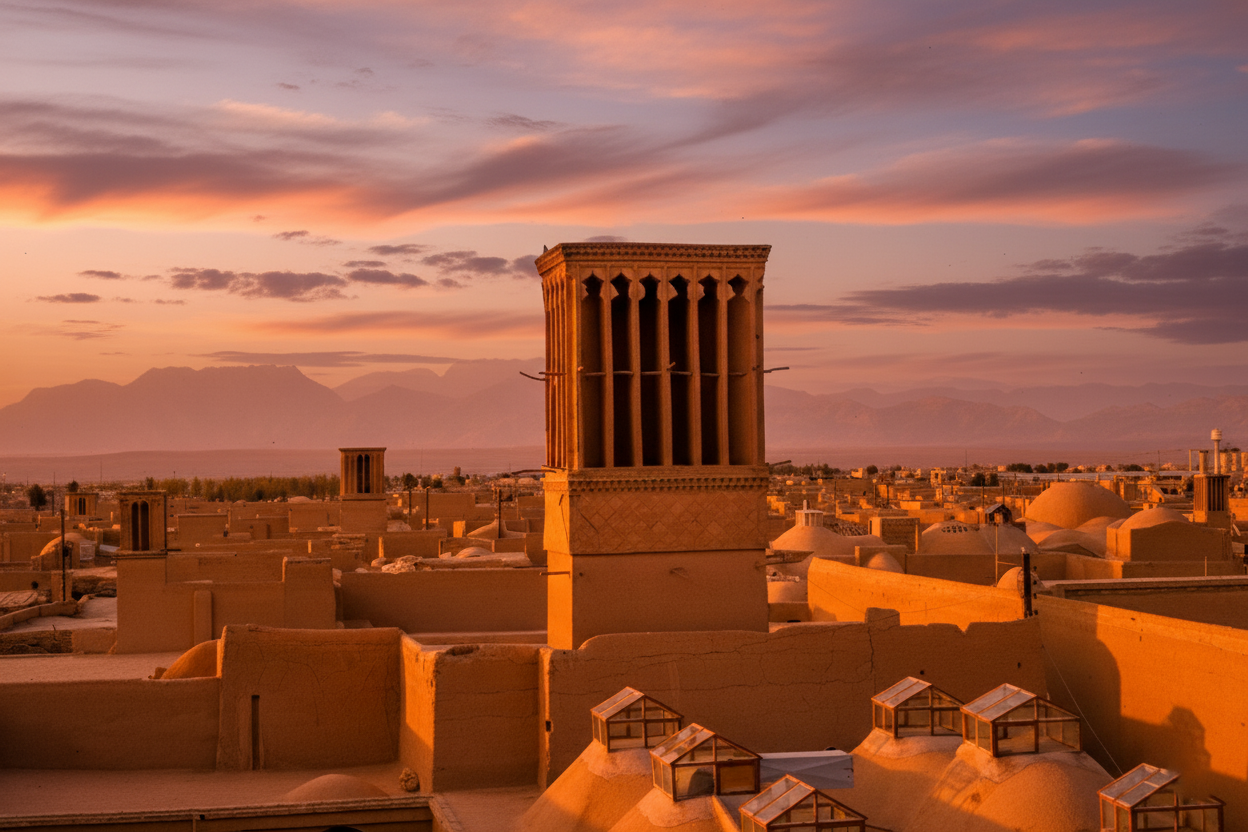

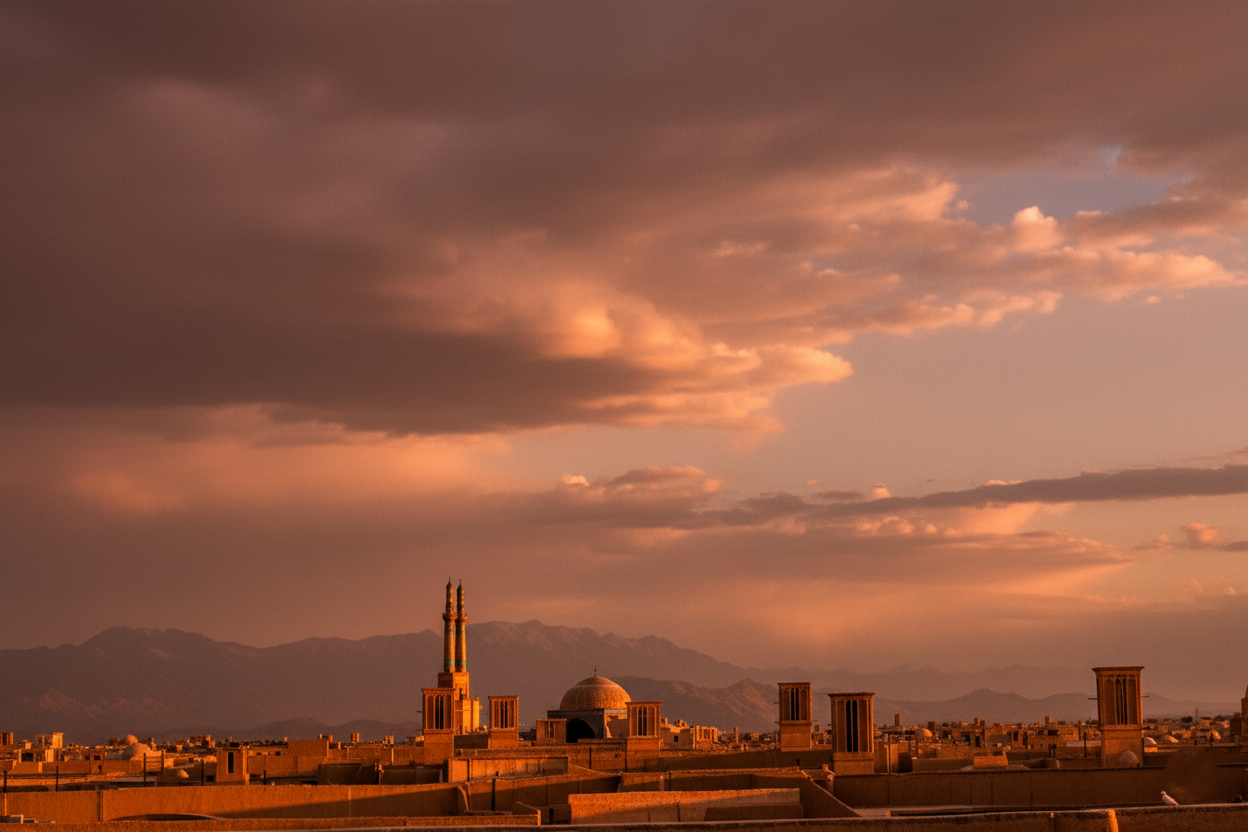
Kashan (کاشان), Naein (نائین), and Yazd (یزد), where windcatchers (bādgir بادگیر) respond precisely to local climatic conditions and entire skylines rise as a forest of these towers, reveal an architecture finely attuned to the invisible currents of air. Here, wind is captured, cooled, and guided through courtyards and interiors, transforming the desert’s شدت into a measured, life-sustaining breeze.
-
Wind (Bād باد) in Iranian architecture is not merely a climatic force but a deliberately harnessed عنصر (element) used to enhance comfort and livability across both urban fabric and architectural space. In pre-Islamic thought, wind was associated with Vāyu—the life-giving yet potentially destructive breath—requiring careful mediation. This understanding evolved into a sophisticated environmental strategy in which airflow was shaped, slowed, accelerated, and redirected through design.
At the urban scale, cities such as Yazd (یزد), Kashan (کاشان), and Naein (نائین) were organized with narrow, winding kūcheh (کوچهها) that break harsh winds while channeling desirable breezes into residential zones. Dense شهری fabric, courtyard typologies, and shaded گذرها (passages) create pressure gradients that encourage natural ventilation. At the architectural scale, a series of inventive devices were developed to capture and regulate wind. The most iconic is the bādgir (بادگیر), a vertical wind catcher that rises above rooftops to intercept الهواء at higher elevations and direct it downward into interiors. These are often paired with subterranean cooling systems such as sardāb (سرداب) and qanats (قنات), where air passes over water to cool through تبخیر (evaporation) before circulating through living spaces.
Additional elements—such as domed roofs with ventilation openings, bazaar skylights, and carefully positioned apertures—work together to create a continuous airflow cycle driven by solar heat and pressure differentials. In Kashan and Naein, multi-directional windcatchers respond to shifting wind patterns, while in Yazd, entire skylines are defined by these towers acting as a collective respiratory system for the city. The celebrated bādgir of Dowlatabad Garden (باغ دولتآباد) exemplifies this precision, capturing even minimal breezes and distributing them efficiently.
Through these integrated systems, Iranian architecture transforms wind from an unpredictable environmental force into a controlled climatic resource, demonstrating a deep understanding of aerodynamics and environmental design—where the invisible movement of air becomes the primary medium for achieving thermal comfort and sustainable habitation.
