Physical Dematerialization (مادیزدایی فیزیکی): The Ecological Imperative
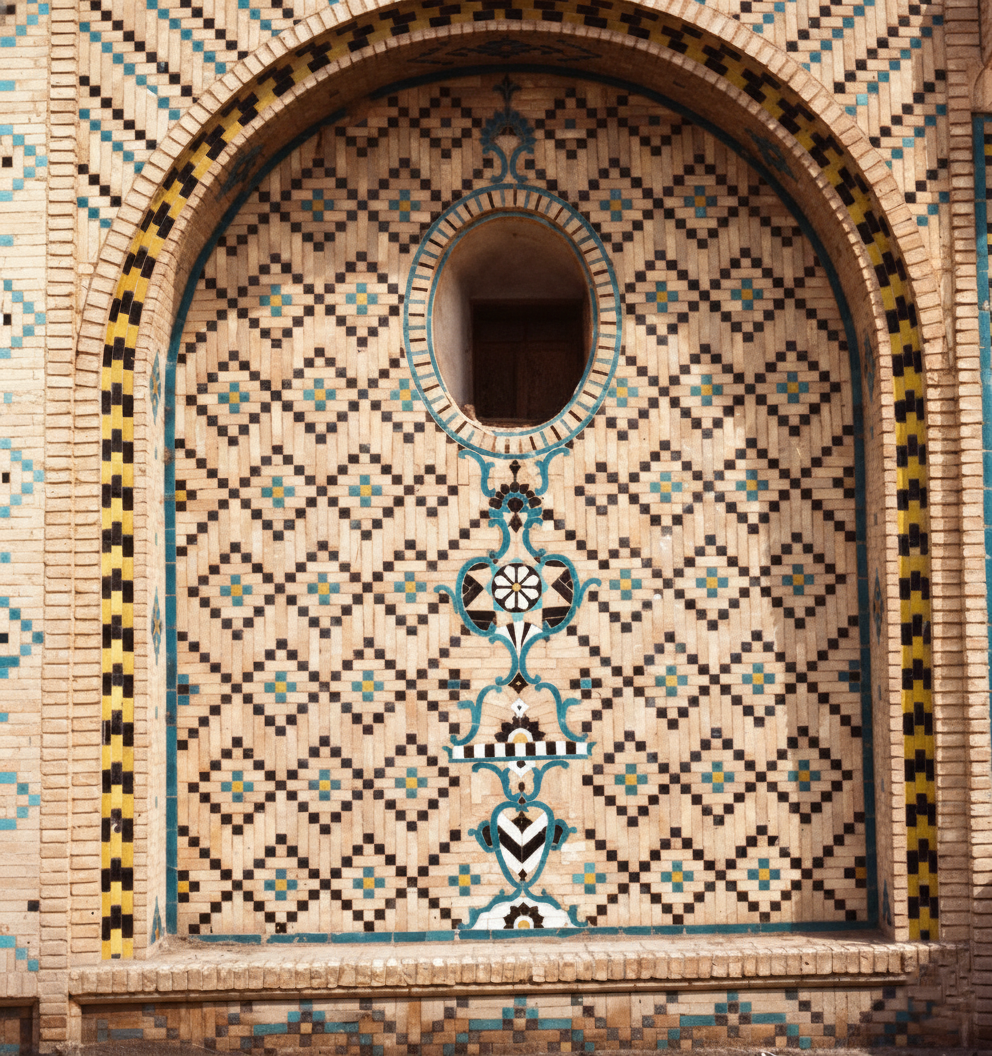
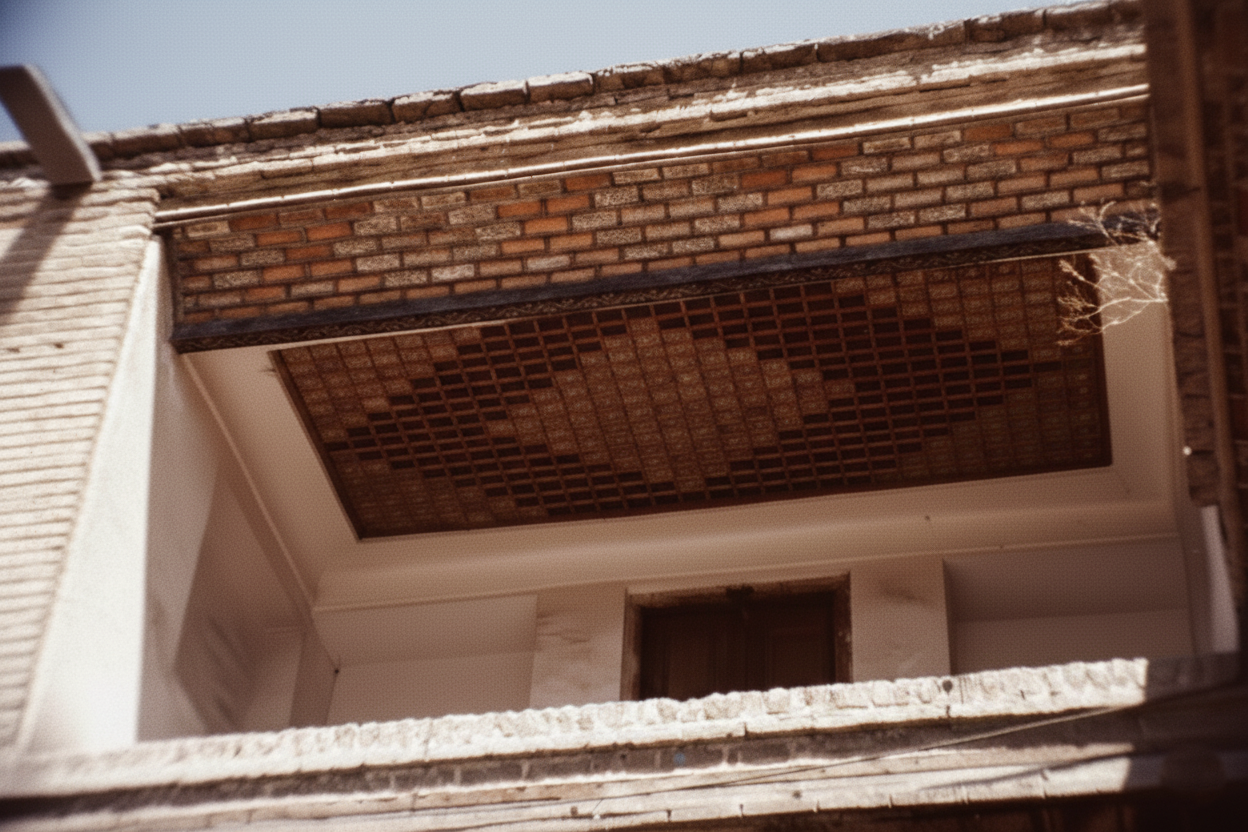
Physical Dematerialization (مادیزدایی فیزیکی) in Iranian architecture transforms necessity into performance. Strategies such as the Gowdal-Bāghcheh (گودالباغچه), Tāq-e Namā (طاقنما), and Bām-e Do-pooste (بام دوپوسته) reduce mass while enhancing thermal efficiency. By carving voids and reusing earth, buildings achieve climatic balance, structural stability, and energy efficiency—demonstrating how subtractive design creates comfort, resilience, and environmental harmony in hot-arid regions.
-
Physical Dematerialization (مادیزدایی فیزیکی): The Ecological Imperative.
In Iranian architecture, dematerialization emerges as a pragmatic response to climate, material scarcity, and environmental balance. Rooted in principles of resource efficiency and ecological harmony, it operates through the careful reduction of mass and energy consumption—ensuring that the built environment sustains present needs without compromising future resilience.
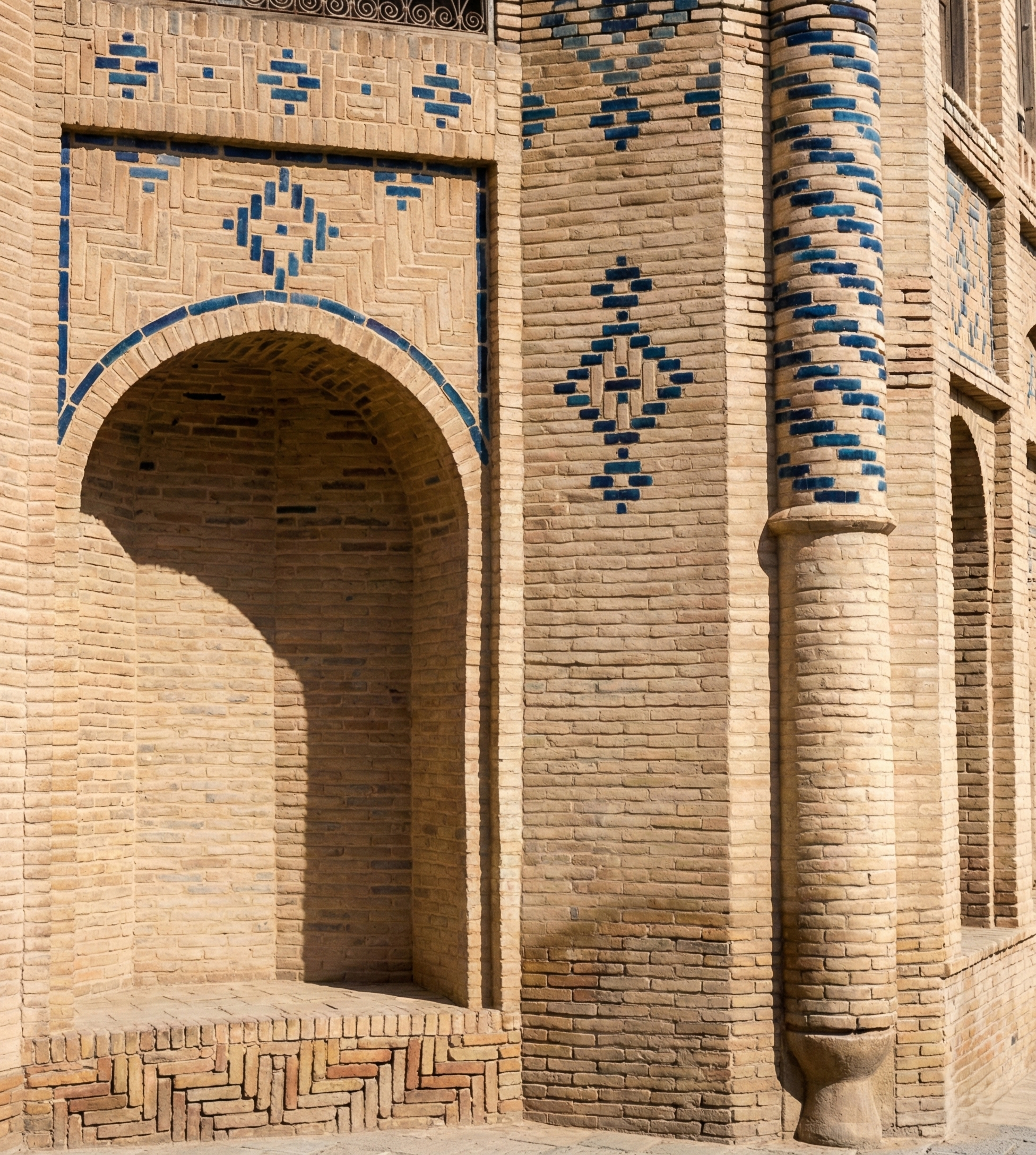
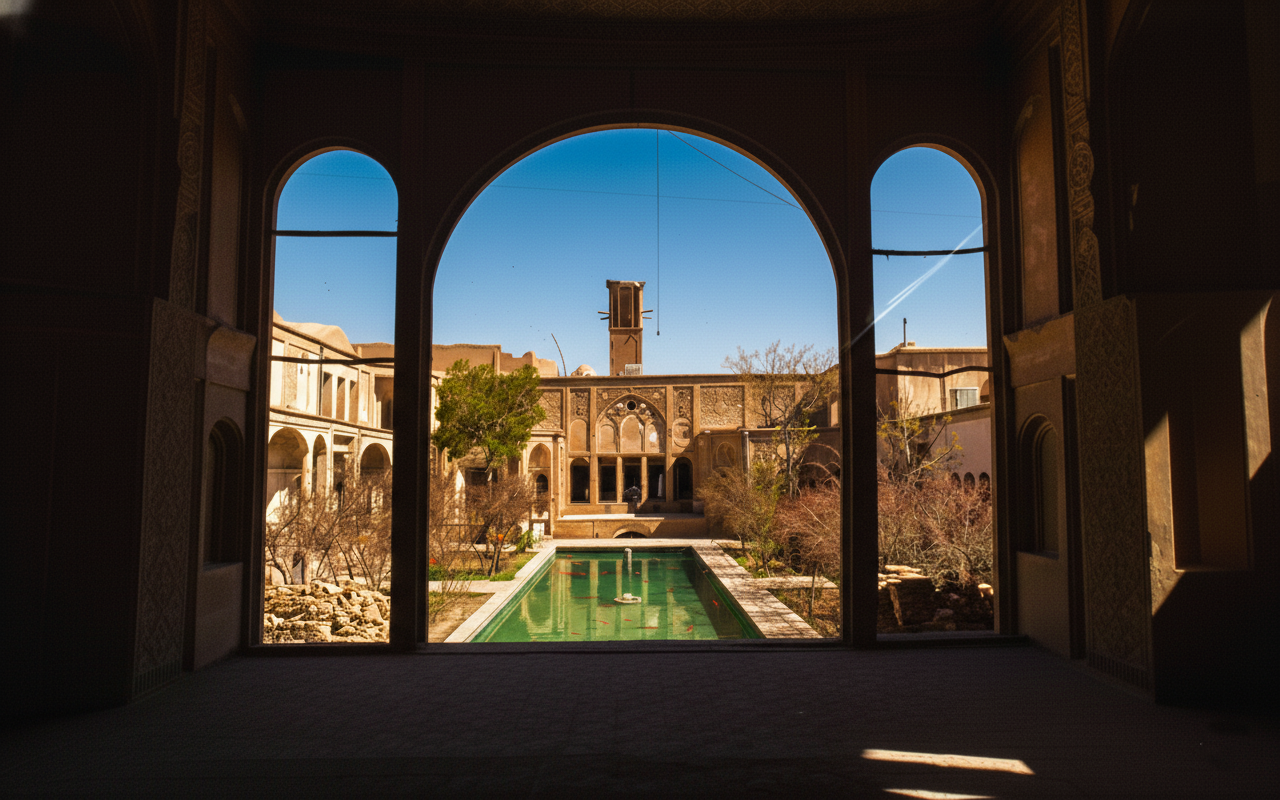
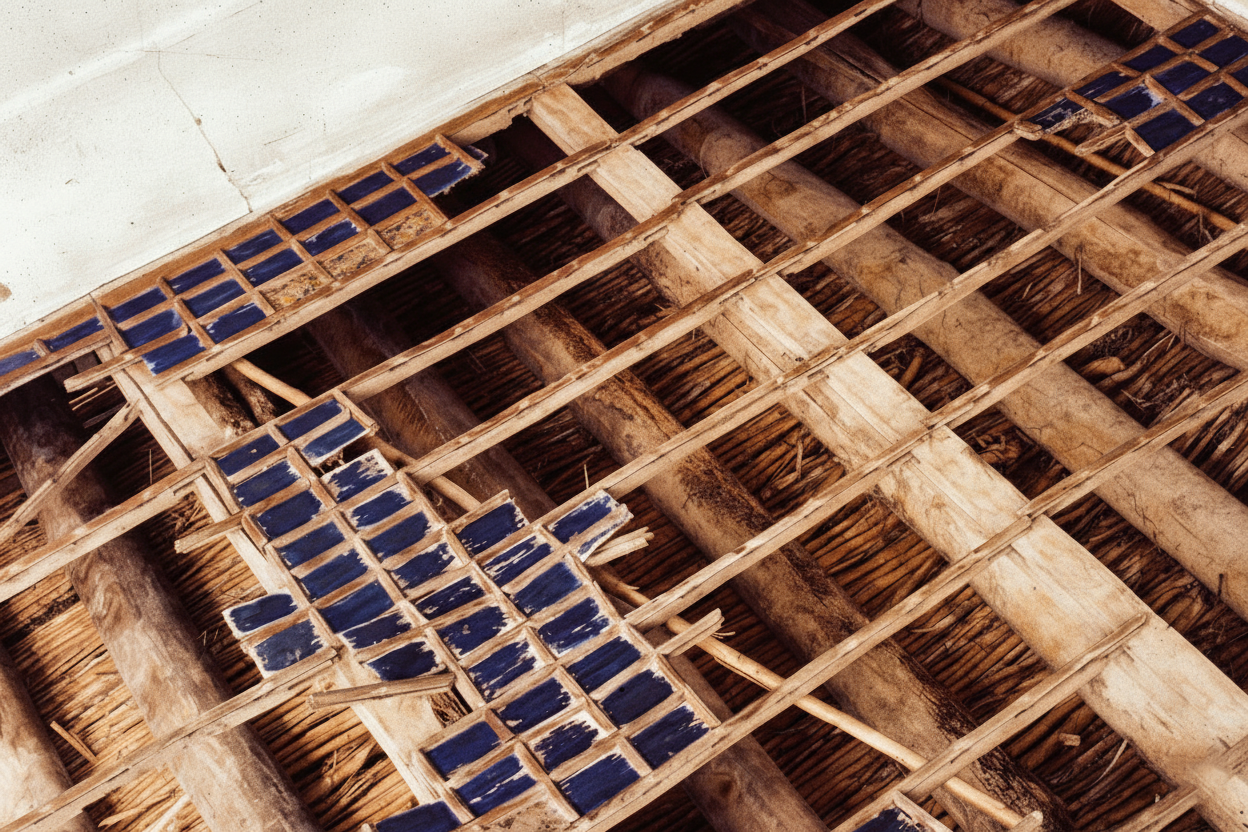
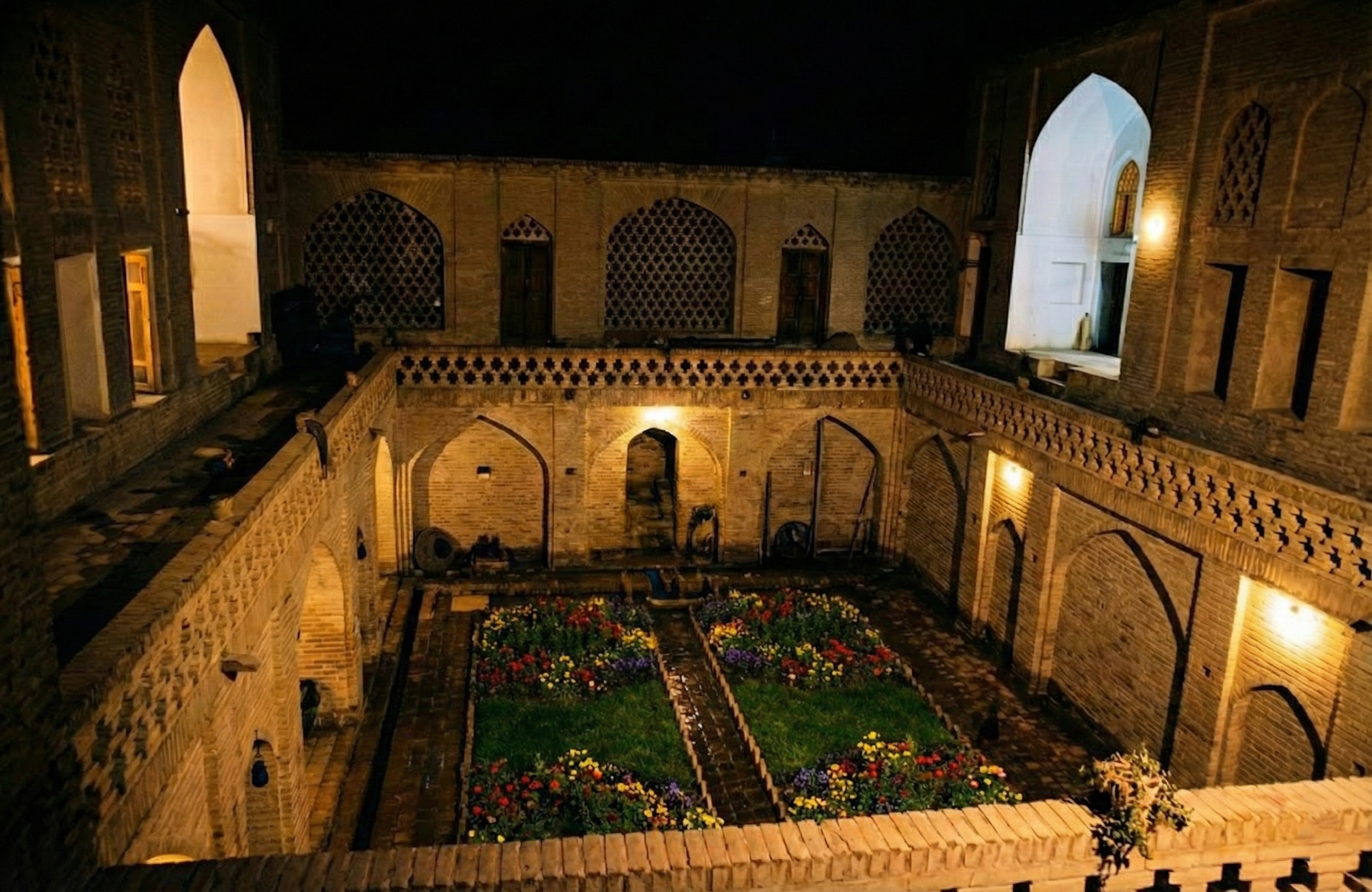
This approach is embodied in vernacular strategies such as the Gowdal-Bāghcheh (sunken courtyard), Tāq-e Namā (recessed blind arches), and the Bām-e Do-pooste (double-layered roof). These elements do more than define spatial organization; they introduce intentional voids that reduce structural load while enhancing climatic performance. Architecture, in this context, becomes a subtractive practice—where removing material generates both environmental efficiency and spatial refinement.
The Gowdal-Bāghcheh exemplifies a closed-loop construction logic. Soil excavated from the courtyard is repurposed into adobe bricks, binding the building to its site both materially and thermally. By lowering the structure into the زمین (earth), the courtyard stabilizes internal temperatures and reduces exposure to extreme conditions, while simultaneously improving structural grounding.
Similarly, the integration of Tāq-e Namā (طاقنما) reduces the volume of masonry within load-bearing walls. These recessed forms are not merely decorative; they strategically lighten the ساختمان (building), decreasing embodied energy and enhancing seismic resilience through a lowered center of gravity.
In the گرم و خشک (hot-arid) مناطق (regions) of southeastern Iran—particularly Kerman, Yazd, and Sistan—the Bām-e Do-pooste (بام دوپوسته) further advances this logic. This double-layered roof system introduces an intermediate air cavity that buffers solar heat before it penetrates interior spaces. Considering that roofs account for up to 50–70% of total heat gain in buildings, this layered construction transforms the بام (roof) into an active climatic moderator rather than a passive surface.
Together, these strategies reveal dematerialization not as absence, but as performance. Through calibrated voids, reduced mass, and material intelligence, Iranian architecture achieves thermal comfort, structural efficiency, and environmental continuity—demonstrating that the most sustainable architecture is often that which builds less, yet performs more.
