Kāshi Mo‘arraq (کاشی معرّق)
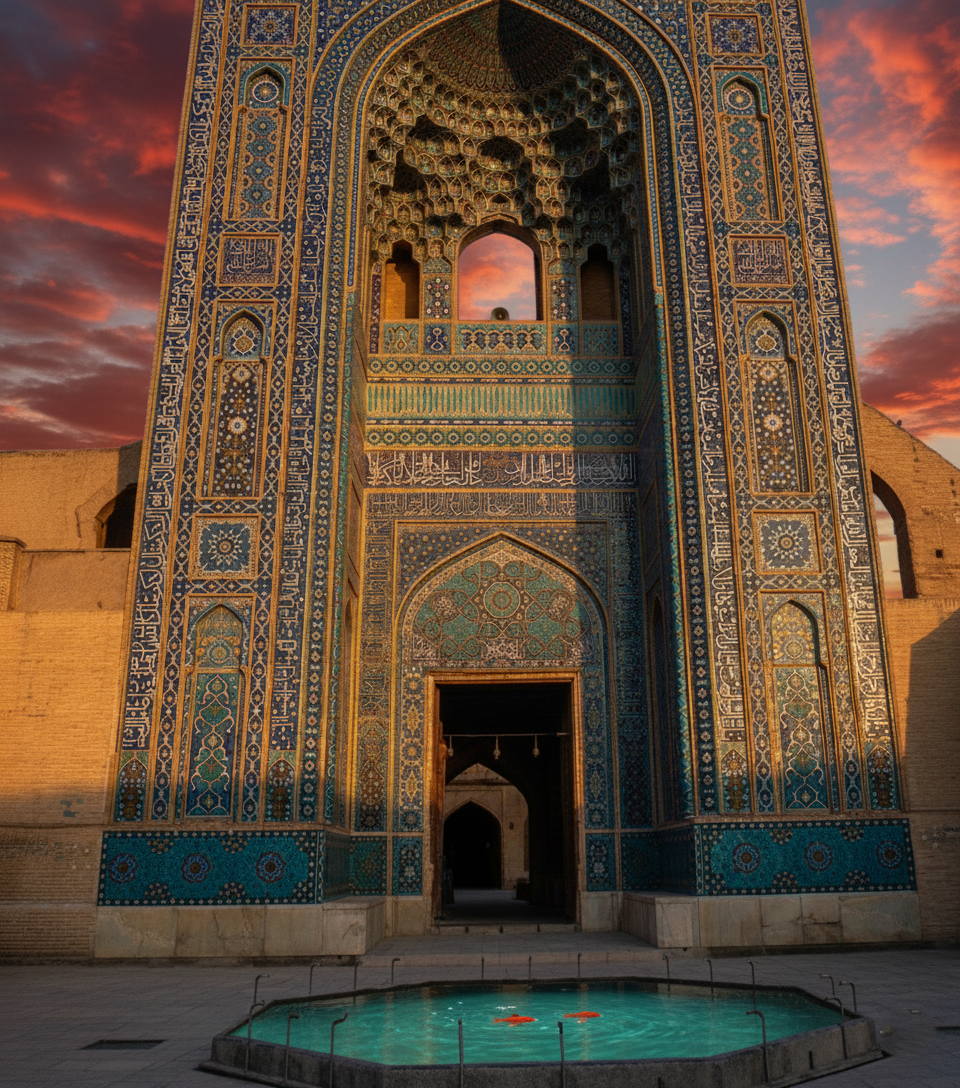
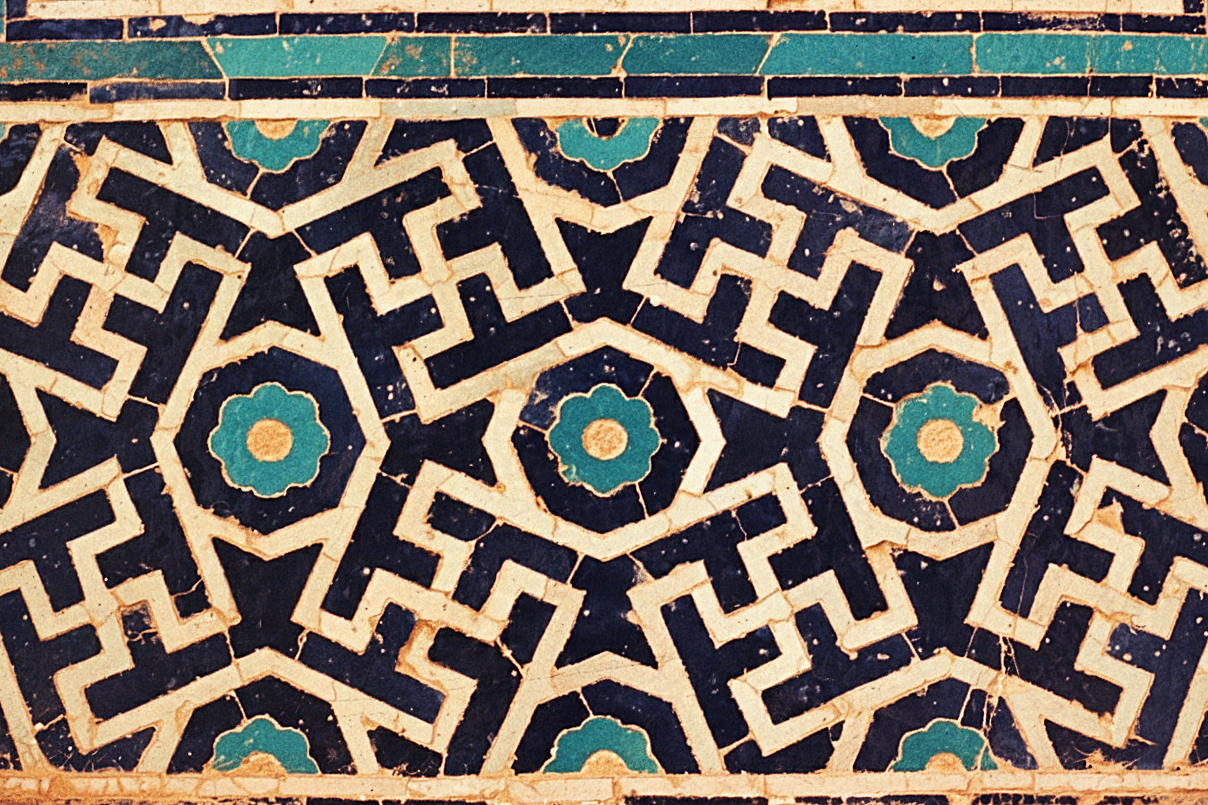
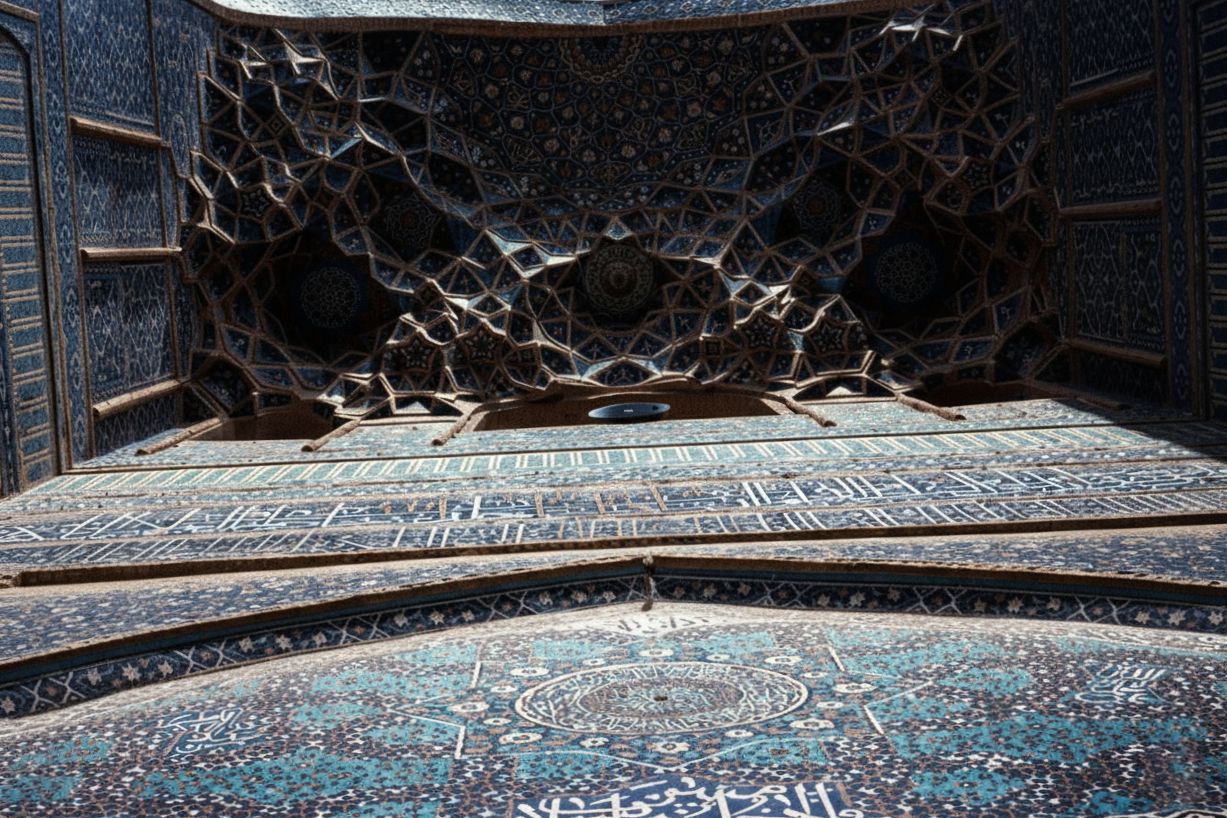
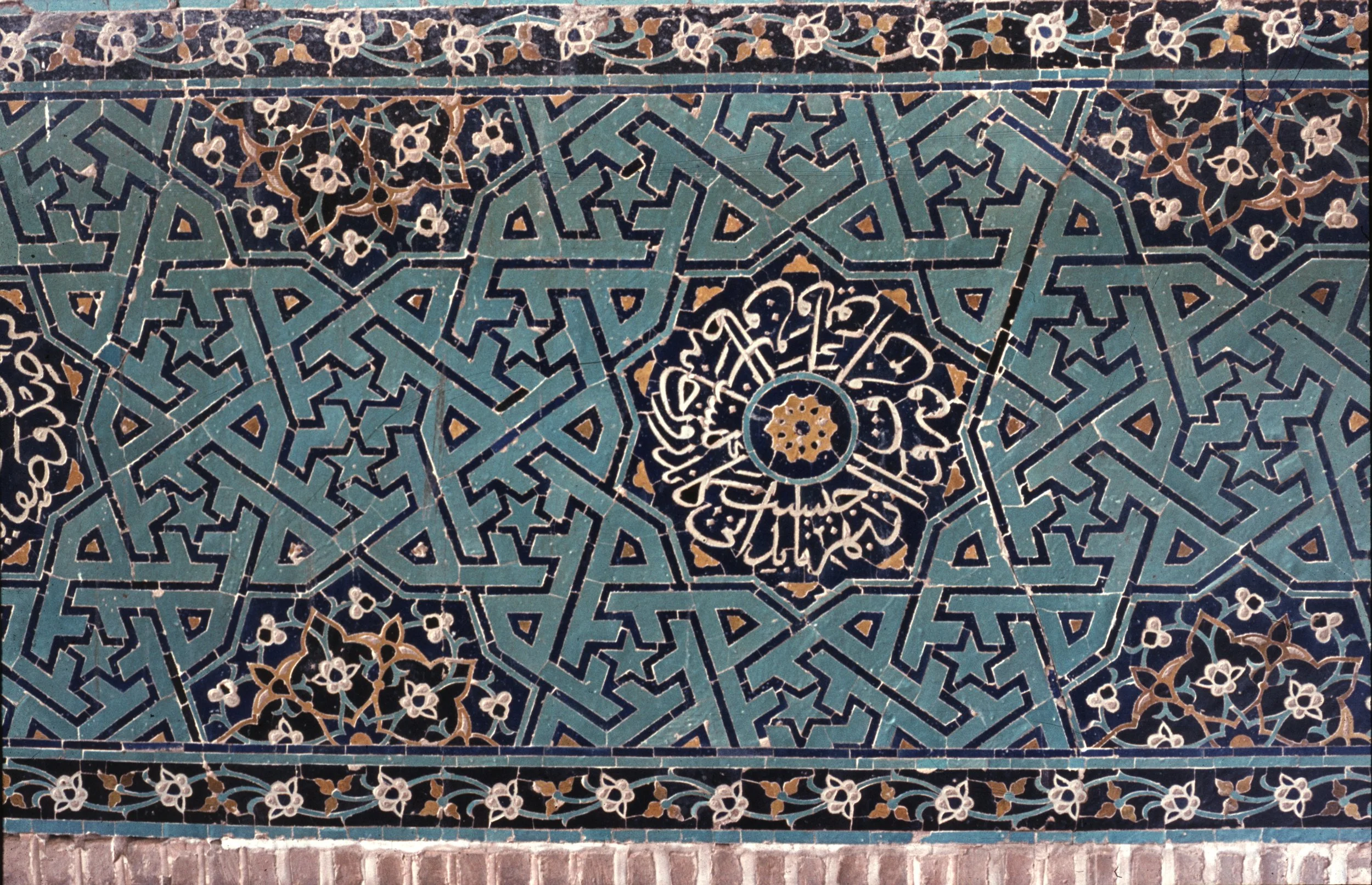
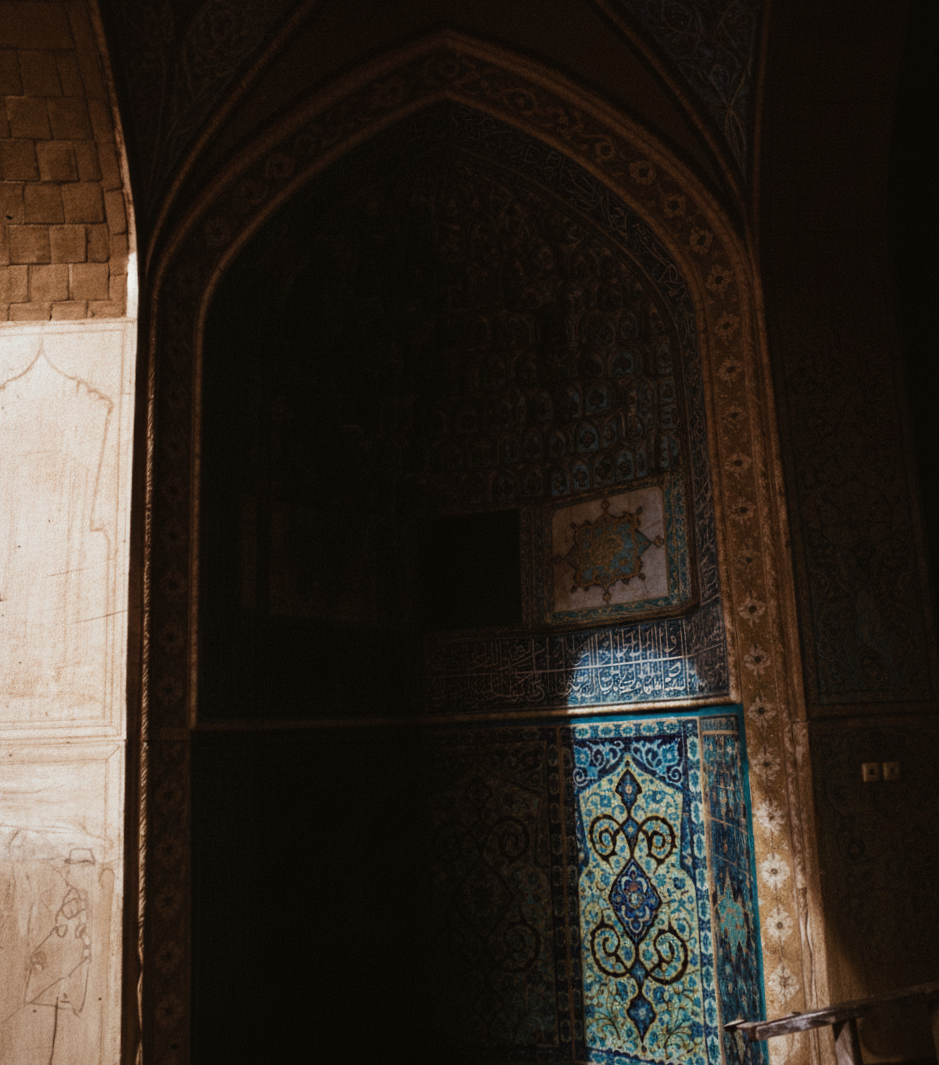
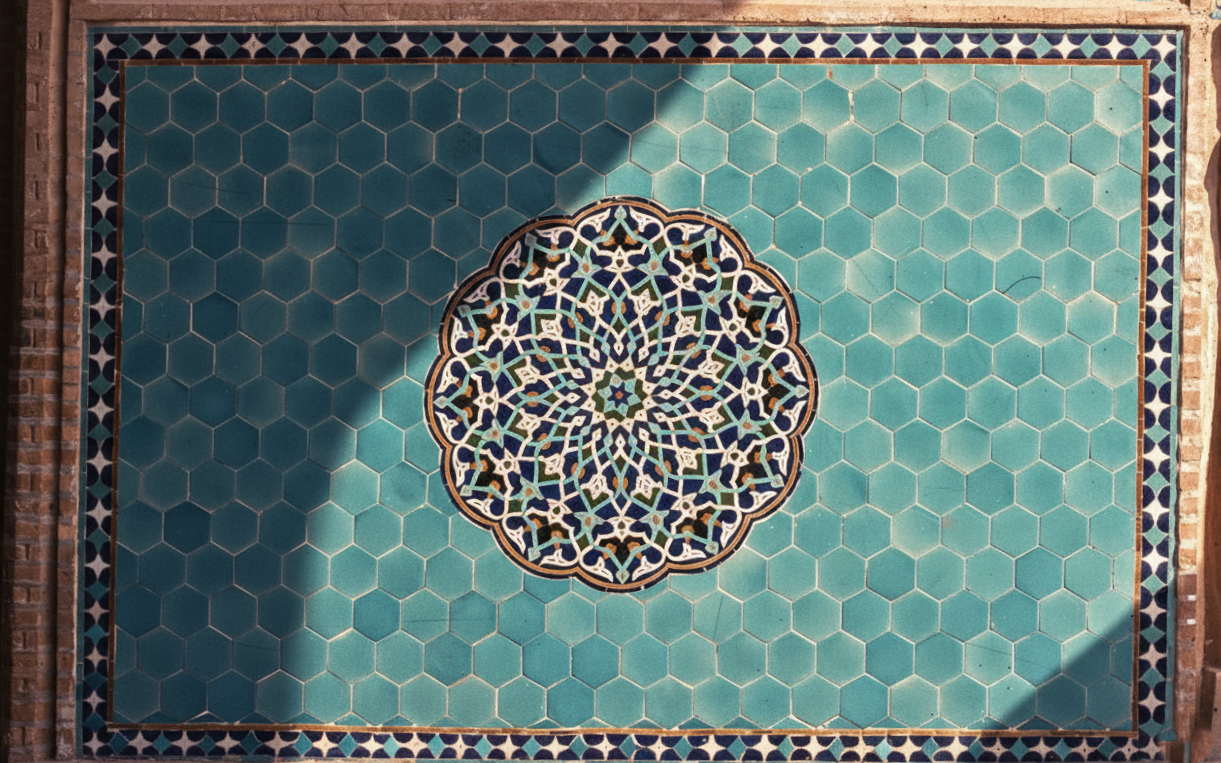
The monumental entrance (pishtāq پیشطاق) of the Jāmeh Mosque of Yazd exemplifies Kāshi Mo‘arraq (کاشی معرّق), in which finely cut, monochrome-glazed tiles are assembled into intricate geometric and vegetal compositions. Freed from structural constraints, this mosaic technique enables fluid arabesques and luminous color fields, transforming the surface into a continuous, highly refined tapestry of precision, craftsmanship, and visual harmony.
-
Kāshi Mo‘arraq (کاشی معرّق), or mosaic faience, represents a fundamentally different approach from Ma‘qelī—one in which ornament is composed, cut, and applied rather than generated through structure. In this technique, master craftsmen first produce large monochrome glazed tiles, which are then meticulously cut into precise geometric and vegetal shapes (ghateh-hā قطعهها) using chisels and files, following a full-scale master drawing (tarh طرح). These individual tesserae—stars, petals, arabesques—are assembled face-down like a jigsaw puzzle, then fixed together with plaster (gach گچ) to form a unified panel that can be installed onto a surface. Freed from the constraints of the brick module (ājer آجر), Kāshi Mo‘arraq allows for fluid curves, intricate arabesques, and highly refined color compositions, reaching its peak in the Timurid period where surfaces dissolve into continuous, luminous fields of pattern. This mastery is vividly displayed at the monumental entrance (pishtāq پیشطاق) of the Jāmeh Mosque of Yazd, where finely cut mosaic tiles articulate soaring inscriptions and arabesques with exceptional precision. Unlike the rule-bound, structural geometry of bannā’ī (بنّایی), this is a pictorial and artisanal geometry, where precision cutting and assembly enable an almost limitless formal vocabulary, transforming architecture into a finely crafted skin of color and line.
