Kāshi Haft Rang (کاشی هفترنگ), or “Seven-Color Tile”
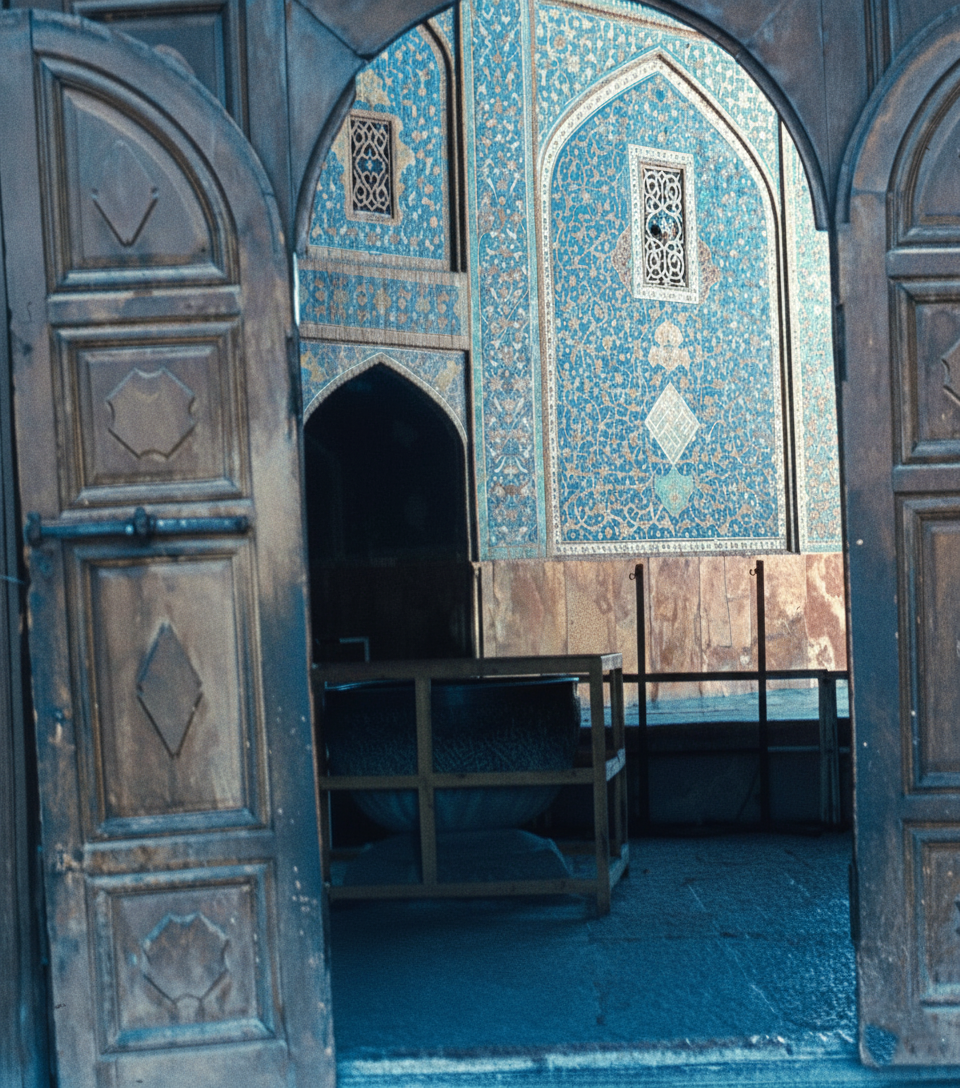
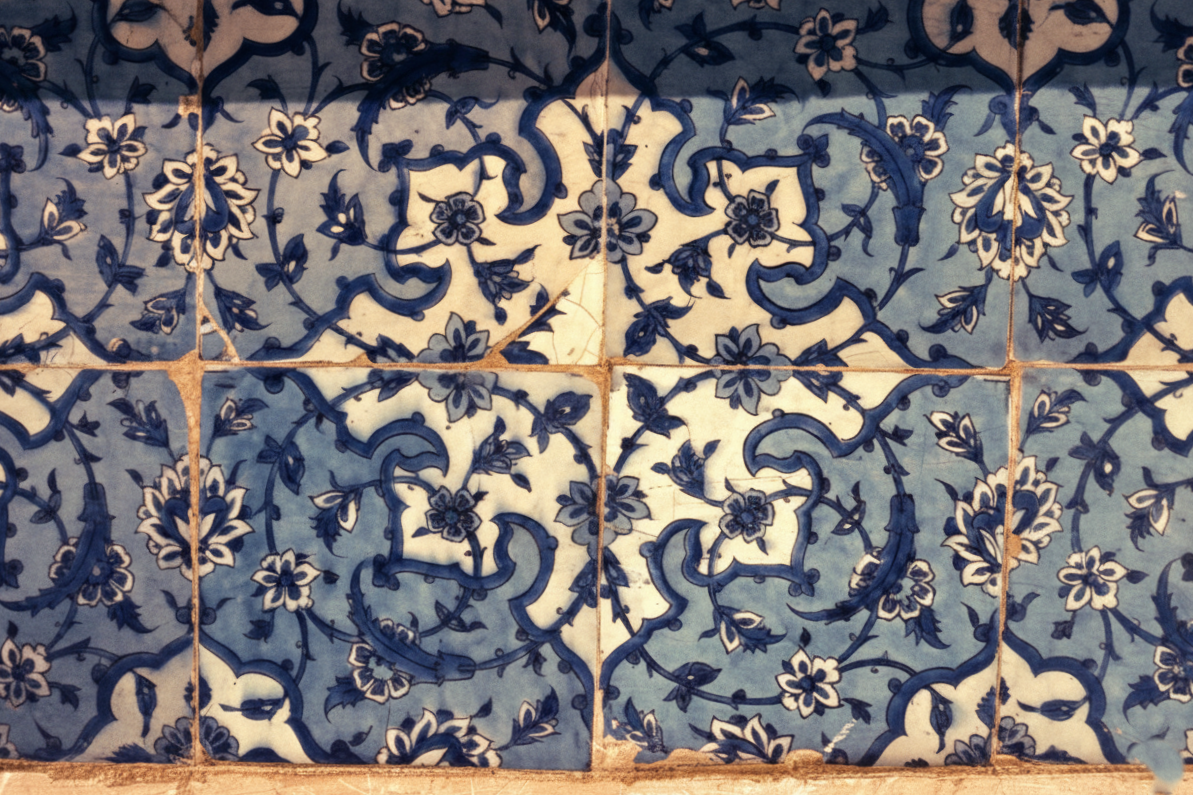
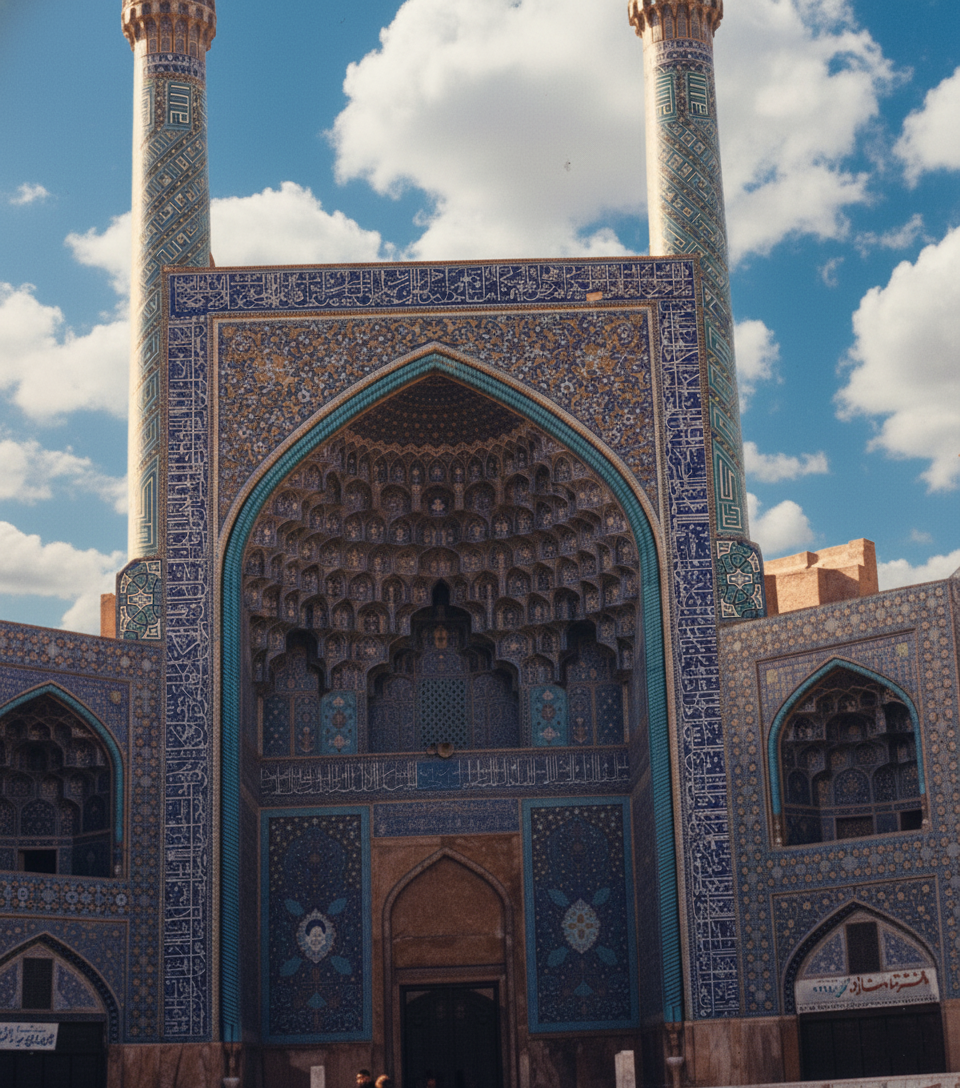
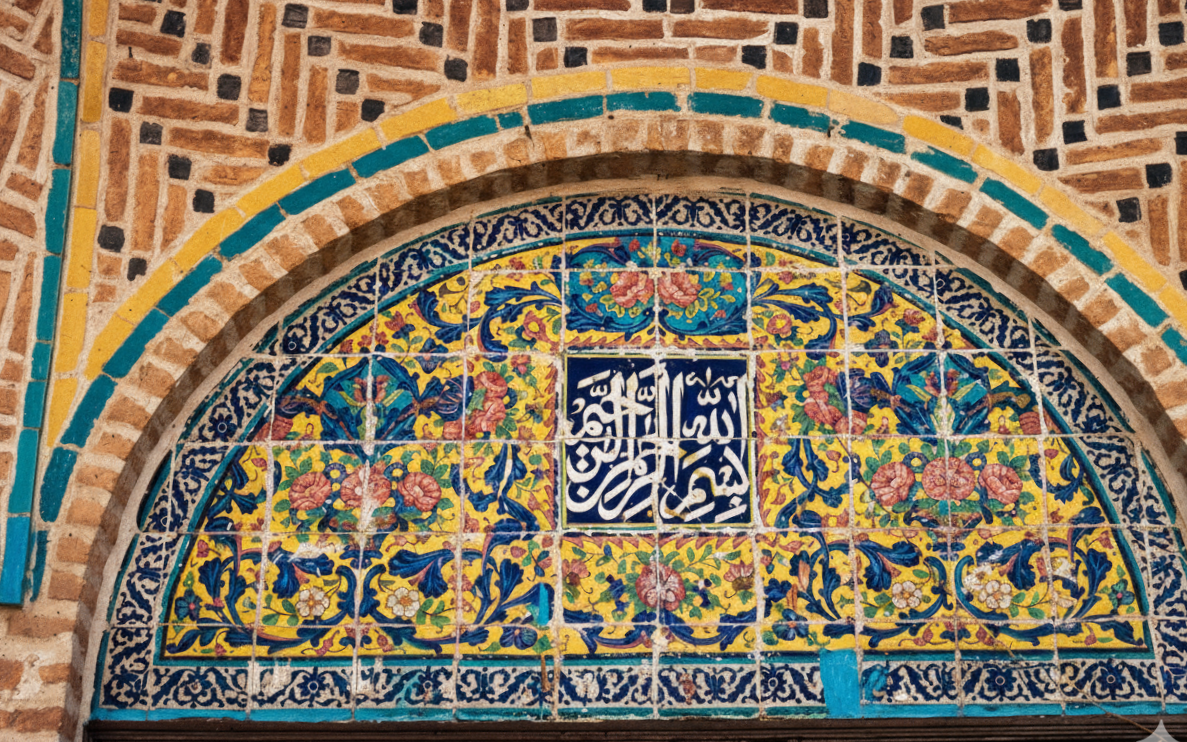
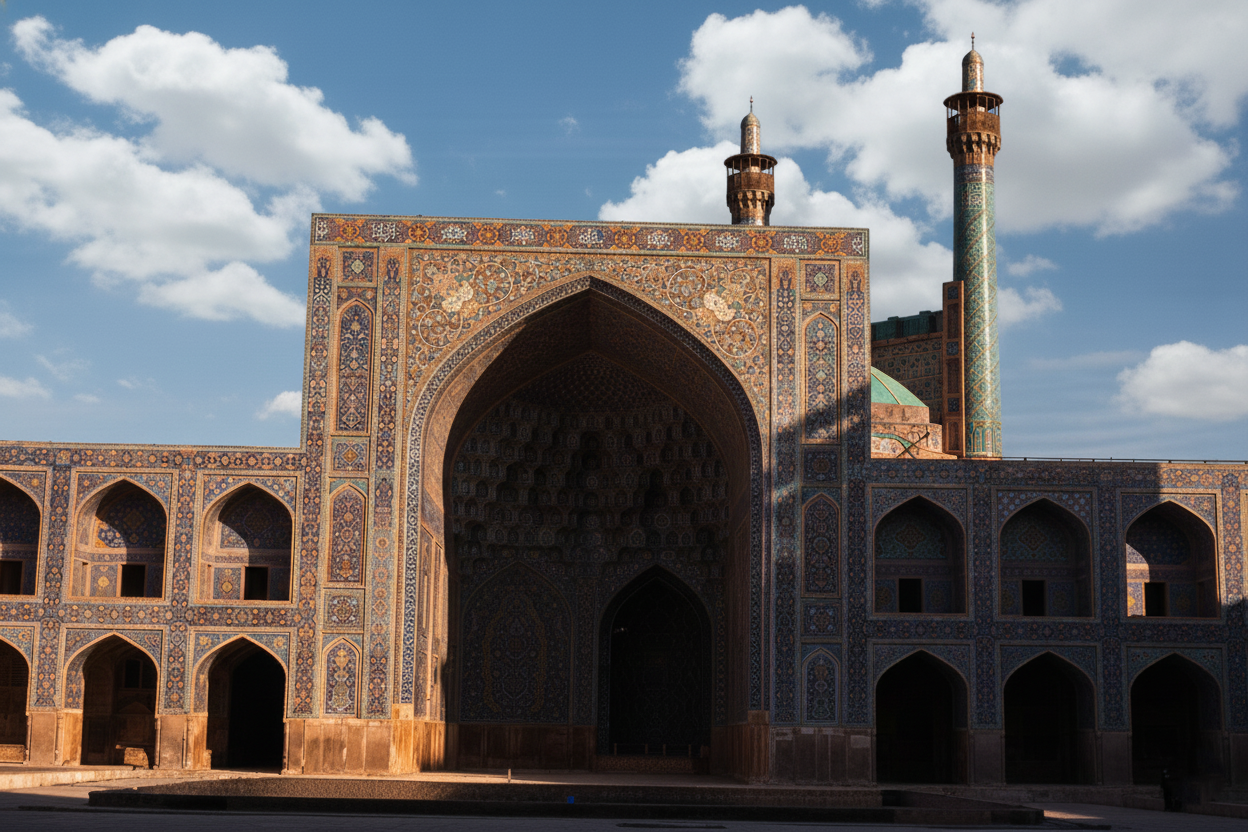
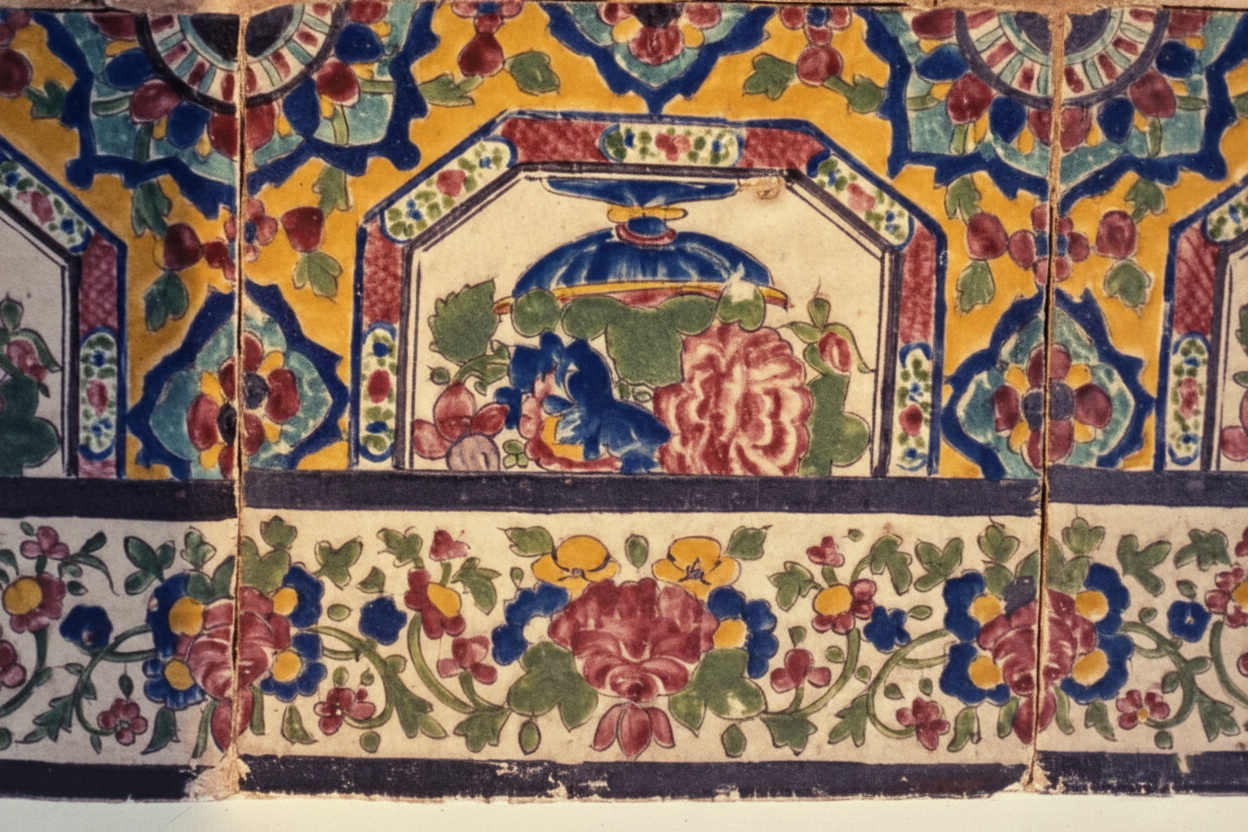
Shah Mosque (Masjed-e Shāh مسجد شاه) exemplifies Kāshi Haft Rang (کاشی هفترنگ), where painted square tiles transform vast surfaces into continuous, vibrant compositions. Unlike Kāshi Mo‘arraq’s conformable, tessellated geometry, Haft Rang operates on a rigid grid, mapping fluid floral and calligraphic designs onto flat planes, creating mural-like façades that prioritize painterly expression over structural or geometric adaptability.
-
Kāshi Haft Rang (کاشی هفترنگ), or “Seven-Color Tile,” represents a pivotal Safavid innovation that transformed architectural surfaces into expansive, painterly fields, as seen in monuments like the Shah Mosque (Masjed-e Shāh مسجد شاه) in Isfahan. Unlike Kāshi Mo‘arraq (کاشی معرّق), which assembles patterns from individually cut pieces, Haft Rang involves painting complete designs onto standard square tiles (typically 15×15 or 20×20 cm) and firing them as unified units, allowing for efficient coverage of large façades. The distinction between these two techniques lies fundamentally in their treatment of the architectural “pixel”: Mo‘arraq operates with a conformable, tessellated geometry, where small, irregular pieces follow the lines of the design itself, enabling seamless application over complex, double-curved surfaces such as domes and muqarnas (مقرنس). Haft Rang, by contrast, is governed by a Cartesian grid, where imagery is conceived as a flat composition and mapped across rigid square modules, making it ideal for broad, planar surfaces like iwans (ایوان) and courtyard walls. While Mo‘arraq approximates curvature through finely articulated fragmentation, Haft Rang relies on orthographic projection, producing continuous, mural-like compositions whose scale and fluidity derive from brushwork, even as their underlying geometry remains strictly planar.
