Karbandi (کاربندی), the “Master Grid”
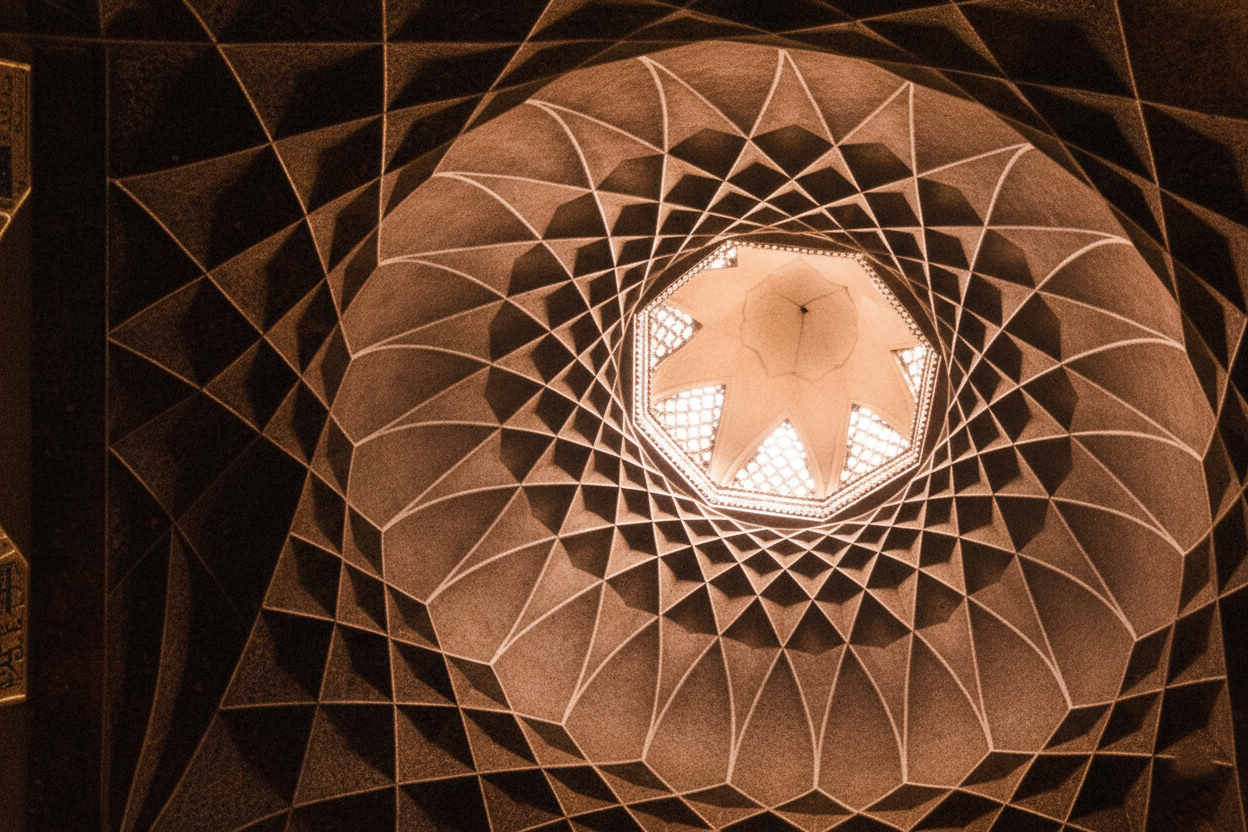
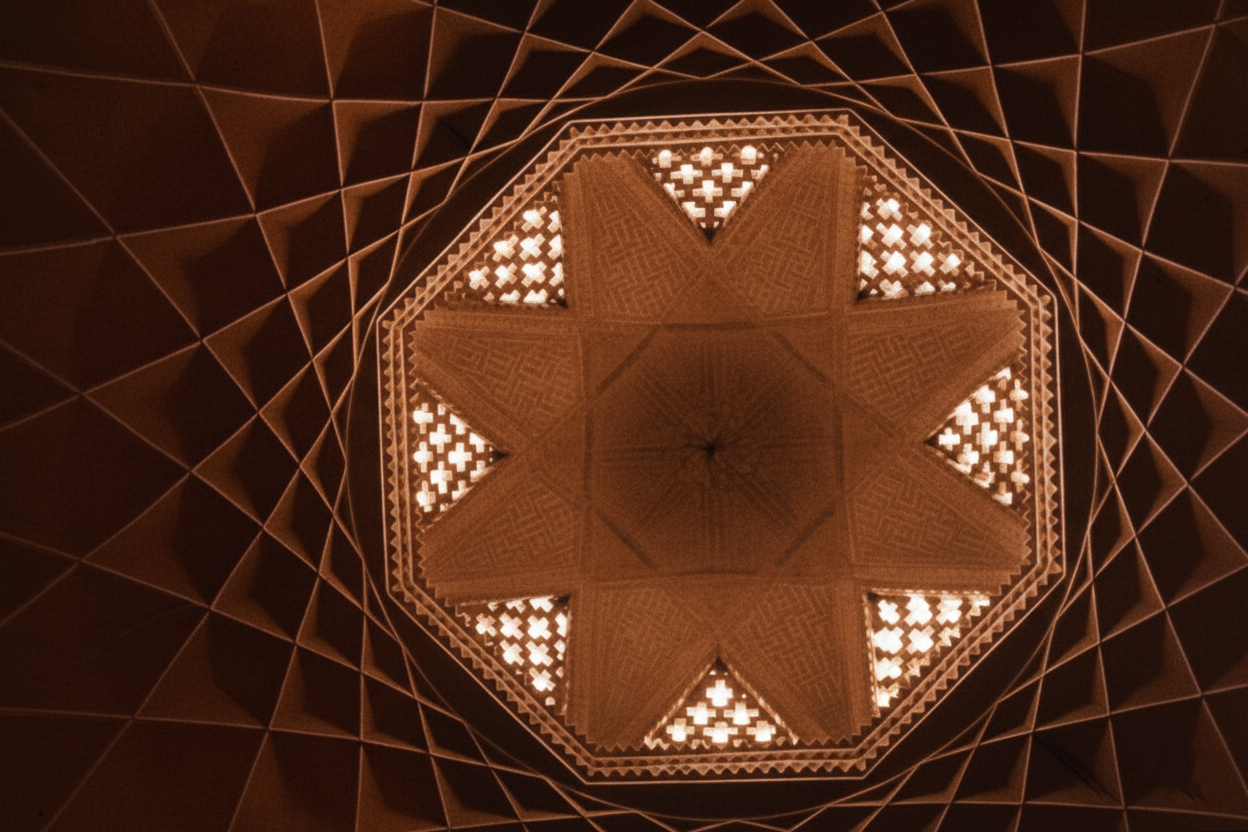
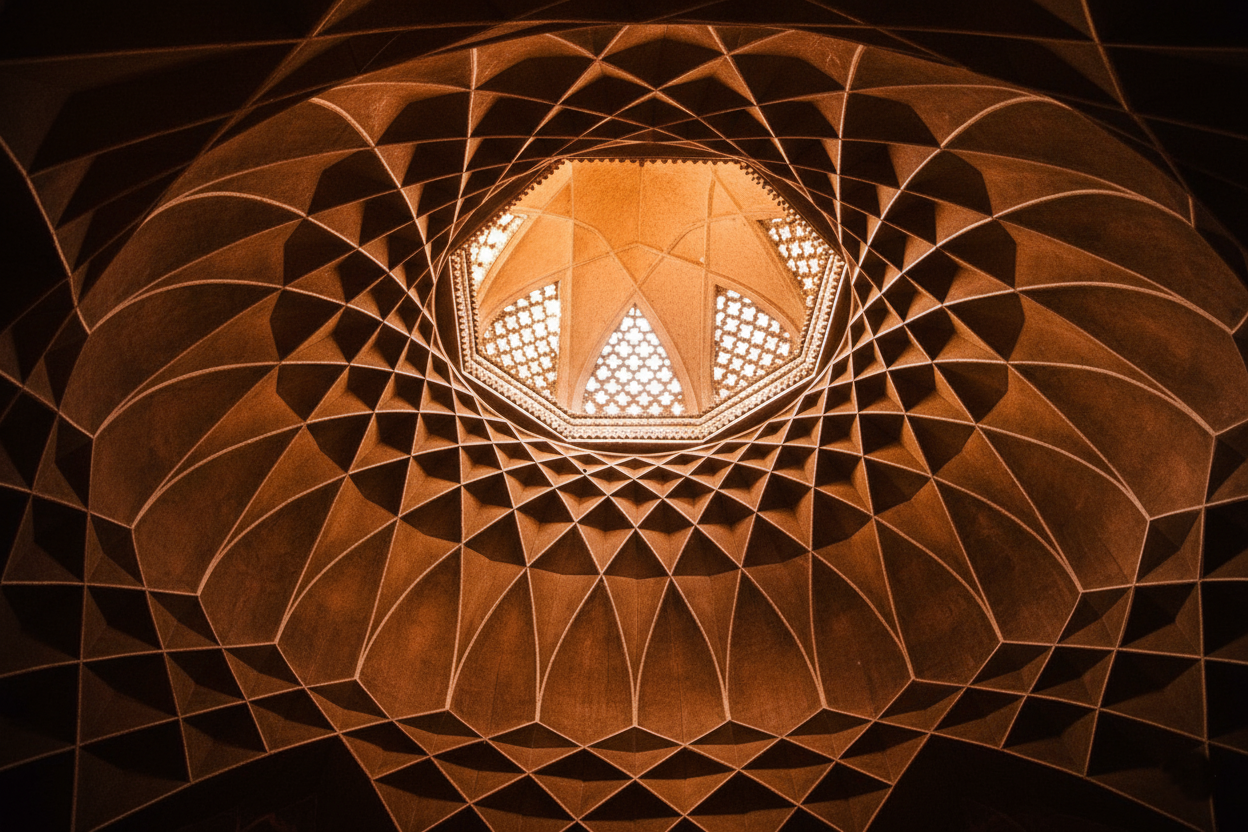

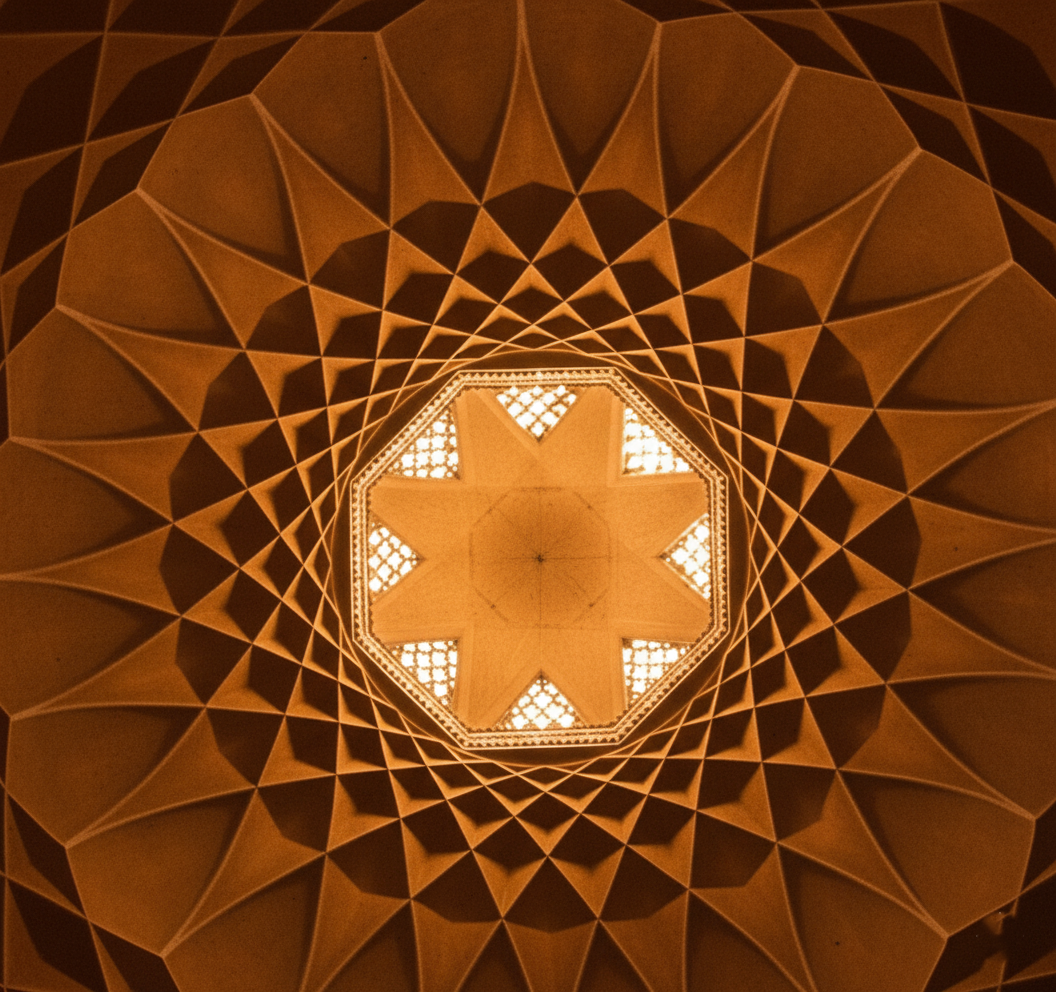
Interiors of Dolat Abad Garden (باغ دولتآباد) in Yazd reveal Karbandi (کاربندی) as a masterful geometric framework that both supports and transforms the dome. Through its شبکه of interlocking ribs, it dissolves structural mass into light and shadow, creating a sense of dematerialization in which the ceiling appears weightless, suspended, and rhythmically ordered by geometric logic.
-
Karbandi (کاربندی), often described as the “Master Grid” of Persian architecture, occupies a pivotal rank in the alchemy of geometry—the transformation of abstract mathematical order into built form. Composed of interlocking ribs (rāgehā راگهها), it organizes space through a precise geometric شبکه (network) that mediates the transition from مربع (square) to دایره (circle), enabling the formation of domes while distributing structural forces with clarity and efficiency. This system operates as both framework and pattern: a rule-based matrix where تقسیمبندی (subdivision) generates stability as well as visual rhythm.
Its alchemical quality lies in its ability to convert structural necessity into perceptual richness—transforming وزن (weight) into ordered زیبایی (beauty), and, crucially, contributing to the dematerialization of mass. Through the subdivision of solid سقف (ceiling) surfaces into a شبکه of articulated ribs and voids, Karbandi dissolves the visual heaviness of masonry, breaking it into a field of خطوط and facets that catch light and shadow. The dome is no longer perceived as a الثقيلة (heavy) mass, but as a hovering, luminous structure—its وزن visually dispersed through geometry.
This effect is evident in the refined interiors of Dolat Abad Garden (باغ دولتآباد) in Yazd, where Karbandi beneath the domes creates an intricate lattice that both stabilizes the structure and visually lightens it. Here, the سقف appears less as a monolithic پوشش (cover) and more as a suspended geometric canopy. In this way, Karbandi stands as a synthesis of structure and ornament—an architectural expression where geometry not only organizes forces but also transforms perception, elevating construction into an experience of وزنlessness and spatial clarity.
