Rasmi-bandi (رسمیبندی), or the “Weaver’s Grid”
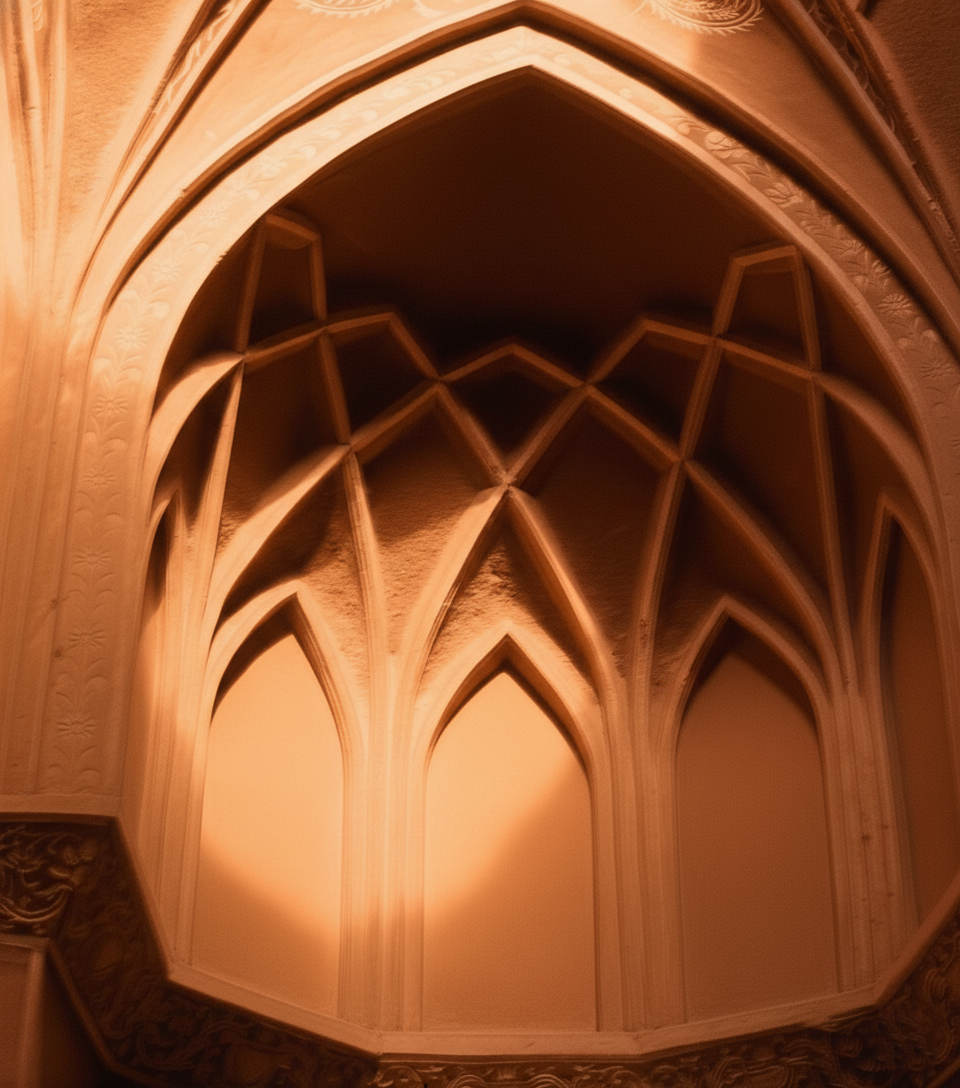
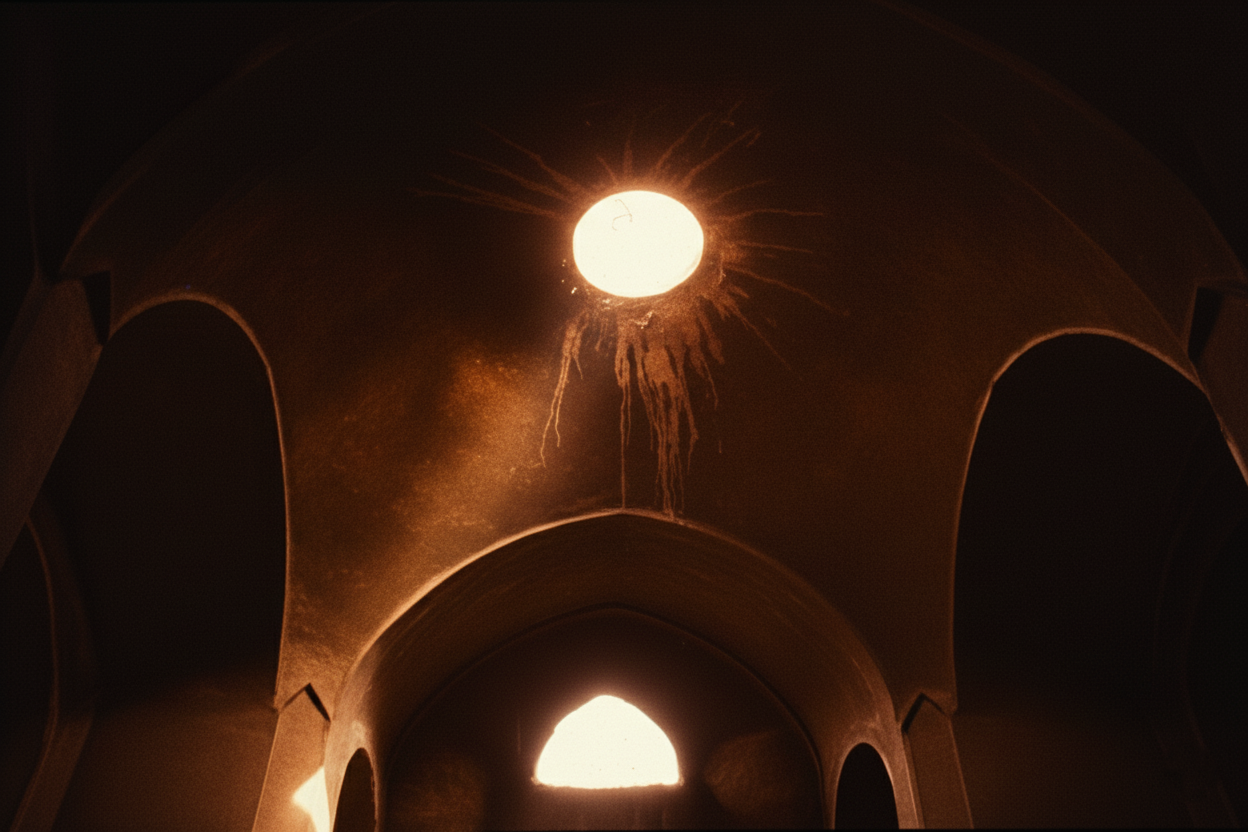
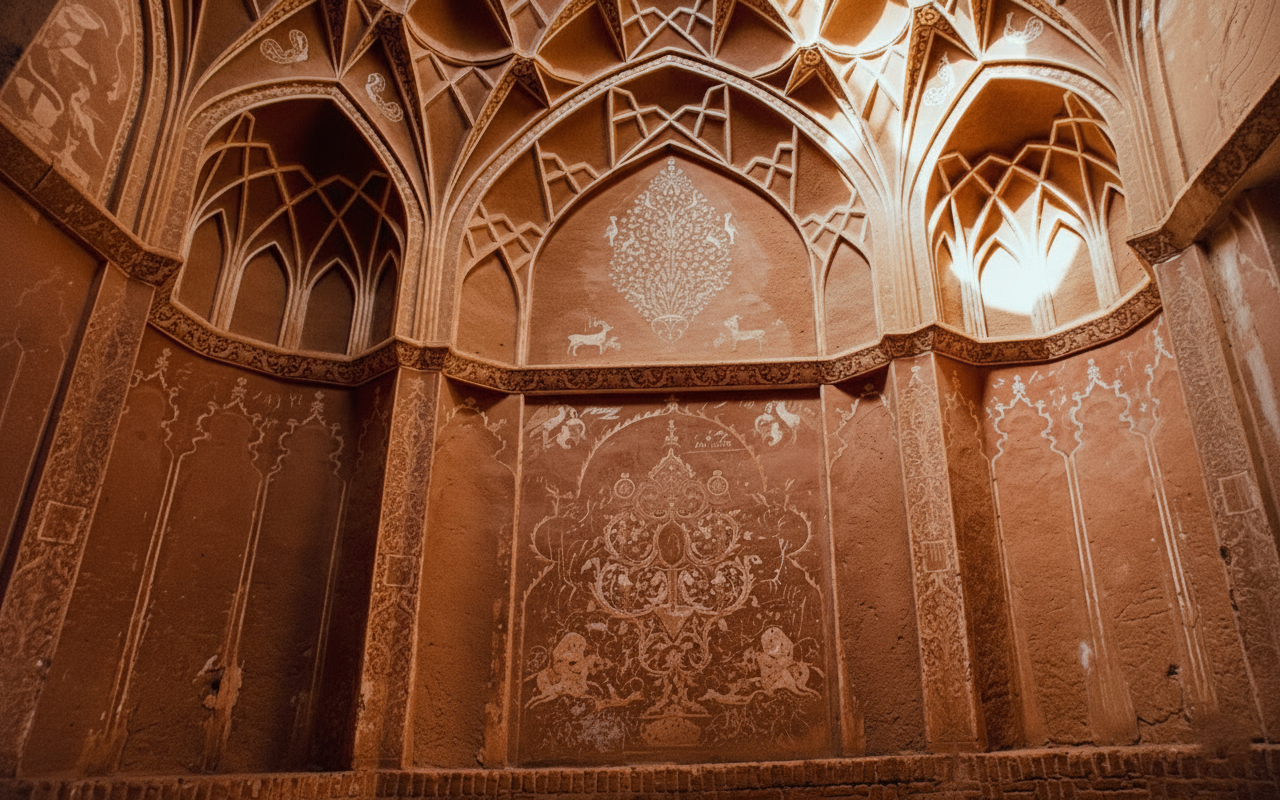
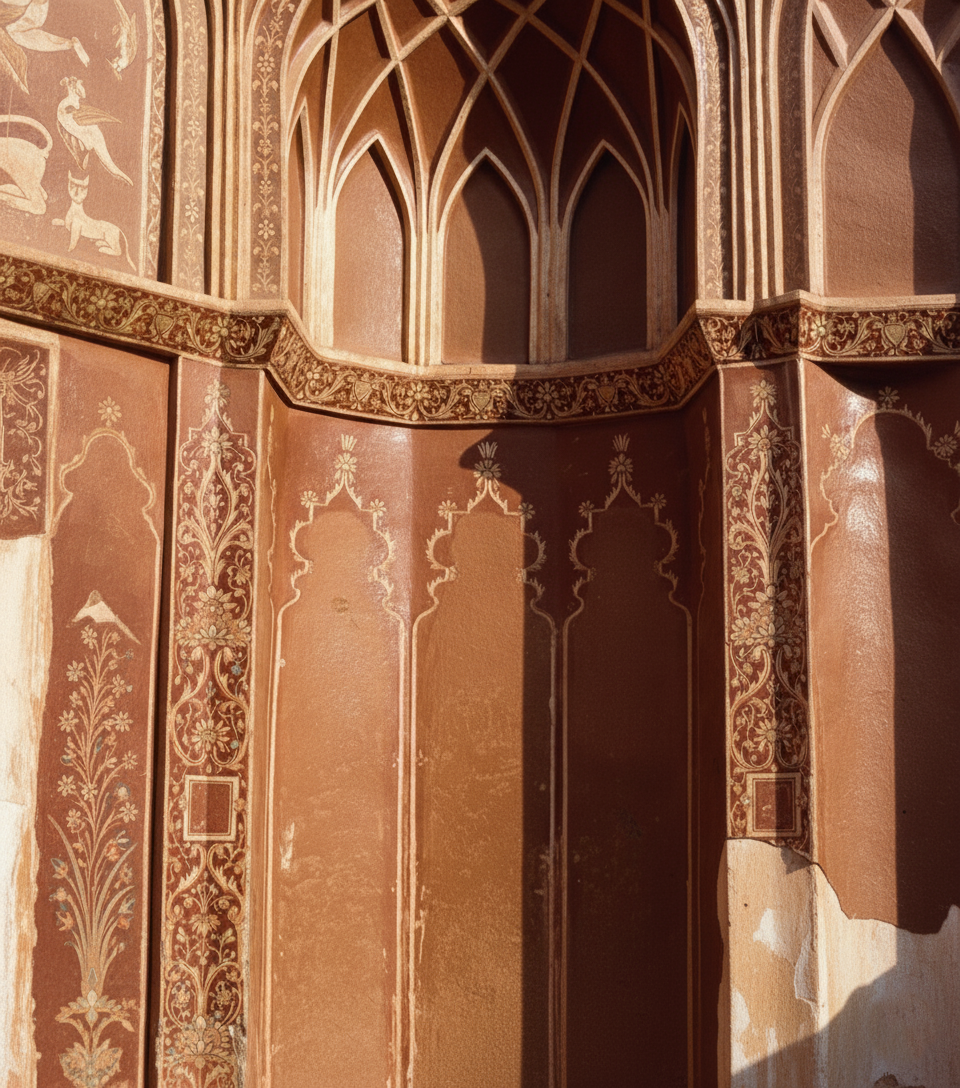
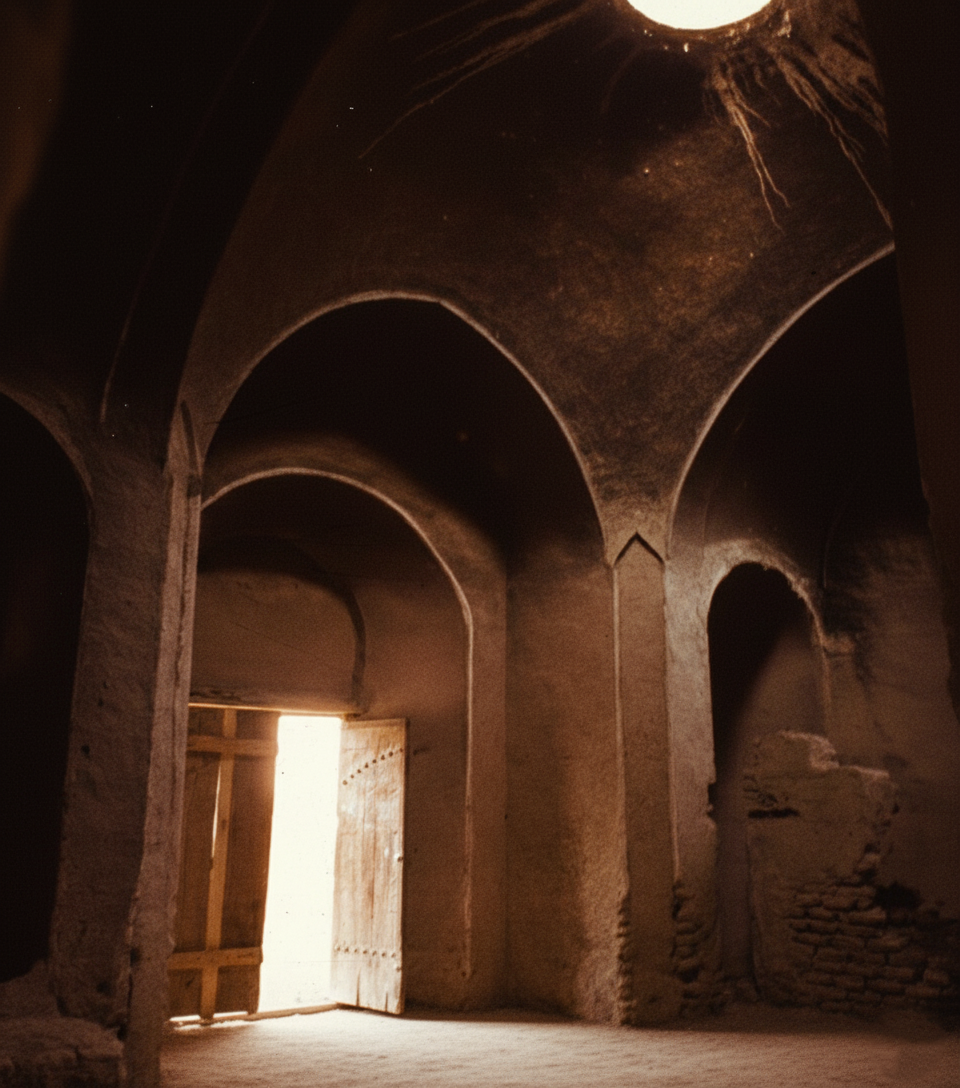
Borujerdi House (خانه بروجردیها) in Kashan, where Rasmi-bandi articulates wall recesses (tāghcheh طاقچهها), demonstrates the Weaver’s Grid as a delicate ornamental system that transforms surfaces into geometric tapestries. Subdividing space into intricate plaster panels creates a layered “false shell,” softening structure and enhancing the dematerialization of mass through refined pattern, depth, and shadow.
-
Rasmi-bandi (رسمیبندی), or the “Weaver’s Grid,” is a refined, ornamental evolution of Karbandi (کاربندی), shifting the focus from structural logic to surface articulation. While Karbandi operates as a load-bearing geometric framework that organizes forces through interlocking ribs (rāگهها راگهها), Rasmi-bandi elaborates the spaces between these ribs into an intricate شبکه of panels—rhombuses, kites, and stars—often executed in plaster (gach گچ). This creates a delicate “false shell” (poost-e kāzeb پوست کاذب) that descends from the true سقف, softening the perception of structure and transforming it into a woven, textile-like surface. If Karbandi is the structural skeleton, Rasmi-bandi is its ornamental skin, emphasizing visual richness, layering, and the dematerialization of mass through pattern rather than construction. This sensibility extends beyond ceilings into architectural التفاصيل (details), as seen in the Borujerdi House (خانه بروجردیها) in Kashan, where Rasmi-bandi articulates wall recesses (tāghcheh طاقچهها), turning functional niches into finely composed geometric tapestries.
