Yazdi-bandi (یزدبندی), or the “Extended Grid”
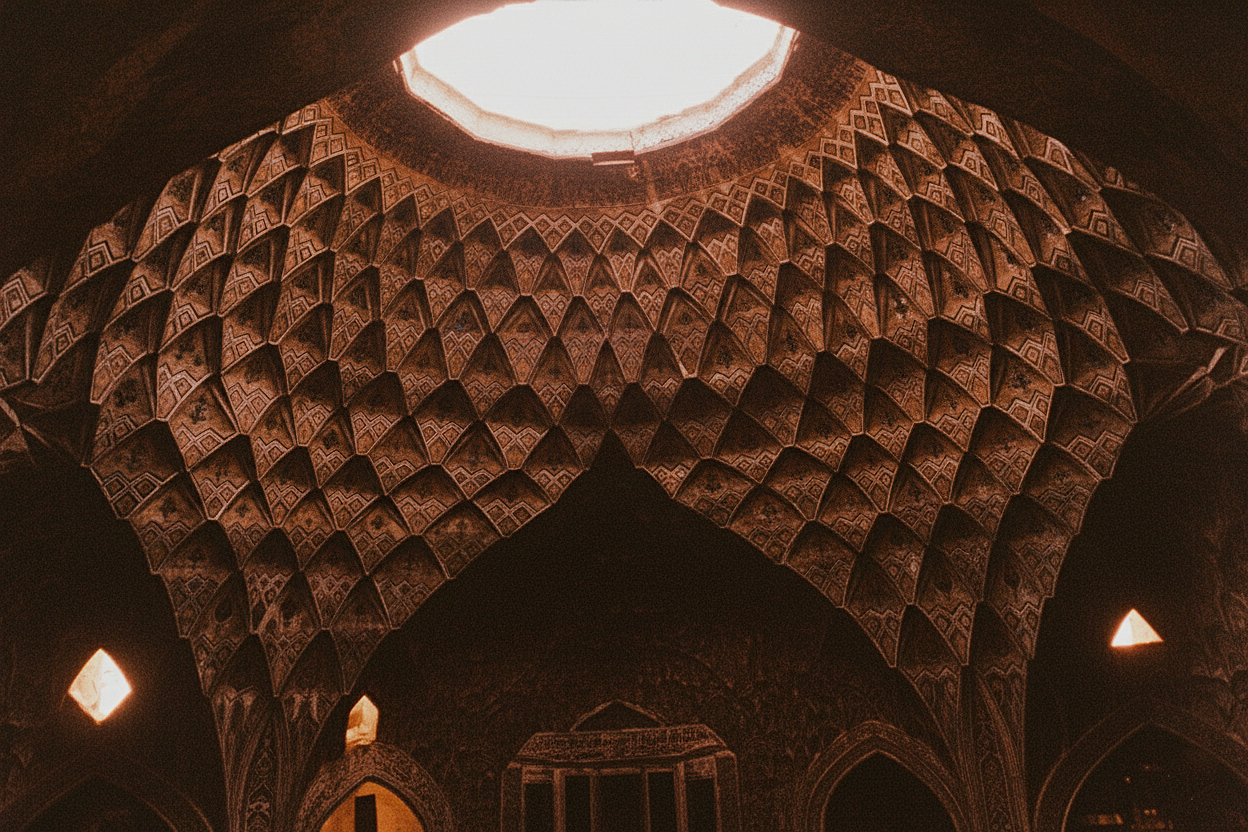
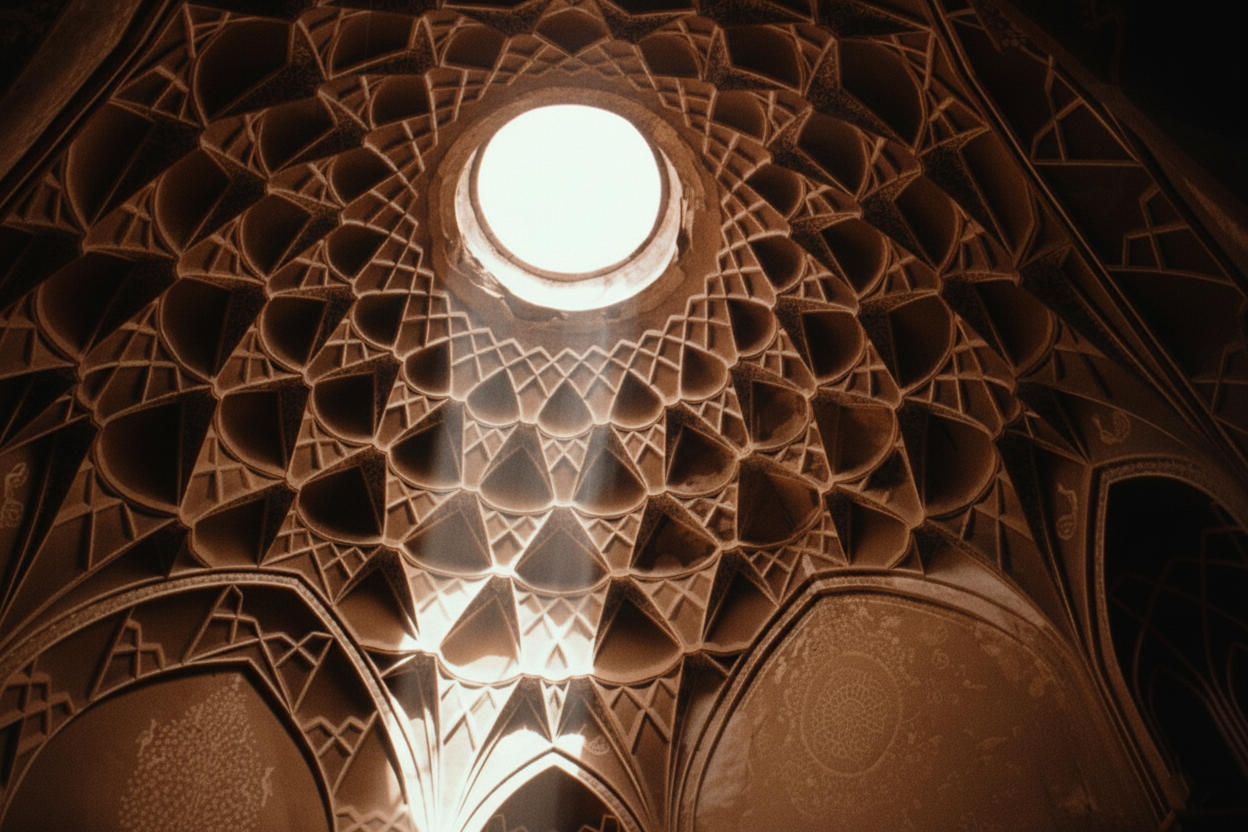

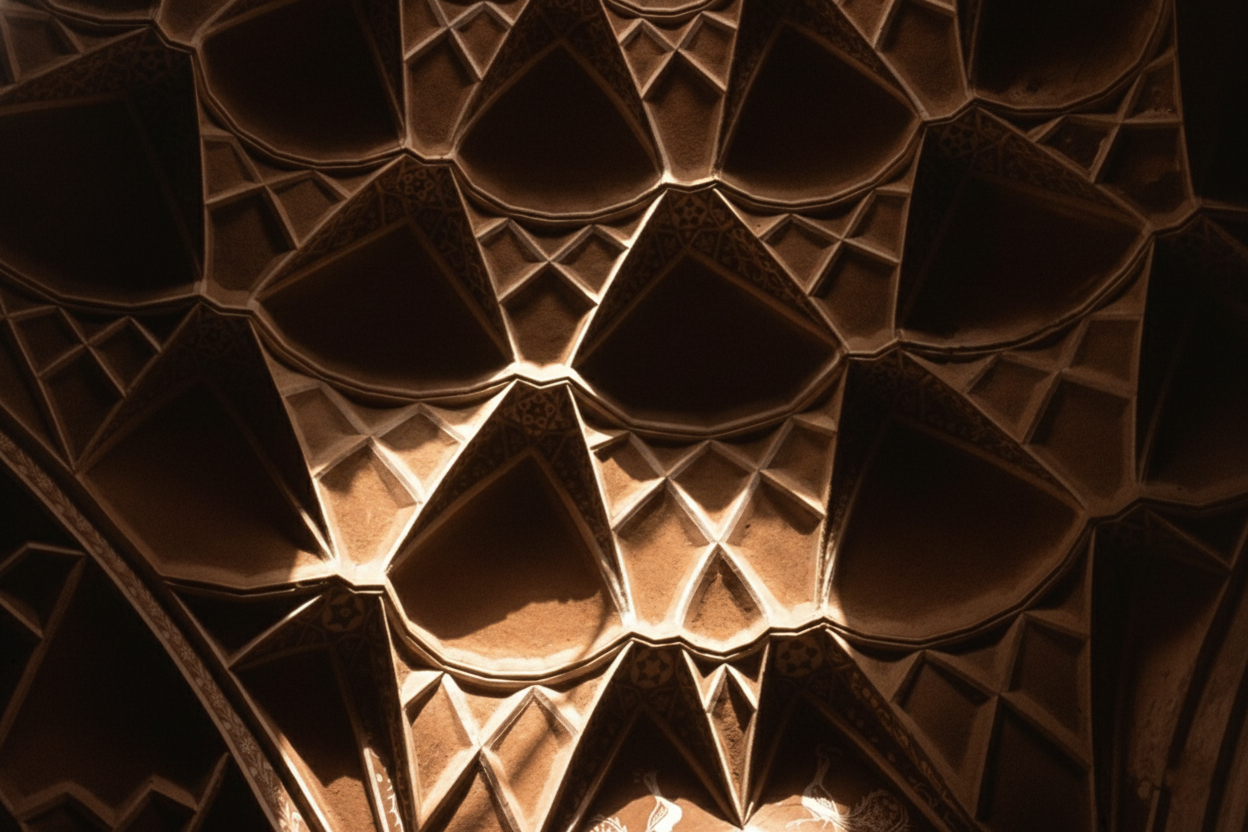
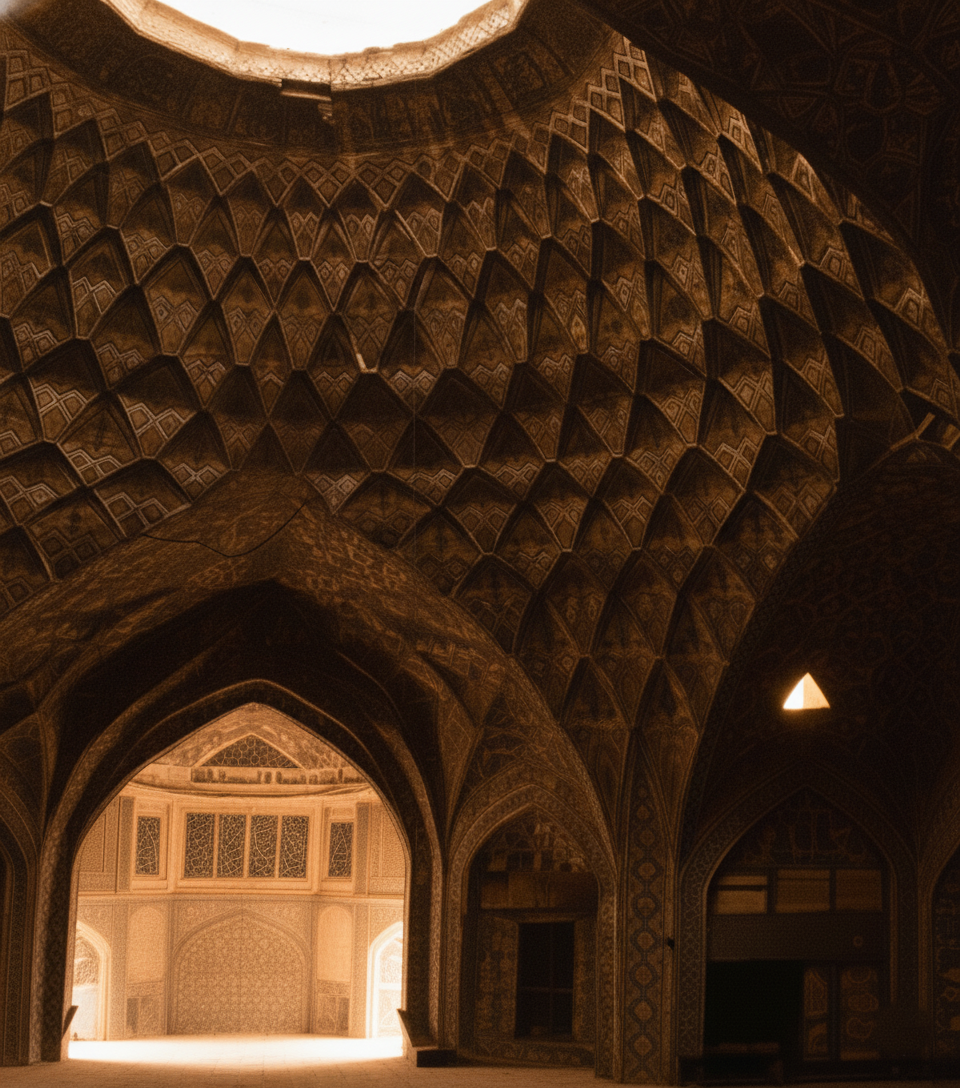
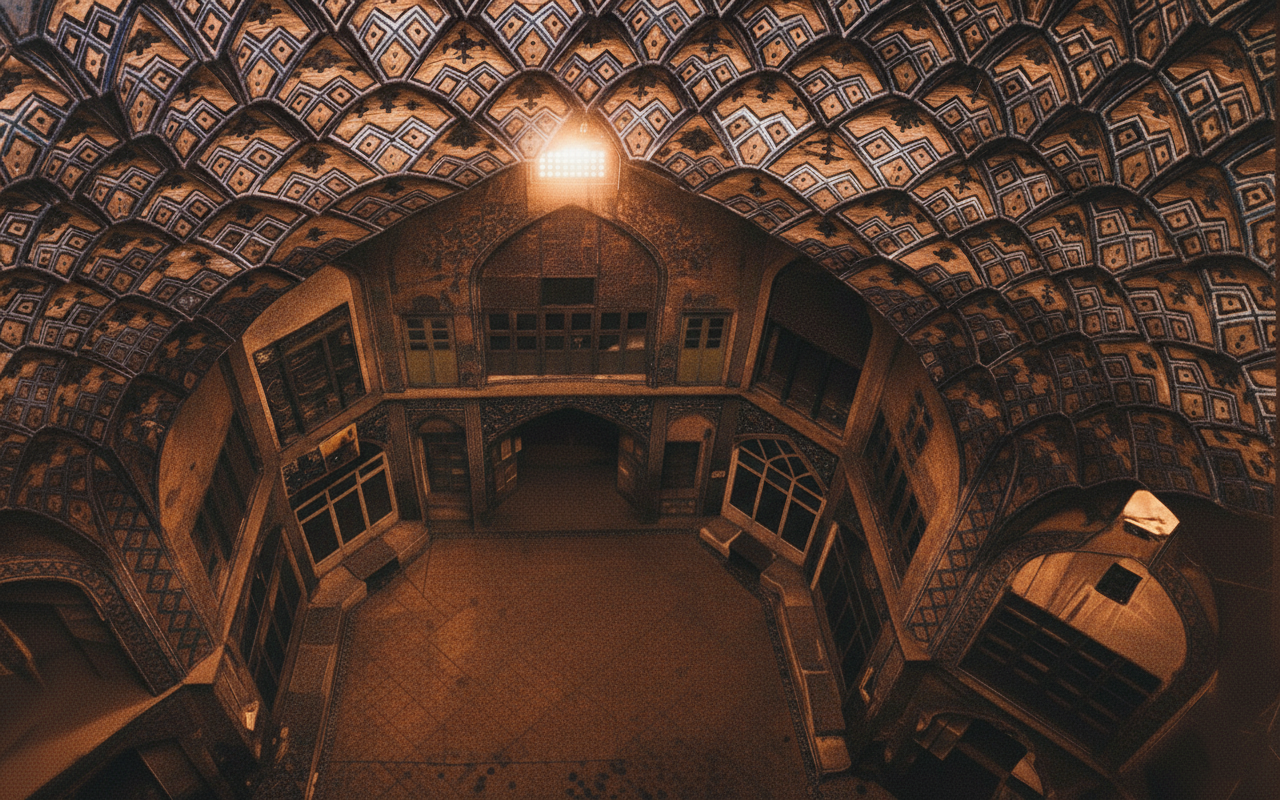
Use of Yazdi Bandi (یزدبندی) in Borujerdi House (خانه بروجردیها) and bazaar (بازار) in Kashan (کاشان) demonstrates an extended geometric grid that organizes ceilings (سقفها) into modular, repeating units. Unlike the structural continuity of Karbandi (کاربندی) or the ornamental layering of Rasmi-bandi (رسمیبندی), it creates a rhythmic field, breaking down mass into articulated patterns that enhance spatial continuity and visual lightness.
-
Yazdi-bandi (یزدبندی), or the “Extended Grid,” represents a sophisticated evolution in the alchemy of geometry, mediating between the structural rigor of Karbandi (کاربندی) and the ornamental refinement of Rasmi-bandi (رسمیبندی). While Karbandi functions as a continuous, load-bearing master grid of interlocking ribs (rāgehā راگهها) that resolve forces and spatial transitions, and Rasmi-bandi transforms this framework into a woven, decorative skin across interstitial panels, Yazdi-bandi reconfigures the system into a field of modular, repeatable geometric units. Emerging prominently in the architectural traditions of Yazd, it facilitates the transition from rectangular bases to curved سقفها through an extensible logic that is neither purely structural nor purely surface-driven. Its geometry departs from the radial symmetry of Rasmi-bandi, adopting instead a directional, elongated, and cascading organization particularly suited to covering rectangular or longitudinal spaces such as iwans (ایوان) and roof intersections. Through rhythmic repetition and articulated brick units (ājer آجر), Yazdi-bandi achieves a distinct form of dematerialization—breaking down mass into a continuous yet discretized field, where each unit participates in a larger order while retaining its استقلال. In this way, it extends geometry beyond a single compositional center into an adaptable architectural language, transforming ceilings and vaults into expansive constellations of pattern, structure, and spatial continuity.
