Karbandi (کاربندی)—or Rasmi-bandi (رسمیبندی)
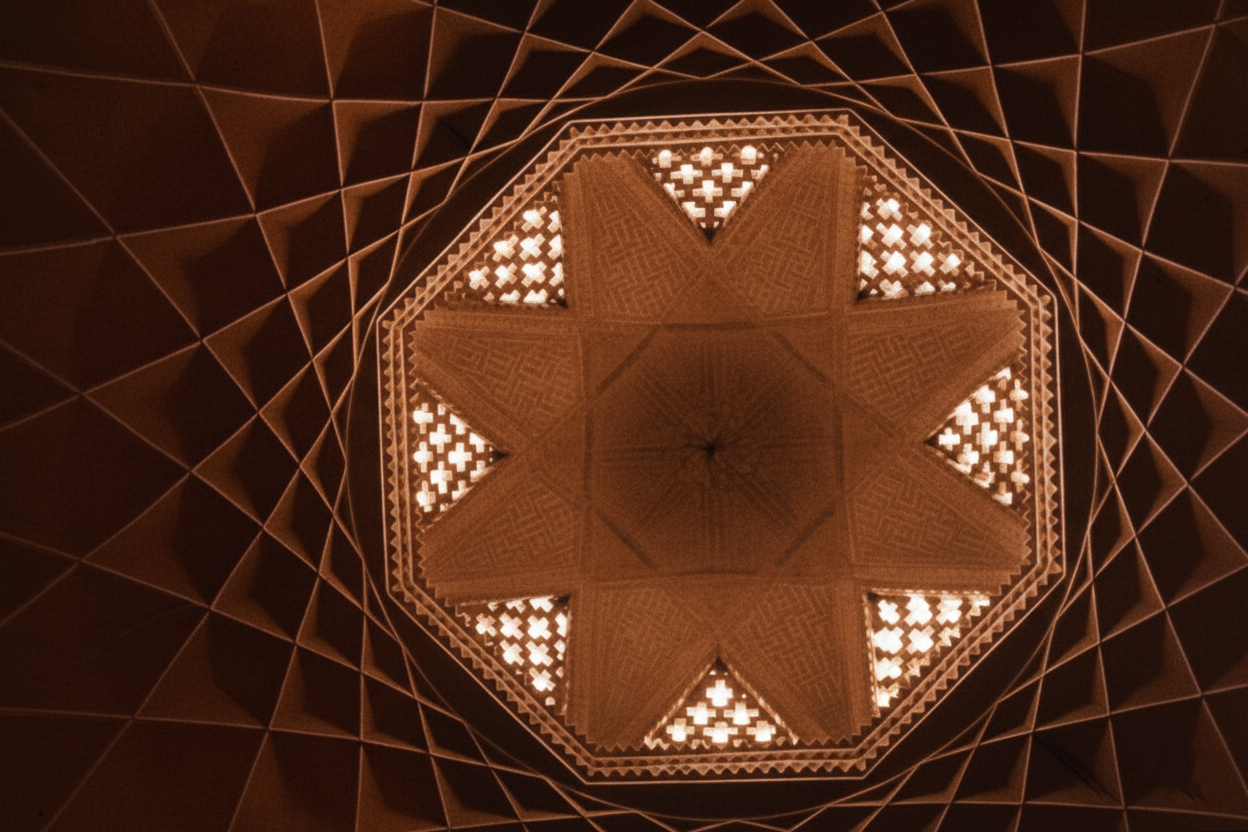
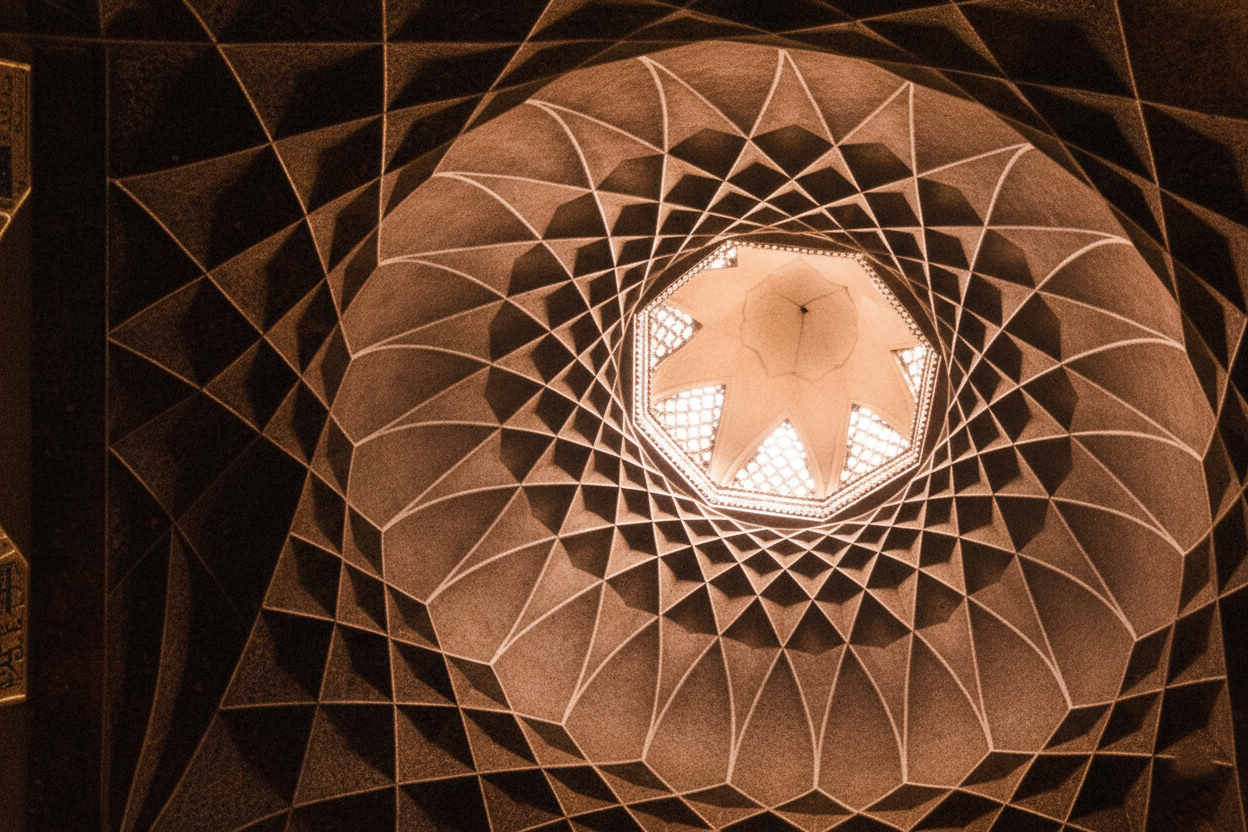
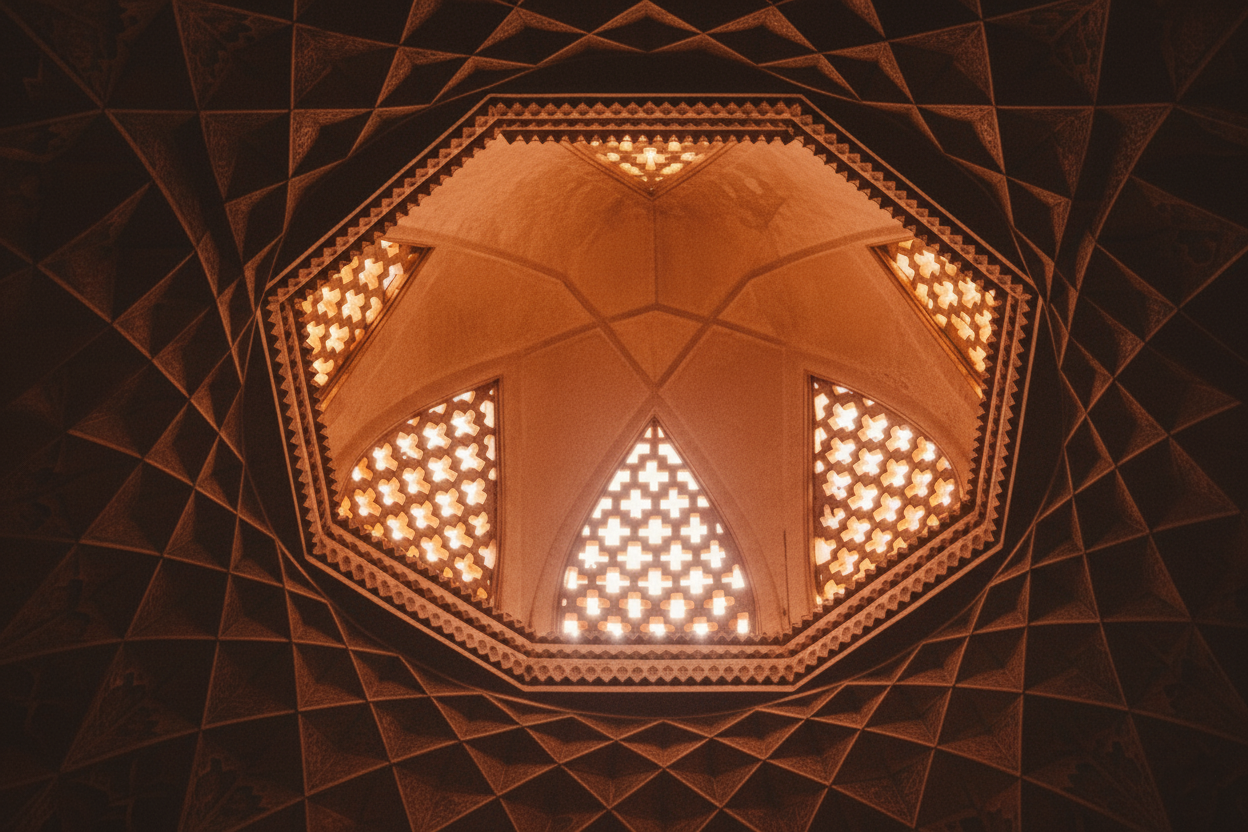
Dolat Abad Garden (باغ دولتآباد یزد) showcases Karbandi (کاربندی) as a luminous structural web where ribs dissolve mass (جرم) into geometry (هندسه). Facets like Shaparak (شاپرک) and the Fakhro-madyan (فخر و مدین) oculus diffuse light (نور), transforming heavy plaster (گچ) ceilings into a suspended, weightless field of shadow (سایه), evoking a floating geometric cloud.
-
Karbandi (کاربندی)—or Rasmi-bandi (رسمیبندی)—in the Dolat Abad Garden (باغ دولتآباد یزد) represents a refined synthesis of structure (سازه), geometry (هندسه), and perception (ادراک), where the ceiling (سقف) becomes both load-bearing system and visual phenomenon. Composed of intersecting ribs that generate a شبکه (network) of faceted surfaces, Karbandi mediates between structural necessity and ornamental expression, guiding the transition from زمین (earth) to آسمان (sky).
In this breathtaking example from Yazd’s desert architecture, the interplay of plaster (گچ), light (نور), and geometry produces a self-supporting web that appears to defy gravity. What would conventionally read as heavy masonry is transformed into thin, sharp ribs—almost like blades—stretching across the surface like a suspended fabric. Between these ribs, kite-shaped facets known as Shaparak (شاپرک) recede into concave depths, capturing سایه (shadow) and forming a honeycomb-like field of hollow pockets, amplifying the sense of lightness.
At the apex, an octagonal oculus integrated with Fakhro-madyan (فخر و مدین) latticework filters the harsh desert sun into a diffused, ethereal glow. This controlled illumination dissolves the densest part of the dome, making it appear as though it hangs from light itself. The monochromatic plaster surface further intensifies this effect, eliminating distraction and focusing attention on the rhythmic dialogue between sharp edges and soft curves.
As the geometry tapers downward, the ceiling begins to resemble a stalactite or suspended chandelier—an inversion of weight that challenges perception. In this way, Karbandi achieves a profound visual dematerialization (مادیزدایی بصری): transforming the architectural necessity of supporting a roof into an experience of levitation. The heavy earthen vault is no longer perceived as mass, but as a floating geometric cloud—an orchestration of light, shadow, and form that transcends its material reality.
