Sunken / Recessed Brick Pattern (Khūn-chīnī (خوونچینی)
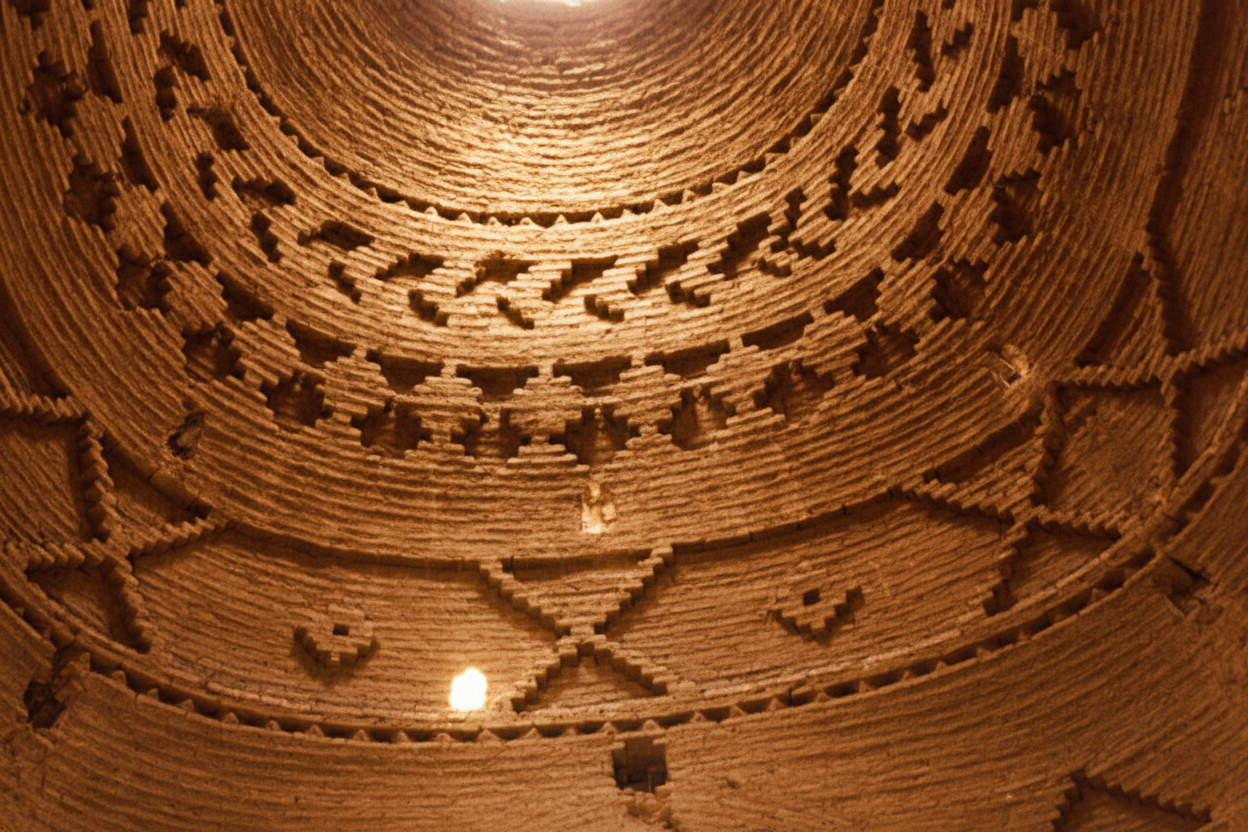
Dome of the Bam Yakhchal (یخچال بم، کرمان) reveals Khūn-chīnī (خوونچینی) as a strategy of visual dematerialization (مادیزدایی بصری), where recessed brick patterns fragment mass (جرم) into rhythmic layers. Light (نور) and shadow (سایه) animate the surface, transforming the heavy earthen structure into a textured, weightless field that softens solidity and enhances thermal and spatial performance.
-
Khūn-chīnī (خوونچینی)—the art of sunken or recessed brick patterning in Iranian brick architecture (معماری آجری)—embodies a seamless fusion of structure (سازه) and ornament (تزئینات), where material is not added but precisely modulated. Through the careful arrangement of bricks (چیدمان آجر), primarily in recessed (فرو رفته) configurations, surfaces are articulated into rhythmic geometric bands that capture light (نور) and deepen shadow (سایه). This technique transforms continuous masonry into a textured field, dissolving the perception of mass (جرم) and introducing visual permeability (نفوذپذیری بصری) and optical lightness (سبکی بصری). A compelling example is seen in the interior dome of the Bam Yakhchal (یخچال بم، کرمان), where concentric layers of recessed brick patterns generate a dynamic interplay of نور و سایه, fragmenting the curved surface into intricate, horizontal registers. As light grazes these carved brick courses, the dome no longer reads as a heavy earthen shell, but as a layered, responsive surface—visually softened and subtly animated. In this way, Khūn-chīnī exemplifies the Iranian architectural ethos of subtraction and precision, where خاک (earth) is refined into a luminous medium, transforming structural necessity into an experience of dematerialization (مادیزدایی بصری) and perceptual lightness.
