Colored Brickwork (Ājor-e Alvān / آجر الوان)
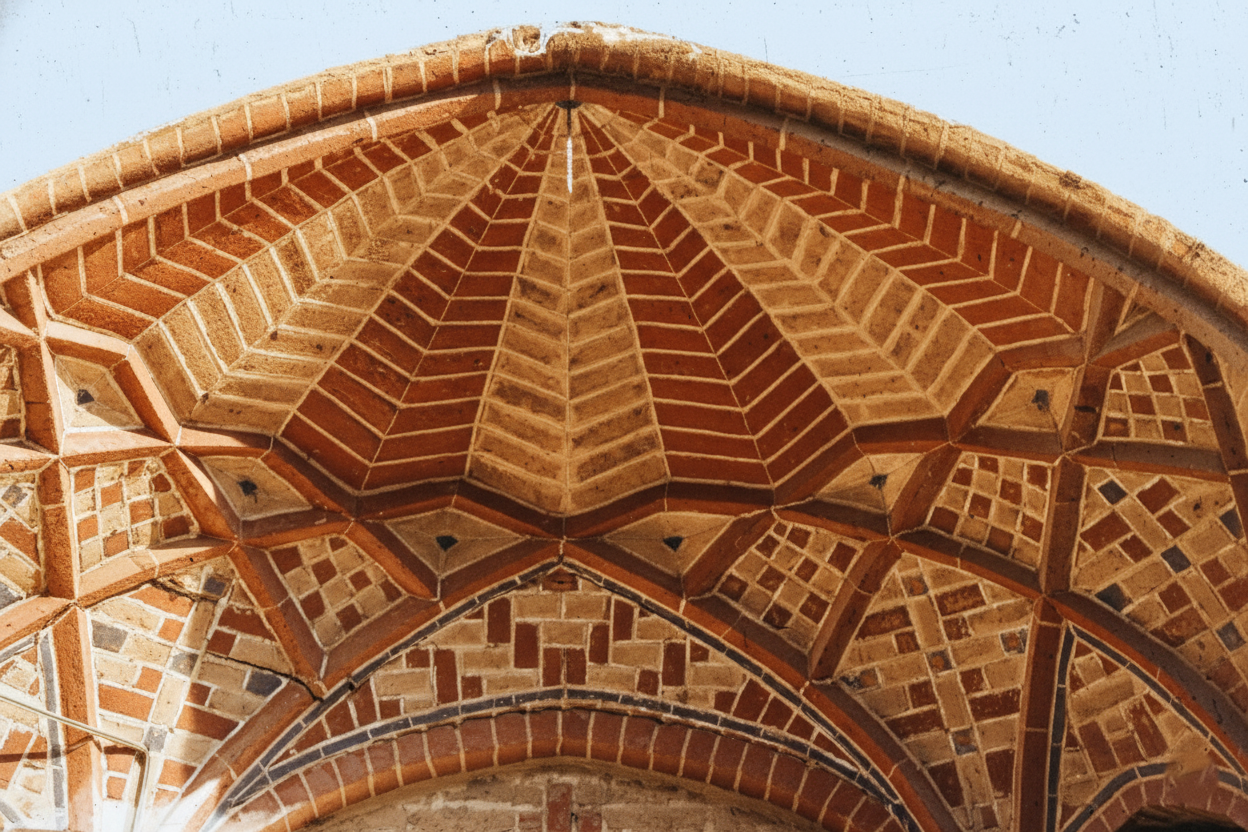
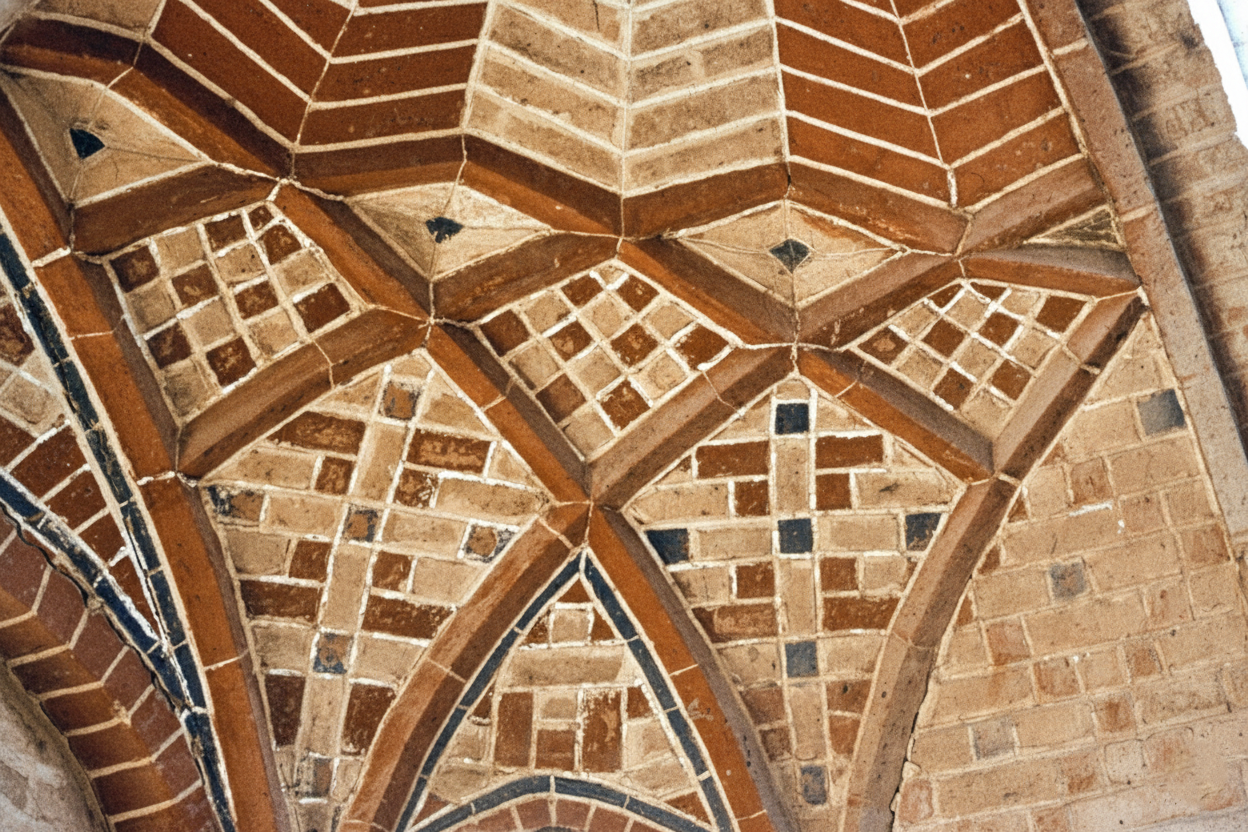
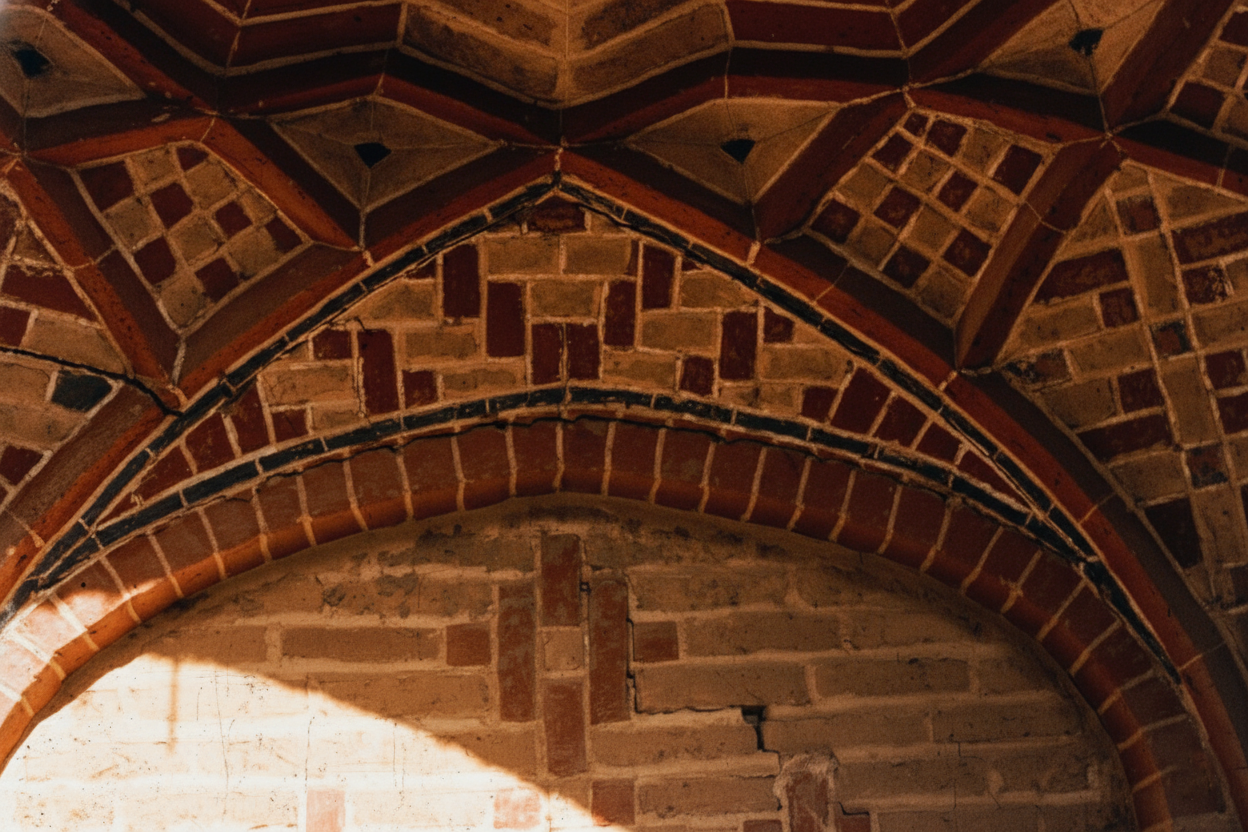
The entrance recess (طاقنما / فرورفتگی ورودی) in City of Qazvin (قزوین) demonstrates Ājor-e Alvān (آجر الوان) as a tool of visual dematerialization (مادیزدایی بصری), where varied brick tones dissolve mass (جرم) into geometric patterns. Light (نور) and shadow (سایه) animate the surface, transforming a heavy masonry threshold into a layered, dynamic field of depth, rhythm, and perceptual lightness.
-
Colored Brickwork (Ājor-e Alvān / آجر الوان).
Ājor-e Alvān (آجر الوان)—colored brickwork—transforms structure into a field of pattern and light, where variations in brick tone dissolve the خوانش (reading) of mass (جرم). In the entrance recess (طاقنما / فرورفتگی ورودی) in Qazvin (قزوین), as seen here, contrasting hues of brick are composed into geometric networks (هندسه), articulating the curved surface of the arch and vault.
Rather than appearing as a heavy masonry threshold, the recess becomes visually fragmented—its surface animated through subtle shifts in color, light (نور), and shadow (سایه). The interplay of warm ochres, reds, and earthen tones breaks down continuity, softening structural وزن (weight) and introducing depth. This chromatic articulation works in tandem with the geometry of the vault, guiding perception upward and inward.
Through Ājor-e Alvān, the entrance is no longer a مجرد boundary (مرز), but a transitional, immersive field—where material dissolves into pattern, and architecture achieves visual dematerialization (مادیزدایی بصری) through the quiet intelligence of brick.
