Hozār-bāf (هزارباف) / Extruded 3D Surface Brickwork
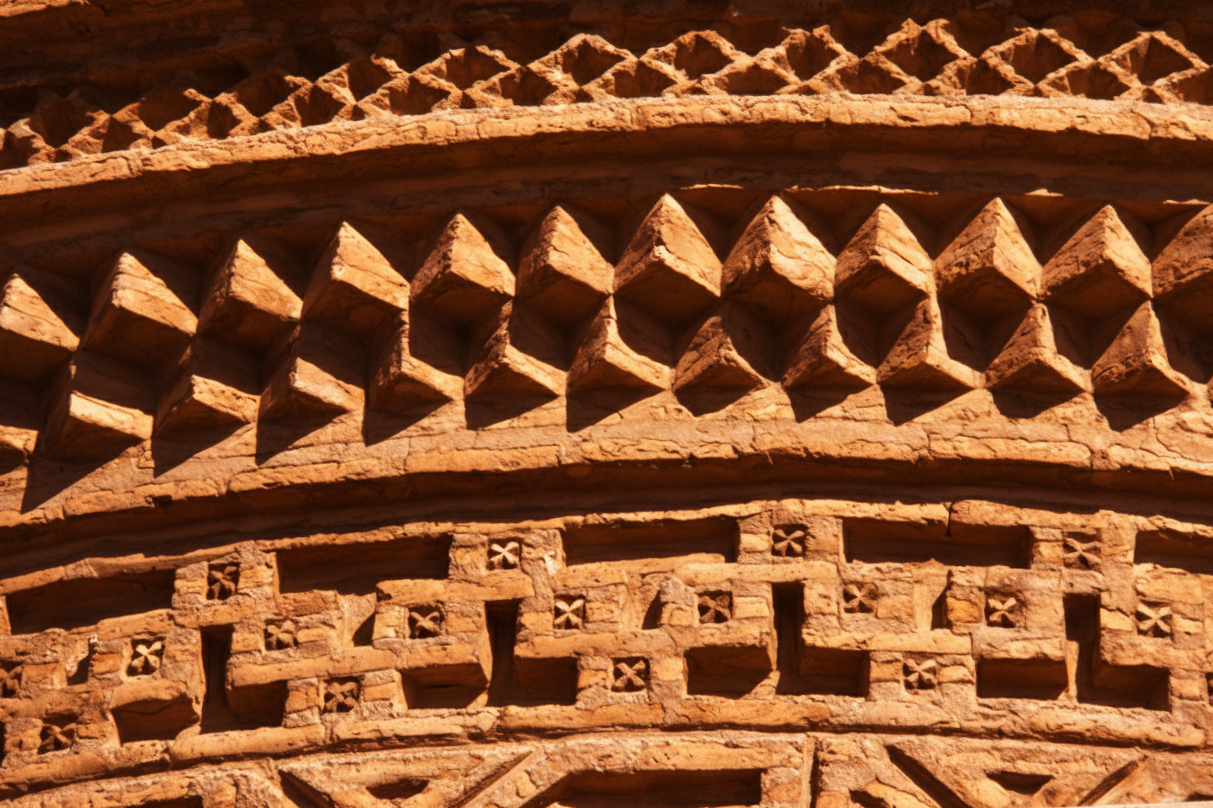
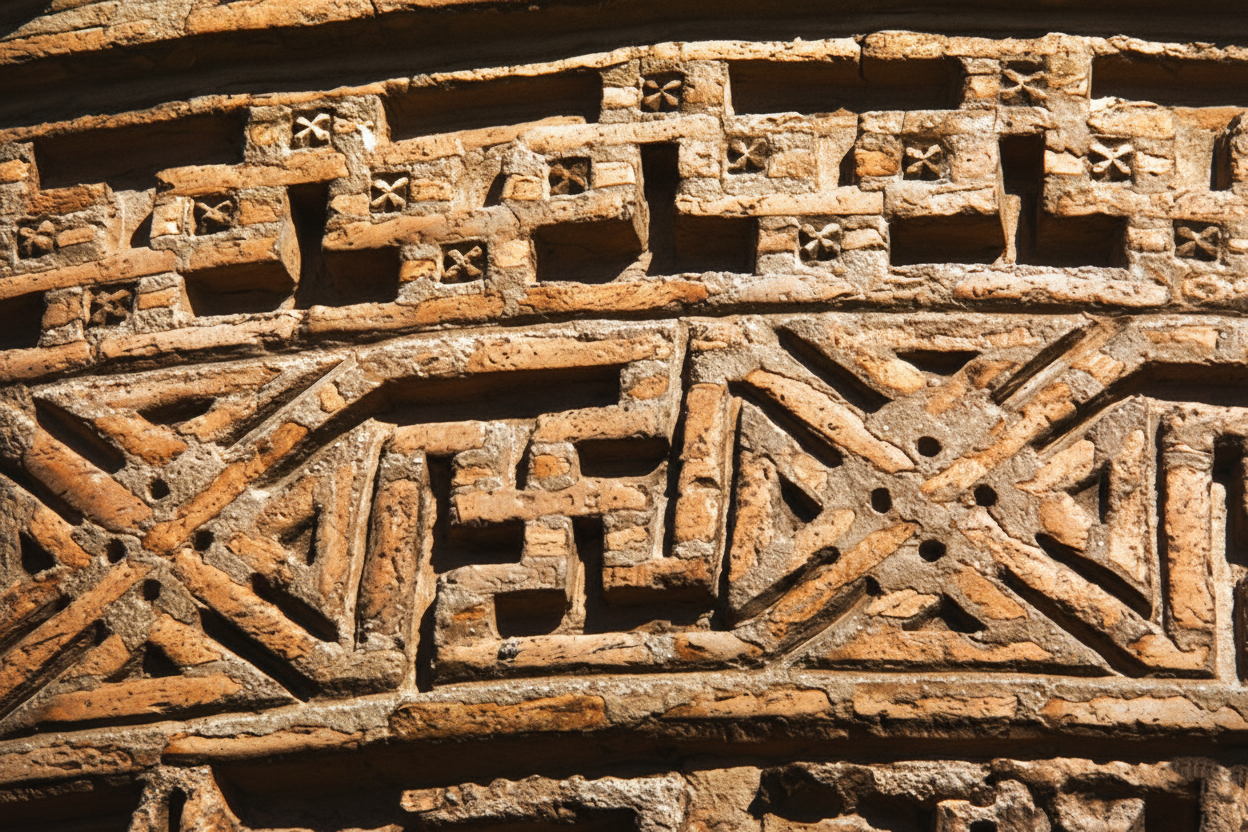
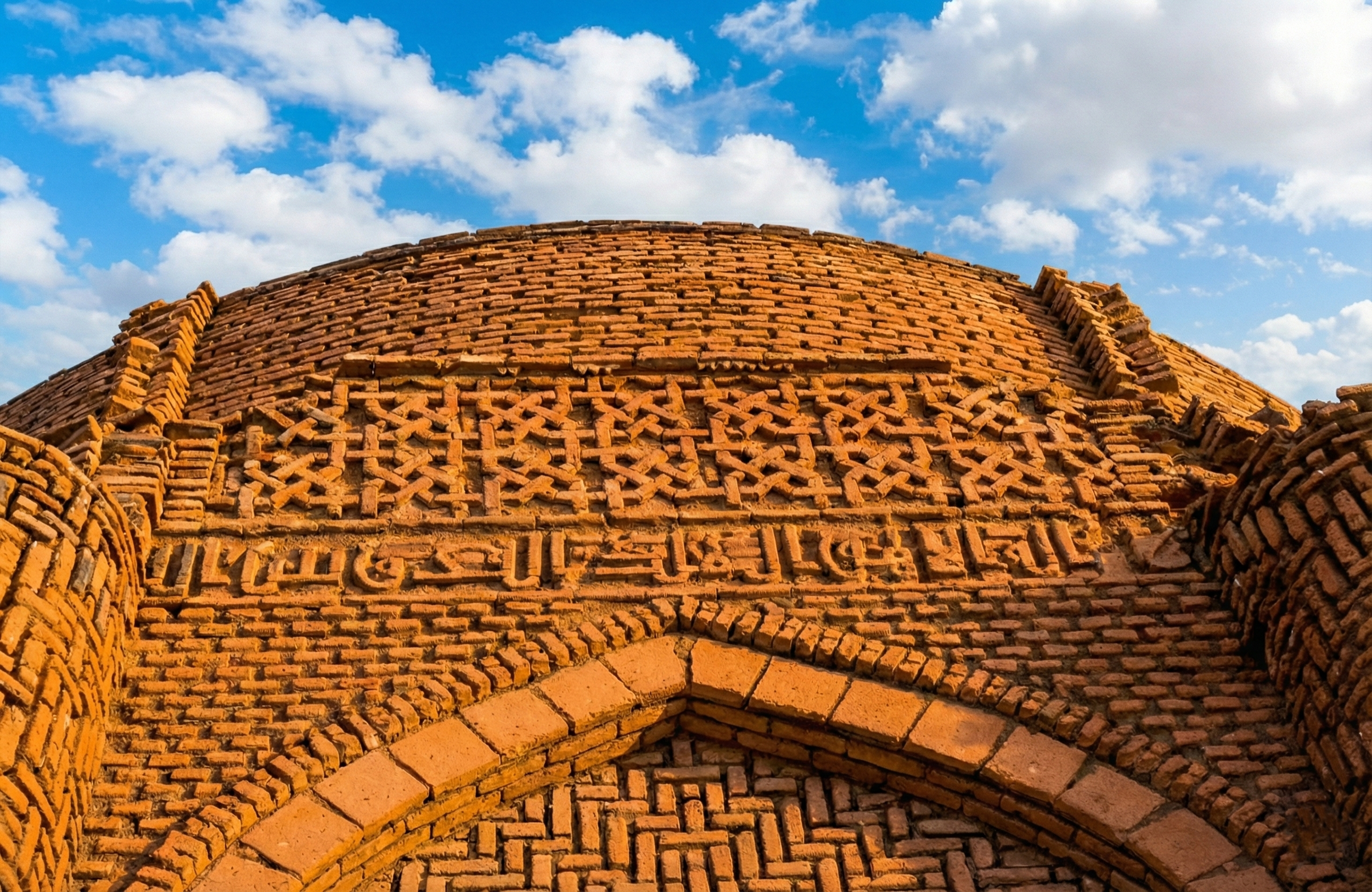
Chehel Dokhtaran Tomb Tower (برج چهل دختران) and the Towers of Kharaghan (برجهای خرقان) exemplify Hozār-bāf (هزارباف), where extruded brickwork transforms mass (جرم) into a woven field (بافت) of light (نور) and shadow (سایه). Through projection and recession, surfaces dematerialize visually while providing passive cooling—reducing heat gain, enhancing airflow, and uniting climatic performance with geometric articulation.
-
Hozār-bāf (هزارباف)—literally “thousand weavings”—is a refined technique of extruded 3D surface brickwork in Iranian brick architecture (معماری آجری), where bricks are meticulously arranged at varying depths through projection (برجستگی) and recession (فرورفتگی) to create richly textured, geometric surfaces. Employed in monuments such as the Chehel Dokhtaran Tomb Tower (برج چهل دختران) and the Towers of Kharaghan (برجهای خرقان), this method transforms flat masonry into a woven field (بافت) of light (نور) and shadow (سایه). The كثرت (multiplicity) of articulated elements dissolves the perception of mass (جرم), playing a central role in visual dematerialization (مادیزدایی بصری), where heavy structures appear optically lighter and more dynamic. At the same time, Hozār-bāf functions as a passive climatic device (سیستم اقلیمی غیرفعال): its shadow-relief patterns create self-shading, reduce solar gain, enhance air movement, and leverage thermal mass (جرم حرارتی) for cooling—demonstrating a synthesis of material intelligence (هوشمندی مصالح), environmental performance, and aesthetic refinement.
