Muqarnas (مقرنس), “stalactite vaulting” or the “Cellular Transition”
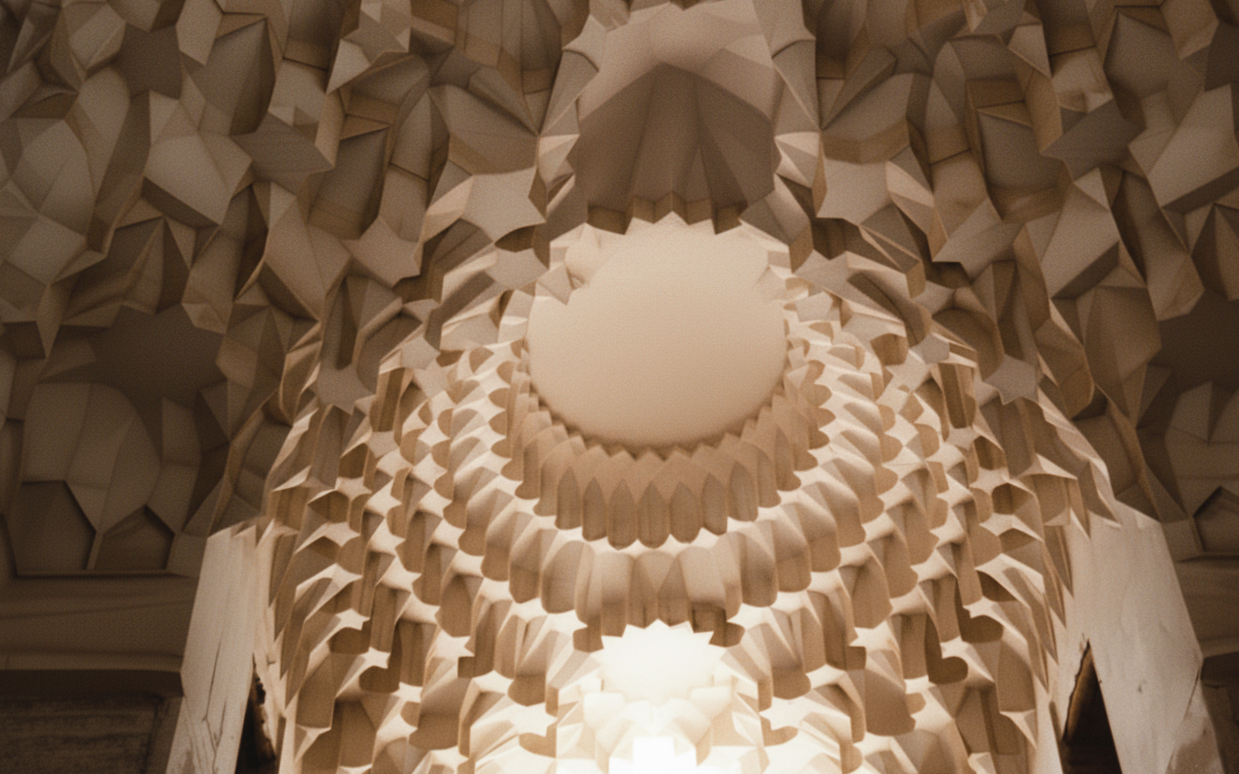
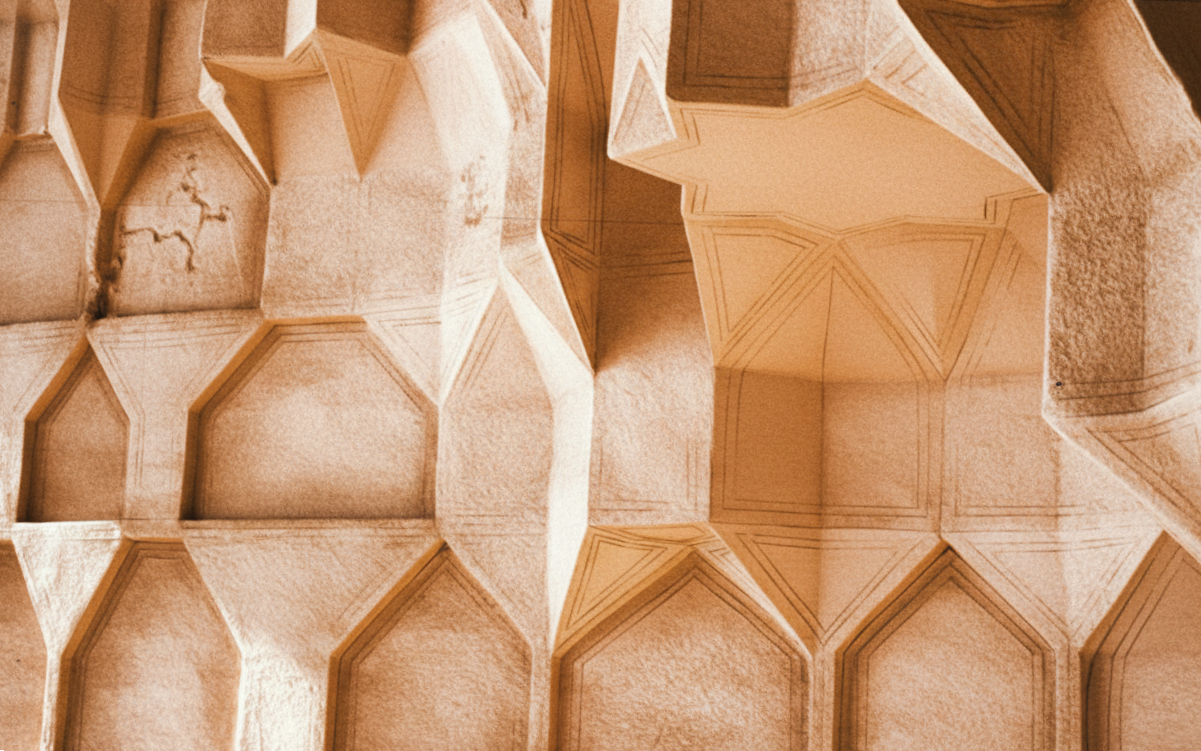
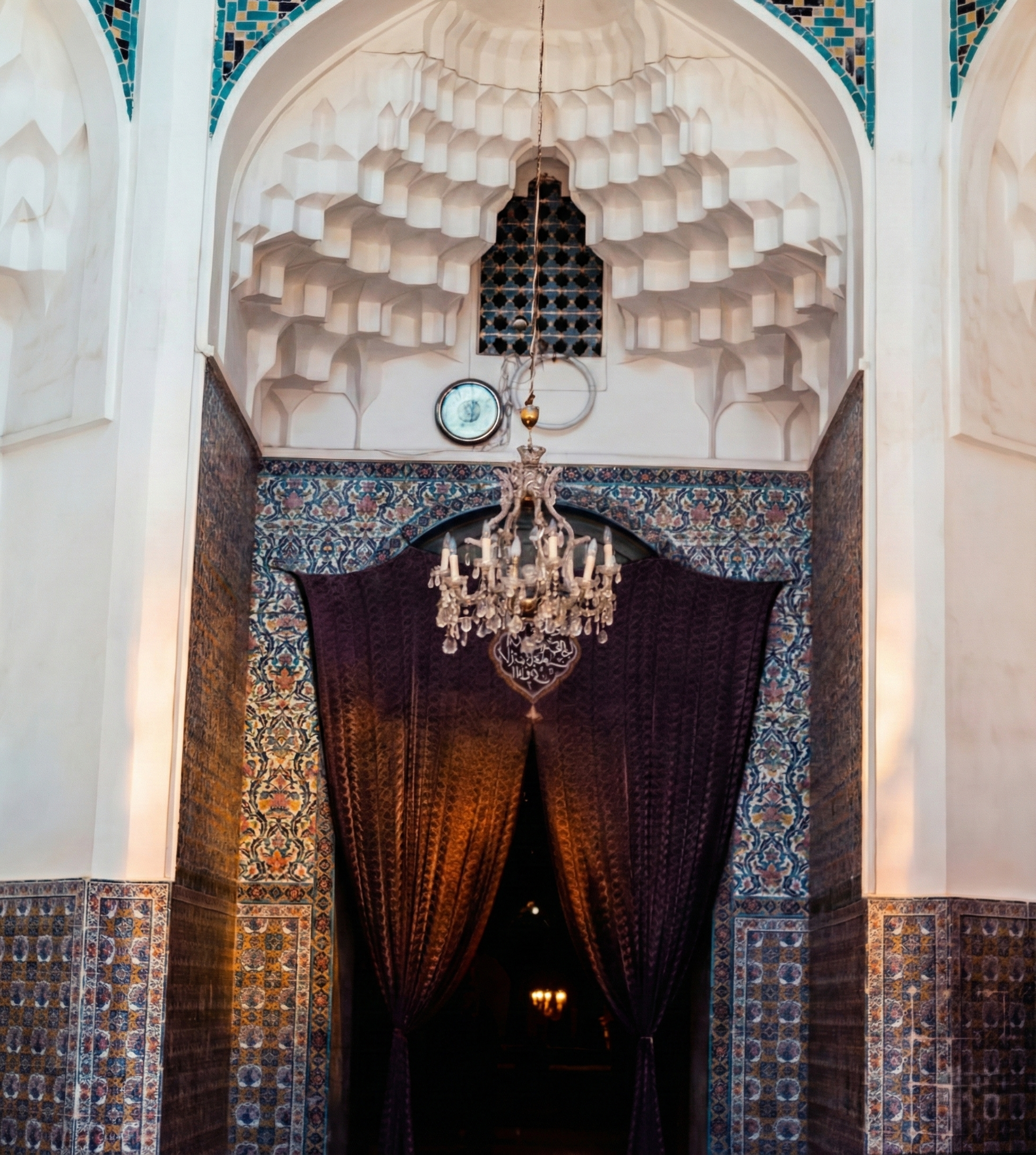
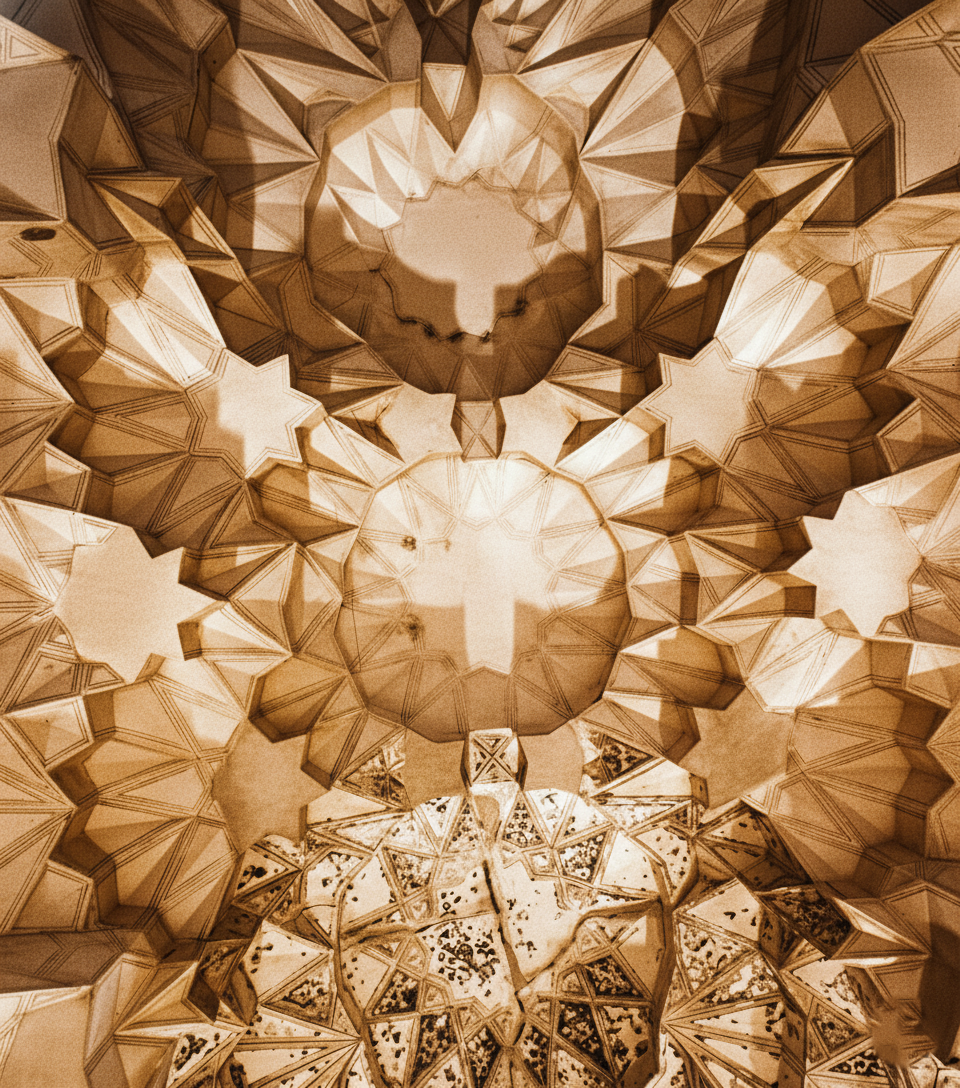
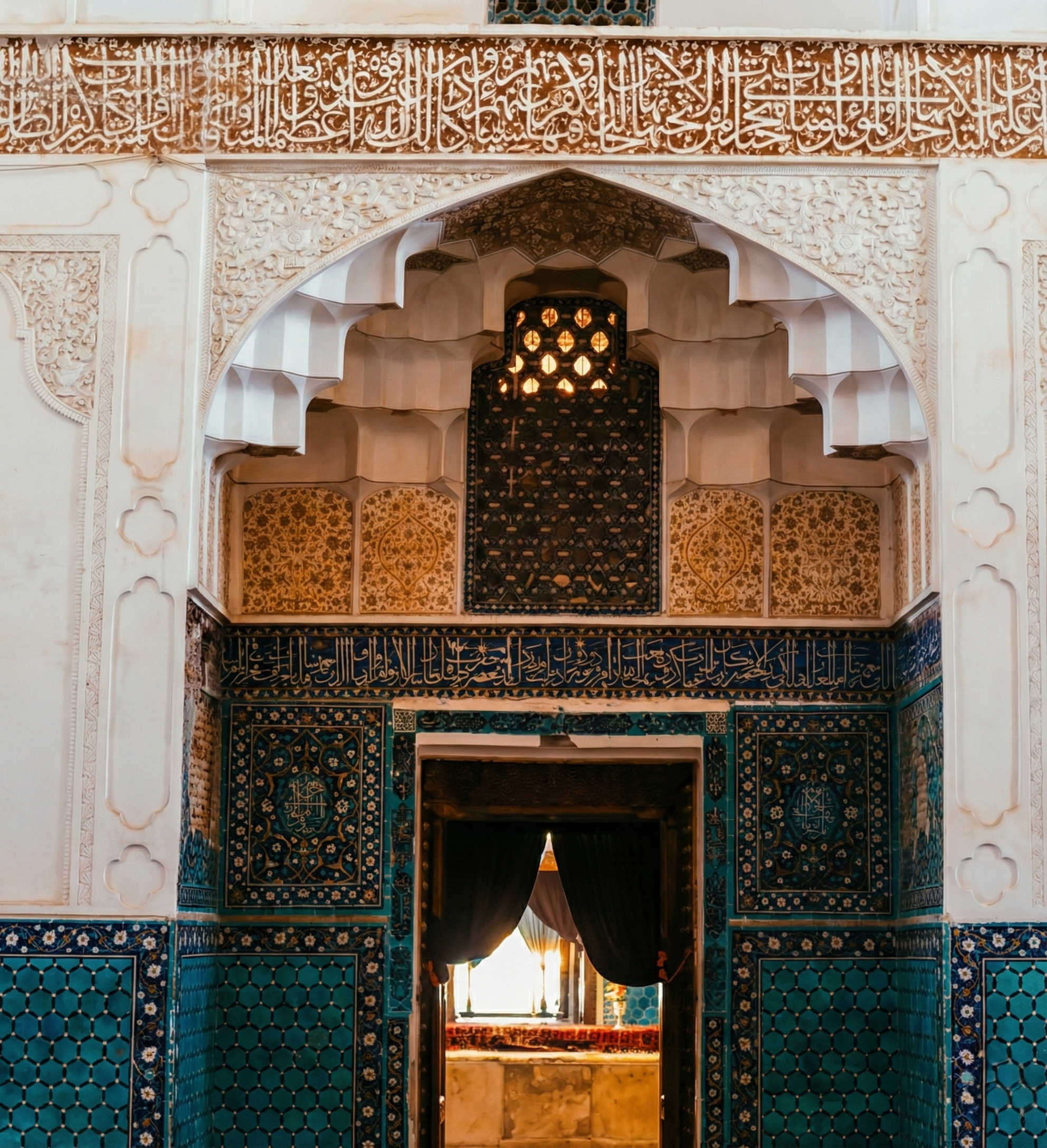
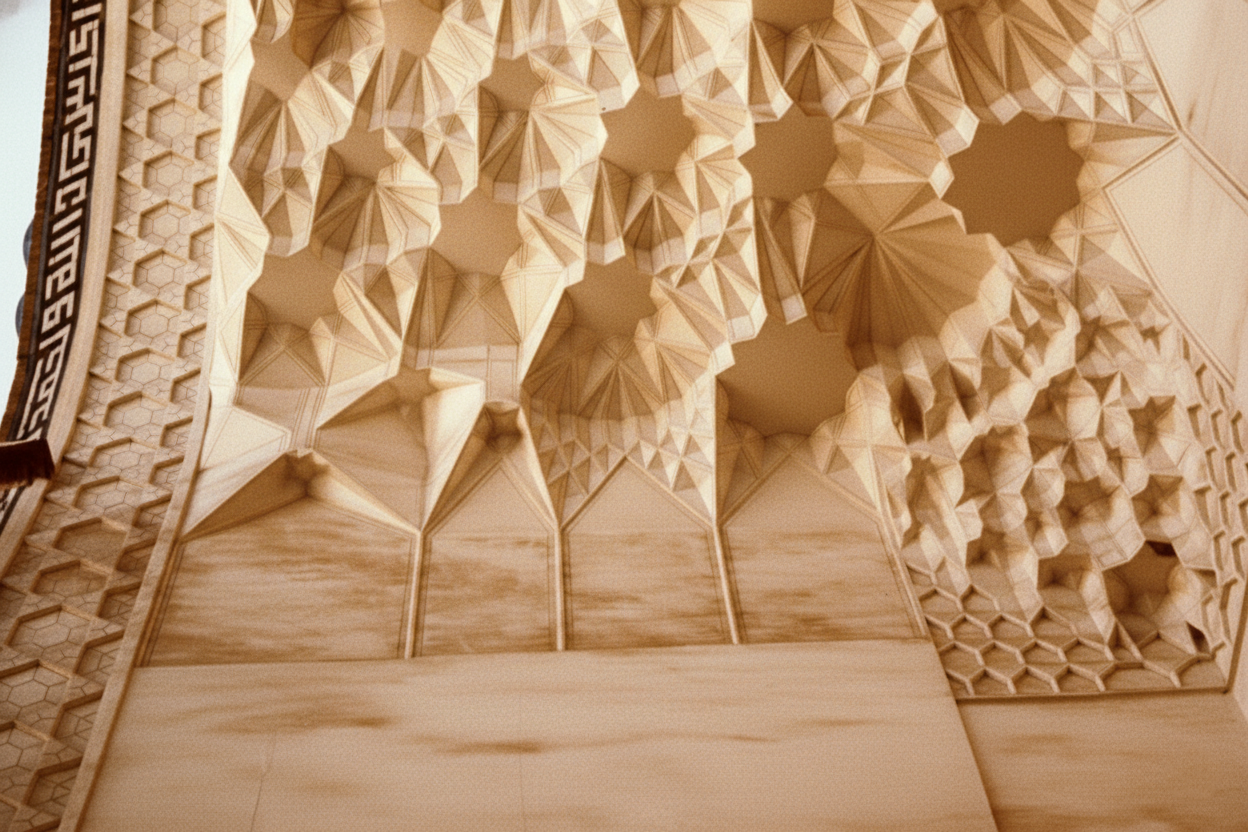
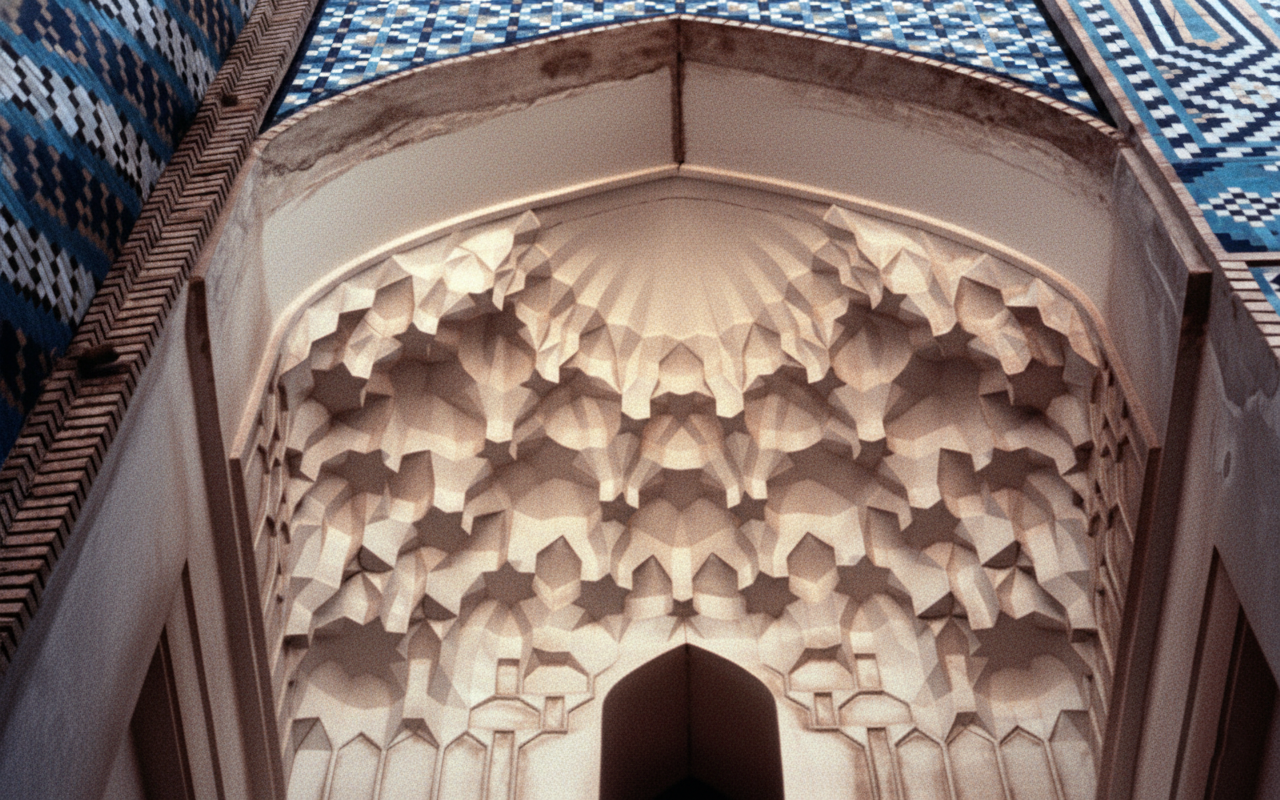
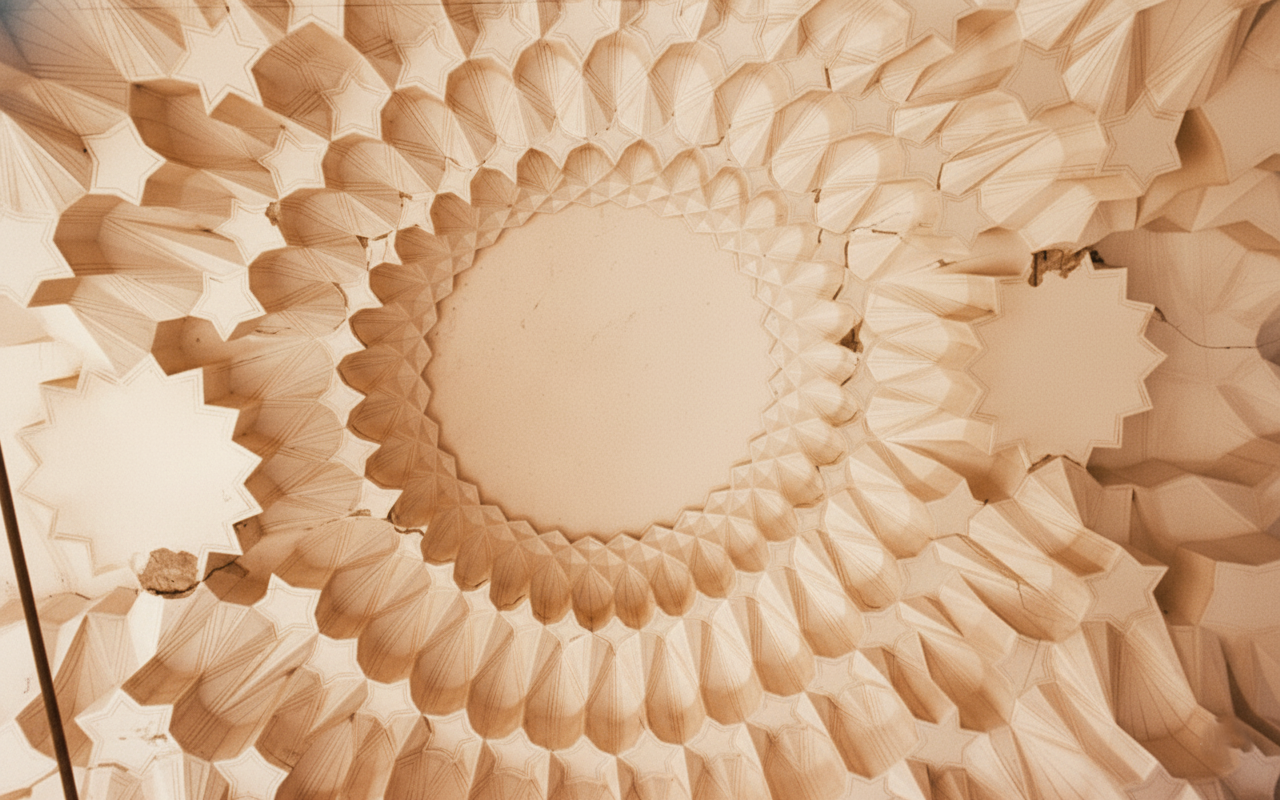
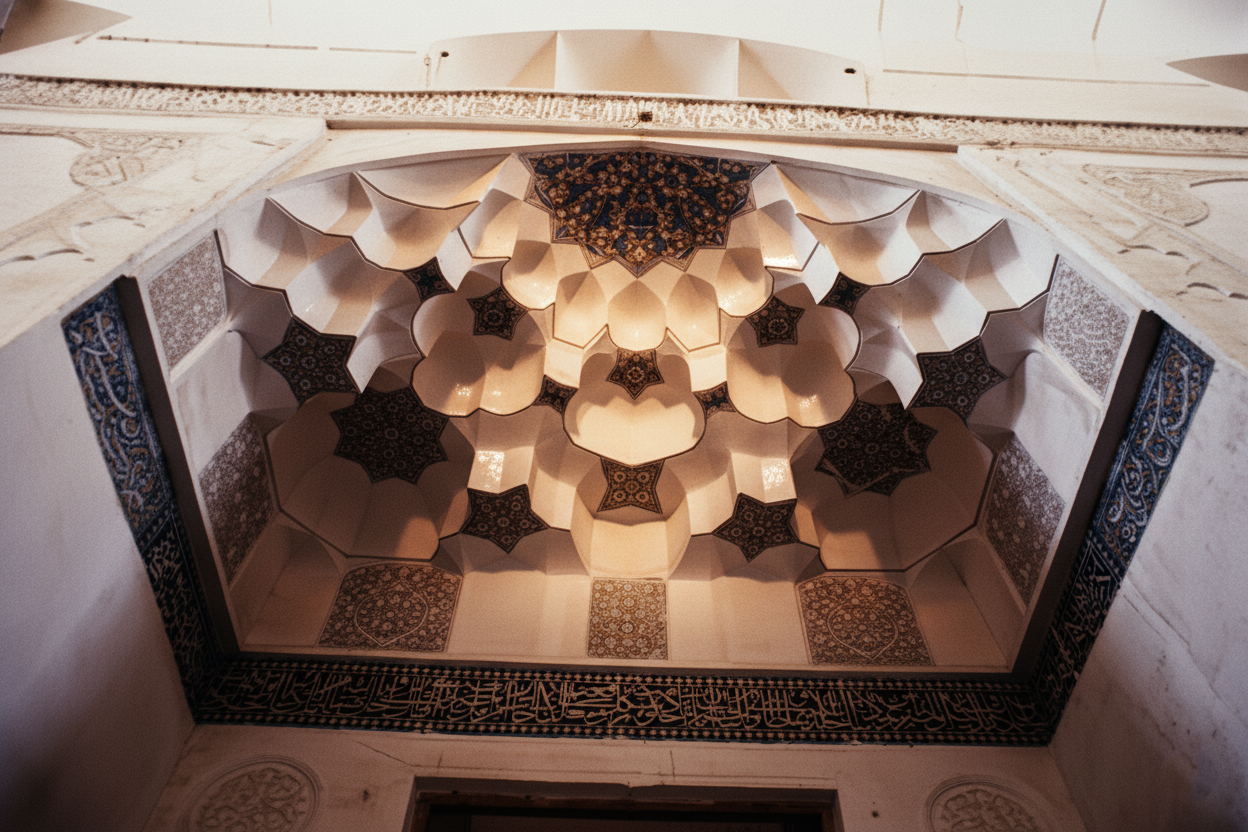
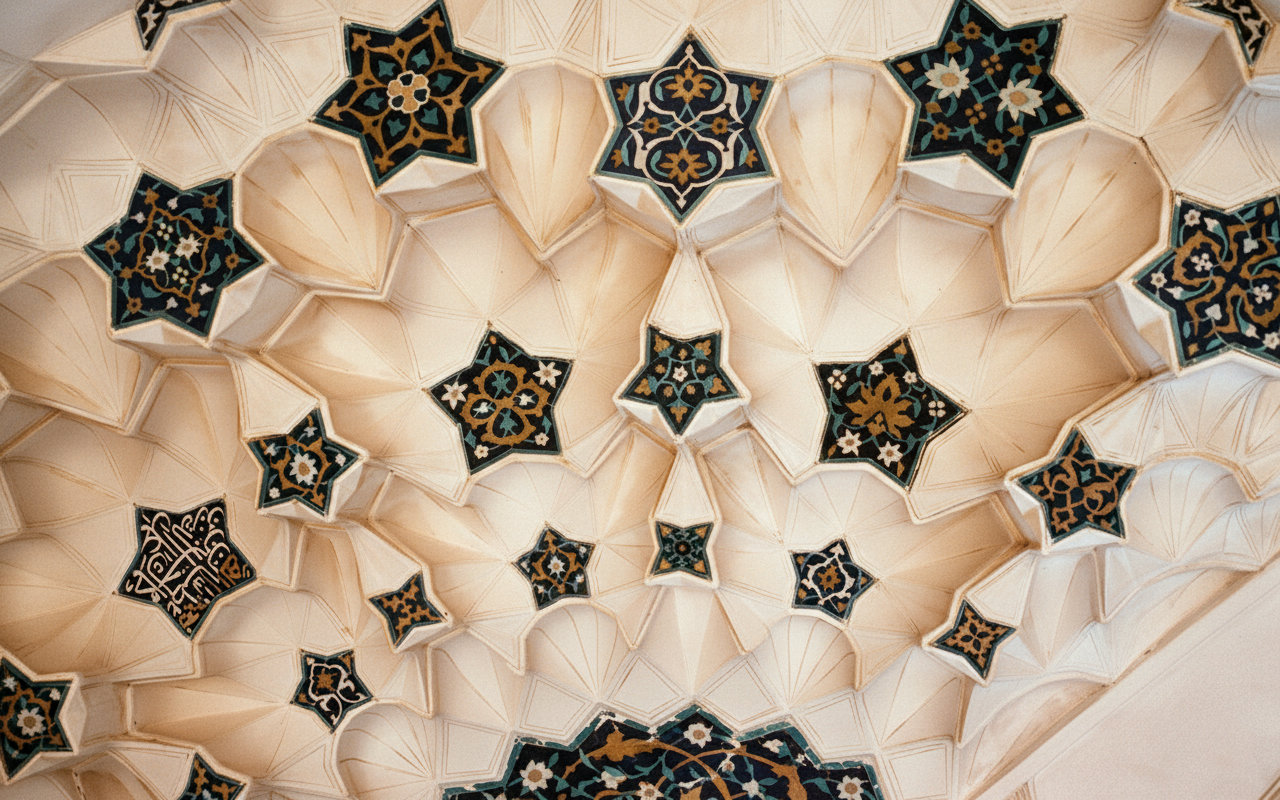
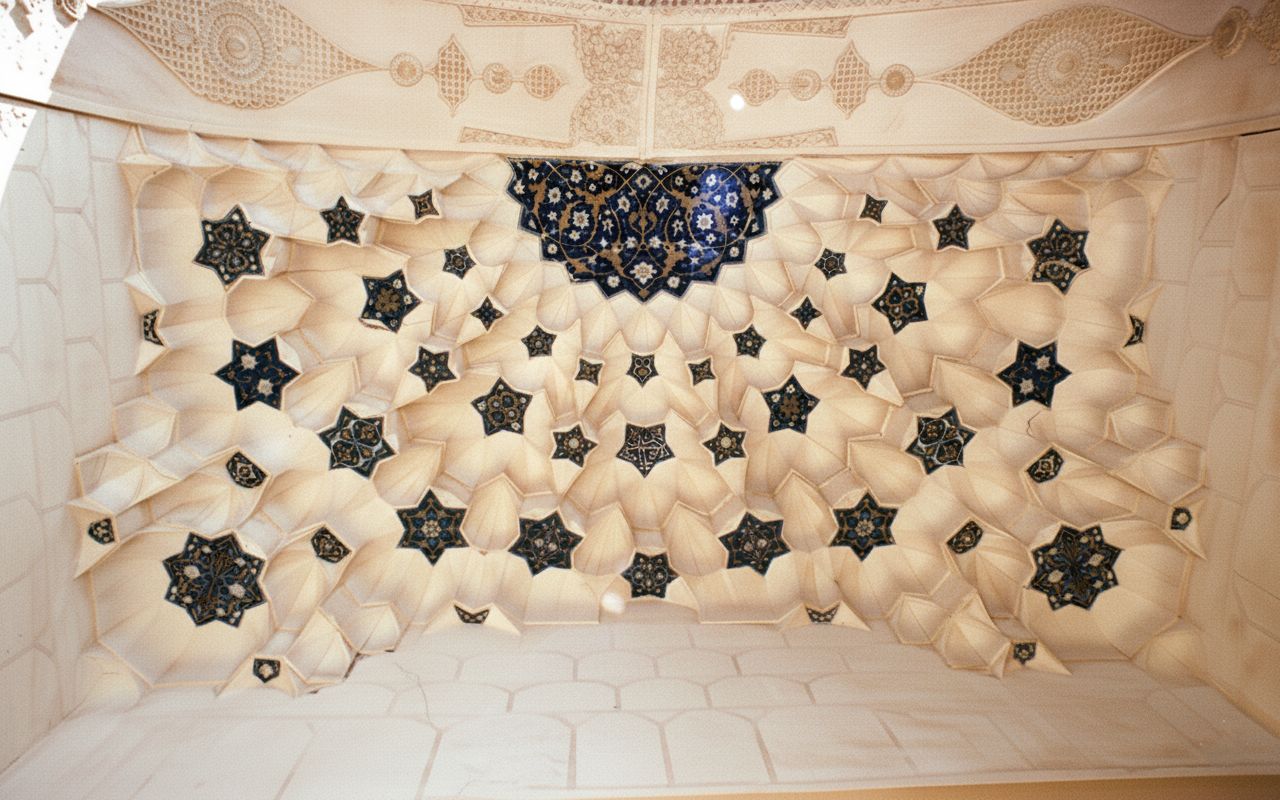
In the shrine complex of Shah Nimatullah Wali (شاه نعمتالله ولی), the سقف unfolds as a cascading constellation of cells, where Muqarnas (Persian: مقرنس) transforms solid structure into a layered field of niches. Through controlled انفصال (fragmentation) and a sense of بیوزنی (weightlessness), mass dissolves into light and shadow, guiding perception from the grounded base toward the ascending dome.
-
Muqarnas (مقرنس), often described as “stalactite vaulting” or the “Cellular Transition,” represents one of the most sophisticated expressions in the alchemy of geometry, where architecture dissolves from unified form into a cascade of articulated أجزاء (cells). Unlike Karbandi (کاربندی), the “Master Grid,” which organizes space through a structural network of ribs, or Rasmi-bandi (رسمیبندی), the “Weaver’s Grid,” which refines those networks into ornamental panels, and Yazdi-bandi (یزدبندی), the “Extended Grid,” which modularizes geometry into repeatable fields, Muqarnas abandons linear and planar logic altogether. Instead, it operates through a ثلاثیبعدی (three-dimensional), hierarchical subdivision of space into layered niches that mediate transitions between square bases and circular domes. While Kaseh-Sazi (کاسهسازی) also employs concave forms, it remains relatively uniform and cellular in repetition; Muqarnas, by contrast, introduces a tiered, cascading نظام (system) where each cell participates in a larger compositional gradient, creating a dynamic progression from unity to multiplicity.
Geometrically, Muqarnas is neither a grid nor a field, but a spatial algorithm of transformation, where each level subdivides and projects outward, producing a fractal-like continuity. It achieves dematerialization by converting solid tectonic form into a perceptual experience of weightlessness (بیوزنی) and fragmentation (انفصال): continuous, load-bearing surfaces are broken into hundreds of کوچکترین اجزا that project, recede, and capture light differently, obscuring the direct reading of structure and dissolving the sense of gravity. The سقف no longer reads as a heavy mass but as a suspended, luminous constellation of ordered parts. In the hierarchy of geometric systems, Muqarnas stands at the apex as a transitional mechanism, converting tectonic solidity into perceptual lightness while maintaining an underlying نظم (order).
This mastery is exemplified in the shrine complex of Shah Nimatullah Wali (شاه نعمتالله ولی) in Mahan, where Muqarnas articulates iwans and domed transitions with extraordinary depth and intricacy. Here, the سقف unfolds as a cascading constellation of cells, guiding the eye from the earthly مربع to the celestial گنبد, embodying the philosophical passage from وحدت (unity) to کثرت (multiplicity). In this sense, Muqarnas is not merely decorative—it is the culmination of the alchemy of geometry, where structure, ornament, and metaphysical meaning converge into a single, immersive spatial experience.
