Na’in (نائین) Nexus of Architecture, Infrastructure, and Nature
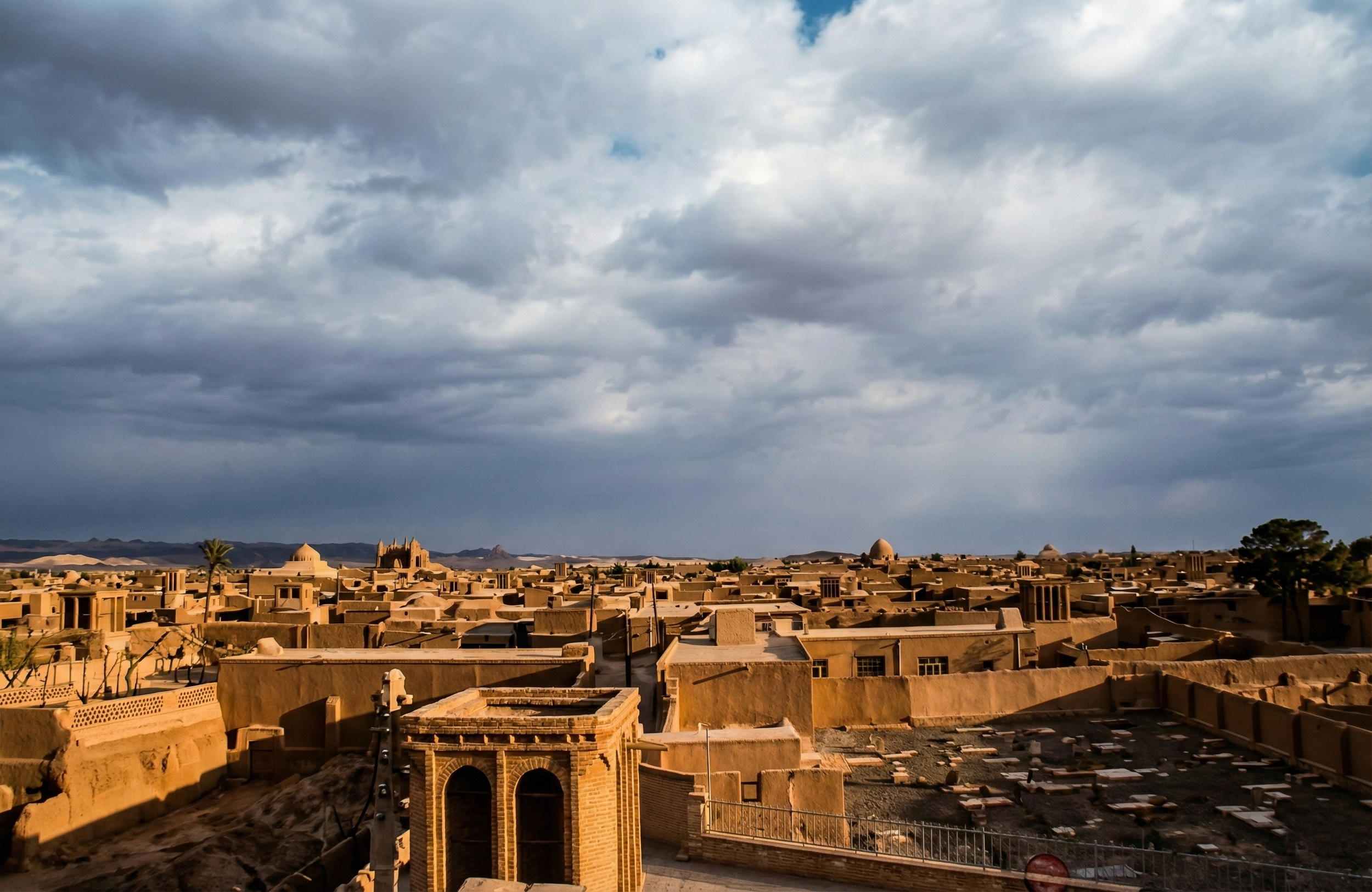
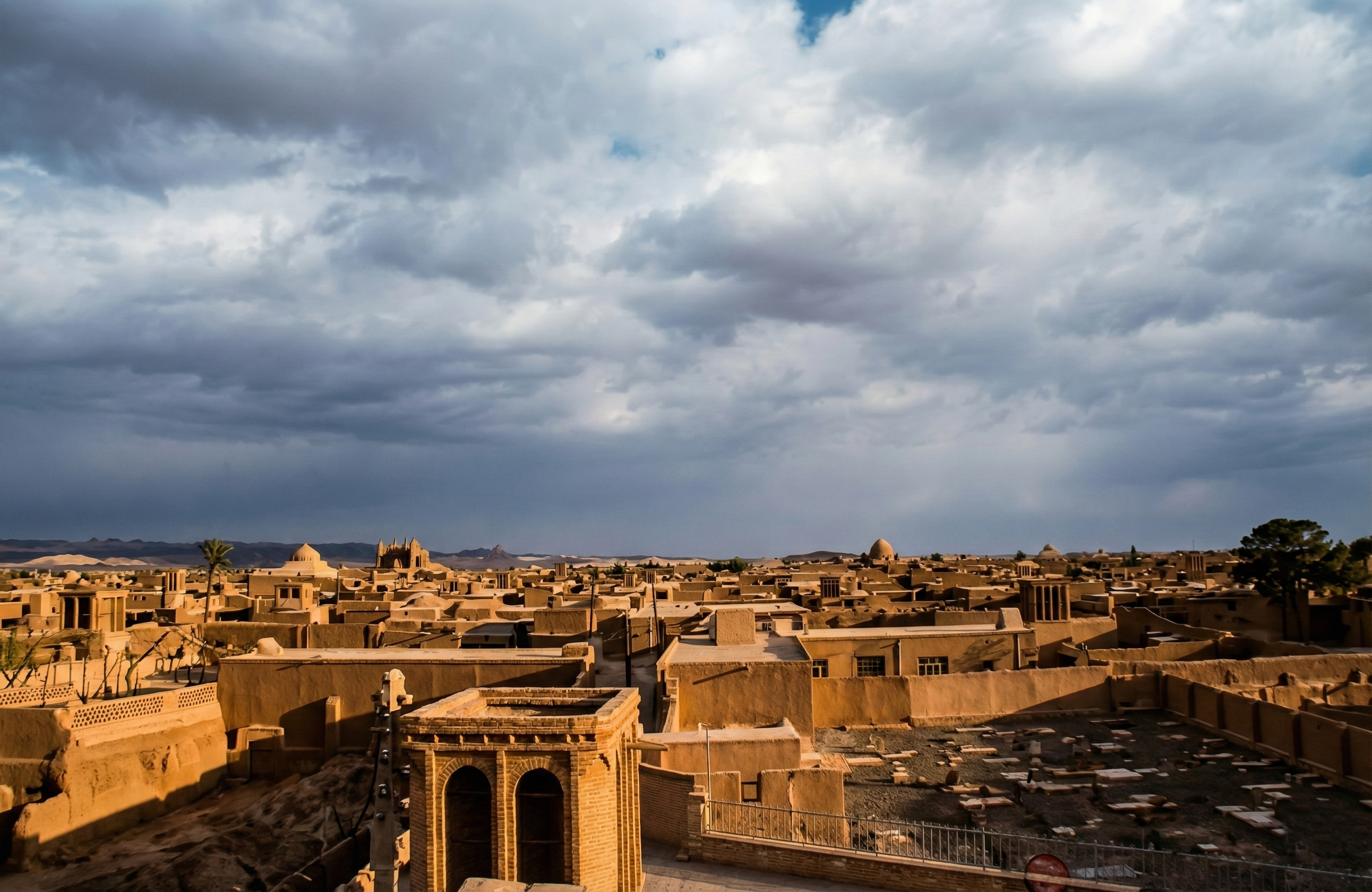
Na’in (نائین), with origins in the Achaemenid (c. 550–330 BCE) and Sassanian (224–651 CE) periods, developed as a Silk Road oasis sustained by qanats (قناتها) and trade. Its compact fabric of khesht houses (خشت), Kucheh-hā-ye Bārīk (کوچههای باریک), and courtyard dwellings surrounds the Jameh Mosque (مسجد جامع نائین, 10th century CE), integrating climate adaptation, infrastructure, and communal urban life.
-
Na’in (نائین) is one of Iran’s oldest continuously inhabited desert cities, with origins tracing to the Achaemenid period (c. 550–330 BCE) and the Sassanian era (224–651 CE). Located along historic routes connected to the Silk Road (جاده ابریشم), the city flourished as a commercial and oasis settlement supported by trade, textile production, and qanat irrigation (قناتها). Historically known for fine wool cloaks and later for its celebrated Na’in carpets, the city developed a compact urban fabric shaped by centuries of commerce and environmental adaptation.
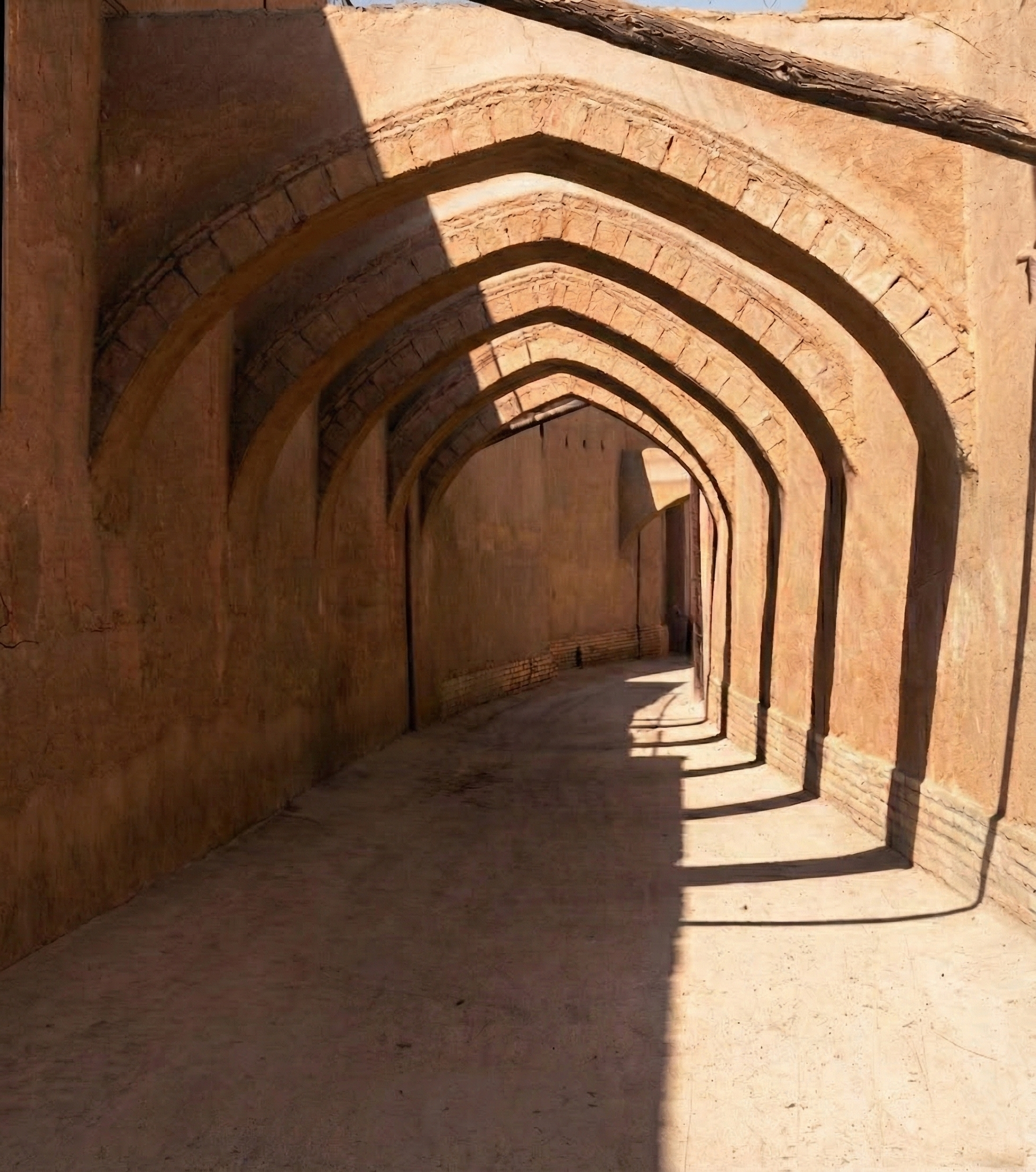
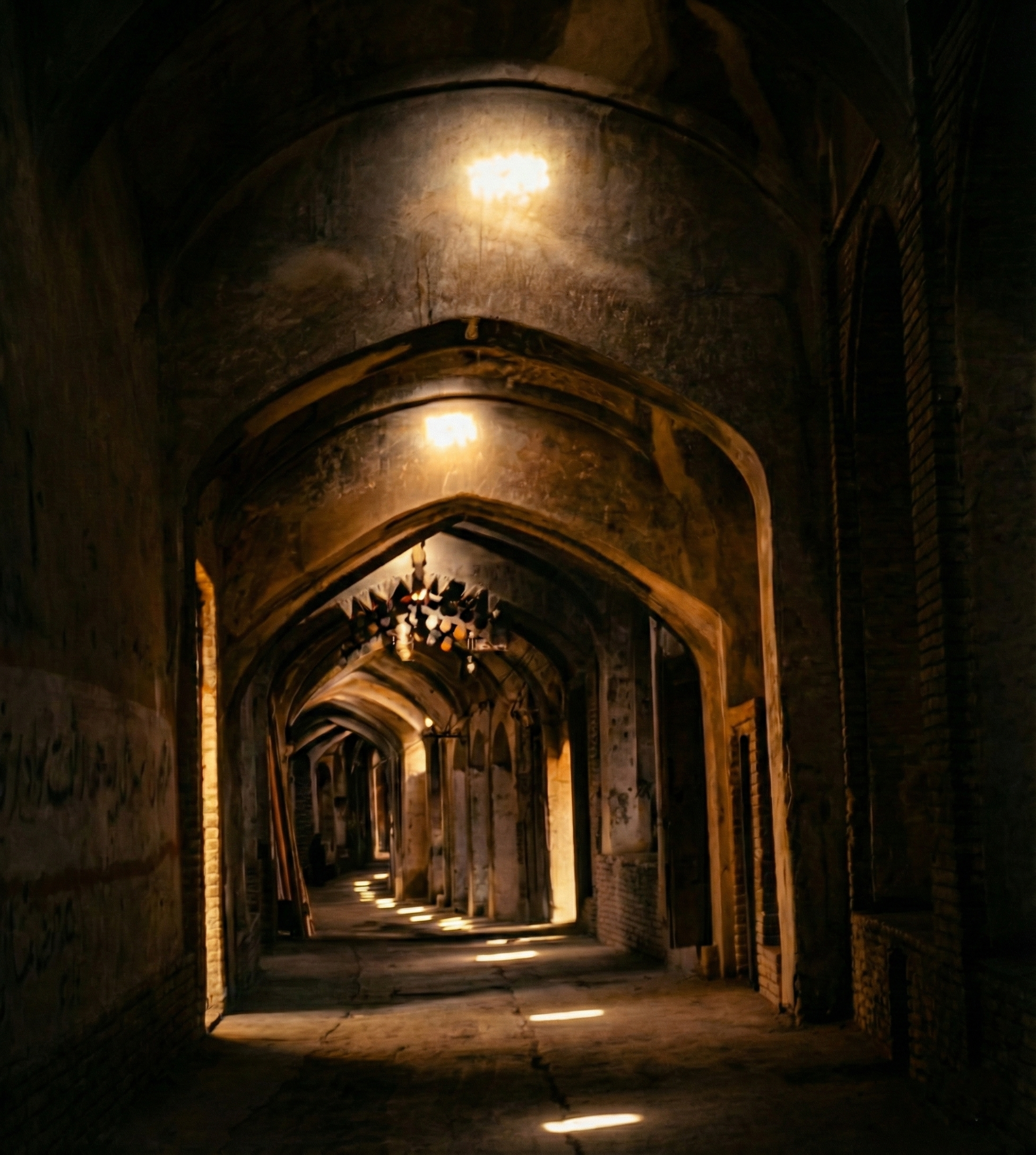
The urban structure of Na’in reflects classic principles of desert architecture, characterized by tightly clustered adobe houses built of khesht (خشت), narrow shaded alleys, and inward-looking courtyard residences designed to protect inhabitants from intense heat, dust storms, and solar exposure. The dense fabric also includes Kucheh-hā-ye Bārīk (کوچههای باریک)—narrow winding alleys that reduce solar radiation, channel airflow, and encourage daily social interaction among residents, reinforcing a strong communal fabric within the historic settlement.
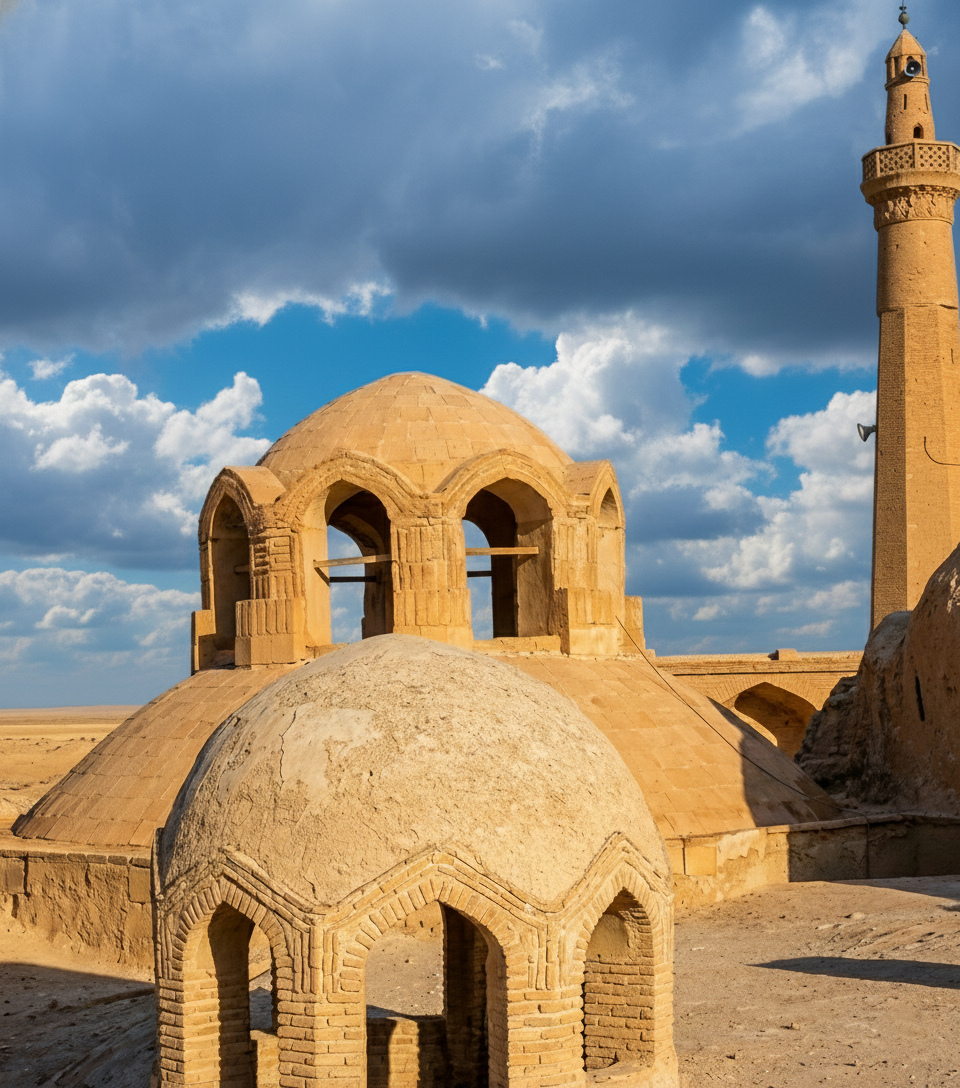
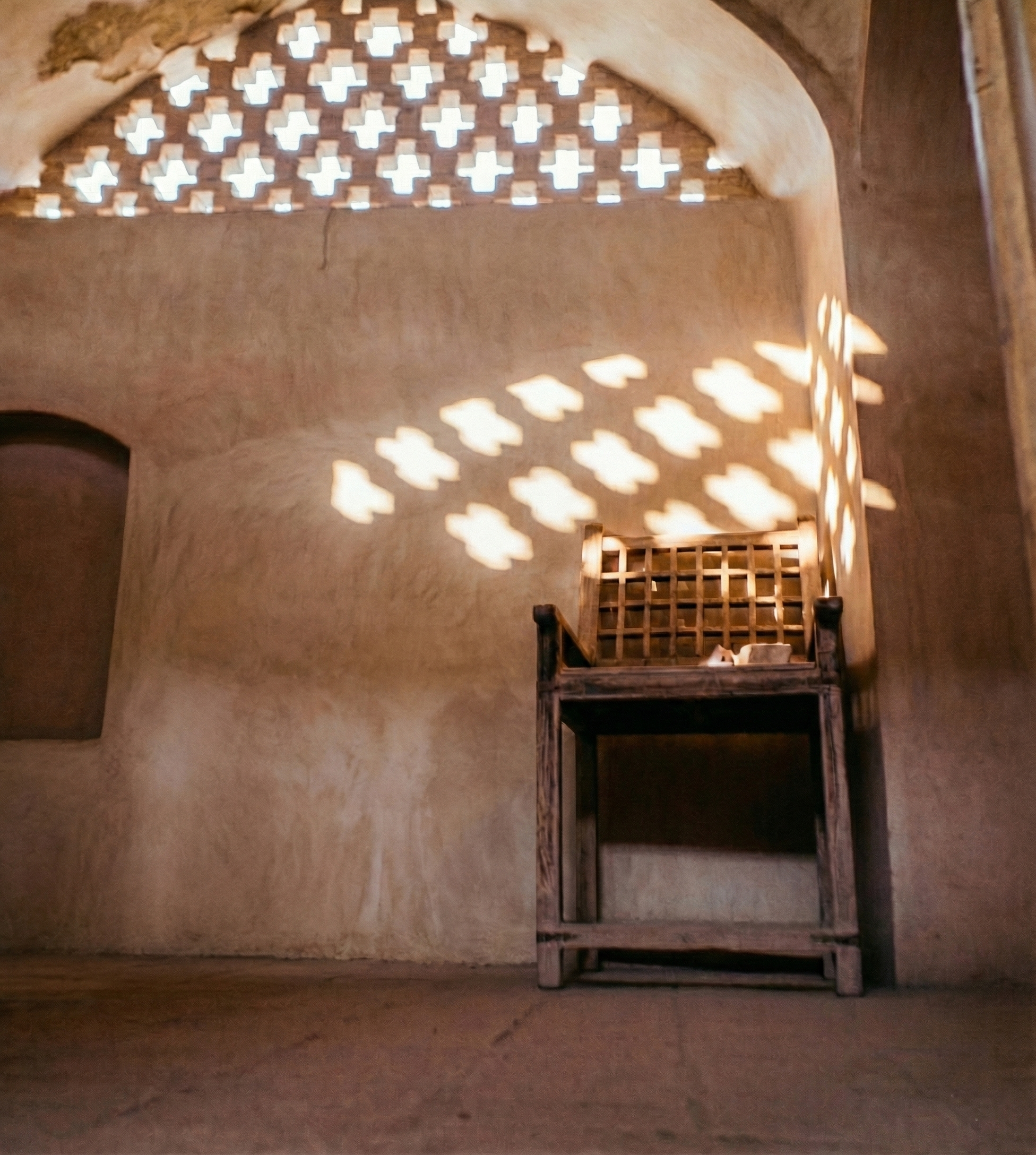
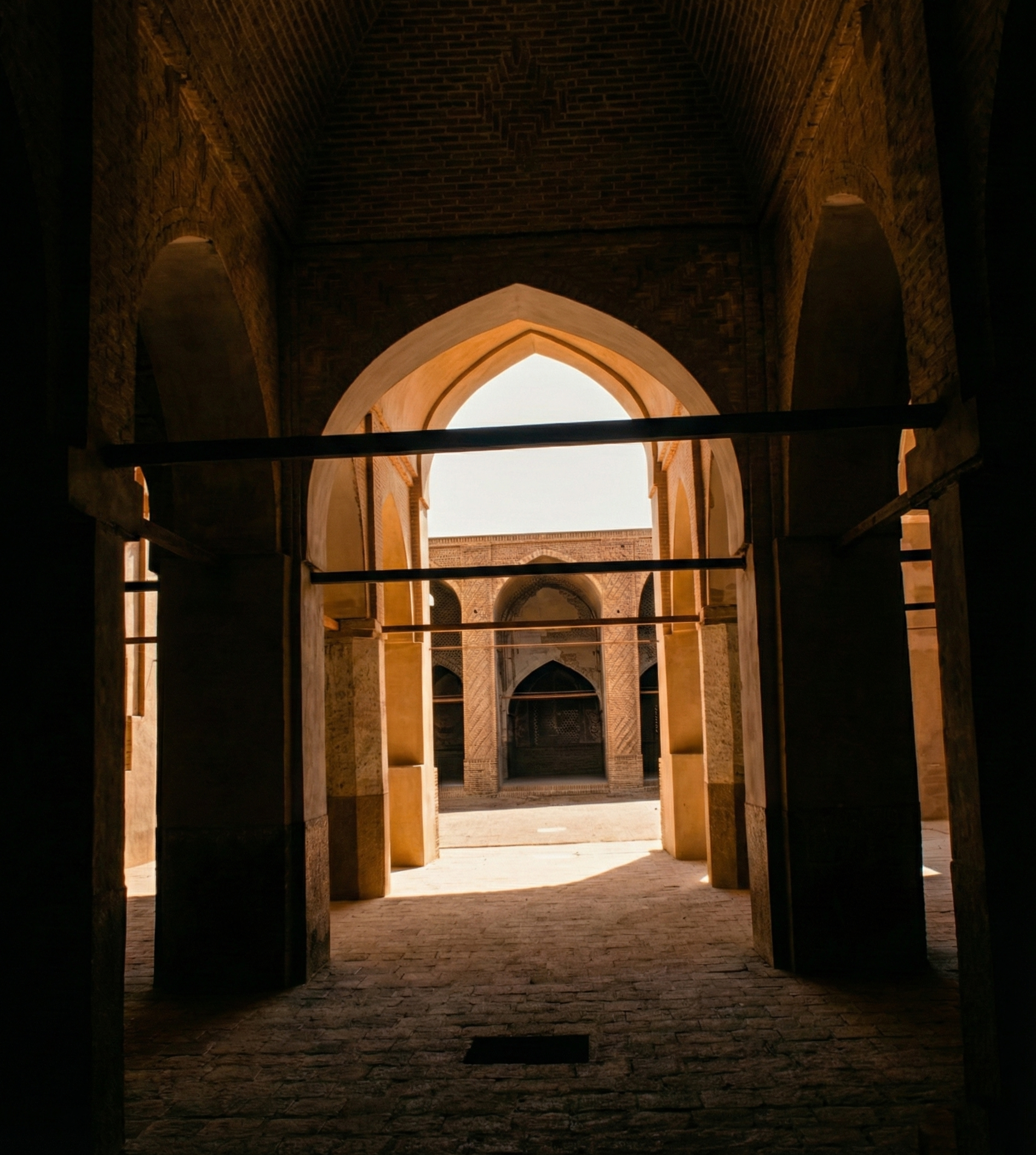
At the center of the city stands the Jameh Mosque of Na’in (مسجد جامع نائین), originally constructed in the 10th century CE (4th century AH) and considered one of the earliest surviving congregational mosques in Iran. The mosque follows a hypostyle plan, supported by rows of columns, and is particularly celebrated for its finely carved stucco mihrab, decorated with intricate vegetal and calligraphic patterns that reflect early Islamic architectural refinement.
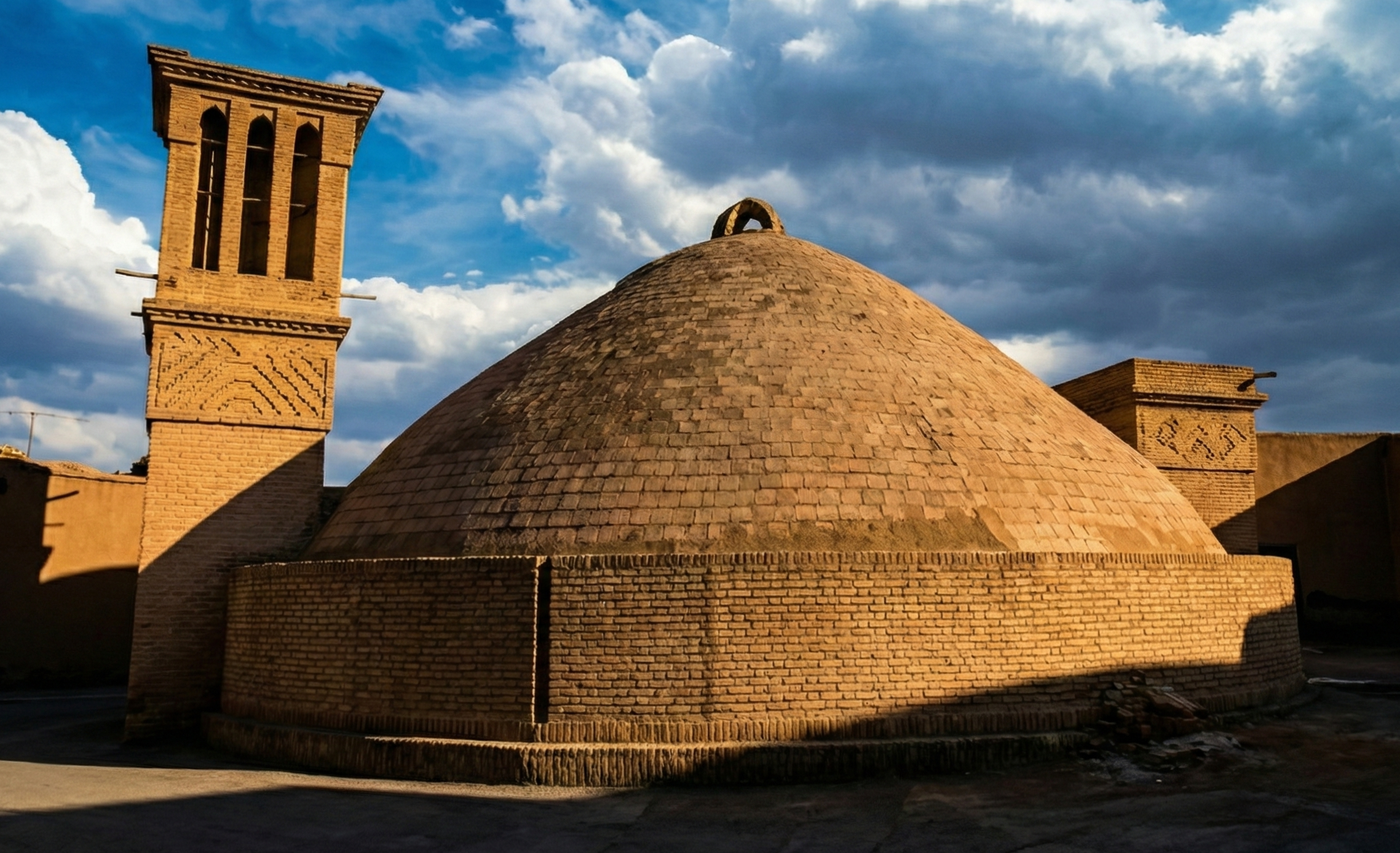
The surrounding urban network includes the bazaar (بازار), residential quarters, gardens, and civic spaces, which together form a cohesive, walkable settlement. Traditional infrastructure demonstrates remarkable environmental ingenuity. Ab-anbars (آبانبارها) served as underground water reservoirs, storing water supplied by qanats (قناتها), while badgirs (بادگیرها) ventilated homes and public buildings. Subterranean spaces known as Sardābs (سرداب) provided thermally insulated living areas during the intense summer heat.
Residential architecture centers around inward-facing courtyards containing small gardens or baghcheh (باغچه). Surrounded by thick earthen walls and shaded iwans (ایوان), these spaces create localized microclimates that regulate temperature and humidity throughout the year. Decorative and structural techniques, including Fakhr-o-Madin (فخر و مدین) brickwork and Hoorno (هورنو) vaulting, further enrich the city’s earthen architectural landscape.
Together, the architectural elements and infrastructure of Na’in (نائین) demonstrate a sophisticated integration of climate adaptation, craftsmanship, and social organization that has shaped desert settlements across the Iranian plateau for more than a millennium.
(It is worth noting that the name “Nain” also appears in the New Testament—Luke 7:11–17—referring to a town in Lower Galilee near Mount Tabor along the ancient Via Maris; however, this biblical Nain is geographically and historically distinct from Na’in (نائین) in Iran.)