Kucheh-hā-ye Bārīk (کوچههای باریک) of Na’in
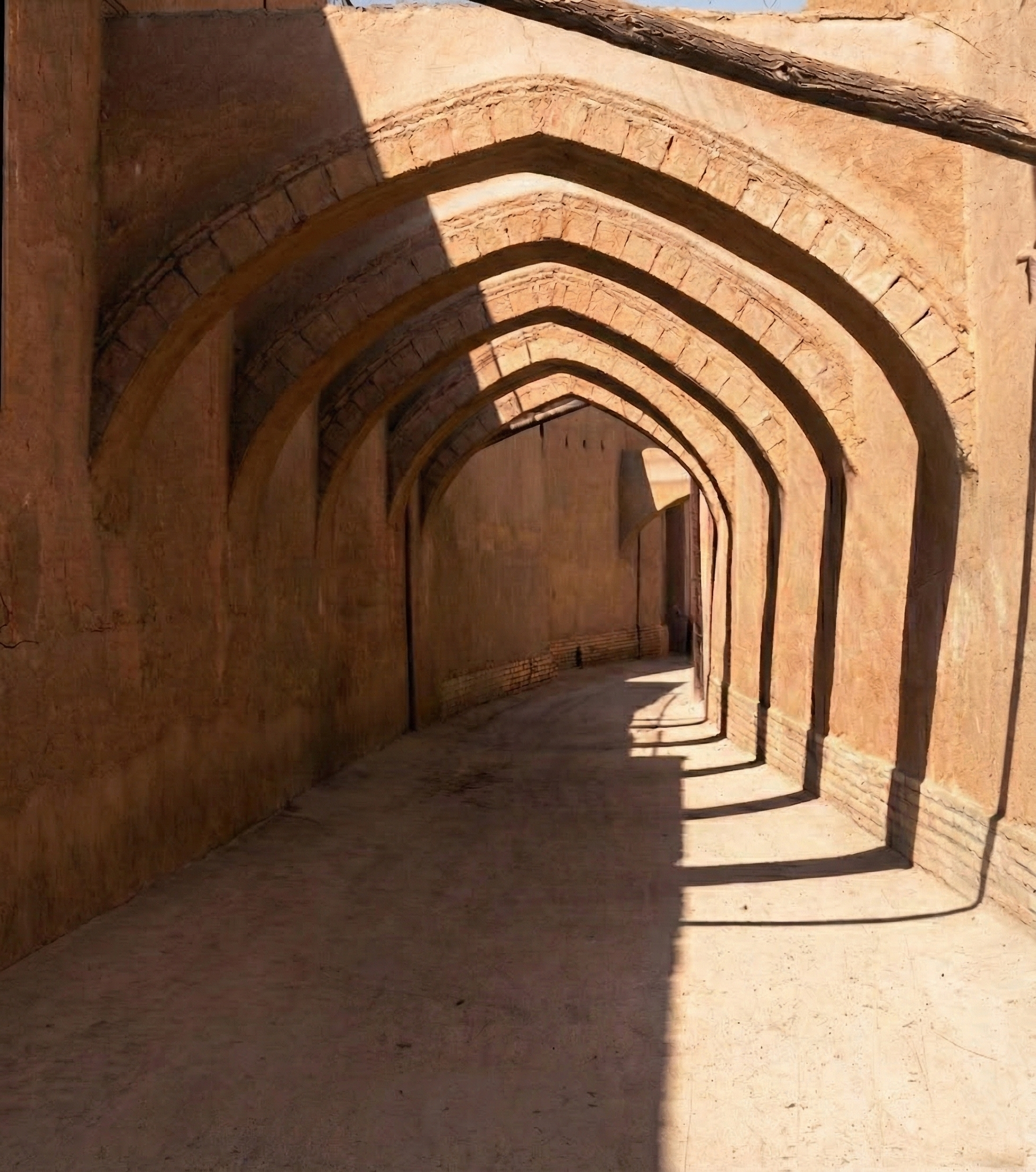
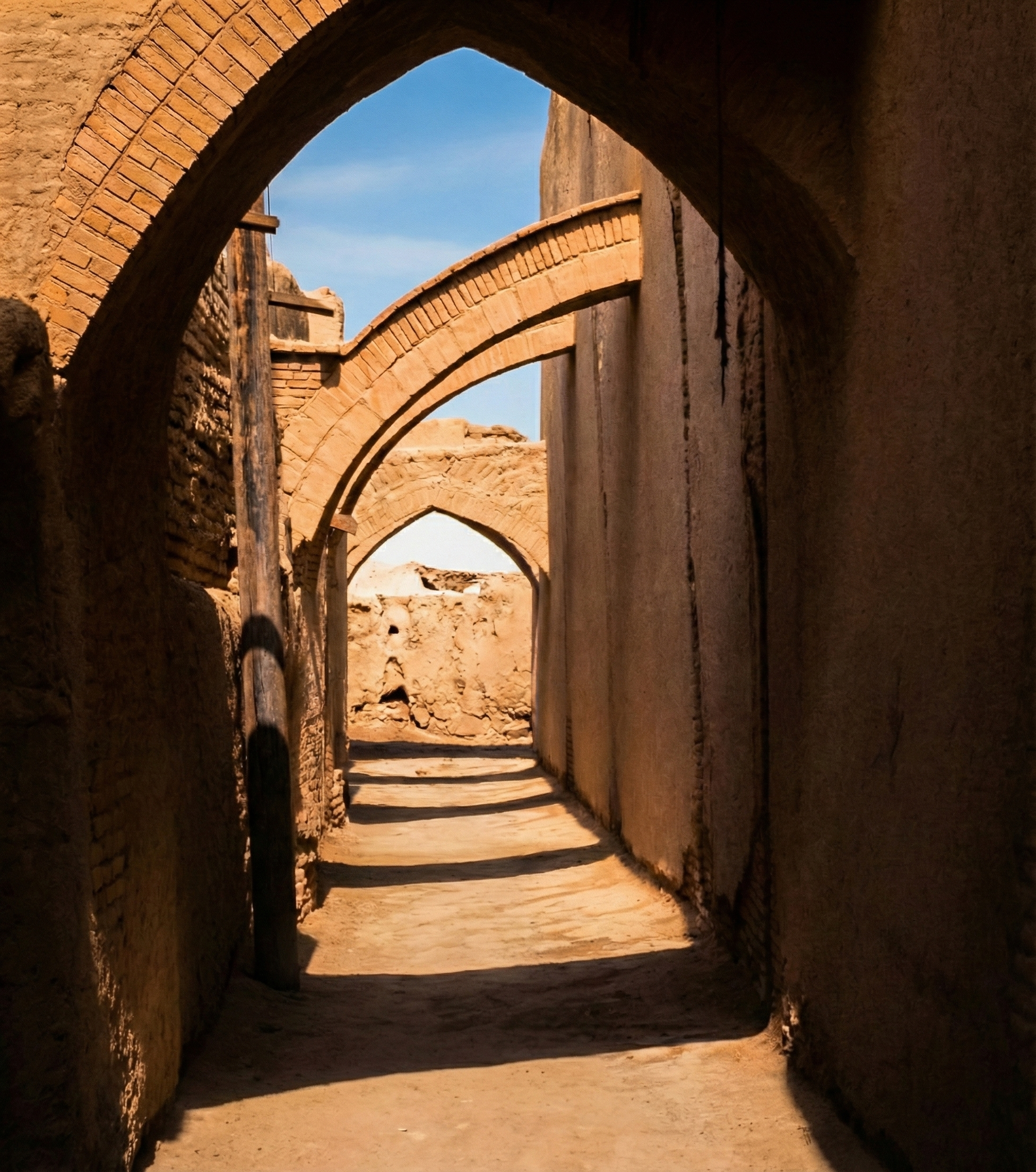
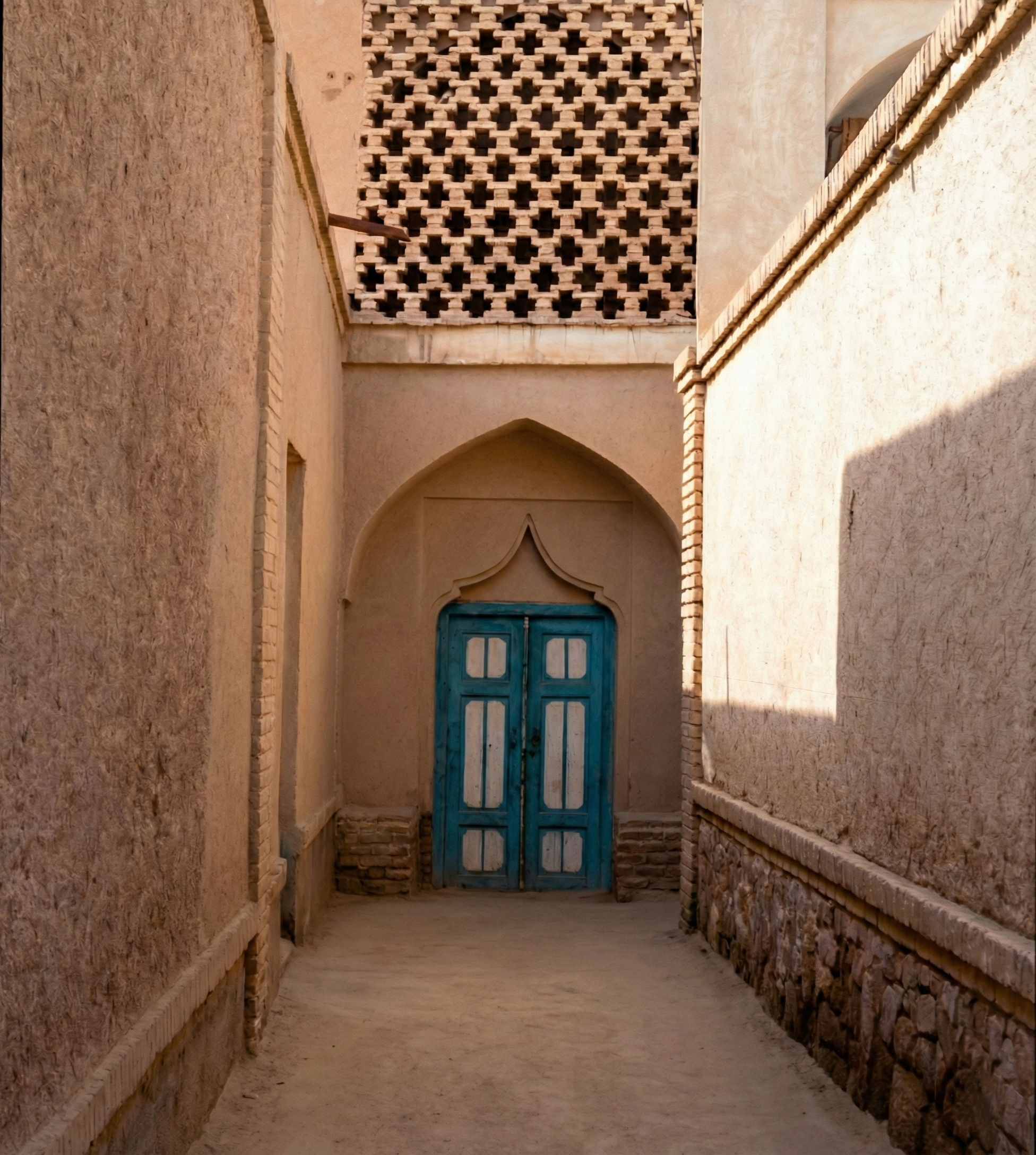
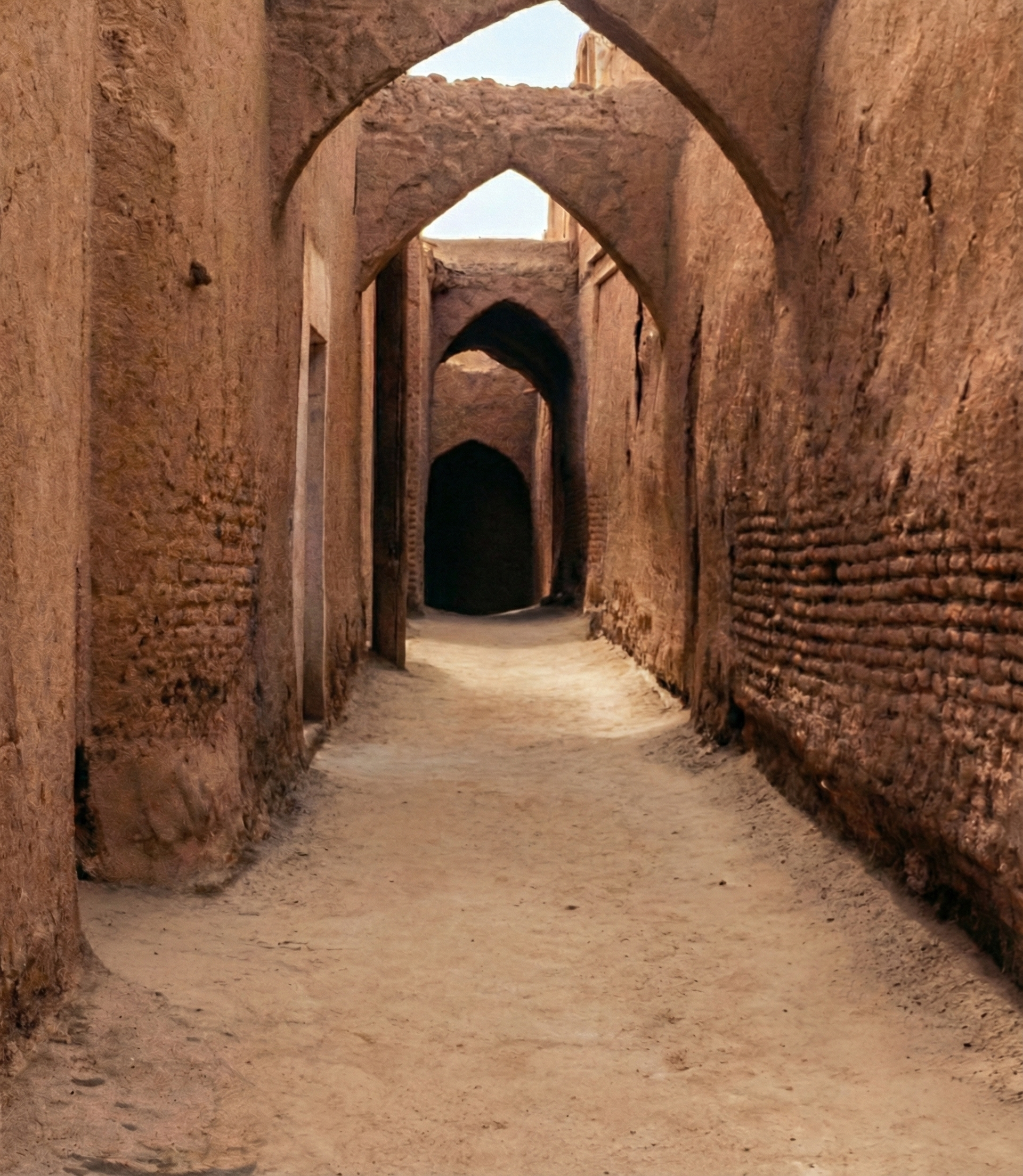
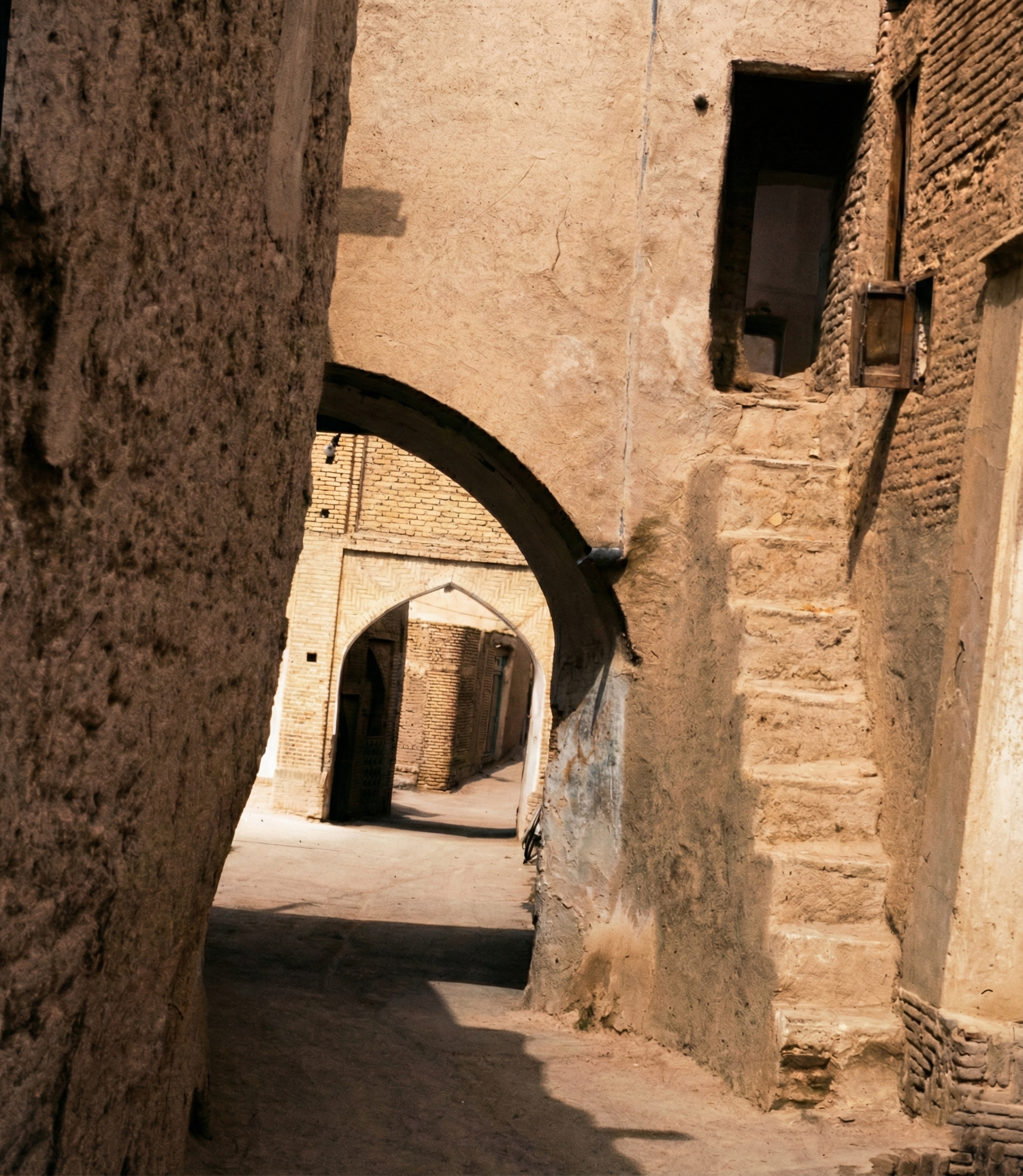
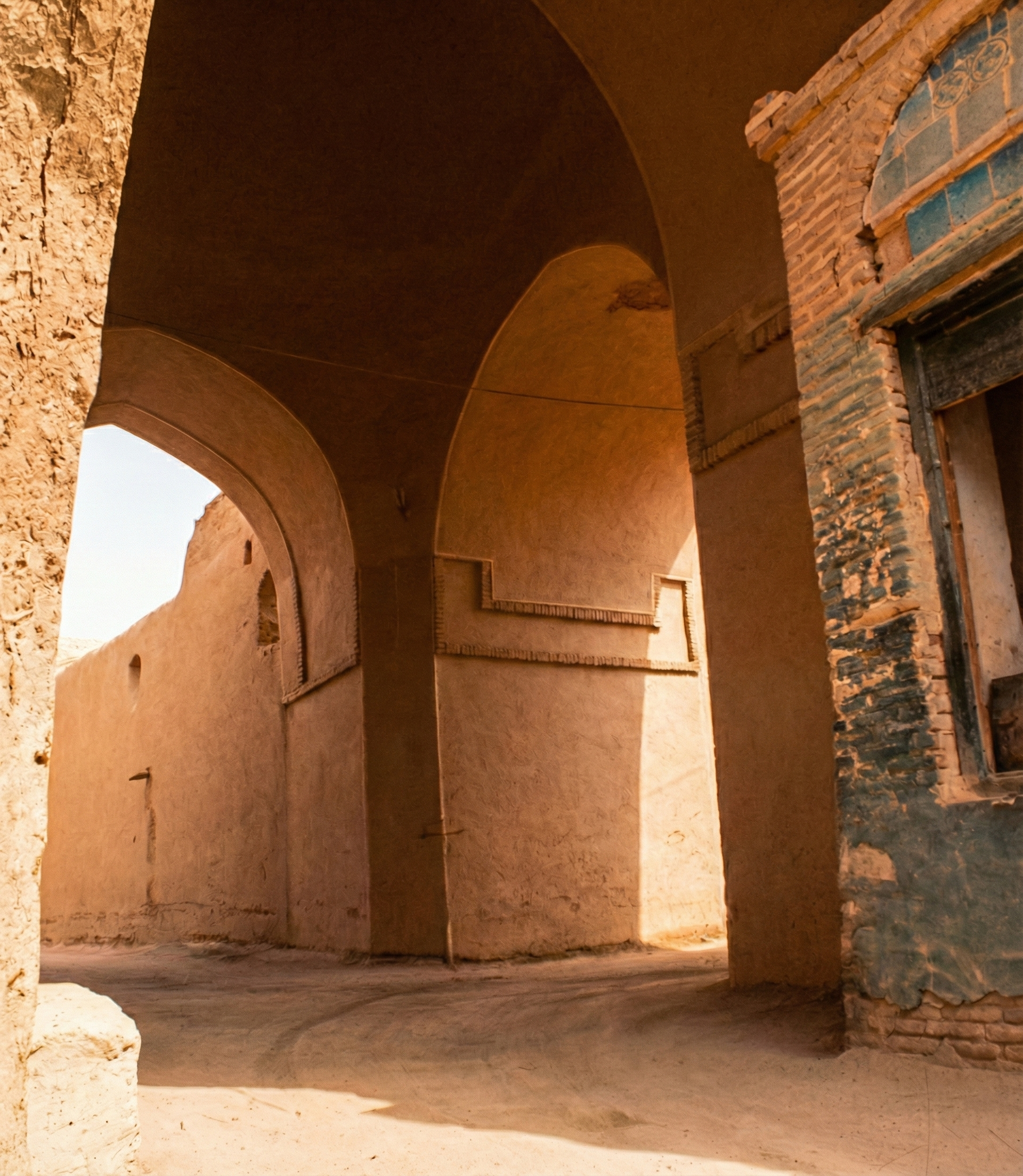
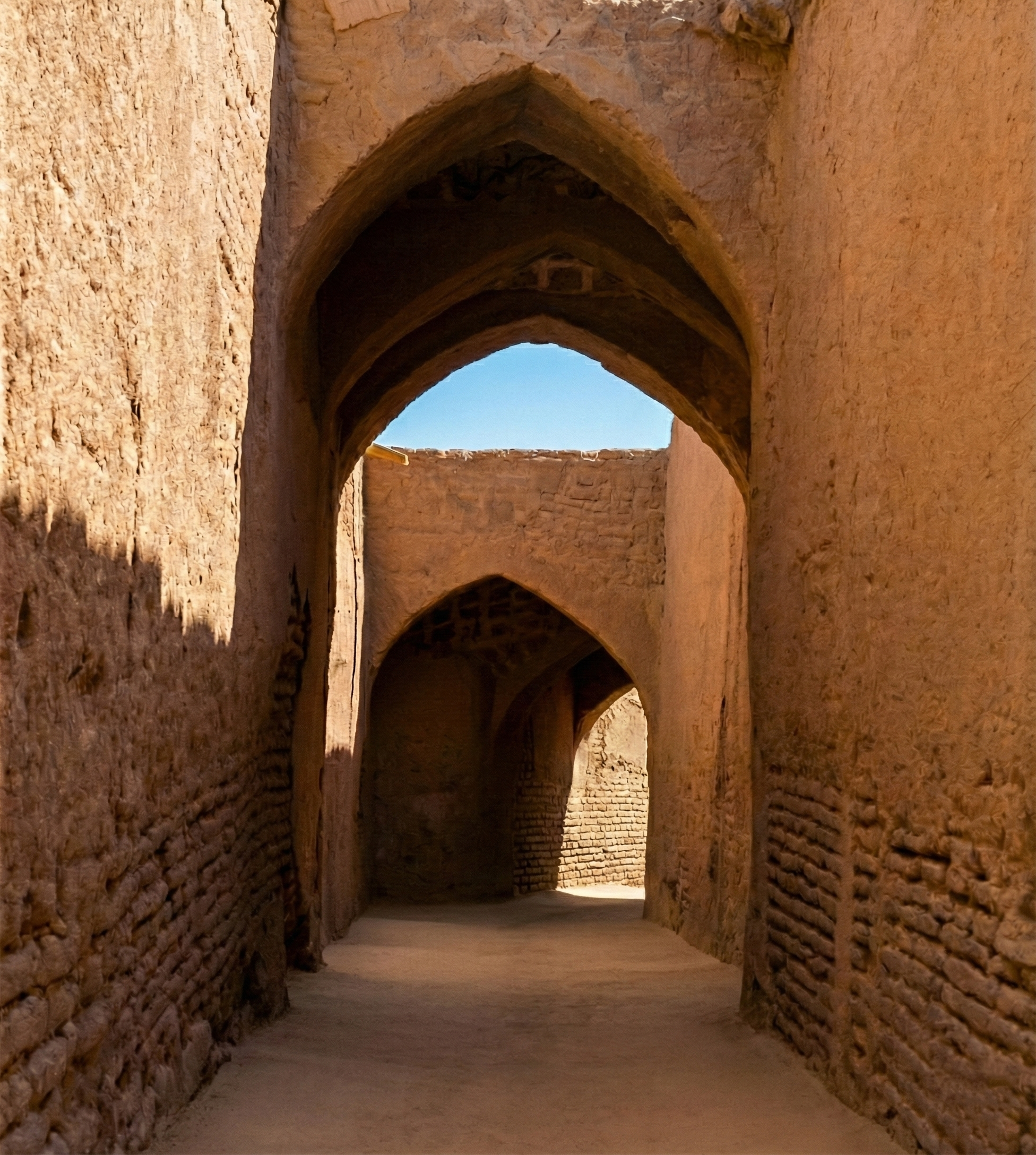
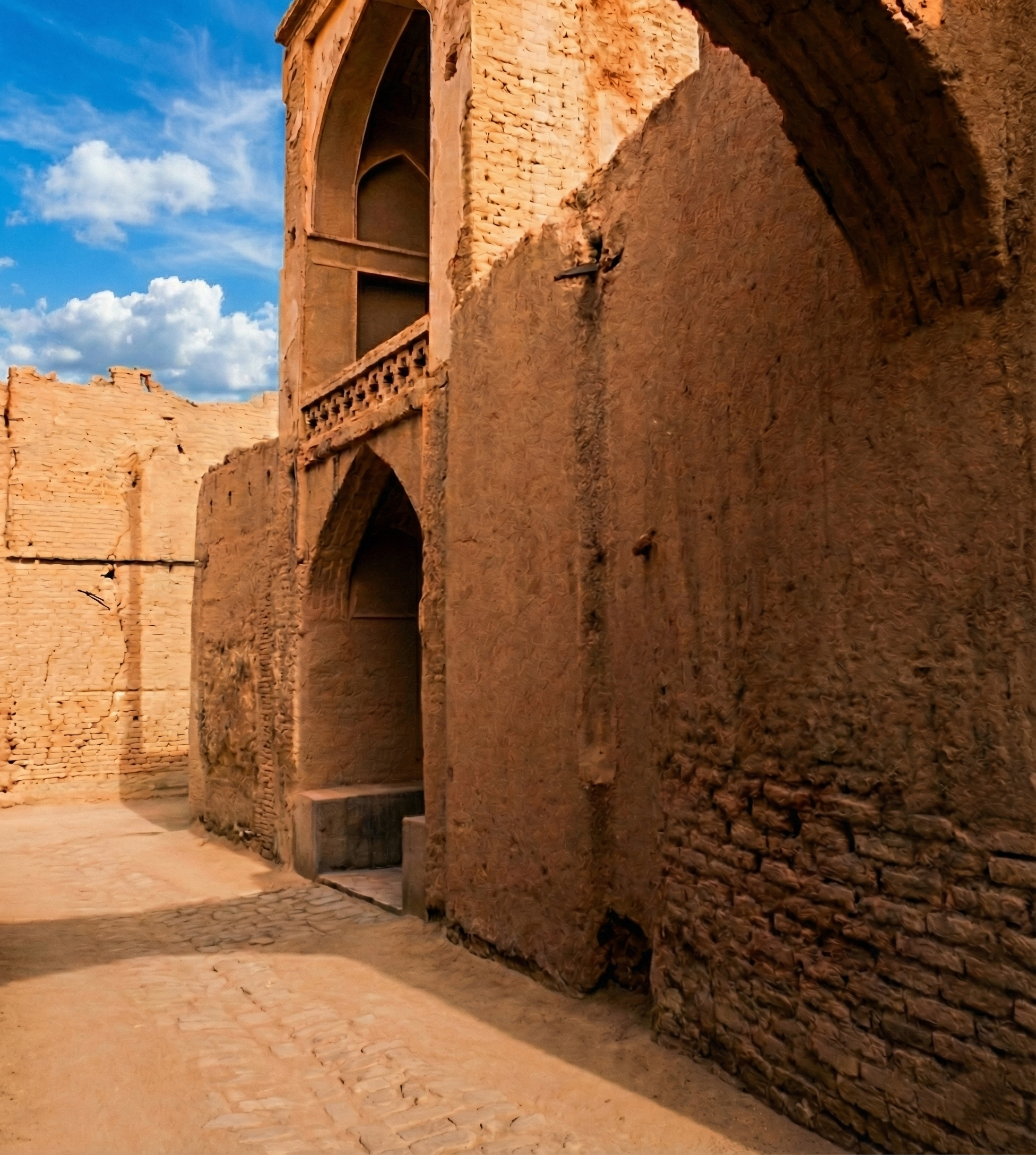
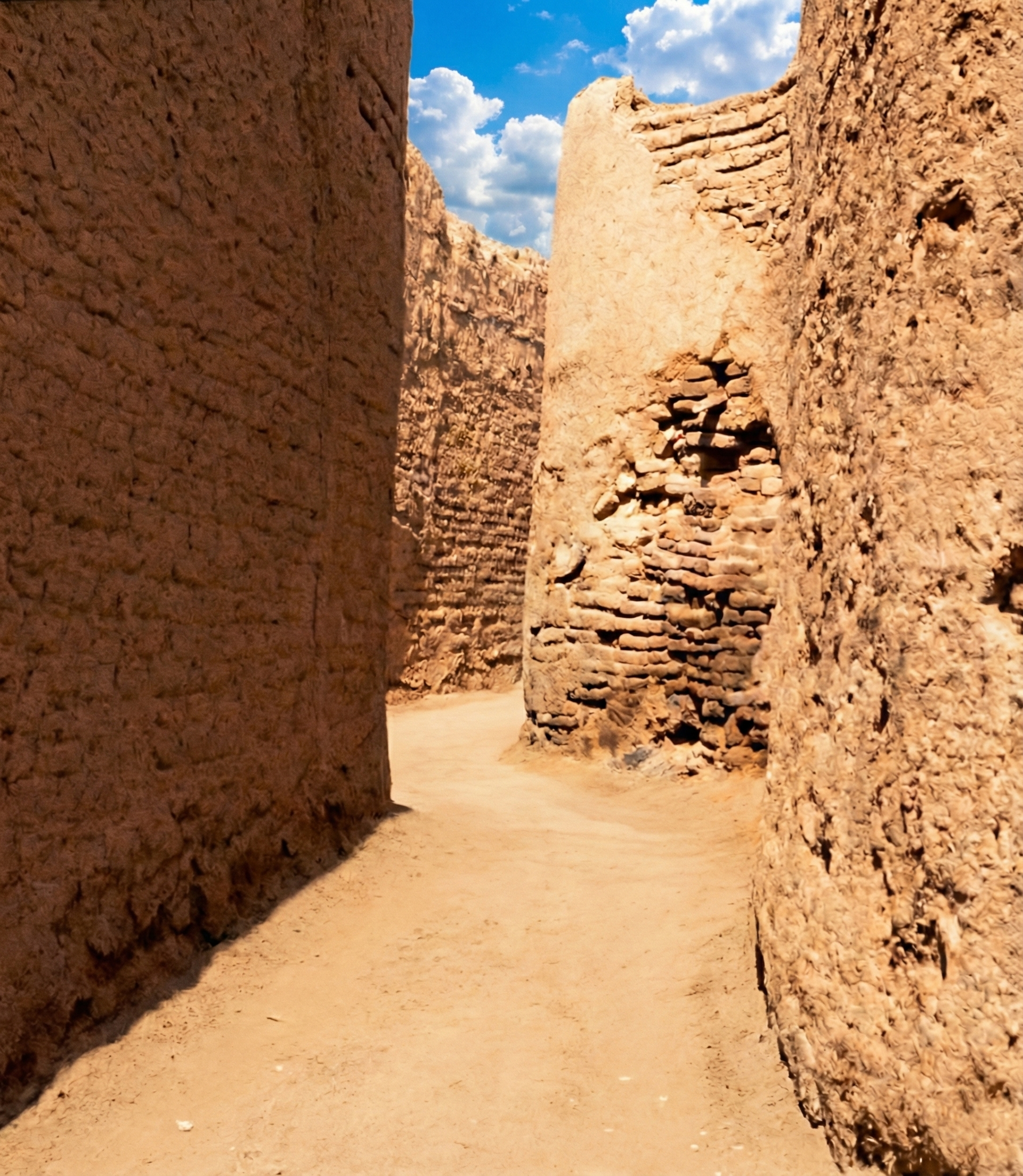
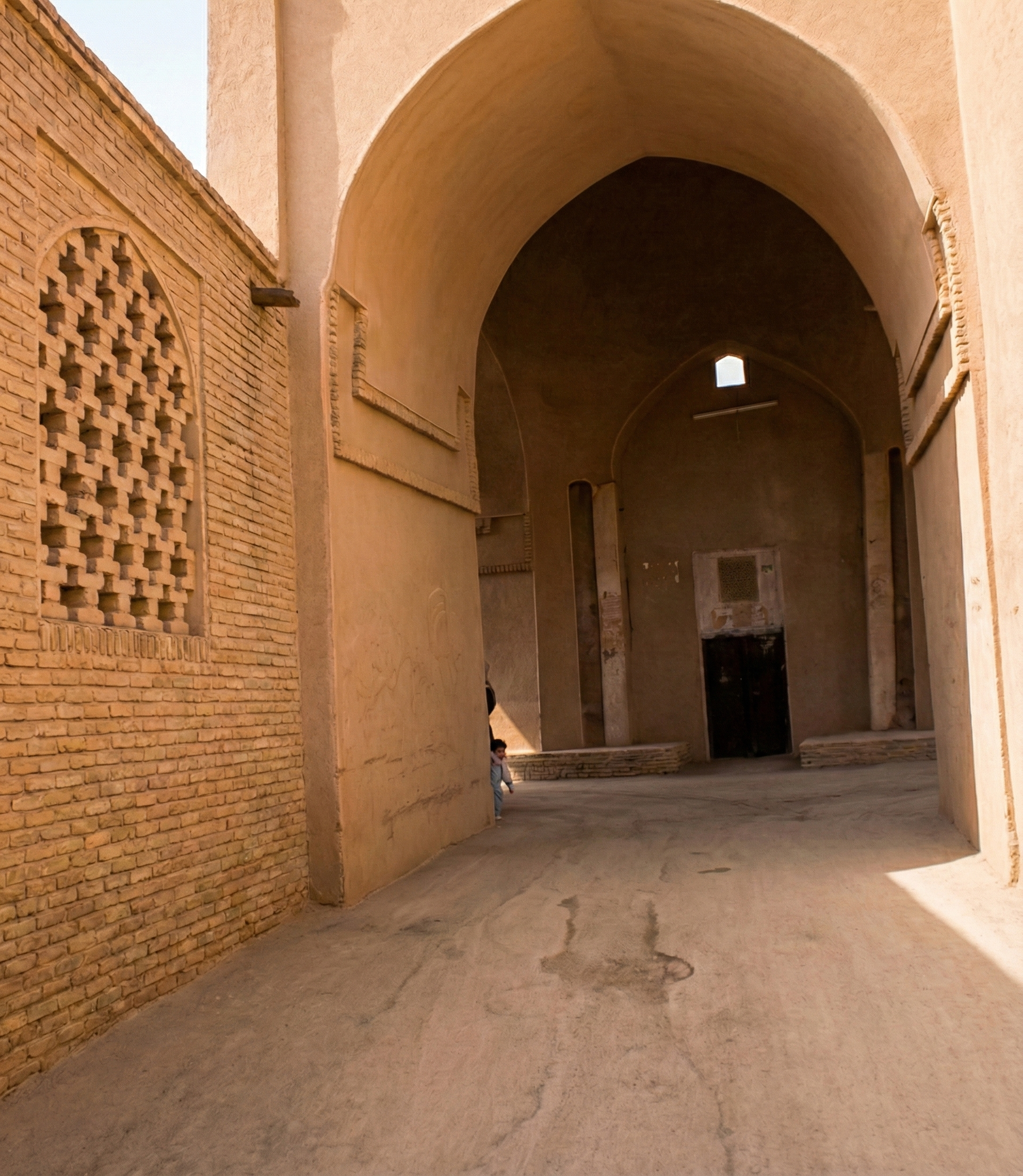
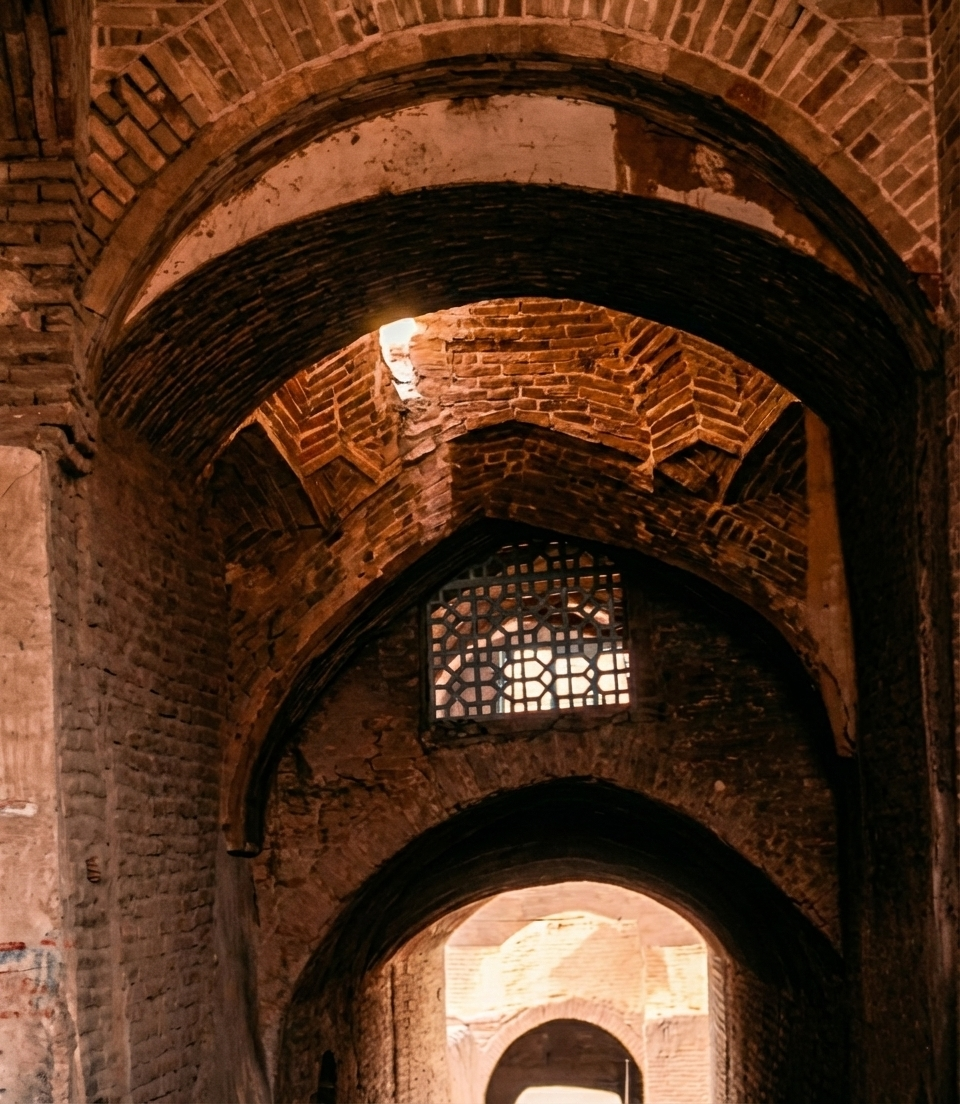
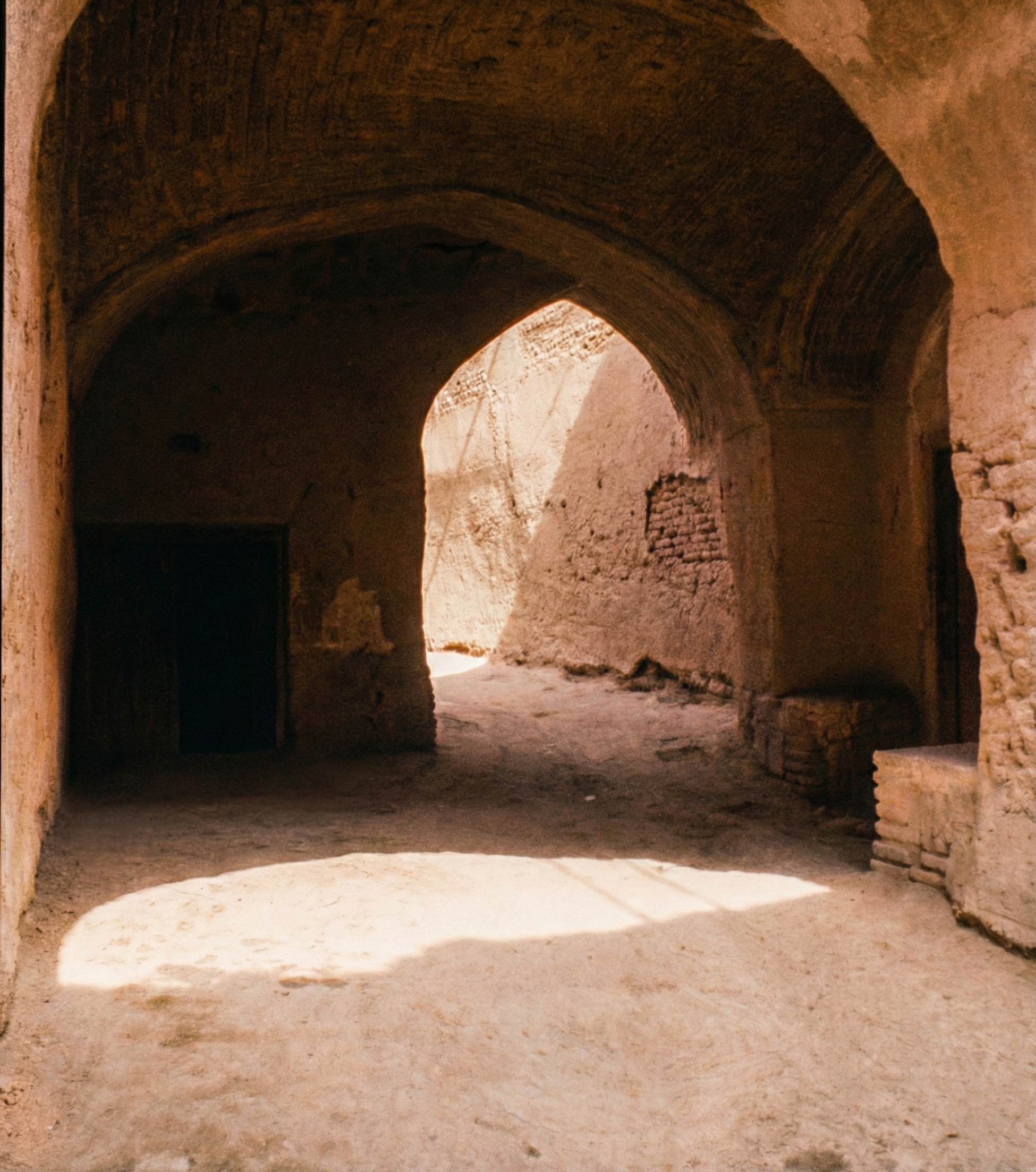
Kucheh-hā-ye Bārīk (کوچههای باریک) in Na’in (نائین), developed during the medieval Islamic period (10th–12th centuries CE), are narrow, shaded alleys that reduce solar exposure and channel airflow. Their adobe walls moderate temperature, while their intimate scale fosters neighborhood interaction, linking climate-responsive design with everyday social life.
-
Kucheh-hā-ye Bārīk (کوچههای باریک), the narrow winding alleys of Na’in (نائین), are fundamental to the city’s climate-responsive urban design. Developed over centuries, particularly from the medieval Islamic period (10th–12th centuries CE) onward, these compressed passageways minimize direct solar exposure and create continuous shade throughout the day. Their high adobe walls store thermal mass, moderating temperature fluctuations, while their irregular geometry slows desert winds and channels cooler air through the urban fabric.
Beyond environmental performance, Kucheh-hā-ye Bārīk structures social life. Their intimate scale encourages face-to-face encounters, spontaneous conversation, and neighborhood cohesion. Acting as semi-private transitional spaces between home and city, they reinforce communal identity while preserving privacy—demonstrating how spatial form, climate adaptation, and social structure are seamlessly intertwined in Na’in’s historic fabric.
