Section V — Shiraz: The City of Gardens and Poetry
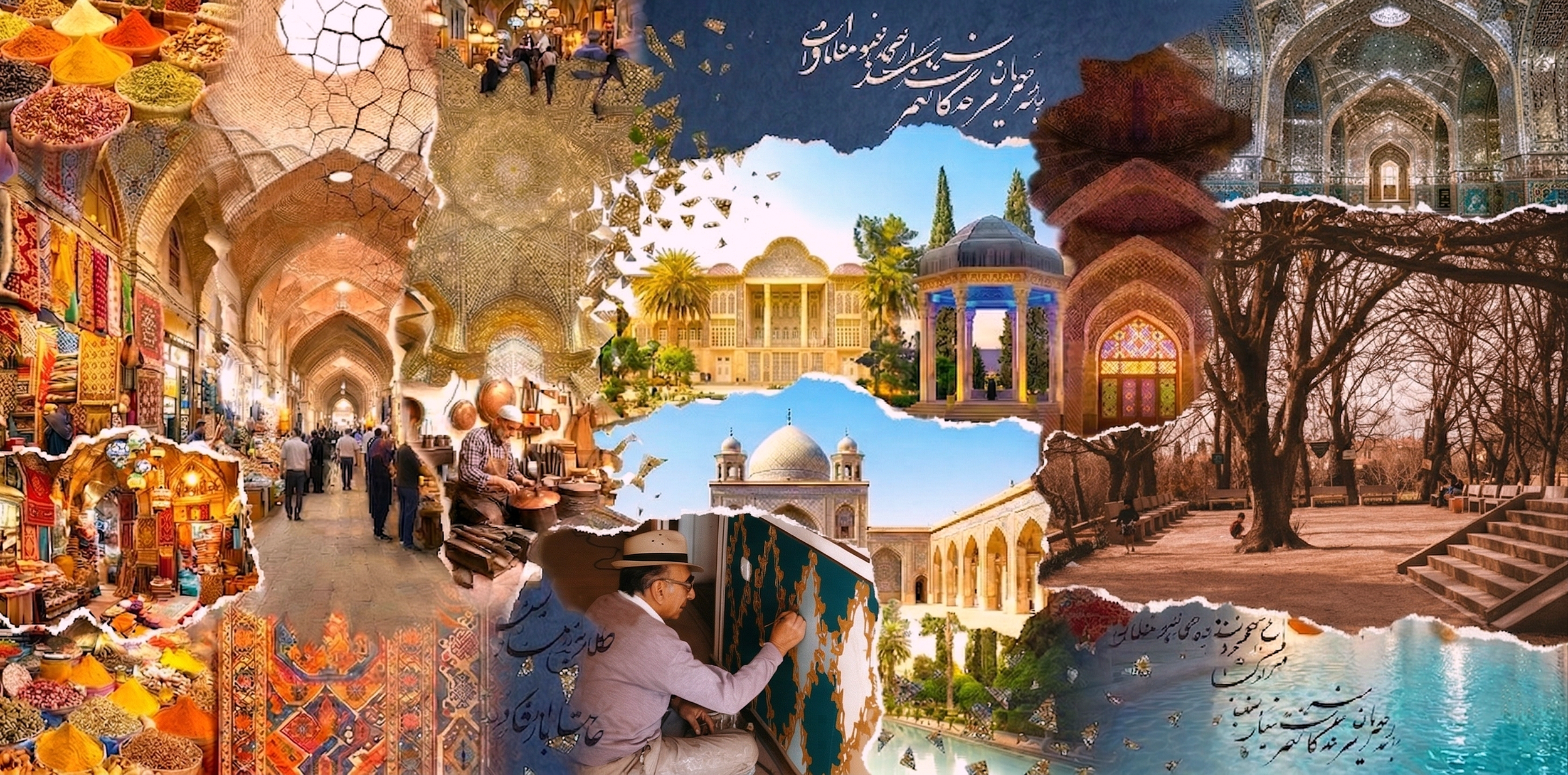
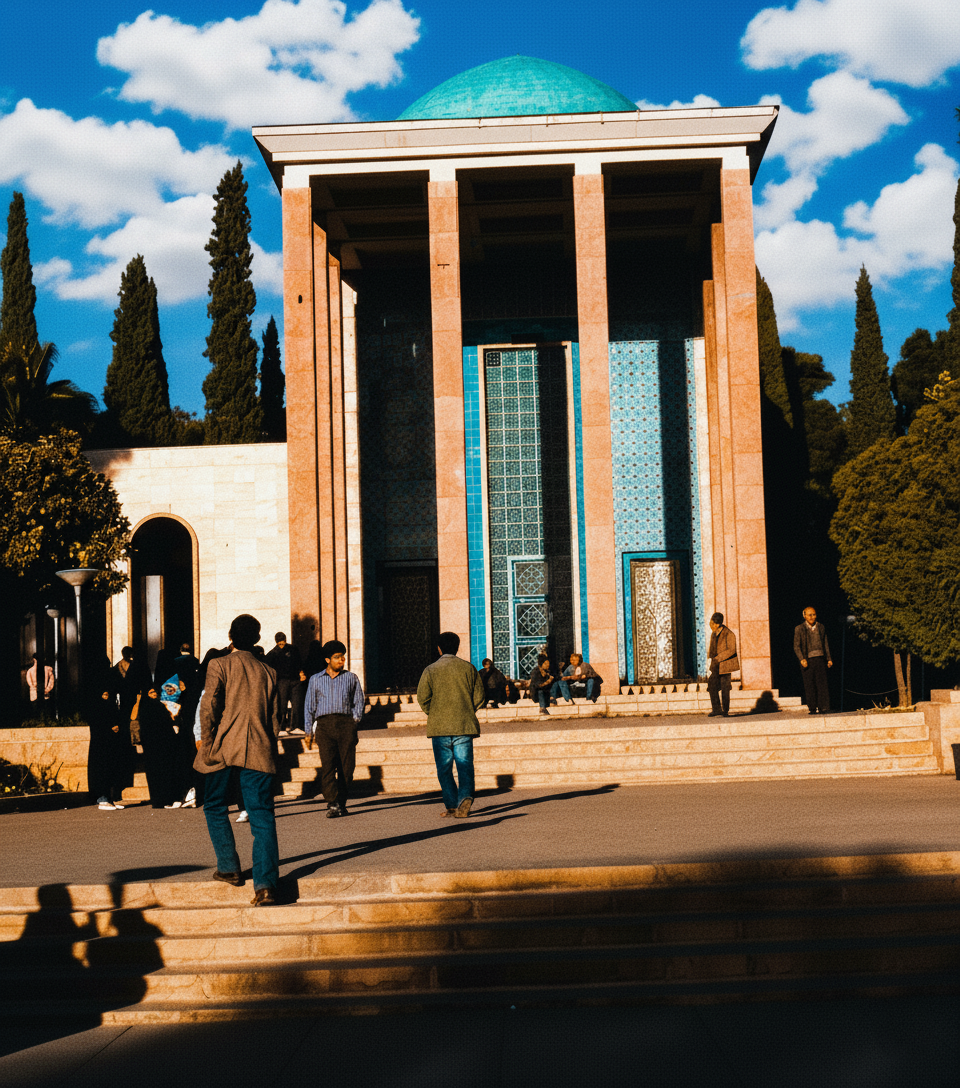
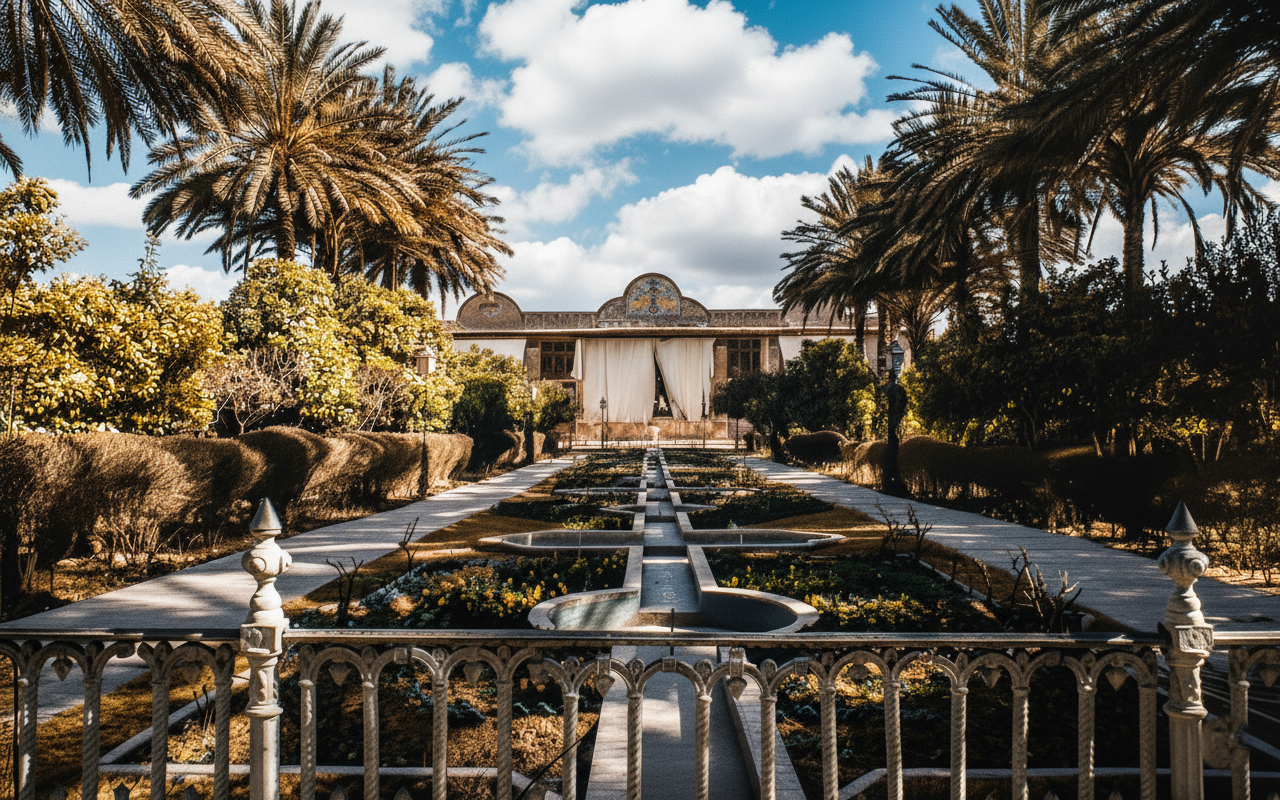
Shiraz (شیراز), in Iran’s Fars Province, has long been celebrated for its poetry, gardens, and refined urban culture. Flourishing along Silk Road routes, the city reached a cultural peak under Karim Khan Zand (1751–1794), who transformed it into a capital marked by human-scale architecture and civic harmony. His Vakil complex—featuring the Arg citadel, Vakil Mosque, Bazaar, and Bathhouse—formed the heart of Shiraz’s political and commercial life. Beyond this core, gardens like Eram and residences such as Narenjestan-e Qavam, along with the shrines of poets Saadi and Hafez, express the city’s enduring connection between landscape, literature, and architecture.
-
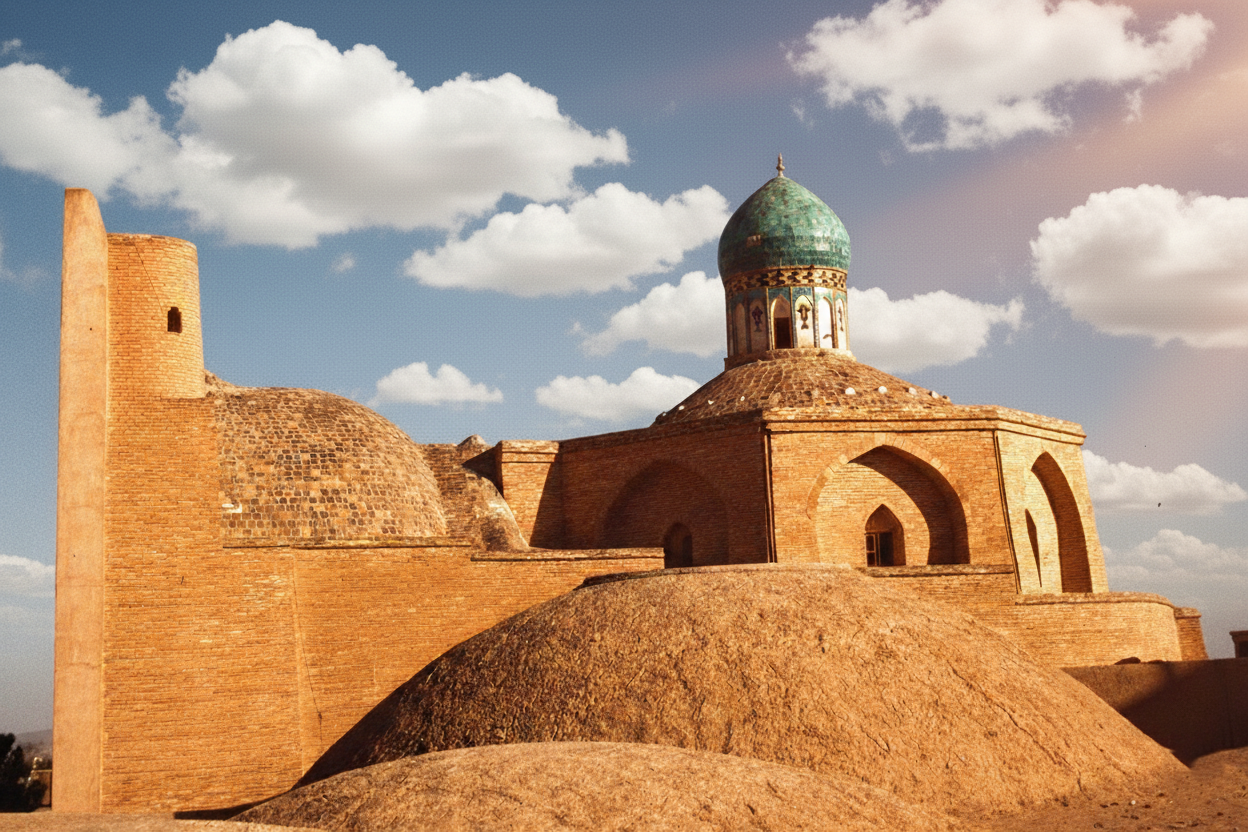
Shiraz (شیراز), long associated with poetry, gardens, and refined urban culture, occupies a central place in Iran’s historical and artistic landscape. Located in the province of Fars, the city developed along important southern branches of the Silk Road (جاده ابریشم) and flourished under several dynasties, including the Buyids, Seljuks, and especially the Zand dynasty (1751–1794), when Karim Khan Zand (کریم خان زند) chose Shiraz as his capital. Rather than adopting the title of king, he called himself Vakil-ol-Roaya (وکیلالرعایا), meaning “Advocate of the People,” and initiated an architectural and urban renaissance that reshaped the city with dignity and human scale rather than imperial excess. Building upon Shiraz’s traditional urban fabric of neighborhoods (محلهها), narrow alleys (کوچههای باریک), courtyard houses, gardens, shrines, and bazaars—many constructed in adobe (خشت و گل)—the Zand period consolidated a coherent civic center intended to rival Safavid Isfahan while remaining grounded in proportion and practicality.
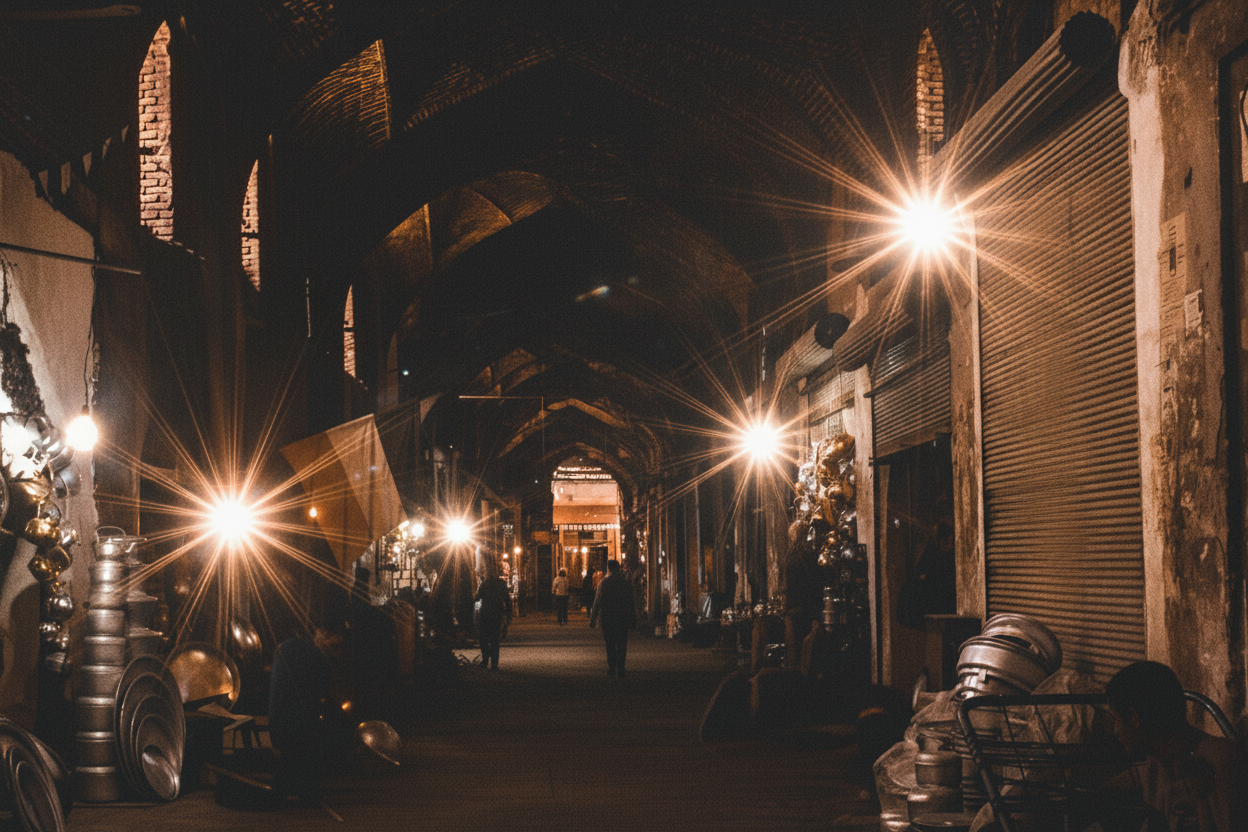
At the heart of this vision stood the Vakil complex, which included the Arg of Karim Khan (ارگ کریم خان), a fortified citadel with four circular towers that served as the royal residence and administrative center; the Vakil Mosque (مسجد وکیل), distinguished by its spacious courtyard and hypostyle prayer hall supported by forty-eight spiraling monolithic stone columns; the Vakil Bazaar (بازار وکیل), whose vaulted brick corridors with skylights regulate light and temperature while linking caravanserais, mosques, and neighborhood streets; and the Vakil Bathhouse (حمام وکیل), carefully engineered with sunken floors and transitional corridors to retain heat efficiently. This architectural ensemble anchored Shiraz’s political, commercial, and social life, reinforcing its position as an important regional trade center.
Beyond the Zand civic core, Shiraz’s identity is enriched by elegant residential and cultural landmarks such as Narenjestan-e Qavam (نارنجستان قوام), Eram Garden (باغ ارم), and the poetic shrines of Saadi (سعدی) and Hafez (حافظ). These sites embody the deep relationship among landscape, literature, and architecture that defines the city’s character. Together with shaded alleys, courtyard houses, and lush gardens that create cooling microclimates, they form a cohesive urban environment where trade, governance, poetry, and climate-responsive design converge—making Shiraz one of the most culturally influential cities in Iran and the Zand era a brief yet remarkable period of architectural patronage and urban harmony.