Section X — Monument of the Ilkhanid Empire
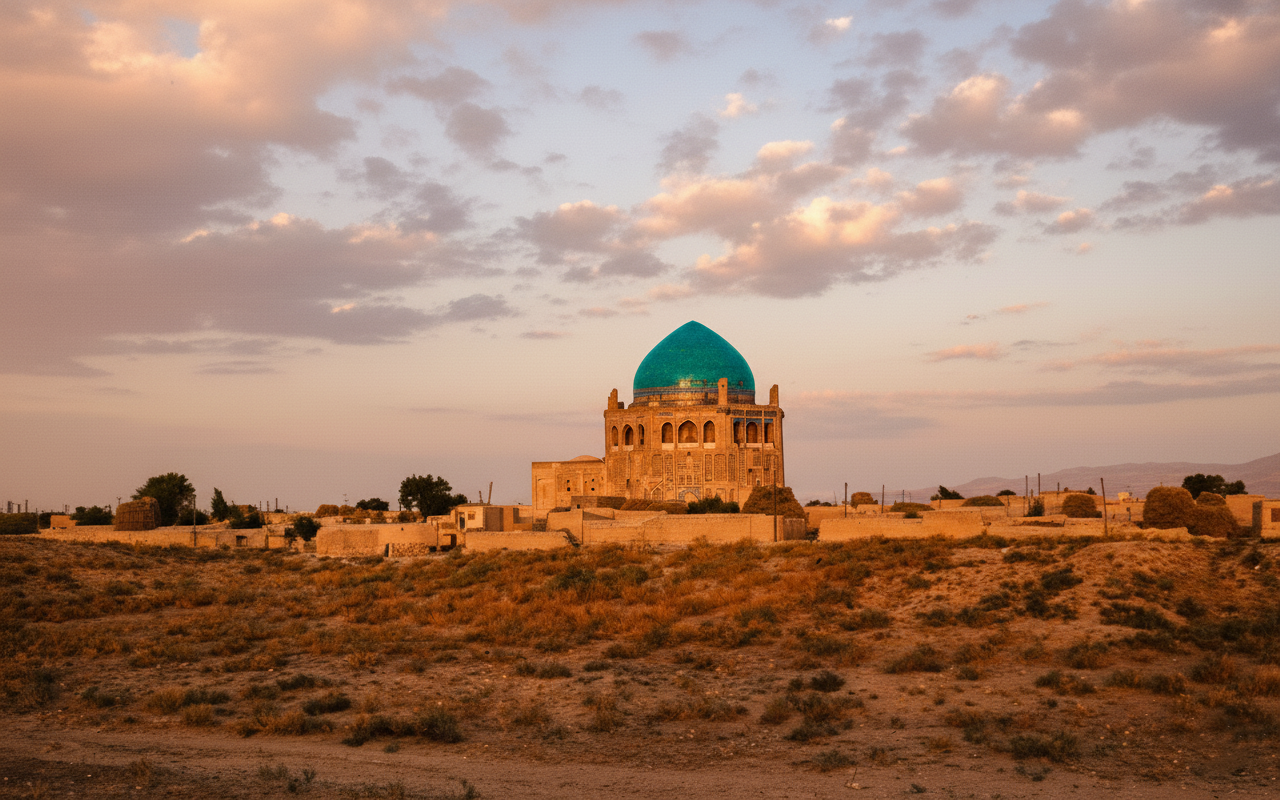
Ilkhanid architecture (معماری ایلخانی) in Iran fused Persian (ایرانی) traditions with Mongol imperial vision, emphasizing monumentality (عظمت), domes (گنبدها), and rich tilework (کاشیکاری). Monuments like Soltaniyeh (سلطانیه) and Takht-e Soleyman (تخت سلیمان) were set in open landscapes (منظر) as symbols of power (قدرت), reflecting planned capitals (پایتخت) and sacred landscapes (منظر مقدس) shaped by nomadic traditions (سنت کوچنشینی).
-
The Ilkhanid Empire (1256–1353) represents a pivotal phase in the architectural history of Iran, marked by a synthesis of Mongol influences with established Persian traditions (Persian / ایرانی). During this period, architecture evolved in scale, technique, and expression, while also redefining the relationship between buildings, landscape, and power.
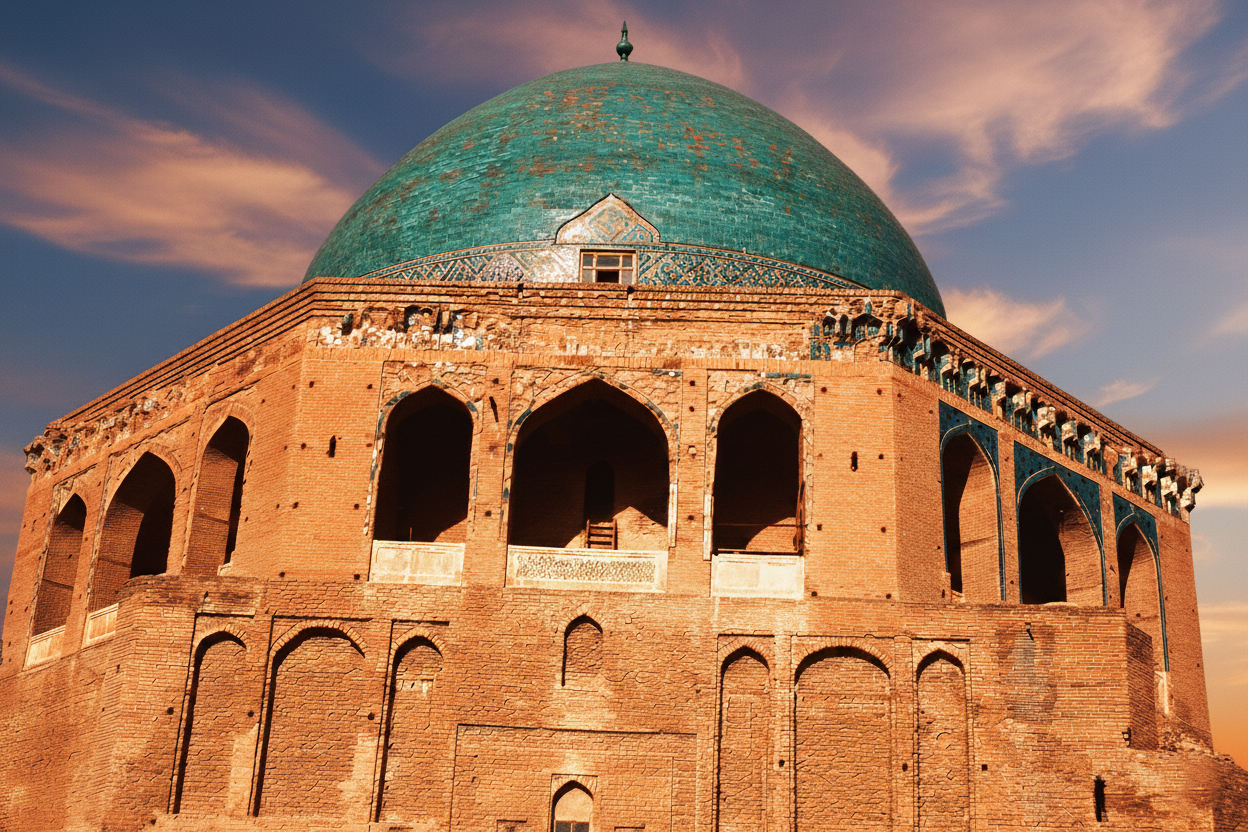
A defining feature of Ilkhanid architecture is its monumental scale (monumentality / عظمت) and vertical emphasis (verticality / عمودیت). Structures such as the Mausoleum of Öljaytü in Soltaniyeh (Soltaniyeh / سلطانیه) were designed with soaring domes (domes / گنبدها) and advanced engineering systems like the double-shell dome (double-shell dome / گنبد دوپوسته), supported by squinches (squinch / گوشواره) and drums (drum / گردن گنبد). These innovations enabled vast, unified interior spaces that conveyed imperial authority (authority / قدرت).
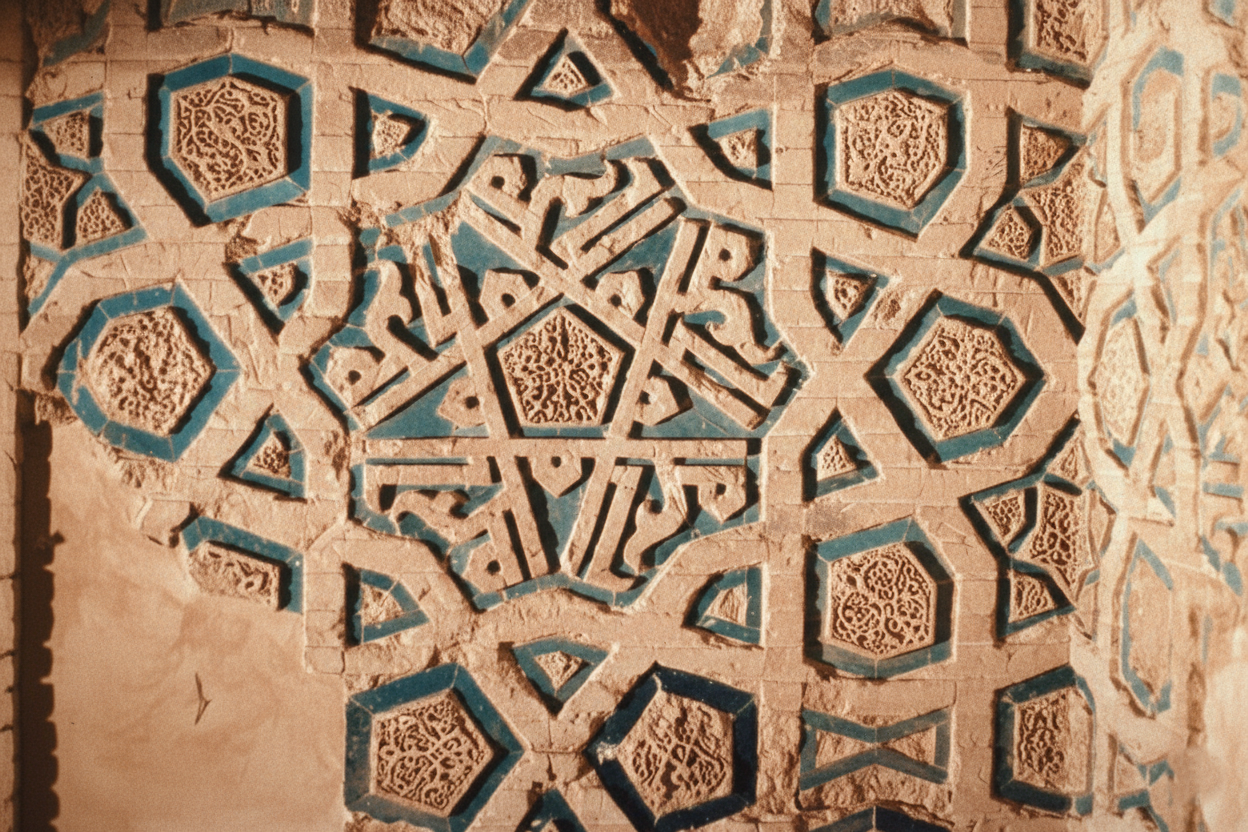
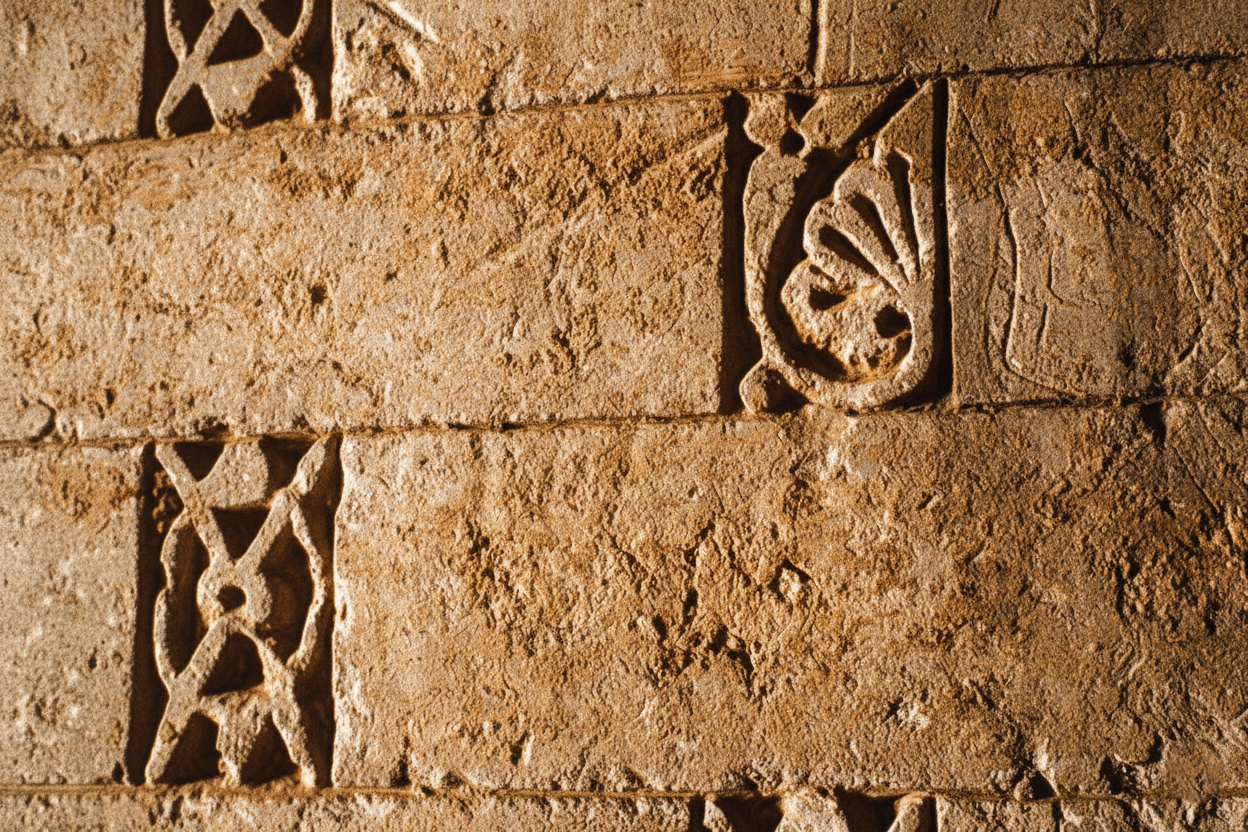
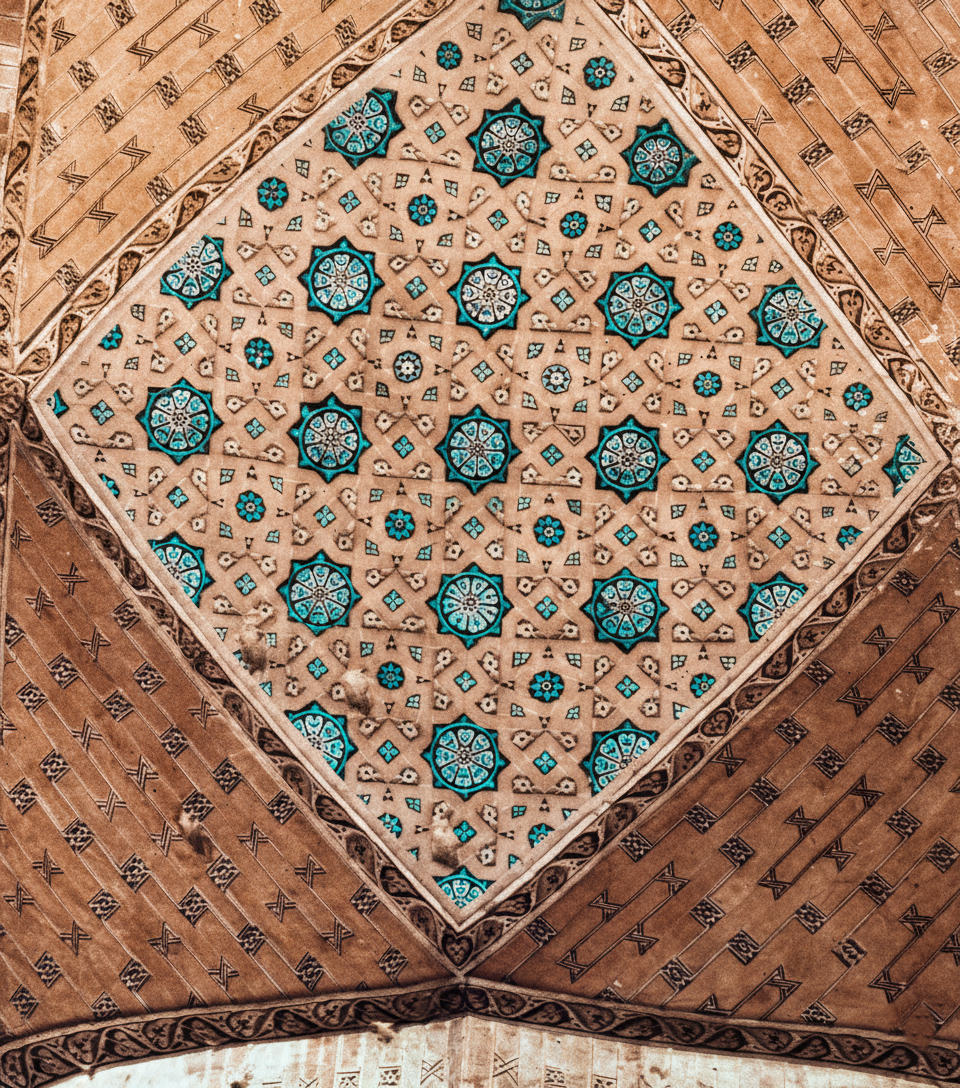
Equally significant is the extensive decorative program, including glazed tilework (tilework / کاشیکاری), stucco (stucco / گچبری), and brickwork (brickwork / آجرکاری), often enriched with geometric patterns (geometric patterns / نقوش هندسی) and calligraphy (calligraphy / خوشنویسی). These surfaces transformed architecture into a medium of visual and symbolic expression.
Spatially, Ilkhanid architecture continued the four-iwan plan (four-iwan plan / طرح چهارایوانی) and courtyard traditions (courtyard / حیاط مرکزی), but expanded them into multifunctional complexes (complex / مجموعه معماری) combining religious (religious / مذهبی), funerary (funerary / آرامگاهی), and ceremonial (ceremonial / آیینی) functions.
A crucial aspect of Ilkhanid architecture, however, is its deliberate placement within vast open landscapes rather than established urban fabric (urban fabric / بافت شهری). For example, Soltaniyeh was conceived as a planned imperial capital (capital city / پایتخت)—a new center of power rather than an extension of an existing city. Its apparent isolation today reflects the later decline of that urban المشروع (project / پروژه شهری), leaving the monumental core as a remnant (remnant / باقیمانده).
Similarly, Takht-e Soleyman (Takht-e Soleyman / تخت سلیمان) functioned as a sacred and ceremonial landscape (sacred landscape / منظر مقدس) rather than a conventional city. Built around a natural lake (lake / دریاچه), it embodied symbolic connections to kingship (kingship / پادشاهی) and pre-Islamic Iranian traditions, reinforcing Ilkhanid legitimacy through historical continuity.
This preference for expansive settings also reflects the nomadic legacy (nomadic tradition / سنت کوچنشینی) of the Mongol rulers, who conceived space territorially rather than through dense urbanism (urban density / تراکم شهری). Architecture was used to assert control over landscape (landscape / منظر) and to create new political and symbolic centers.
In conclusion, Ilkhanid architecture is not only grand (important / مهم) for its structural and decorative innovations, but also for redefining how monuments relate to their surroundings. By combining Persian traditions with imperial ambition and landscape-scale thinking, it produced some of the most powerful and enduring monuments in Iranian architectural history.