Ardestan (اردستان): An Arid Urban Ecology
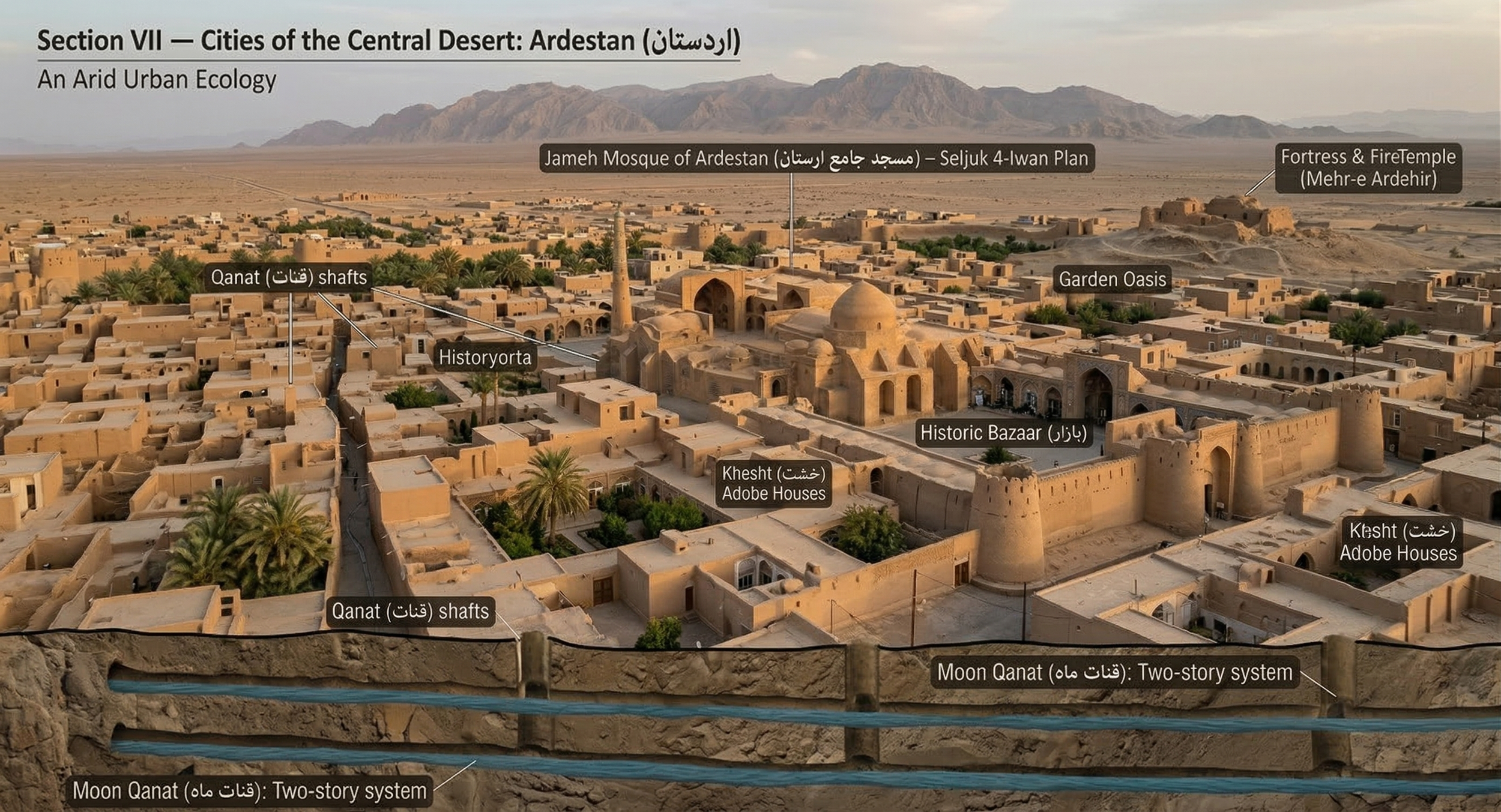
Ardestan (اردستان), an oasis city of Iran’s central desert plateau, developed along Silk Road trade routes and qanat (قنات) irrigation systems. Its remarkable Moon Qanat (قنات ماه) and the Seljuk-era Jameh Mosque (مسجد جامع اردستان, c. 1158–1160 CE) exemplify sophisticated water engineering, four-iwan architecture (ایوان), and dense adobe urban fabric adapted to arid climates.
-
Ardestan (اردستان): An Arid Urban Ecology
Ardestan (اردستان), whose name is often linked to “Arda” (اردا) and “stan” (ستان), carries ancient sacred and heroic associations rooted in the Sassanian era (224–651 CE). Located within the central desert plateau of Iran, the city developed historically as an important oasis settlement sustained by qanat (قنات) irrigation and trade routes connected to the Silk Road. Positioned along these historic routes, Ardestan evolved as a layered desert settlement shaped by commerce, faith, and advanced water engineering. The city’s dense urban fabric reflects centuries of adaptation to the arid environment.
Its survival depended on hydraulic ingenuity, most remarkably the Moon Qanat (قنات ماه), the world’s only two-story qanat where two parallel streams flow one above the other without mixing. This rare two-level qanat system, in which two underground water channels run vertically separated without mixing, represents an extraordinary geological and engineering achievement and demonstrates the advanced hydraulic knowledge of Iranian builders.
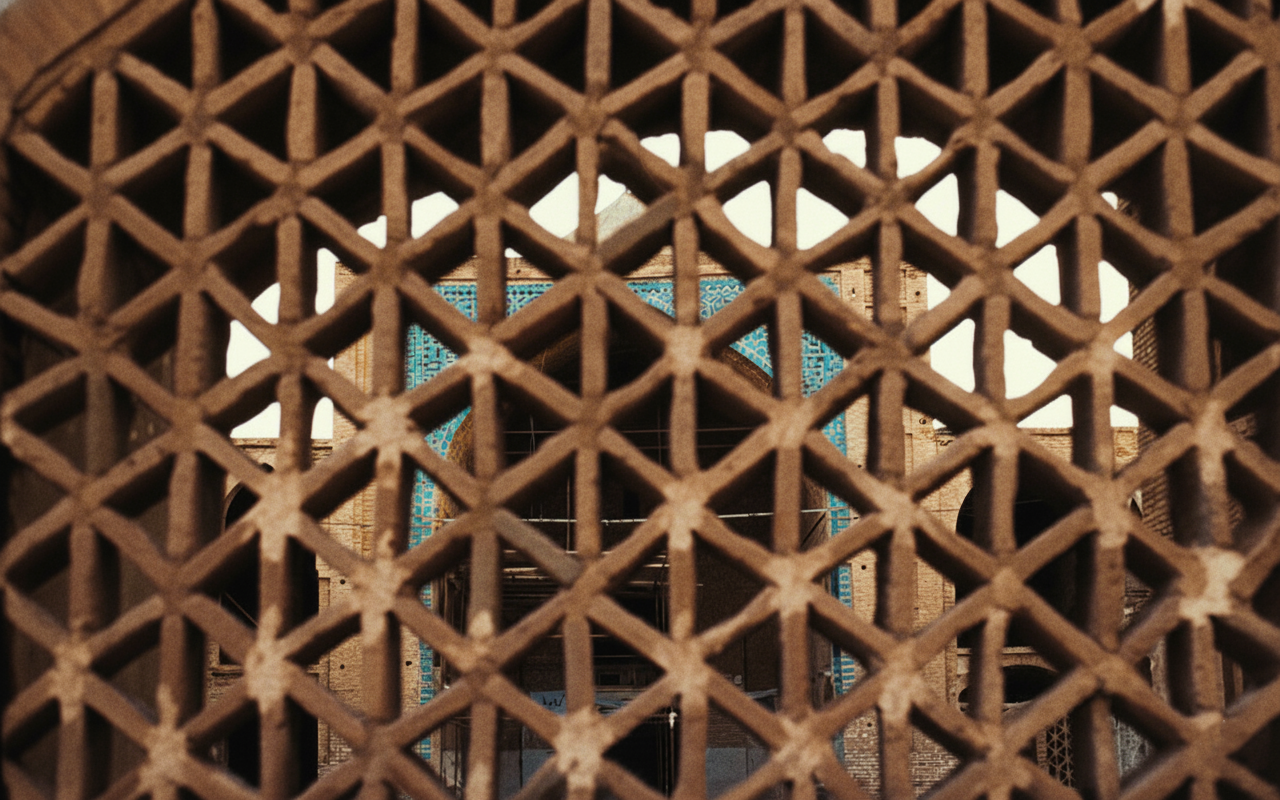
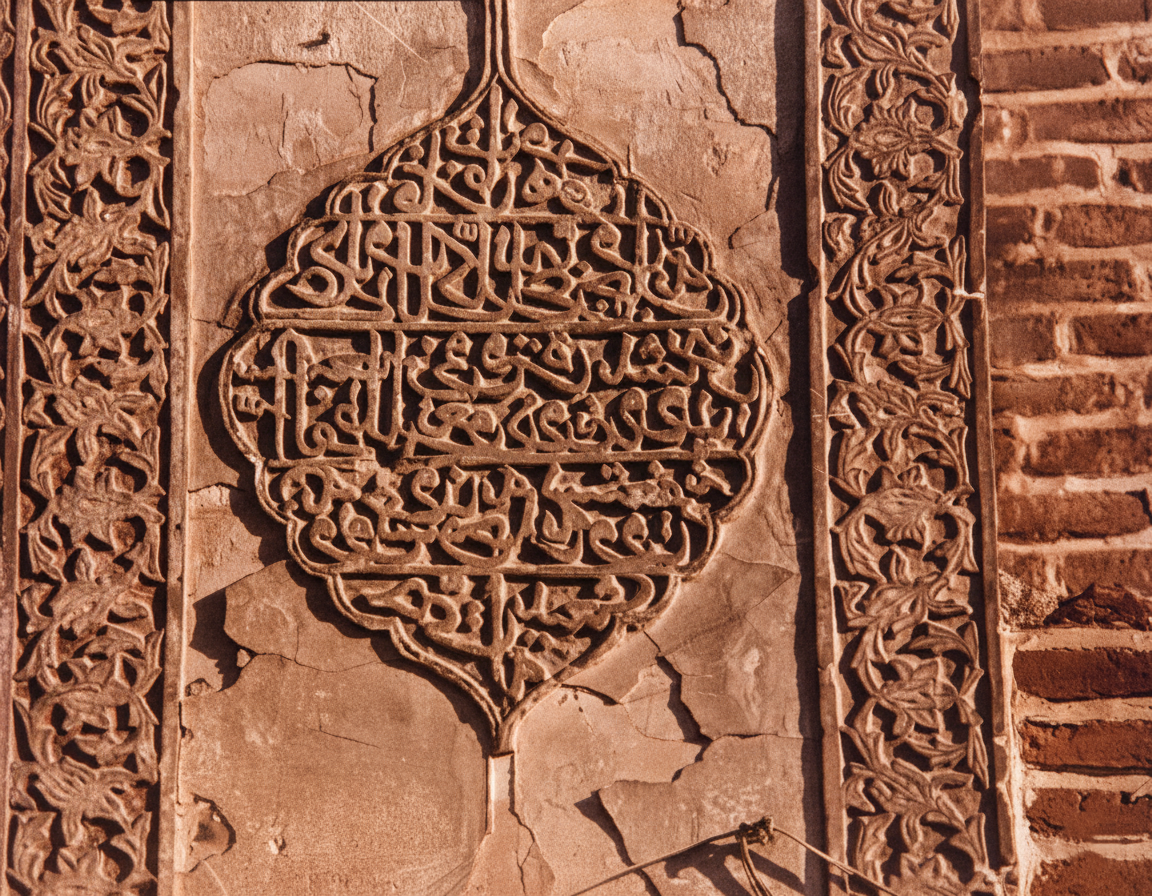
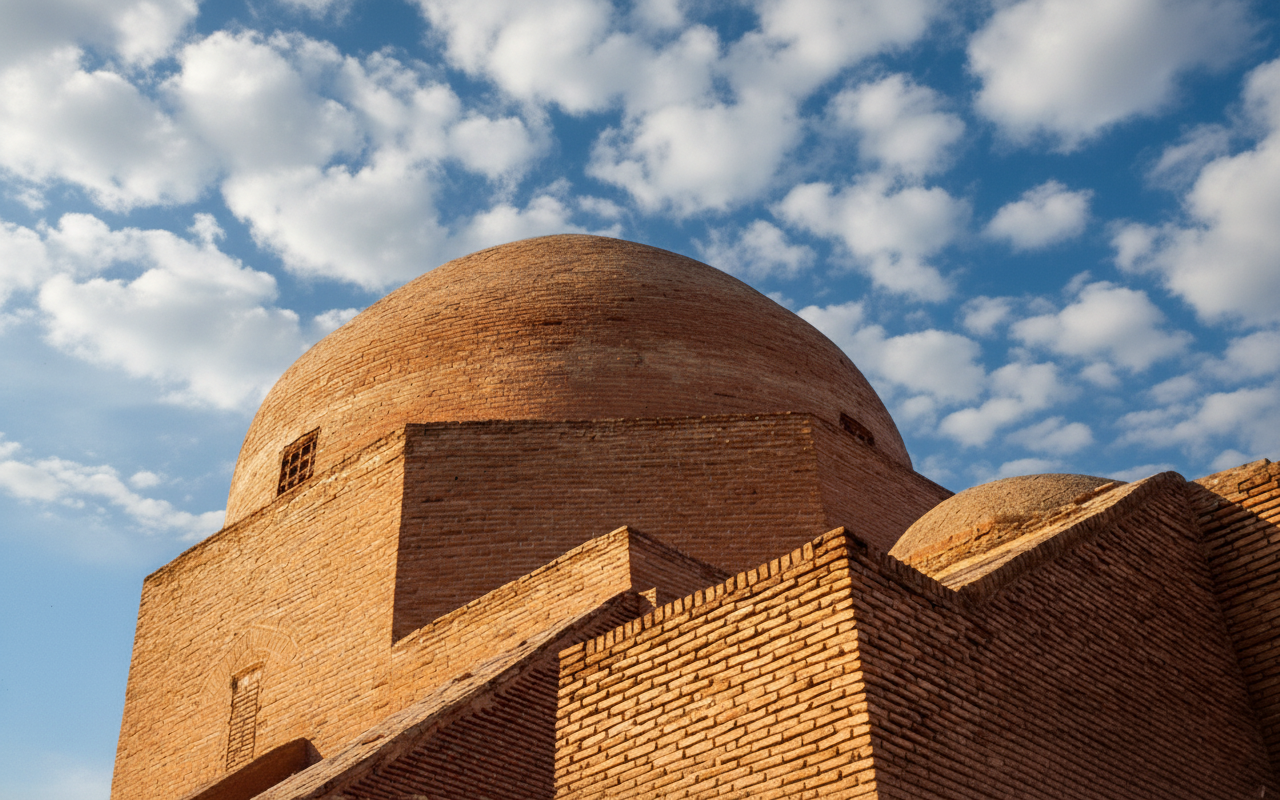
At the heart of the city stands the Jameh Mosque of Ardestan (مسجد جامع اردستان), largely developed during the Seljuk period in the 12th century CE (c. 1158–1160 CE). Built over a pre-Islamic fire temple, the mosque marks the pivotal transition from the hypostyle “forest of columns” to the distinctly Persian courtyard plan and represents one of the earliest fully developed examples of the four-iwan plan (ایوان), which later became the dominant mosque layout throughout Iran. Constructed primarily of brick, the mosque exhibits refined decorative techniques including Gachbori stucco carving (گچبری) and the distinctive Fakhr-o-Madin brickwork pattern (فخر و مدین), in which baked bricks are arranged to create geometric ornament integrated directly into the structure.
Mythological traditions recount that Arvand Shah (اروند شاه), son of Key-Qobad (کیقباد), built the Arvaneh Qanat (قنات اروانه) and a fortress, while Bahman (بهمن) constructed the renowned Mehr-e Ardashir (مهر اردشیر) fire temple—embedding the city within epic Persian memory.
Radiating outward from its mosque-centered core are narrow alleys, adobe houses constructed from khesht (خشت), gardens, and sections of the historic bazaar (بازار). Together they form a dense, climate-responsive urban fabric and compact urban network that moderates desert heat, protects residents from desert winds, and fosters strong social cohesion and interaction within the community.