Section IX — Cities of the Northern Plateau
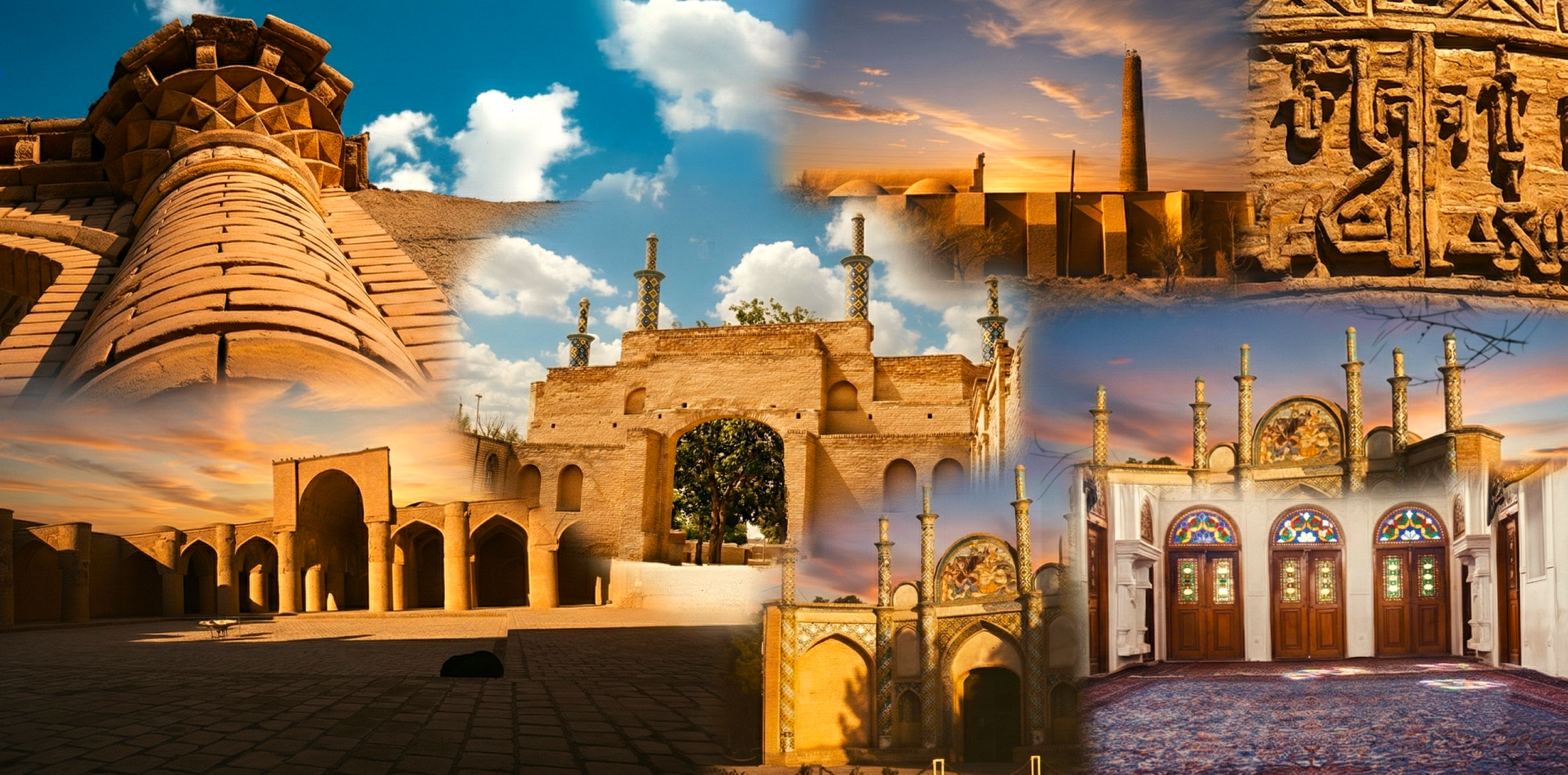
Cities of Iran’s Northern Plateau, between the Alborz Mountains (رشتهکوه البرز) and the central plateau, reveal centuries of architectural continuity shaped by trade and empire. From Safavid Qazvin (قزوین) to the Seljuk Kharaghan Towers (برجهای خرقان) and the historic cities of Semnan (سمنان) and Damghan (دامغان), brick monuments, mosques, and bazaars reflect the enduring urban culture of the Silk Road corridor.
-
Section IX — Cities of the Northern Plateau
The cities of Iran’s Northern Plateau reveal an architectural landscape shaped by trade, empire, and centuries of urban continuity. Positioned between the Alborz Mountains (رشتهکوه البرز) and the central plateau, these cities developed along major routes linking the Iranian heartland to the Caspian region and Central Asia. Their architecture reflects a layered history in which royal patronage, religious institutions, and commercial networks shaped the growth of enduring urban centers.
Qazvin (قزوین) emerged as a major political and cultural center during the Safavid period, when Shah Tahmasp I (شاه طهماسب اول) established it as the imperial capital in 1548. Although the capital later moved to Isfahan, Qazvin retains important traces of its royal past. The Chehel Sotoun Pavilion (کاخ چهل ستون قزوین)—once part of the vast Sa’databad Garden (باغ سعادتآباد) palace complex—offers a glimpse of Safavid court architecture. Nearby, the Jameh Mosque of Qazvin (مسجد جامع قزوین) and the historic Bazaar of Qazvin (بازار قزوین) reveal the continuity of religious and commercial life that structured the city’s urban fabric.
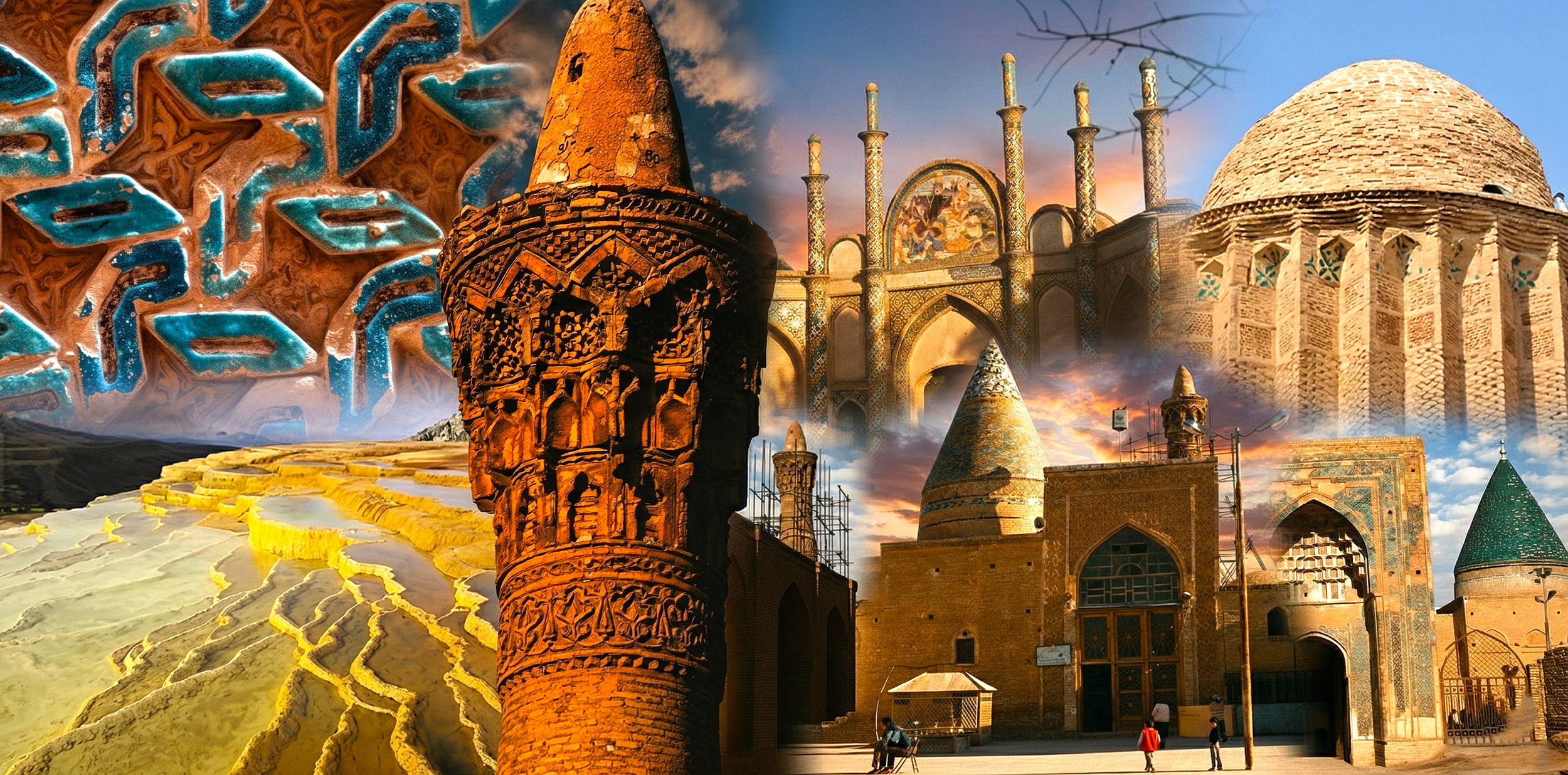
Beyond the city, the Kharaghan Towers (برجهای خرقان) stand in the open plains as remarkable examples of Seljuk funerary architecture (11th century). Their octagonal forms, crowned with double-shell domes and covered in intricate geometric brick patterns, demonstrate the mathematical precision and craftsmanship of medieval Persian builders.
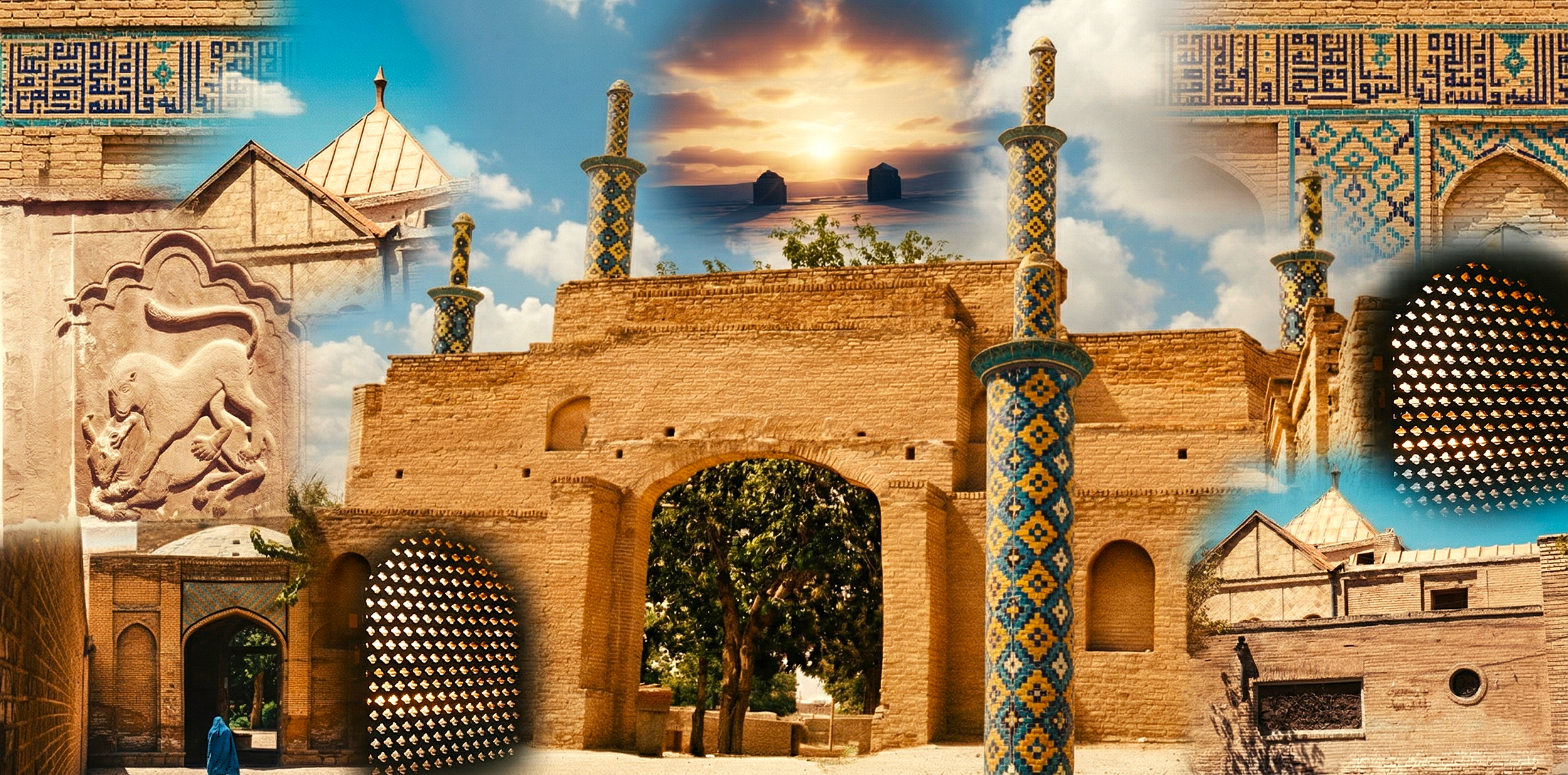
Further east, Semnan (سمنان) developed as a vital stop along the Silk Road corridor. Its Jameh Mosque (مسجد جامع سمنان), with its tall Seljuk brick minaret, and the colorful Arg Square Gate (دروازه ارگ) from the Qajar era illustrate how Iranian cities continually adapted older urban frameworks to new political periods. The covered Bazaar of Semnan (بازار سمنان) remains a central artery of commerce and social life.
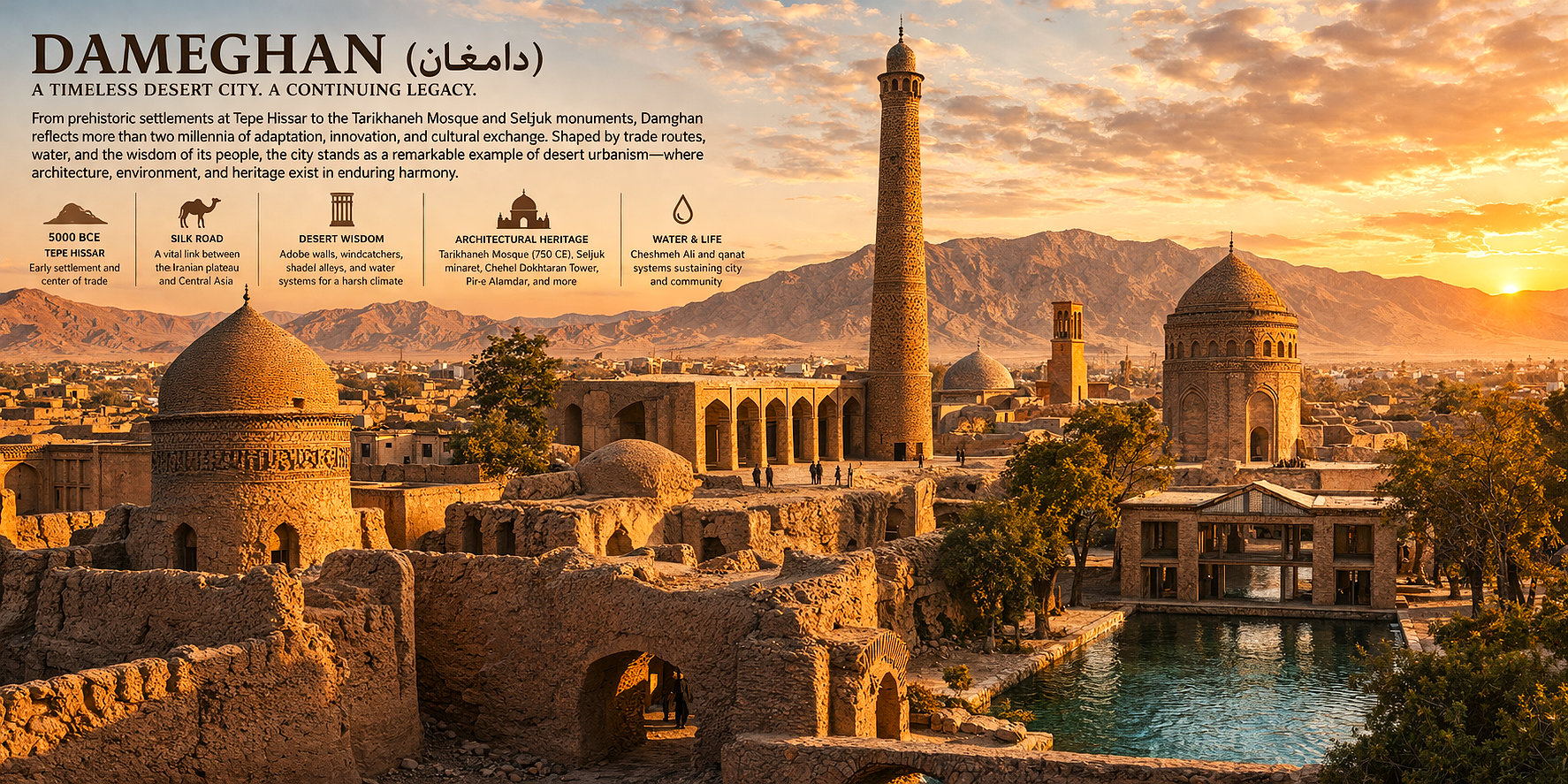
Among the oldest settlements of the region is Damghan (دامغان), whose Tarikhaneh Mosque (مسجد تاریخانه, 8th century CE) preserves one of the earliest surviving forms of Islamic architecture in Iran. Its massive brick columns and hypostyle hall echo Sasanian architectural traditions, while the Seljuk minaret added in the 11th century signals the evolution of Persian mosque design.
Together, these cities illustrate the architectural continuity of the Iranian plateau—where brick construction, geometric ornament, and climate-responsive urban forms created resilient cities along the great trade routes of Eurasia.