Damghan (دامغان) “Ancient Habitat”
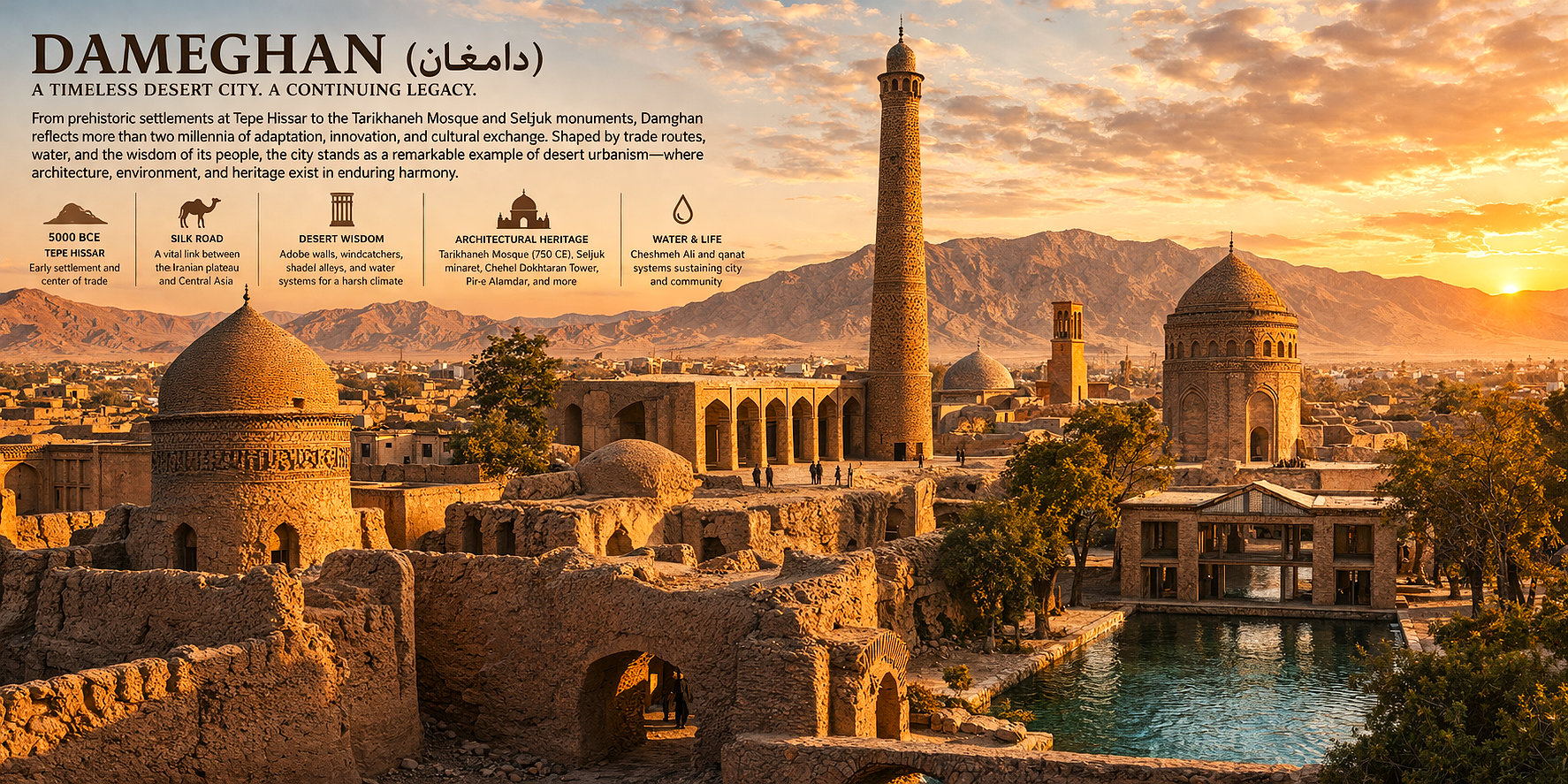
Damghan (دامغان) is one of Iran’s oldest cities, where layers of history from prehistoric Tepe Hissar to the Tarikhaneh Mosque reveal a continuous architectural evolution. Shaped by the Silk Road and desert climate, its adobe fabric, monumental brick structures, and water-based settlements illustrate resilience, cultural exchange, and enduring urban adaptation patterns.
-
Damghan (دامغان), one of the oldest cities on the Iranian plateau, possesses a layered architectural and urban history extending back more than two thousand years, with evidence of settlement as early as the 5th millennium BCE at Tepe Hissar (تپه حصار). This prehistoric site functioned as an important center for lapis lazuli and metalwork, establishing the region’s early role in long-distance trade networks.
During the Median, Achaemenid, Parthian, and Sassanian periods, Damghan evolved into a significant administrative and fortified settlement. In the Parthian era, it served as an important political center, and later became a key stop along the Silk Road (جاده ابریشم), linking the Iranian plateau with Central Asia. This strategic position fostered commercial vitality and cultural exchange, shaping the city’s enduring urban identity.
Over time, Damghan shifted laterally, leaving earlier sections abandoned and forming a stratified urban landscape that reflects adaptation to political, religious, and environmental changes. Built primarily in adobe (خشت و گل), the city’s compact neighborhoods, narrow alleys, covered passageways (ساباط), mosques, towers, gardens, and water systems form a cohesive and climate-responsive fabric integrated with the arid environment of the Dasht-e Kavir (دشت کویر). Thick earthen walls, shaded streets, and passive ventilation strategies mitigate extreme temperatures while reinforcing social cohesion.
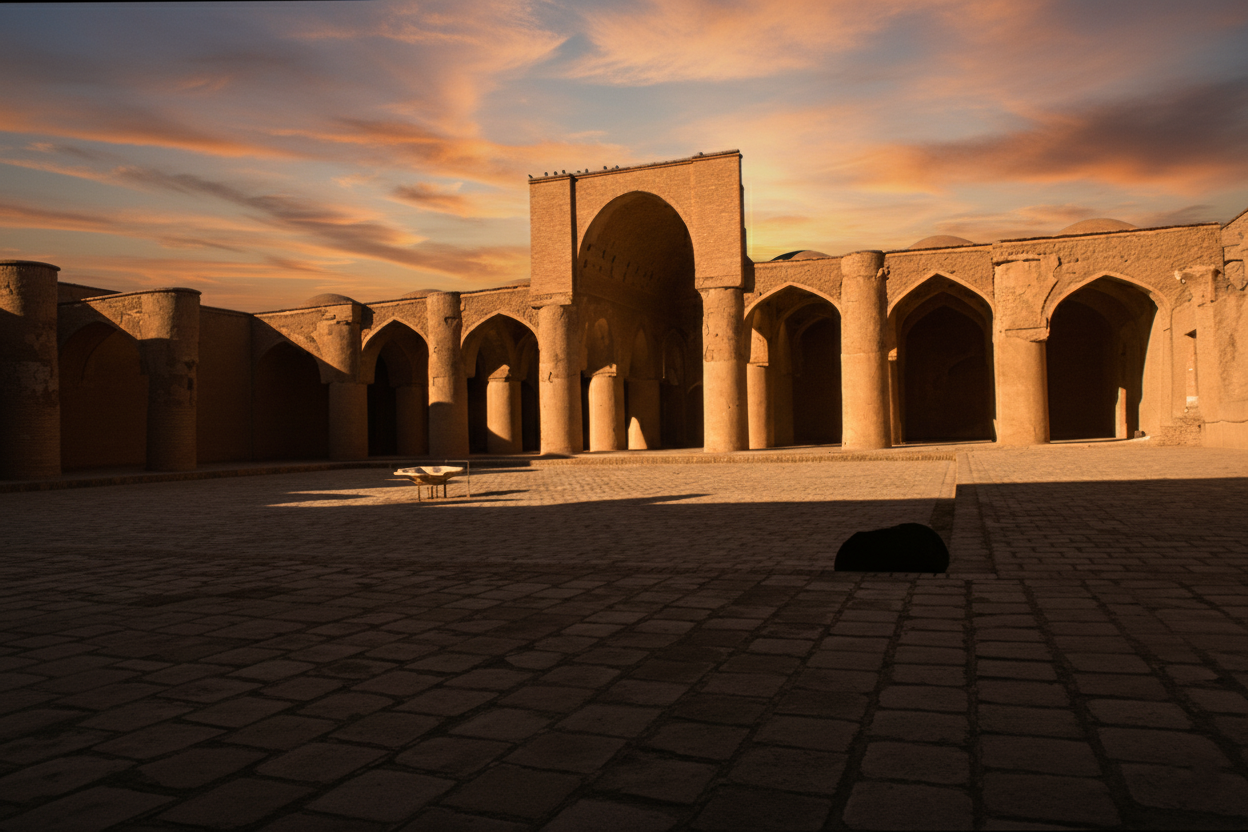
The most significant architectural monument of Damghan is the Tarikhaneh Mosque (مسجد تاریخانه), constructed in the mid–8th century CE (c. 750 CE). It is one of the earliest surviving mosques in Iran and a key example of transitional architecture between Sassanian and early Islamic forms. The structure consists of a hypostyle prayer hall supported by massive brick piers arranged in rhythmic rows reminiscent of Sassanian palace architecture. The simplicity, solidity, and scale of these elements give the mosque a powerful and monumental character while demonstrating the adaptation of pre-Islamic structural systems into Islamic religious space.
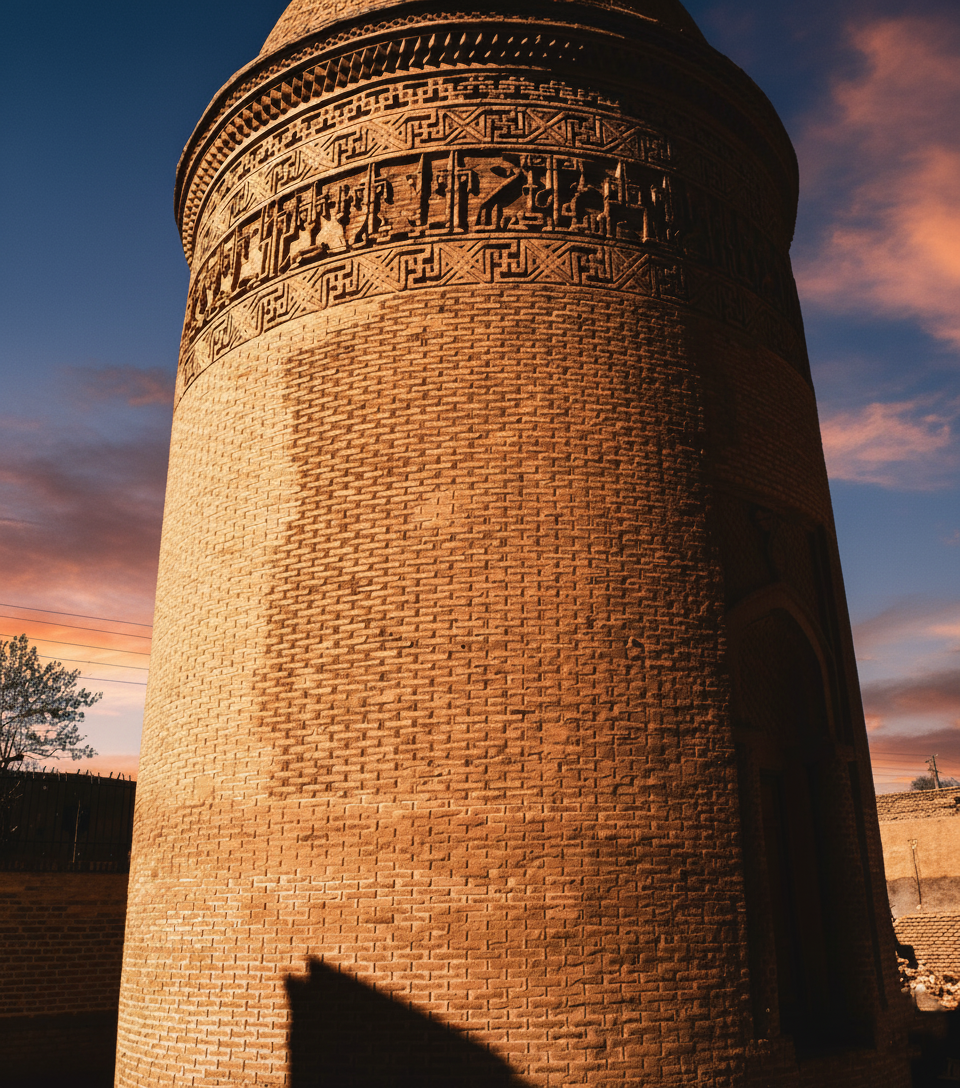
Adjacent to the mosque stands a Seljuk minaret (11th century CE), distinguished by Kufic inscriptions and geometric brick patterns that exemplify the refinement of Seljuk masonry techniques. This period also introduced highly sophisticated decorative brickwork, as seen in the Chehel Dokhtaran Tomb Tower (1054 CE / 446 AH) and Pir-e Alamdar (پیر علمدار, 11th century CE). These monuments display intricate Hozar baf (هزارباف) patterns, where structural brickwork is transformed into elaborate surface ornamentation.
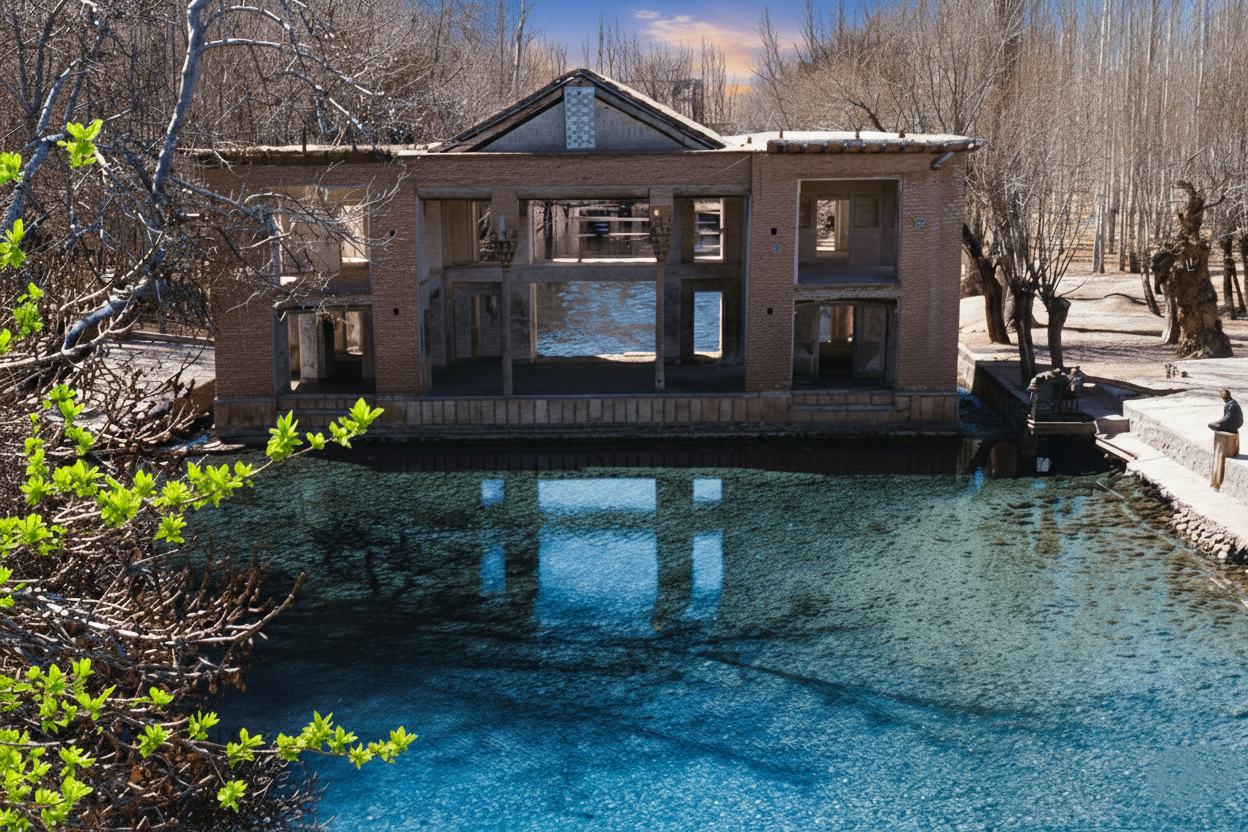
Sites such as Cheshmeh Ali (چشمه علی), developed further during the Safavid (1501–1736 CE) and Qajar (1789–1925 CE) periods, reinforce the enduring relationship between settlement and water منابع (منابع). These spaces highlight the integration of natural resources into urban and architectural design, a defining characteristic of desert cities.
The architectural significance of Damghan lies in its continuity and hybridity. From the early foundations at Tepe Hissar (تپه حصار, 5th millennium BCE) to the Tarikhaneh Mosque (مسجد تاریخانه, c. 750 CE) and later Seljuk monuments, the city reflects the transformation of Sassanian traditions into Islamic architectural forms that would later flourish across the Iranian world. Together, its monuments and urban fabric illustrate Damghan as a resilient model of desert urbanism shaped by التجارة (تجارت), craftsmanship, environmental intelligence, and more than two millennia of cultural exchange.