Darvazeh Arg (دروازه ارگ) of Semnan (سمنان)
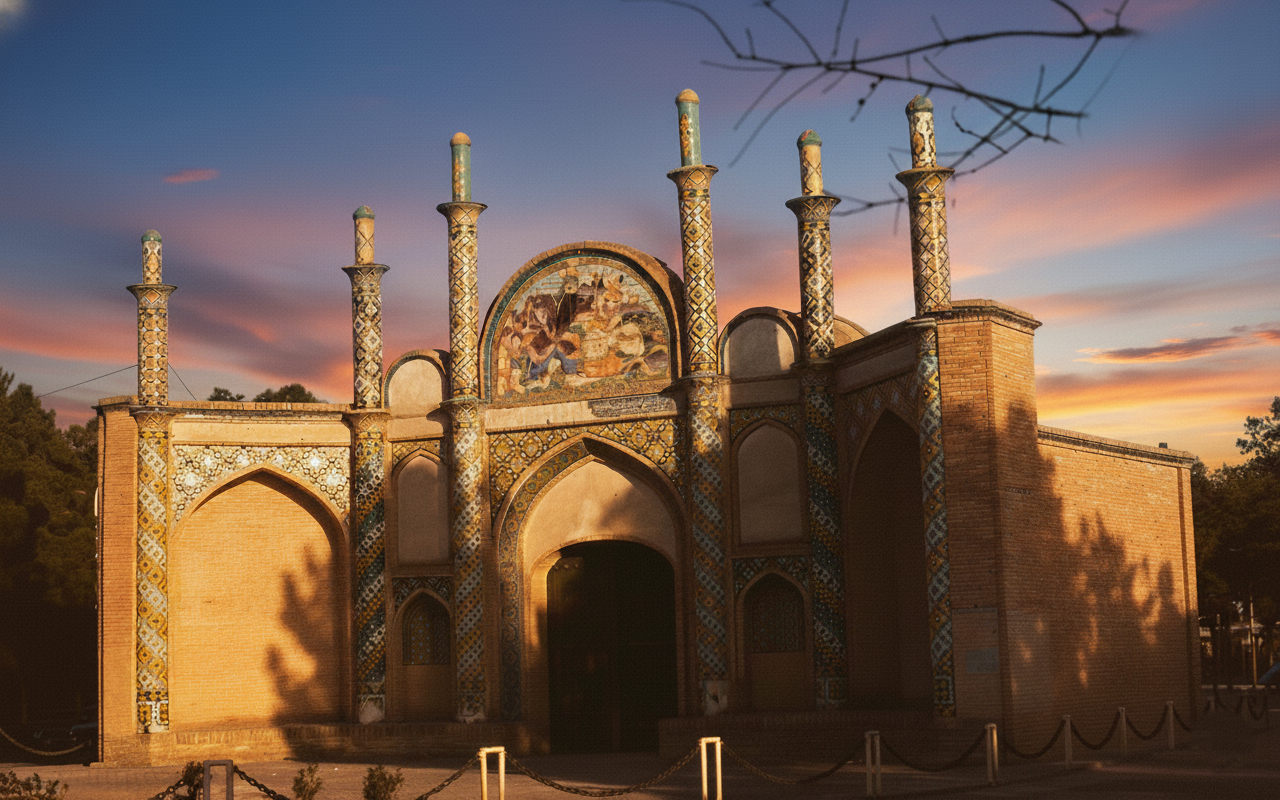
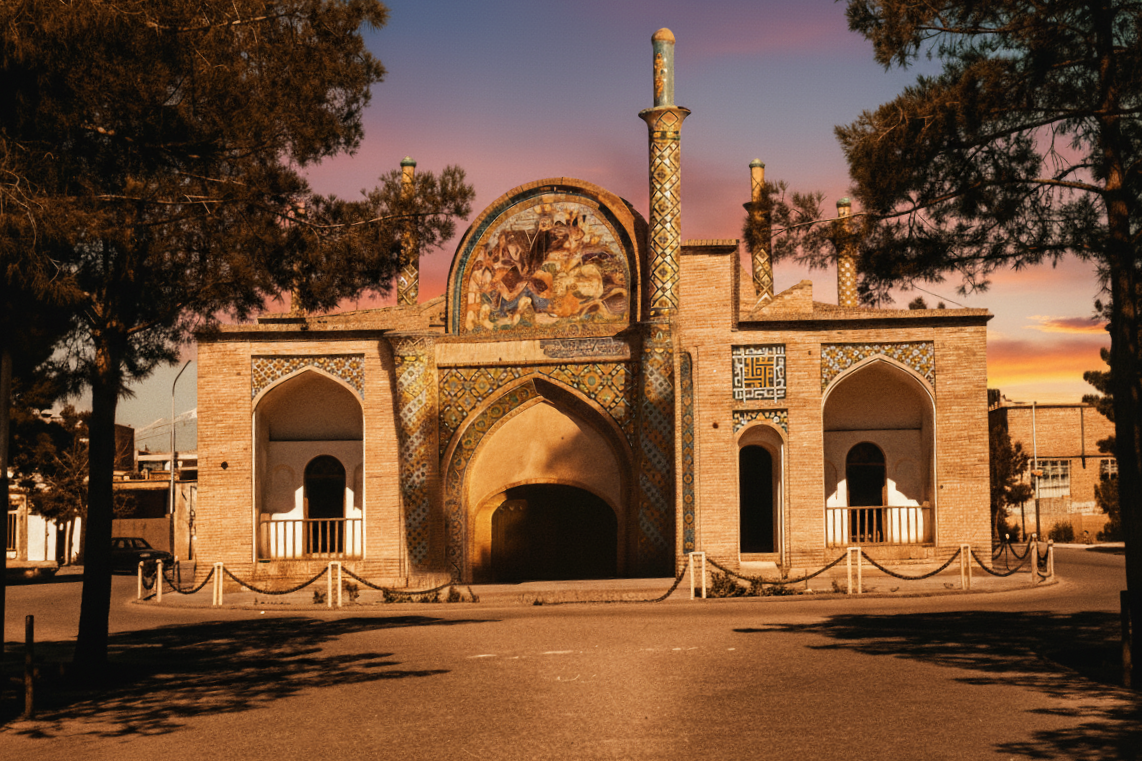
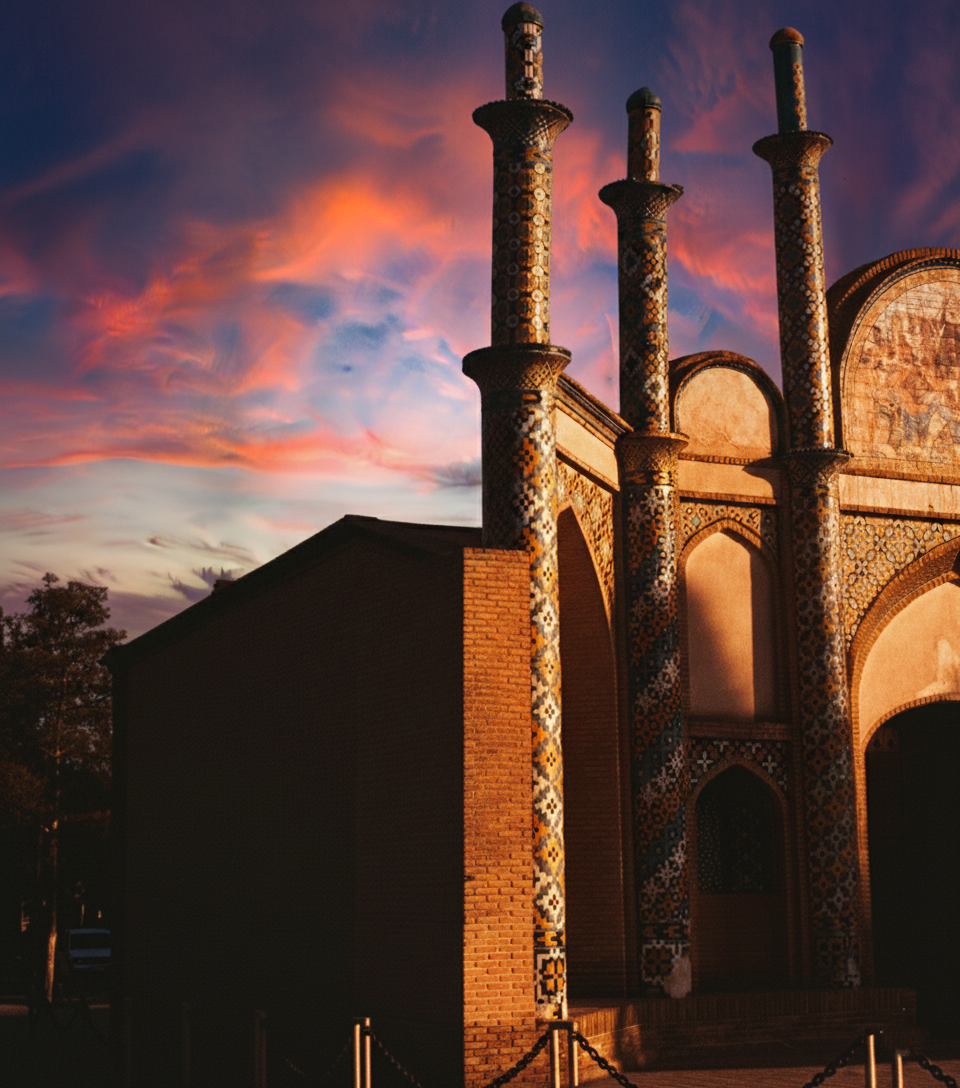
Darvazeh Arg (دروازه ارگ), the 19th-century Qajar (قاجار) city gate of Semnan (سمنان), served as a ceremonial and urban threshold linking the city to the surrounding caravan routes of the Silk Road (جاده ابریشم). Its central arch, flanking towers, and colorful tilework (کاشیکاری) symbolize civic identity while framing entry into the historic bazaar (بازار) and neighborhoods.
-
Darvazeh Arg (دروازه ارگ), the historic city gate of Semnan (سمنان), was constructed during the Qajar period (19th century CE) as part of the city’s defensive, ceremonial, and administrative ensemble. Positioned at the edge of the historic urban core, the gate functioned as a major urban threshold marking the transition between the inner city and the surrounding landscapes and caravan routes connected to the Silk Road (جاده ابریشم). In the spatial organization of traditional Iranian cities, such gates served not only military purposes but also played an essential role in defining the symbolic boundary of the urban realm.
Architecturally, the gate presents a balanced and monumental composition organized around a large central arch (طاق) that forms the primary passageway into the city. This arch is framed by two symmetrical towers that reinforce the structure’s visual stability and give the monument a strong vertical presence within the urban skyline. Constructed primarily of brick masonry—one of the dominant materials of Iranian architecture—the structure demonstrates the Qajar period’s preference for combining structural simplicity with elaborate decorative surfaces.
One of the most distinctive architectural features of Darvazeh Arg is its extensive tilework (کاشیکاری). The façade is decorated with colorful glazed tiles arranged in pictorial and geometric compositions. These panels depict historical scenes, mythological figures, and symbolic imagery, including motifs derived from Persian epic traditions and royal iconography. Such imagery reflects the aesthetic sensibilities of Qajar architecture (معماری قاجار), in which architectural surfaces often became narrative and decorative canvases expressing political authority, civic identity, and cultural pride.
The gate also functioned as an important urban organizing element. Passing through the arch, visitors would enter directly into the dense urban fabric composed of bazaars (بازار), residential neighborhoods (محلهها), and narrow alleys (کوچههای باریک) characteristic of historic Iranian cities. In this sense, Darvazeh Arg framed the movement from open territory into the protected and socially structured environment of the city. The gate’s placement and orientation guided circulation patterns and visually announced arrival into Semnan’s commercial and administrative center.
From an urban perspective, the monument also served ceremonial functions. Processions, official receptions, and public gatherings often occurred near such gateways, reinforcing their role as symbolic points of entry where the identity of the city was publicly displayed. The architectural articulation of the gate—its height, symmetry, and decorative program—was therefore designed to convey dignity, order, and civic prestige.
Today, Darvazeh Arg remains one of the most recognizable architectural landmarks of Semnan (سمنان). Although the surrounding urban landscape has evolved, the gate continues to embody the historical memory of the city’s fortified boundaries and its role as a crossroads along regional trade routes. Through its combination of architecture, urban symbolism, and decorative artistry, the monument stands as an enduring expression of Qajar-era urban design and the layered historical identity of Semnan.
