Tarikhaneh in Damghan (Tarikhaneh / تاریخانه)
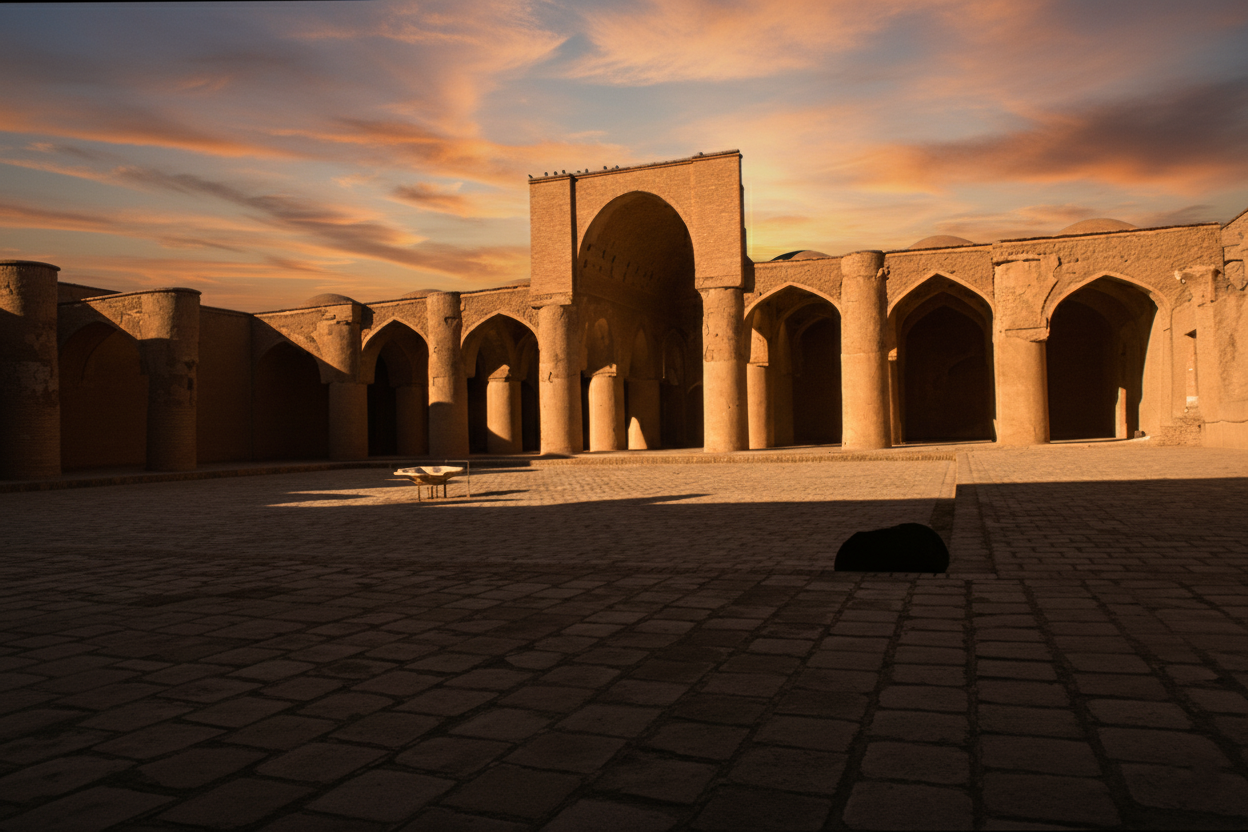
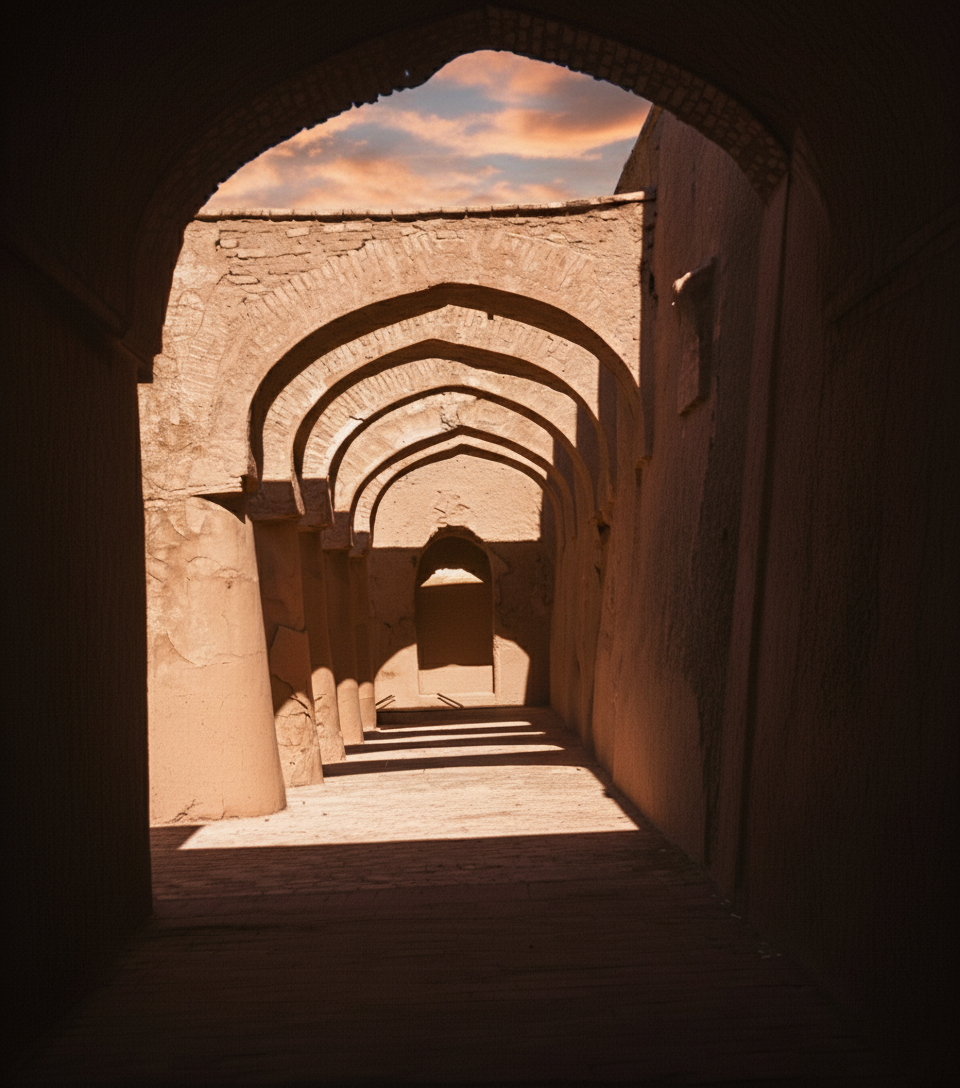
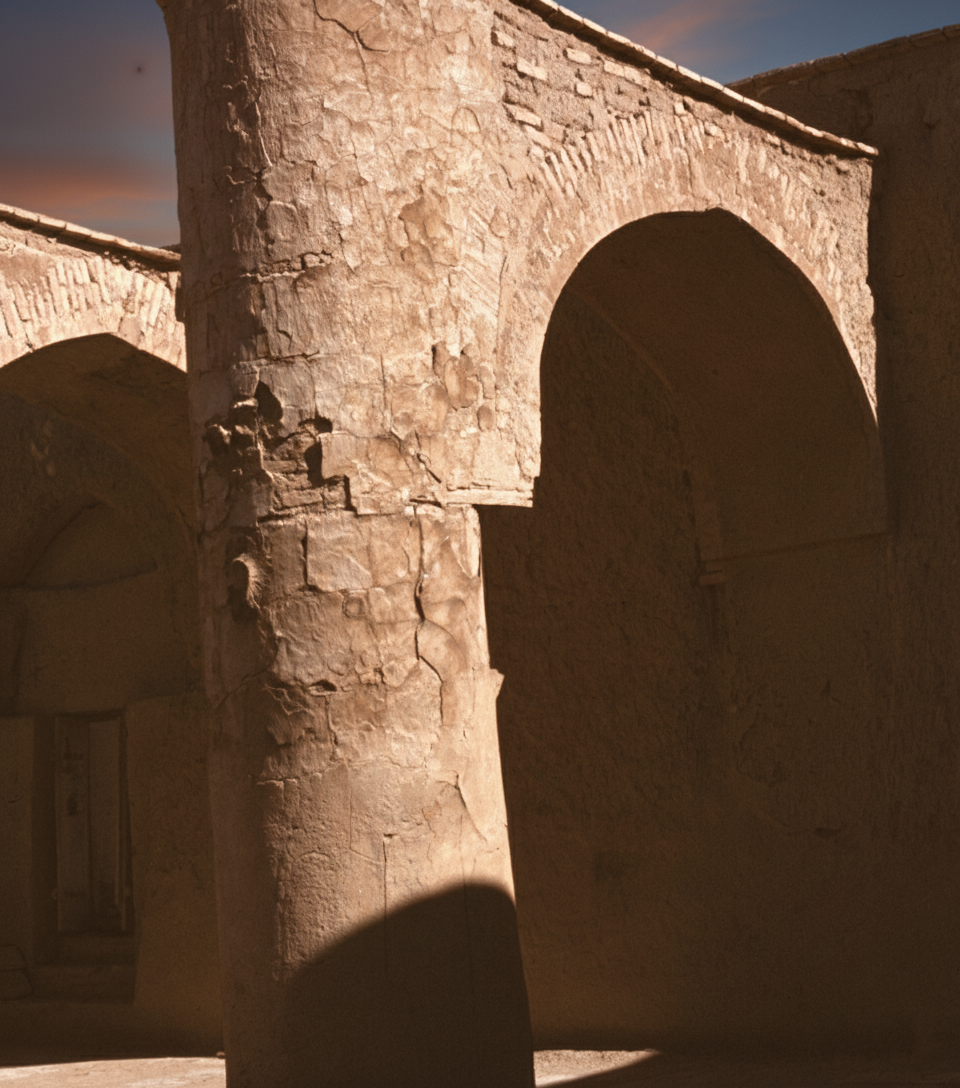
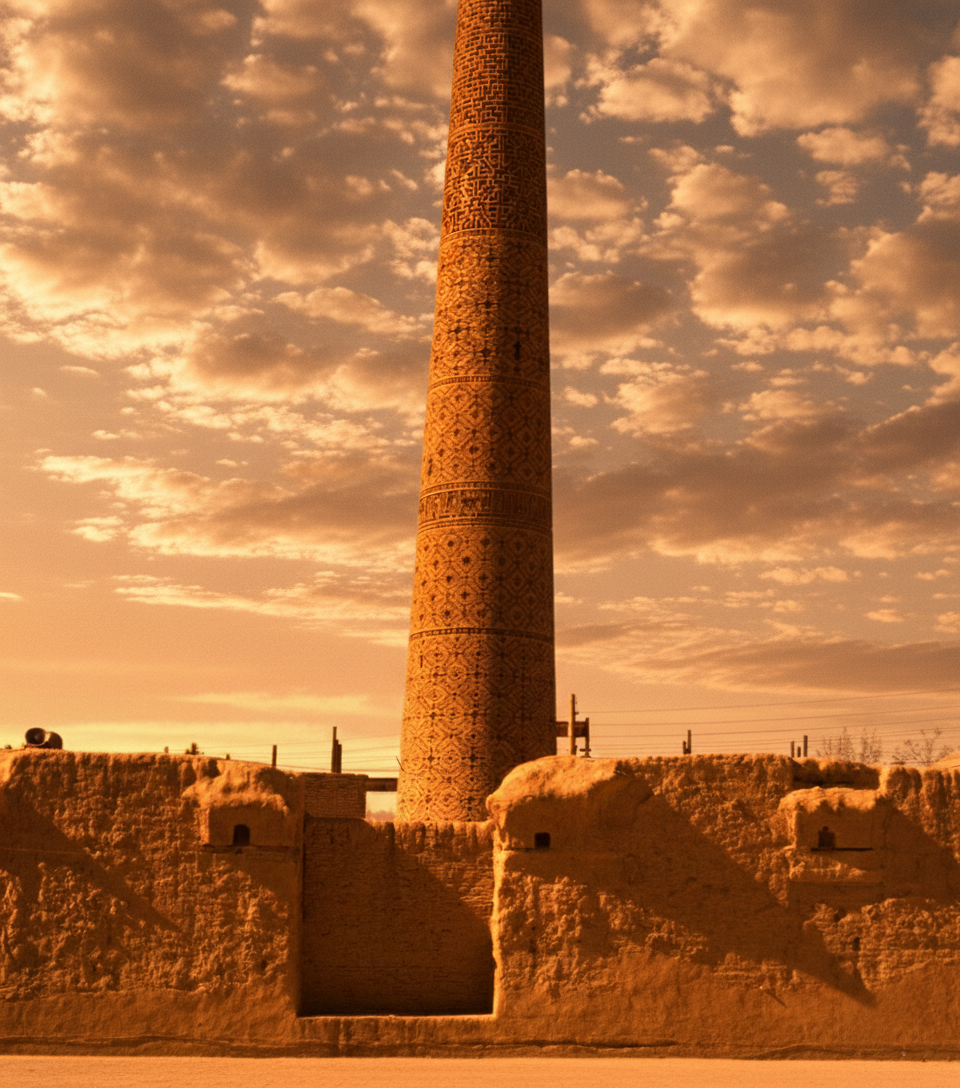
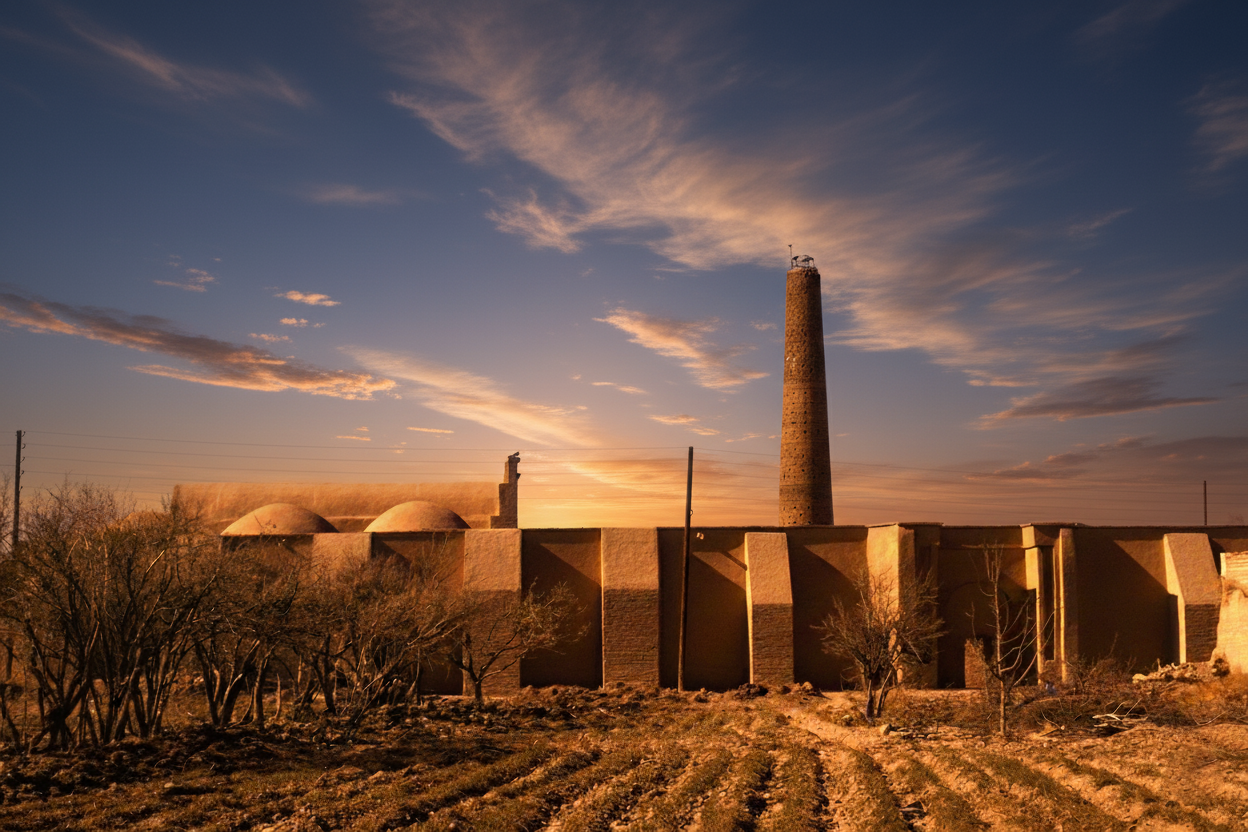
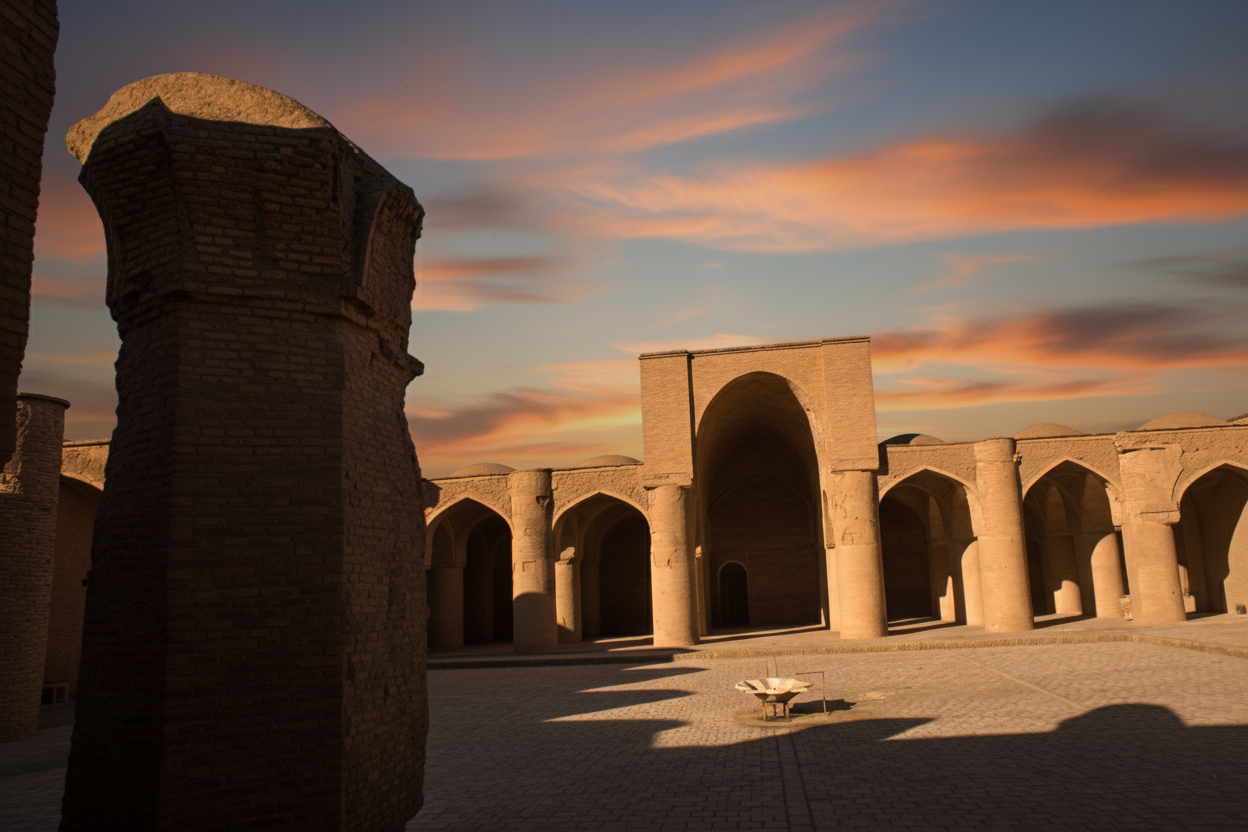
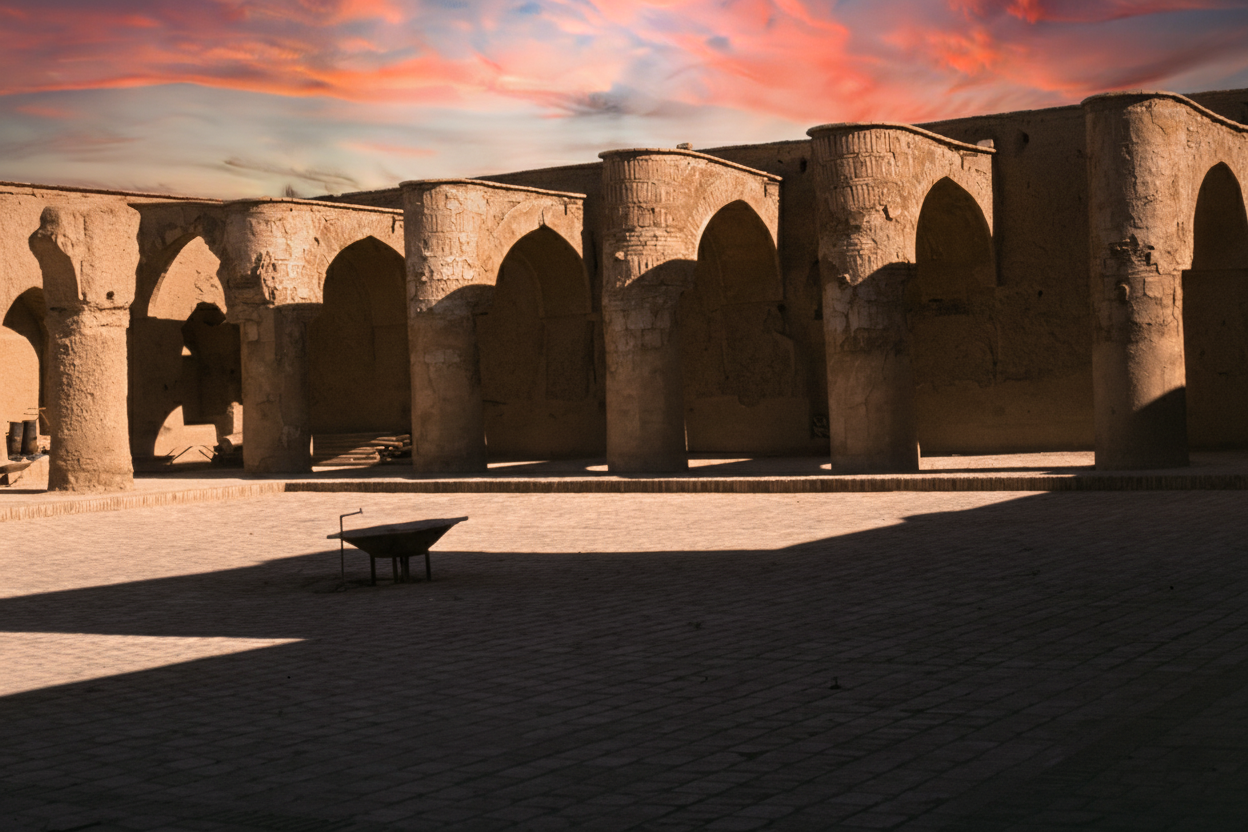
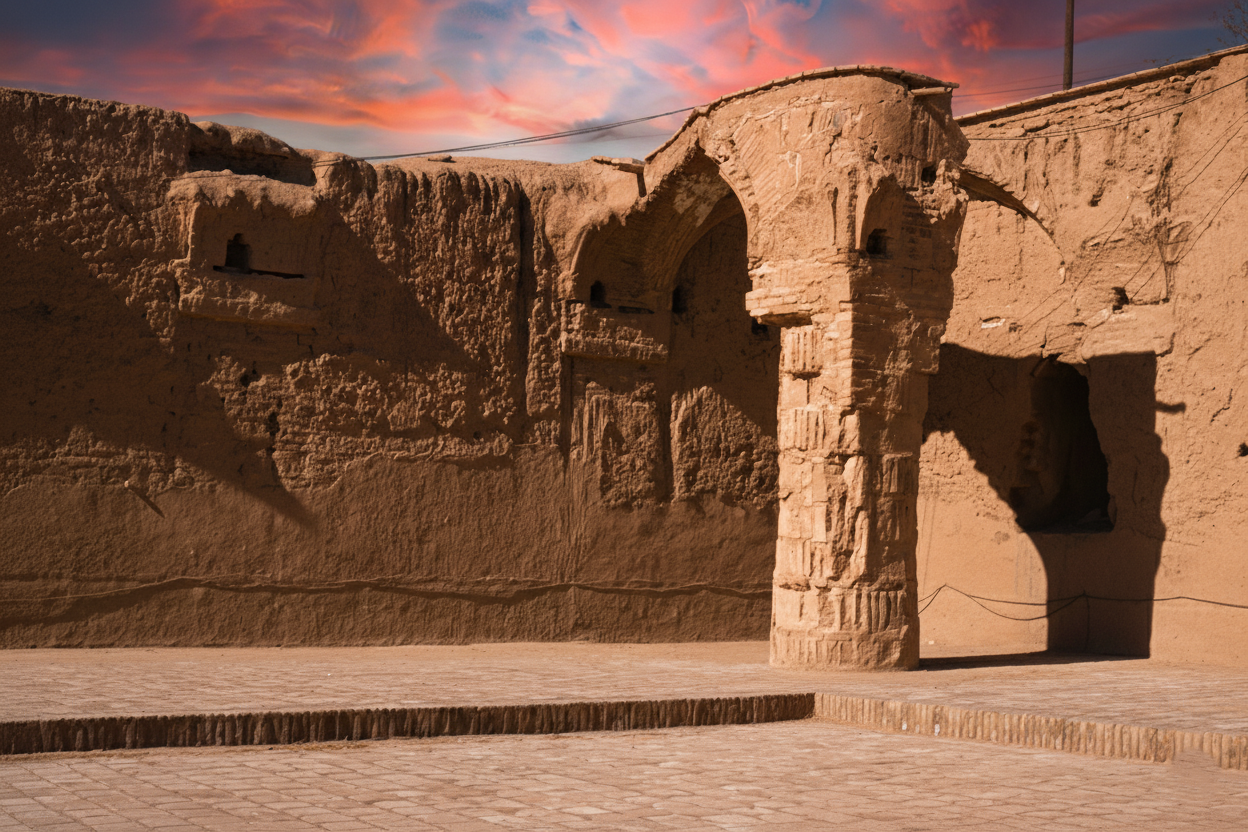
Tarikhaneh (تاریخانه) in Damghan (دامغان) exemplifies early Islamic architecture rooted in Sassanian (ساسانی) traditions. Its hypostyle hall (شبستان ستوندار), massive brick piers (جرزها), and arches (طاقها) create a monumental rhythm (ریتم). The Seljuk minaret (مناره سلجوقی) adds verticality (عمودیت), marking it as a key transitional monument (بنای گذار) in Iran.
-
Tarikhaneh in Damghan (Tarikhaneh / تاریخانه) is widely recognized as one of the earliest and most architecturally significant mosques in Iran, dating to the mid–8th century CE (around 750 CE). Its importance lies not only in its age, but in how clearly it embodies a moment of transition between pre-Islamic Persian architecture and early Islamic spatial and religious needs.
At its core, the mosque reflects the enduring influence of Sassanian architecture (Sassanian / ساسانی), particularly in its structural logic and construction techniques. The hypostyle plan (hypostyle / شبستان ستوندار)—a hall supported by multiple columns—recalls earlier Persian palatial and fire temple spaces (fire temple / آتشکده). However, here it is reinterpreted to serve Islamic congregational prayer (mosque / مسجد), demonstrating how existing architectural knowledge was adapted rather than replaced.
One of the most striking features is the use of massive circular brick piers (piers / جرزها) connected by broad arches (arches / طاقها). These elements create a powerful rhythmic sequence (rhythm / ریتم) throughout the interior, giving the space a sense of monumentality (monumentality / شکوه) despite its relative simplicity. The proportions and repetition of these forms guide both movement and perception, reinforcing the communal and spiritual experience of the space.
The construction materials—primarily adobe (adobe / خشت) and brick (brick / آجر)—highlight a commitment to structural clarity (structural clarity / وضوح سازهای) and continuity with regional building traditions (tradition / سنت). Rather than relying on elaborate ornament, the architecture emphasizes form, mass, and tectonics (tectonics / ساختارشناسی معماری). This restraint is significant: it reflects an early Islamic aesthetic that valued function and spatial coherence while still rooted in Persian craftsmanship.
Tarikhaneh thus represents a key transitional moment (transition / گذار) in architectural history, where Persian spatial concepts (Persian spatial forms / فرمهای فضایی ایرانی) were reinterpreted within an Islamic framework (Islamic architecture / معماری اسلامی). It stands as a bridge (bridge / پل) between two cultural and architectural systems.
The mosque’s minaret (minaret / مناره), added in the 11th century during the Seljuk period (Seljuk / سلجوقی), further enhances its significance. This cylindrical brick tower (cylindrical form / فرم استوانهای) is among the earliest surviving minarets in Iran. Its restrained decorative brickwork (brick decoration / تزیینات آجری) demonstrates the emerging sophistication of Seljuk craftsmanship while maintaining harmony with the mosque’s earlier simplicity.
Importantly, the minaret introduces a strong vertical element (verticality / عمودیت) that contrasts with the mosque’s predominantly horizontal mass (horizontal mass / توده افقی). This vertical counterpoint not only enhances the visual composition but also reinforces the mosque’s presence as an urban landmark (urban landmark / نشانه شهری) within Damghan (Damghan / دامغان).
In sum, Tarikhaneh is architecturally important because it embodies continuity, adaptation, and innovation. It preserves the structural intelligence of Sassanian building traditions while marking the emergence of a distinctly Islamic architectural identity in Iran—making it a foundational monument (foundational monument / بنای بنیادین) in the history of Persian and Islamic architecture.
