Zavareh (زواره), Desert Urban Planning
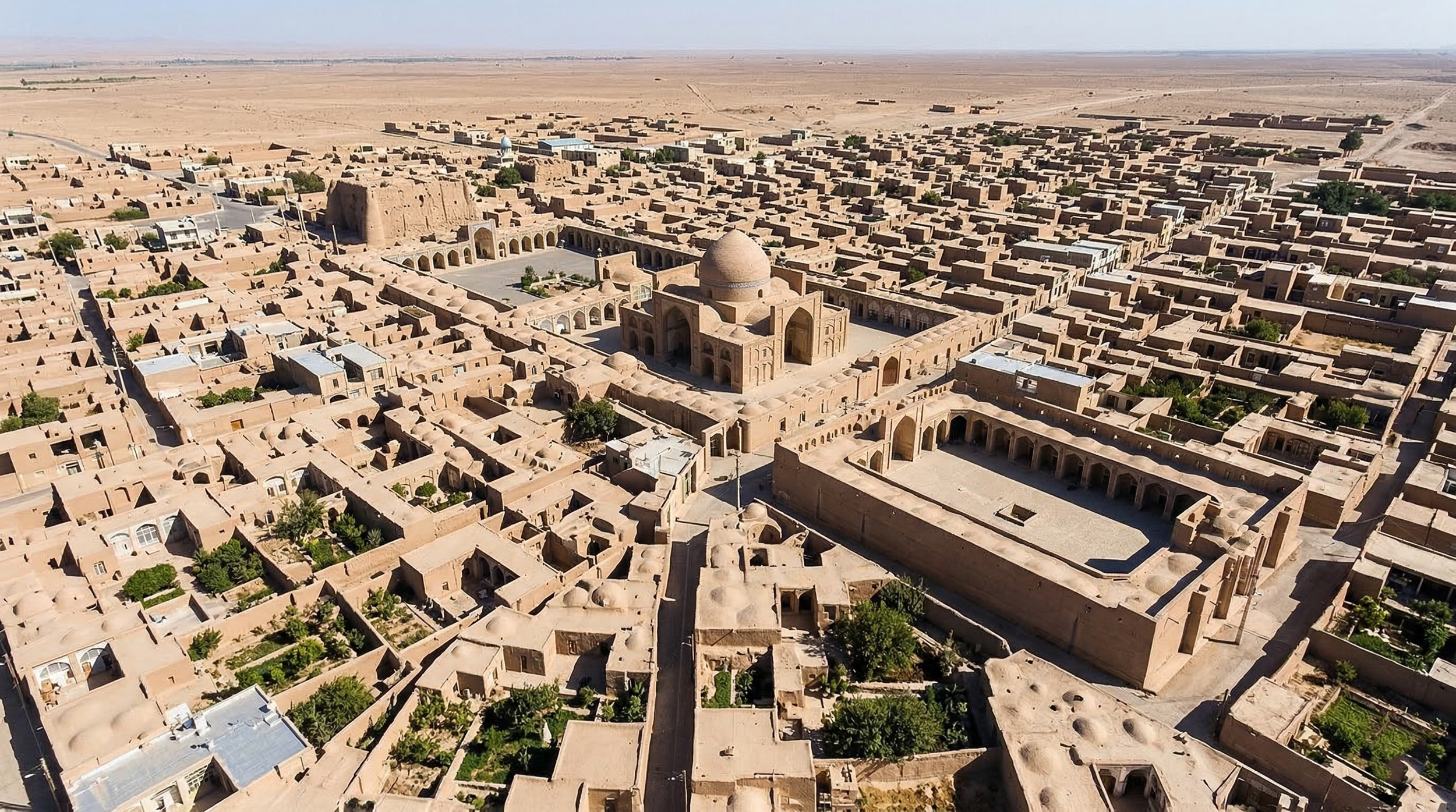
Zavareh (زواره), near Ardestan (اردستان), is one of Iran’s earliest planned desert towns, with origins in the Sasanian era (224–651 CE). Flourishing in the Seljuk period, its adobe and kah-gel (کاهگل) fabric centers on the Jameh Mosque (مسجد جامع زواره, 1135 CE), integrated with qanats (قنات کاریز), bazaars (بازار), and shaded alleys.
-
Zavareh (زواره), Desert Urban Planning. Zavareh (زواره), located a few kilometers from Ardestan (اردستان) along routes connected to the Silk Road (جاده ابریشم), is an ancient desert town whose origins reach back to the Sasanian era (224–651 CE). Its name is linked in legend to Zavareh (زواره), the brother of Rostam (رستم). Unlike many settlements that developed organically, Zavareh is often regarded as one of the earliest examples of a consciously planned desert town in Iran, displaying a relatively systematic urban layout centered around its mosque and bazaar.
The city flourished during the Seljuk period (11th–12th centuries CE), when it became an important regional center along caravan routes of central Iran. Its dense urban fabric—constructed primarily from adobe and kah-gel (کاهگل) over khesht (خشت)—forms a sculptural mass of earthen architecture that provides effective thermal insulation in the harsh desert climate. The settlement was sustained by the ancient Kariz Qanat (قنات کاریز) and anchored by landmarks such as the Sang-bast Fortress.
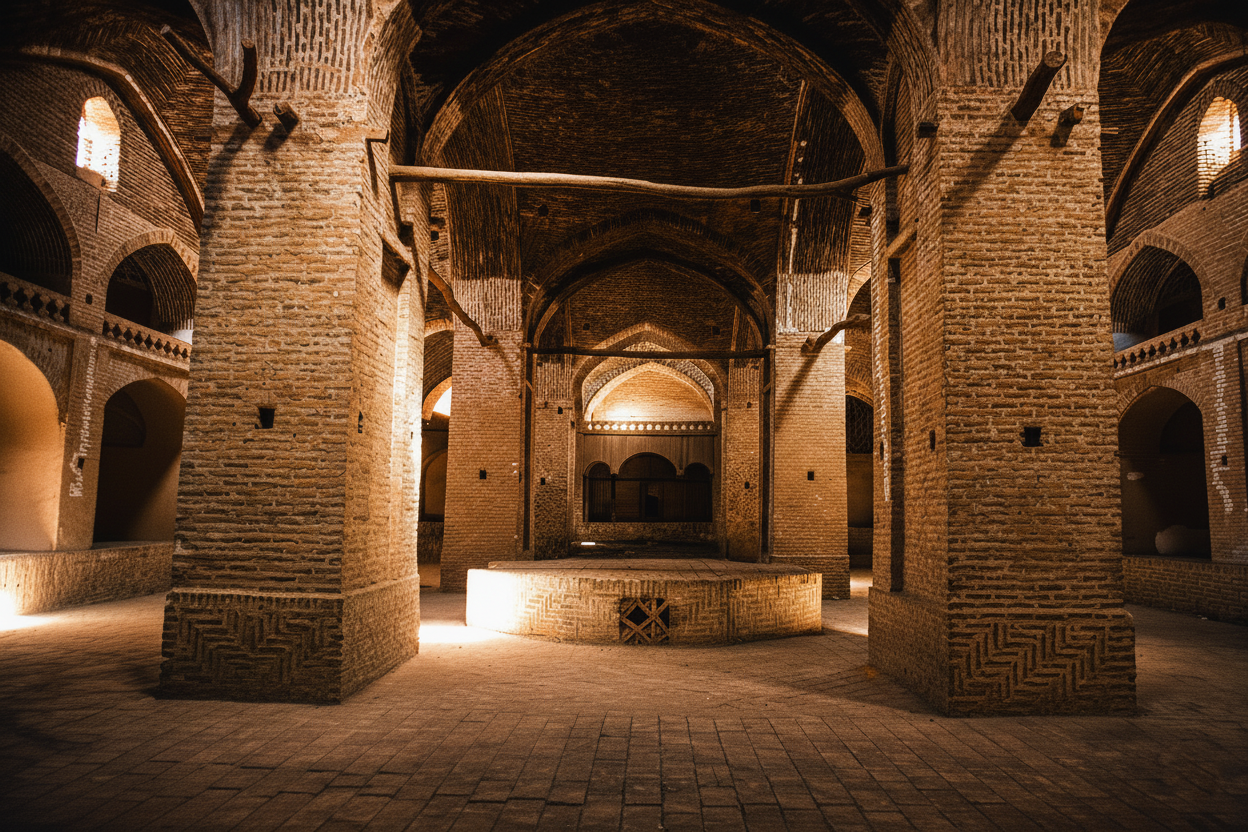
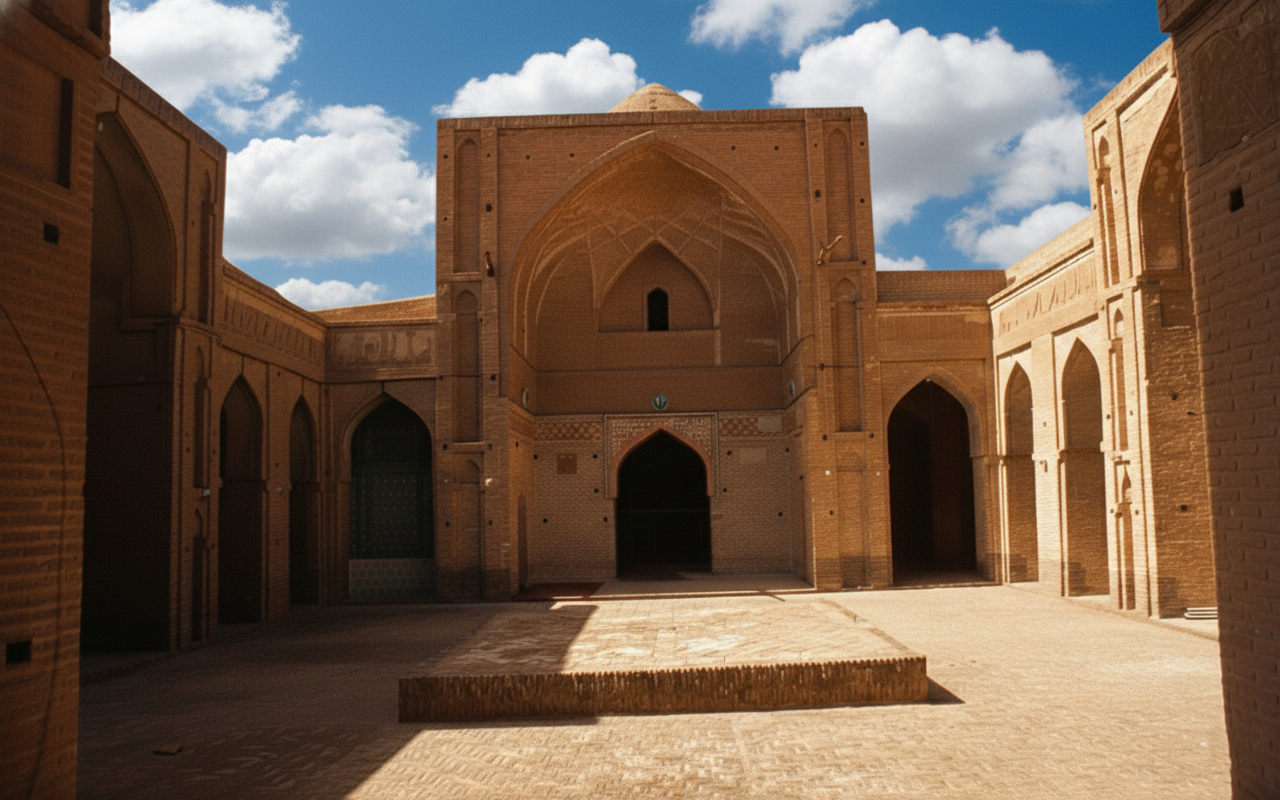
At its heart stands the Jameh Mosque of Zavareh (مسجد جامع زواره), built in 1135 CE. This Seljuk monument is considered one of the earliest mosques in Iran, designed entirely according to the four-iwan plan (ایوان), demonstrating the geometric clarity and architectural innovation that characterized Seljuk architecture and influencing mosque design across the Islamic world.
Nearby stands the Zavareh Grand Tekyeh (تکیه بزرگ زواره), a communal religious space used for Muharram mourning ceremonies and Ta'zieh (تعزیه) performances. The Tekyeh’s courtyard, arcades, and earthen materials create an acoustically and climatically effective gathering place for large public rituals.
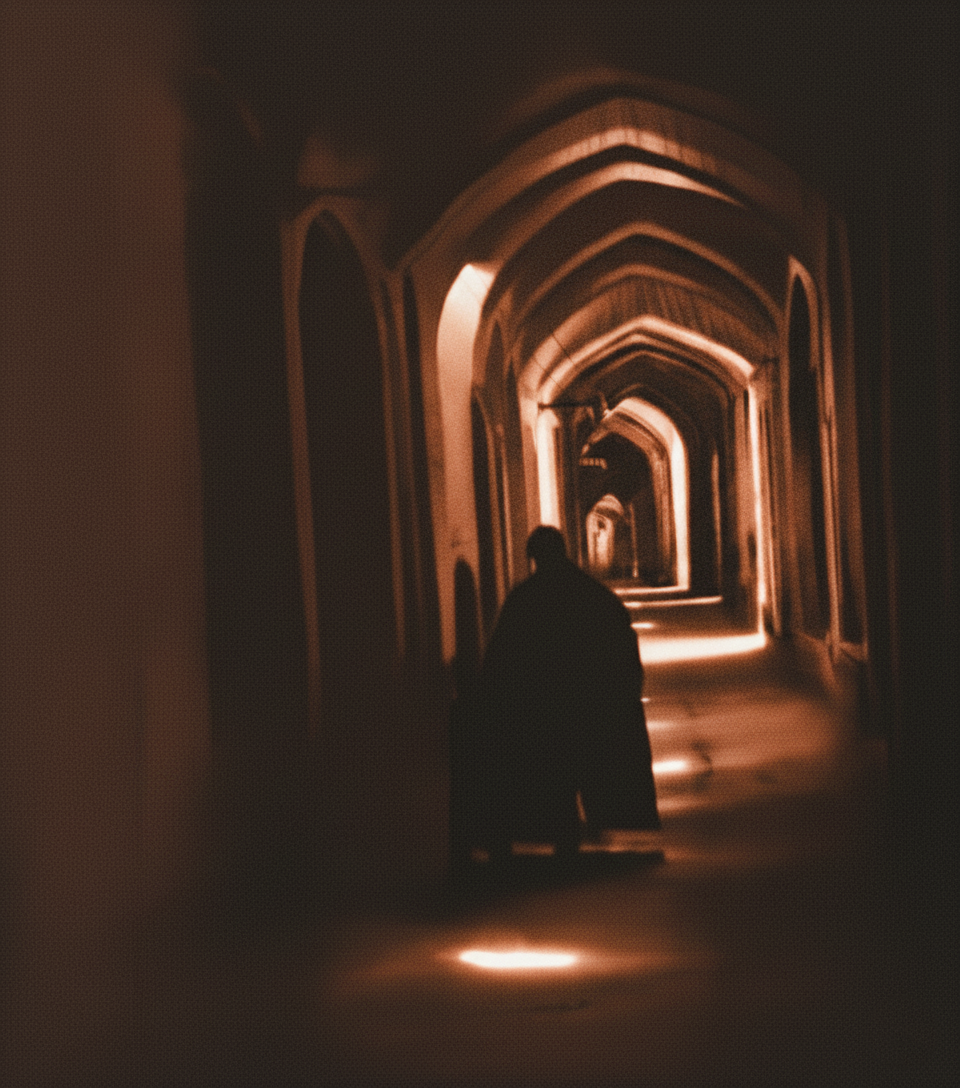
Radiating outward from the mosque-centered core, the bazaar (بازار), residential quarters, gardens (باغچهها), and winding narrow alleys (کوچههای باریک) form a cohesive and walkable settlement shaped by trade routes and caravan movement. These shaded alleys mitigate desert heat, channel cooling breezes, and encourage daily social interaction. Through the integration of mosque, bazaar, communal spaces, and housing, Zavareh represents a coherent model of desert urbanism in which architecture, climate adaptation, and social life remain closely interconnected.