Jameh Mosque of Zavareh
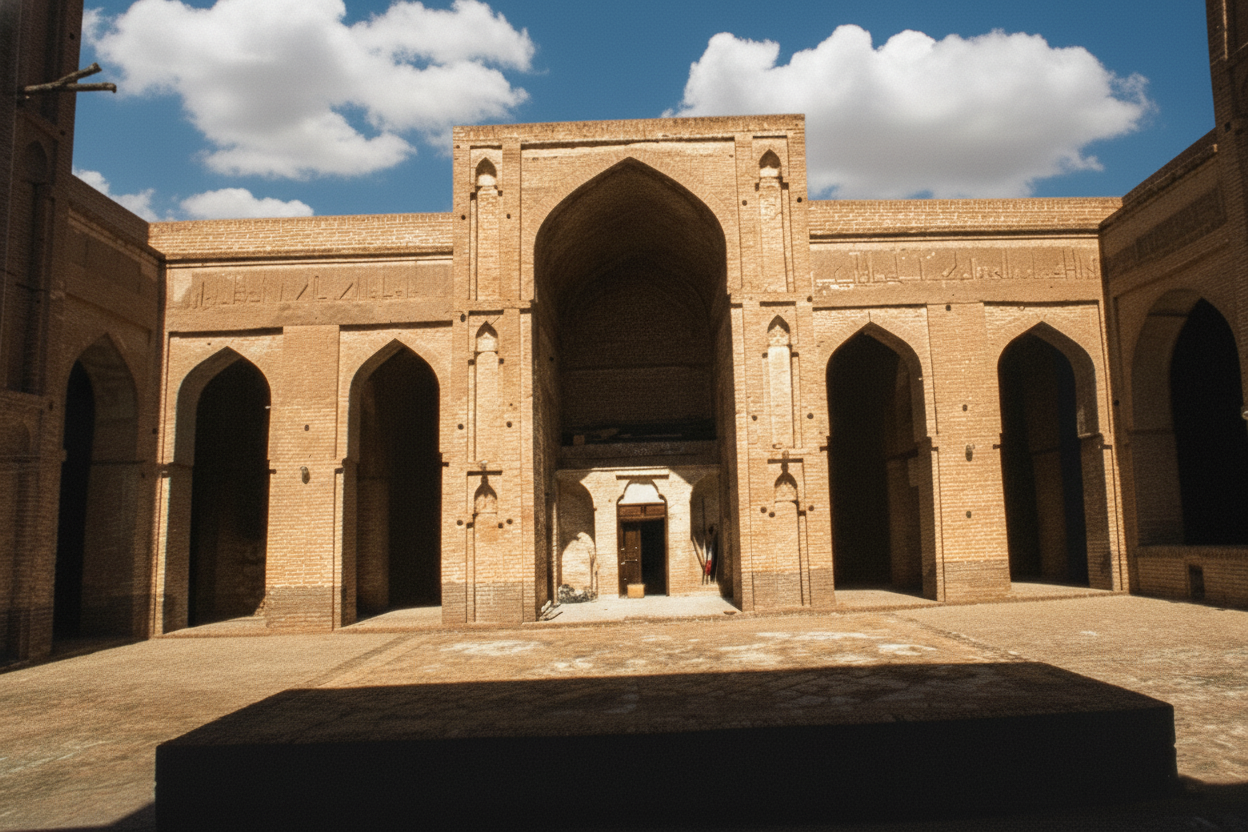
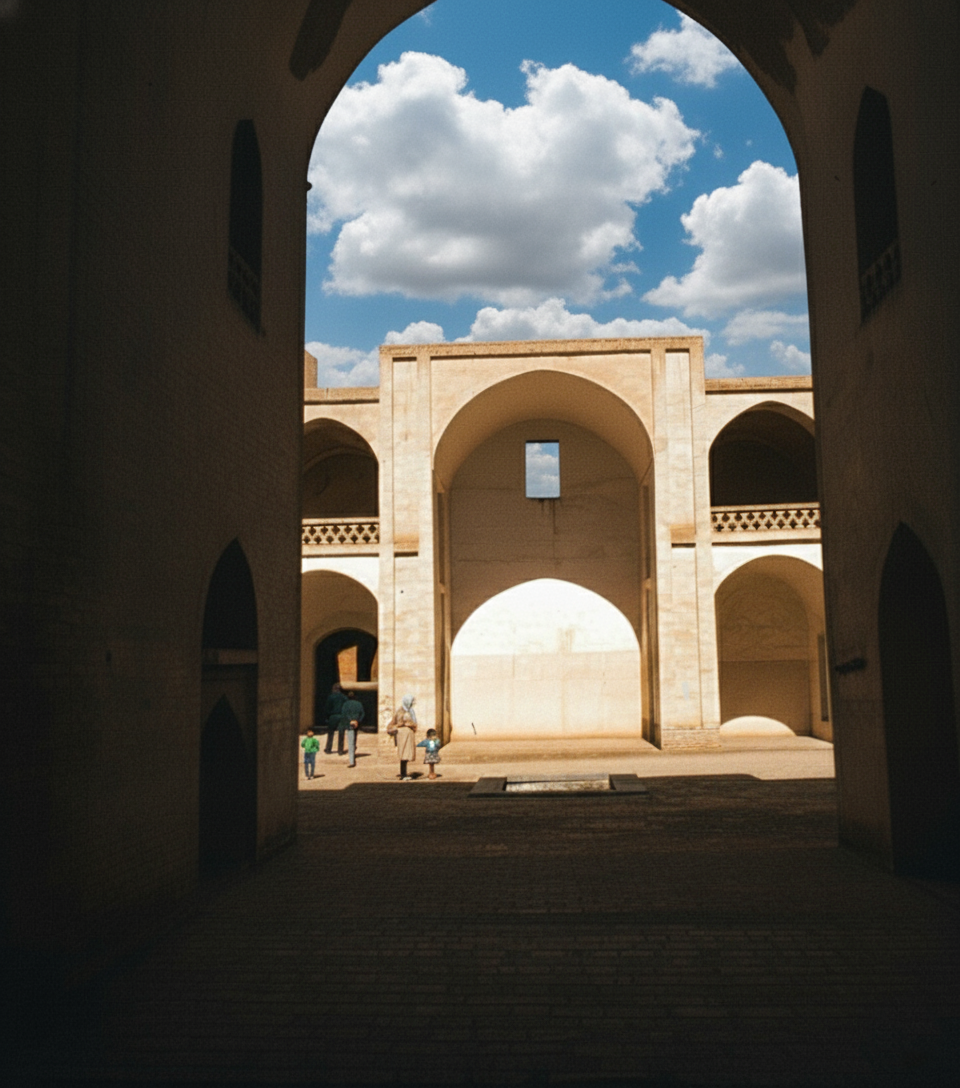
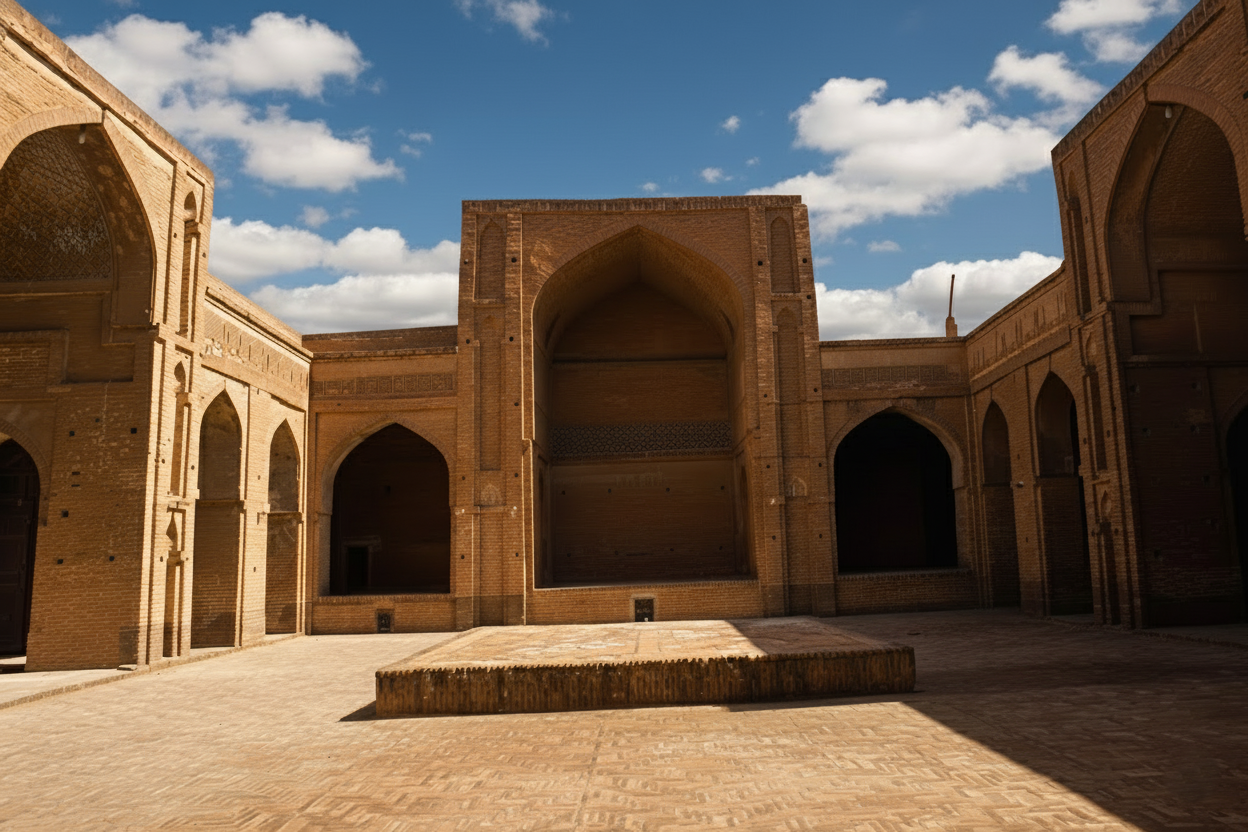
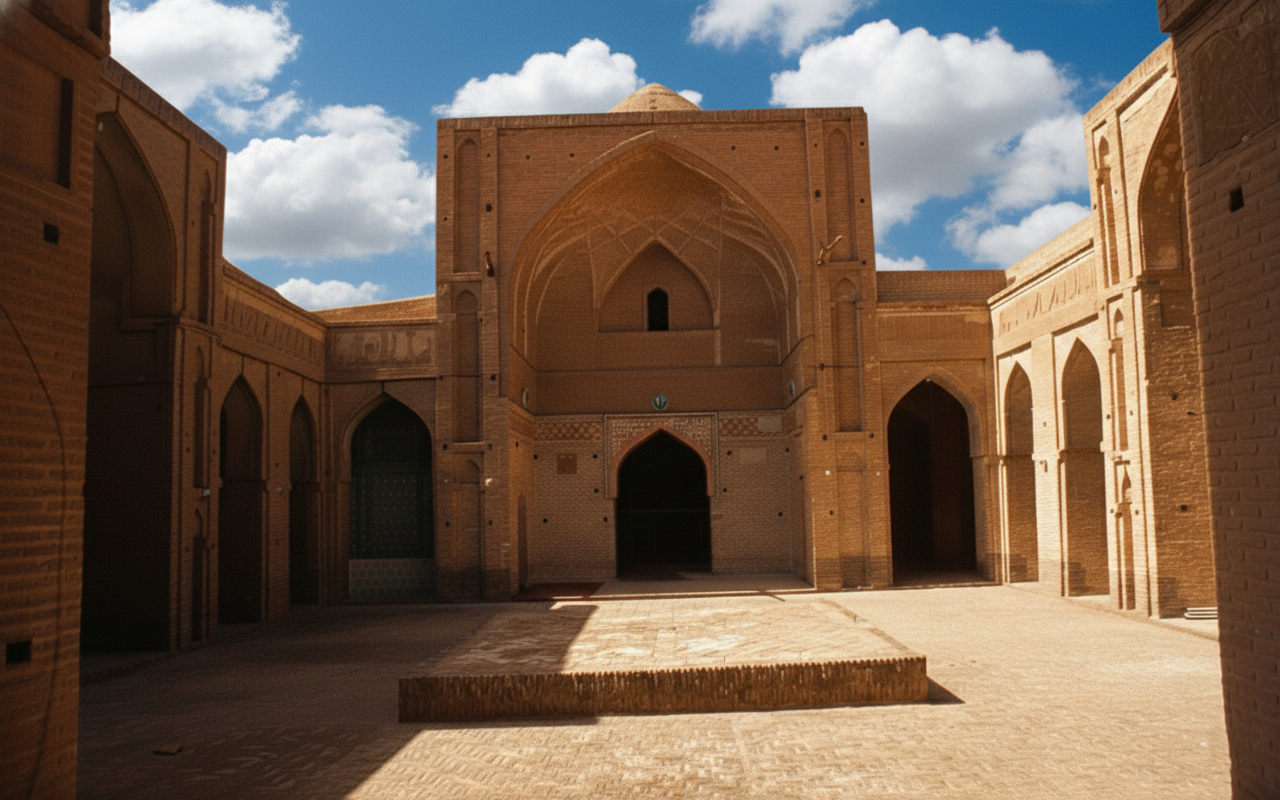
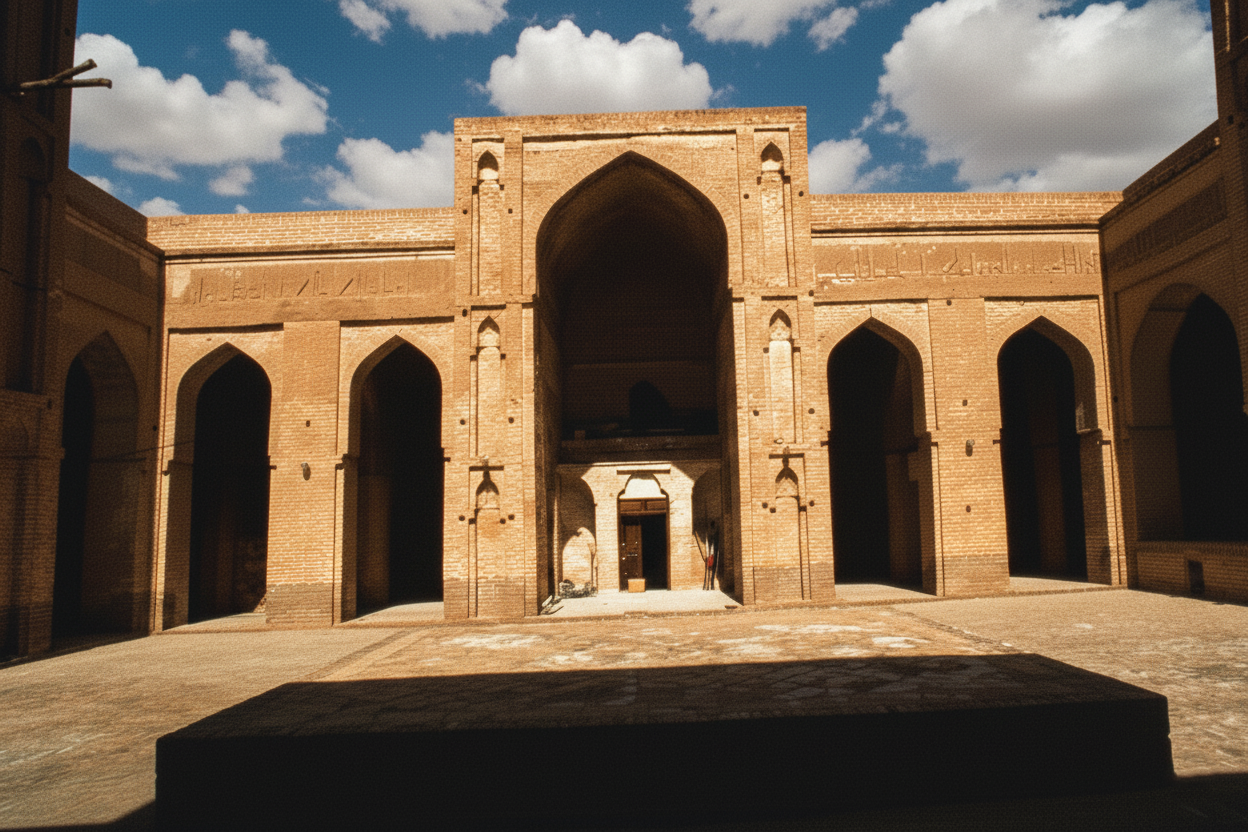
In the Jameh Mosque of Zavareh (مسجد جامع زواره, 1135 CE), some spaces are more developed on one side due to urban and architectural conditions. Integration with the surrounding bazaar (بازار) and streets shaped its layout, while Seljuk planning emphasized the qibla (قبله) axis and the iwan (ایوان), concentrating structural and climatic control.
-
In the Jameh Mosque of Zavareh (مسجد جامع زواره, 1135 CE), certain architectural spaces appear to have been developed more prominently on one side due to the mosque's urban, structural, and environmental context.
First, the mosque was integrated into the existing urban fabric of Zavareh (زواره), where surrounding streets, the bazaar (بازار), and nearby residential structures shaped the complex's spatial organization. Because the mosque was inserted into a dense settlement, some sides of the structure had to respond to adjacent buildings or circulation routes, limiting symmetrical expansion.
Second, Seljuk architectural planning often emphasized the principal axis leading to the qibla (قبله) and the main iwan (ایوان) facing the courtyard. Architectural emphasis was therefore concentrated on the most symbolically and functionally important sides of the mosque rather than distributed evenly.
Finally, the use of adobe (خشت) and brick construction required structural stability and climate responsiveness. Thicker walls and more articulated architectural elements were often concentrated on specific sides to regulate light, control airflow, and maintain thermal comfort within the mosque’s prayer spaces.
