The Zavareh Grand Tekyeh (تکیه بزرگ زواره)
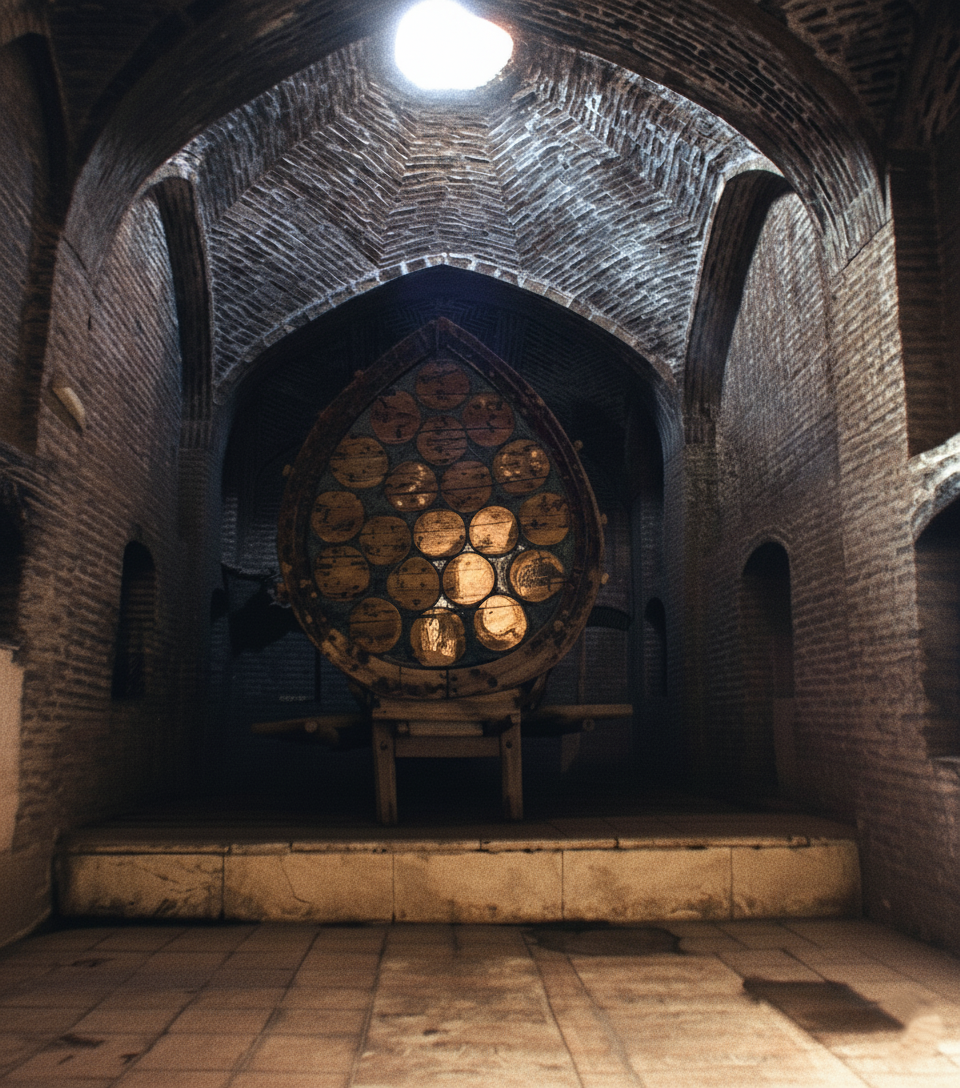
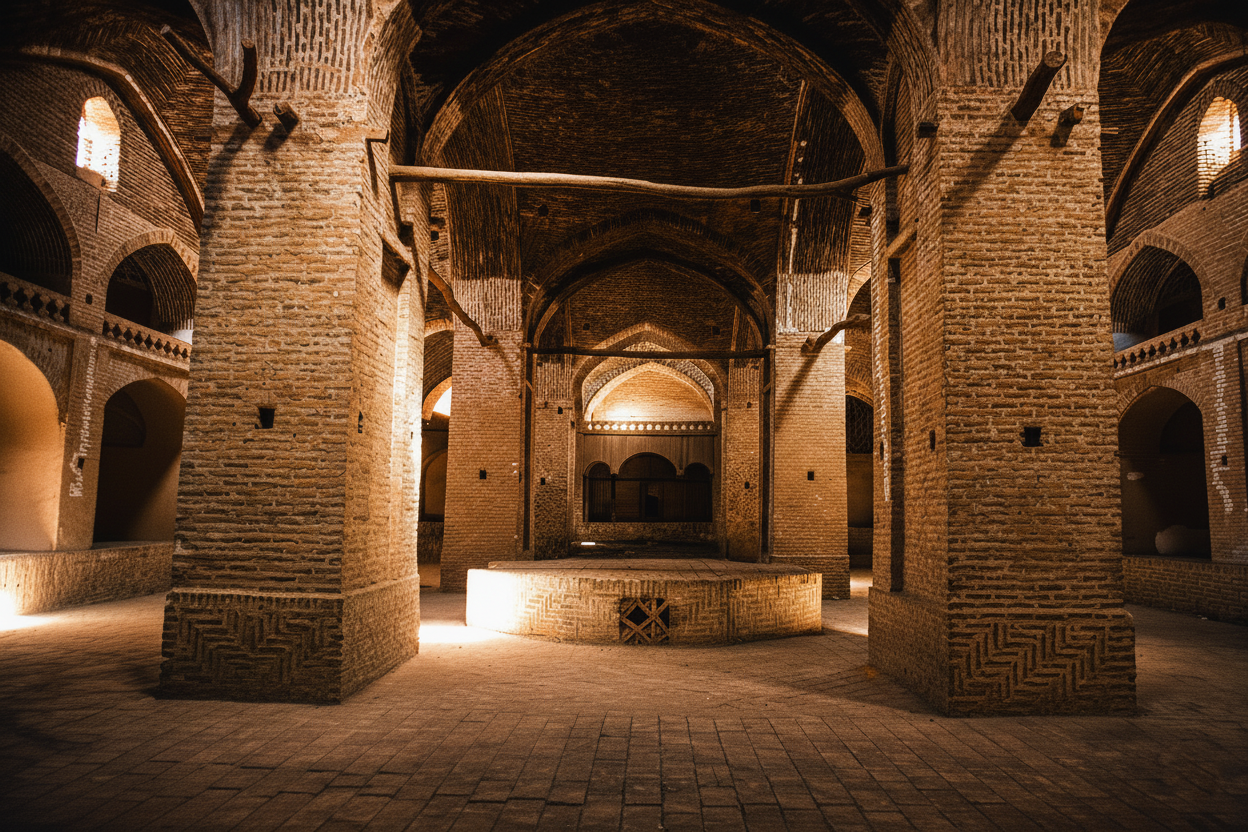
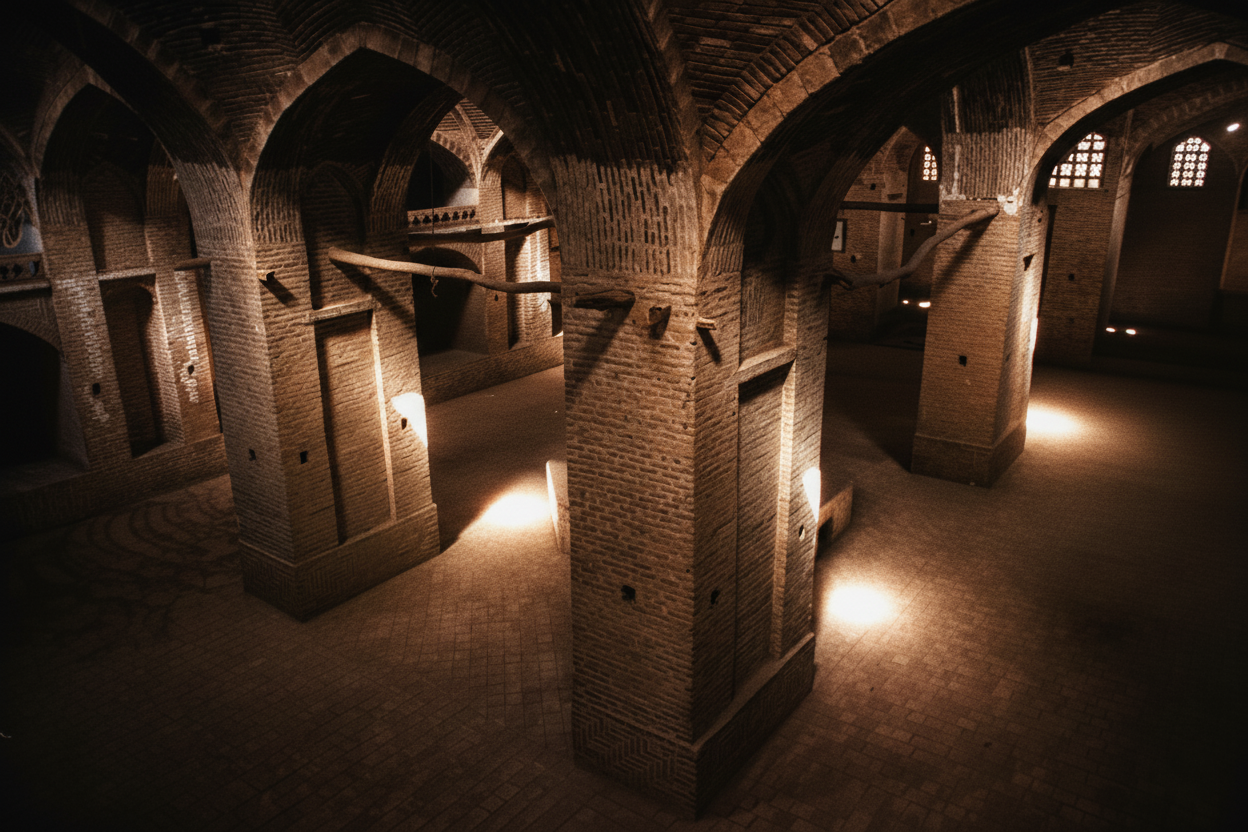
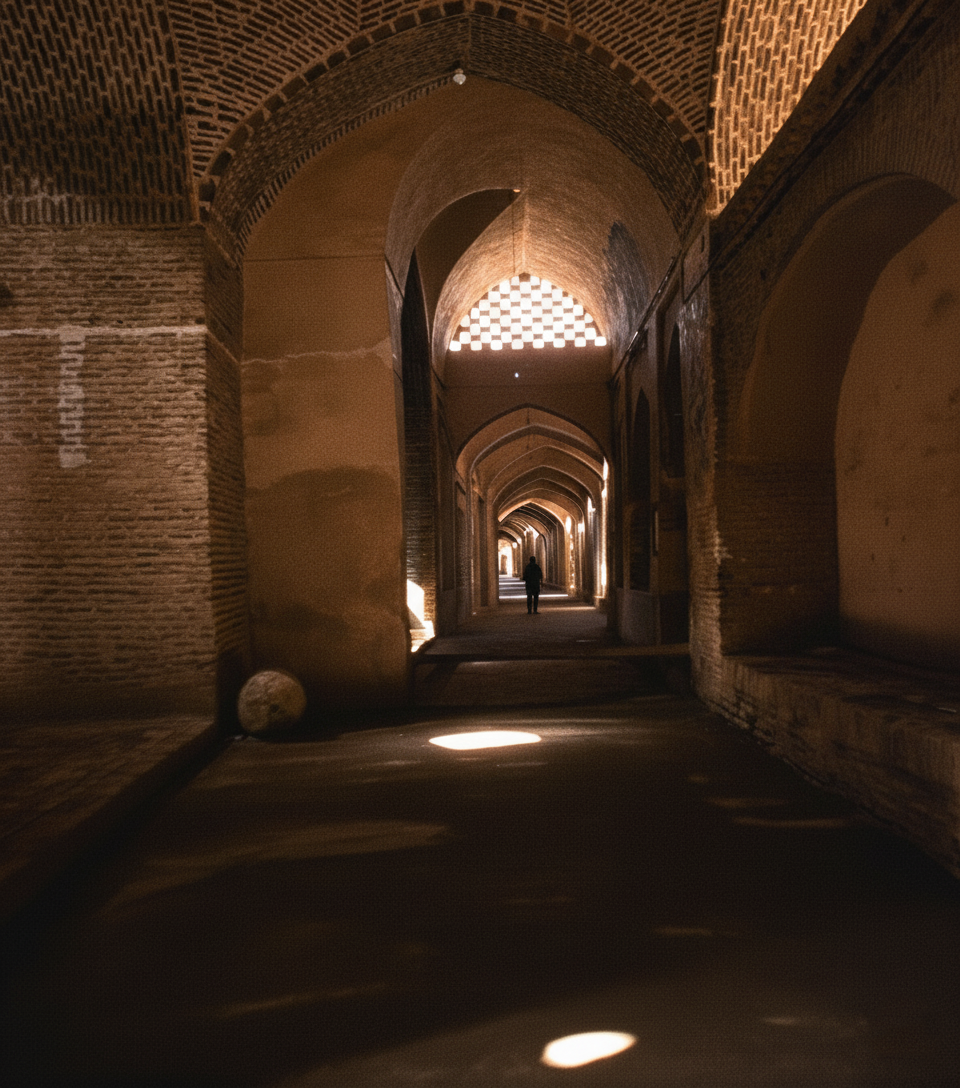
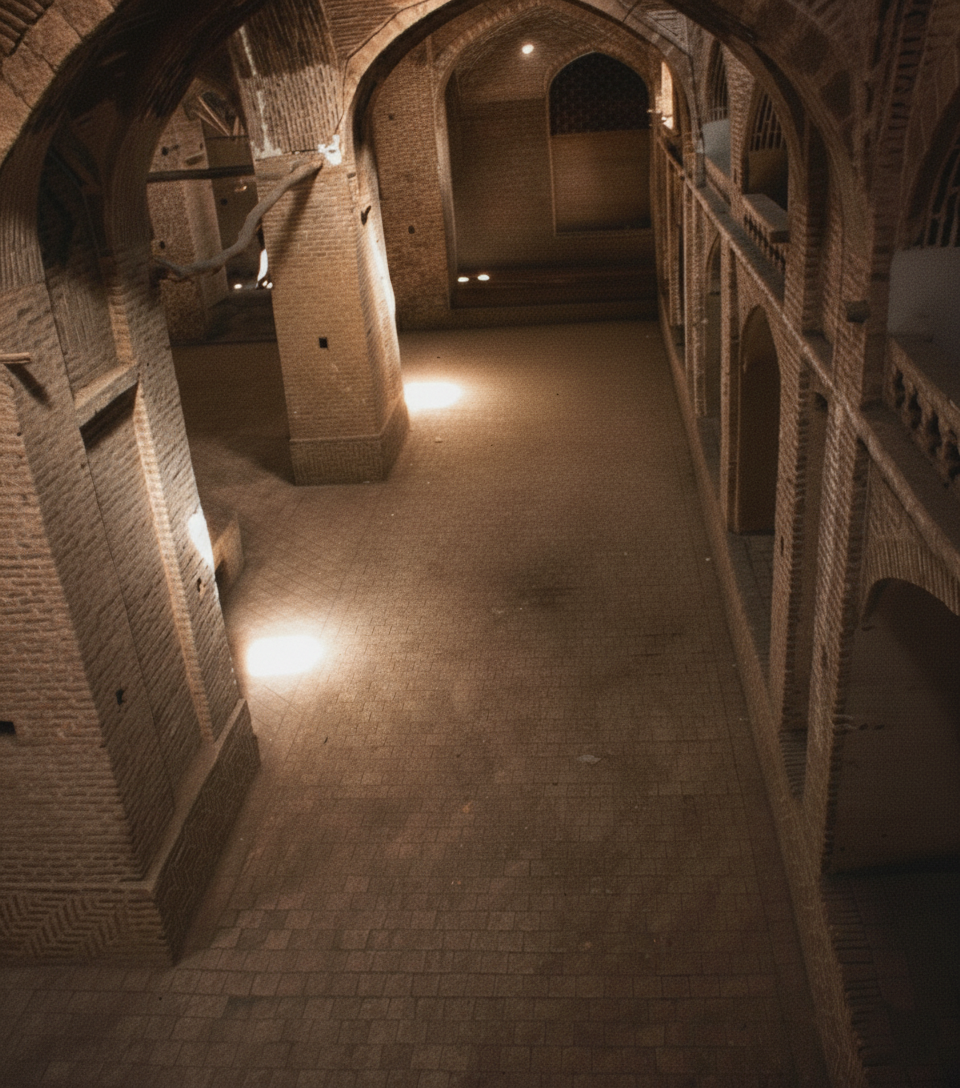
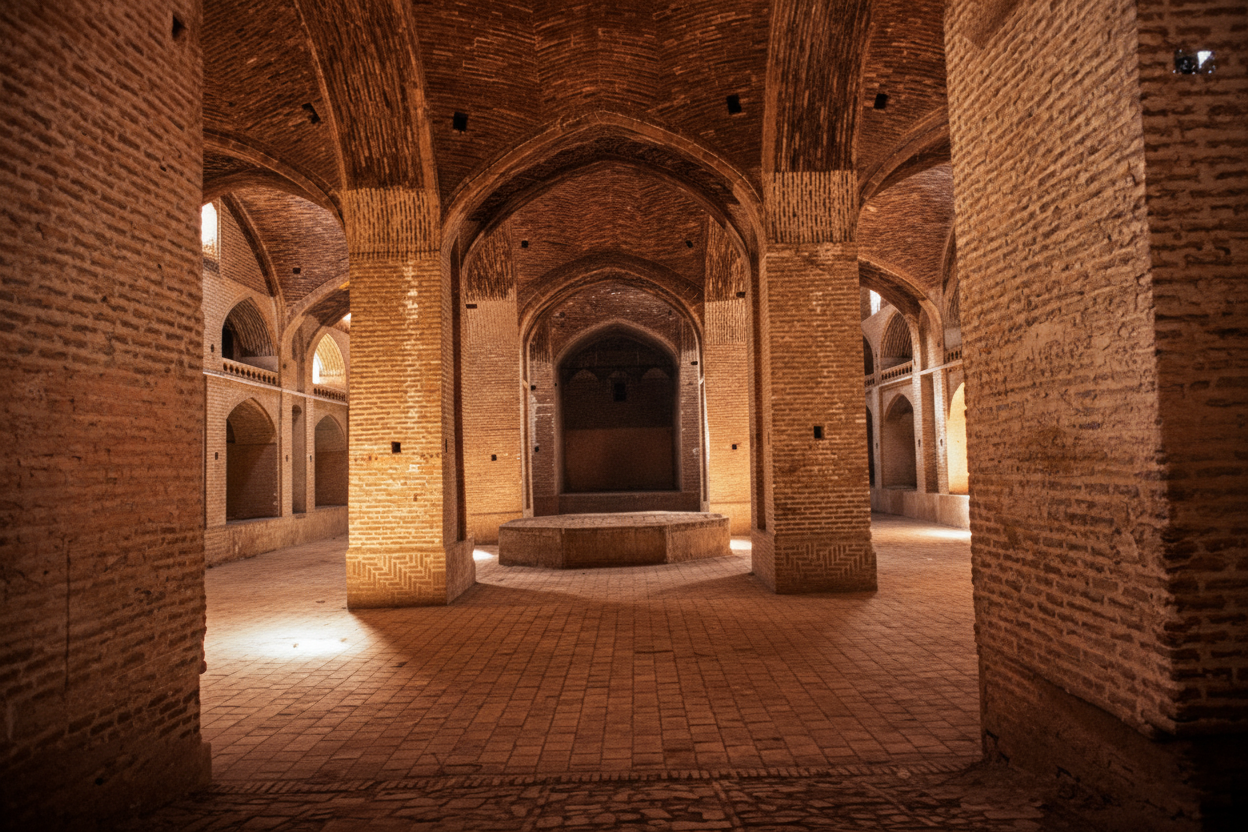
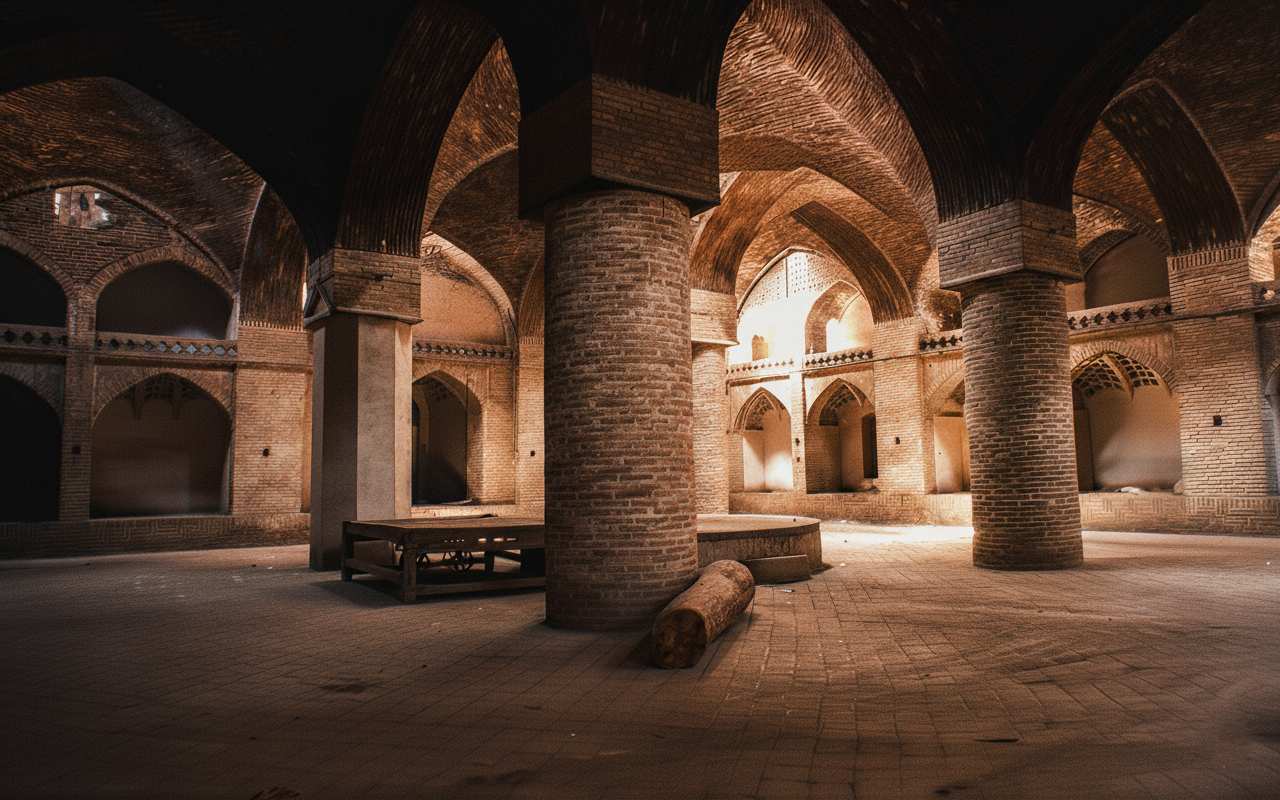
The Zavareh Grand Tekyeh (تکیه بزرگ زواره), beside the Jameh Mosque (مسجد جامع زواره, 1135 CE), extends worship into civic ritual. Built with khesht (خشت) and kah-gel (کاهگل) around an enclosed courtyard, it hosts Muharram (محرم) and Ta’zieh (تعزیه) ceremonies, in which the architecture organizes communal gatherings, reinforcing Zavareh’s social cohesion and collective memory.
-
The Zavareh Grand Tekyeh (تکیه بزرگ زواره), located in close relationship to the Jameh Mosque of Zavareh (مسجد جامع زواره, 1135 CE), extends the religious and social functions of the mosque into the civic life of the city. While the Jameh Mosque serves as the primary space for daily worship and formal congregational prayer, the Tekyeh provides a complementary architectural setting for collective rituals, particularly Muharram (محرم) mourning ceremonies and Ta’zieh (تعزیه) performances that commemorate the martyrdom of Imam Husayn (امام حسین) in the 7th century CE (680 CE).
Architecturally rooted in desert construction traditions, the Tekyeh is organized around an enclosed courtyard framed by arcades and constructed primarily from khesht (خشت) adobe and kah-gel (کاهگل) plaster. These earthen materials moderate temperature and create a sheltered microclimate, while the courtyard form establishes an intimate acoustic environment suitable for recitation, lamentation, and dramatic performance. The surrounding arcades and elevated platforms accommodate spectators and participants, transforming the Tekyeh into a spatial theater of ritual.
Beyond its ceremonial function, the Tekyeh plays a critical role in reinforcing social cohesion within Zavareh (زواره). During Muharram, residents gather in the Tekyeh, where architecture serves as an instrument for organizing communal presence, shared emotion, and collective memory. The spatial hierarchy of courtyard, arcades, and entrances subtly orders movement and gathering, allowing the community to participate simultaneously as performers, mourners, and witnesses.
In this way, architecture actively reinforces the town's social structure. The Tekyeh becomes a civic stage where religious devotion, neighborhood identity, and communal solidarity converge. Through its physical proximity and symbolic dialogue with the Jameh Mosque, the Tekyeh transforms the surrounding urban space into a unified sacred and social precinct. Together, these institutions anchor the religious, cultural, and communal life of Zavareh, embedding spiritual practice and social continuity within the city's architectural fabric.
