Section IV — Fars: The Heartland of Persian Civilization
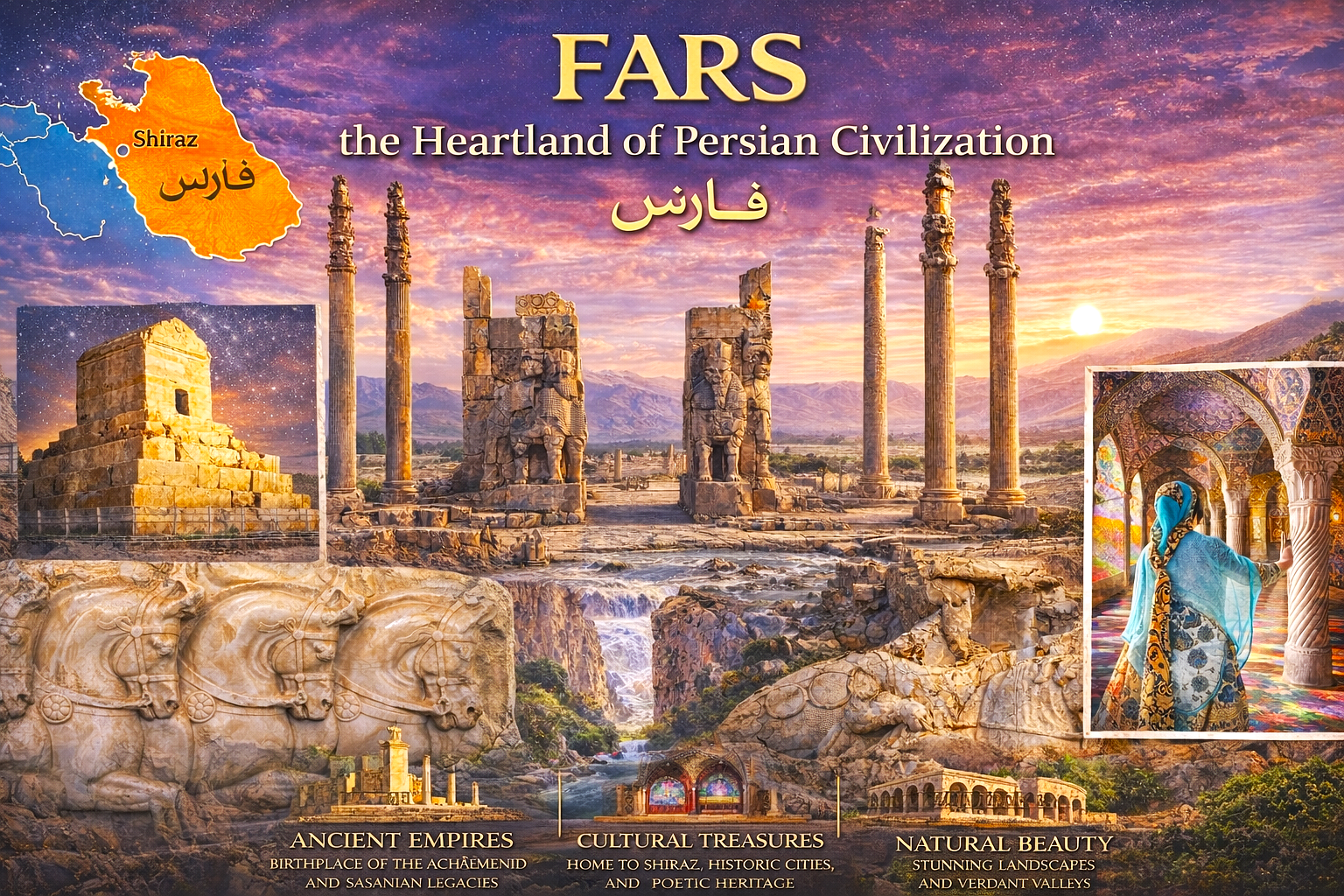
Fars, the historic heartland of Persian civilization, was home to Persepolis, founded by Darius the Great around 518 BCE as the ceremonial center of the Achaemenid Empire. Built on a vast stone terrace, its grand halls, sculpted columns, reliefs, and inscriptions symbolized imperial unity, political authority, and the cultural diversity of the Persian world.
-
The province of Fars (فارس) represents the historical and cultural heartland of Persian civilization. It was here that the Achaemenid Empire, one of the largest and most influential empires of the ancient world, established its ceremonial center at Persepolis (تخت جمشید). Located about sixty kilometers northeast of Shiraz, Persepolis was founded around 518 BCE by Darius the Great (داریوش بزرگ) and served as a monumental setting for imperial ceremonies and diplomatic gatherings.
Unlike other capitals such as Susa (شوش) or Ecbatana (هگمتانه), Persepolis functioned primarily as a symbolic center of imperial unity, where representatives from across the empire assembled—especially during the celebration of Nowruz (نوروز). Built upon a vast stone terrace at the foot of the mountains, the complex was carefully designed with monumental gateways, grand staircases, and vast columned halls that reflected the power and organization of the Achaemenid state.
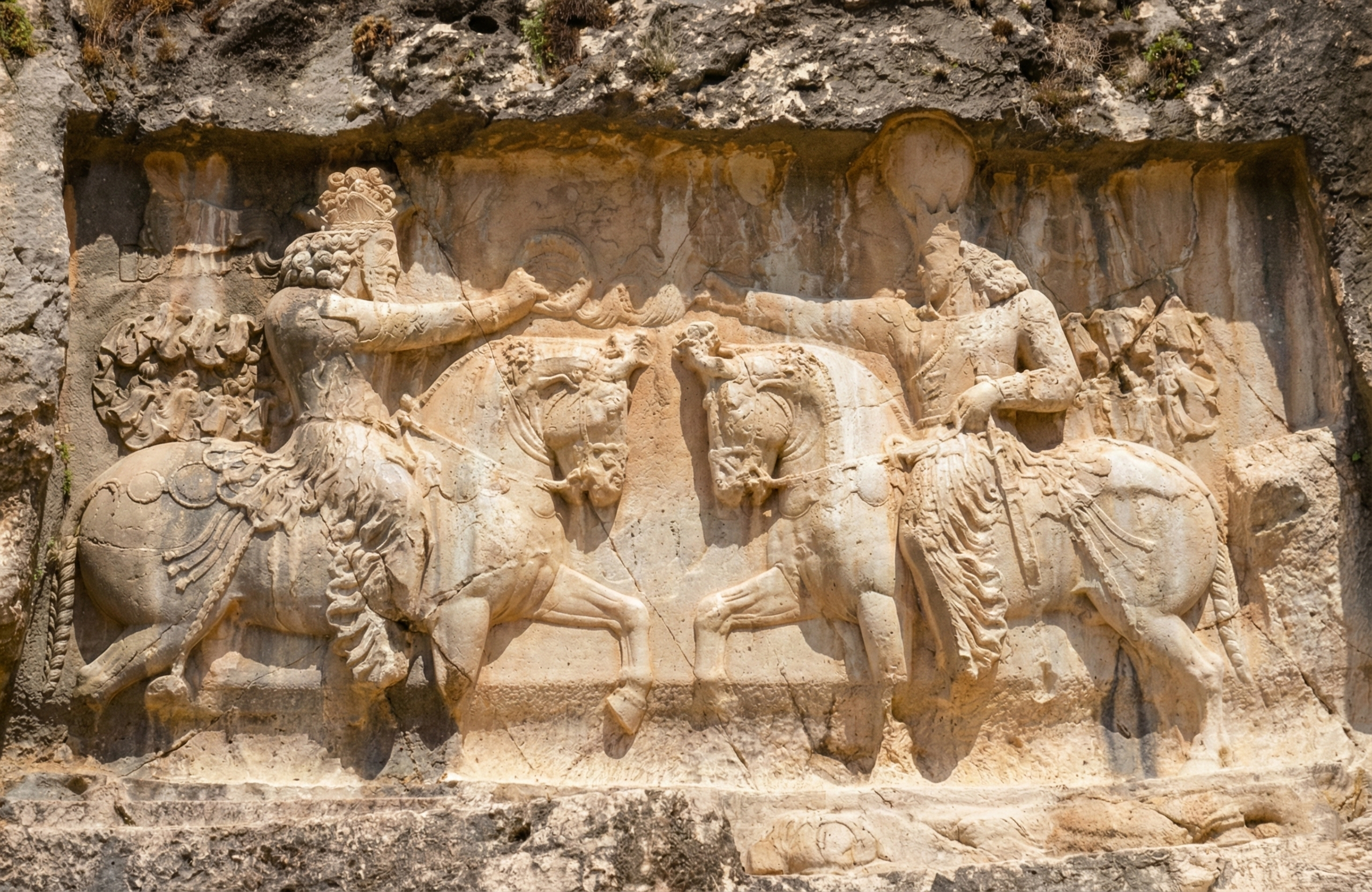
Among the most remarkable architectural features are the towering columns of the Apadana Palace and the Gate of All Nations, whose sculpted capitals—often depicting paired animals such as bulls, lions, and griffins—combined structural engineering with symbolic expressions of strength and royal authority. The site is also renowned for its finely carved stone reliefs (نقوش برجسته), which portray ceremonial processions of delegations from the many lands of the empire, each bringing gifts and wearing distinctive attire that illustrates the cultural diversity of the Achaemenid world.
Equally significant are the cuneiform inscriptions (کتیبههای میخی) carved into palace walls and gateways. Written in Old Persian, Elamite, and Babylonian, these inscriptions record royal proclamations and building dedications while acknowledging the divine authority of Ahura Mazda (اهورامزدا). Integrated into the architecture, they served as enduring declarations of imperial legitimacy.
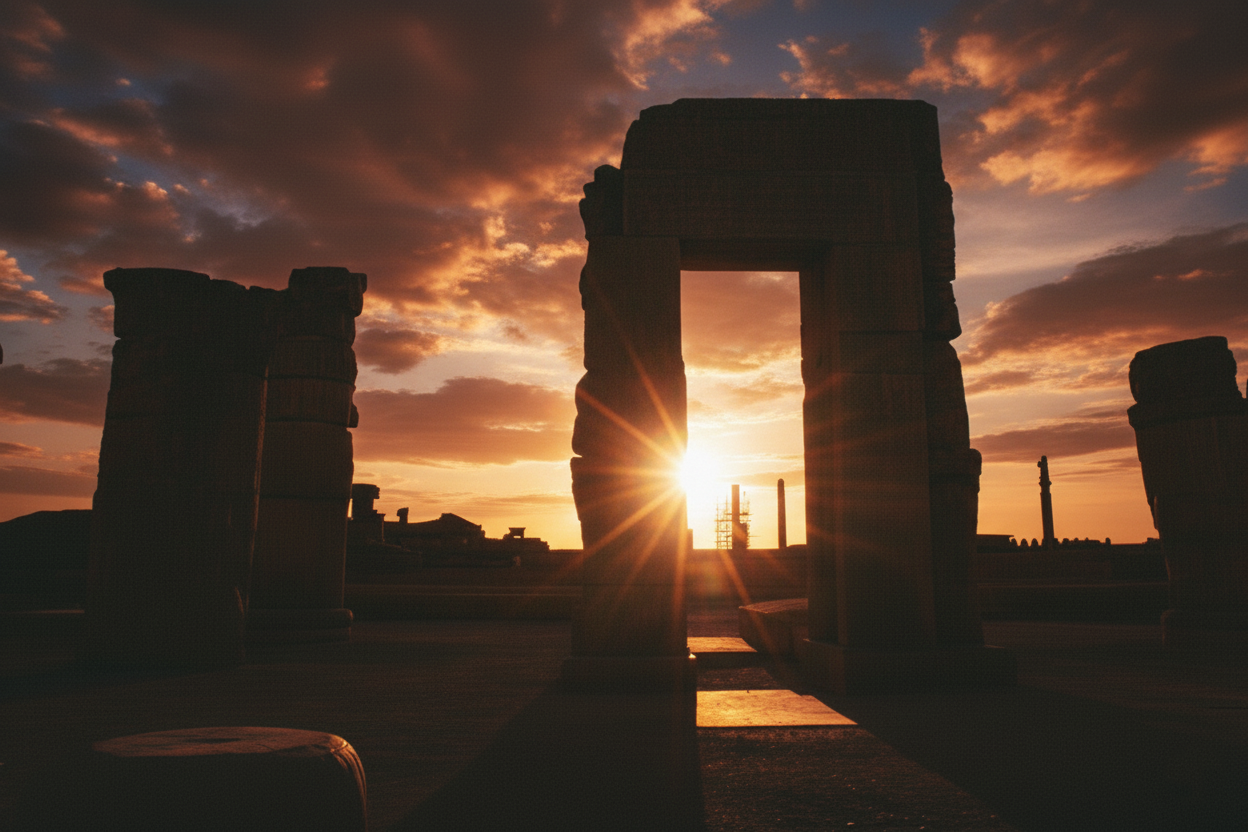
Although Persepolis was captured and burned by Alexander the Great in 330 BCE, its monumental terraces, columns, reliefs, and inscriptions remain among the most powerful surviving symbols of ancient Persian civilization. Together, they reflect the artistic vision, political organization, and cultural ideals that emerged from Fars—the historic heartland of Persia.