Naqsh-e Rustam (نقش رستم)
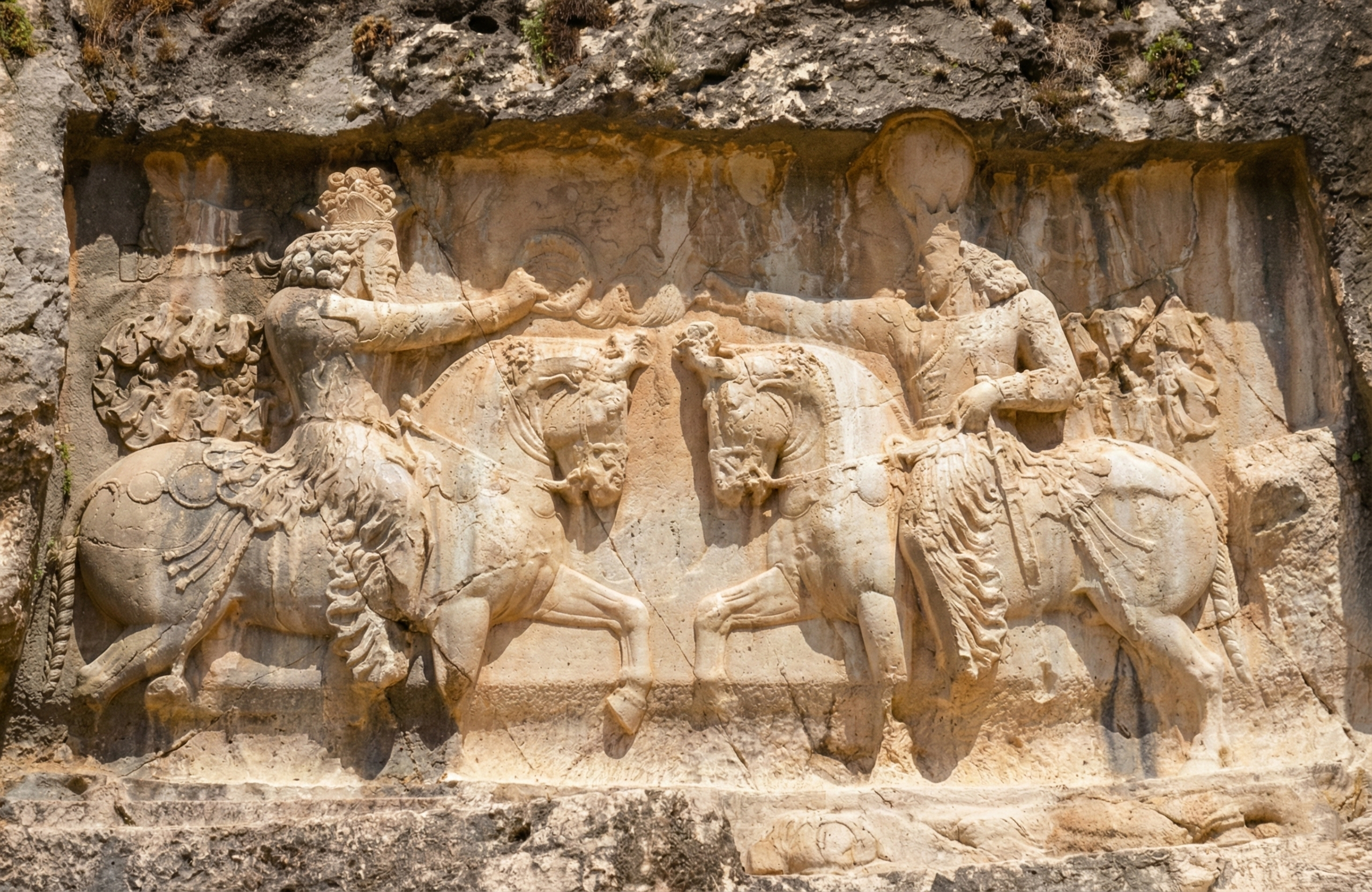
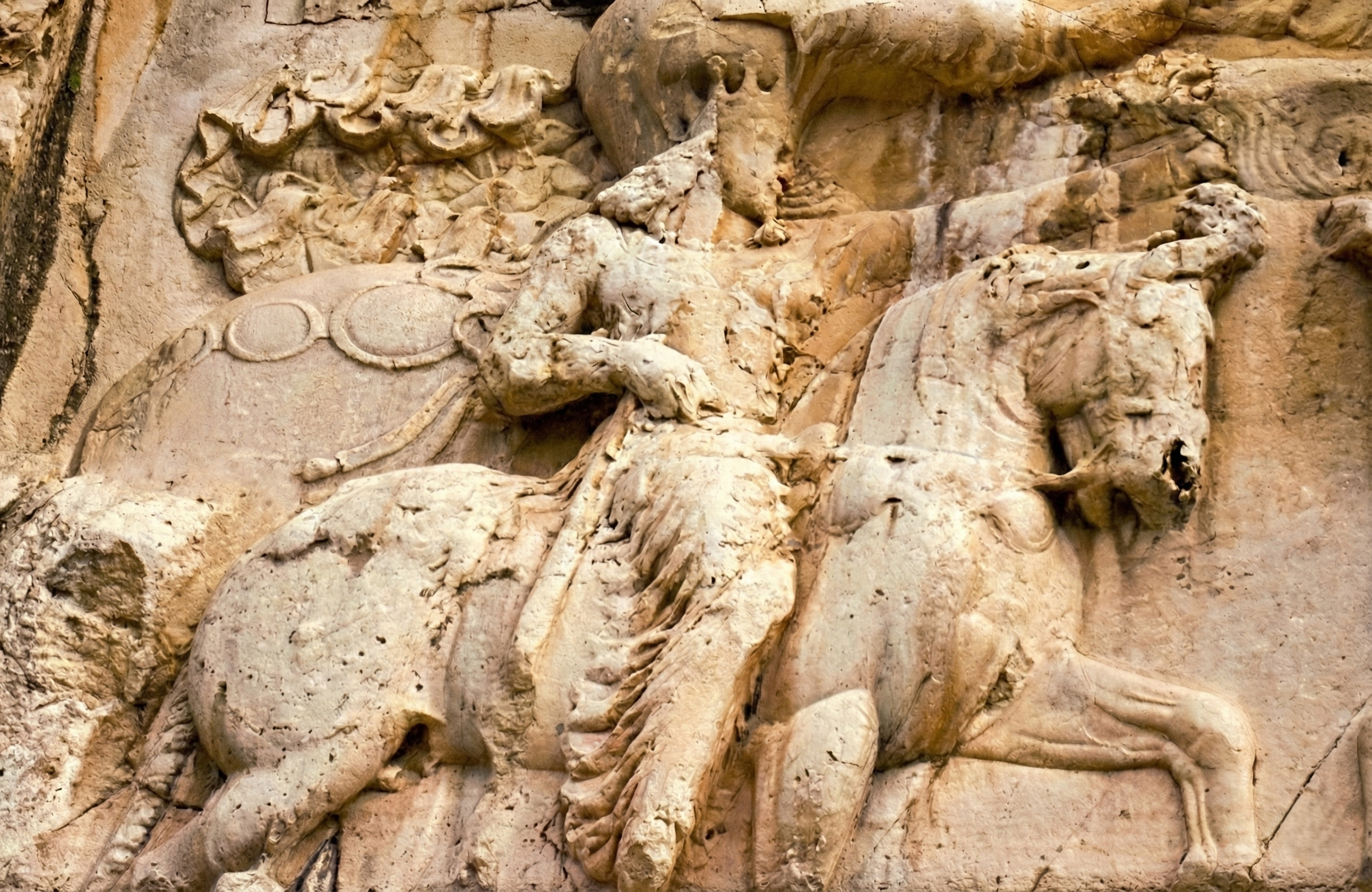
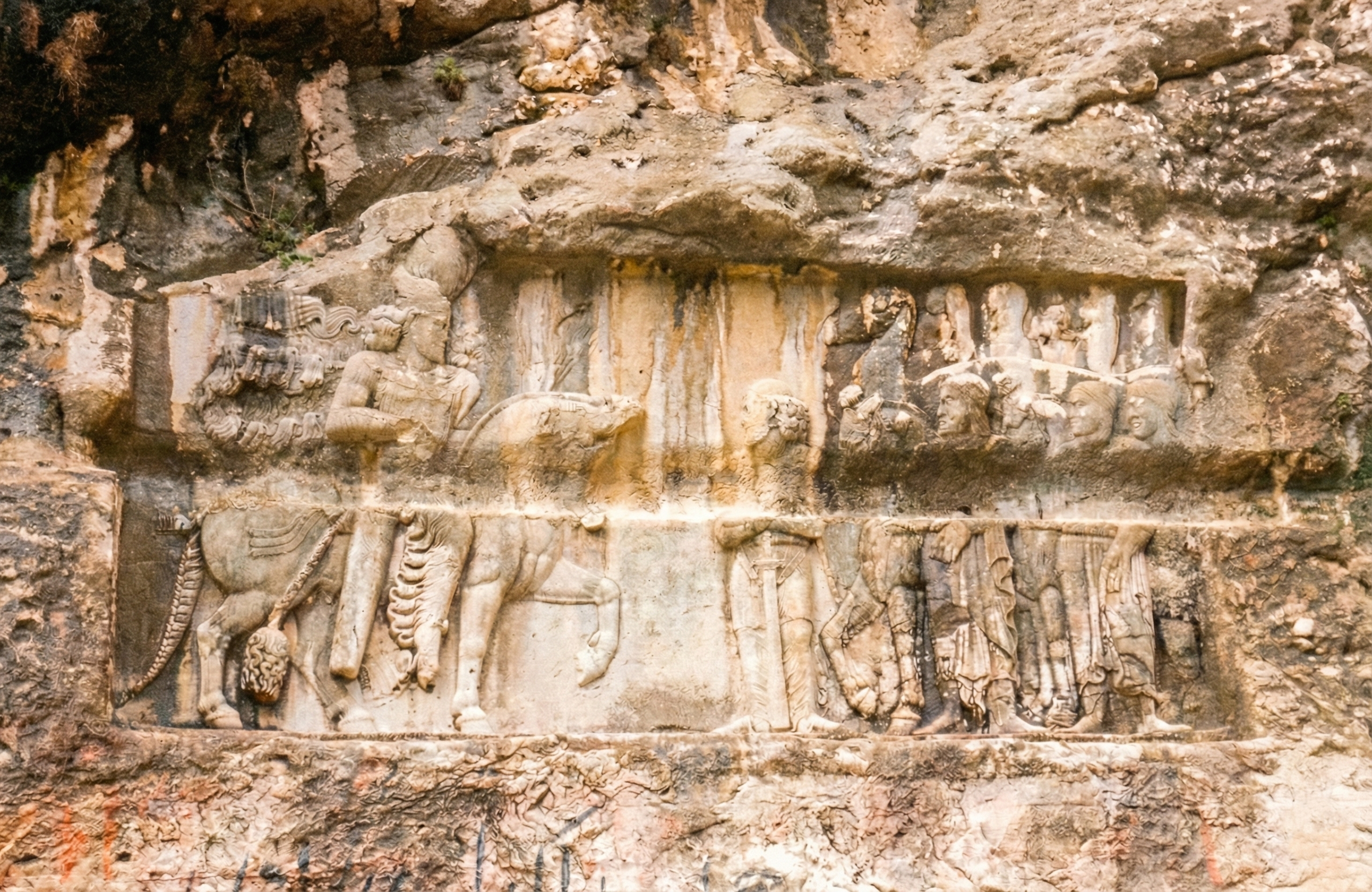
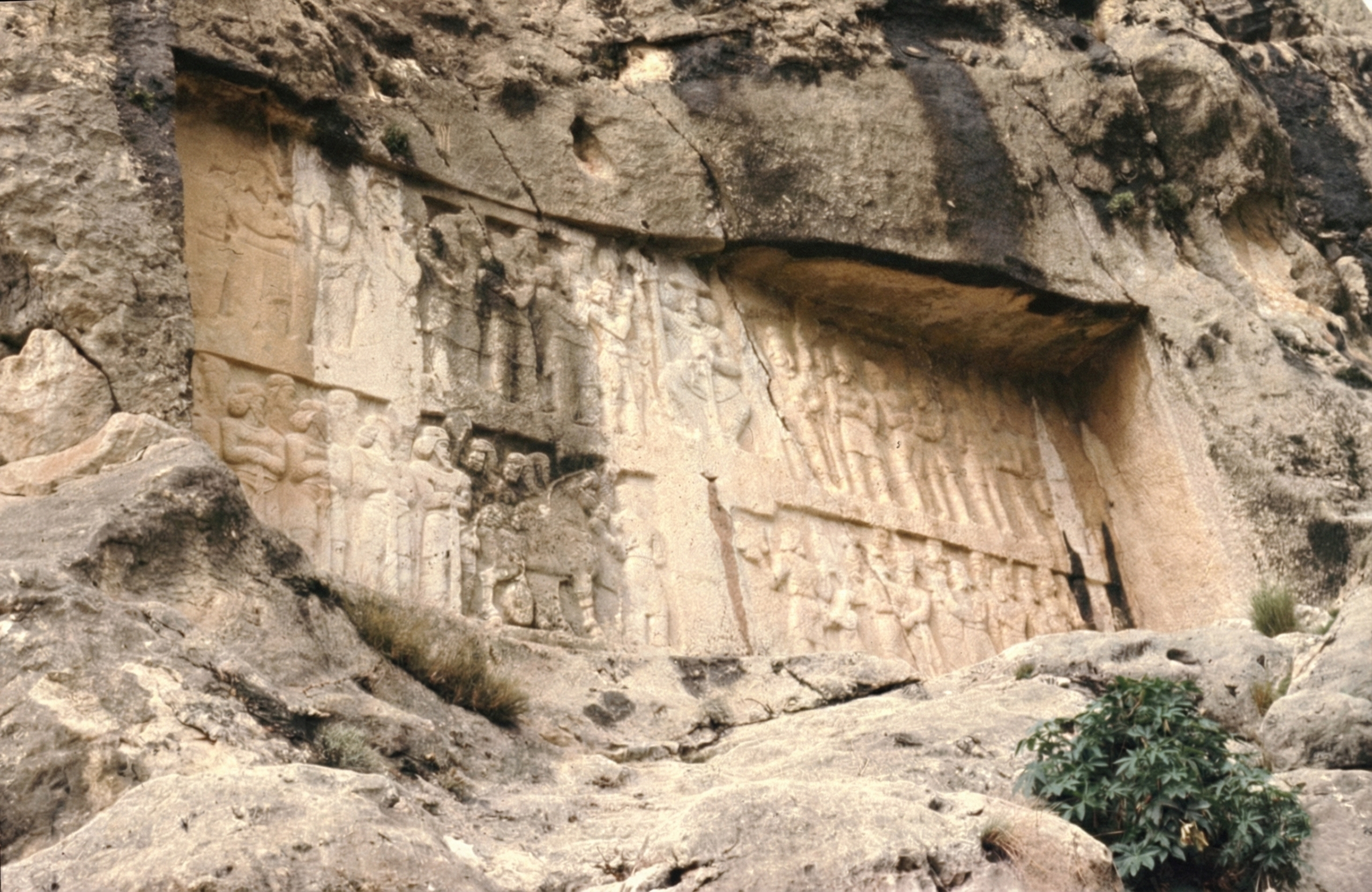
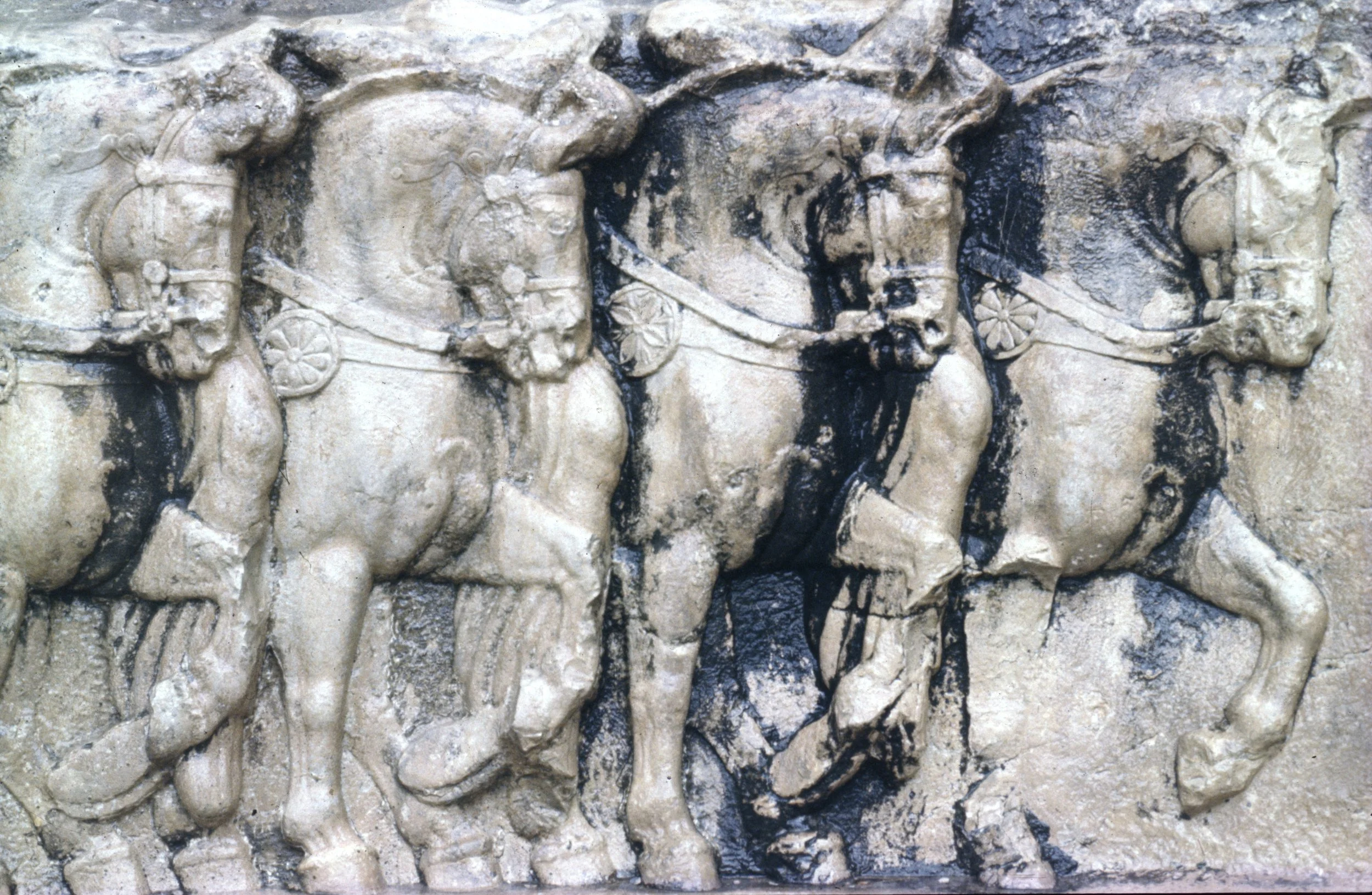
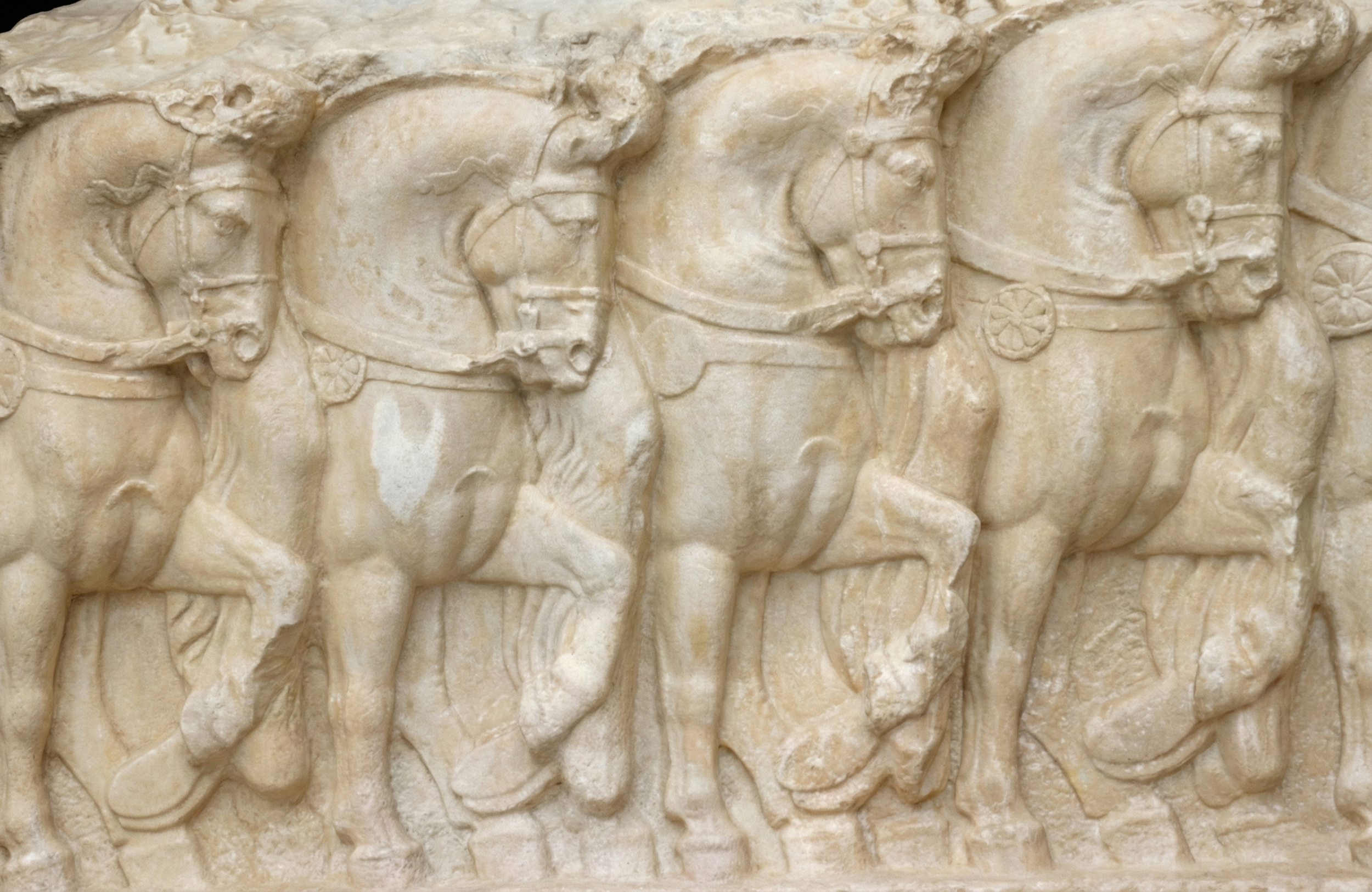
Naqsh-e Rustam (نقش رستم) in Fars preserves Achaemenid tombs (5th century BCE) and Sasanian reliefs (3rd century CE), including Ardashir I’s investiture. Muscular horses, ornate trappings, and flowing garments reflect early Iranian artistic expression. High-relief carving and symbolism convey power, divine legitimacy, and the transition of empires in this monumental landscape.
-
Naqsh-e Rustam (نقش رستم), Monumental Expression in the Heartland of Persian Civilization
Naqsh-e Rustam (نقش رستم), located in the province of Fars near Persepolis, stands as one of the most significant monumental sites of ancient Iran. Carved into a limestone cliff, the site brings together the royal tombs of Achaemenid kings from the 5th century BCE and later Sasanian rock reliefs of the 3rd century CE, forming a continuous narrative of imperial power in the heartland of Persian civilization.
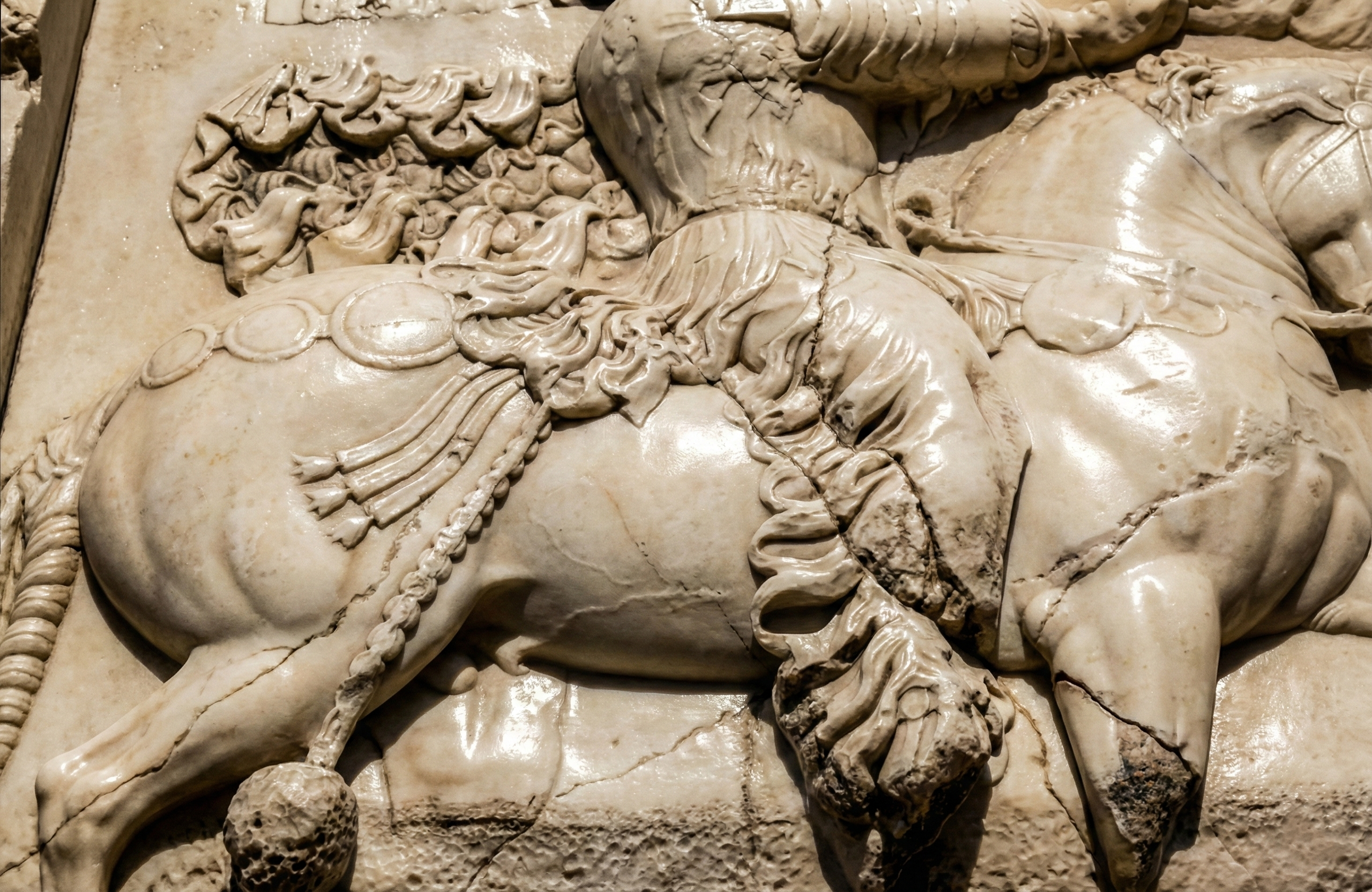
Among its most remarkable features is the investiture relief of Ardashir I, founder of the Sasanian Empire. In this scene, Ardashir I is depicted on horseback receiving the ring of kingship from Ahura Mazda, the supreme Zoroastrian deity. Beneath the hooves of Ardashir’s horse lies the defeated Parthian king Artabanus IV, while the god’s horse tramples Ahriman, symbolizing the triumph of order over chaos and the انتقال of power from Parthian to Sasanian rule.
This image offers a detailed view from that relief, focusing on the rear of the horse and the ornate garments of the rider. The powerful, rounded haunches of the horse reflect the distinctive Sasanian “volumetric” style, in which figures seem to emerge forcefully from the rock in high relief. The horse’s trappings—large circular medallions (phalerae) and intricate tassels—signify royal authority and military prestige. Flowing ribbons or fillets (kustis) extend from the rider’s waist, their finely carved folds conveying movement and lightness against the solidity of the stone.
These sculptural qualities, combined with symbolic narrative and monumental scale, make Naqsh-e Rustam one of the earliest and most important expressions of Iranian artistic identity. Here, architecture, sculpture, and landscape merge to create a lasting visual language of power, legitimacy, and continuity—linking Achaemenid and Sasanian traditions within the cultural core of Fars.
