Dalan (دالان): Passage, Shade, and Environmental Gradation
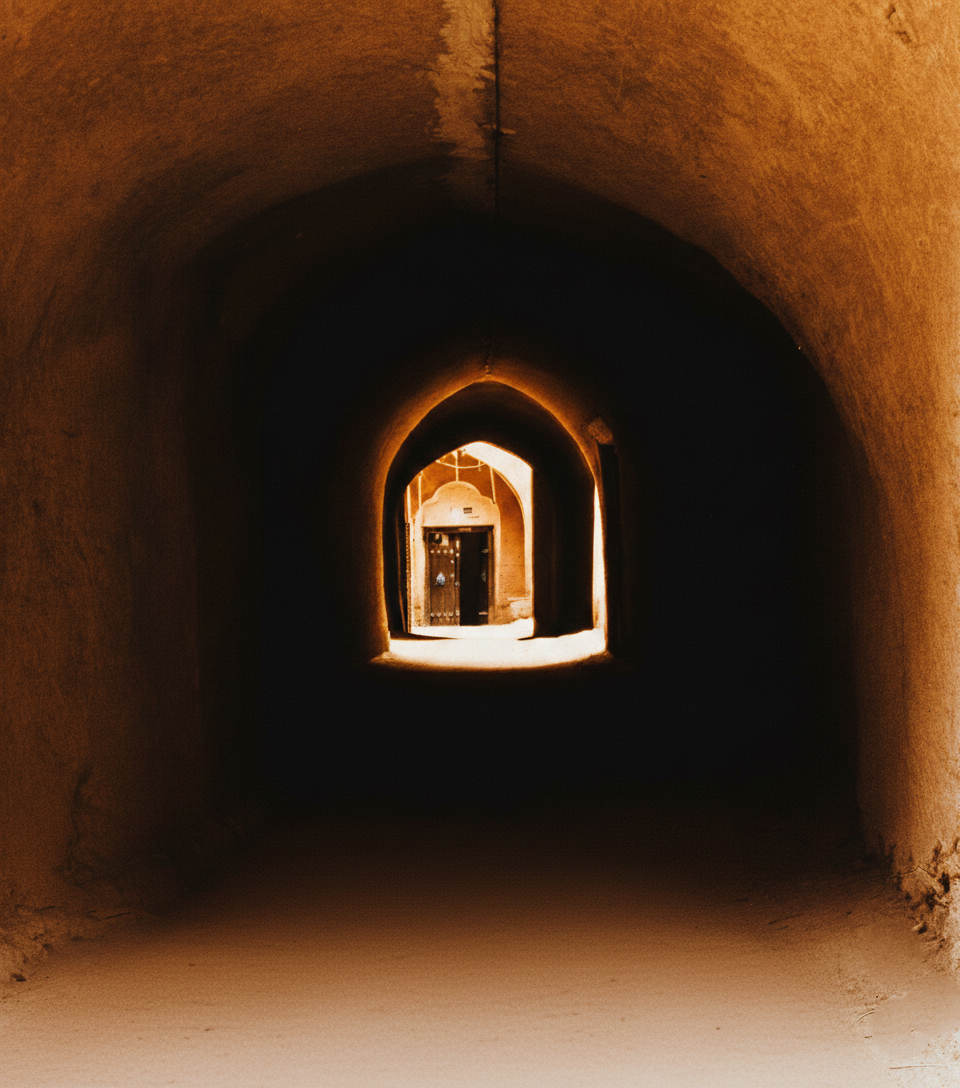
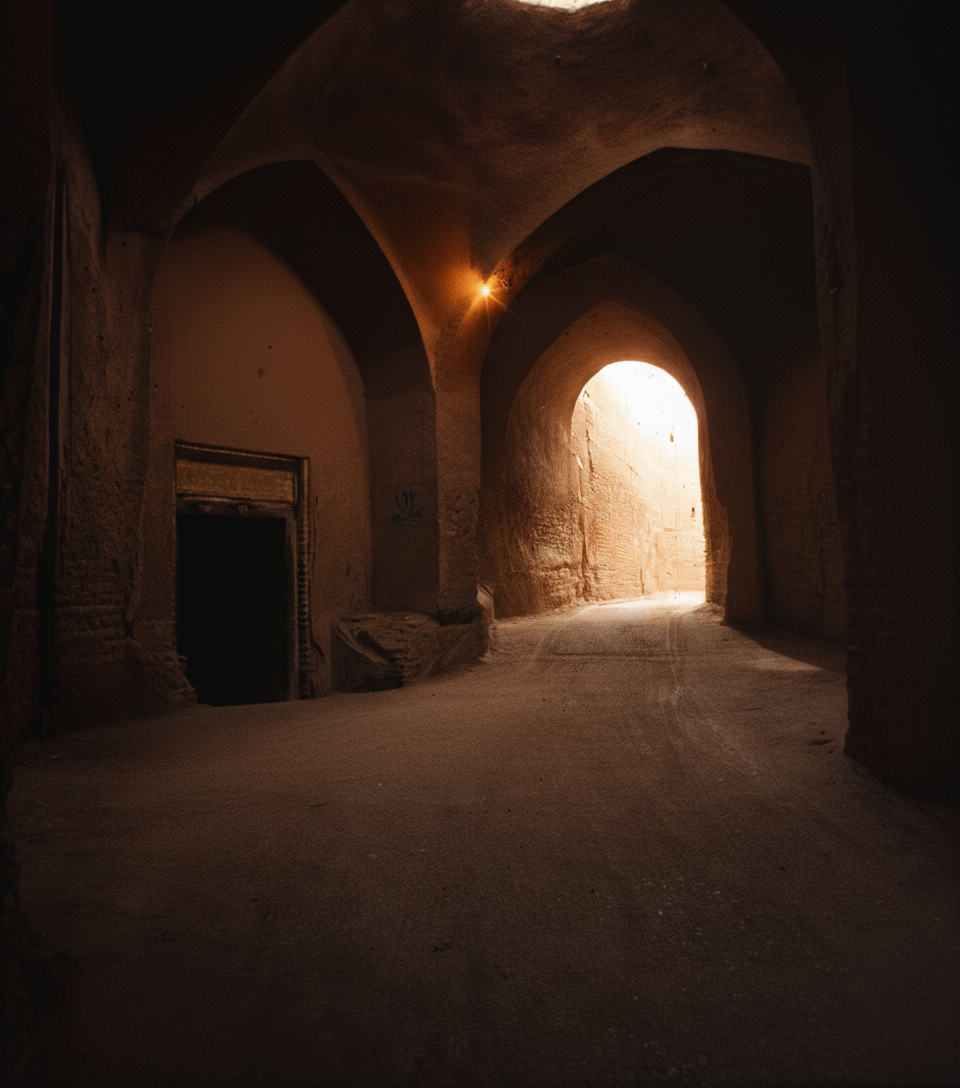
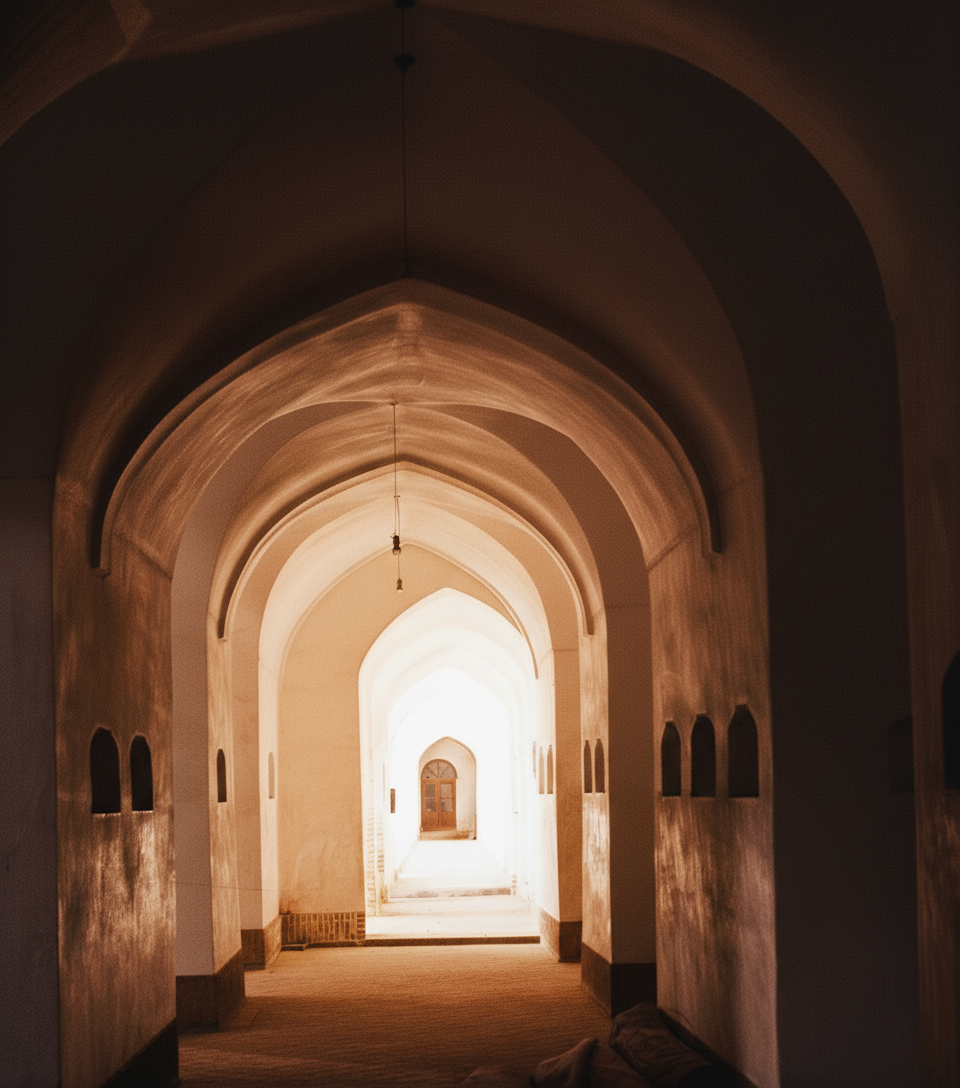
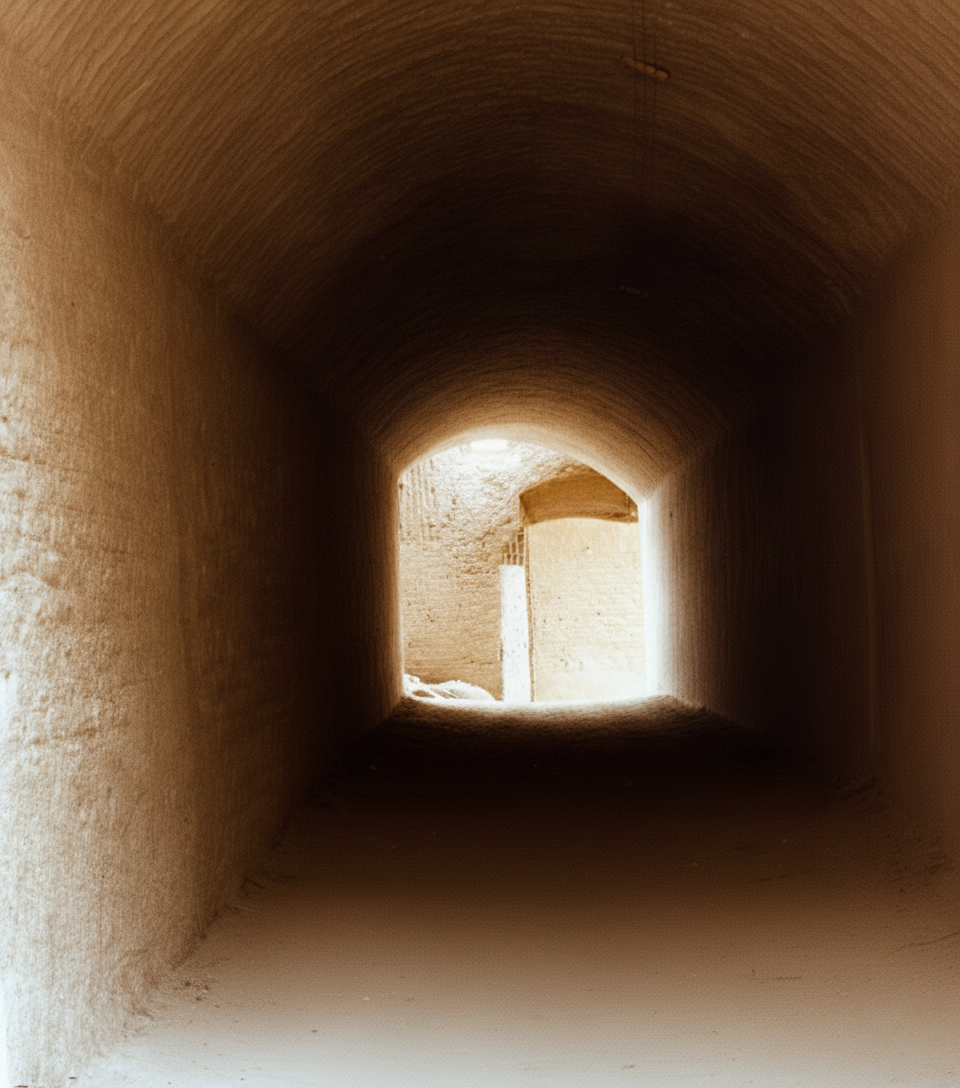
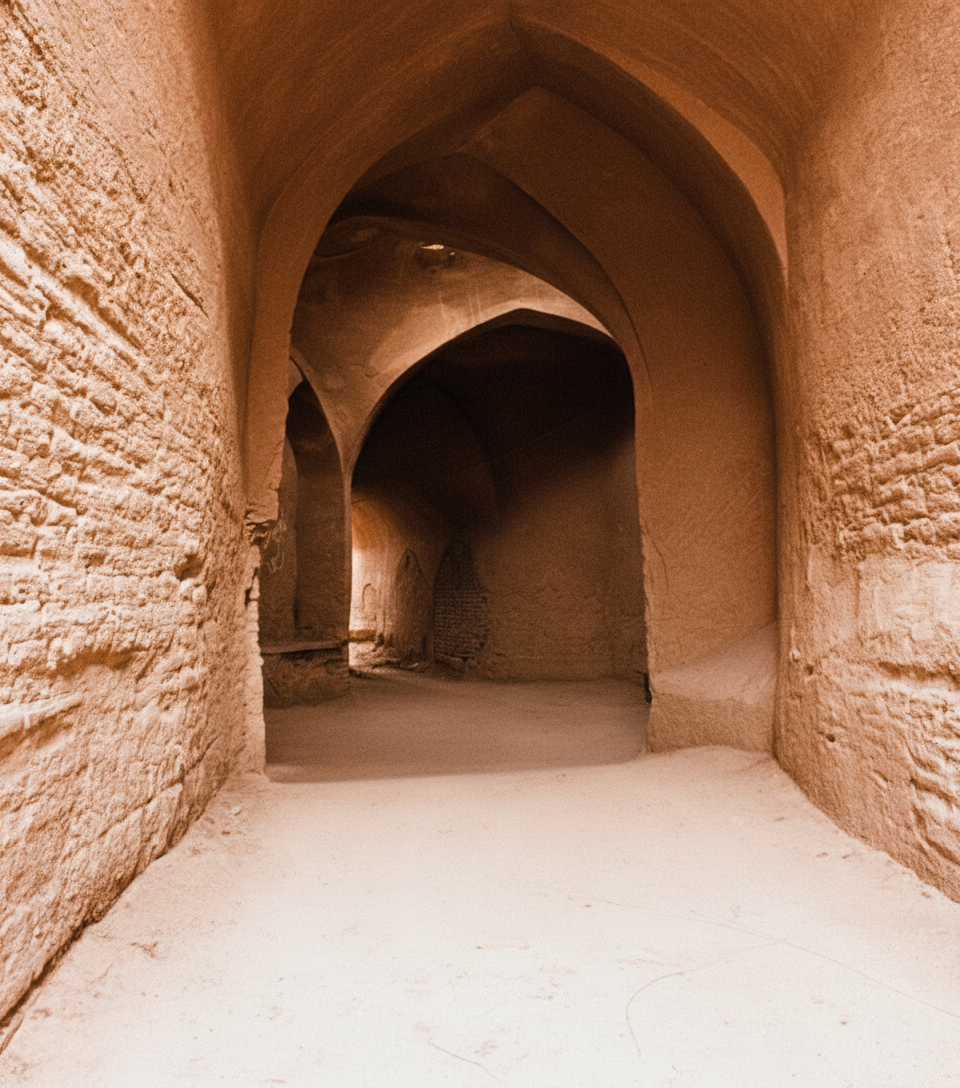
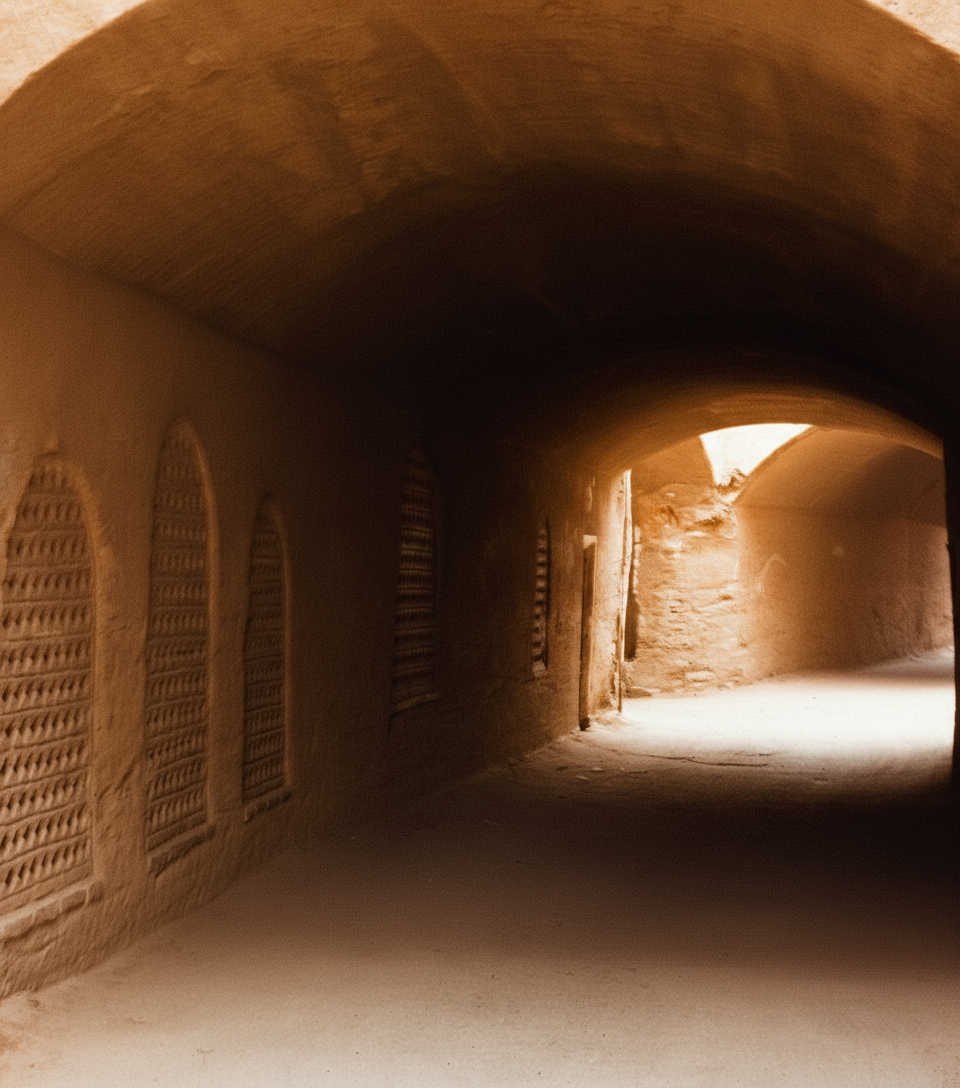
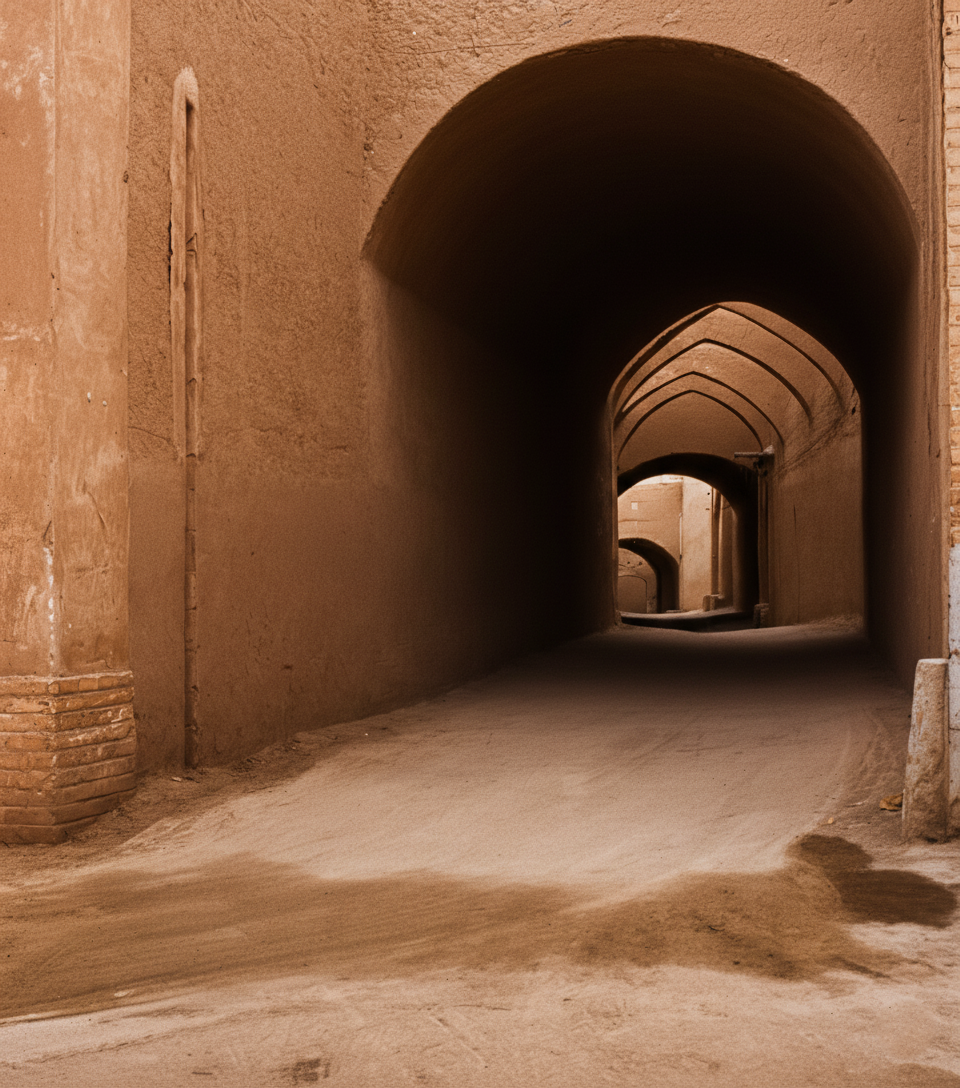
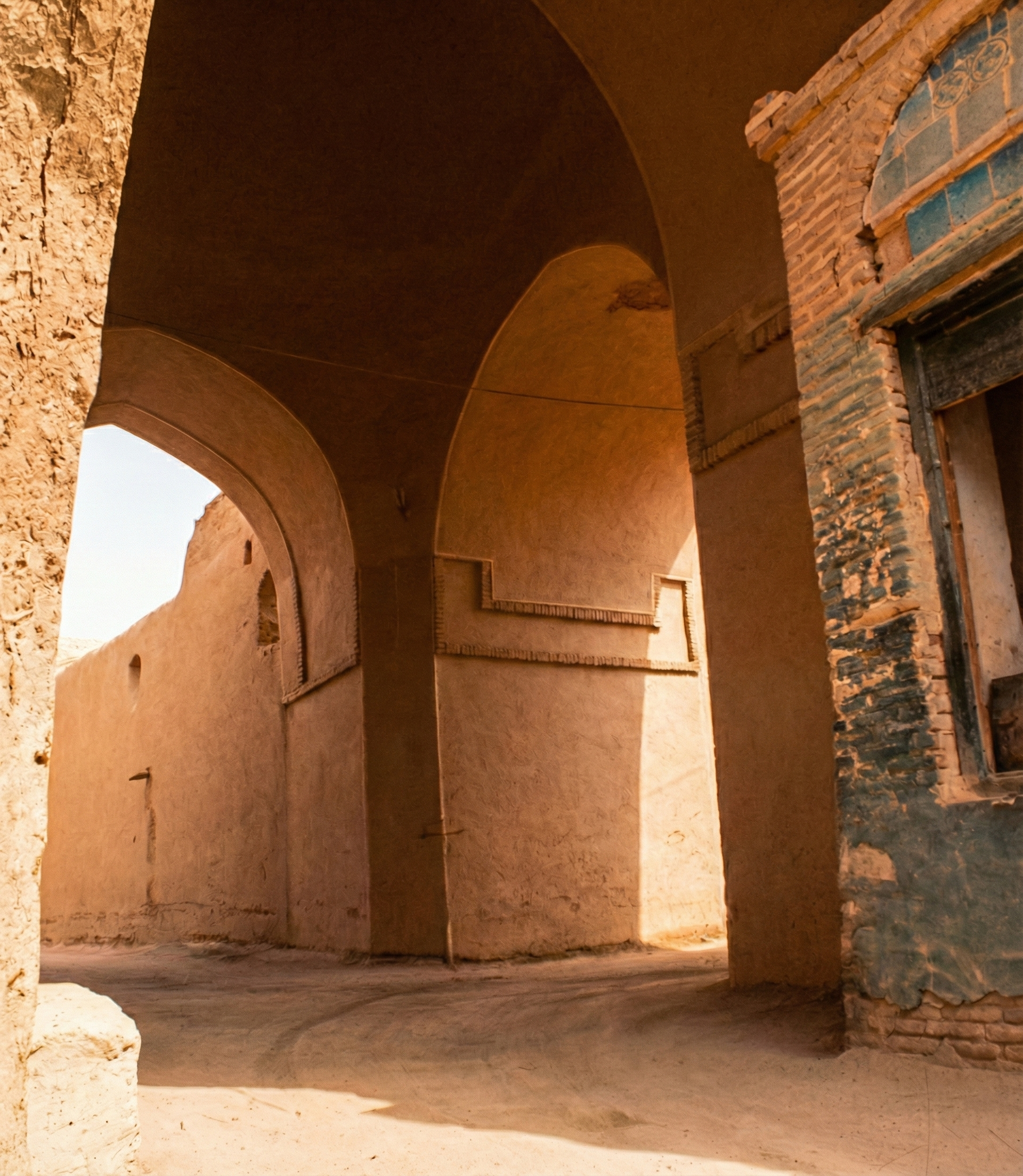
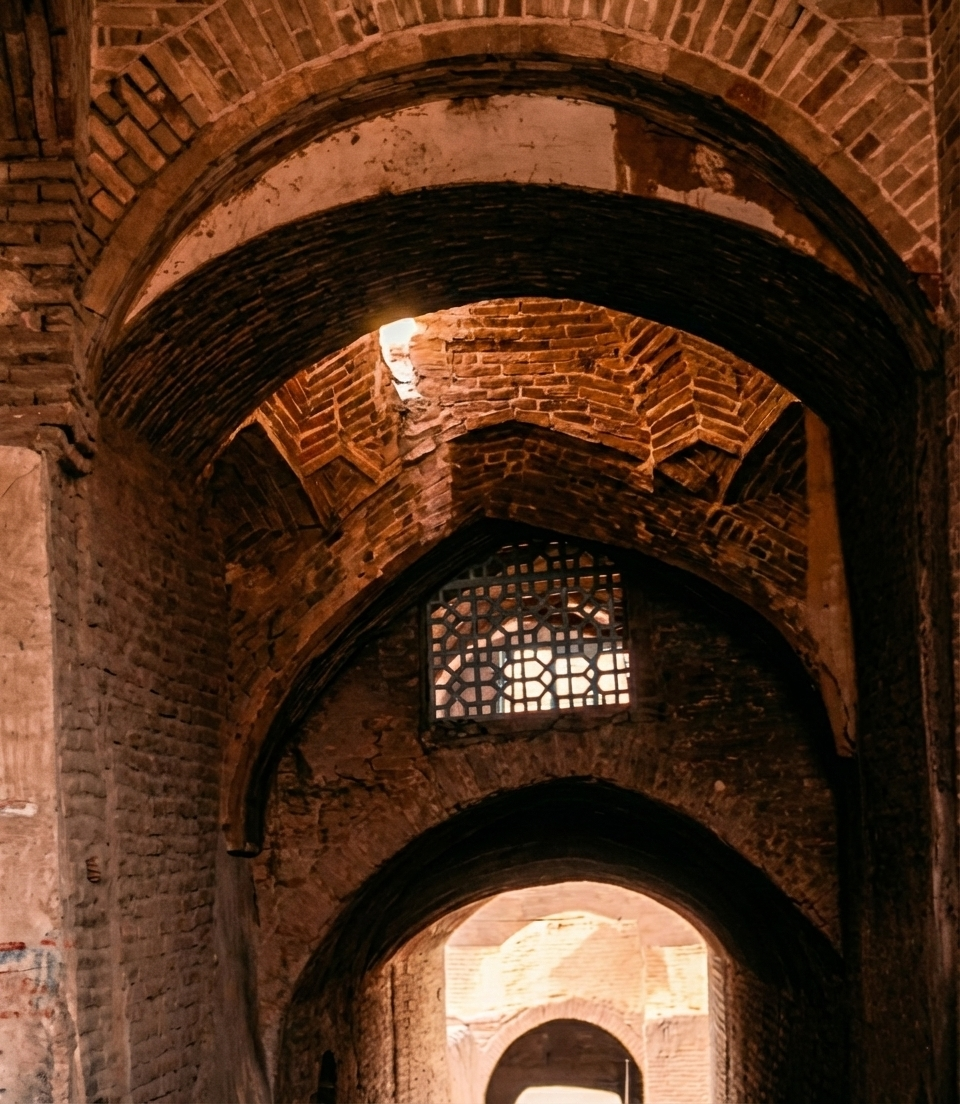
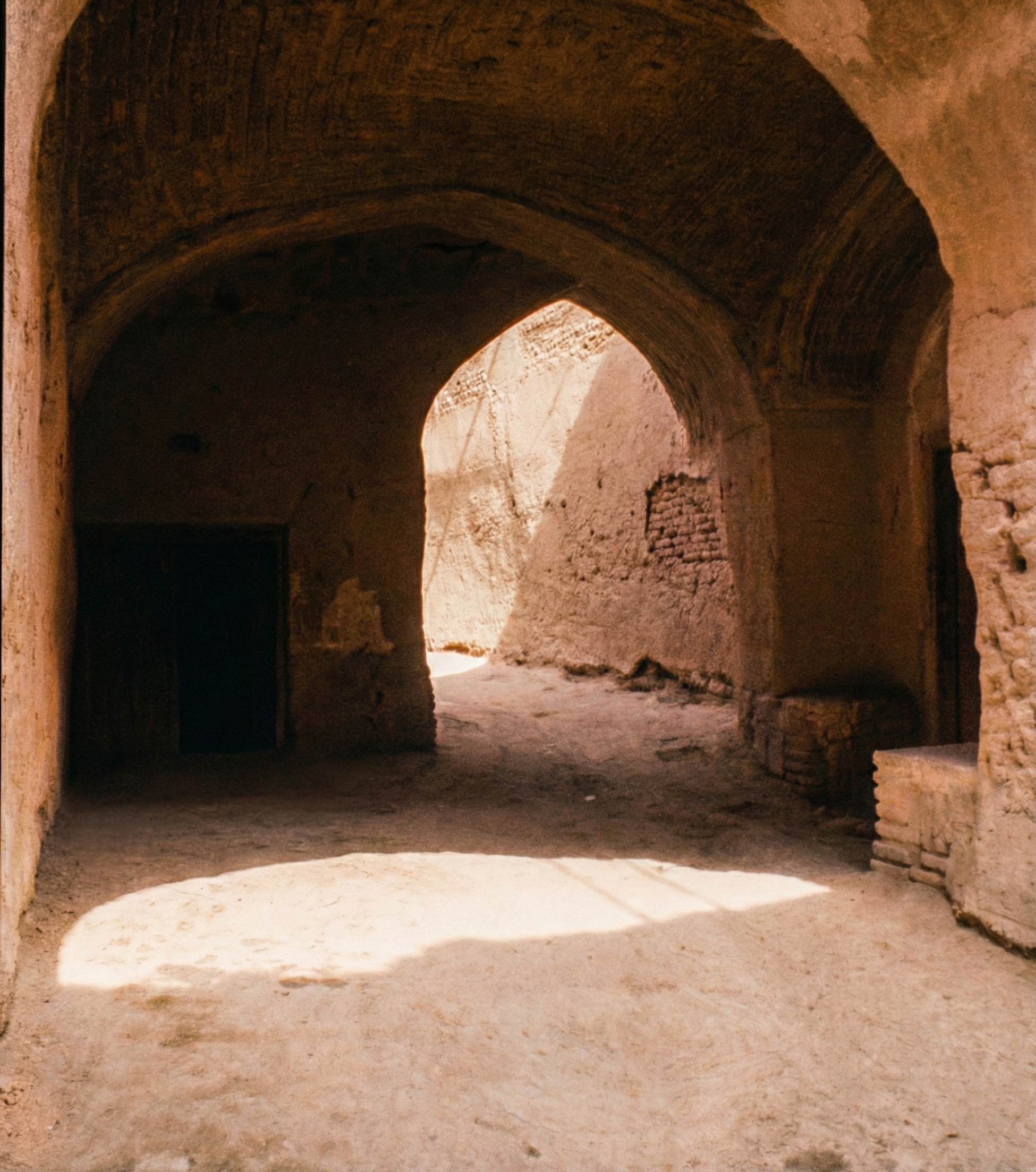
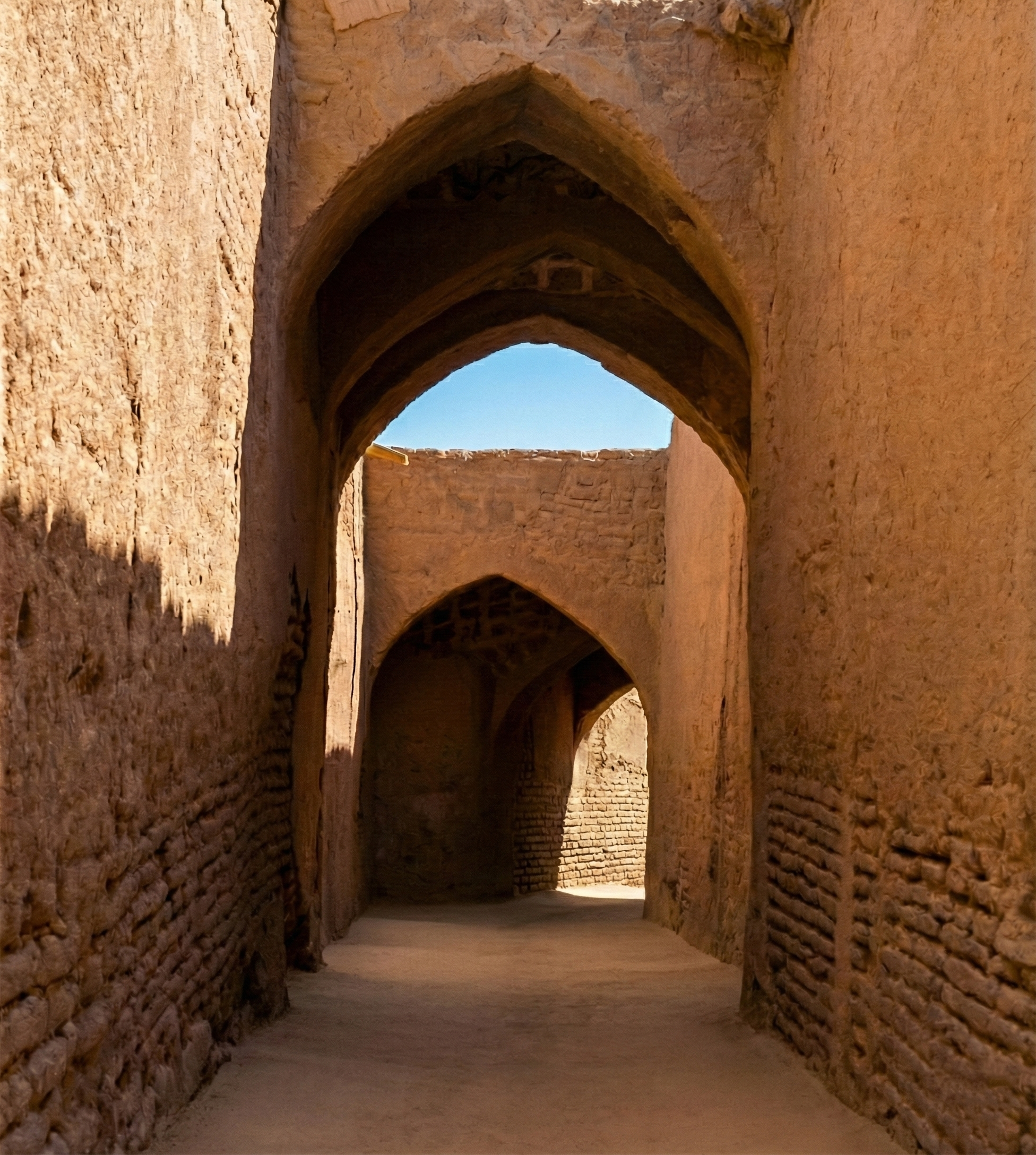
Dalan (دالان), a shaded and often winding passage, transforms circulation into climatic moderation in traditional Iranian architecture. By filtering light, slowing airflow, and softening thermal transitions, it creates a gradual environmental gradient between spaces. Whether in houses, bazaars, or baths, the Dalan acts as a buffer—guiding movement while preserving comfort through depth, shade, and controlled transition.
-
Dalan (دالان): Passage, Shade, and Environmental Gradation
In traditional Iranian architecture, the Dalan functions not merely as a corridor of circulation but as a climatic regulator embedded within spatial sequence. Typically shaded, elongated, and often angled or winding, the Dalan mediates movement between spaces while simultaneously controlling light, airflow, and heat. By interrupting direct exposure, it introduces distance, depth, and delay—transforming transition into environmental moderation.
Climatically, the Dalan reduces solar penetration and limits heat transfer by interrupting linear pathways for sunlight and air. It bends slow airflow, diffuses glare, and prevents abrupt thermal exchange, encouraging gradual acclimatization rather than sudden exposure. Circulation thus becomes an active component of climate control, softening the passage between outdoor and indoor conditions.
This role is particularly pronounced in traditional Iranian public baths (ḥammāms), where long, winding dalans serve as an essential thermal buffer between the street and the heated interior chambers. In these bath complexes, the Dalan regulates the heat cape by preventing the rapid loss of warm, humid air while shielding inner spaces from cold drafts and temperature shock. The extended, indirect passage allows heat to dissipate gradually and moisture levels to stabilize before users enter progressively warmer zones. The architecture choreographs bodily movement through a calibrated thermal gradient—cool to warm, warm to hot—using space rather than mechanical control.
Historically, the Dalan has been a fundamental element across Iranian architectural typologies. In houses, it links the Hashti to the courtyard, protecting private spaces from heat, dust, and visual intrusion. In madrasas, caravanserais, and bazaars, elongated Dalans form shaded networks that sustain pedestrian comfort in arid climates. In ḥammāms, they become instruments of thermal containment and atmospheric continuity.
Theoretically, the Dalan exemplifies a climate-conscious approach in which architecture moderates exposure through sequencing rather than insulation. It thickens the envelope by inserting shaded, temperate depth between climatic extremes, allowing air, light, and bodies to adjust across space and time. In this sense, the Dalan affirms a central principle of traditional Iranian architecture: that environmental comfort is achieved not through abrupt separation, but through carefully calibrated transitions embedded within form itself.
