Iwan (ایوان): Deep Shade, Threshold, and Climatic Moderation
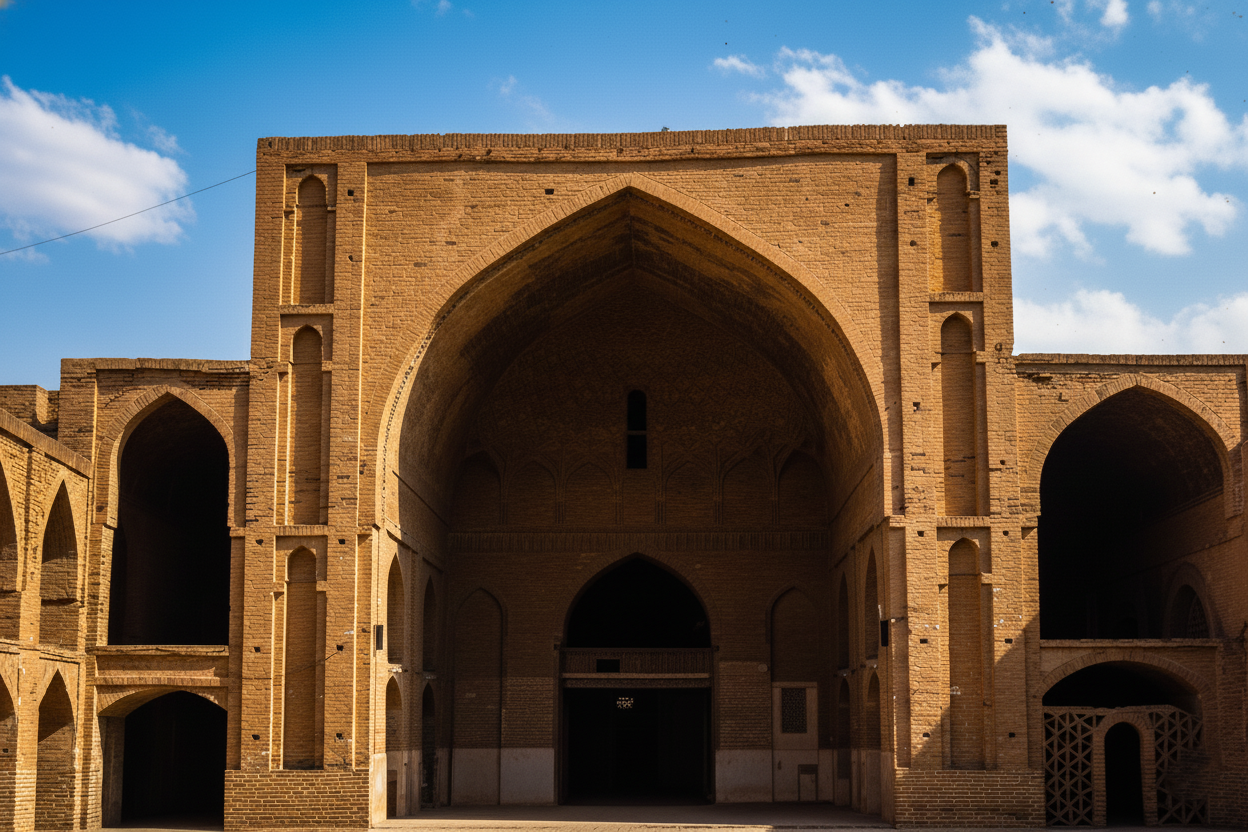
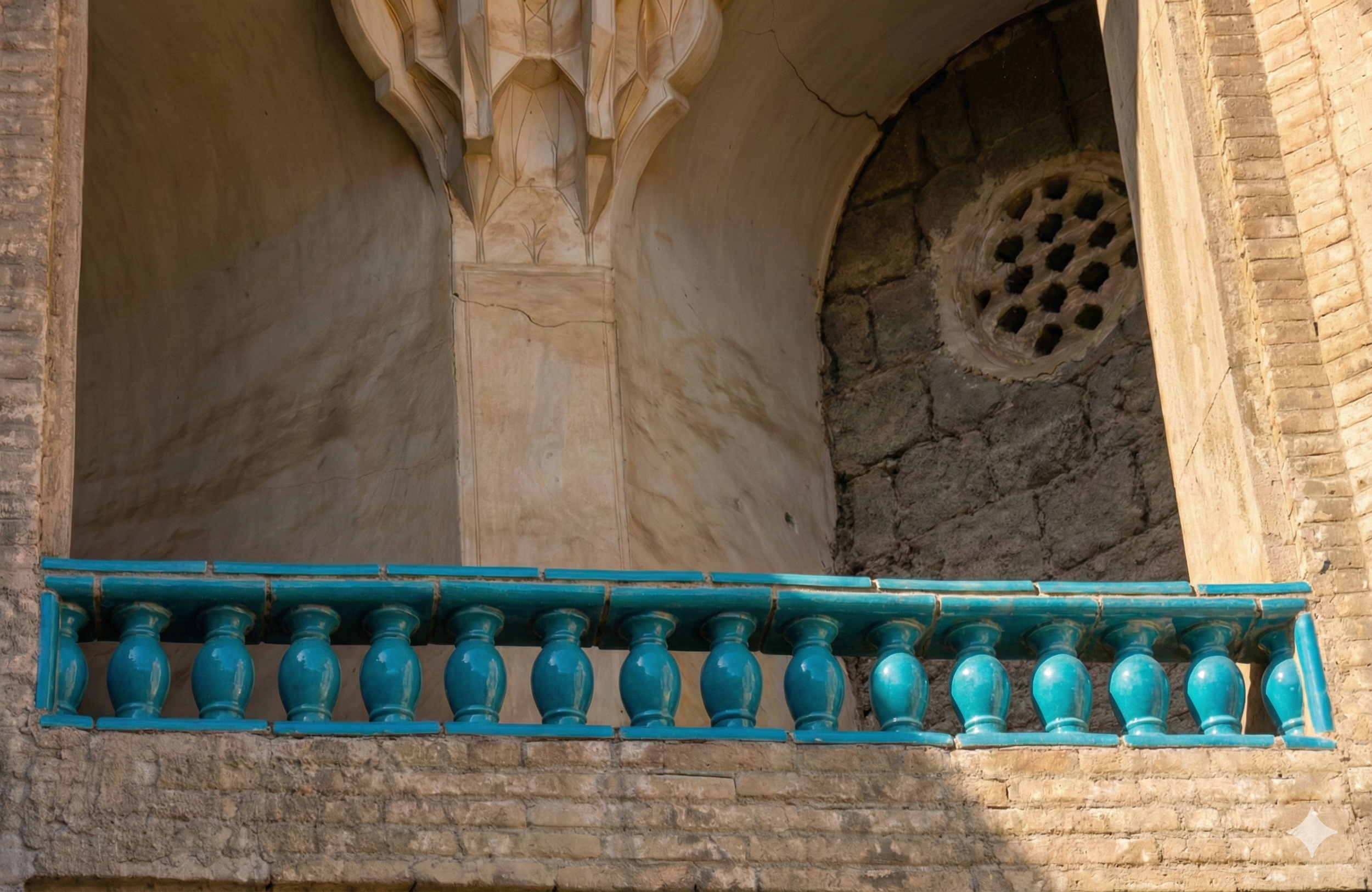
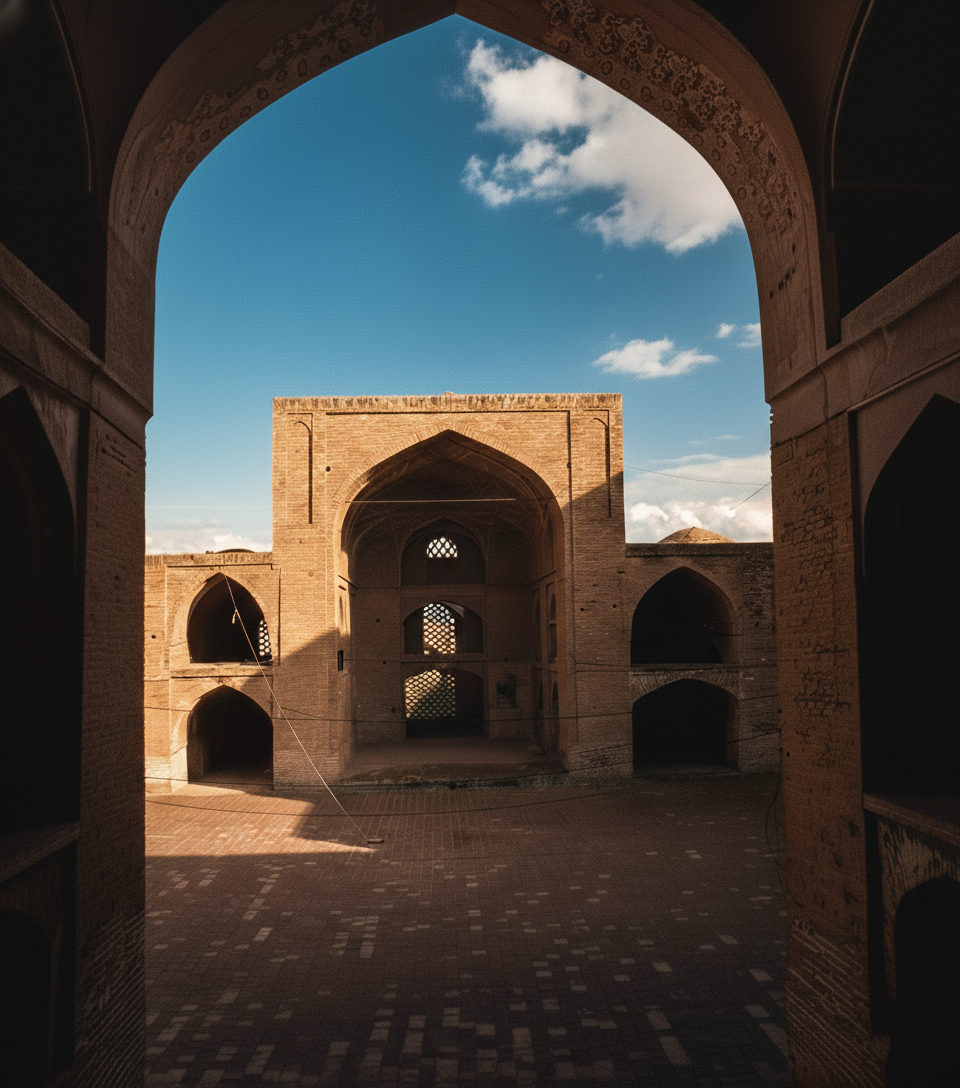
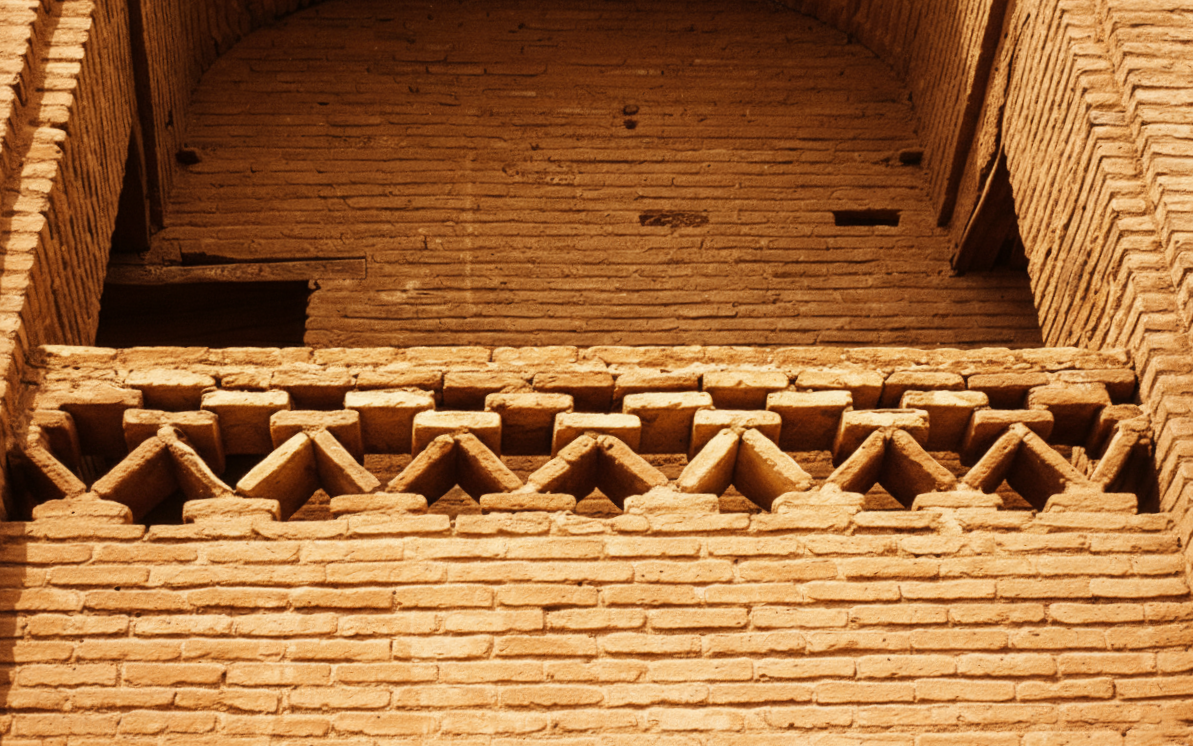
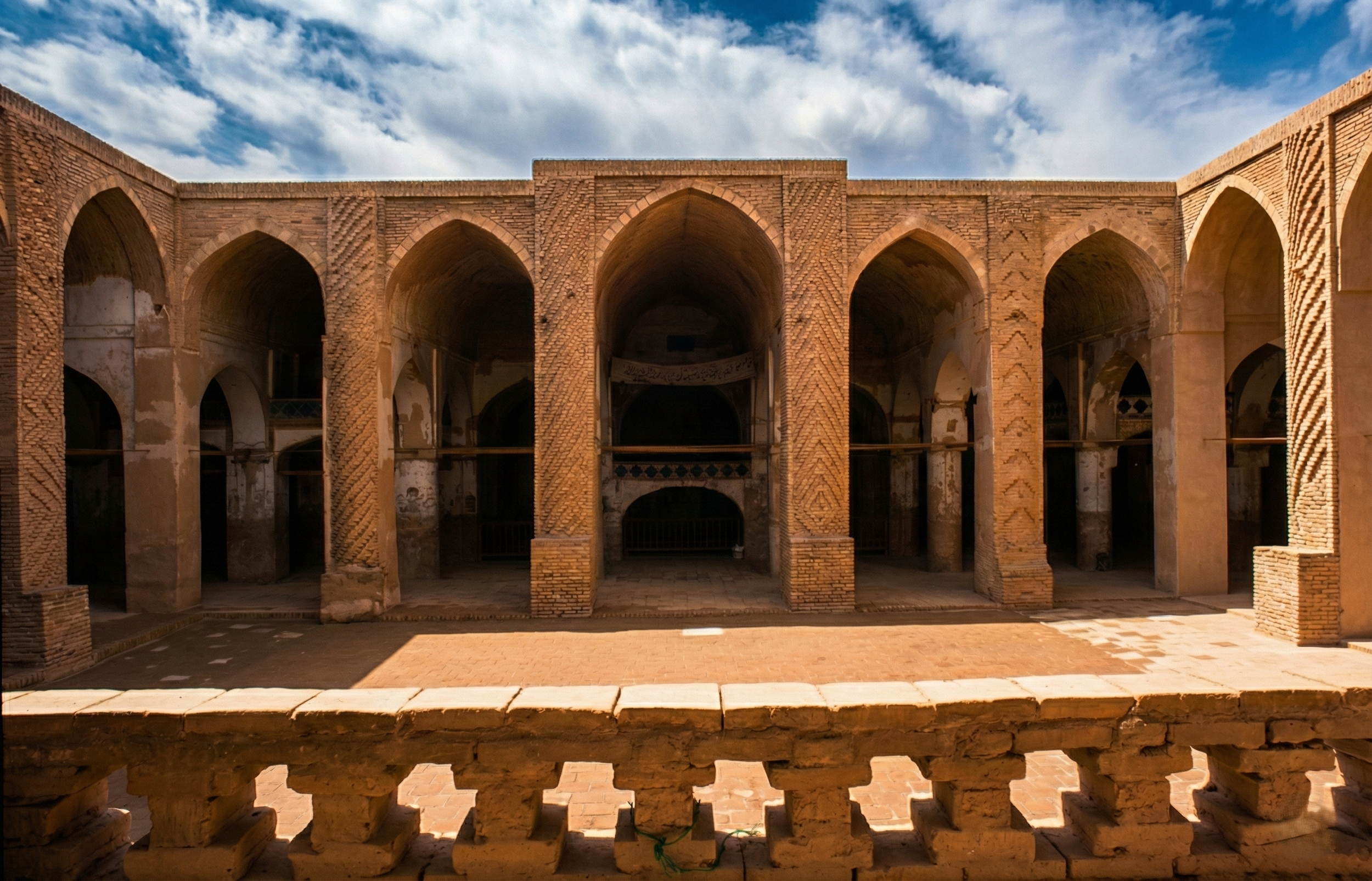
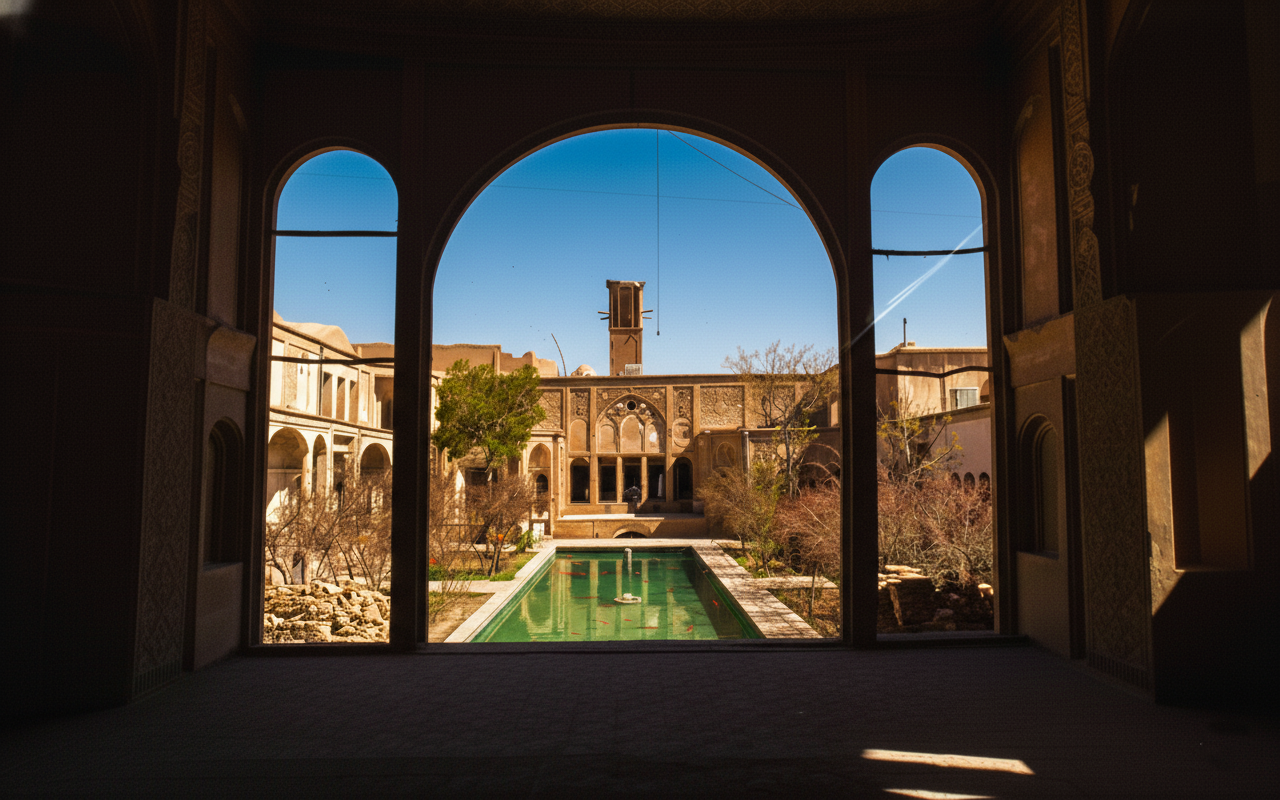
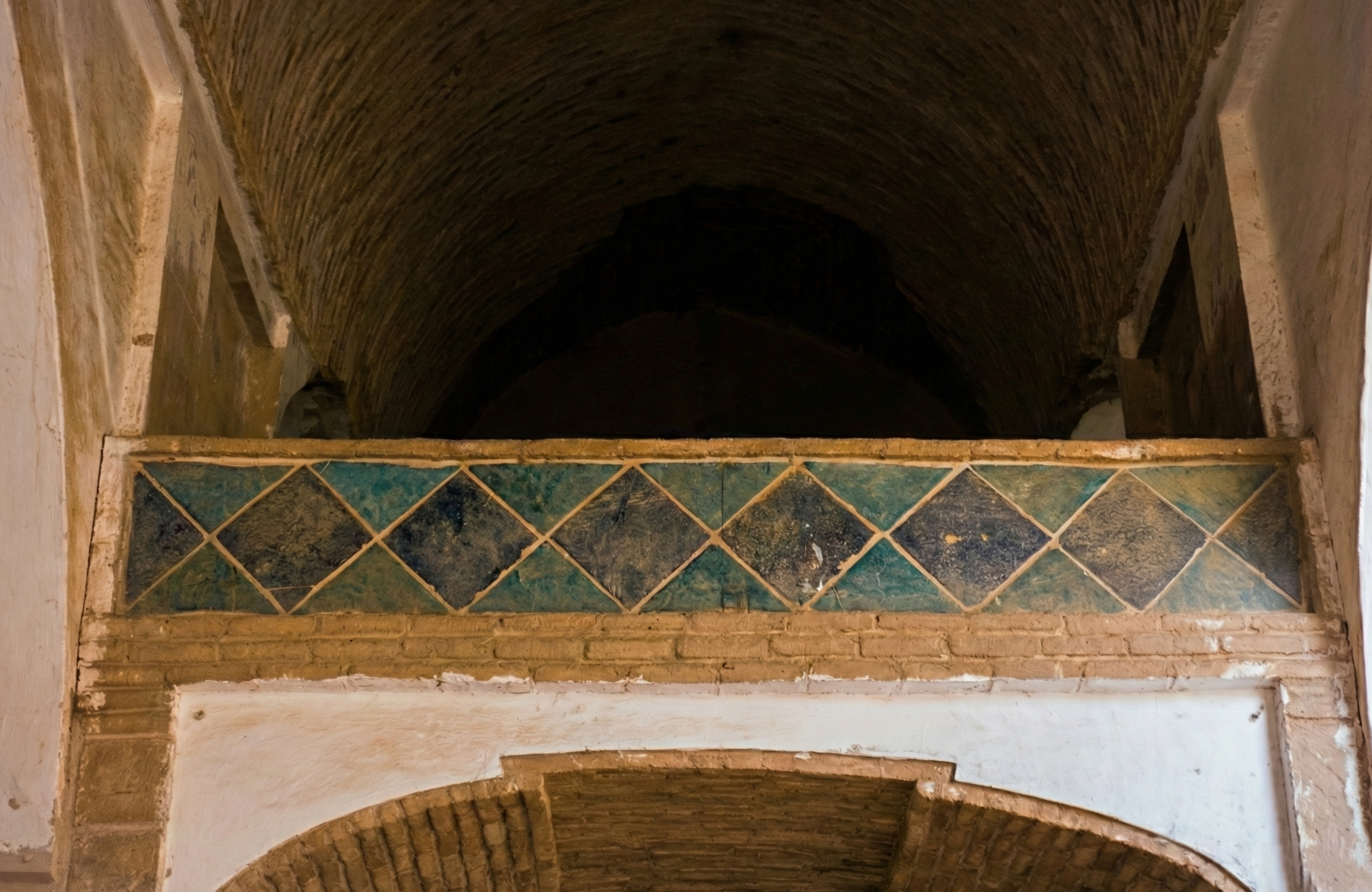
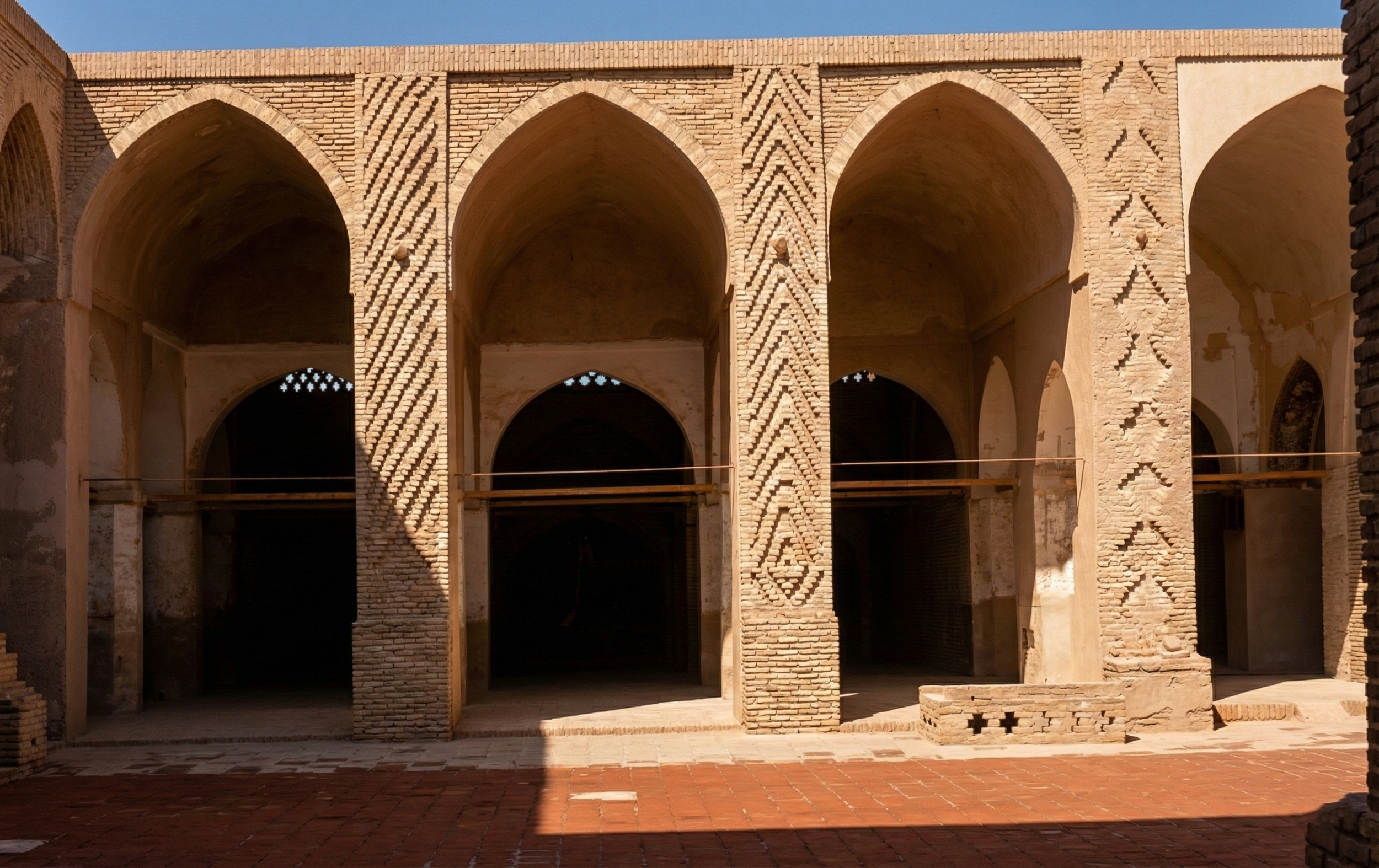
Iwan (ایوان), a vaulted, semi-open space, serves as a shaded threshold between the interior and the courtyard in traditional Iranian architecture. Its deep recess and thick walls reduce heat and glare, while its form promotes airflow and thermal comfort. Enhanced by articulated surfaces, the Iwan transforms shade and transition into a refined system of passive climatic moderation.
-
Iwan (ایوان): Deep Shade, Threshold, and Climatic Moderation
The Iwan is a defining architectural element of traditional Iranian architecture, conceived as a vaulted, semi-open hall recessed into the building mass. Operating as a deep pocket of shade, it mediates between enclosed interior rooms and the open courtyard, moderating exposure to sun, heat, and glare. Neither fully inside nor outside, the Iwan functions as a habitable threshold shaped by mass, depth, and geometry.
Climatically, the Iwan’s recessed form and thick surrounding walls significantly reduce direct solar radiation while delaying heat transfer through thermal mass. The vaulted ceiling encourages warm air to rise and stratify above the occupied zone, preserving cooler conditions at human height. When oriented toward prevailing breezes or shaded courtyards, the Iwan also facilitates gentle air movement, reinforcing its role as a naturally cooled intermediary space.
Interior articulation—most notably Muqarnas (مقرنس)—further enhances the Iwan’s microclimatic performance. By fragmenting the concave surface of the vault into a cellular geometry, Muqarnas increases surface area and disrupts uniform heat accumulation. Warm air is diffused and retained above the inhabited zone, reducing downward radiant heat transfer. The stepped geometry also scatters reflected daylight, softening glare while maintaining visual luminosity, and generates micro-shadows that lower surface temperatures and encourage subtle convective air movement. Ornament, in this context, functions as environmental intelligence rather than applied decoration.
Historically, the Iwan has been central to Iranian residential, civic, and religious architecture. In courtyard houses, it operates as a seasonal living room, supporting daily activities during warm periods. In mosques, madrasas, and palatial complexes, monumental iwans organize spatial hierarchy and procession while serving as large-scale climatic buffers between sunlit courts and enclosed halls. Across these typologies, the Iwan demonstrates how architectural depth and ornament together sustain habitation without mechanical intervention.
Theoretically, the Iwan exemplifies a climate-conscious architecture rooted in section rather than enclosure. It thickens the building envelope by inserting a shaded, articulated void between interior and exterior, allowing light, air, and bodies to acclimate gradually. Through mass, geometry, and ornament, the Iwan reveals a fundamental principle of Iranian architecture: environmental comfort emerges not from exclusion of nature, but from its careful modulation through form.
