Gonbad (گنبد): Curvature, Stratification, and Climatic Regulation
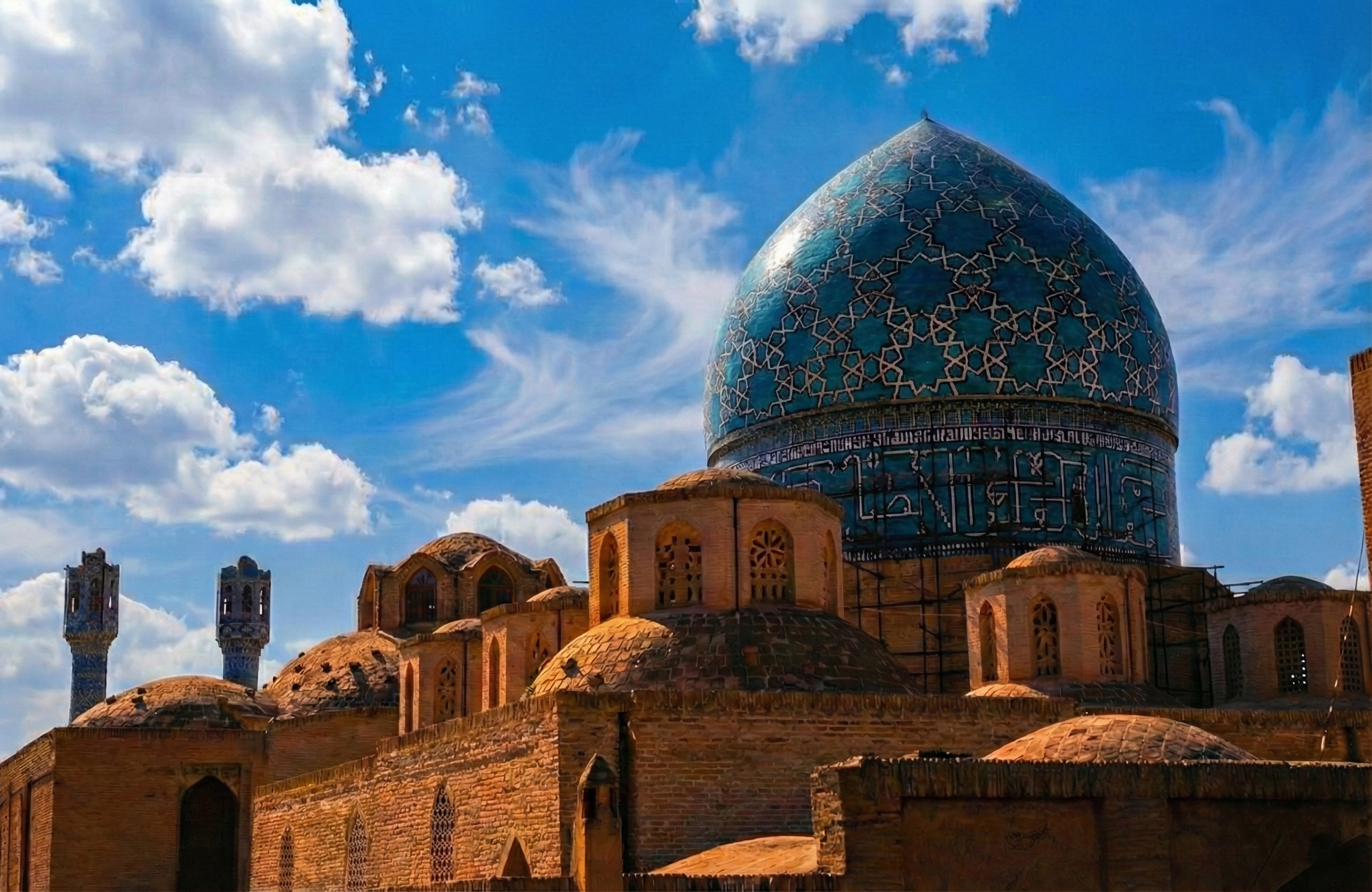
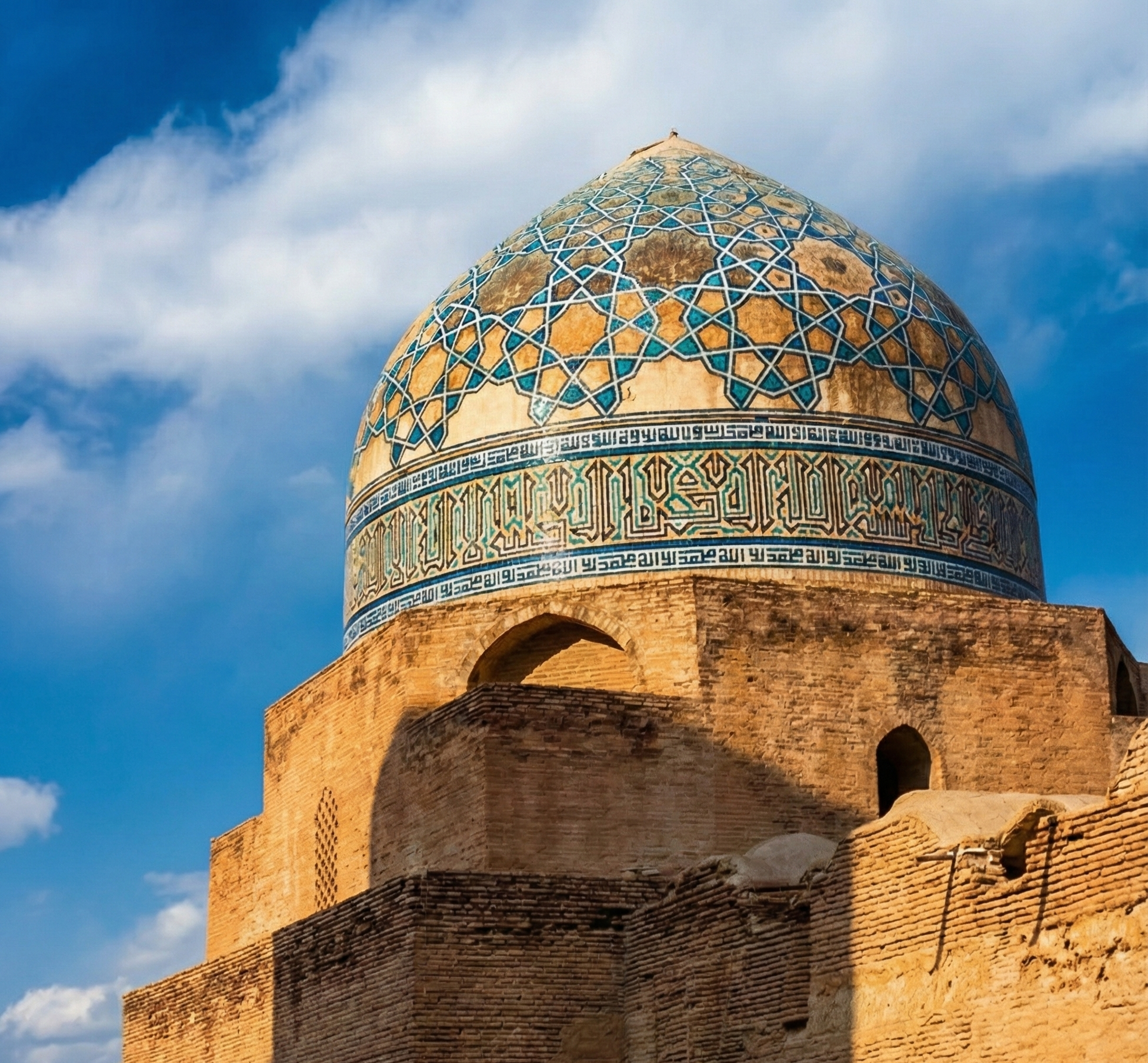
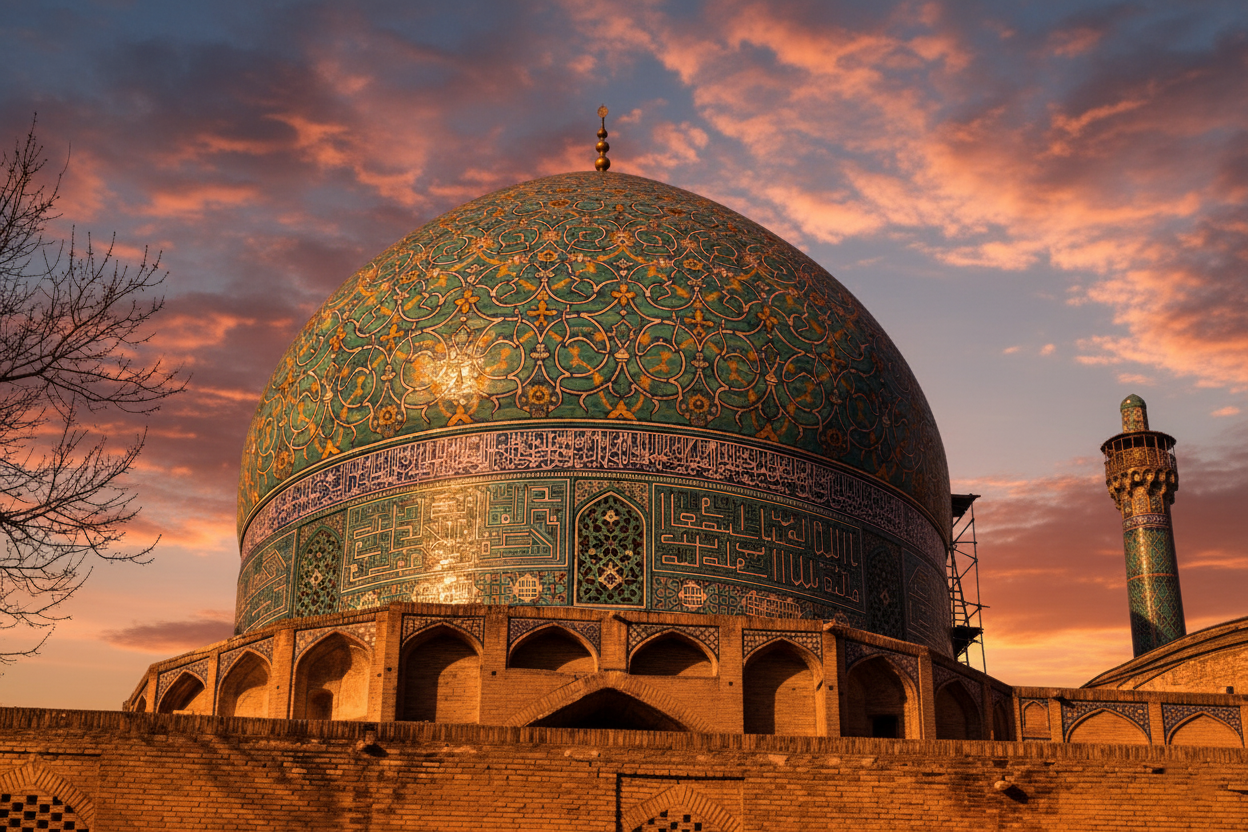
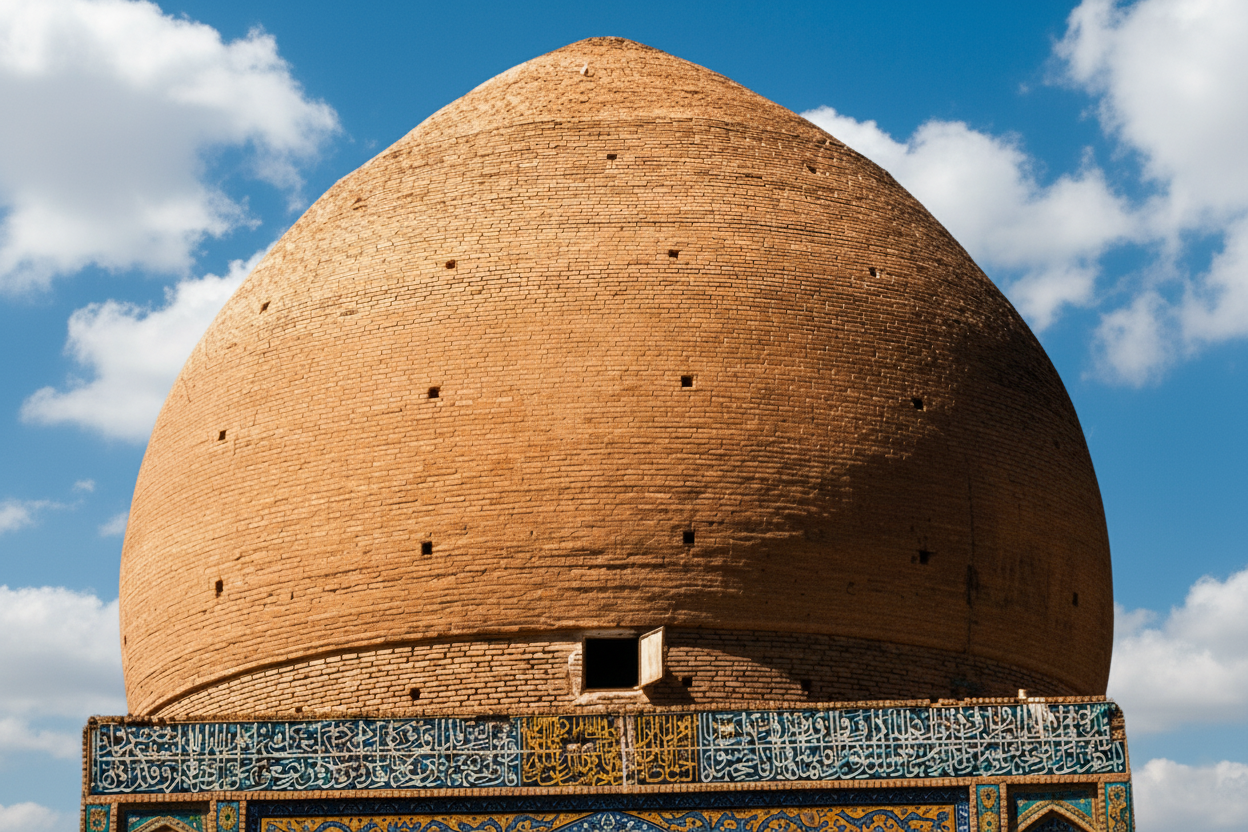
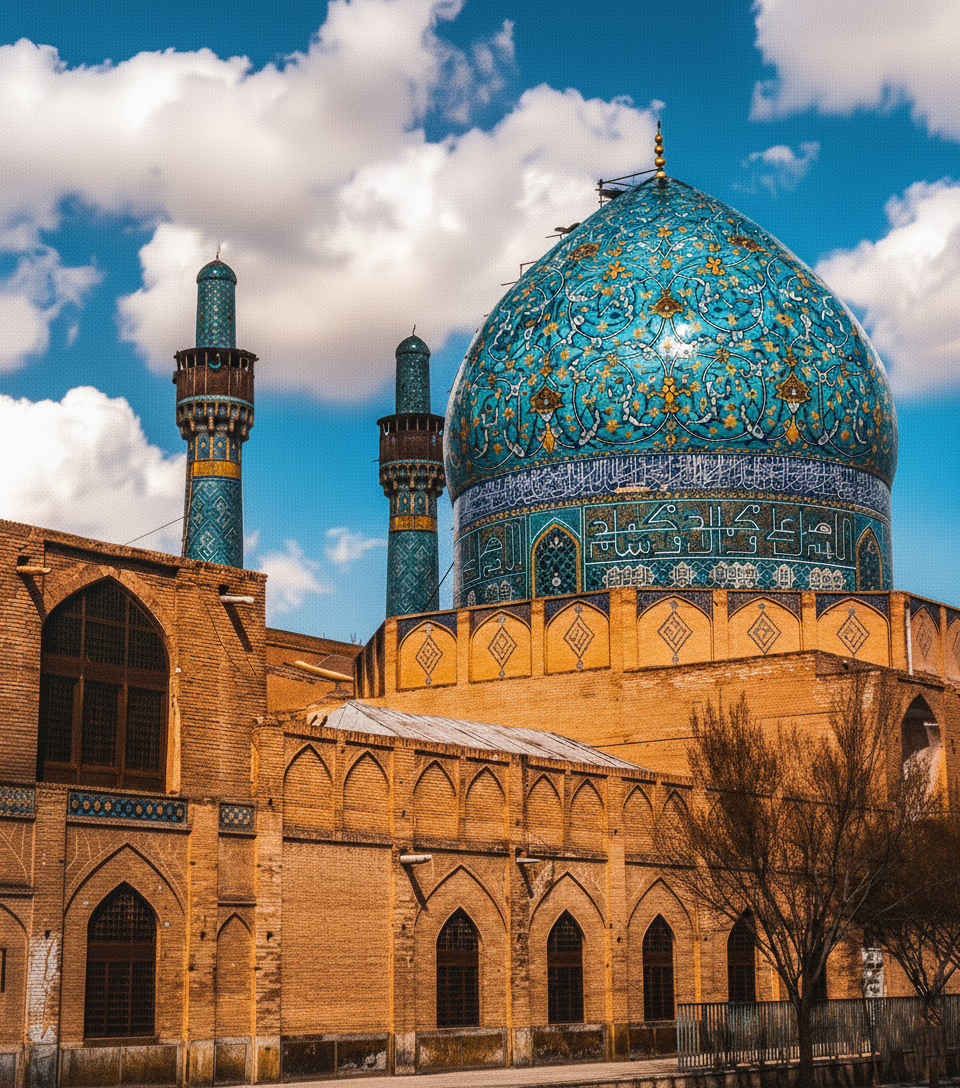
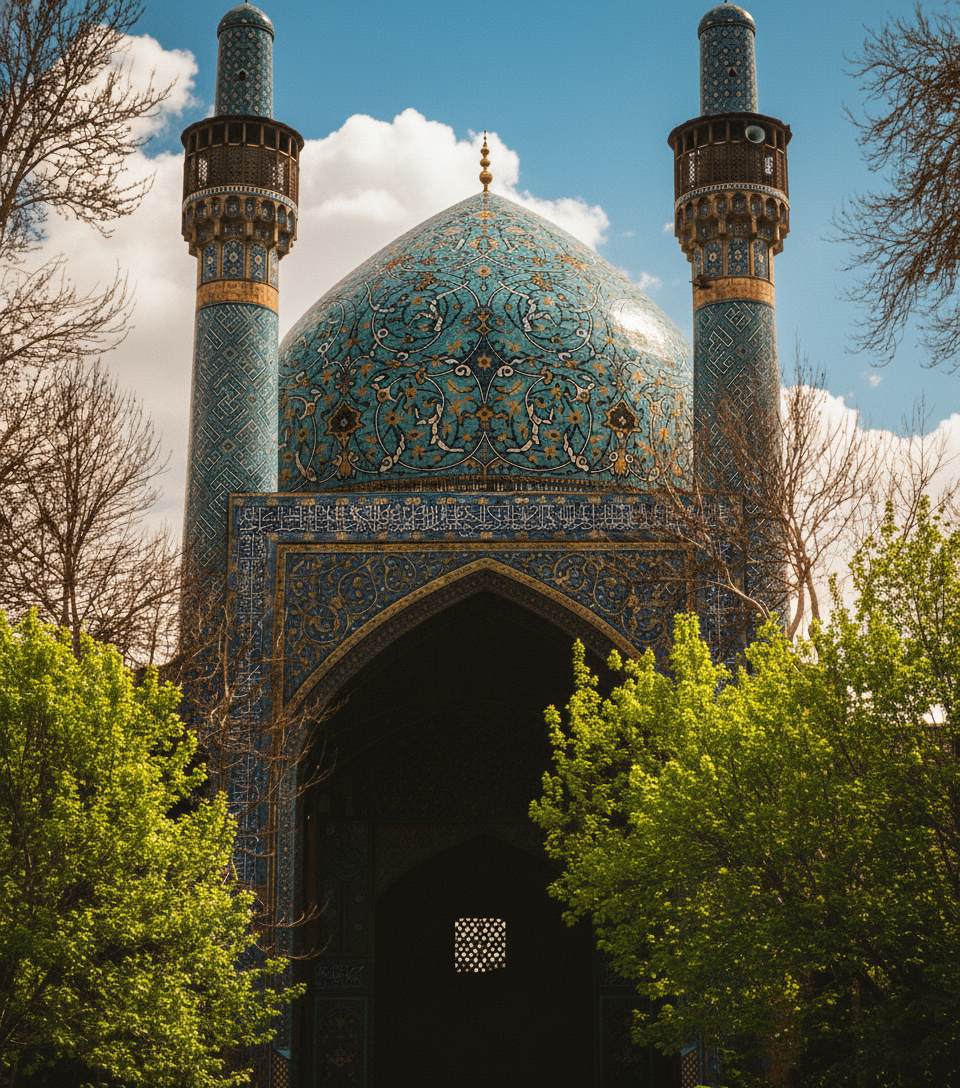
Gonbad (گنبد), the iconic dome of Iranian architecture, transforms geometry into climate control. Its curved form creates self-shading, reduces heat gain, and promotes airflow across its surface. Inside, it enables thermal stratification, drawing warm air upward and enhancing ventilation through openings like the Hoorno (هورنو), demonstrating how form, rather than technology, sustains comfort.
-
Gonbad (گنبد): Curvature, Stratification, and Climatic Regulation
The Gonbad is a central element of traditional Iranian architecture, serving as both a structural crown and a climatic regulator. Defined by its convex geometry, the dome transforms the roof from a passive covering into an active environmental device, moderating solar radiation, air movement, and thermal stratification through form alone.
The curvature of the Gonbad produces continuous self-shading as the sun moves across the sky, preventing any single surface from being exposed for prolonged periods. In addition to reducing peak solar gain, this geometry generates differential heating across the roofscape. Areas shaded by the dome remain cooler, while adjacent exposed surfaces receive higher solar radiation and warm more rapidly. This temperature gradient induces localized convective air movement along the roof surface, as warmer air rises and cooler air is drawn in to replace it. The resulting airflow enhances heat dissipation from the roof, contributing to passive cooling of the structure without mechanical assistance.
Within the interior, the dome organizes air vertically. Warm air rises naturally toward the apex, while cooler air remains in the occupied zone below. When equipped with an oculus or vent—known as the Hoorno (هورنو)—the Gonbad functions as a natural chimney, expelling accumulated hot air and reinforcing convection. This upward draft draws cooler air inward from courtyards, iwans, or subterranean chambers, integrating the dome into a larger climatic system that spans roof, section, and ground.
Historically, domes have been employed across Iranian architectural typologies, including mosques, madrasas, baths, bazaars, palaces, and residential spaces. In large congregational buildings, the Gonbad stabilizes the climate of expansive interiors; in baths and houses, smaller domes regulate heat, humidity, and light through carefully positioned openings. In each case, the dome operates not as an ornamental cap but as an environmental organizer.
Theoretically, the Gonbad exemplifies a climate-conscious architecture in which environmental control emerges from geometry, mass, and section rather than technological intervention. By coupling self-shading, surface-level convection, and vertical air stratification, the dome thickens the building envelope, demonstrating a core principle of traditional Iranian architecture: that comfort is achieved through the intelligent calibration of form in dialogue with the sun and air.
