The Borujerdi House
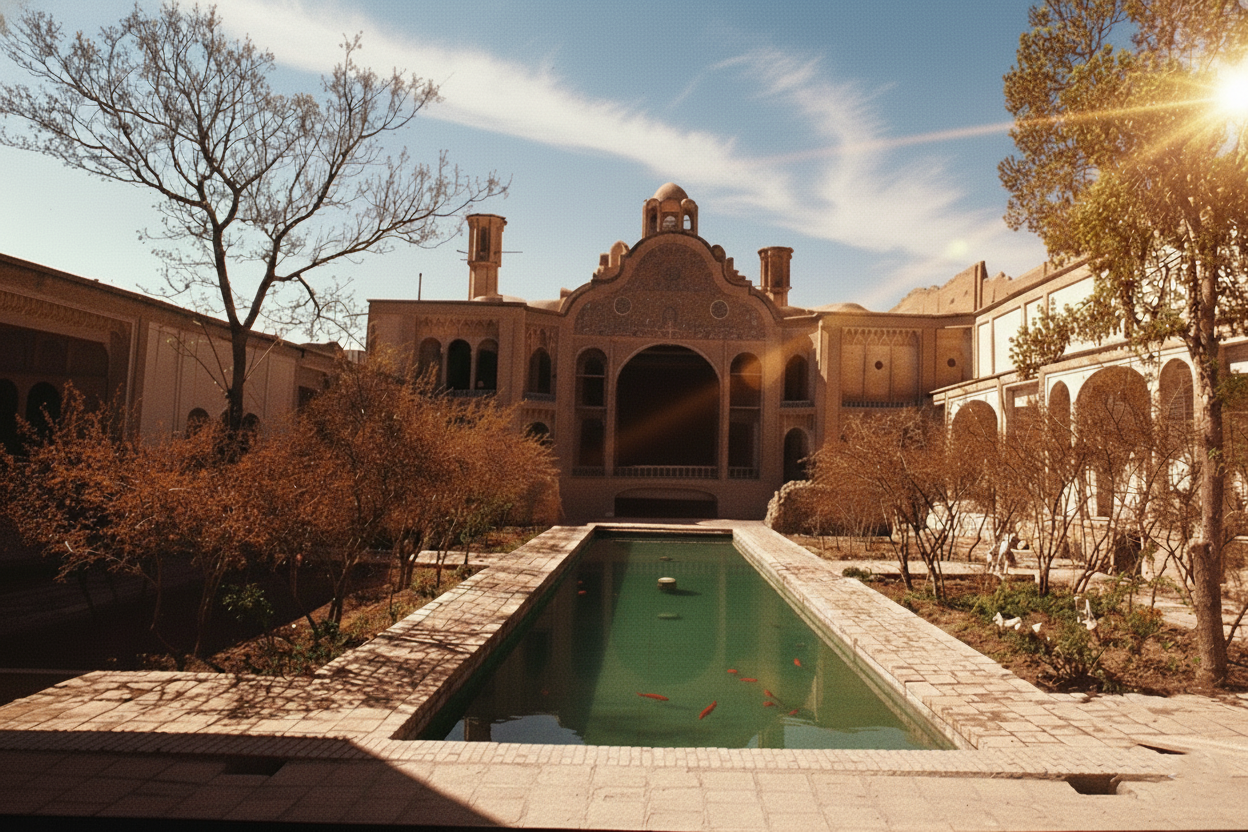
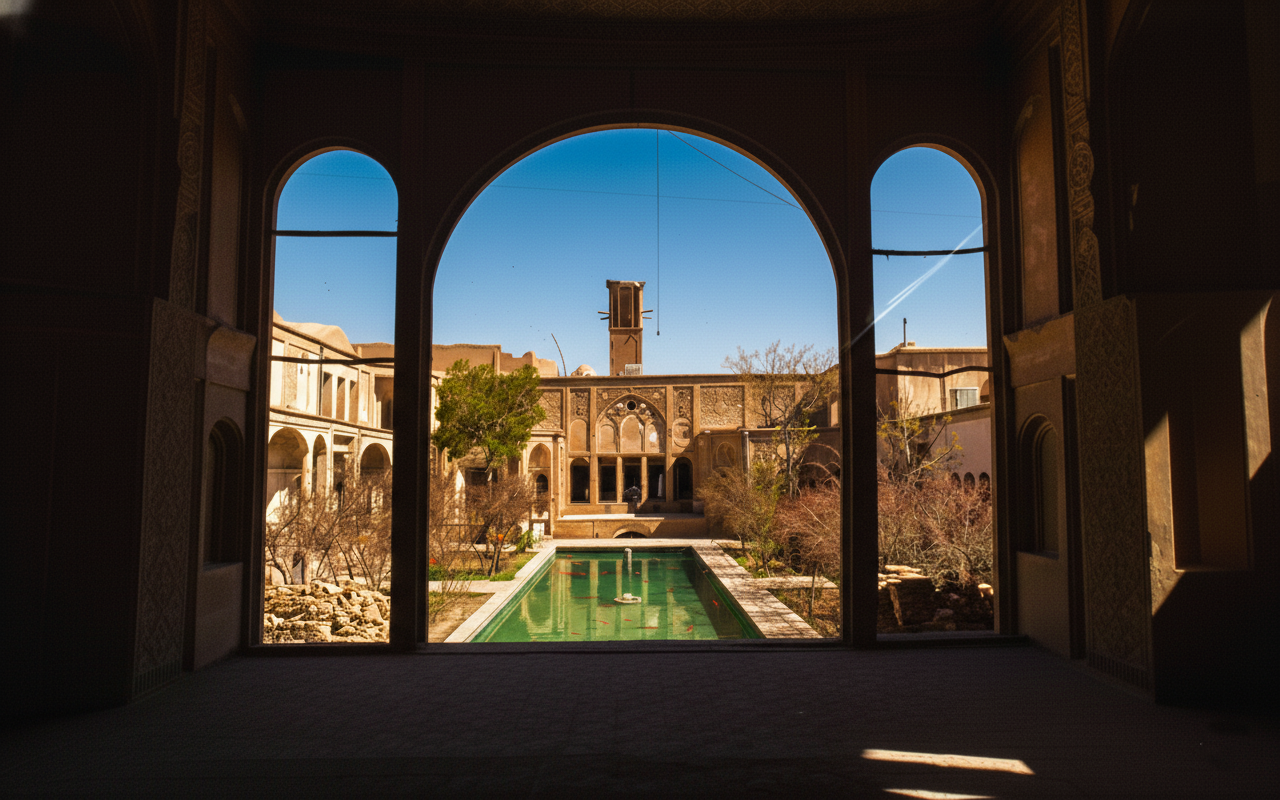
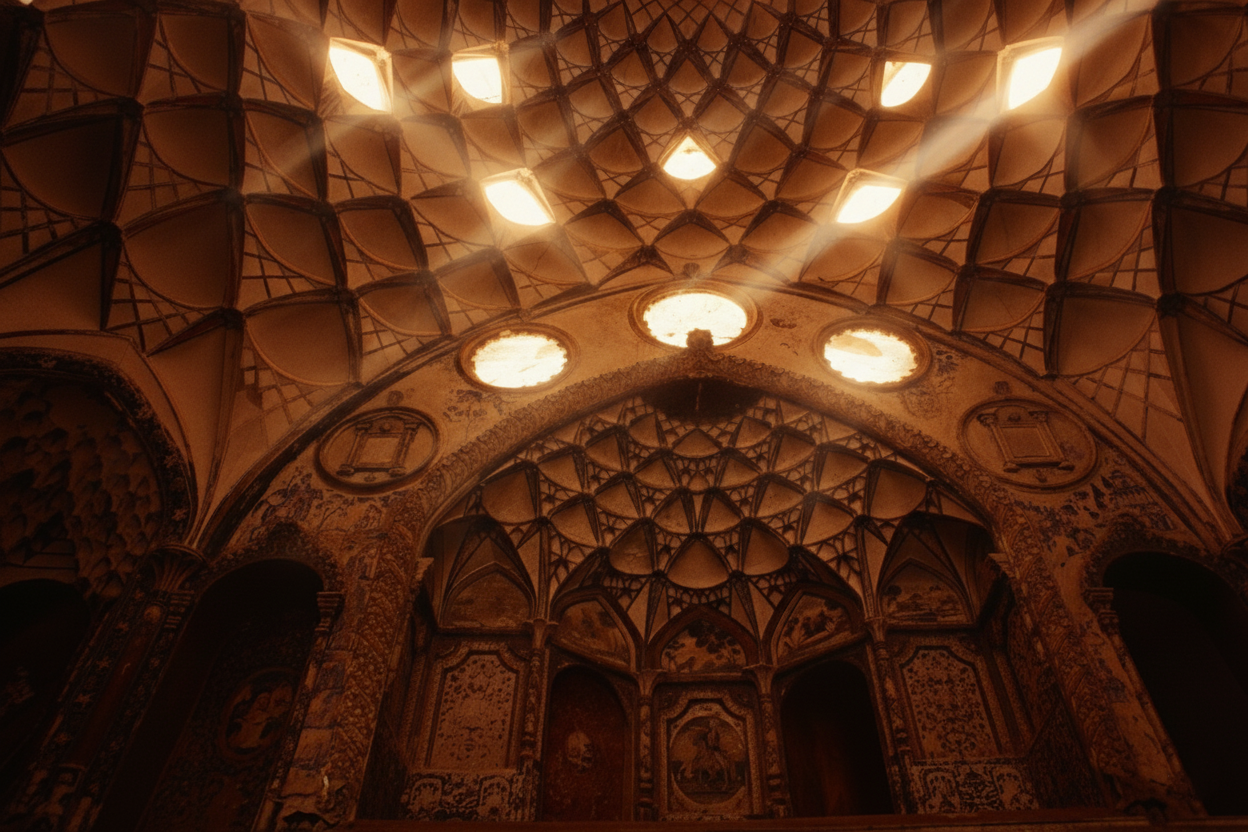
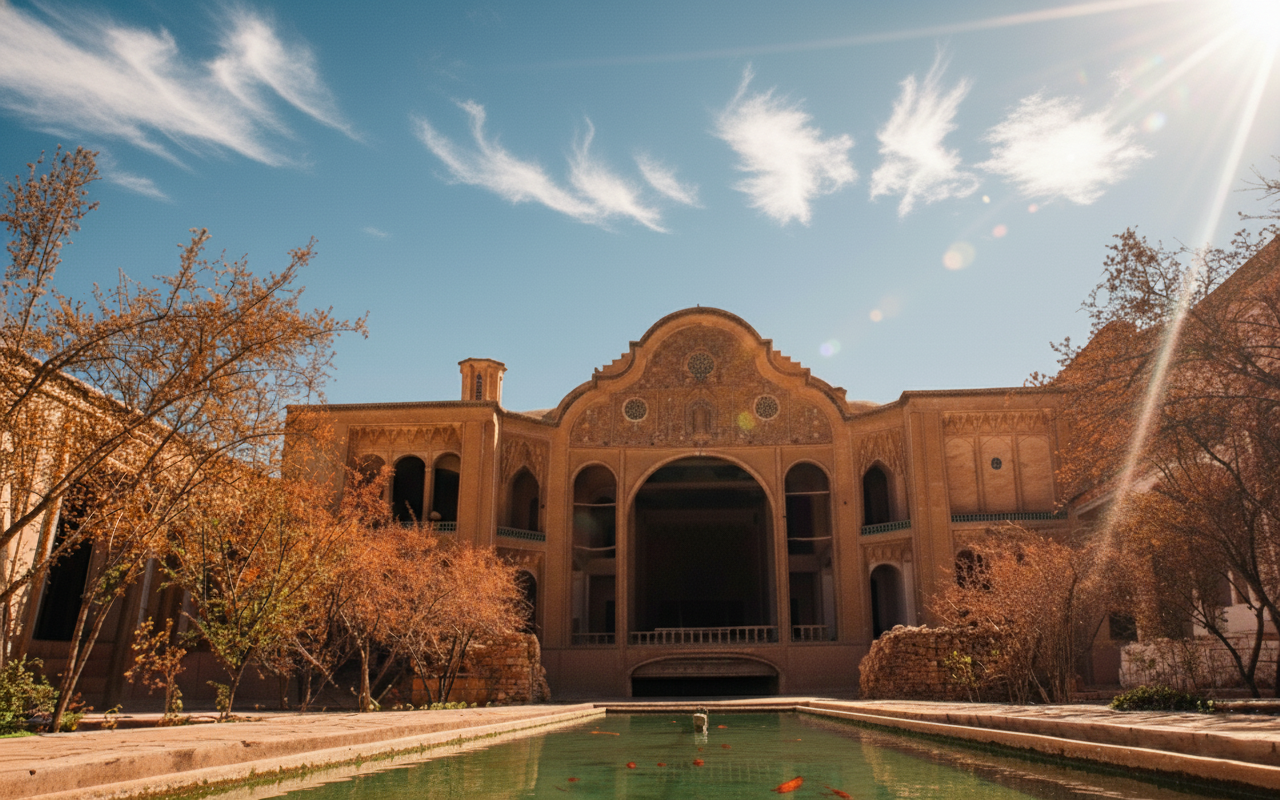

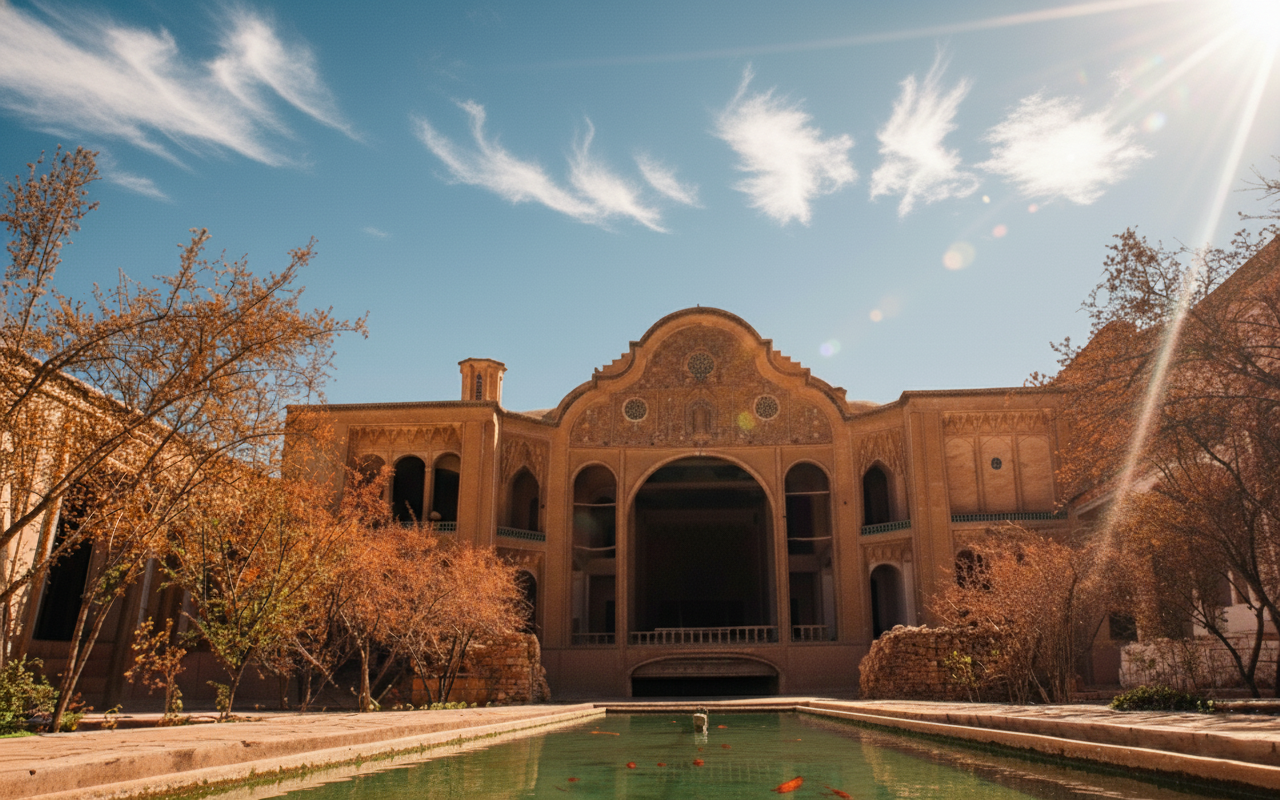
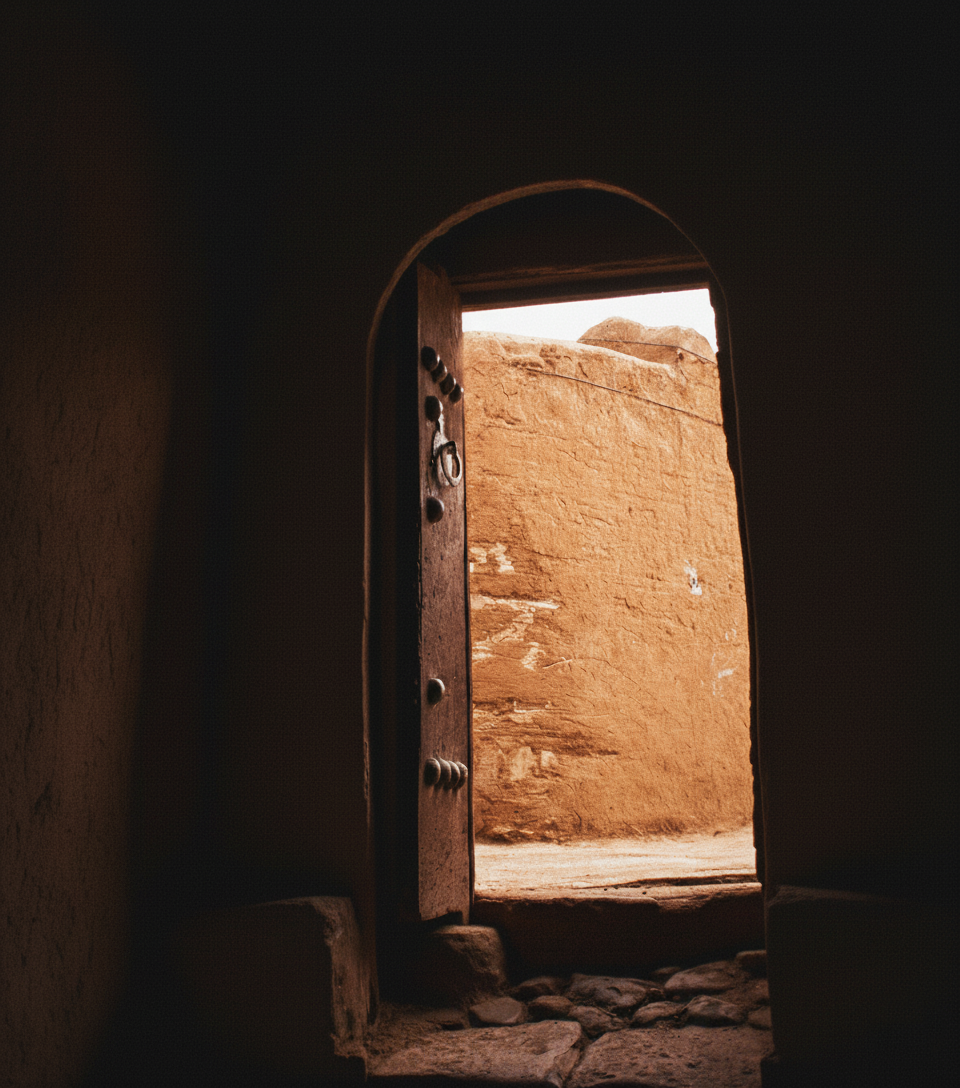
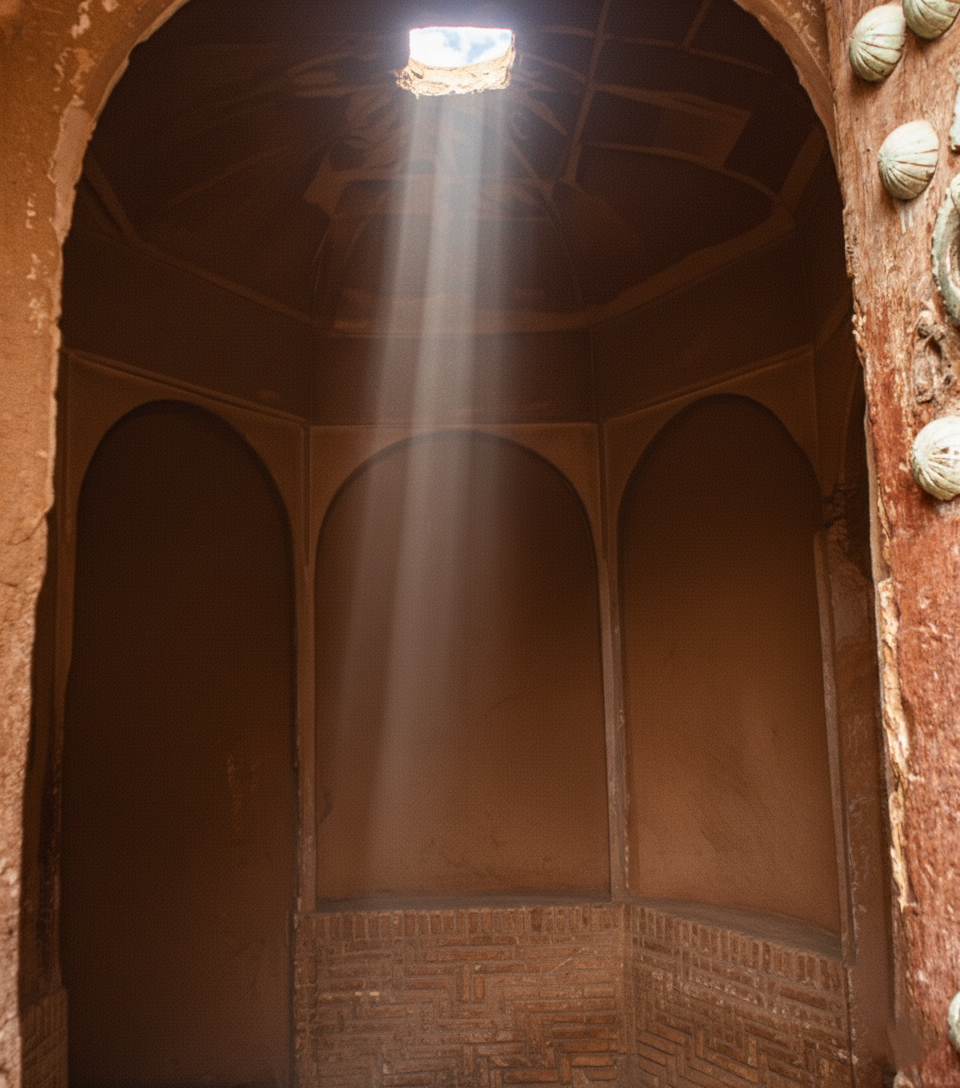
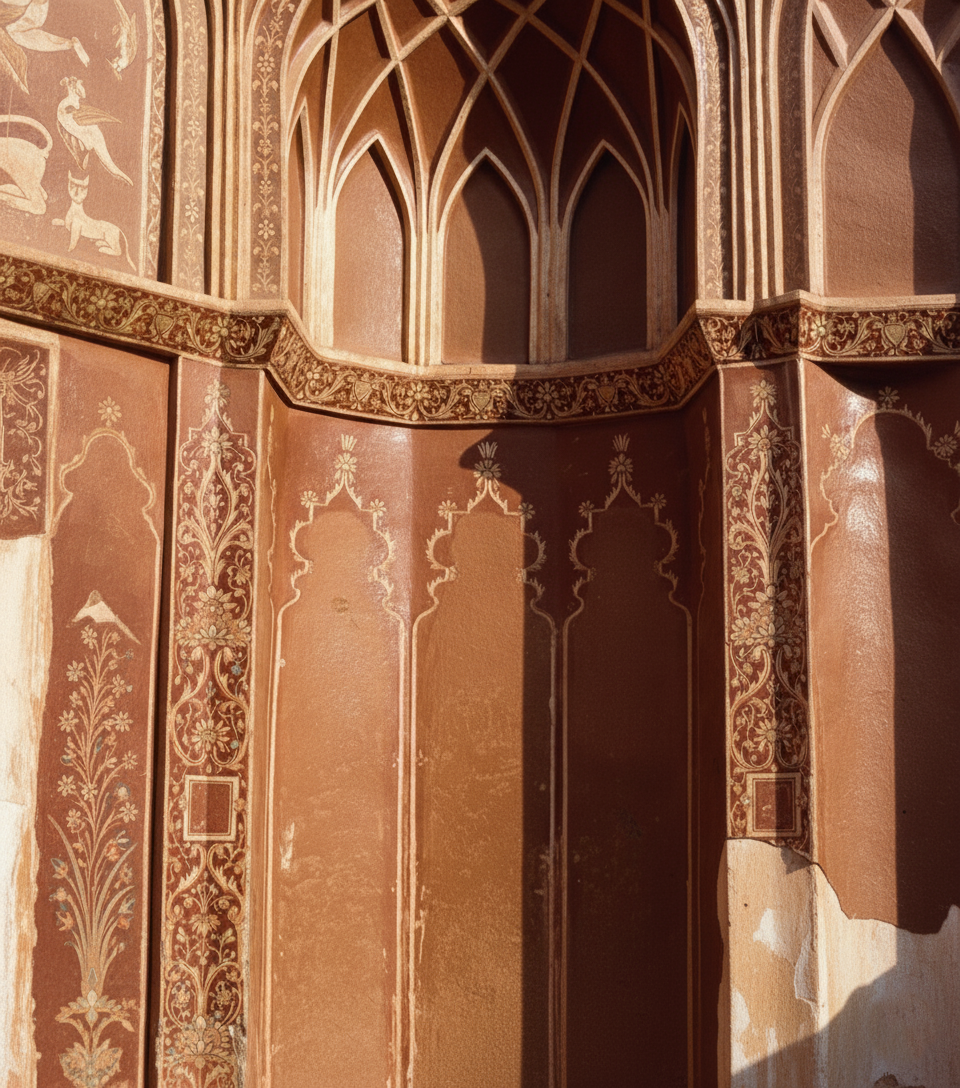
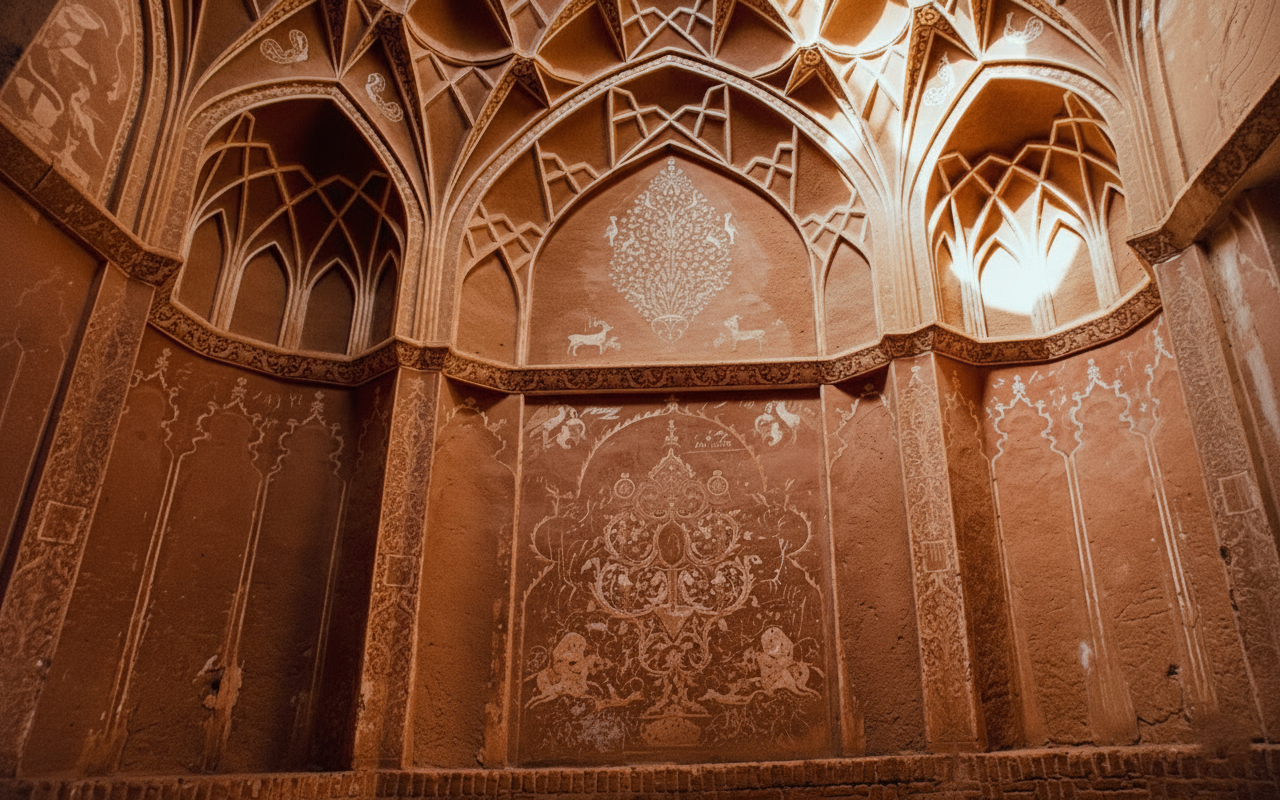
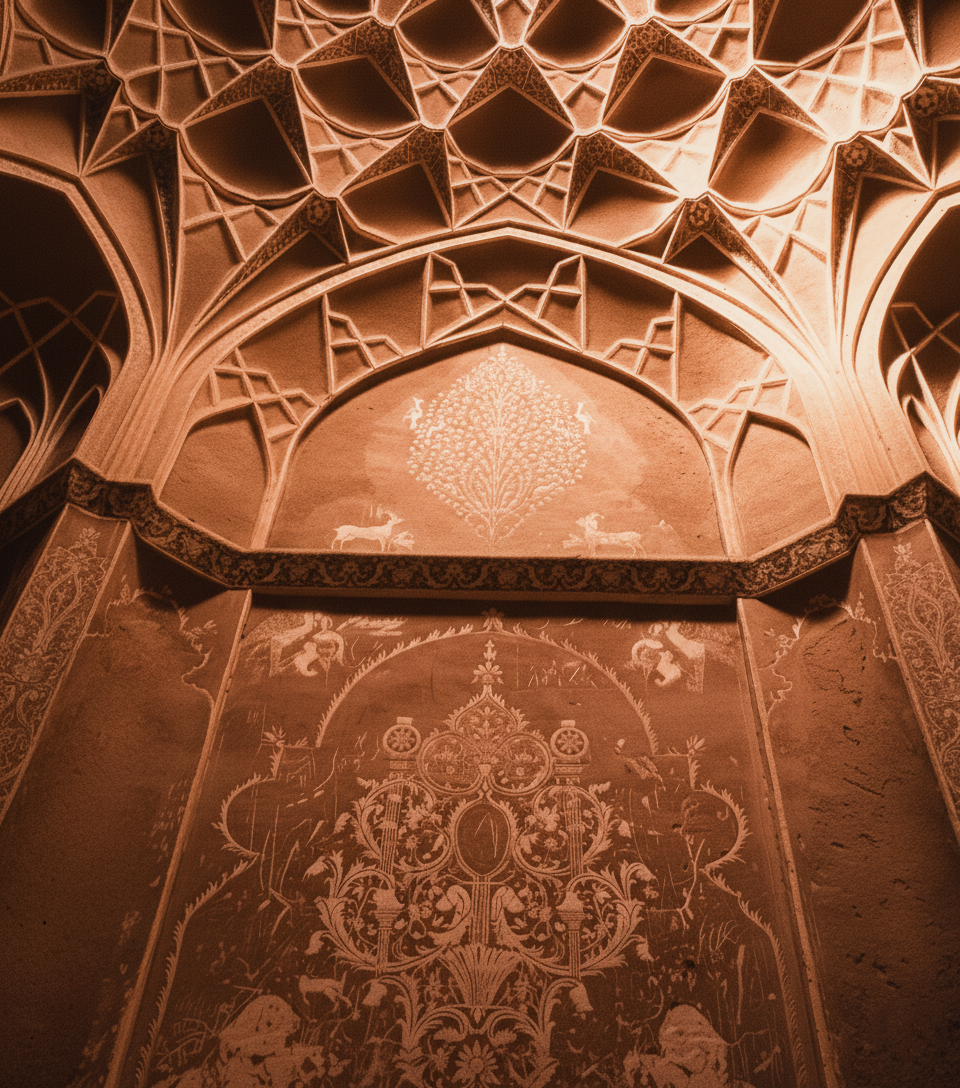
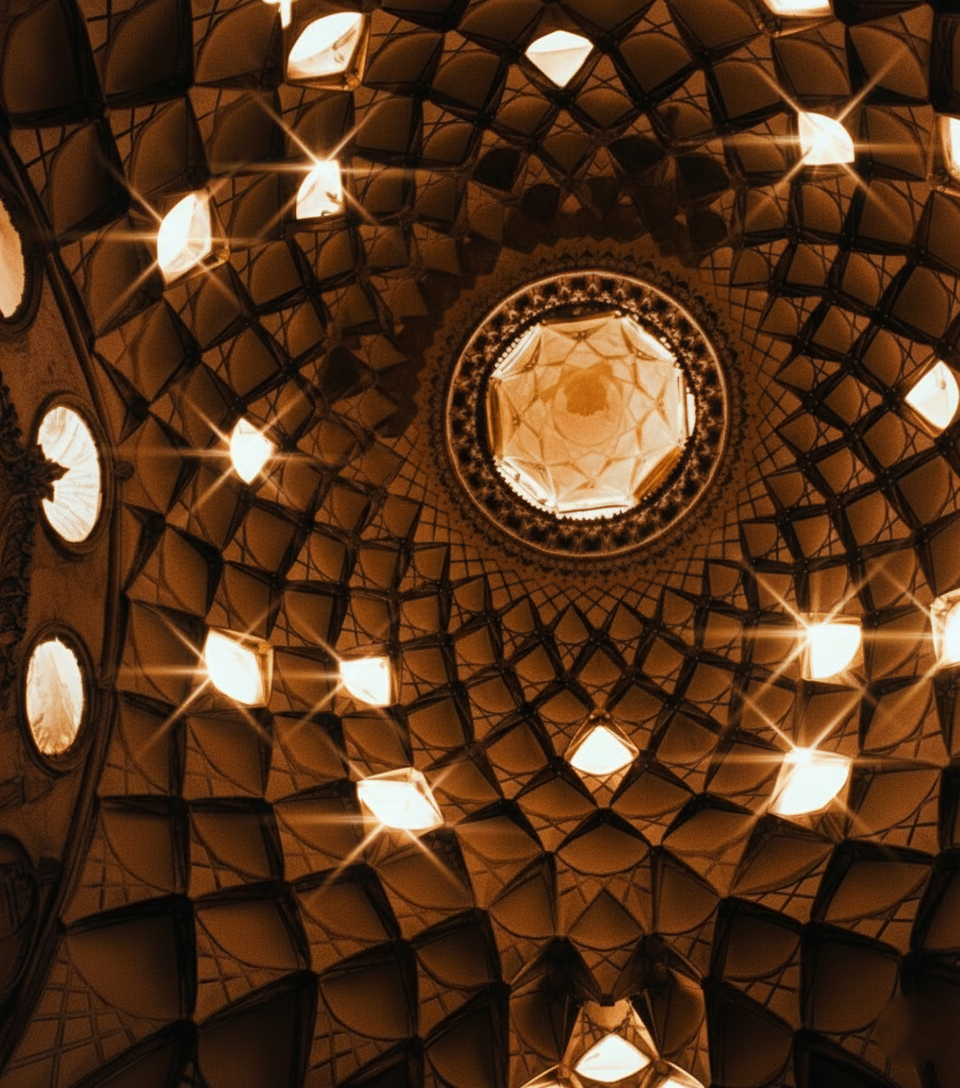
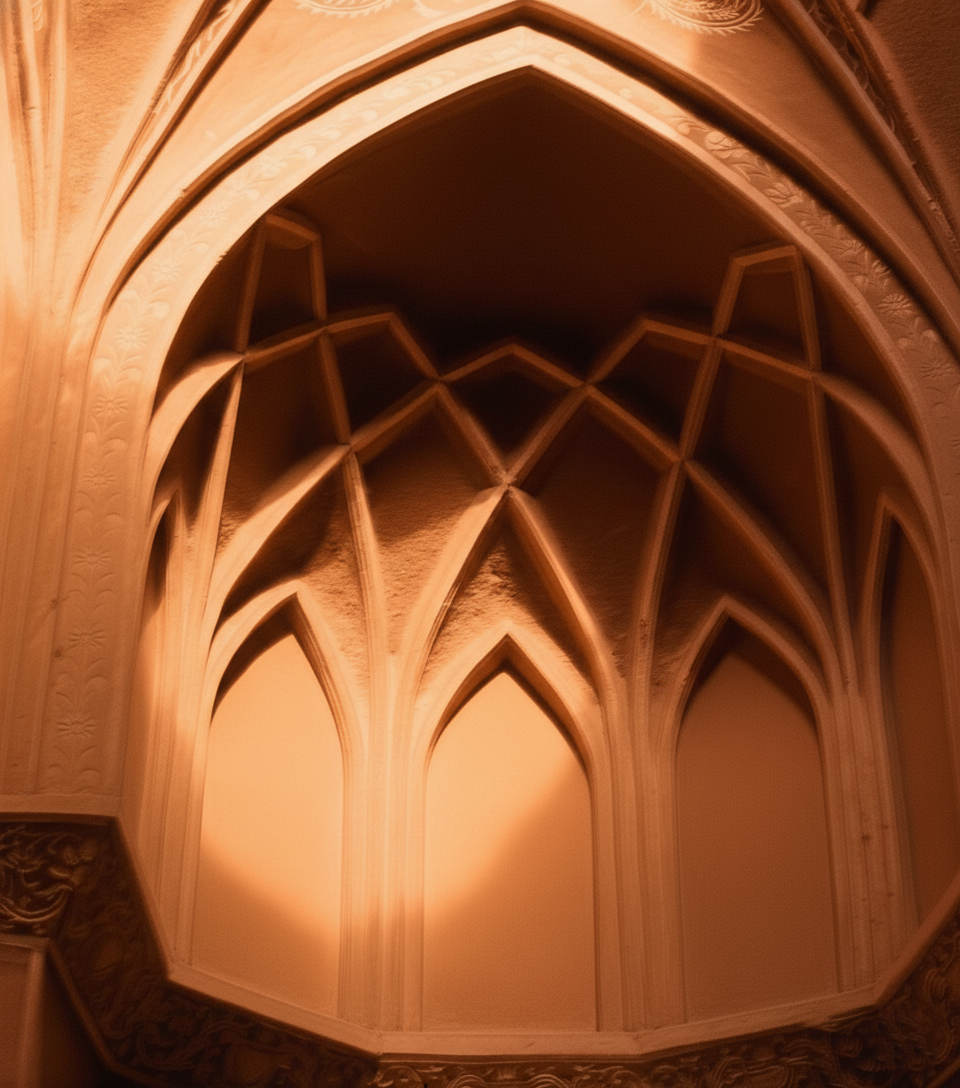
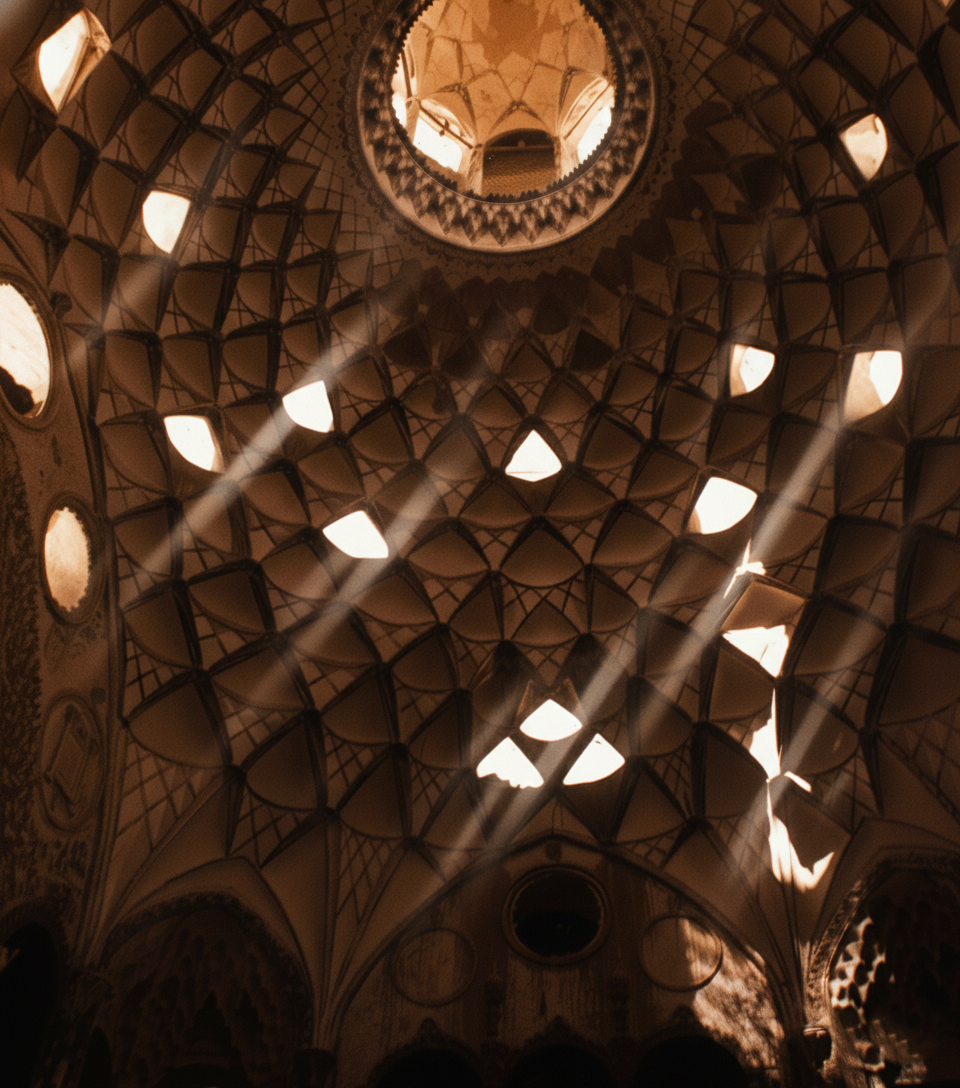
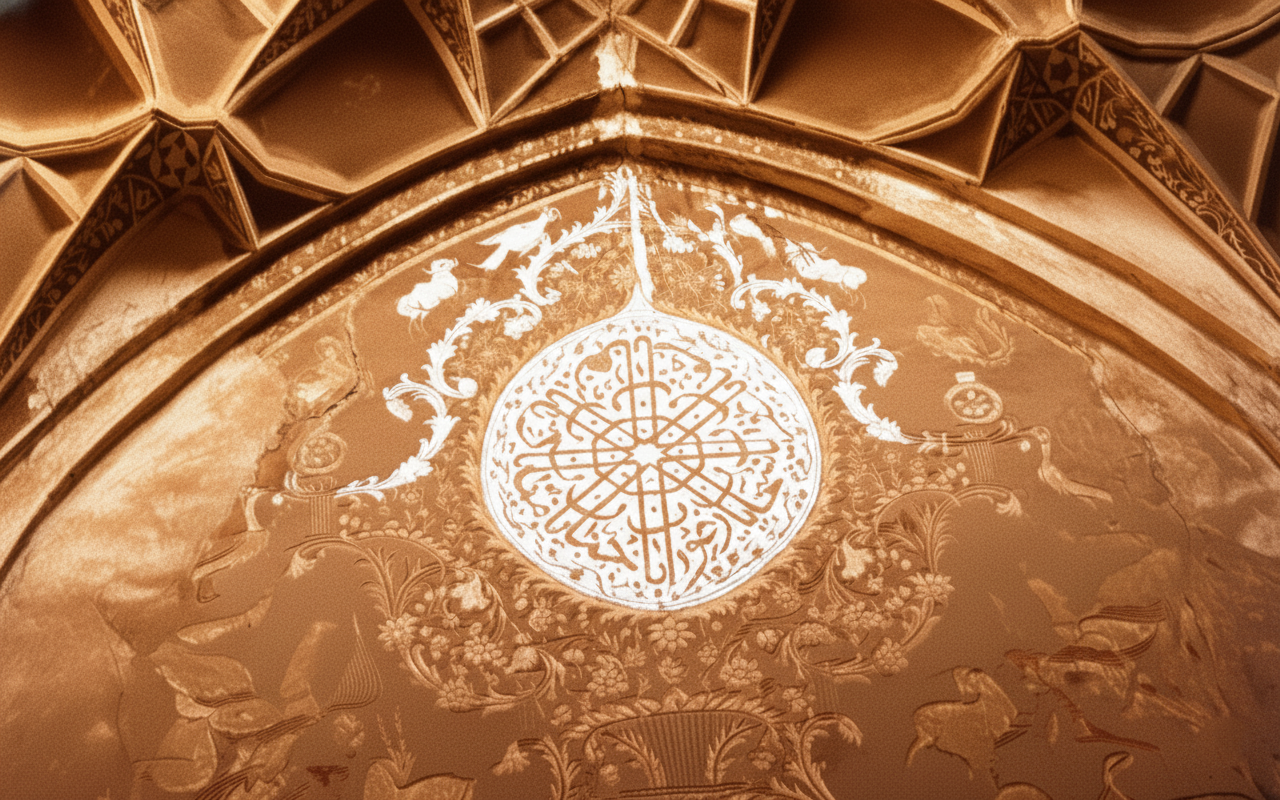
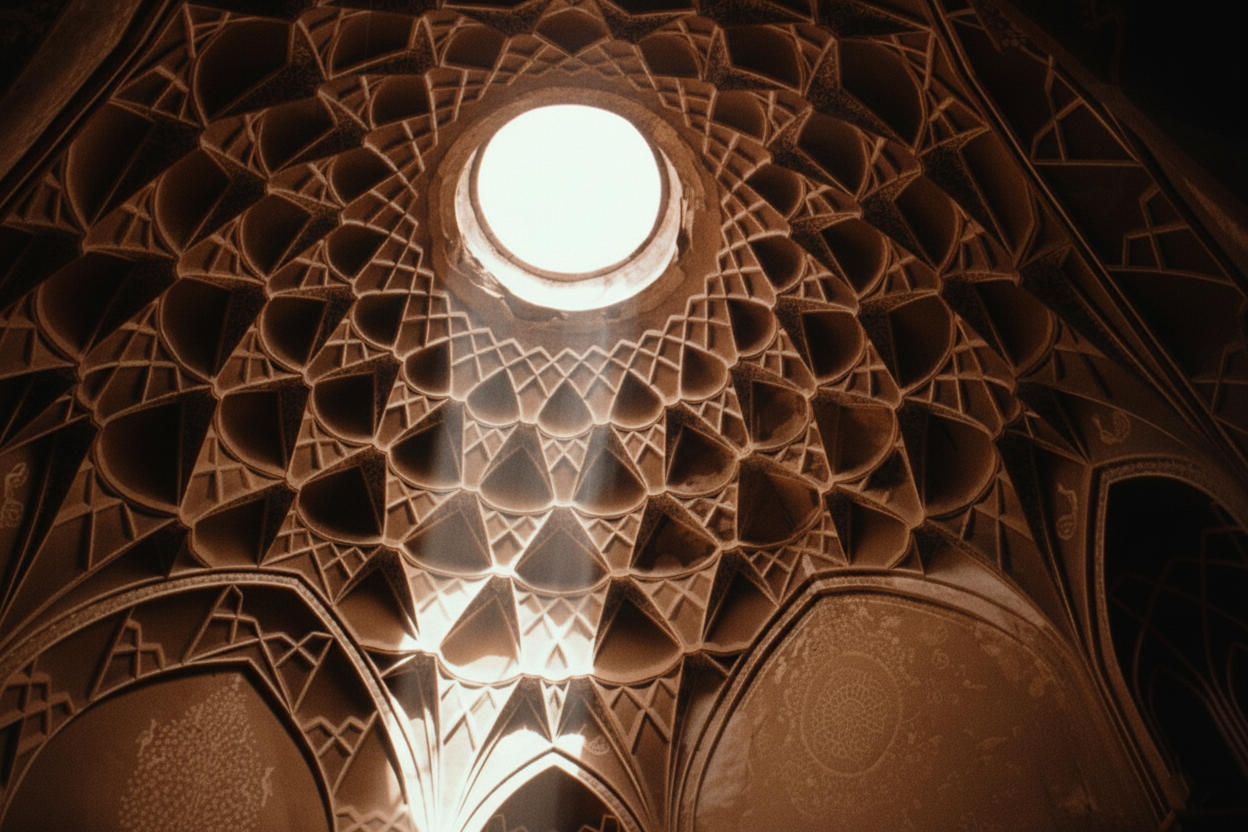
The Borujerdi House (خانه بروجردیها, 1857–1892 CE) exemplifies Kashan’s 19th-century merchant architecture shaped by Silk Road (جاده ابریشم) trade. Organized around a central courtyard, it regulates climate and social life, while windcatchers (بادگیر), a domed reception hall (گنبد), and adobe (خشت و گل) construction demonstrate refined climate-responsive design and craftsmanship.
-
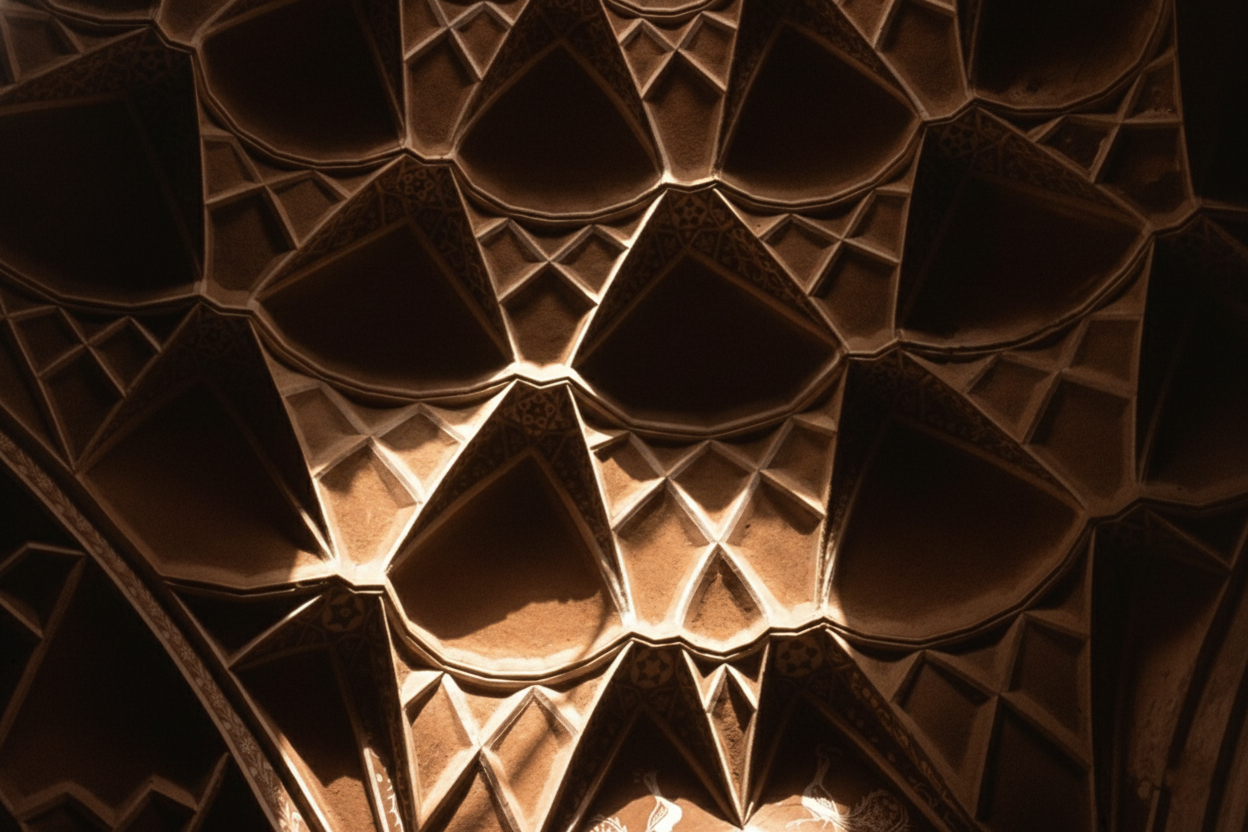
The Borujerdi House is one of the finest examples of Kashan’s 19th-century domestic architecture, representing the sophistication of merchant houses shaped by trade along the Silk Road (جاده ابریشم). Designed as an introverted courtyard residence, the house is organized around a central courtyard that serves as the home's climatic and social heart. This courtyard, often planted and proportioned with careful symmetry, regulates light, airflow, and temperature while structuring daily life around a protected open space. Surrounding rooms open inward to this court, creating a layered spatial hierarchy that balances privacy and hospitality. Its elegant windcatchers (بادگیر), domed reception hall (گنبد), and refined plasterwork demonstrate a masterful integration of climate-responsive design and artistic craftsmanship, all executed primarily in adobe (خشت و گل).
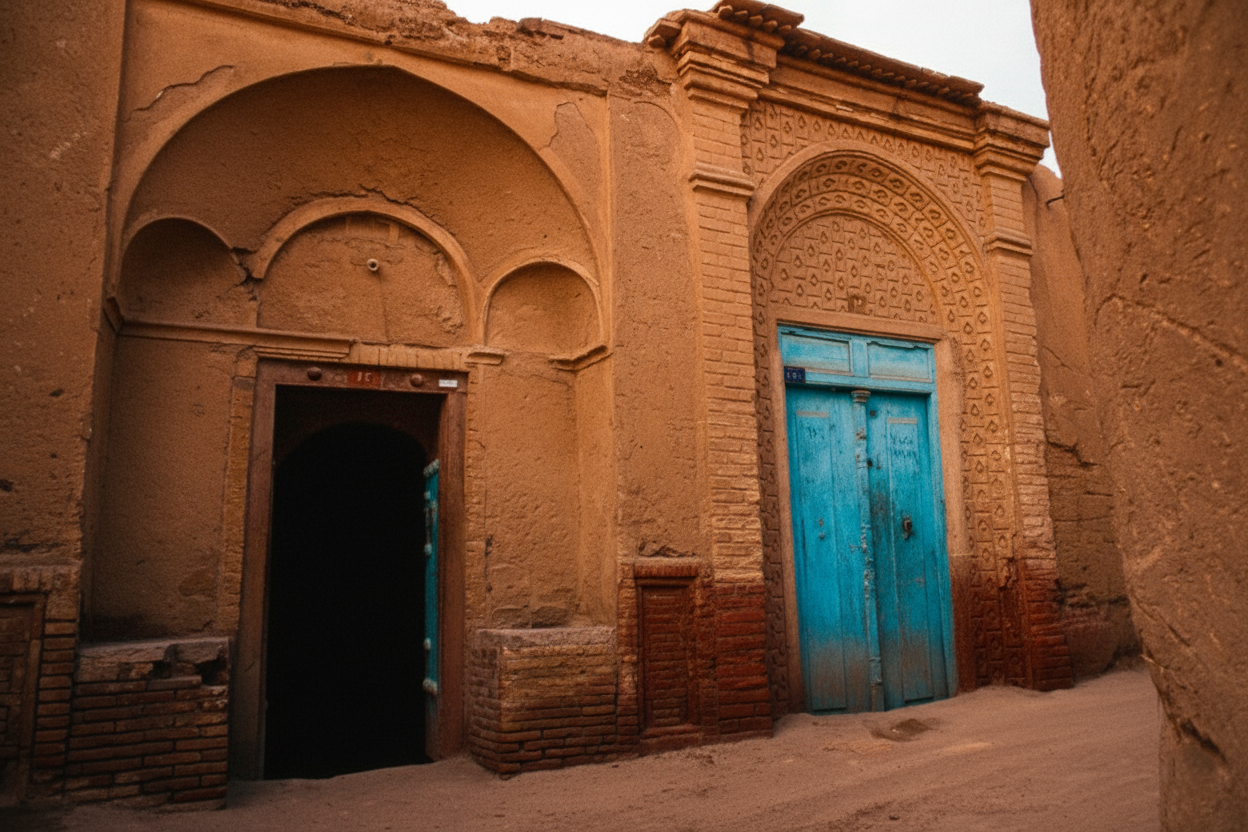
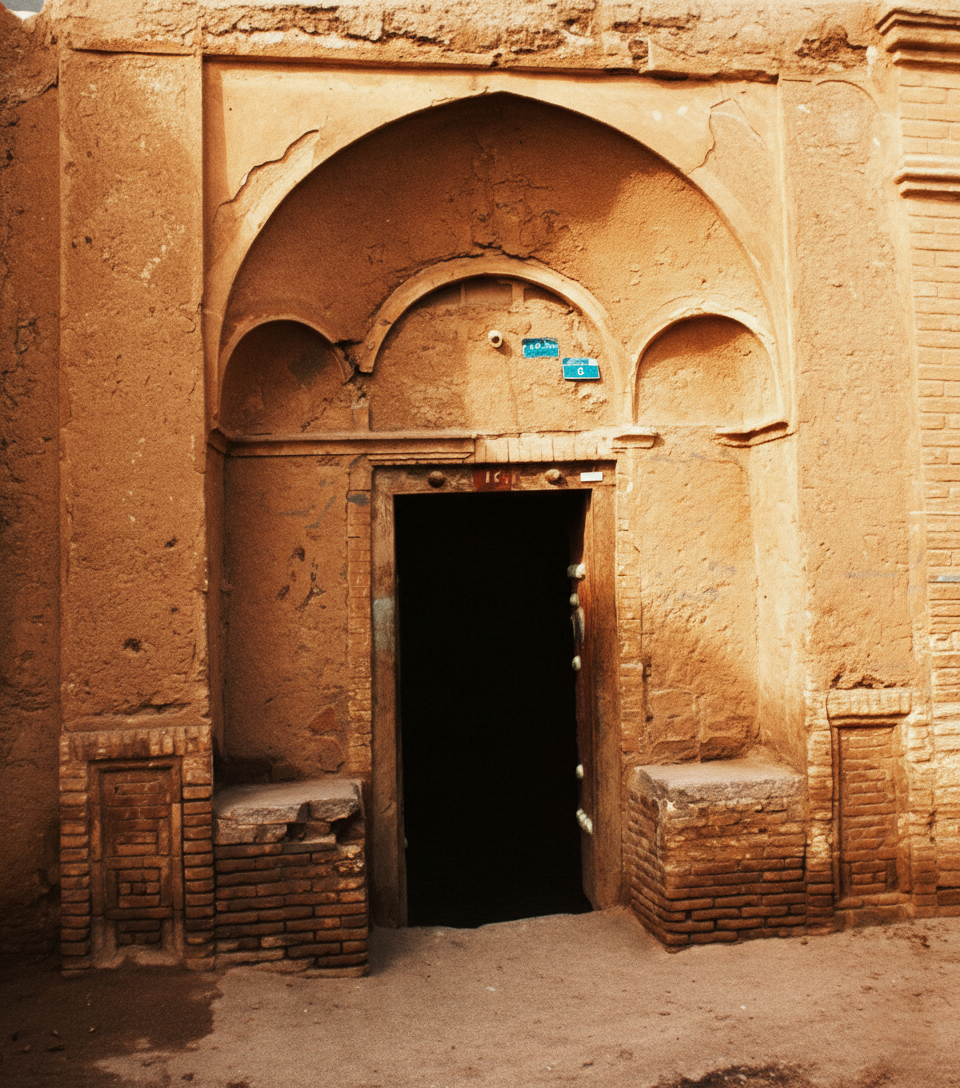
Within the urban fabric, the Borujerdi House reflects the core values embedded in Kashan’s architecture—introspection, environmental intelligence, and social order. The modest exterior walls facing the alley (کوچه) conceal the richly articulated interior centered on the courtyard, reinforcing the contrast between public restraint and private refinement. Above, its domes and بادگیرها contribute to the city's continuous skyline, illustrating how even private residences help shape Kashan’s cohesive desert cityscape.
