Hoorno (هورنو): Aperture, Geometry, and Climatic Release
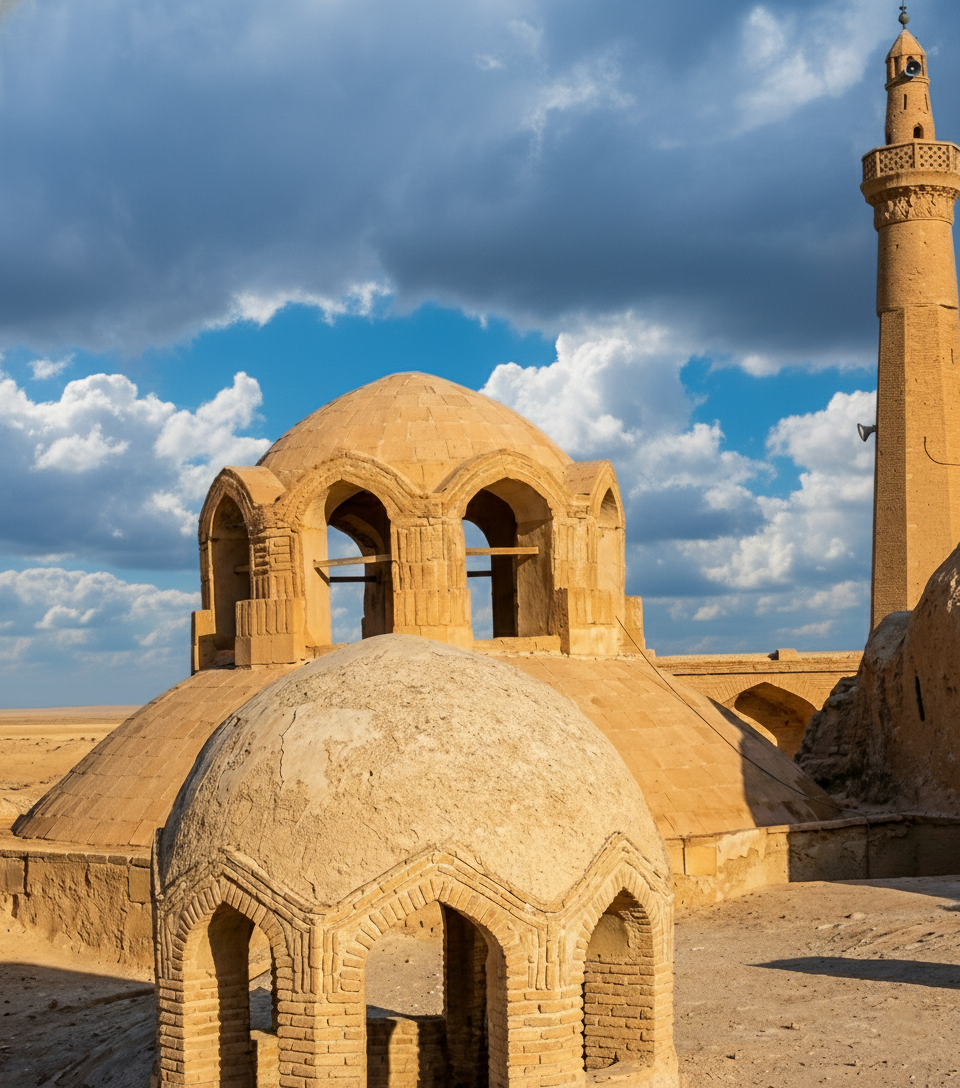
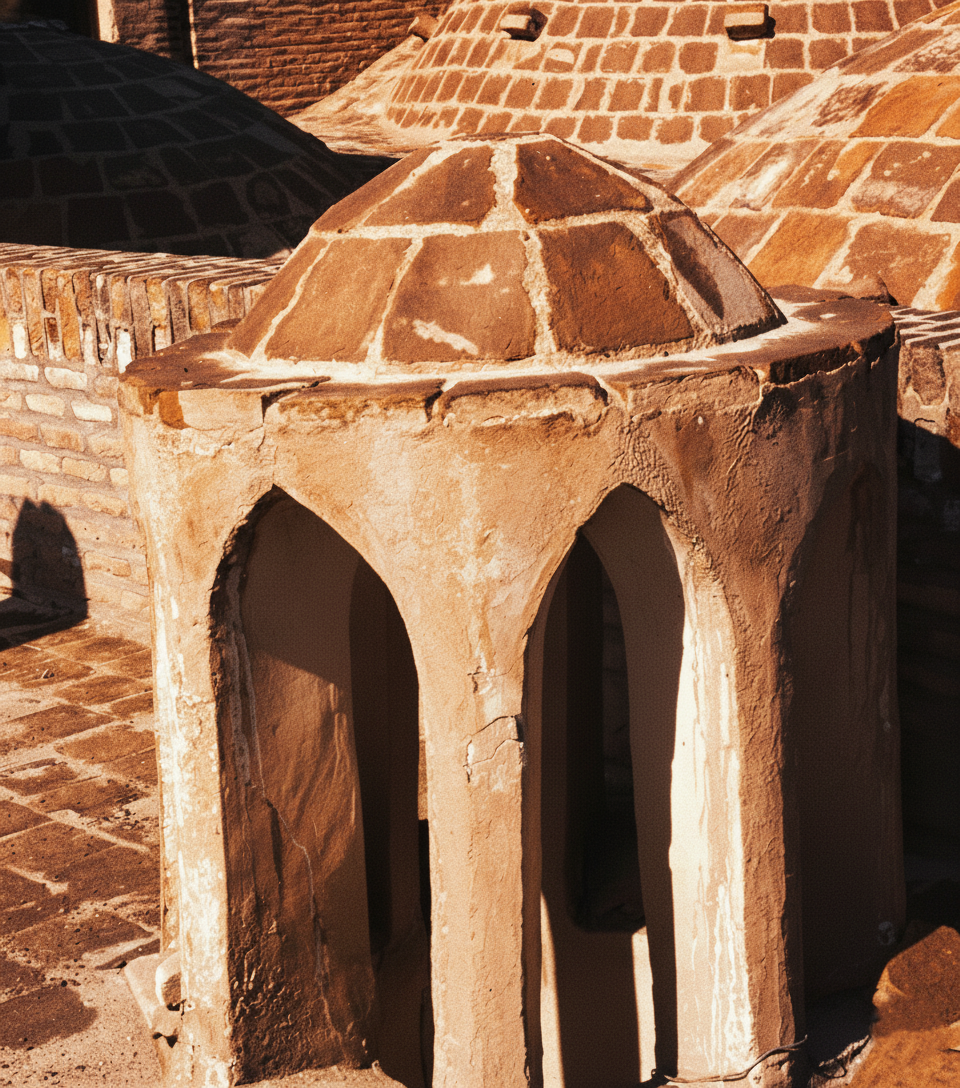
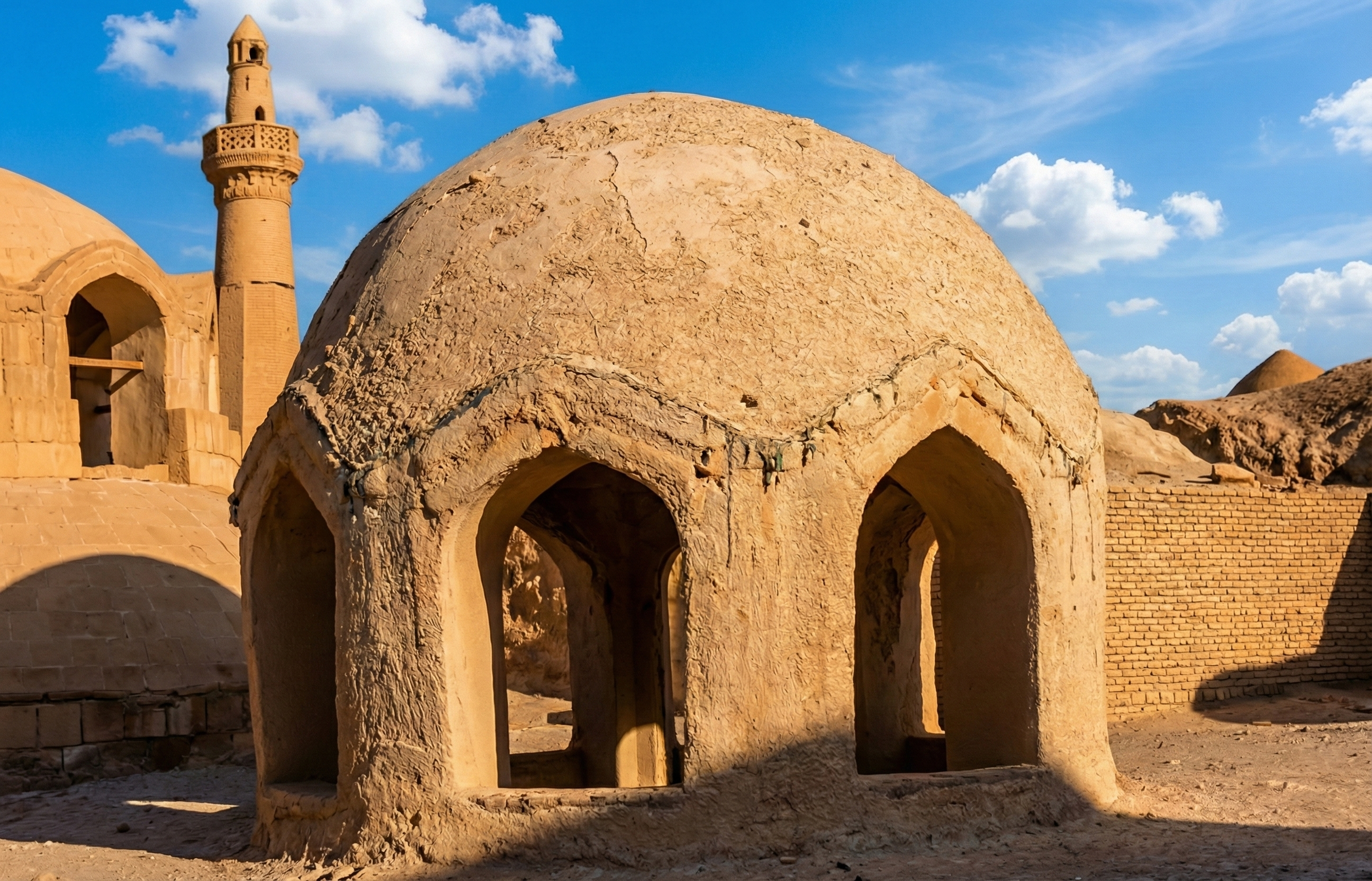
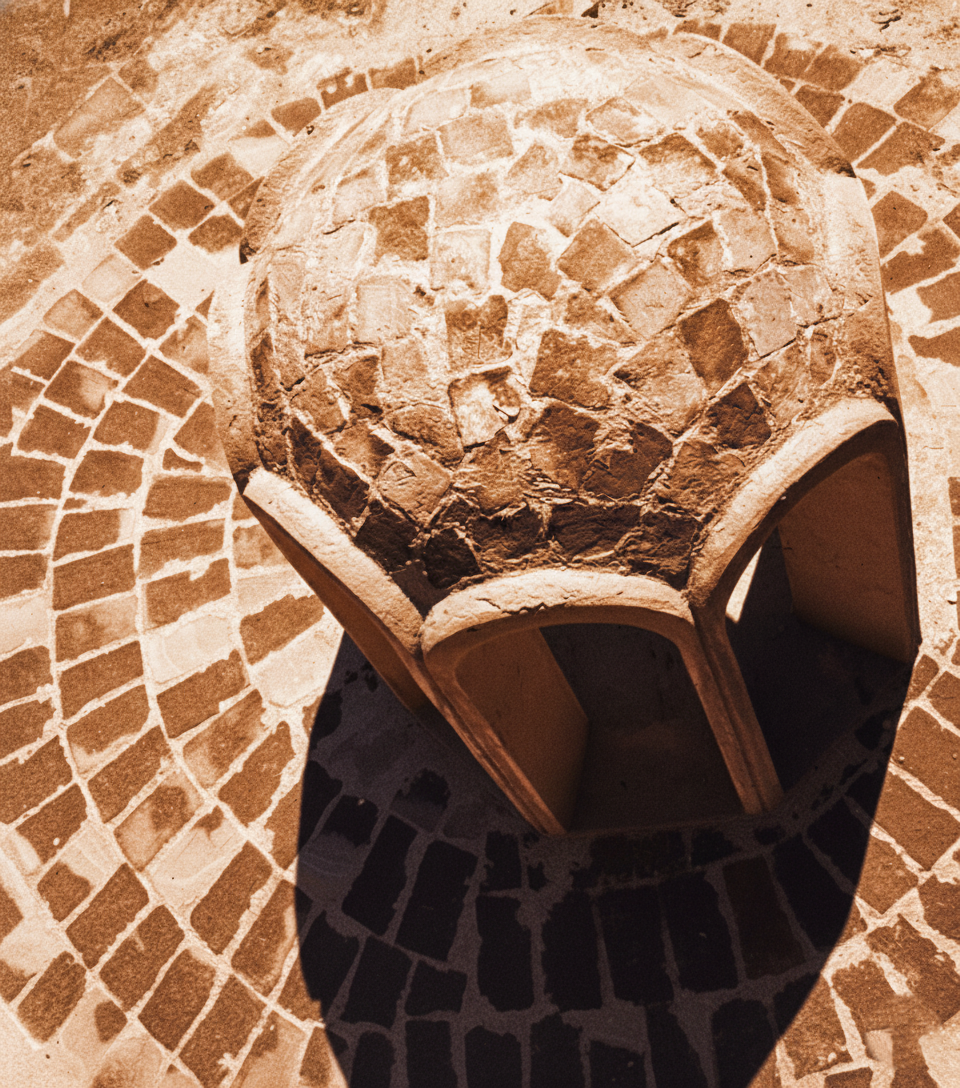
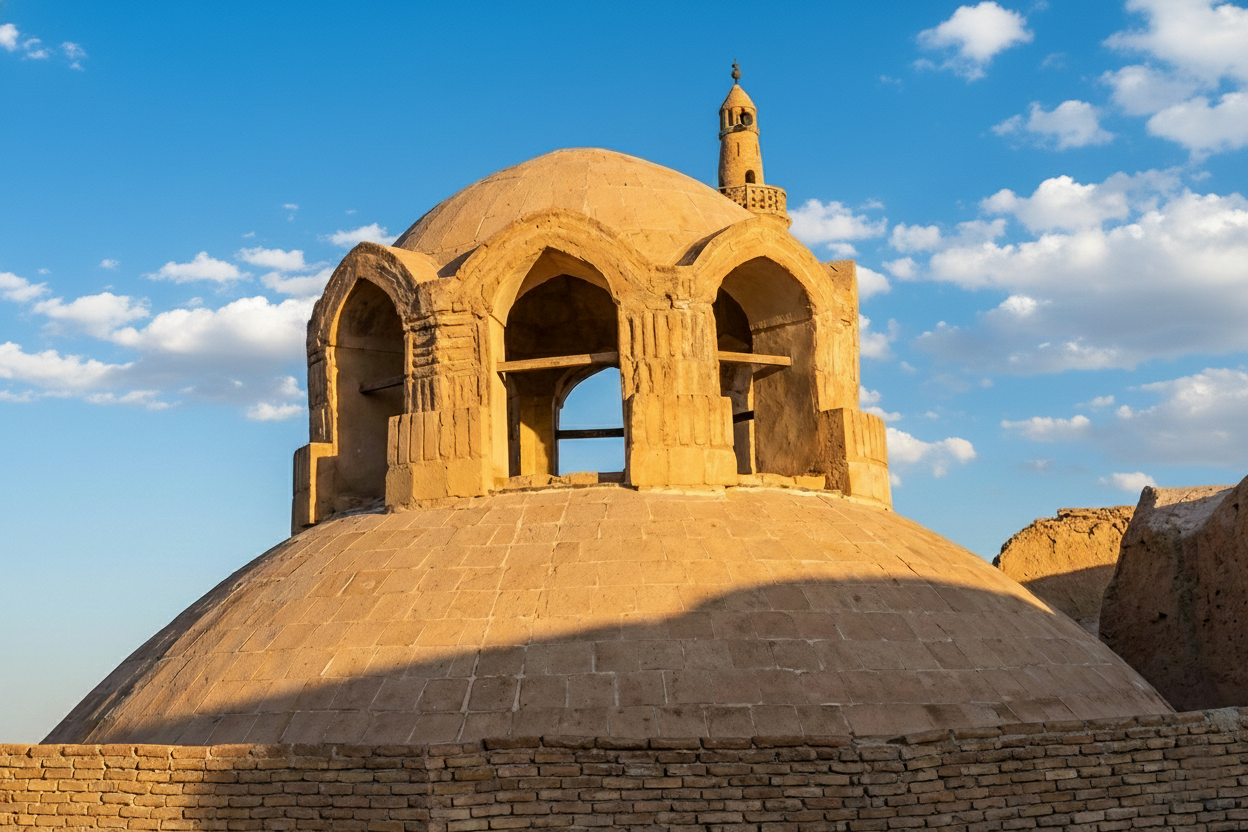
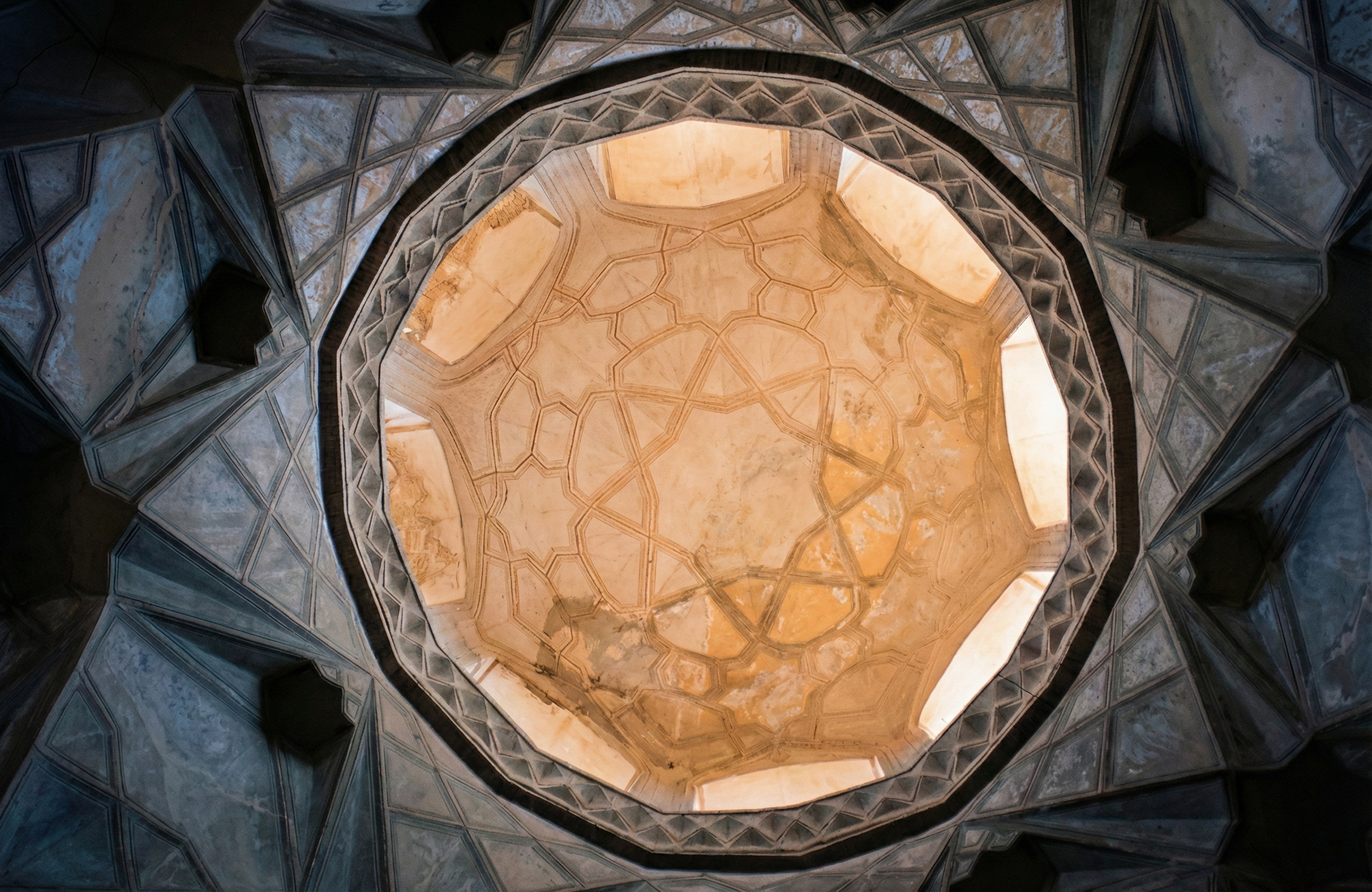
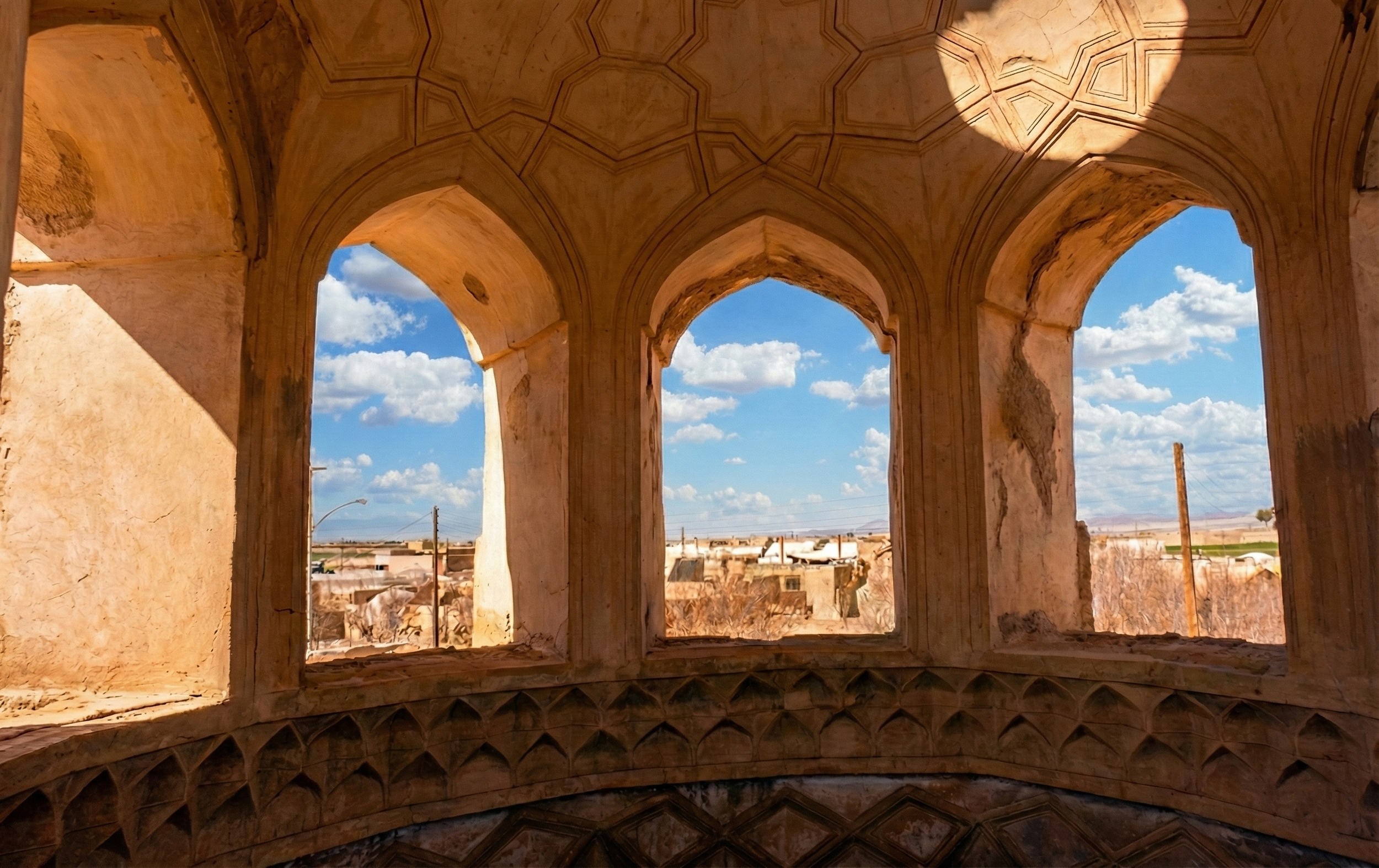
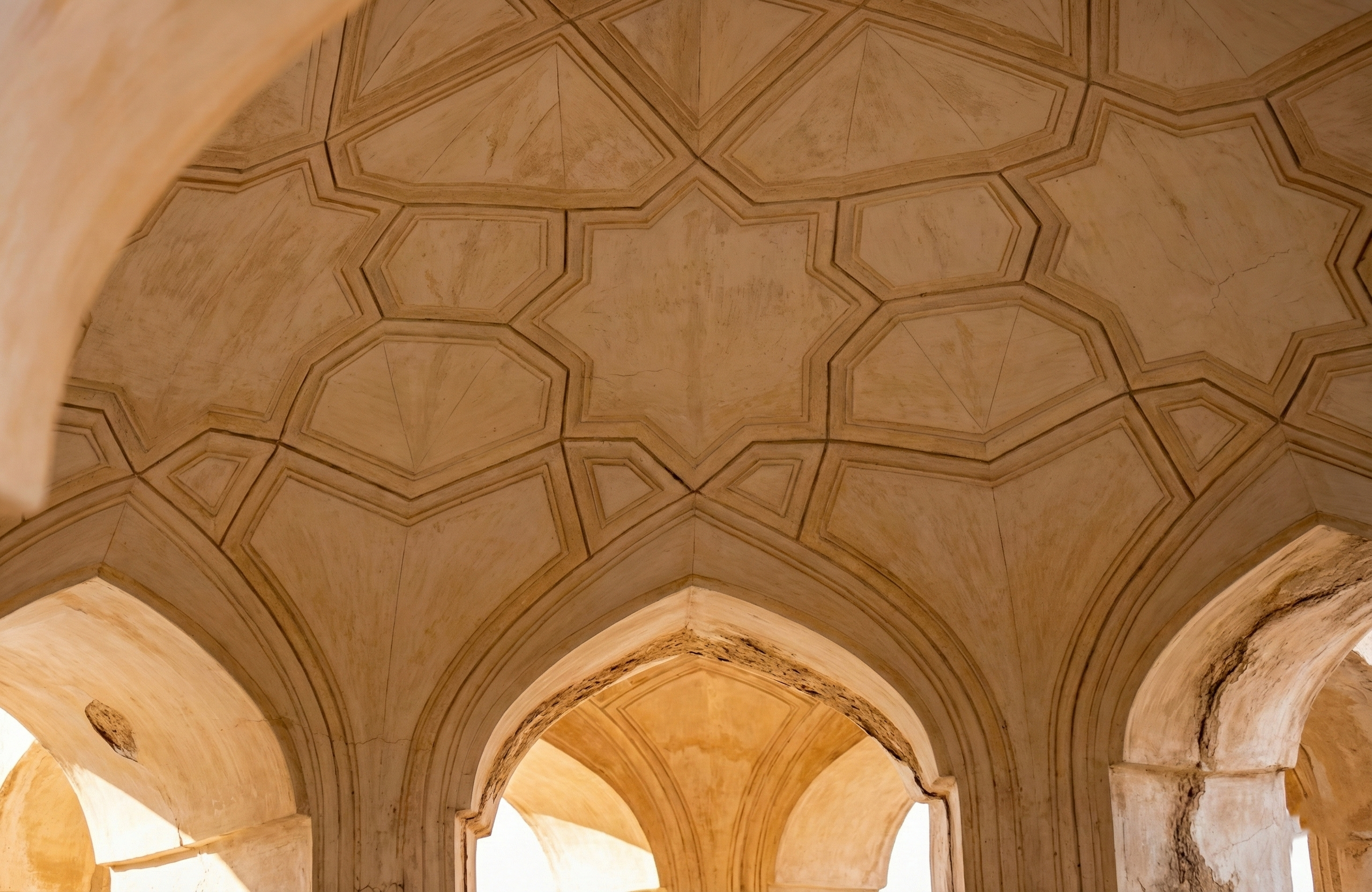
Hoorno (هورنو), a small opening at the apex of domes and vaults, serves as a precise climatic valve in traditional Iranian architecture. By releasing rising warm air, it activates natural ventilation and draws in cooler air below. Enhanced by intricate geometries, the Hoorno transforms minimal apertures into powerful systems of airflow, light diffusion, and passive environmental control.
-
Hoorno (هورنو): Aperture, Geometry, and Climatic Release
The Hoorno is a small, precisely positioned roof opening that plays a decisive role in the climatic intelligence of traditional Iranian architecture. Located at the apex of domes or at the highest point of vaulted roofs, it functions as a controlled outlet for accumulated heat. Although small, the Hoorno activates powerful environmental forces, converting the roof from a sealed lid into a calibrated release system.
Climatically, the Hoorno intensifies the stack effect. As warm air rises toward the uppermost zone of a space, the aperture provides an escape path, preventing heat stagnation beneath the roof. This upward discharge induces negative pressure below, drawing cooler air inward from courtyards, iwans, windcatchers, or subterranean chambers. Ventilation is achieved through pressure differentials rather than large openings, preserving enclosure while sustaining airflow.
The environmental performance of the Hoorno is significantly enhanced through its interaction with interior roof geometries such as Muqarnas (مقرنس), Karbandi (کاربندی), Rasmi-bandi (رسمیبندی), Yazdi-bandi (یزدیبندی), and Kaseh-sazi (کاسهسازی). These articulated systems fragment the upper volume into layered and cellular forms that diffuse rising warm air, slow its movement, and guide it gradually toward the oculus. By increasing surface area and disrupting direct radiant paths, they act as thermal baffles, reducing heat transfer to the occupied zone while allowing continuous exhaust.
At the same time, these geometries enhance convective circulation and light modulation. Micro-cavities and stepped surfaces encourage localized air movement, stabilizing the vertical draft toward the Hoorno. Reflected daylight entering through the opening is scattered across faceted surfaces, decoupling illumination from heat gain and softening glare—an effect especially critical in domes, iwans, and public baths.
Historically, the Hoorno and its associated interior articulations were employed across Iranian architectural typologies, including mosques, hammams, bazaars, and residential spaces. In baths, they regulate heat and humidity while maintaining enclosure; in monumental halls, they stabilize large interior volumes without mechanical intervention; in houses, they complement courtyards and windcatchers to sustain passive ventilation.
Theoretically, the Hoorno exemplifies an architecture of precision in which minimal apertures are amplified through geometry. Ornament and performance are inseparable: decorative systems transform the oculus into a climatic valve, regulating heat, air, and light through form rather than force. Together, they affirm a central principle of traditional Iranian architecture—that environmental comfort arises from the intelligent calibration of openings, surfaces, and sections, not from technological excess.
