Kāhgel (کاهگل) and Light Plasters: Reflection, Curvature, and Climatic Endurance
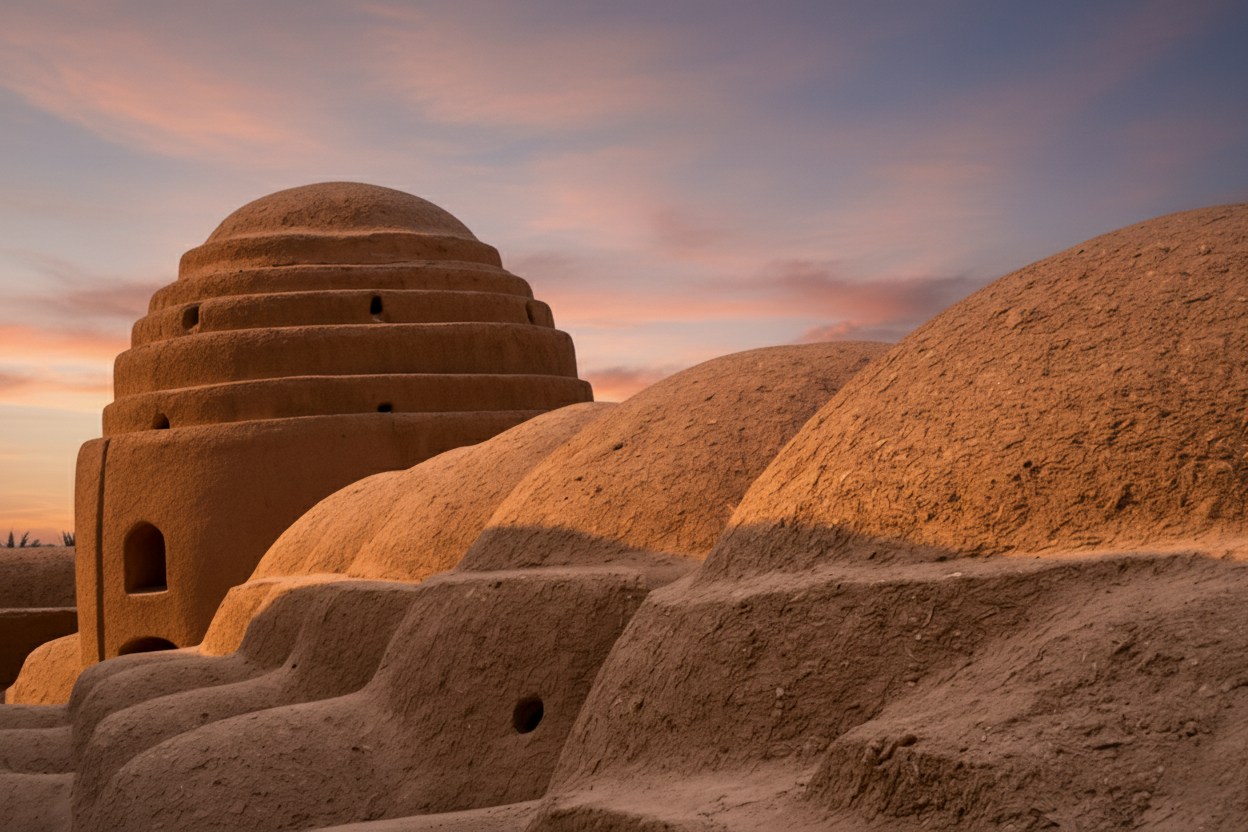
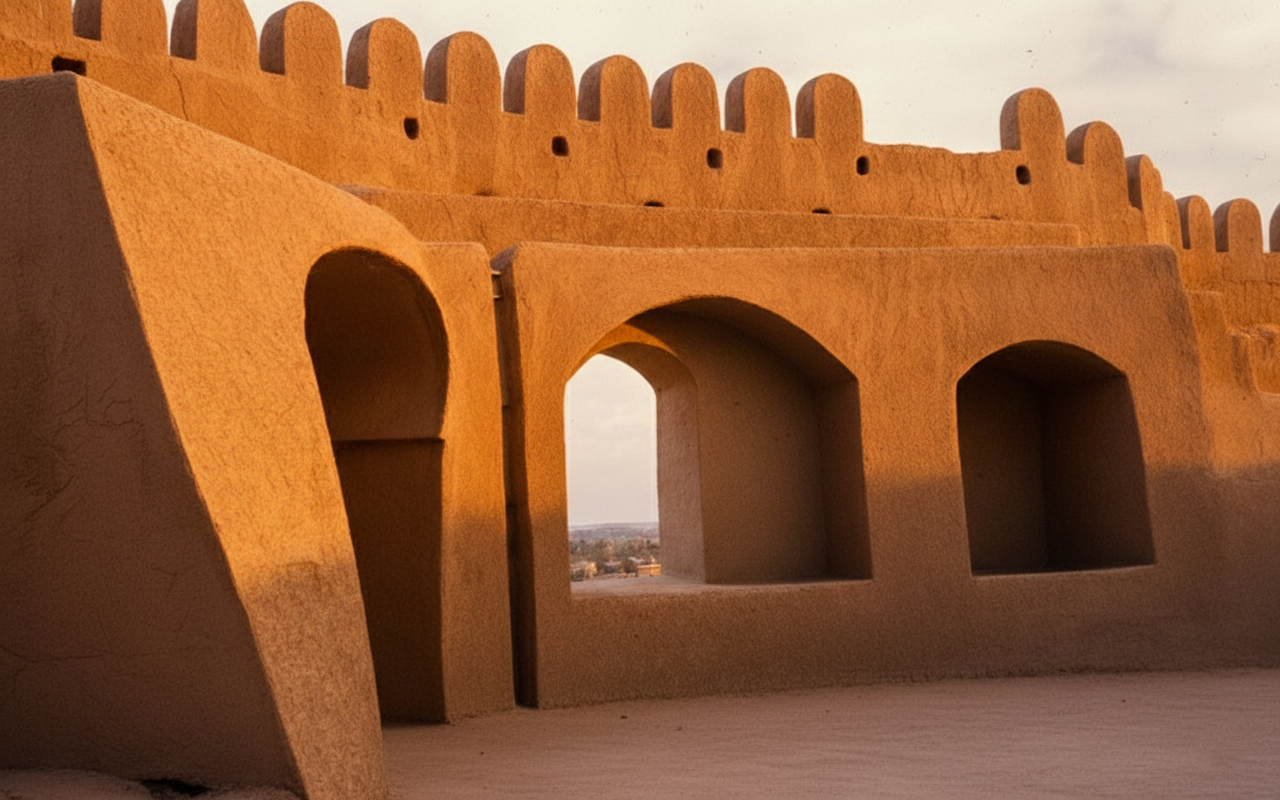
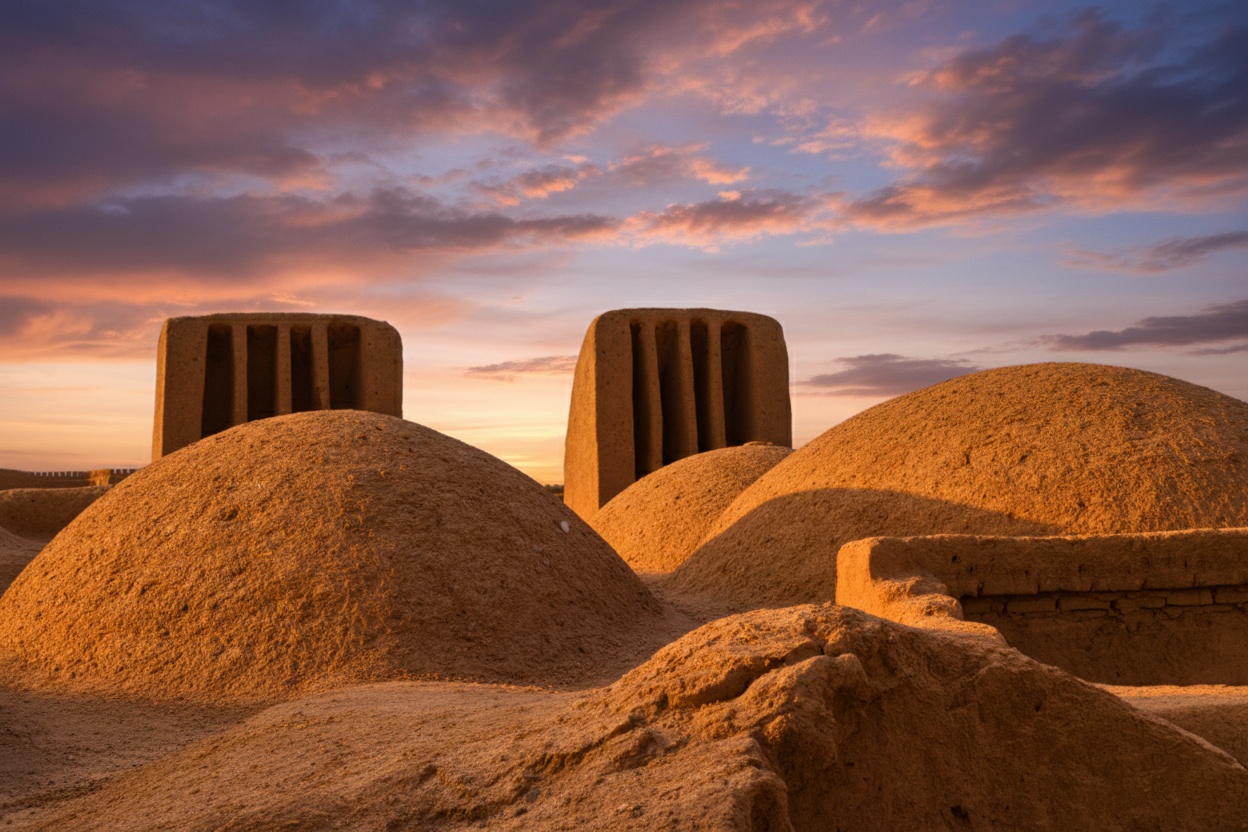
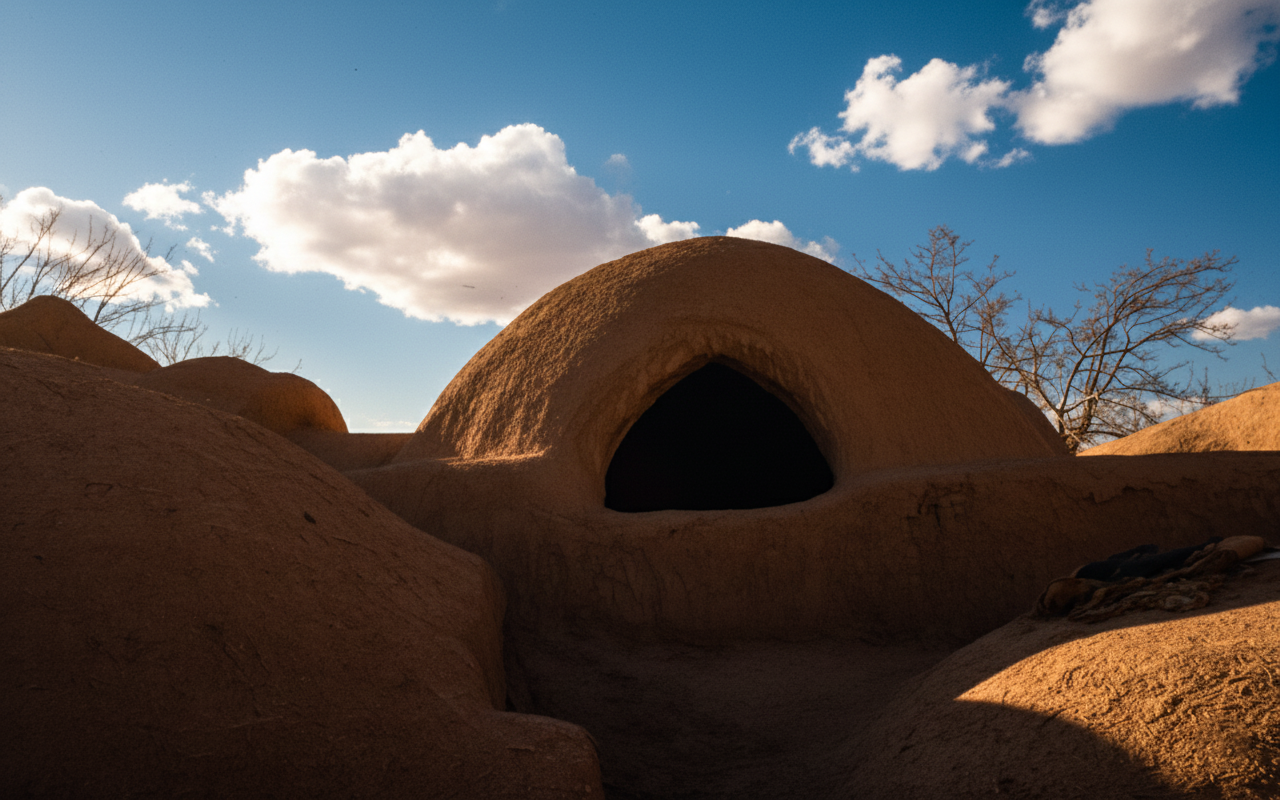
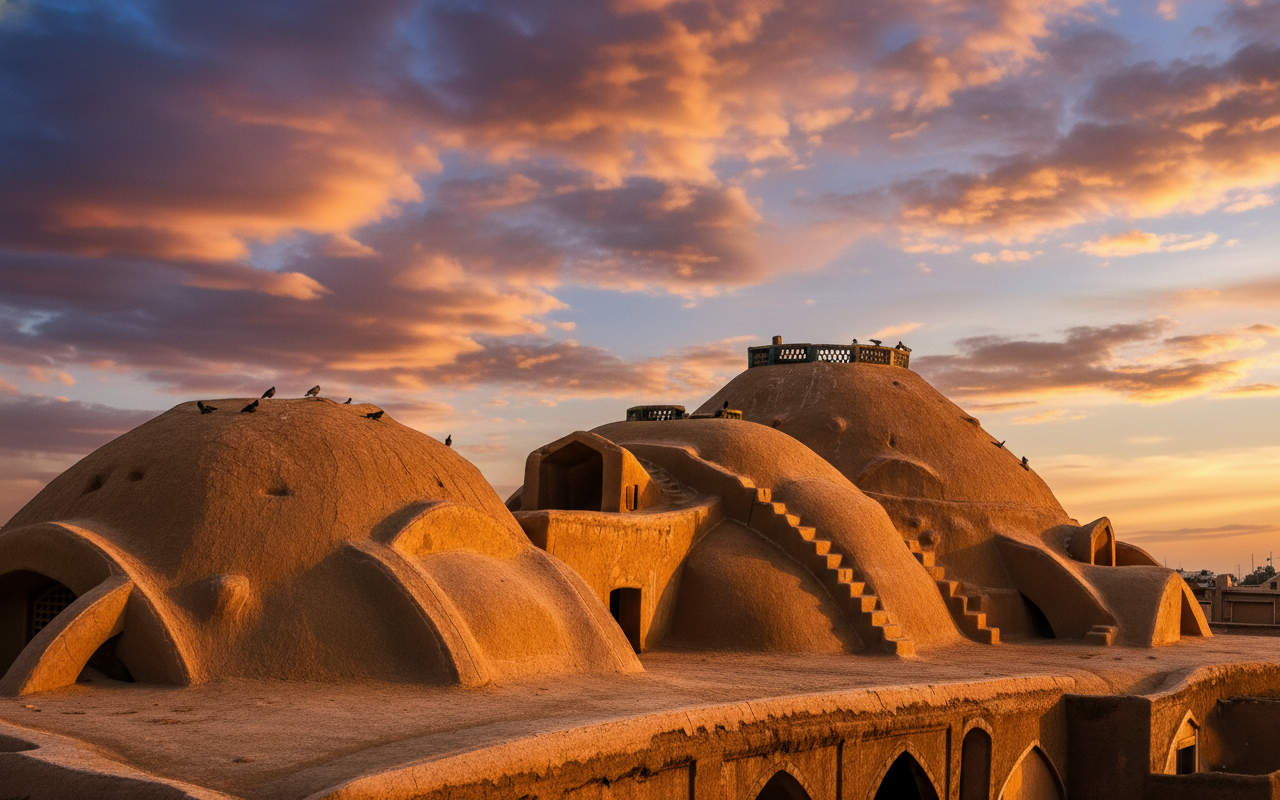
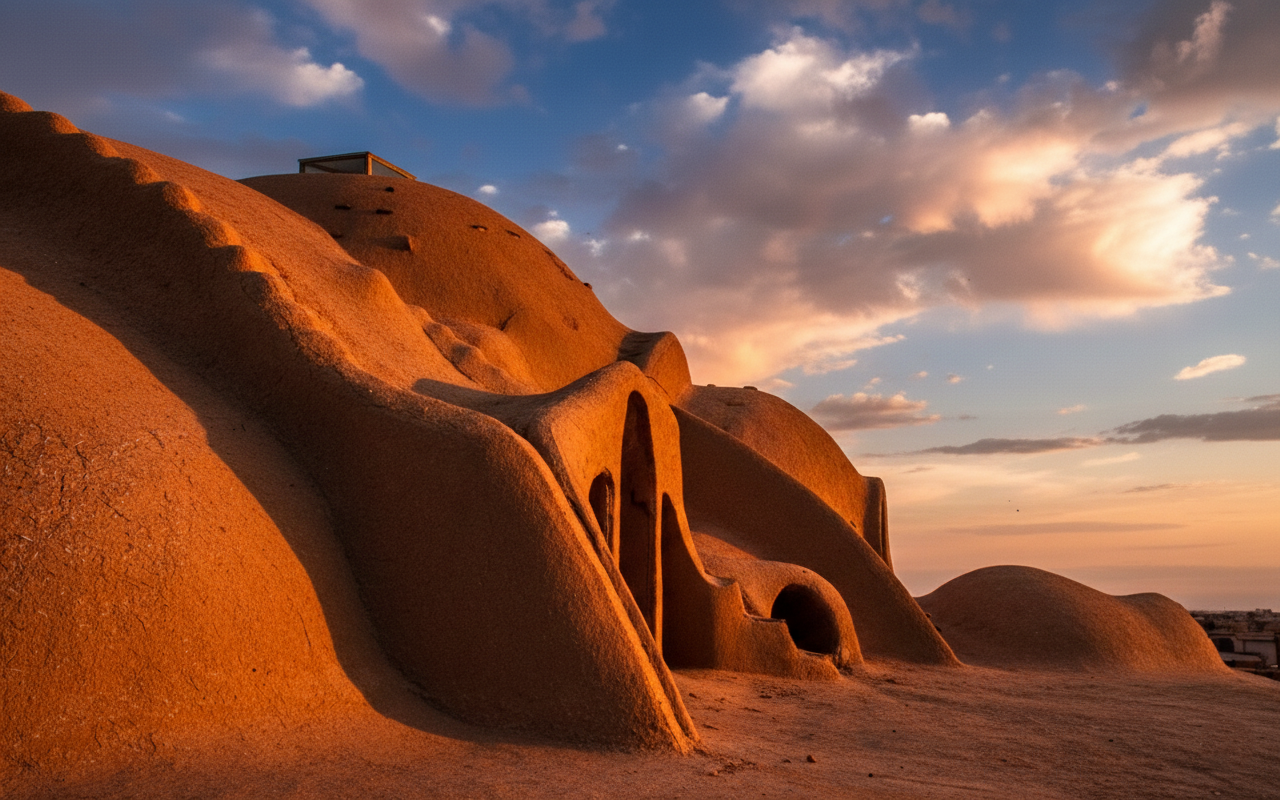
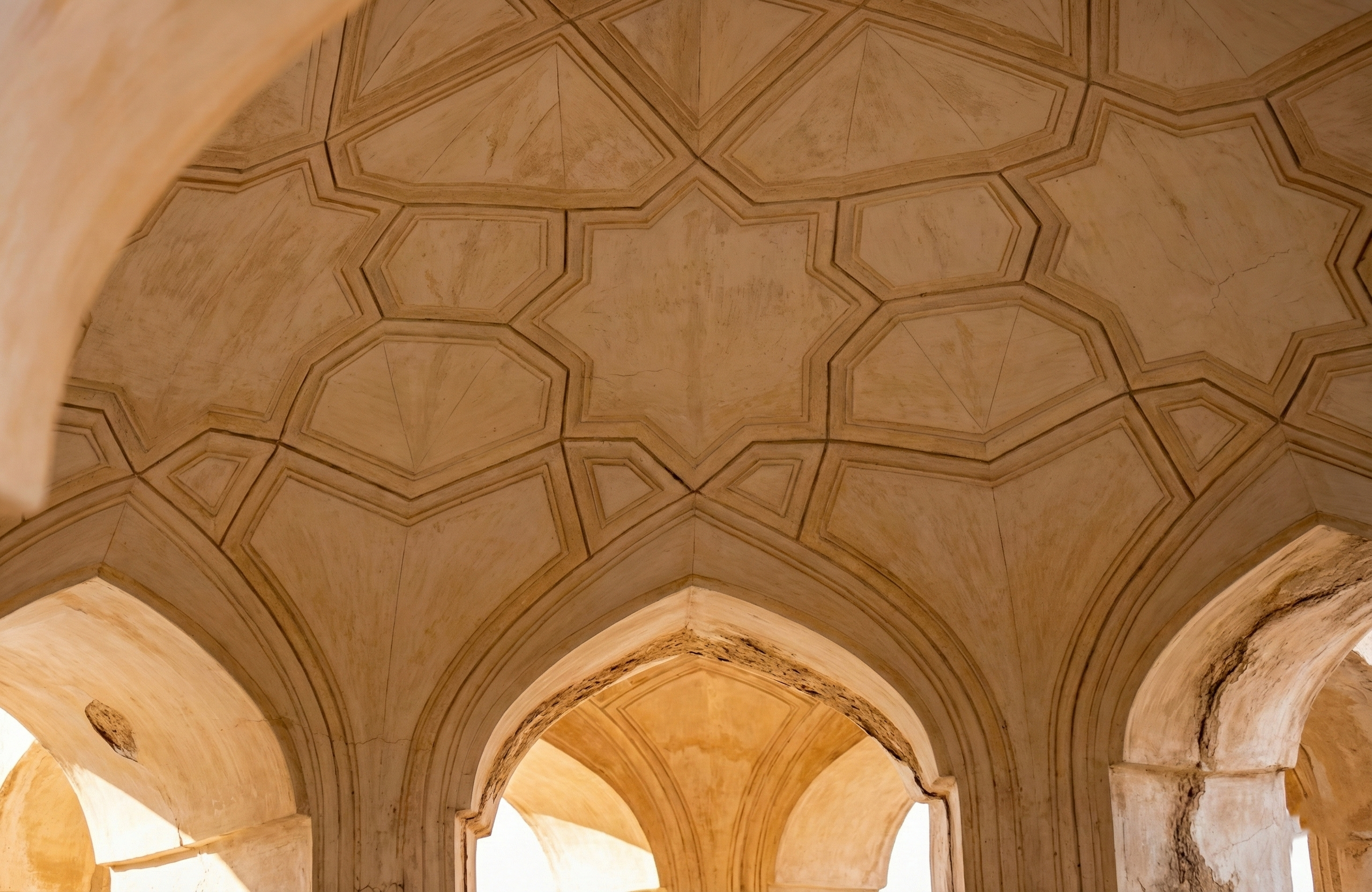
Kāhgel (کاهگل), a traditional blend of earth, straw, and lime, forms a responsive climatic skin in Iranian architecture. Its light color reflects solar heat, while its organic composition absorbs and releases moisture, creating subtle cooling effects. Applied to domes and vaults, it leverages curvature to enhance durability and thermal performance, embodying a refined harmony among material, form, and climate.
-
Kāhgel (کاهگل) and Light Plasters: Reflection, Curvature, and Climatic Endurance
Reflective roof surfaces formed with Kāhgel—a light-colored mixture of earth, straw, and lime—or lime-based plasters function as active climatic skins in traditional Iranian architecture. Rather than serving as passive finishes, these materials regulate heat, moisture, and durability through their inherent physical properties.
The high albedo of Kāhgel reduces solar heat absorption, protecting underlying masonry and enabling thermal mass to operate through gradual heat exchange rather than saturation. Its organic composition exhibits hygroscopic behavior: straw fibers absorb atmospheric moisture during cooler nighttime hours and release it via evaporation during daytime heating, producing a subtle yet effective micro-cooling effect that lowers surface temperature and delays heat transfer.
Straw reinforcement also regulates water flow during rainfall, slowing runoff, reducing erosion, and limiting cracking. This hydrological moderation extends the life of the plaster while preserving its climatic performance.
When applied to curved roof geometries such as domes and vaults, Kāhgel’s effectiveness is amplified. Curvature disperses solar exposure, promotes convective airflow across the surface, accelerates drainage, and maintains the plaster’s reflective and hygroscopic functions. Geometry and material thus operate as a unified system.
Theoretically, Kāhgel exemplifies a climate-conscious architecture in which material intelligence replaces mechanical intervention. Reflection, moisture exchange, and controlled drainage converge to create a durable, responsive roof surface—demonstrating how traditional Iranian architecture achieves comfort through calibrated cooperation between form, material, and environment.
