Central Courtyards and Inward Gardens: The Climatic Heart of the Iranian House (حیاط مرکزی و باغ درونگرا).
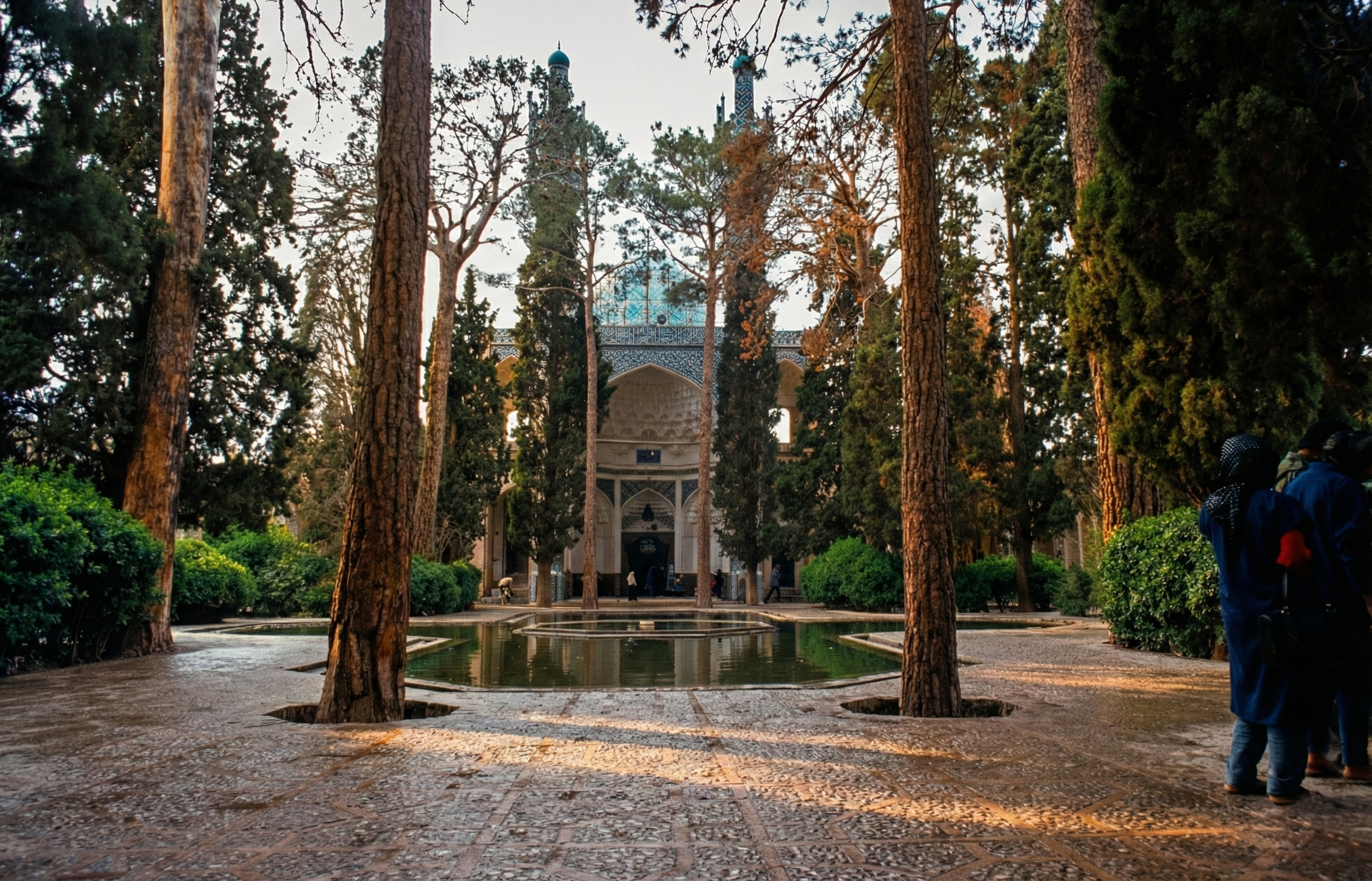
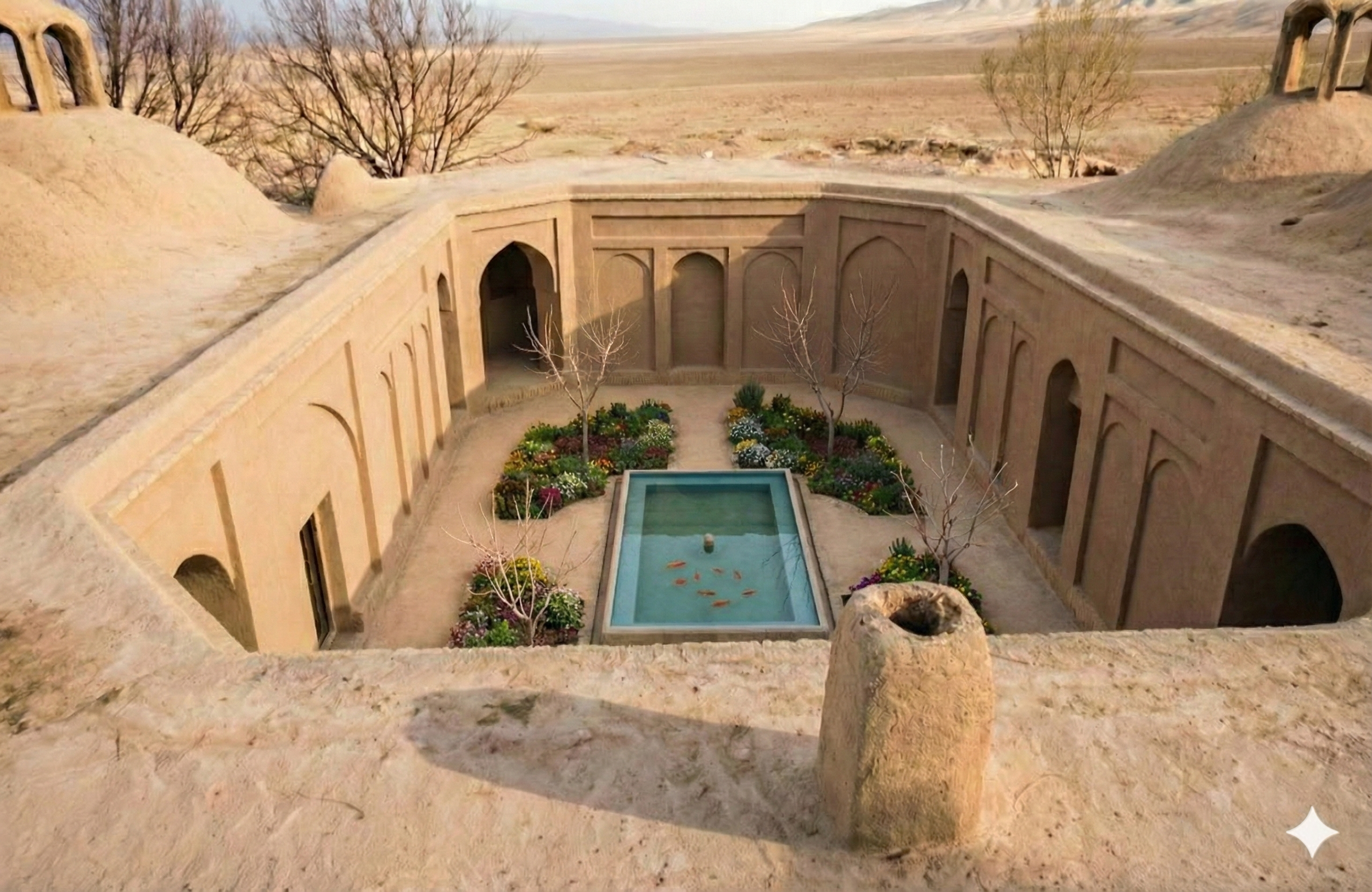
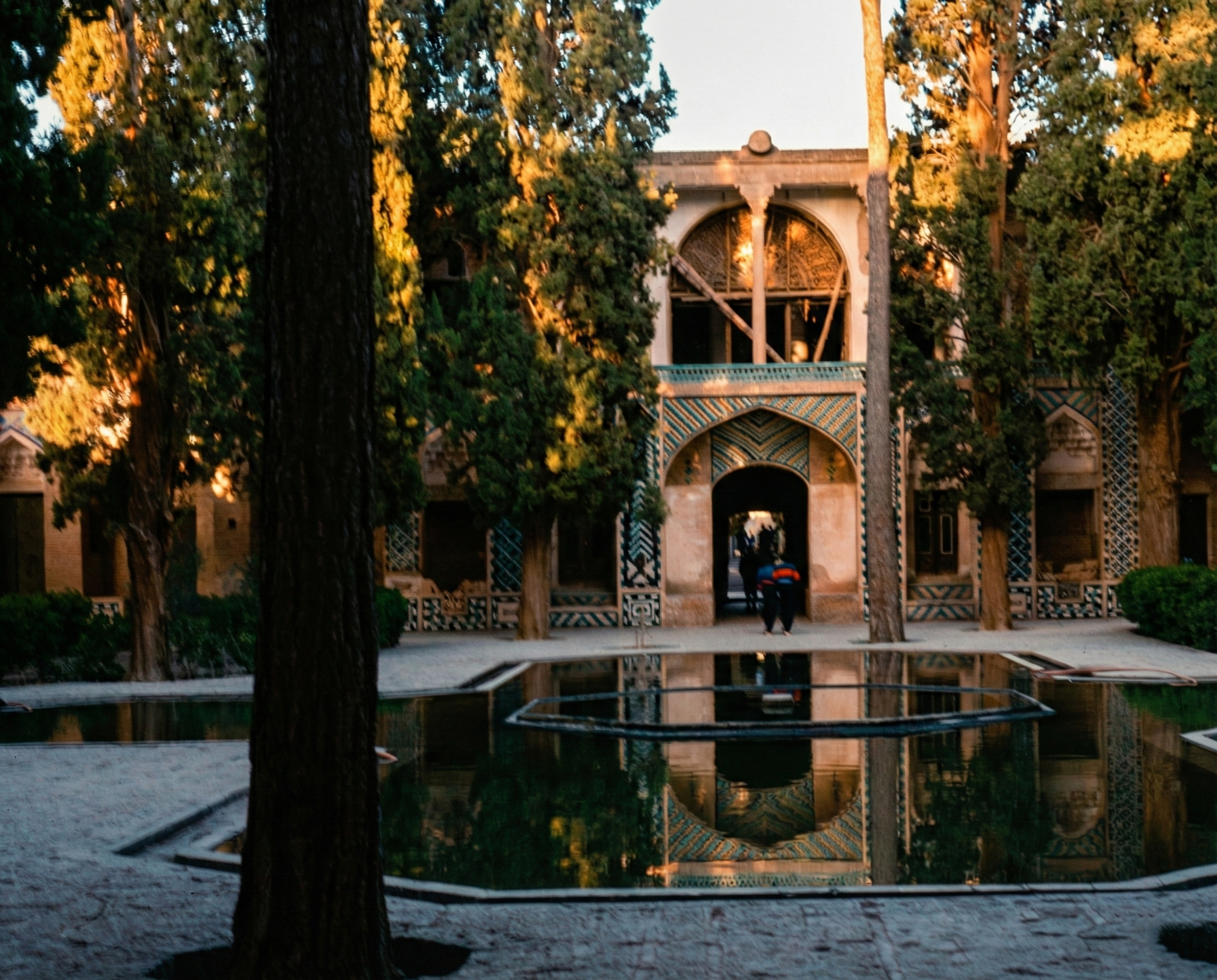
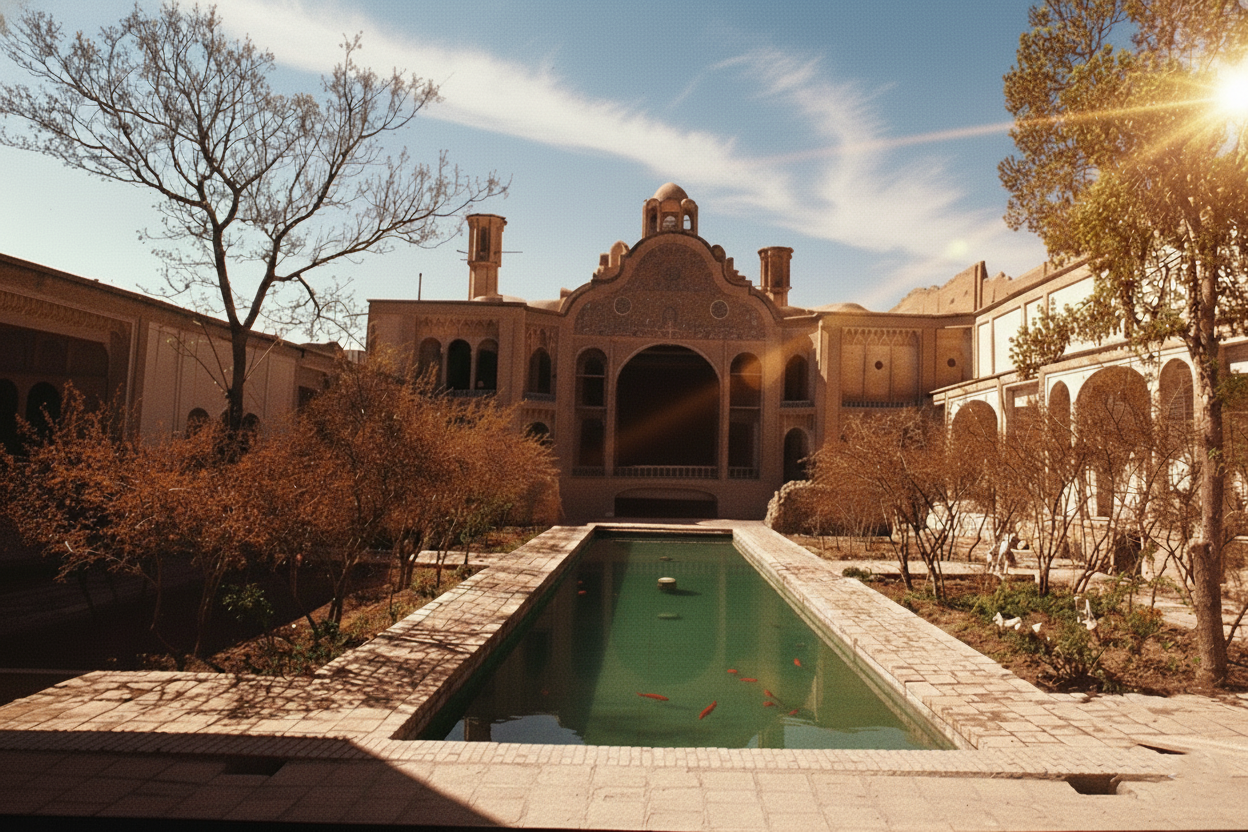
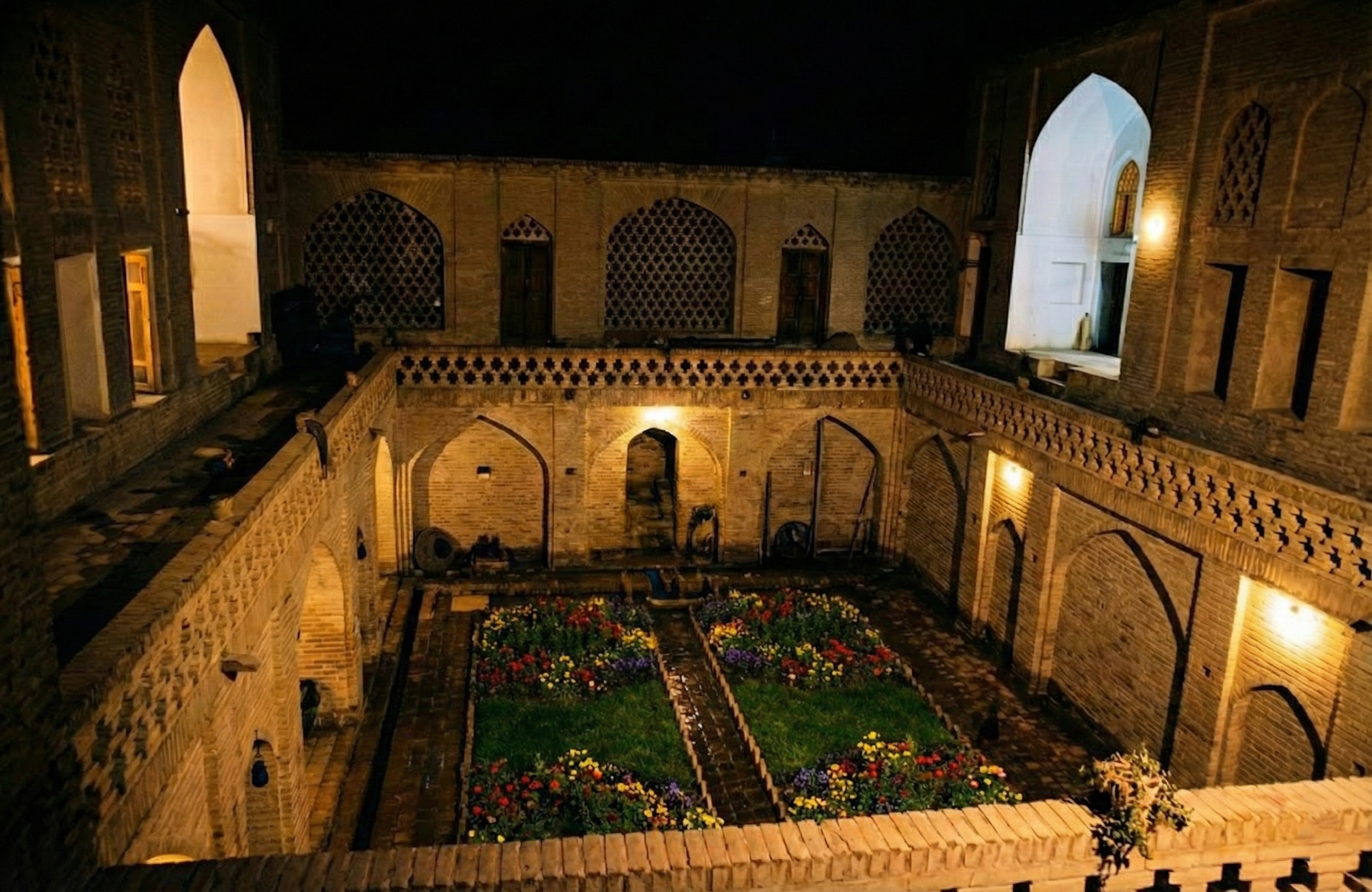
Central Courtyards and Inward Gardens (حیاط مرکزی و باغ درونگرا) form the climatic heart of the traditional Iranian house. Oriented inward, they create protected microclimates through shade, الهواء, water, and vegetation. With features like the ḥowz (حوض) and bāghcheh (باغچه), these spaces cool, filter, and stabilize the environment—transforming the home into a balanced, living system of comfort and cultural expression.
-
Central Courtyards and Inward Gardens: The Climatic Heart of the Iranian House (حیاط مرکزی و باغ درونگرا).
In traditional Iranian architecture, the central courtyard and inward garden function as the primary environmental engine of the house. Rather than exposing interiors to harsh external conditions, buildings turn inward, organizing habitable spaces around an open void that moderates climate through air, water, vegetation, and sky. The courtyard thus creates a protected microclimate that balances heat, humidity, light, and privacy.
The Hayat (حیاط) operates as both a climatic buffer and a social nucleus. Enclosed by surrounding walls, it shields interiors from hot winds and dust while promoting vertical air movement and cross-ventilation between shaded rooms, iwans, and upper openings. Cooler night air is captured within the courtyard and released gradually during the day, stabilizing interior conditions.
At its center, the Ḥowz (حوض) enhances thermal comfort through evaporative cooling and light reflection, subtly lowering air temperature and diffusing daylight into adjacent spaces. Bāghcheh (باغچه) plantings—trees, vines, and shrubs—complete this system by providing shade, filtering dust, and cooling the air through evapotranspiration, transforming the courtyard into a living climatic lung.
Equally significant are the brick-paved walkways bordering the Bāghcheh (باغچه). Constructed of porous fired bricks and sometimes inlaid with river stones, these surfaces act as thermal and evaporative moderators. In summer evenings, when wetted, they release stored heat through evaporation, cooling the courtyard air. This practice supports outdoor social life while reinforcing the cooling of adjacent interiors, where the tempered air is retained overnight.
Theoretically, the Iranian courtyard exemplifies a climate-conscious architecture in which void and surface, rather than enclosure alone, regulate the environment. By integrating air movement, evaporative cooling, vegetation, and material intelligence, traditional Iranian architecture transforms open space into a finely tuned climatic apparatus—demonstrating how comfort emerges through balance, ritual, and the orchestration of natural systems rather than mechanical force.
