Qanāt (قنات): Subterranean Flow, Climatic Sustenance, and Urban Continuity
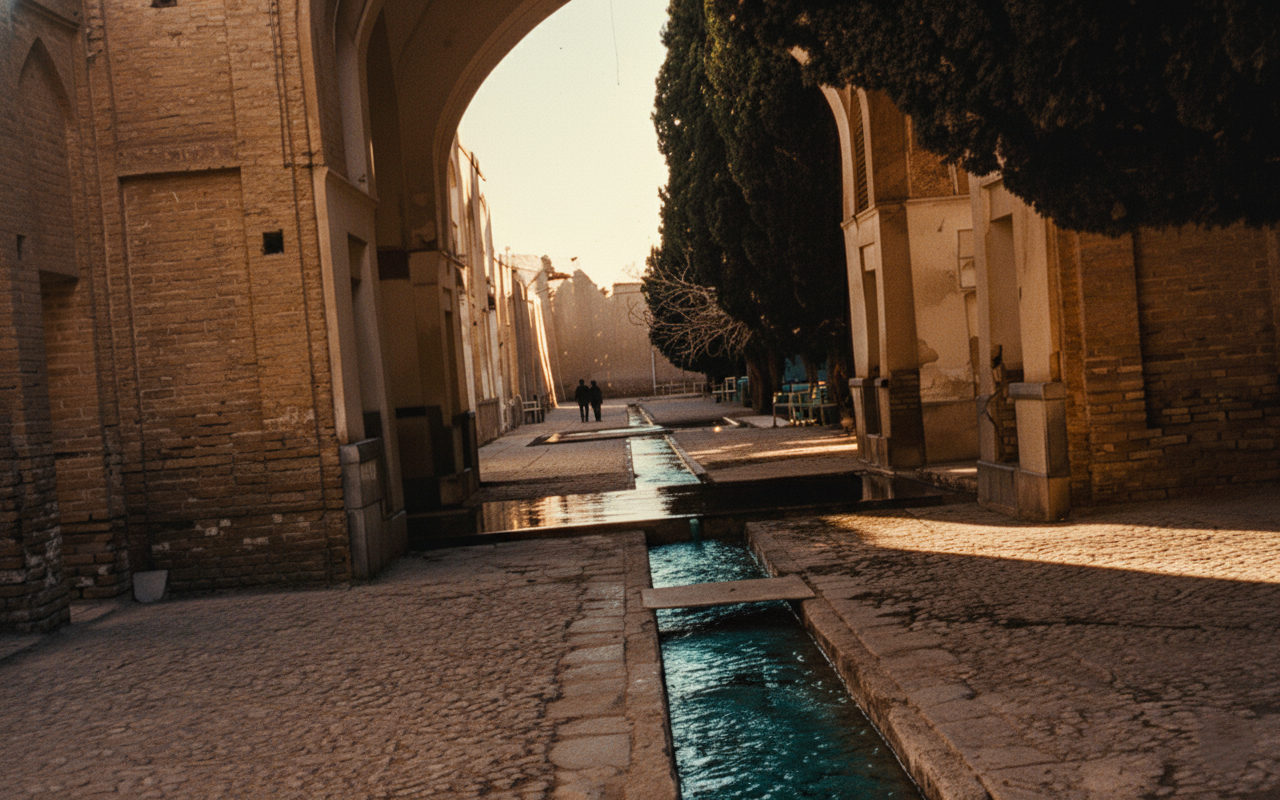
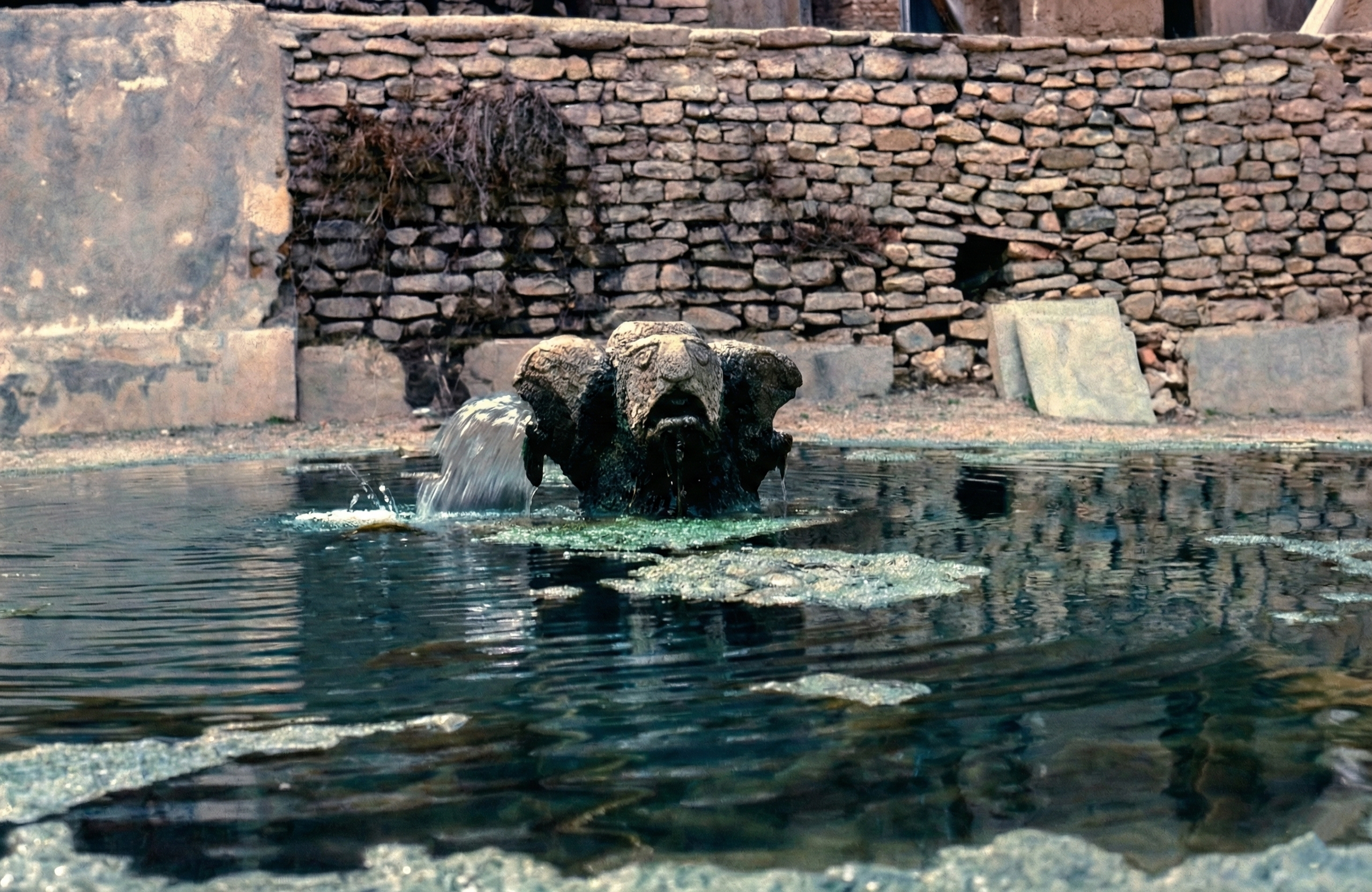
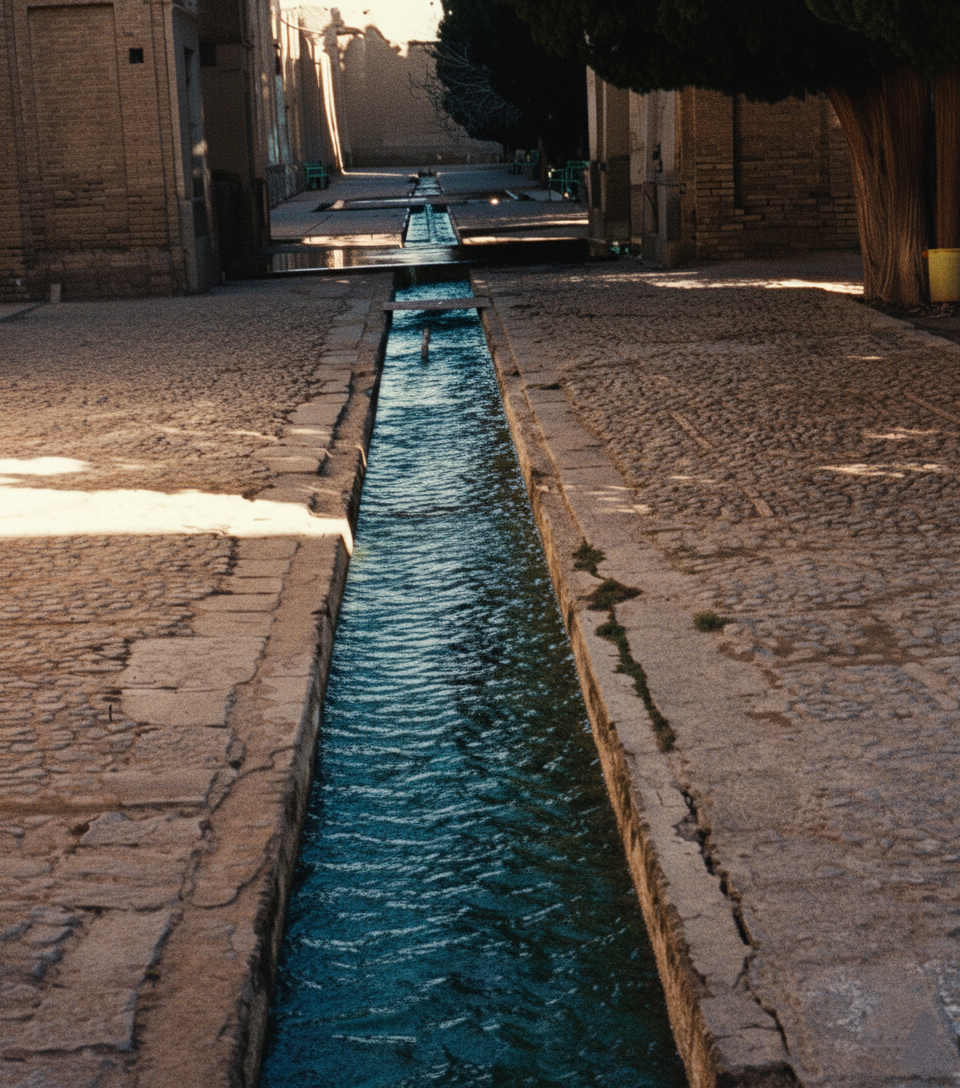
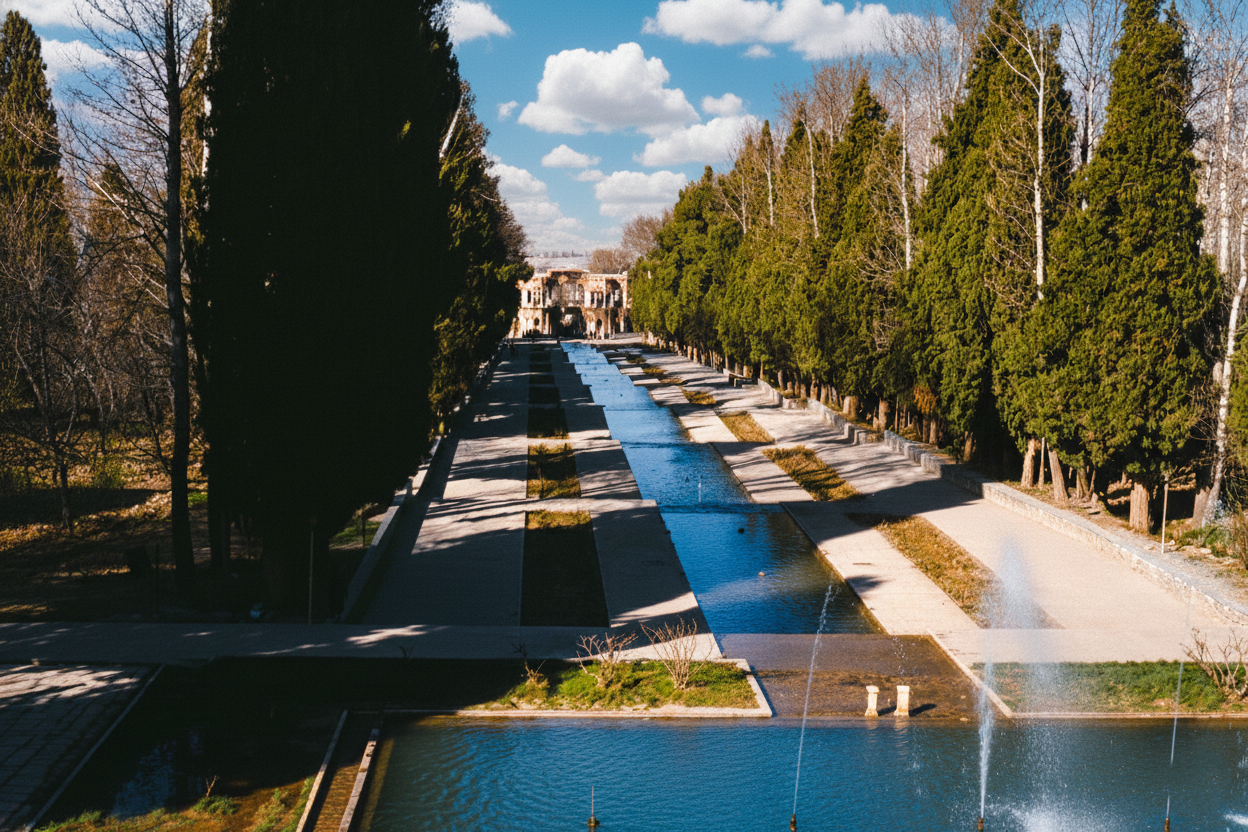
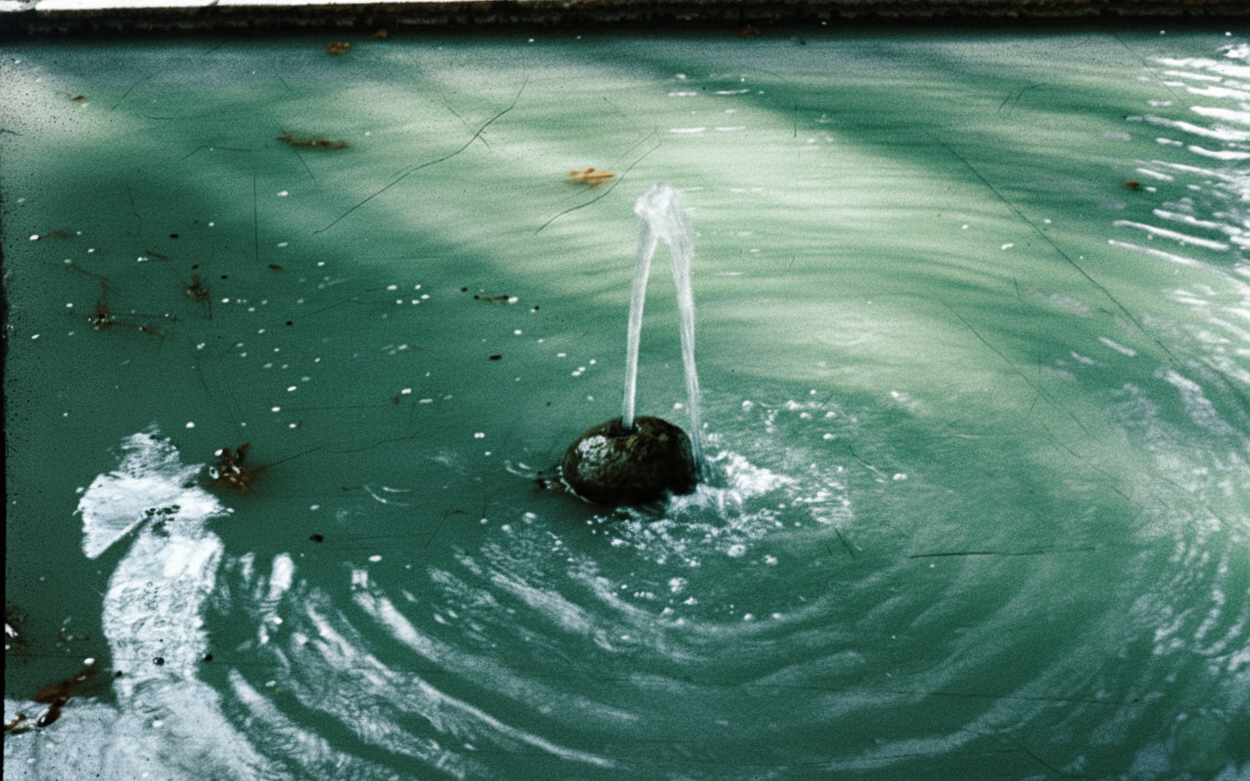
Qanāt (قنات), an ingenious subterranean water system, sustained life across Iran’s arid landscapes by channeling cool groundwater over long distances with minimal loss. Beyond irrigation, it shaped cities and architecture, feeding courtyards, gardens, and basins while enhancing evaporative cooling. As a hidden yet vital network, the qanāt unified water, climate, and settlement into a resilient and enduring environmental system.
-
Qanāt (قنات): Subterranean Flow, Climatic Sustenance, and Urban Continuity
The Qanāt is among the most sophisticated infrastructural systems of traditional Iranian architecture, functioning simultaneously as a hydraulic network, a climatic instrument, and an organizer of settlement form. Conceived as a gently sloped underground channel, it conveys water from distant aquifers to inhabited areas with minimal evaporation, enabling architecture and urban life to persist in arid and semi-arid environments.
Climatically, the subterranean nature of the qanāt preserves water at a cool, stable temperature. When introduced into architectural spaces—such as courtyards, ḥowz (حوض) basins, ḥowz-khāneh chambers, or gardens—the flowing water enhances evaporative cooling, lowering ambient air temperature and increasing humidity in otherwise dry climates. This effect is intensified when qanāt water and cooled air interact with windcatchers, iwans, or shaded courts, integrating hydrology into the building’s passive environmental system.
Historically, qanāts shaped both domestic architecture and urban morphology. Houses, gardens, baths, mosques, caravanserais, and bazaars were often aligned along qanāt routes, allowing water to surface discreetly within courtyards or subterranean chambers. In elite residences and public buildings, qanāt water sustained reflective pools and garden planting; in baths, it regulated heat and humidity. Metaphorically speaking, the qanāt served as the spinal cord of the urban fabric, transmitting life, coolness, and continuity beneath the surface while supporting diverse architectural organs above.
Theoretically, the qanāt exemplifies a climate-conscious architecture rooted in subtraction rather than exposure. By extracting water from sunlight and surface heat, it conserves both moisture and coolness, delivering them precisely where needed. Architecture does not dominate this resource; rather, it selectively reveals it, allowing water to perform climatic work through proximity, evaporation, and ritual presence.
In this sense, the qanāt extends the building envelope downward into the earth, transforming depth into environmental agency. It demonstrates a central principle of traditional Iranian architecture: that sustainable comfort and urban resilience arise from the intelligent alignment of infrastructure, landscape, and form—where water, air, and earth are orchestrated into a unified climatic system rather than consumed as isolated resources.
