Section II — The Cradle of Ancient Civilizations
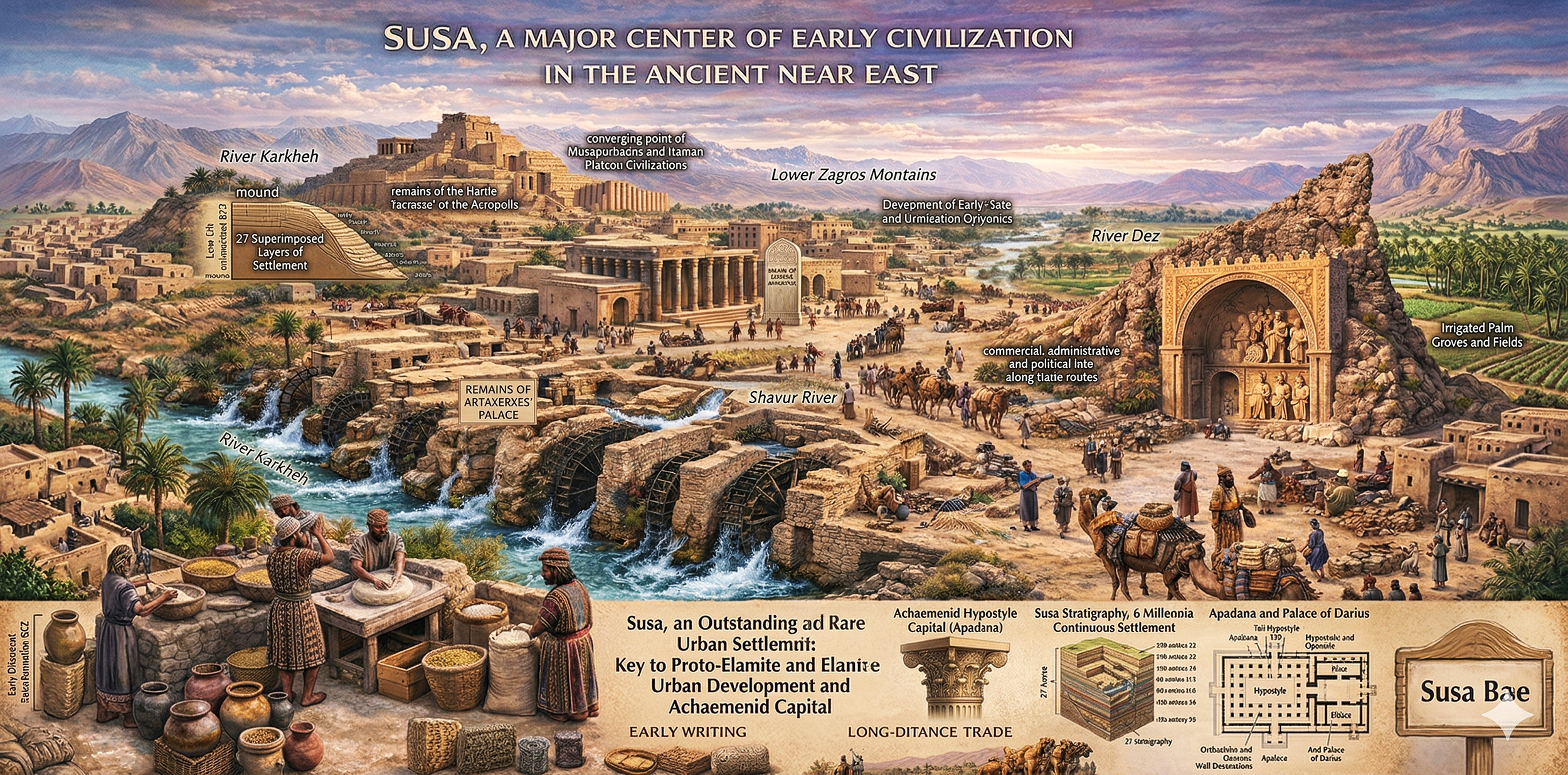
Susa, in southwestern Iran, was one of the earliest centers of civilization in the ancient Near East. Founded in the late 4th millennium BCE, it became a major Elamite political and economic capital. Positioned between Mesopotamia and the Iranian plateau, Susa fostered trade, cultural exchange, early writing, monumental architecture, and administrative systems linking diverse ancient societies.
-
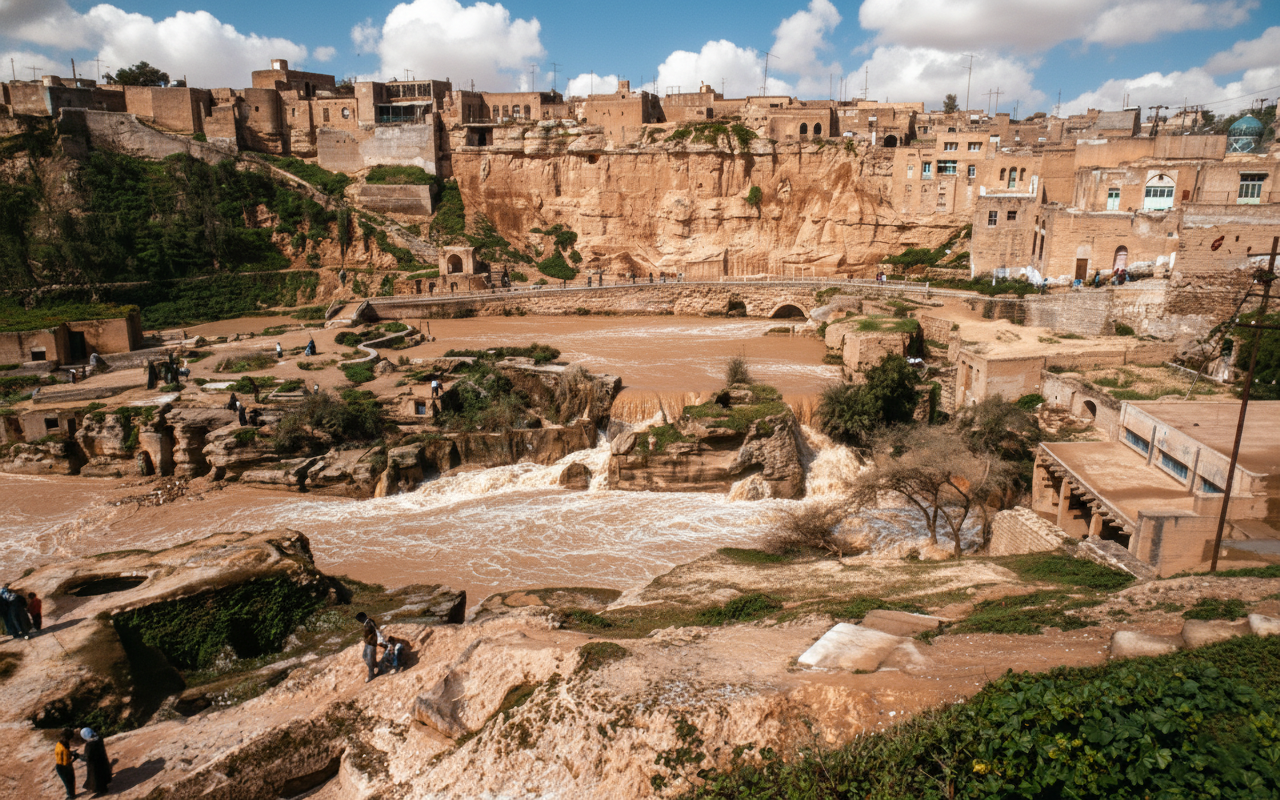
This section focuses on Susa and the surrounding Elamite territories, one of the earliest centers of civilization in the ancient Near East. Located in the fertile lowlands of southwestern Iran, near the Zagros Mountains and close to Mesopotamia, Susa became a major political, economic, and cultural center of the Elamite civilization beginning in the late 4th millennium BCE.
Susa’s strategic location allowed it to function as a bridge between Mesopotamia and the Iranian plateau, facilitating trade, cultural exchange, and technological diffusion. The region benefited from access to agricultural lands, river systems, and routes leading into the highlands rich in resources such as stone, metals, and timber. These advantages helped Susa develop into an early urban center with organized administration, craft production, and long-distance trade networks.
Throughout its history, Susa served as a principal capital of Elam, witnessing the rise and fall of several Elamite dynasties. Archaeological evidence from the site reveals early forms of writing, monumental architecture, temples, and administrative systems that demonstrate the complexity of Elamite society. The interaction between Elam and neighboring Mesopotamian powers—particularly Sumer, Akkad, and later Babylon—played a significant role in shaping the political and cultural landscape of the region.
By highlighting Susa and the broader Elamite territory, this section illustrates how the eastern frontier of the ancient Near East contributed to the development of early civilization, serving as both an independent cultural center and a crossroads linking Mesopotamian and Iranian worlds.