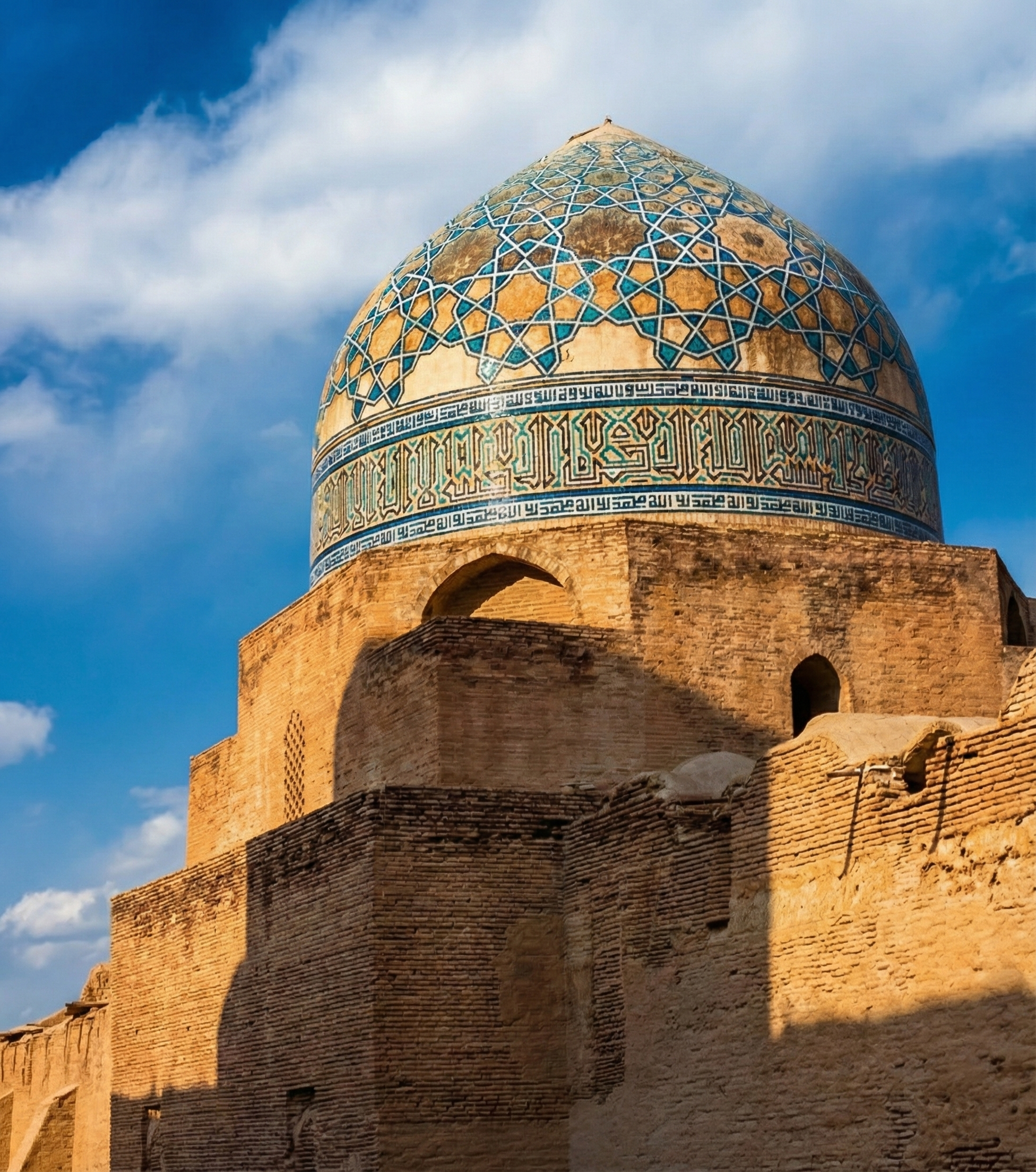
Section XI, Saveh (ساوه), A Historic City of the Central Plateau
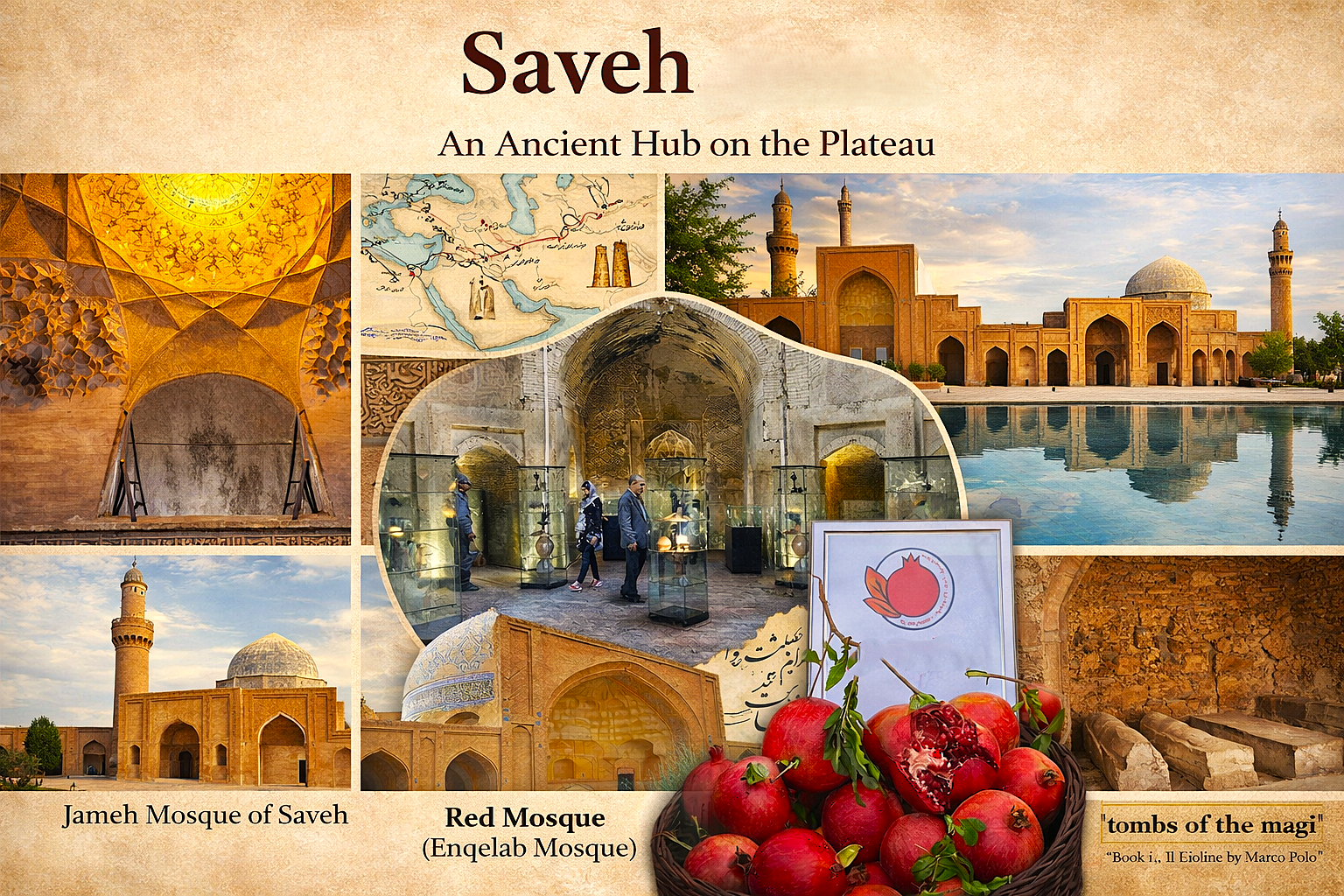
Saveh, located on Iran’s central plateau, is a historic city with origins dating to the 1st millennium BCE. Flourishing during the Seljuk period, it developed as a center of trade, agriculture, and scholarship. Its qanat-supported landscape and strategic position along regional routes shaped a resilient urban and cultural history over centuries.
-
Saveh (ساوه), A Historic City of the Central Plateau.
Saveh (ساوه), located in Iran’s Markazi Province along the central plateau, has long occupied a strategic position on historic routes linking western Iran to eastern regions and Central Asia. Archaeological evidence suggests that settlement in the area dates back to at least the 1st millennium BCE, while the city rose to prominence during the early Islamic period (7th–10th centuries CE) and flourished particularly under the Seljuk dynasty (11th–12th centuries CE) as a regional center of trade, agriculture, and scholarship.
Situated in a semi-arid landscape, Saveh developed as an oasis-supported settlement sustained by qanat irrigation systems and fertile plains suitable for cultivation. Its agricultural production—especially pomegranates and melons—became well known and contributed to the city’s economic vitality within regional trade networks.
During the medieval period, Saveh was also recognized as a center of learning and religious activity. Mosques, madrasas, and caravanserais formed an integral part of its urban fabric, reflecting both its intellectual life and its role along major overland routes. However, the city suffered significant decline following the Mongol invasions of the early 13th century (c. 1220 CE), after which its regional importance diminished.
Today, Saveh remains a representative example of a historic Iranian plateau city, where layers of ancient settlement, Islamic urban development, and agricultural tradition illustrate the enduring relationship between environment, trade, and cultural life.