Tohidkhaneh (توحیدخانه)
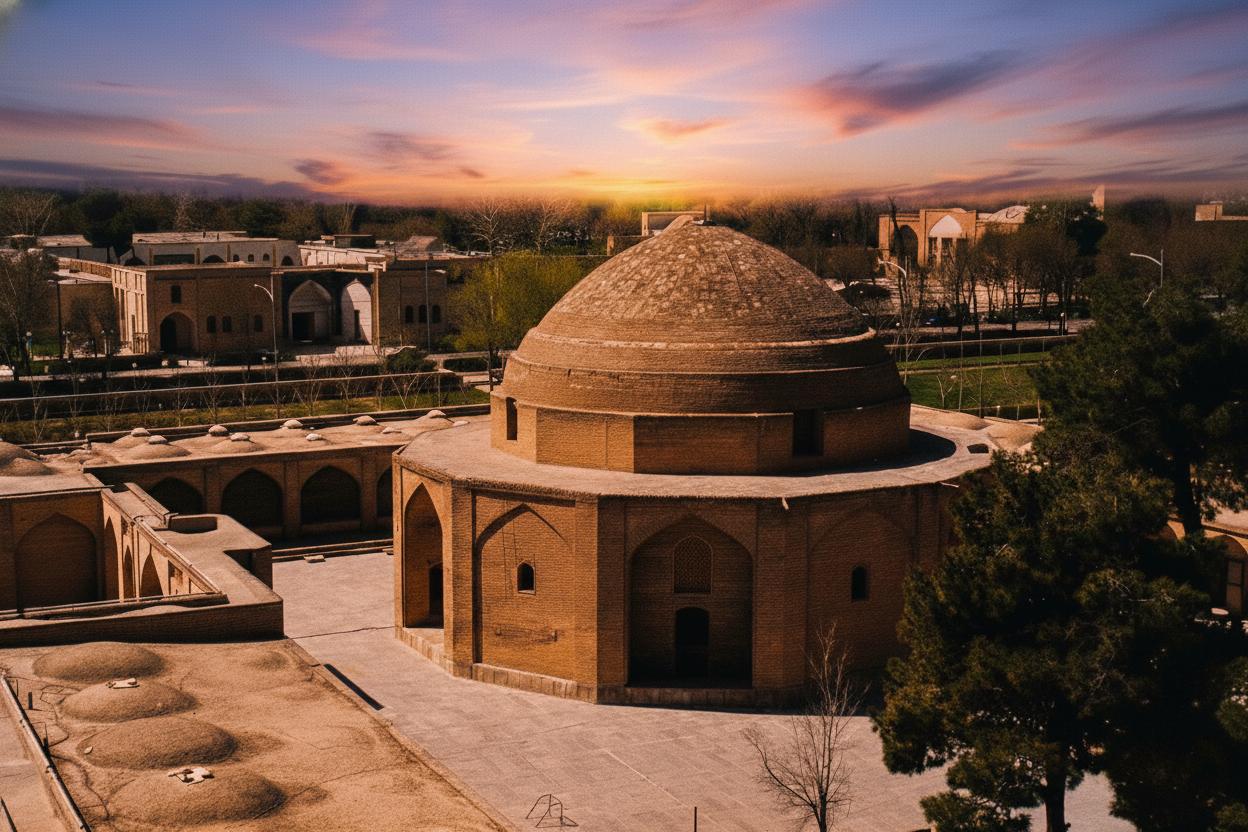
Tohidkhaneh (توحیدخانه), located behind Ali Qapu Palace in Isfahan (اصفهان), was a Safavid-era Sufi gathering space associated with Shah Abbas I in the early 17th century. Integrated within the royal precinct of Naqsh-e Jahan Square, it illustrates how Safavid imperial planning accommodated both public authority and private spiritual life.
-
Tohidkhaneh (توحیدخانه) in Isfahan (اصفهان) is a Safavid-era structure located directly behind Ali Qapu Palace (کاخ عالیقاپو), dating to the early 17th century during the reign of Shah Abbas I (شاه عباس اول). The building was associated with Sufi gatherings (تصوف / tasawwuf) and functioned as a khāneqāh-like (خانقاه) space where mystics assembled for prayer, spiritual discourse, and ritual practices. Historical accounts suggest that Shah Abbas I himself occasionally attended these gatherings, reflecting the complex relationship between Safavid political authority and Sufi traditions in the early Safavid period.
Architecturally, the building formed part of the royal precinct surrounding Naqsh-e Jahan Square (میدان نقش جهان), positioned within the cluster of Safavid palatial and ceremonial structures behind the square. Its relatively modest architectural scale contrasts with the monumental buildings facing the square, emphasizing its role as a more intimate spiritual and contemplative space within the imperial complex.
Within the broader framework of Safavid imperial urban planning, Tohidkhaneh illustrates how the royal capital integrated spiritual, ceremonial, and administrative functions within a carefully structured urban environment. While Naqsh-e Jahan Square served as the public stage for imperial authority—framed by Ali Qapu Palace, the Shah Mosque (مسجد شاه / مسجد امام), the Sheikh Lotfollah Mosque (مسجد شیخ لطفالله), and the Isfahan Bazaar (بازار اصفهان)—the buildings behind the palace accommodated more private aspects of royal life, including spiritual retreat and courtly gatherings.
Over time, Tohidkhaneh experienced several changes in function. During the 20th century, it was incorporated into the palace complex and at times used as a prison before eventually coming under cultural stewardship for preservation and adaptive reuse. Although the precise details of its original construction and patronage remain debated in historical sources, the building remains an important testament to the religious, social, and architectural diversity of Safavid Isfahan, revealing a layer of spiritual life that existed alongside the city’s monumental imperial planning.
