Bāft-e Feshordeh (بافت فشرده): Compactness, Mutual Shading, and Urban Thermal Buffering
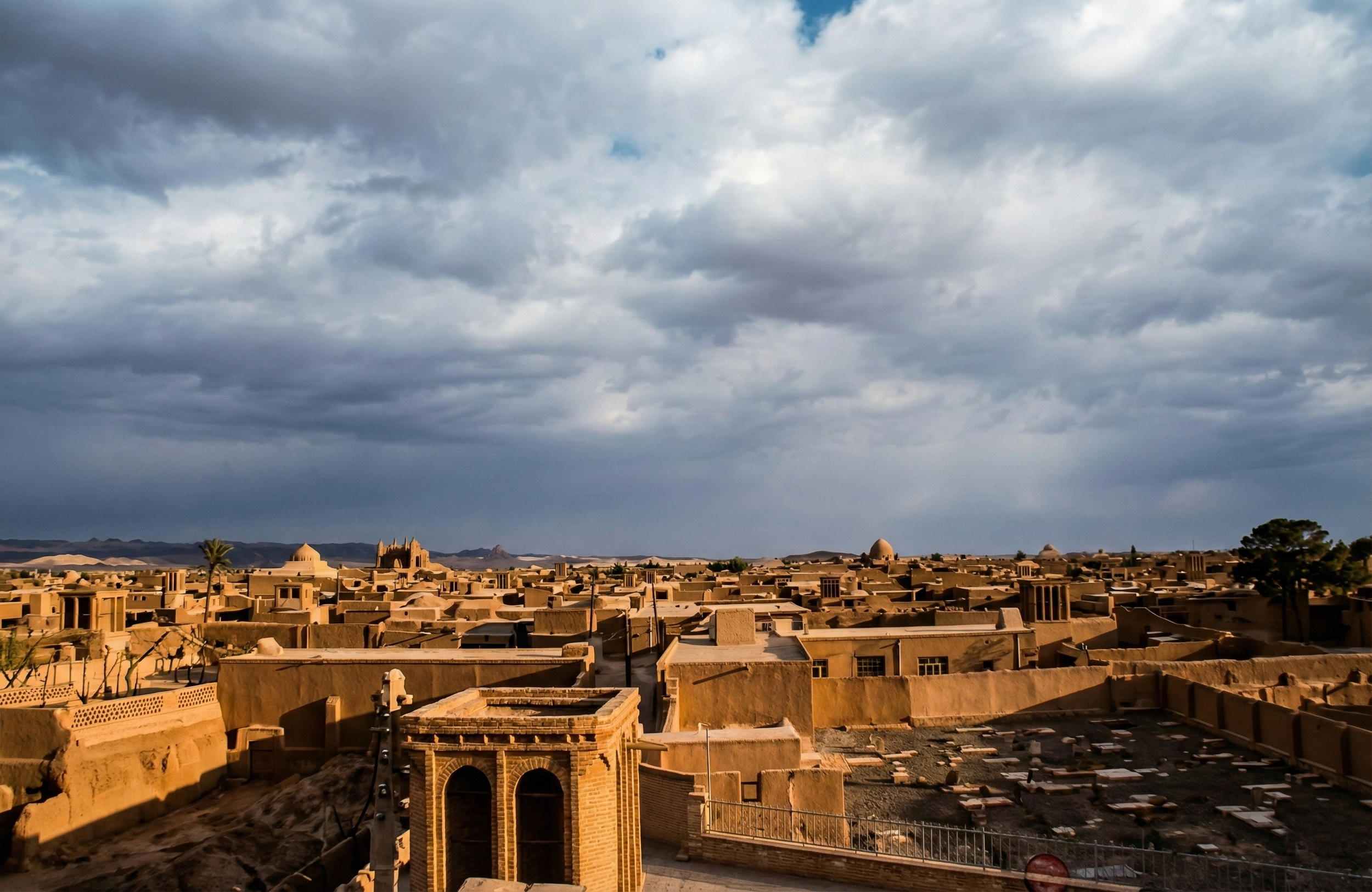
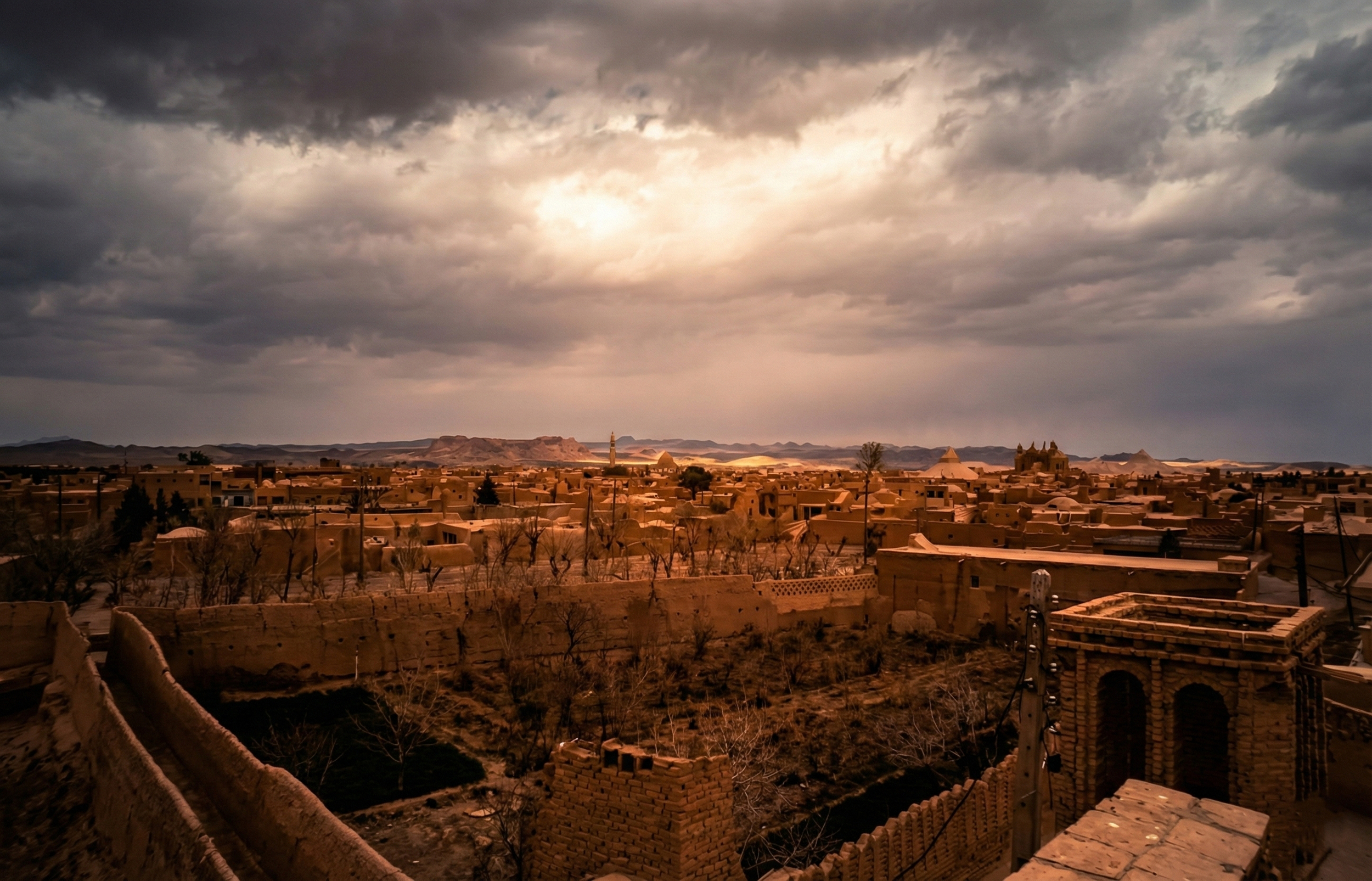
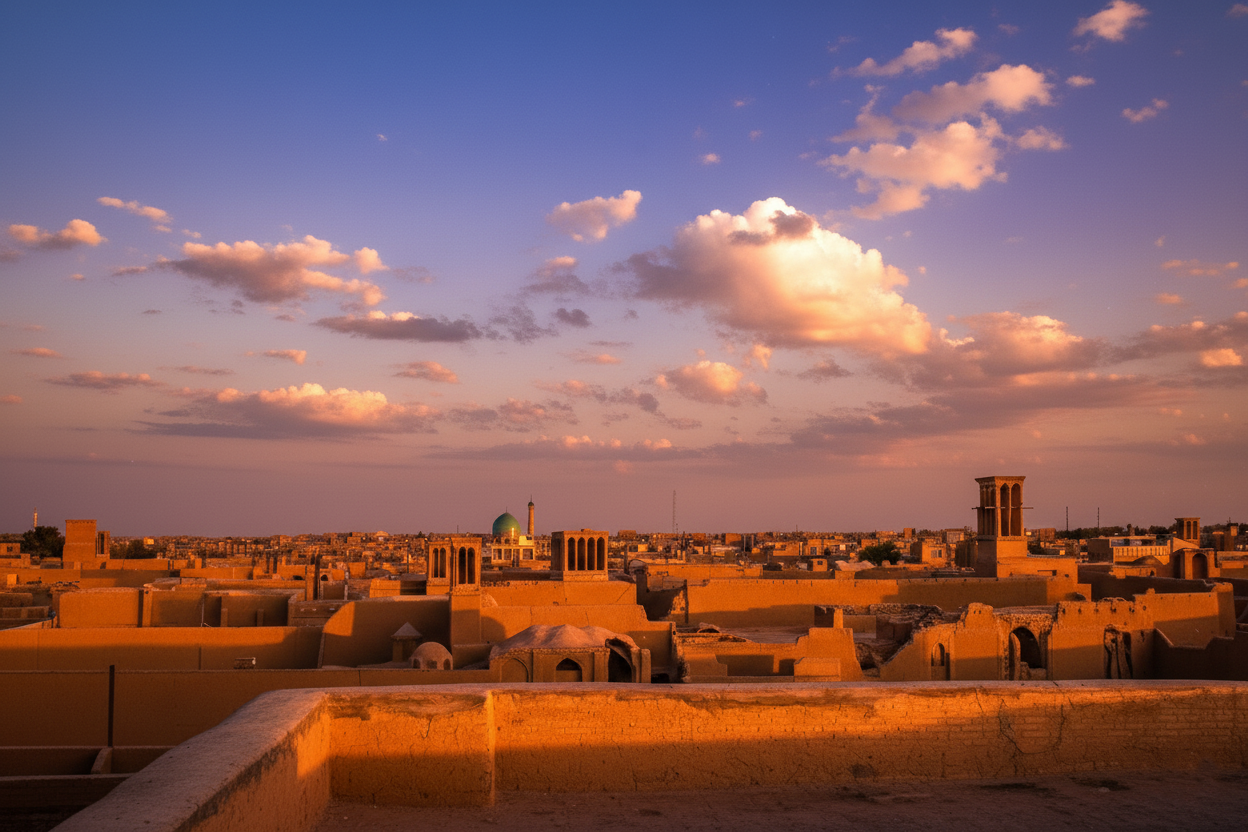
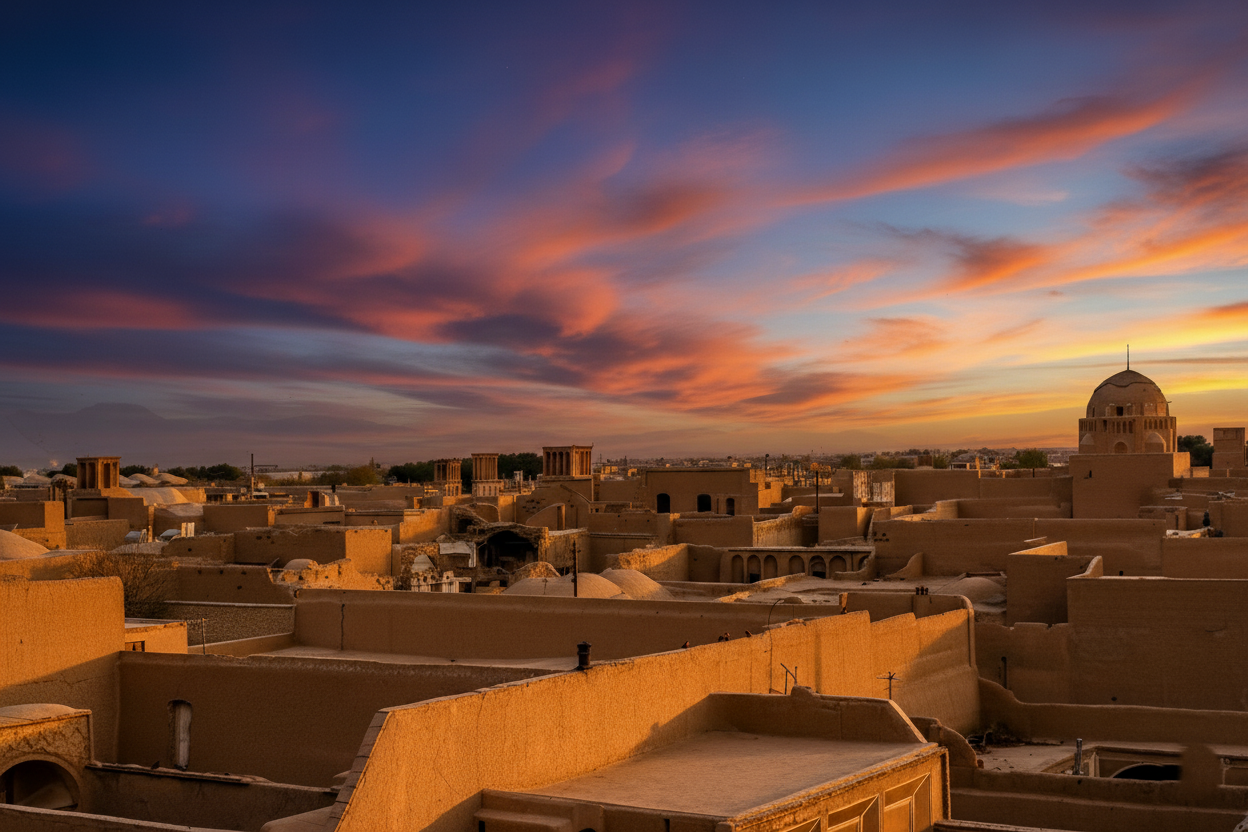
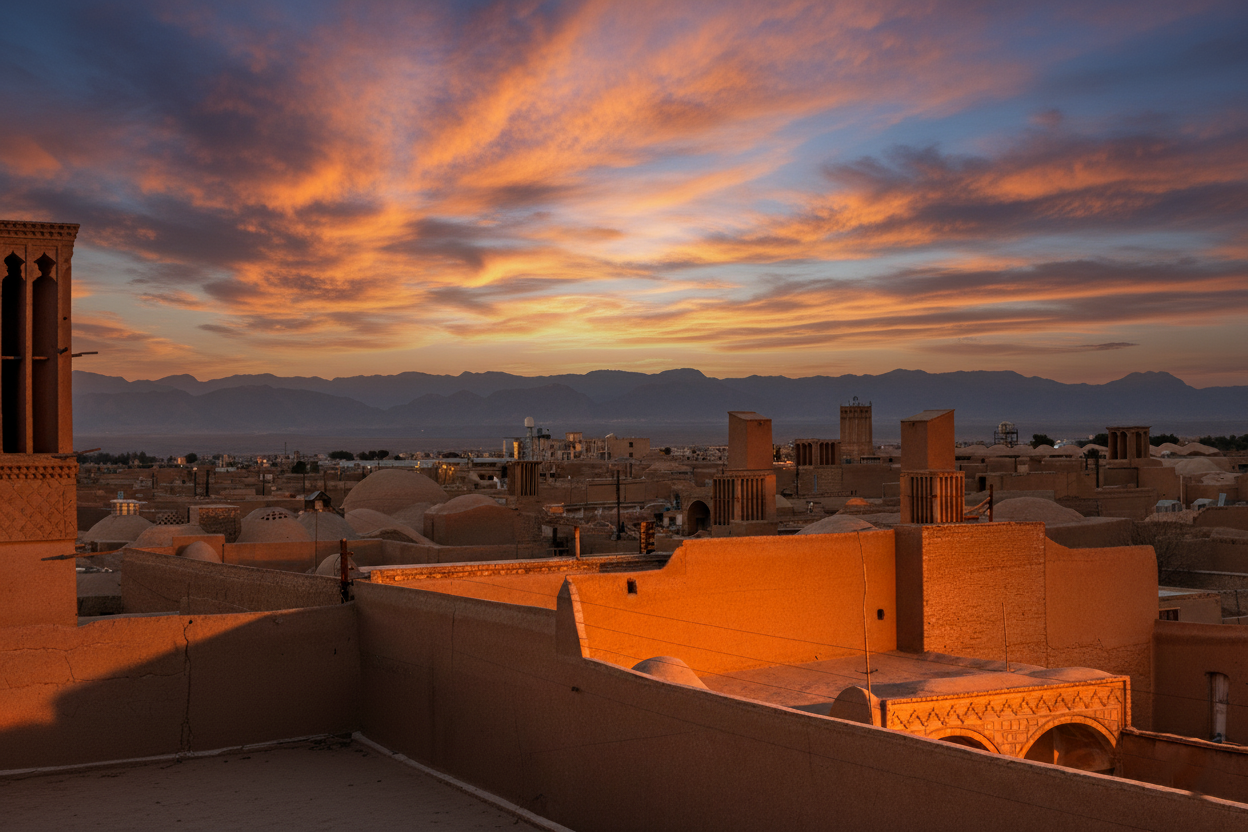
Bāft-e Feshordeh (بافت فشرده), or compact urban fabric, transforms density into a climatic strategy. Closely built structures share walls, reduce solar exposure, and cast mutual shade, creating cooler, thermally stable environments. Interwoven with narrow alleys and shaded passages, this dense fabric moderates airflow and temperature, demonstrating how collective form—not isolated buildings—sustains comfort and resilience in traditional Iranian cities.
-
Bāft-e Feshordeh (بافت فشرده): Compactness, Mutual Shading, and Urban Thermal Buffering (Urban / Macro-Scale Climatic Elements – بافت و عناصر اقلیمی شهری)
In traditional Iranian architecture and urbanism, Bāft-e Feshordeh—the dense, compact urban fabric—functions as a collective climatic apparatus rather than a mere accumulation of buildings. Closely attached structures share walls, minimize exposed surfaces, and form a continuous mass that moderates environmental extremes at the neighborhood scale.
Climatically, compactness reduces the amount of building envelope directly exposed to solar radiation. Shared party walls eliminate heat gain and loss on multiple sides, while closely spaced volumes cast mutual shade across streets, courtyards, and roofs. This aggregation lowers surface temperatures, slows heat transfer, and creates a thermally buffered urban environment that remains cooler during the day and retains warmth at night.
The dense fabric also shapes air movement. Narrow gaps between buildings and irregular rooflines guide wind through shaded corridors, reducing wind speed and filtering dust while sustaining gentle airflow at the pedestrian level. In combination with courtyards, iwans, and windcatchers, the compact fabric supports a layered ventilation system that balances protection and permeability across the city.
Historically, this pattern is evident in Iranian cities such as Yazd, Kashan, Isfahan, and Shiraz, where houses, bazaars, mosques, and caravanserais are tightly interwoven. The compact fabric integrates with narrow alleys (Kucheh-hā-ye Bārīk), covered passages (sabat), and shared infrastructure such as qanāts and āb-anbārs, producing a resilient urban ecosystem responsive to climate and social life.
Theoretically, Bāft-e Feshordeh exemplifies climate-conscious urbanism grounded in collective performance rather than individual optimization. Thermal comfort is achieved not through isolated buildings or mechanical systems, but through proximity, shared mass, and mutual shading. In traditional Iranian architecture, density becomes an environmental strategy—one that transforms the city itself into a large-scale thermal buffer, sustaining habitable space through compression, continuity, and cooperation.
