Lamassu (Shedu) at Persepolis
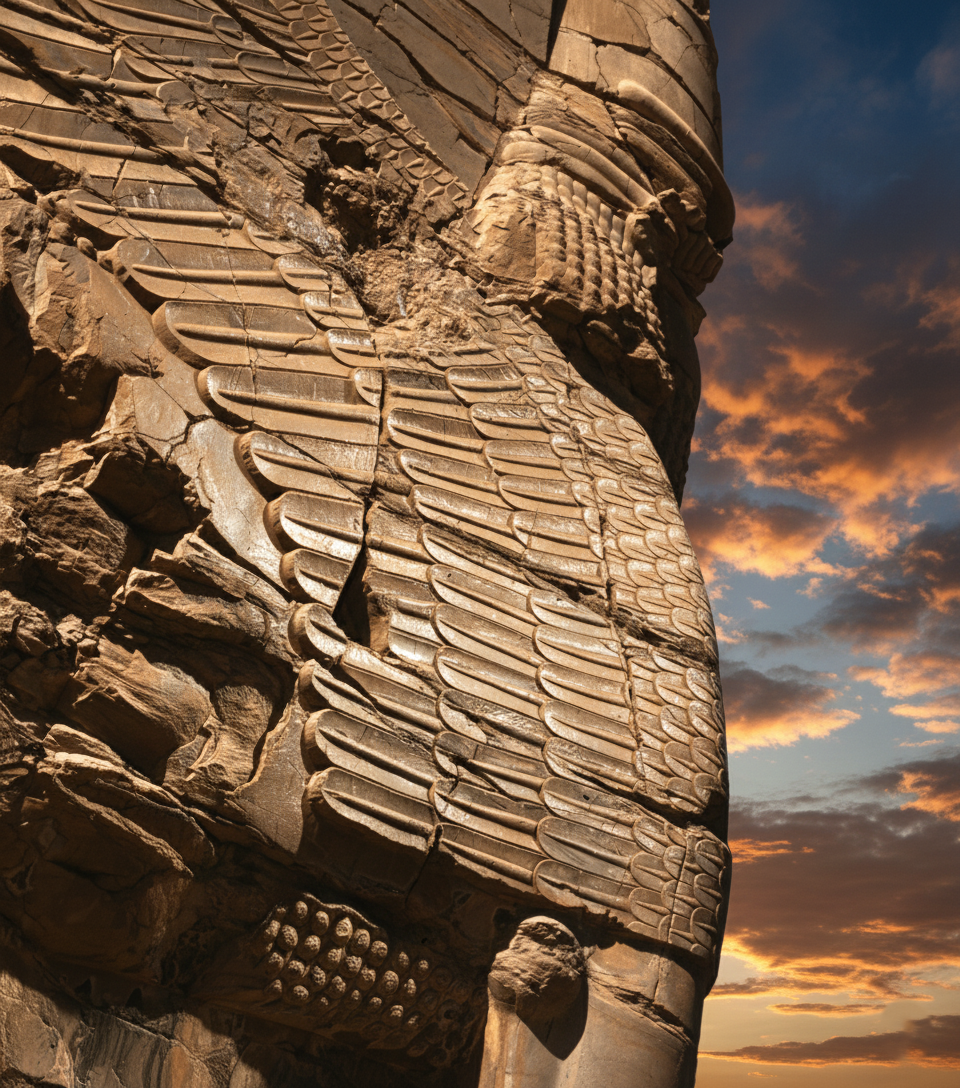
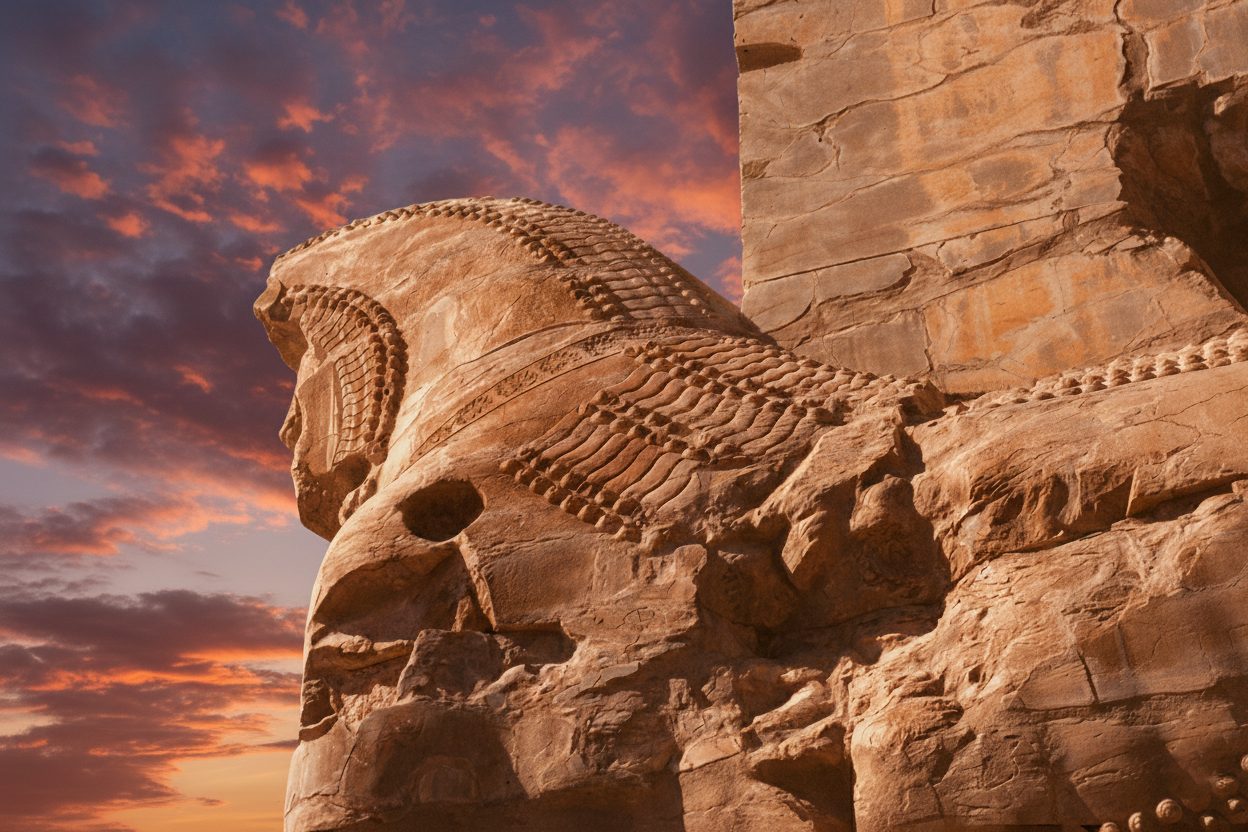
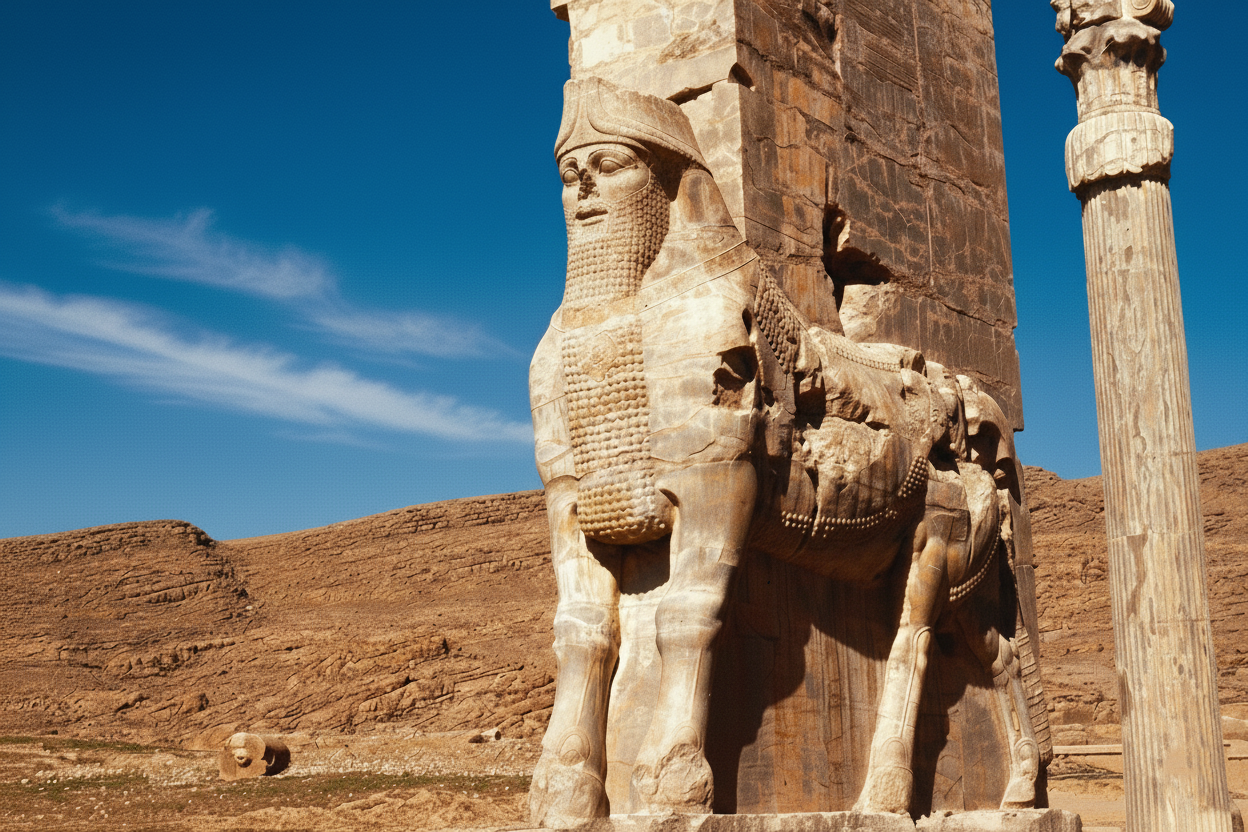
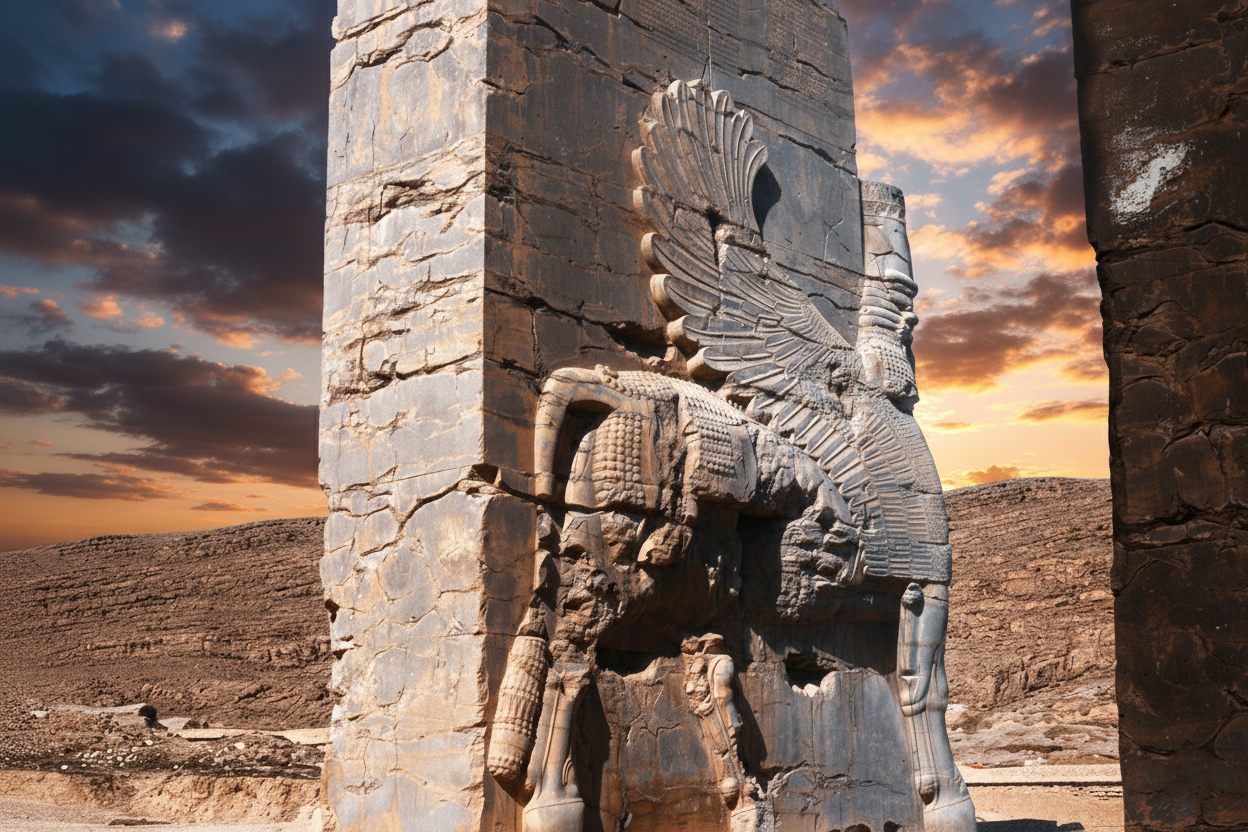
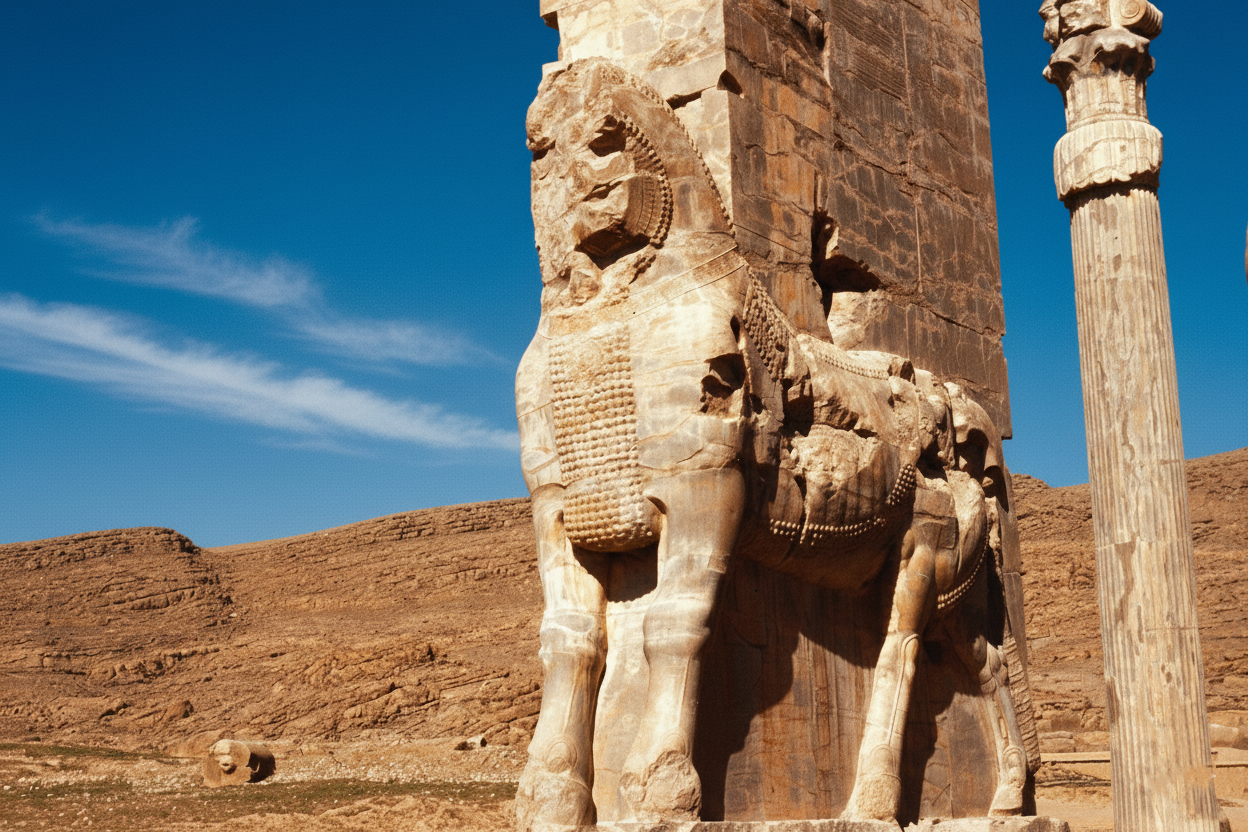
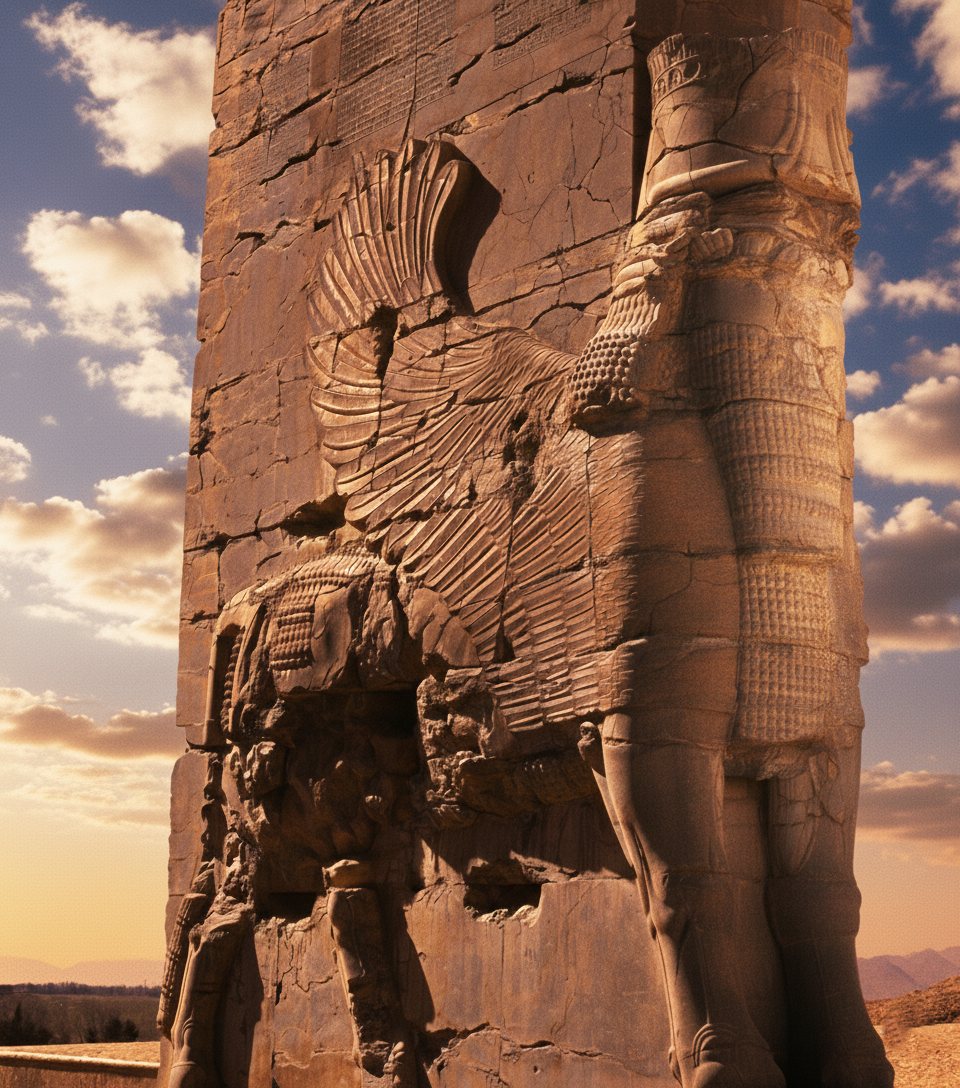
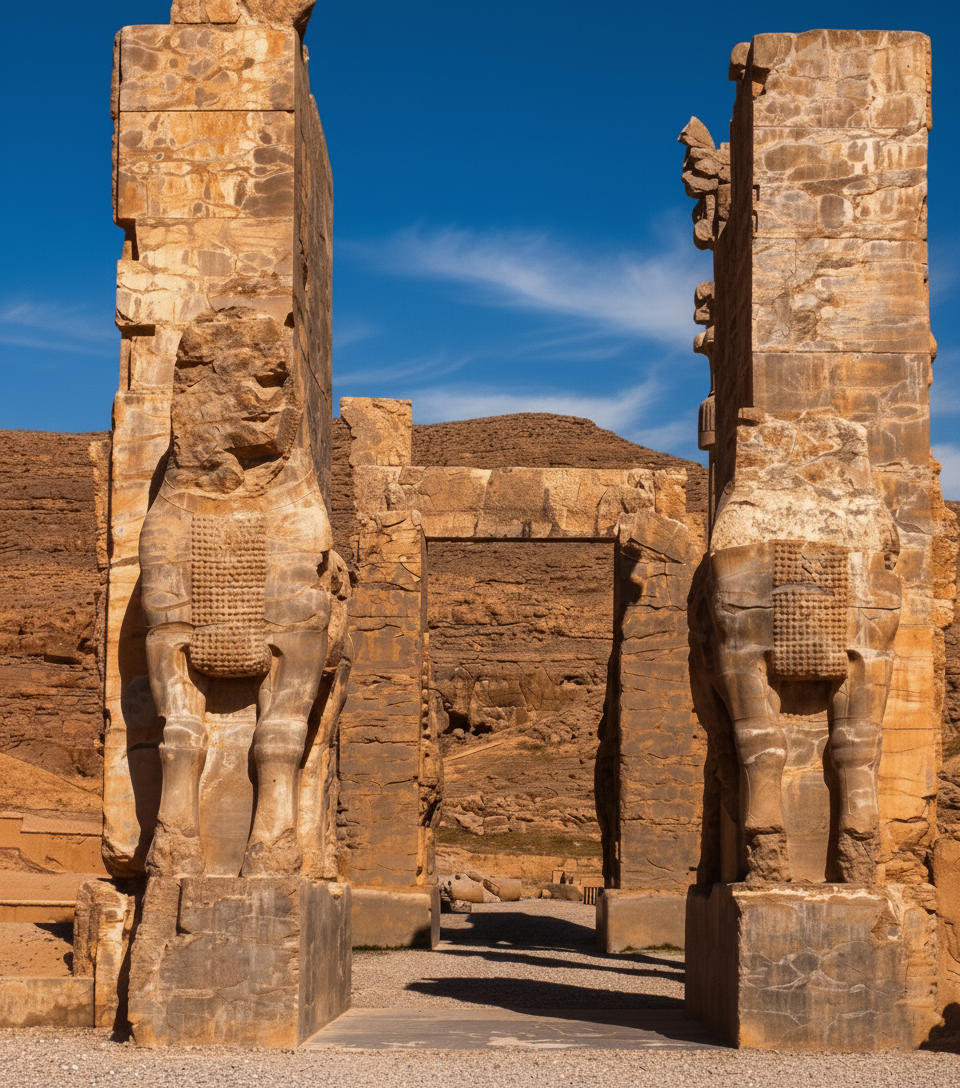
Lamassu, or Shedu, are monumental guardian figures with a human head, eagle wings, and the body of a bull or lion, symbolizing strength, wisdom, and protection. Influencing the sculptural program of Persepolis, similar winged guardians stood at gateways like the Gate of All Nations, expressing imperial authority and the Achaemenid blend of Near Eastern artistic traditions.
-
Lamassu, also known as Shedu, are monumental guardian figures that appear in the gateways of ancient Near Eastern palaces and influenced the sculptural program of Persepolis (تخت جمشید). These mythological beings combine the body of a bull or lion, the wings of an eagle, and a human head, symbolizing strength, wisdom, and divine protection. At Persepolis, similar winged guardian figures stand at important entrances such as the Gate of All Nations, where they served as protective symbols for the imperial complex.
Carved from large stone blocks, these sculptures reflect the Achaemenid synthesis of artistic traditions, particularly drawing on earlier Assyrian and Mesopotamian architecture. Beyond their protective symbolism, the figures also conveyed imperial authority, greeting visitors from across the vast empire and reinforcing the ceremonial grandeur of Persepolis.
