Natanz, an Avestan Water Heritage
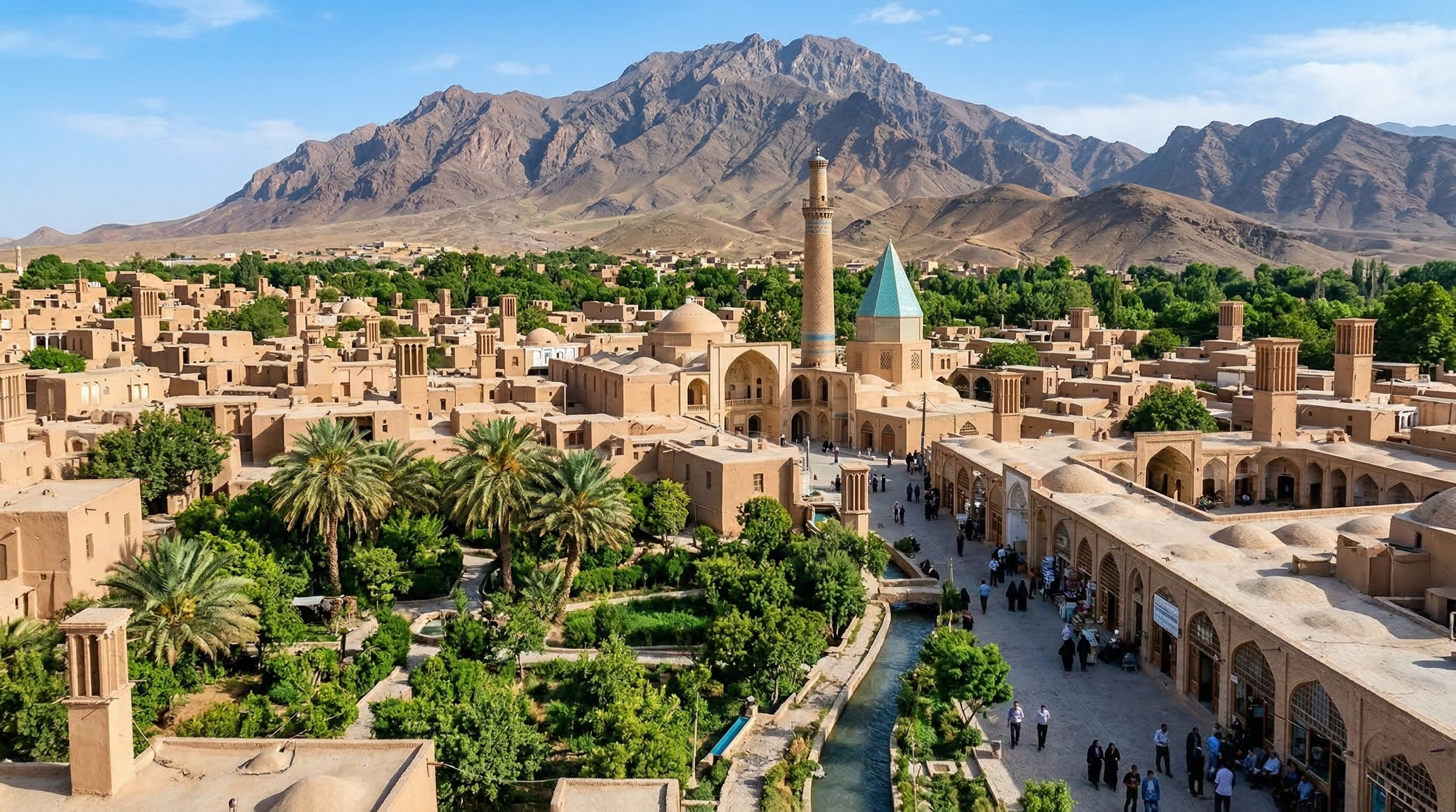
Natanz (نطنز), an oasis at the foothills of Mount Karkas (کوه کرکس), flourished along Silk Road (جاده ابریشم) routes during the Ilkhanid period (13th–14th centuries CE). Its garden-like urban fabric, shaped by qanats (قناتها) and khesht (خشت) houses, centers on the Sheikh Abd al-Samad Complex (مجموعه شیخ عبدالصمد, early 14th century CE).
-
Natanz (نطنز): An Avestan Water Heritage
Natanz (نطنز), whose name is linked to an Avestan (اوستایی) word meaning “a small place with plenty of water,” has origins that trace back to the Sassanian era (224–651 CE). Situated at the foothills of Mount Karkas (کوه کرکس), the city rises in vivid contrast to the surrounding arid plains, forming a striking oasis where mountain water sources nourish a network of gardens, orchards, and qanats (قناتها).
Positioned along caravan routes connected to the Silk Road (جاده ابریشم), Natanz flourished particularly during the Ilkhanid (ایلخانیان) period (13th–14th centuries CE). Agricultural trade, supported by reliable water sources and fertile soil, along with caravan exchange, reinforced the city’s urban growth and allowed it to develop into a prosperous regional center.
Unlike many defensive desert settlements, Natanz evolved as a “Garden City,” where the urban fabric is loosely woven around qanats (قناتها), flowing streams, gardens, and adobe houses of khesht (خشت). This configuration creates an organic, nature-integrated environment in which architecture and landscape remain closely intertwined.
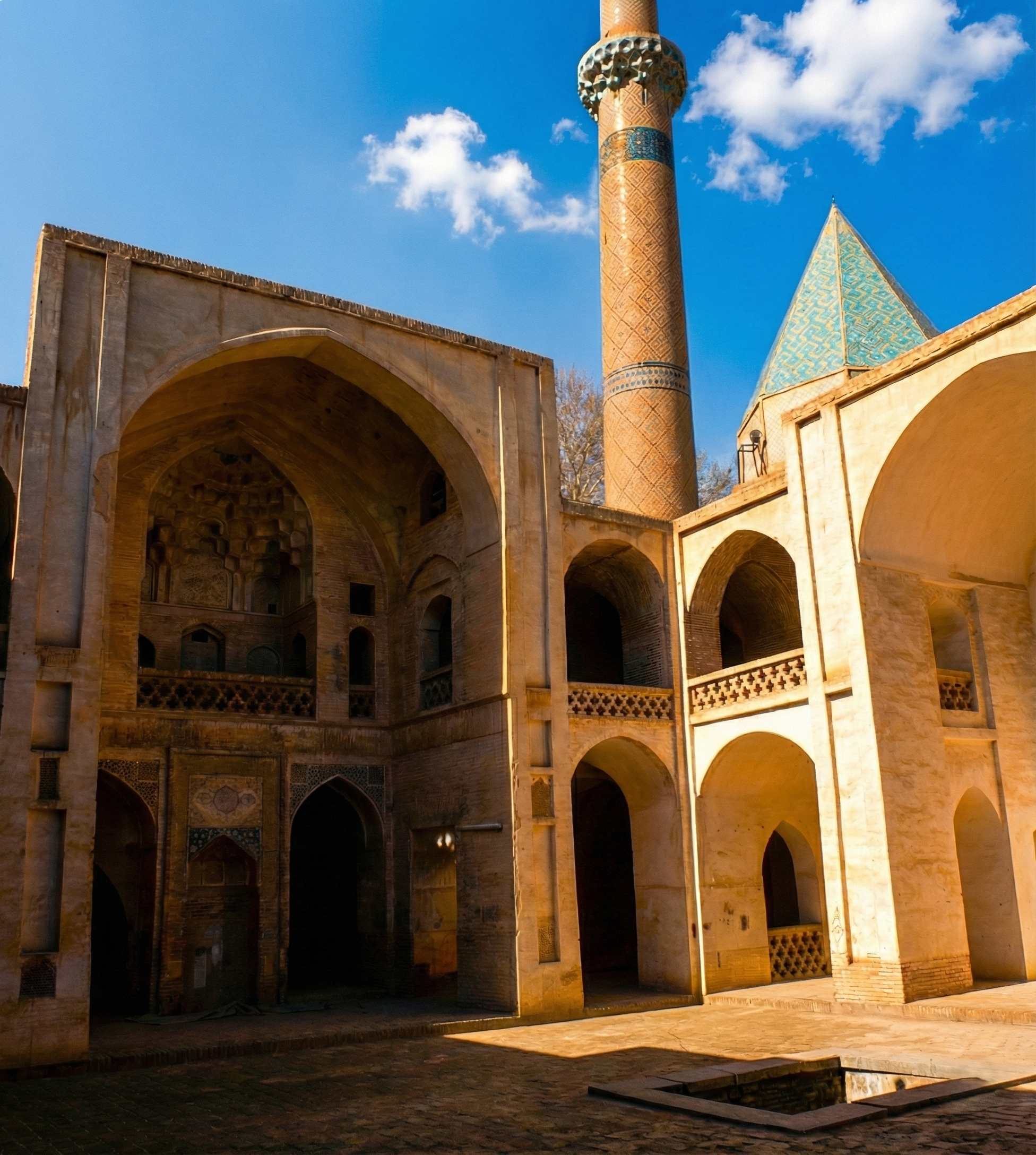
At the architectural core of the city stands the Sheikh Abd al-Samad Complex (مجموعه شیخ عبدالصمد), constructed in the early 14th century CE. This ensemble includes the Jameh Mosque of Natanz (مسجد جامع نطنز), largely built between c. 1304–1310 CE, the tomb of the Sufi mystic Sheikh Abd al-Samad (شیخ عبدالصمد), and a tall brick minaret completed in 1325 CE. The complex is distinguished by refined Ilkhanid architecture, including a turquoise conical dome, an octagonal pavilion, intricate brick patterns, delicate muqarnas (مقرنس) vaulting, and finely carved stucco decoration. The slender minaret rises prominently above the surrounding cityscape, emphasizing the vertical elegance characteristic of Persian Islamic architecture and anchoring the spiritual and architectural identity of the city.
Radiating outward from this religious core, the bazaar (بازار), caravanserai (کاروانسرا), residential houses, and winding alleys form a cohesive settlement shaped by both trade routes and a distinct mountain microclimate. Narrow shaded passages regulate temperature, while gardens and water channels moderate the environment and encourage daily social encounters, sustaining Natanz’s enduring balance between climate adaptation, commerce, spirituality, and communal life.