Central Courtyards of Na’in
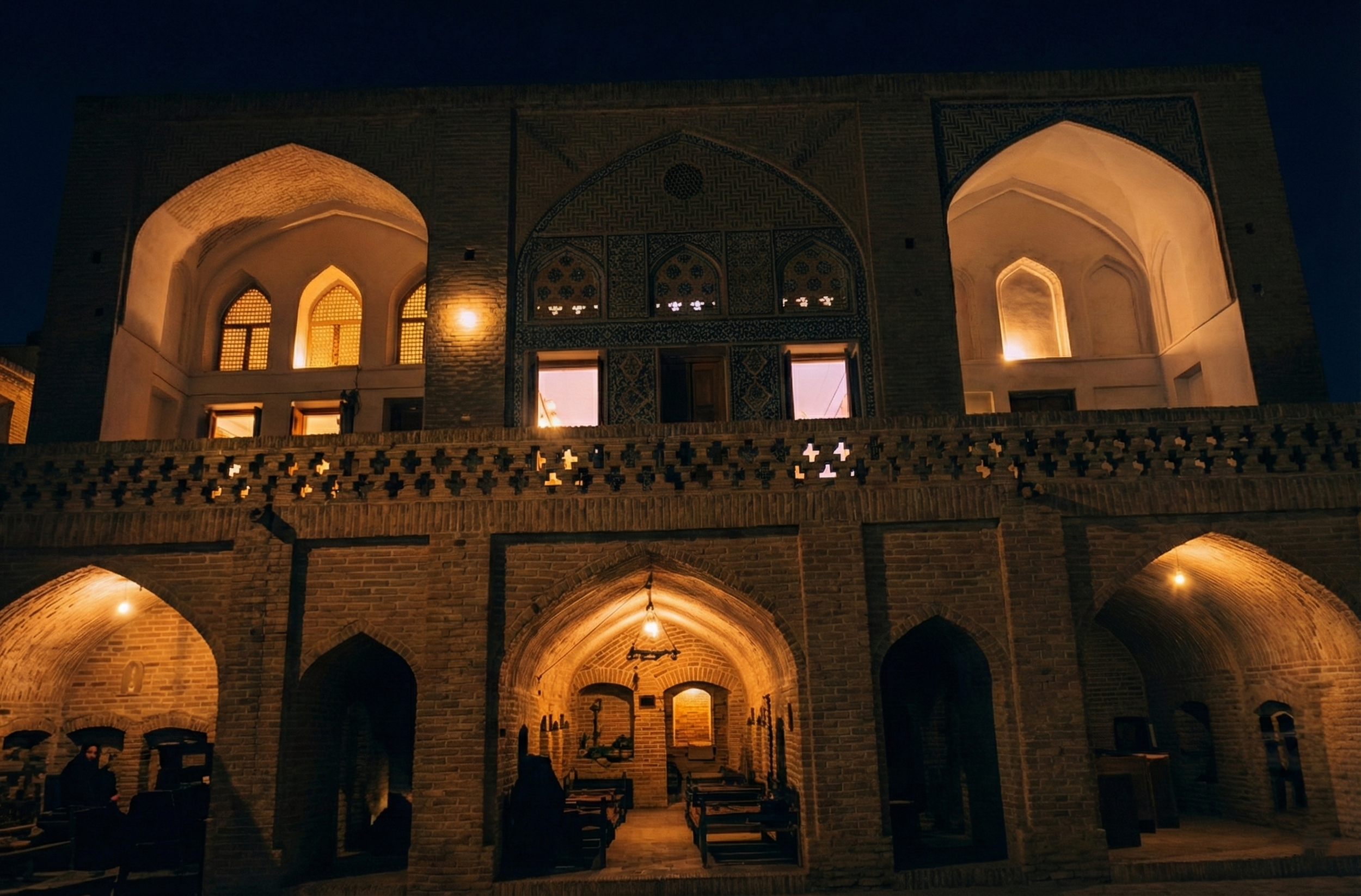
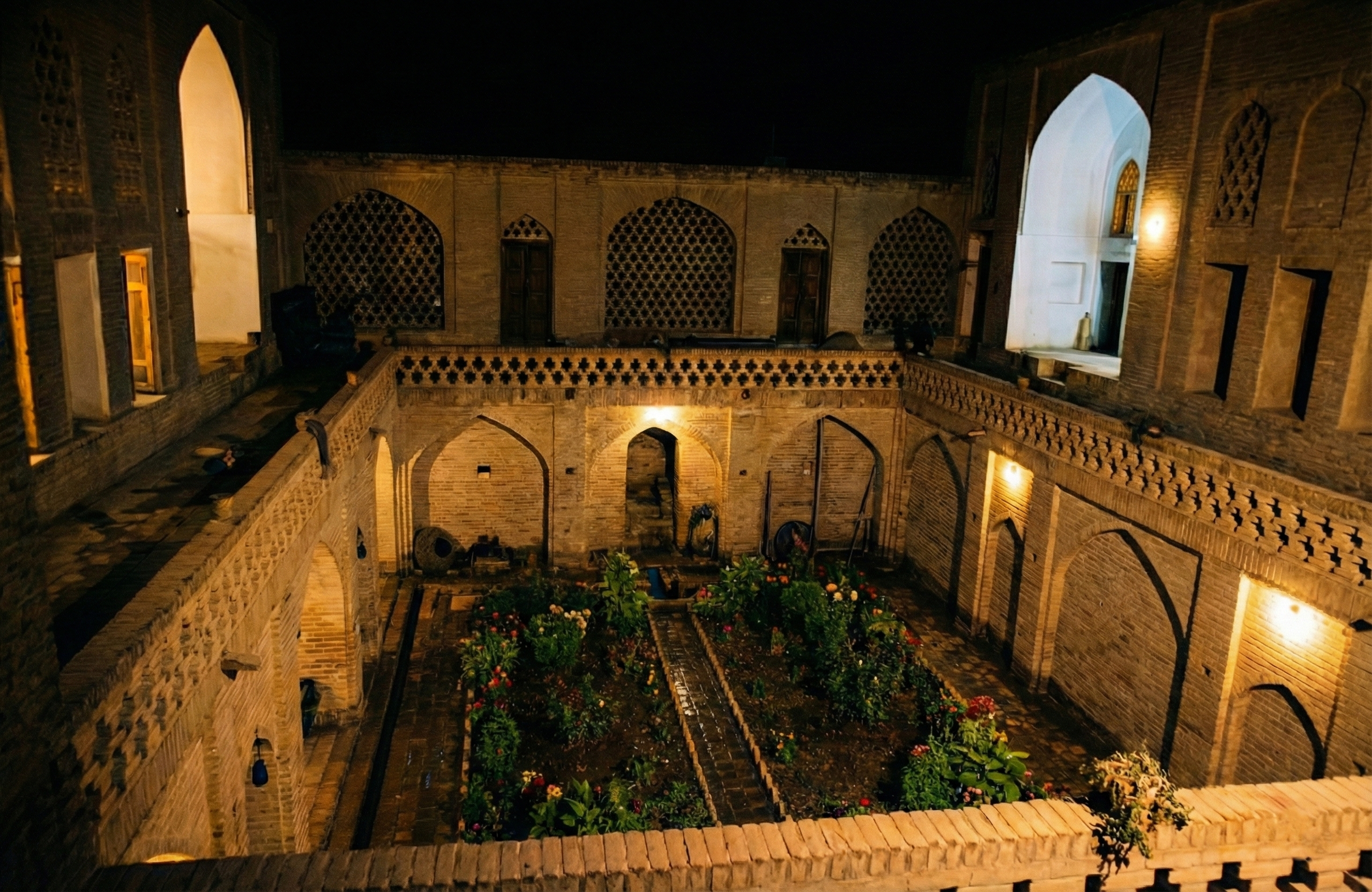
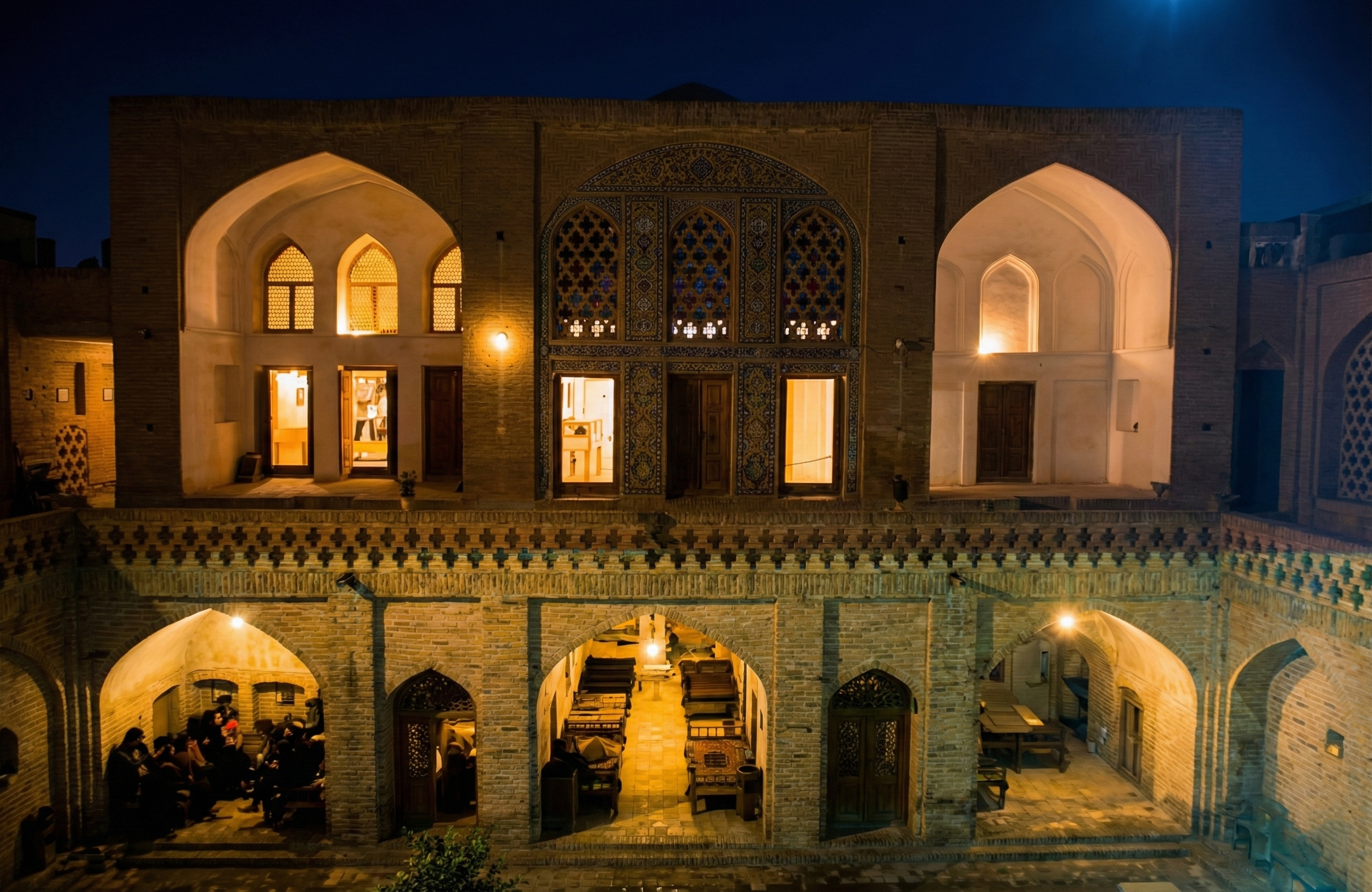
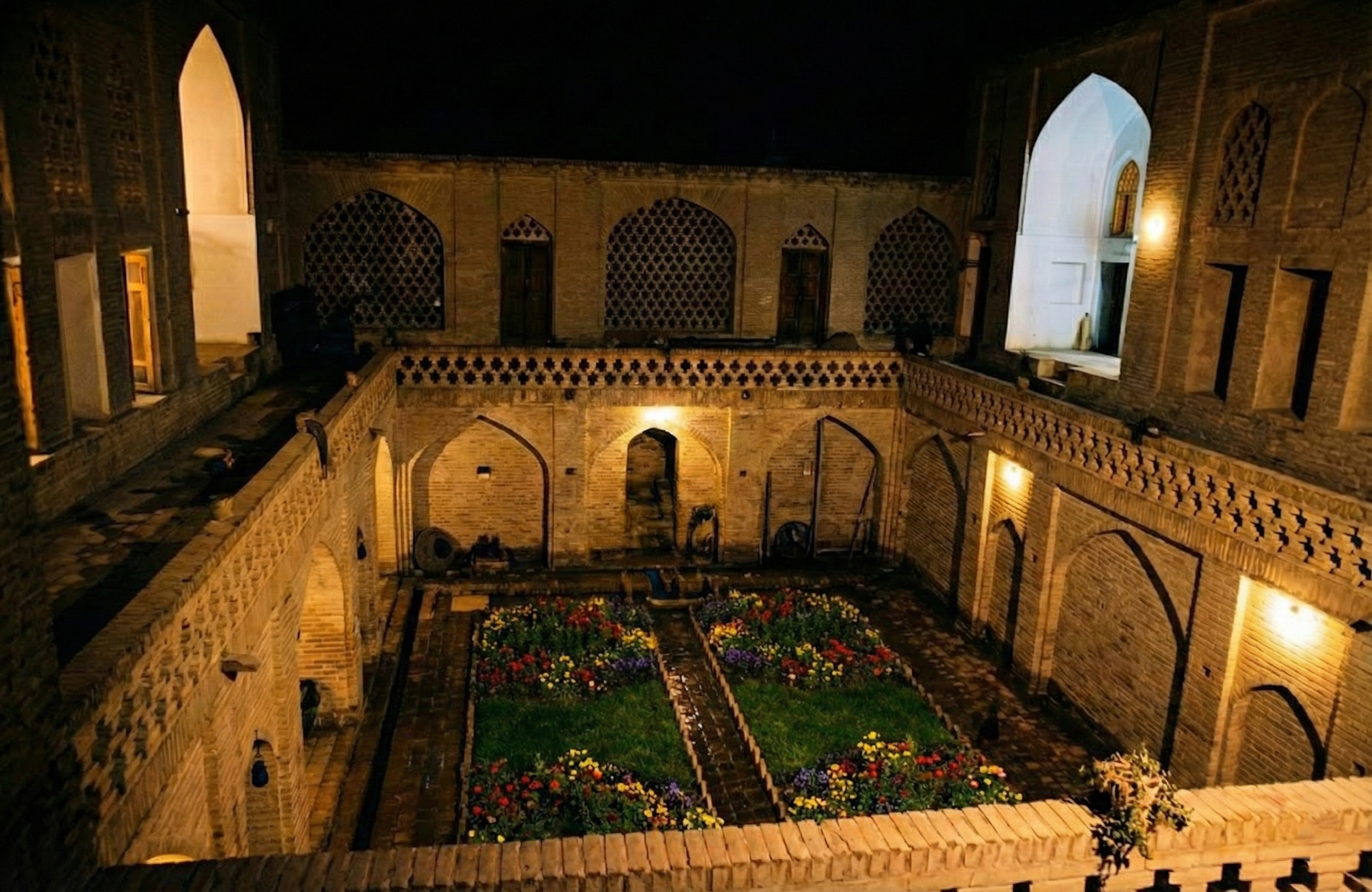
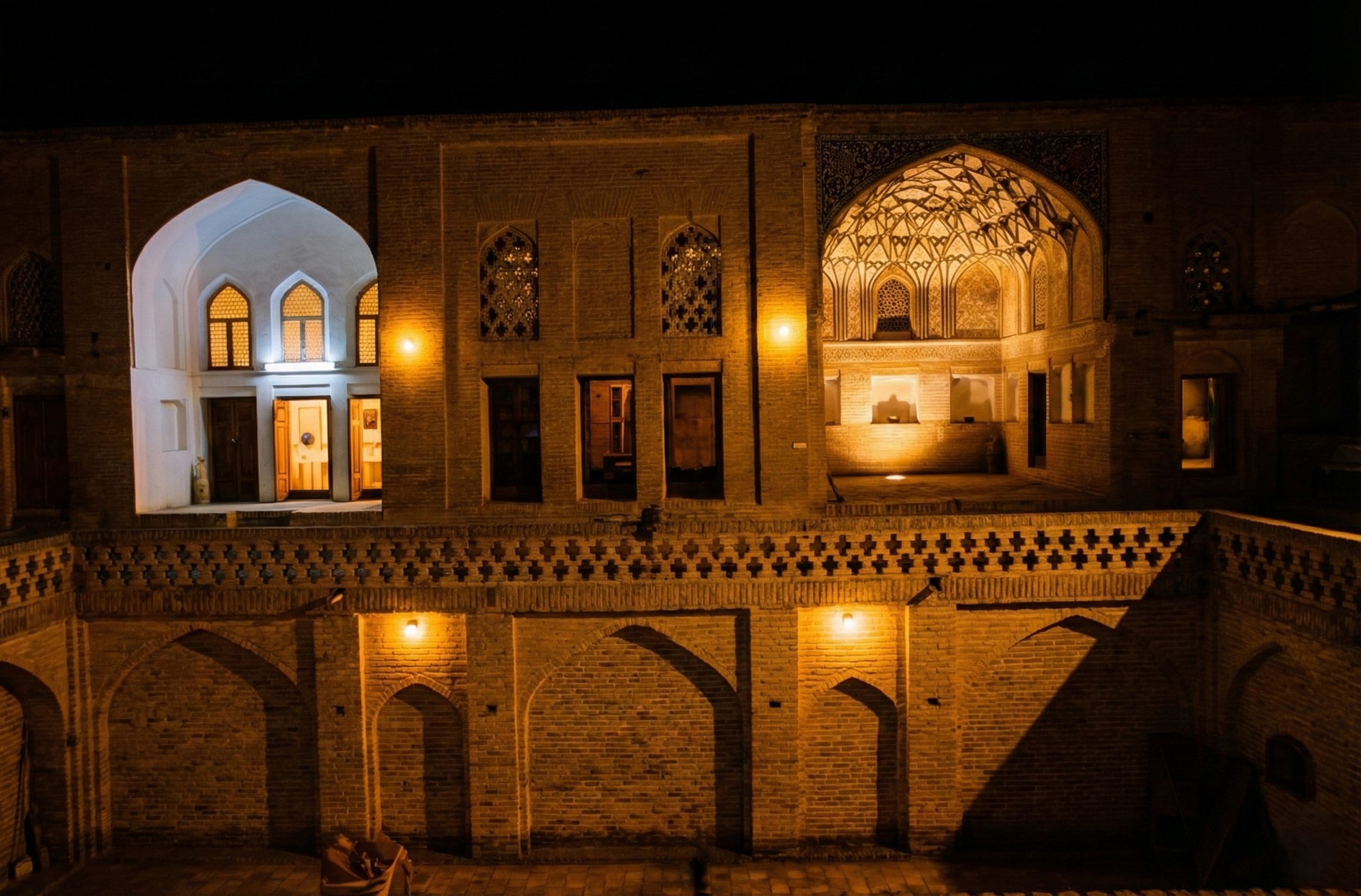
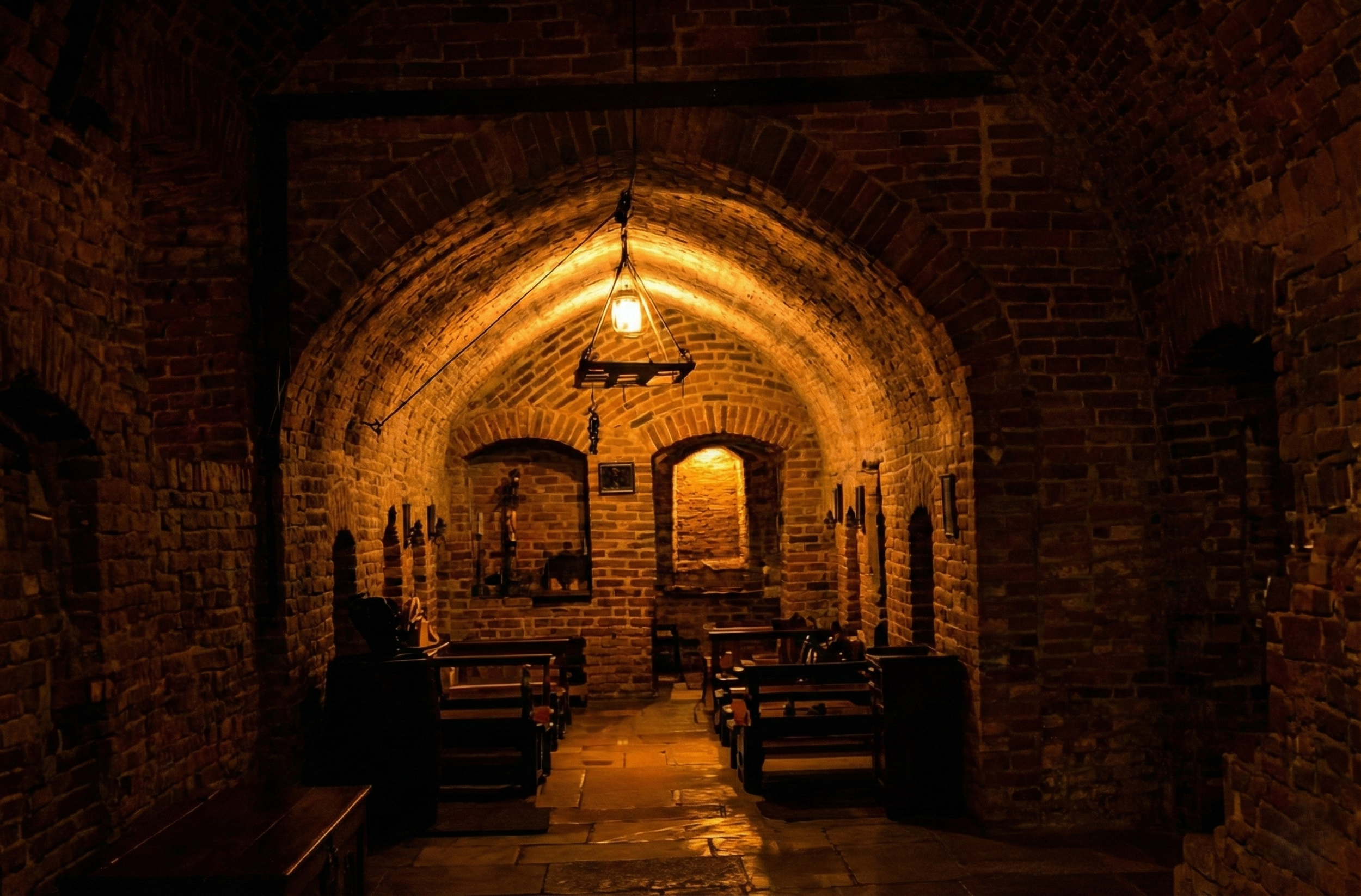
Central courtyards in Na’in (نائین), developed from the Seljuk period (11th–12th centuries CE) and continuing through the Safavid and Qajar eras (16th–19th centuries), organize domestic life around a baghcheh (باغچه) and water basin. Surrounded by adobe walls and iwans (ایوان), they create cooling microclimates while reinforcing privacy and family cohesion.
-
Central courtyards, which became fully developed in Na’in (نائین) from the Seljuk period (11th–12th centuries CE) and continued through the Safavid and Qajar eras (16th–19th centuries CE), are fundamental to the city’s residential architecture. These inward-looking spaces organize domestic life around a private open-air core, often featuring a small باغچه (baghcheh) and water basin to moderate temperature and humidity. Surrounded by thick adobe walls and shaded iwans, the courtyard creates a microclimate that provides summer cooling and winter solar gain. Beyond environmental performance, the central courtyard establishes spatial hierarchy, privacy, and family cohesion, reinforcing Na’in’s broader urban logic of introverted, climate-responsive design.
