Bazaar (بازار): Shaded Spine and Urban Climatic Artery
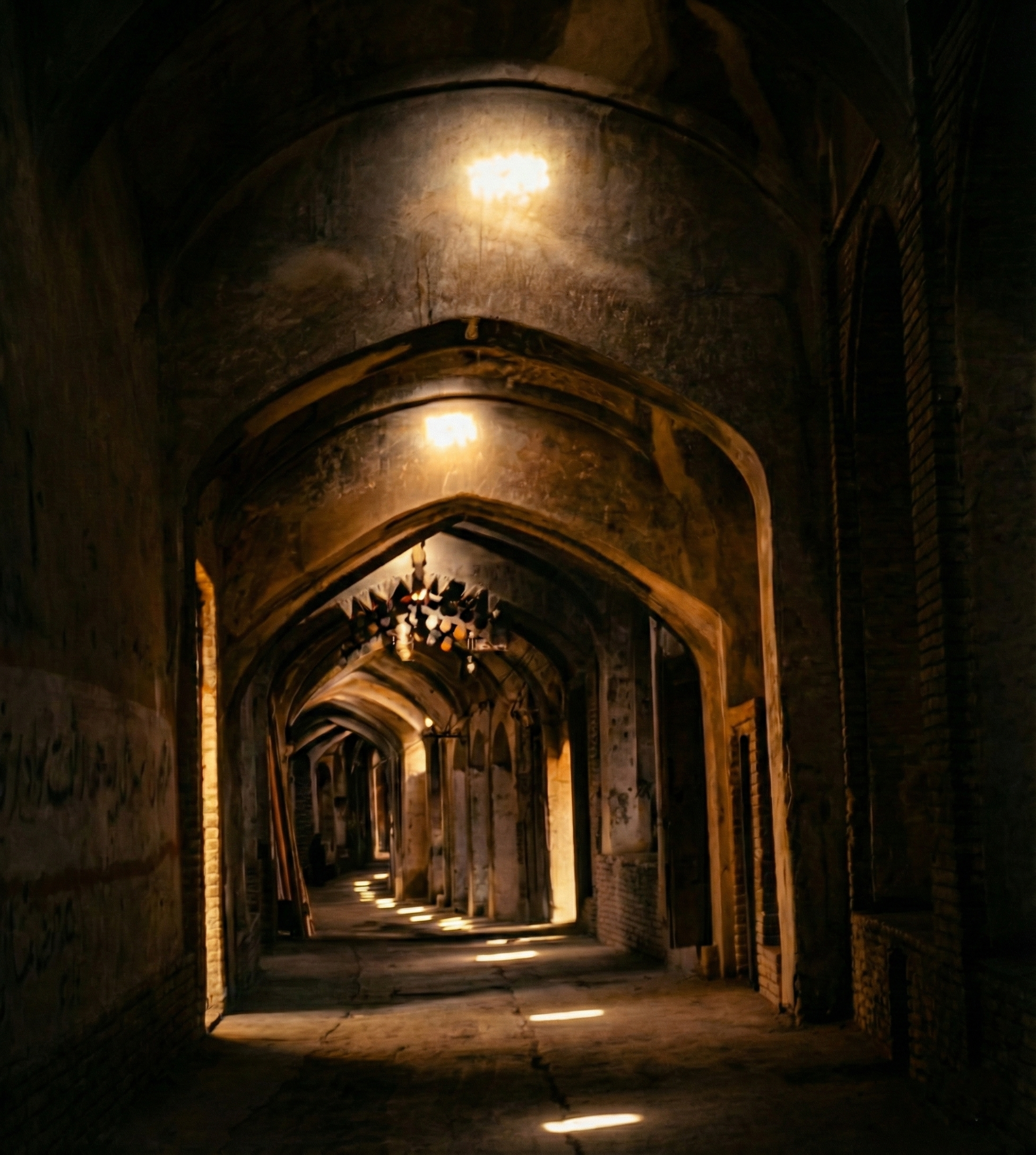
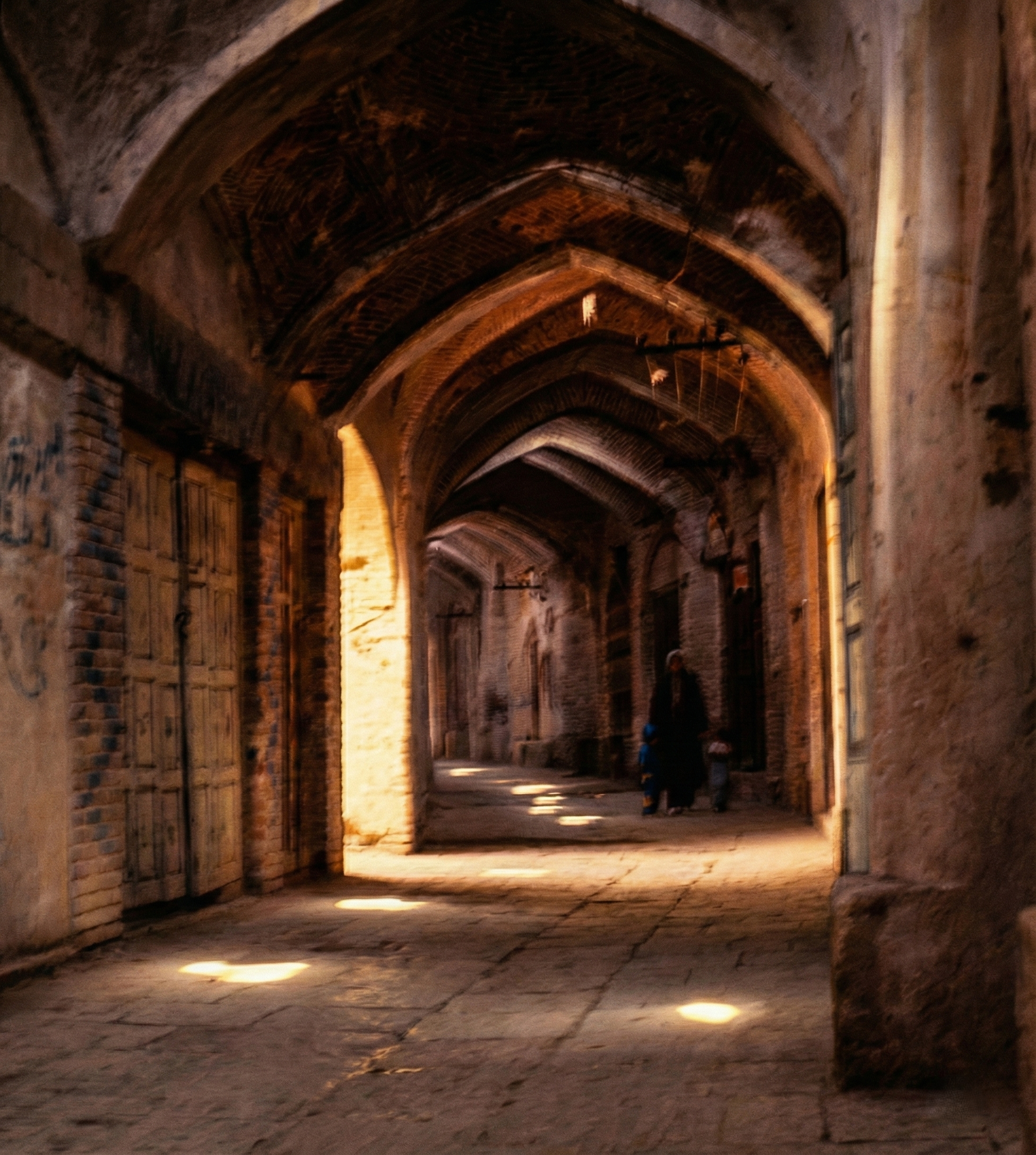
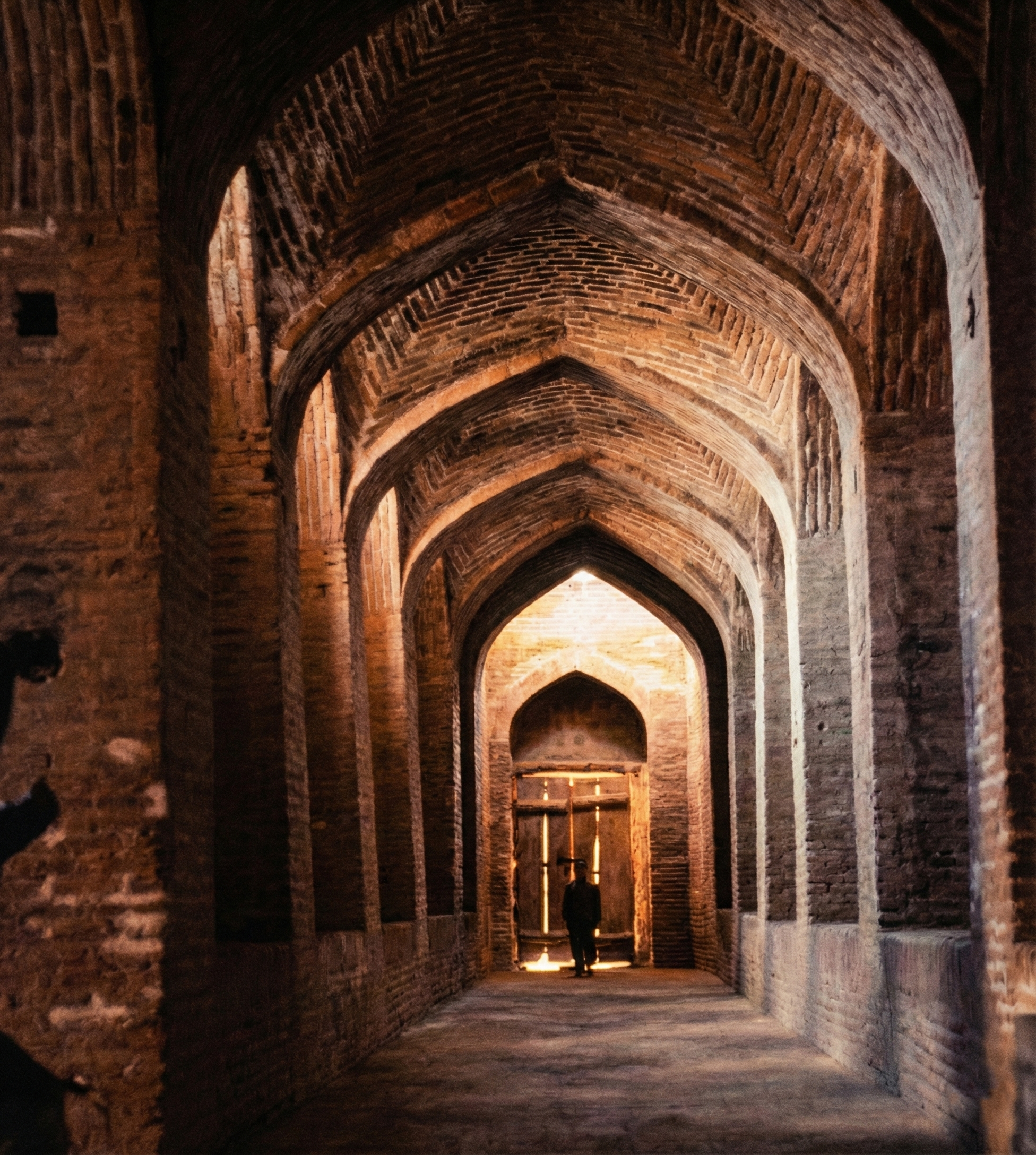
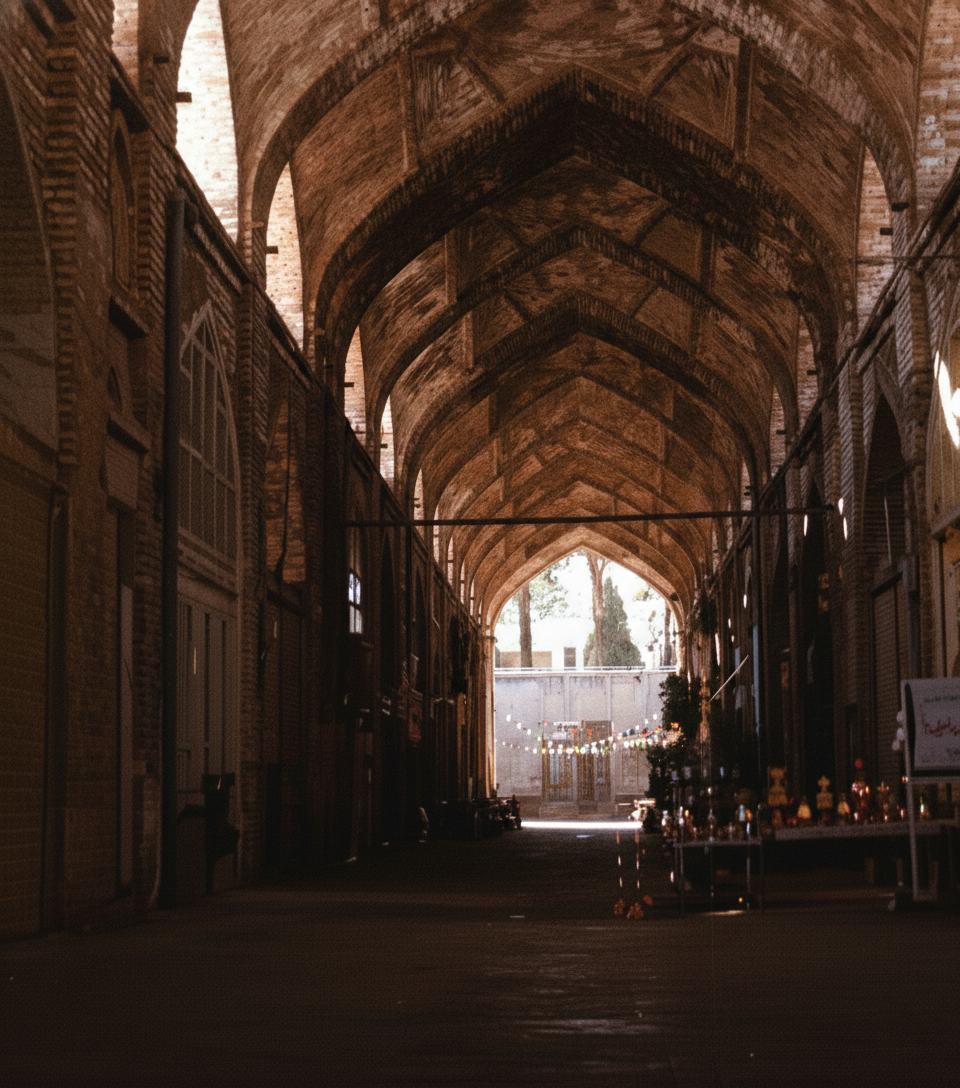
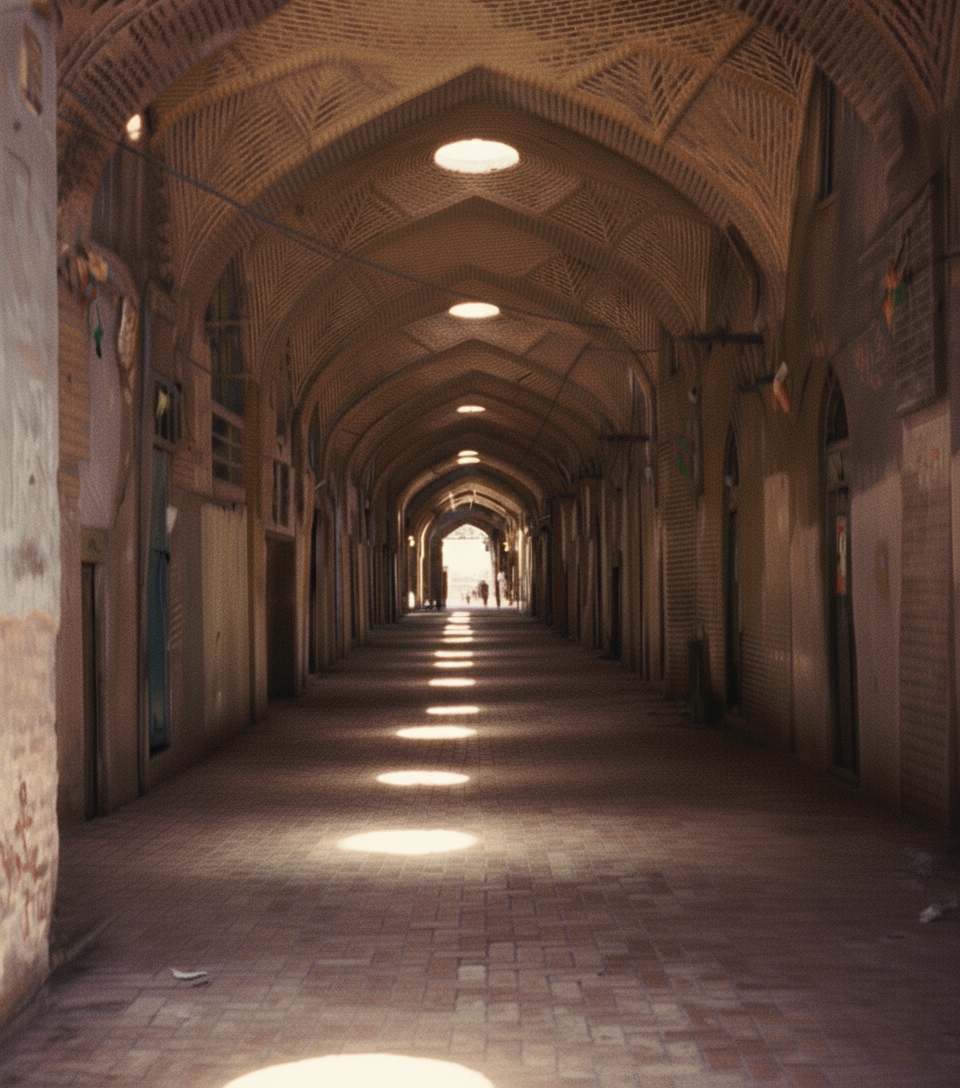
Bazaar (بازار), the traditional market spine of Iranian cities, functioned as both a commercial and climatic artery. Its vaulted roofs created continuous shade, reduced heat, and enabled ventilation through openings above. Extending across the urban fabric, bazaars connected key spaces while fostering cooler microclimates, demonstrating how architecture could integrate commerce, movement, and environmental comfort into a unified, climate-conscious urban system.
-
Bazaar (بازار): Shaded Spine and Urban Climatic Artery:
In traditional Iranian cities, the Bazaar functions as more than a commercial corridor; it serves as a primary climatic spine that structures urban life and moderates the environment at the city scale. Extending longitudinally through dense fabrics, bazaars connect gates, mosques, caravanserais, and neighborhood quarters, binding economic activity to climatic performance.
Climatically, the bazaar’s continuous vaulted roofing creates an elongated shaded zone that protects pedestrians from direct solar exposure and reduces surface temperatures. The curvature of vaults and domes distributes heat and allows warm air to rise above the occupied zone. Strategically placed roof openings—oculi, lanterns, and vents—admit controlled daylight while allowing hot air to escape, thereby maintaining cooler conditions within the corridor than those on surrounding streets.
The bazaar also helps regulate urban airflow. Variations in roof height, section, and permeability create pressure differentials that encourage gentle ventilation along the spine. In conjunction with adjacent courtyards, caravanserais, and side alleys, the bazaar becomes part of a broader network of shaded wind corridors that temper heat and dust while sustaining walkability.
Historically, bazaars formed the backbone of Iranian cities such as Isfahan, Tabriz, Kashan, and Shiraz. Their climatic comfort enabled long hours of daily activity and social interaction, reinforcing the bazaar’s role as both an economic engine and a public interior. Specialized sections—covered passages, domed intersections, and caravanserai courtyards—further diversified microclimates within the linear fabric.
Theoretically, the bazaar exemplifies a climate-conscious urbanism in which infrastructure and environment are inseparable. Acting as a shaded, ventilated artery, it distributes comfort across the city while organizing movement and exchange. In traditional Iranian architecture, the bazaar demonstrates how collective thermal comfort can be achieved through section, continuity, and controlled permeability, thereby transforming commerce into a driver of urban climatic resilience rather than a source of environmental stress.
