Section VII — Cities of the Central Desert
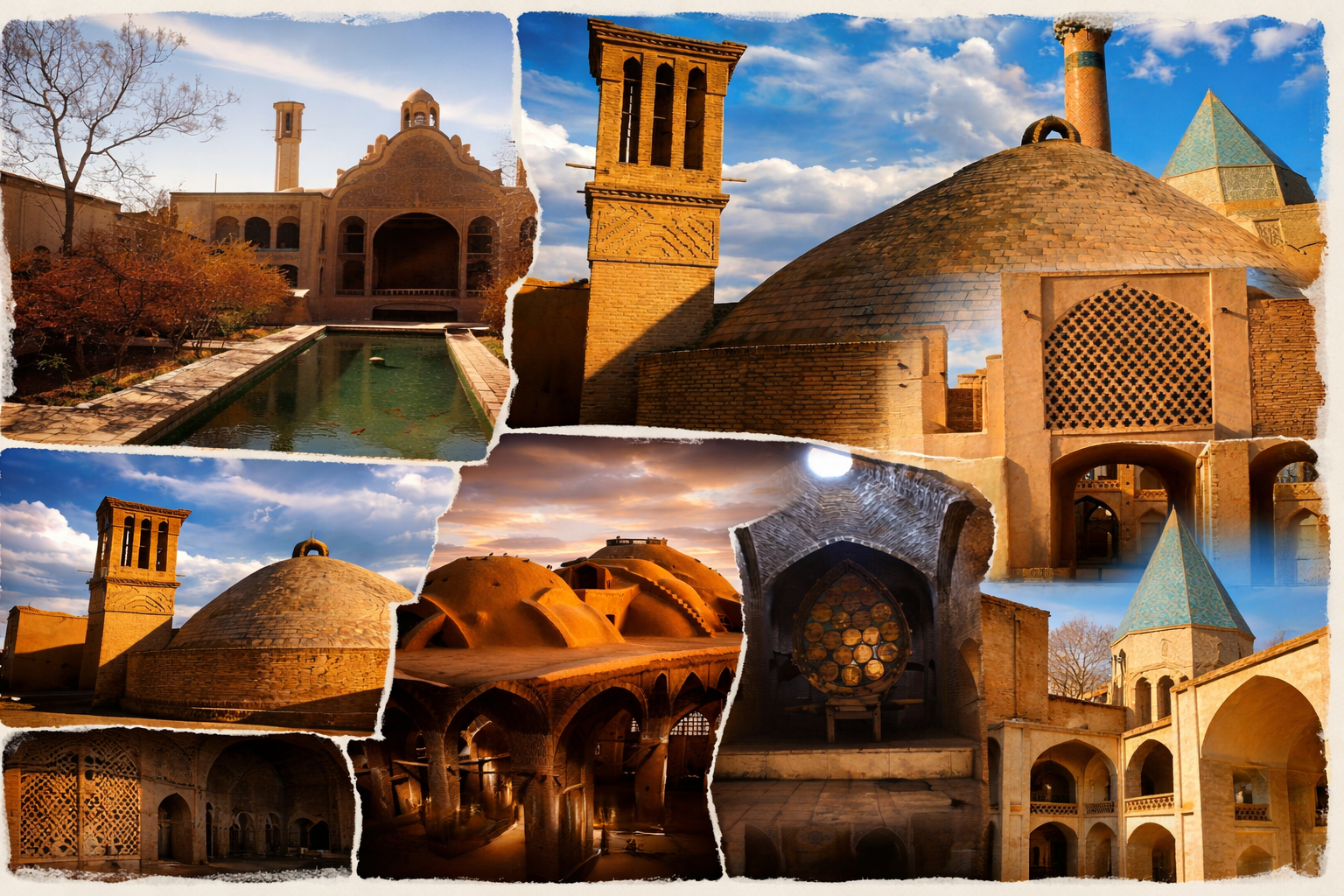
The cities of Iran’s Central Desert—including Yazd (یزد), Na'in (نائین), Ardestan (اردستان), Zavareh (زواره), Natanz (نطنز), Abyaneh (ابیانه), and Kashan (کاشان)—demonstrate a resilient model of desert urbanism. Through compact adobe fabrics, qanat irrigation (قنات), windcatchers (بادگیر), and courtyard houses, architecture, climate adaptation, and social life are integrated into sustainable oasis settlements.
-
The cities of Iran’s Central Desert—including Yazd (یزد), Na'in (نائین), Ardestan (اردستان), Zavareh (زواره), Natanz (نطنز), Abyaneh (ابیانه), and Kashan (کاشان)—collectively illustrate a sophisticated model of desert urbanism shaped by environmental constraints, trade networks, and cultural continuity. Across these settlements, compact adobe fabrics built from khesht and mud plaster (خشت و گل) form dense urban morphologies characterized by narrow shaded alleys (کوچههای باریک), inward-oriented courtyard houses, and interconnected public institutions such as mosques, bazaars (بازار), caravanserais (کاروانسرا), and gardens. These spatial configurations function as climatic infrastructures that regulate solar exposure, airflow, and temperature within the harsh hot–arid environment of the Iranian plateau. Environmental technologies—including badgirs (بادگیر), qanat systems (قنات), ab-anbars (آبانبارها), and subterranean cooling spaces such as sardābs (سرداب)—demonstrate an advanced integration of architecture with water management and passive environmental control. Monumental religious complexes, such as the Jameh Mosques of Yazd, Na'in, Ardestan, and Zavareh, and the Sheikh Abd al-Samad Complex in Natanz, act as spatial and symbolic anchors around which urban life is organized. Meanwhile, variations in landscape—from the terraced red-earth village of Abyaneh to the garden-like oasis of Natanz and the refined courtyard architecture and gardens of Kashan—illustrate the adaptability of Iranian architectural traditions to differing ecological conditions. Together, these cities reveal a resilient urban paradigm in which environmental knowledge, social organization, craftsmanship, and spiritual institutions converge to produce enduring settlements capable of thriving within one of the world’s most demanding climates.
