Ali Qapu Palace (کاخ عالیقاپو)
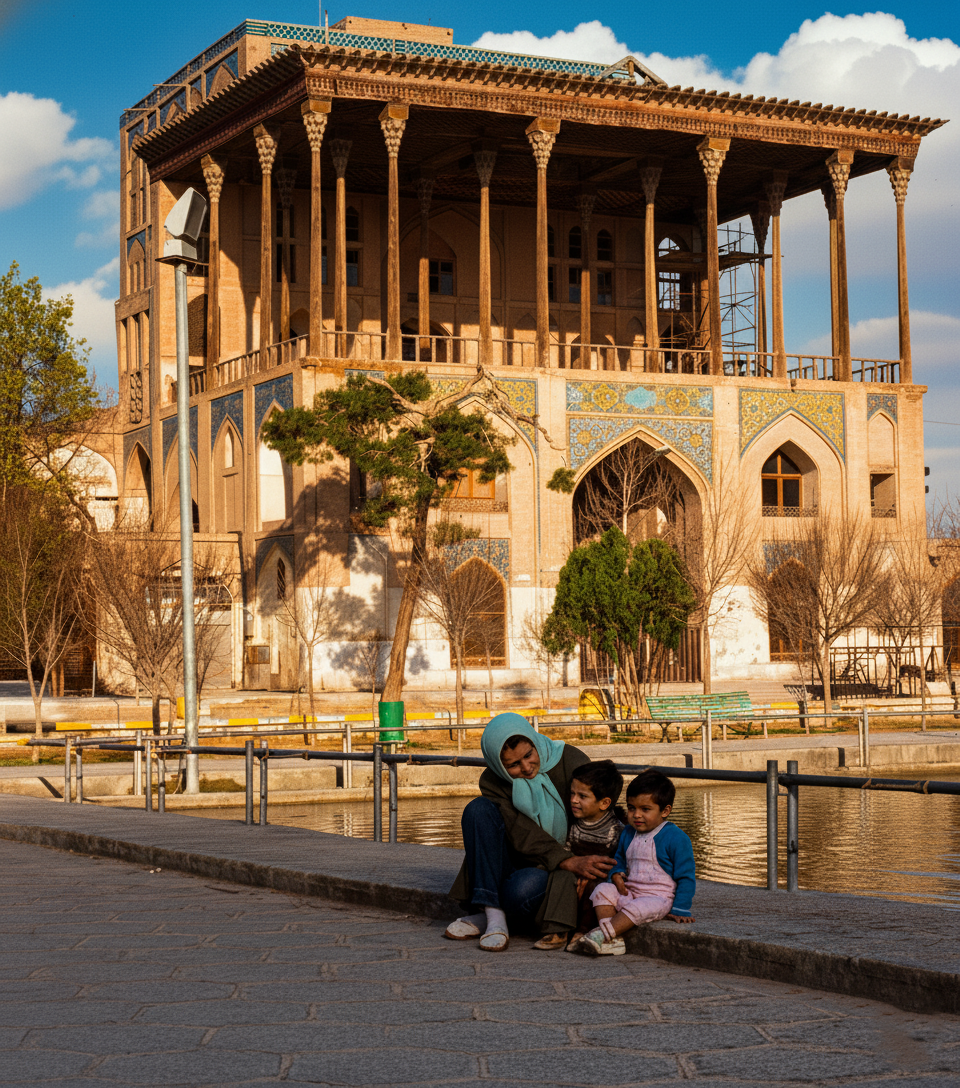
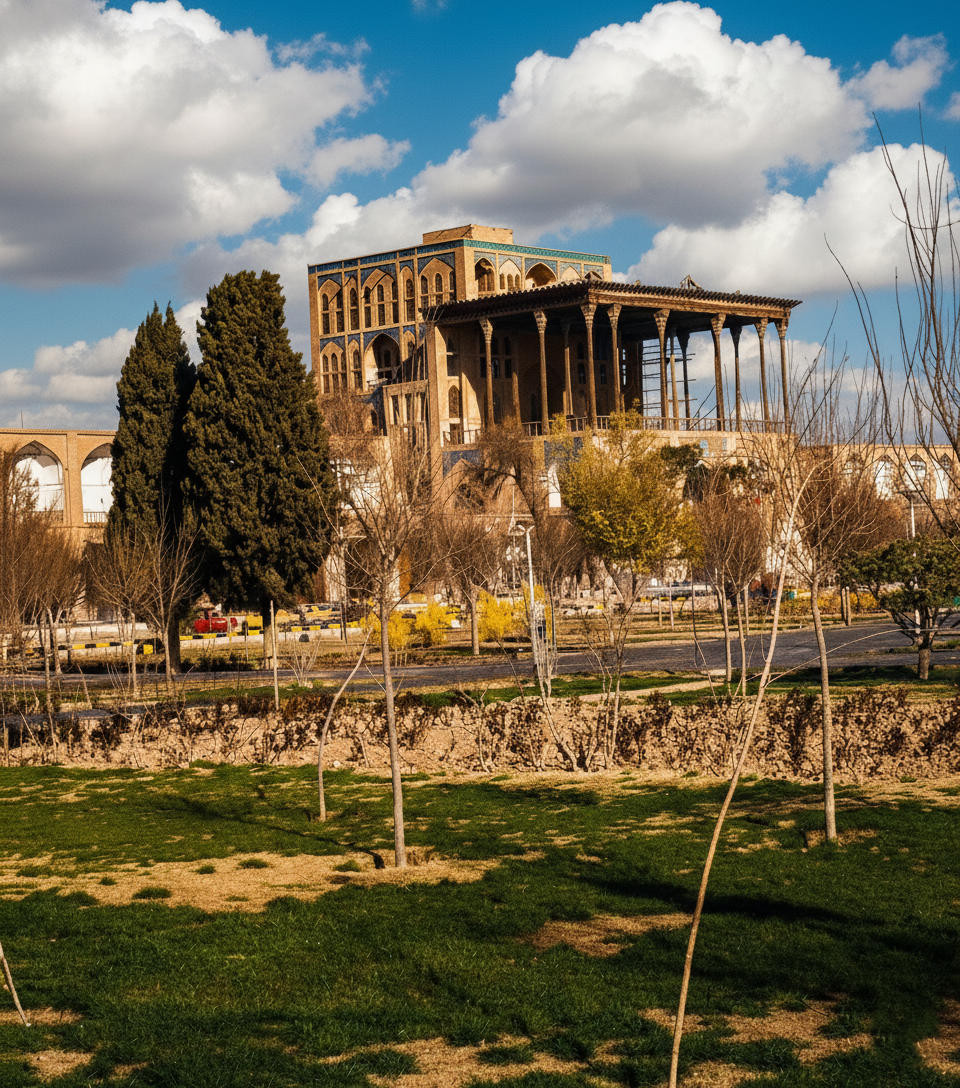
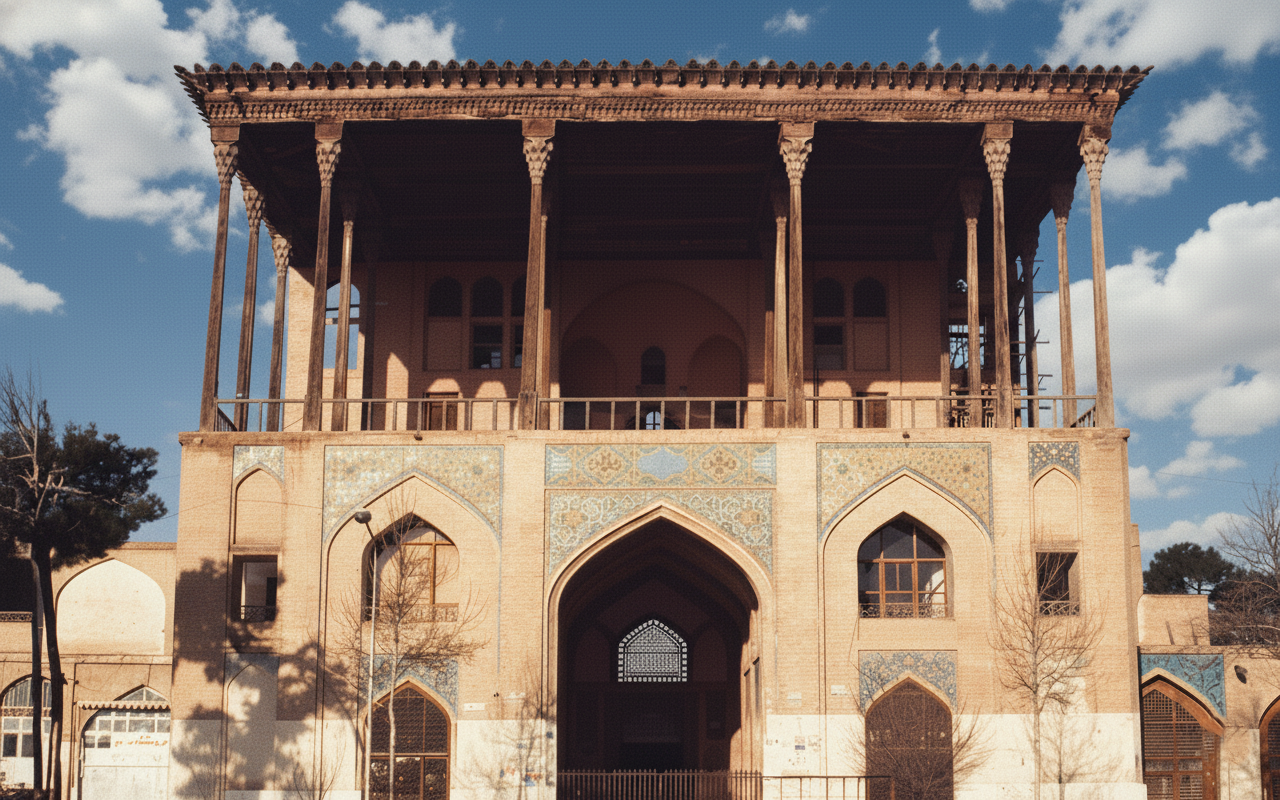
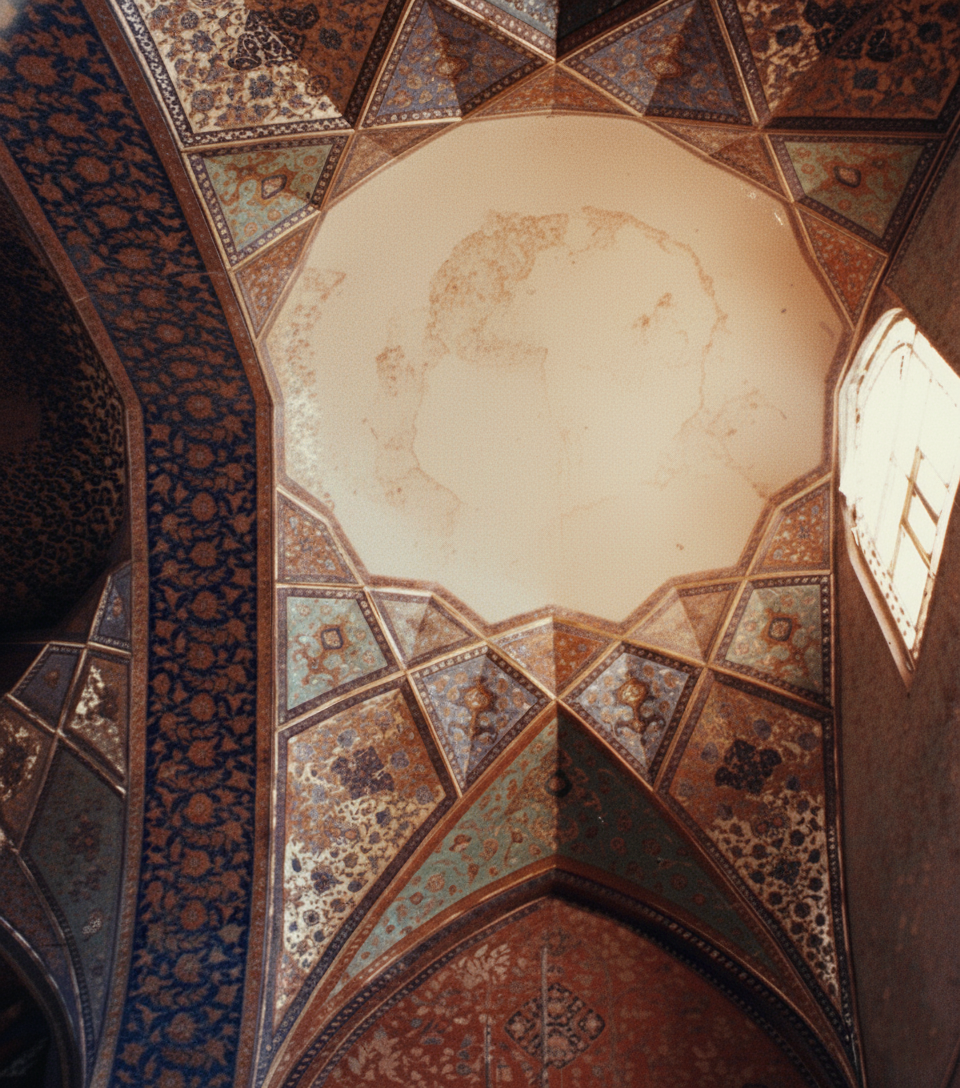
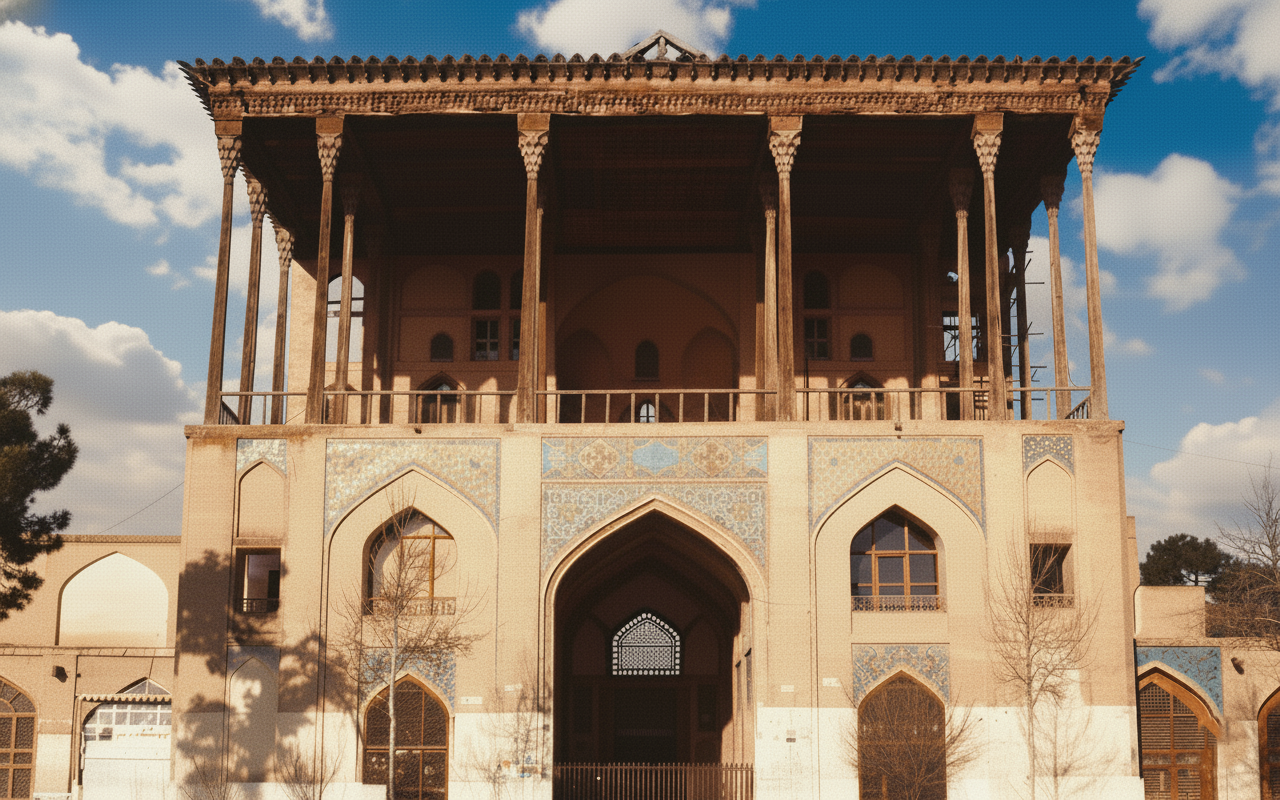
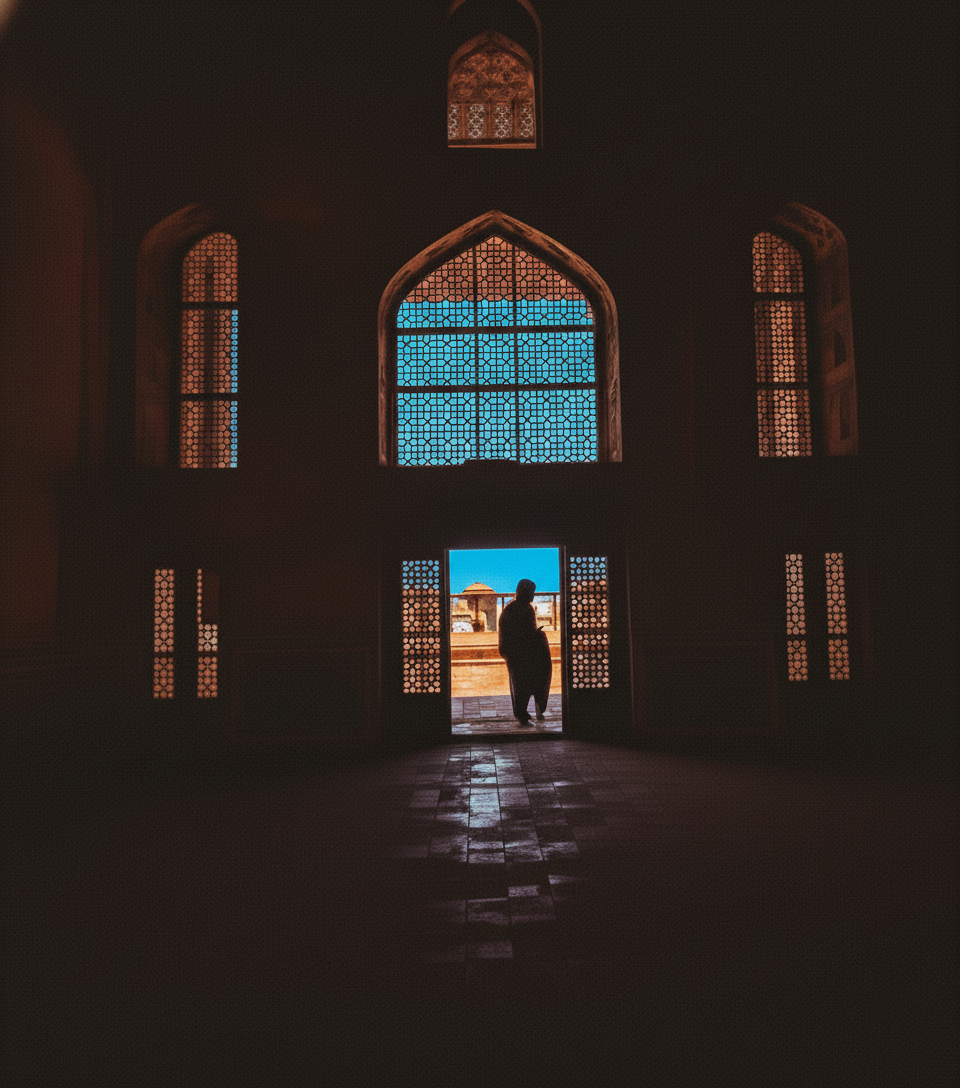
Ali Qapu Palace (کاخ عالیقاپو), begun around 1597 under Shah Abbas I, forms the western anchor of Naqsh-e Jahan Square (میدان نقش جهان). Its six-story structure and 18-column terrace allowed the Shah to observe public ceremonies below, linking the royal precinct to the square and transforming the Safavid capital into a stage for imperial authority.
-
Ali Qapu Palace (کاخ عالیقاپو) was commissioned by Shah Abbas I (شاه عباس اول) around 1597 as the ceremonial gateway to the Safavid royal precinct in Isfahan (اصفهان). Positioned on the western side of Naqsh-e Jahan Square (میدان نقش جهان), the palace functioned as both a governmental center and royal residence, embodying the political authority of the Safavid court within the new imperial capital.
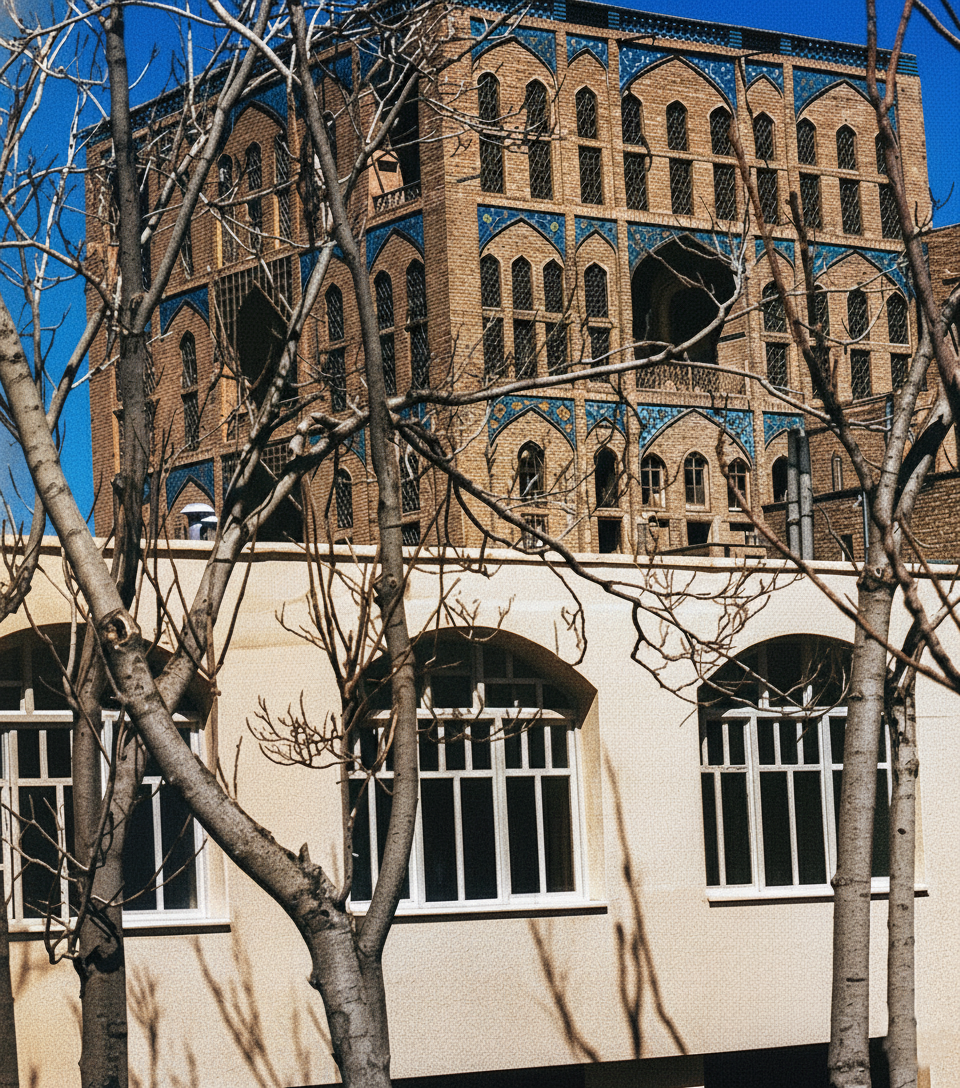
Originally conceived as a modest two-story structure, the palace evolved over approximately seventy years into a six-story building reaching nearly 48 meters in height, making it one of the tallest structures in the Safavid capital. Its design creates a striking architectural illusion: from the square it appears to be two stories high, from the sides four, and from the rear six, adapting its visual scale to different urban perspectives.
One of the palace’s most distinctive elements is the 18-column wooden terrace, which projects toward the square. This elevated platform functioned as a royal viewing deck, allowing the Shah and his court to observe public ceremonies, polo matches, military parades, and festivities held in Naqsh-e Jahan Square. In this way, the square itself became a theatrical stage for Safavid power, with the palace serving as the royal grandstand.
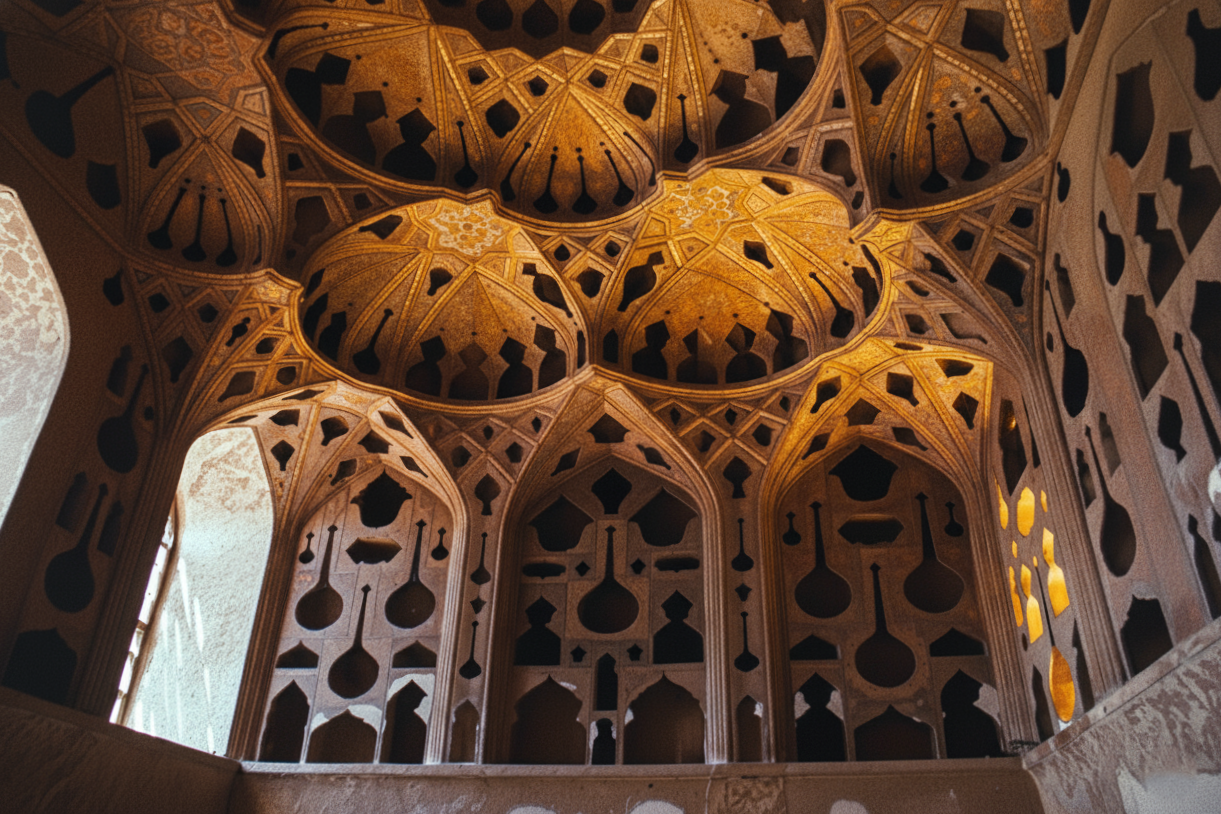
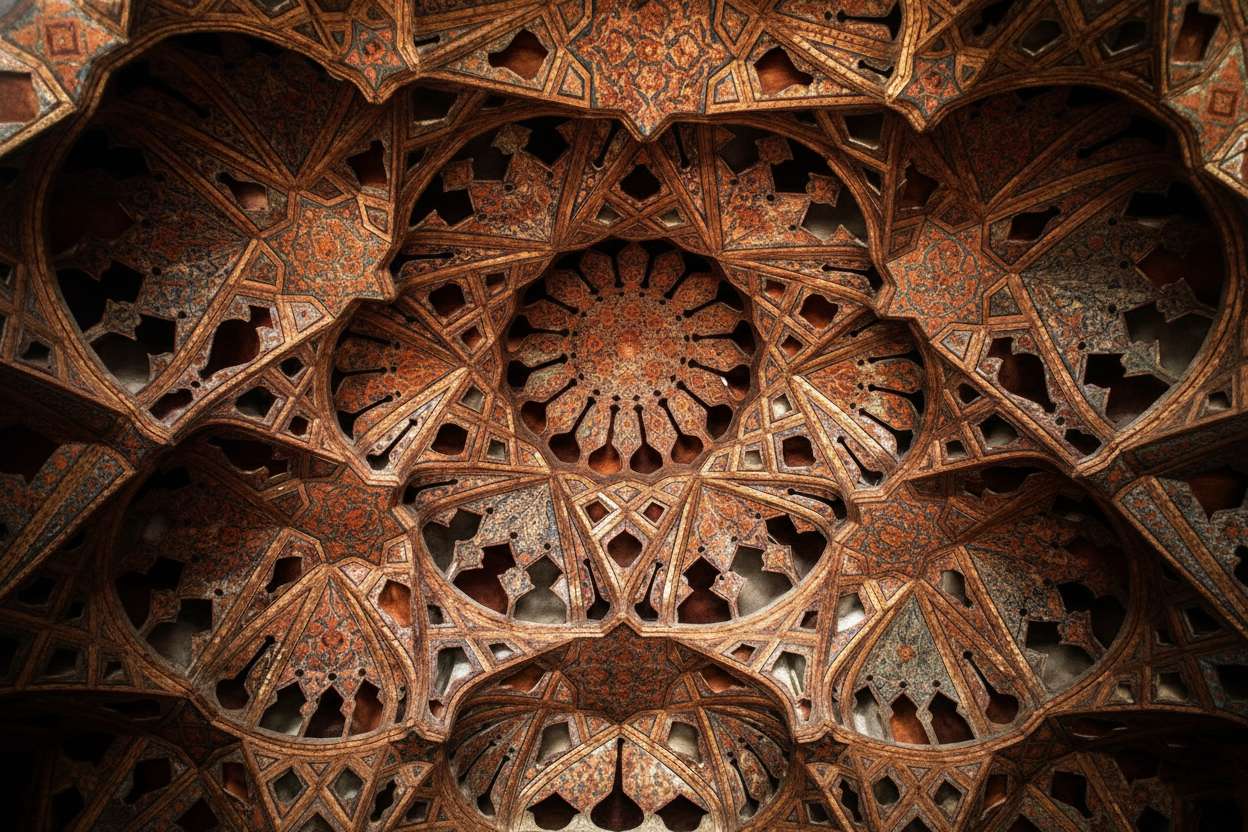
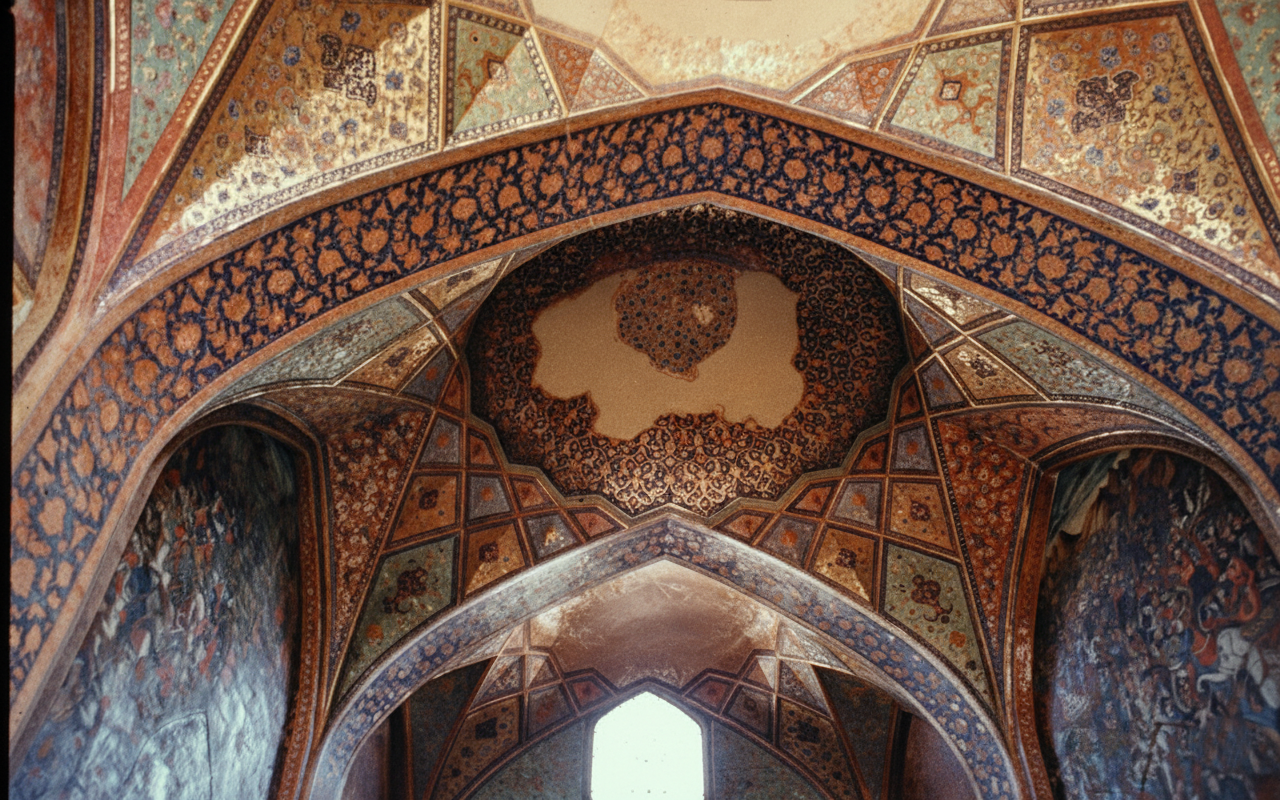
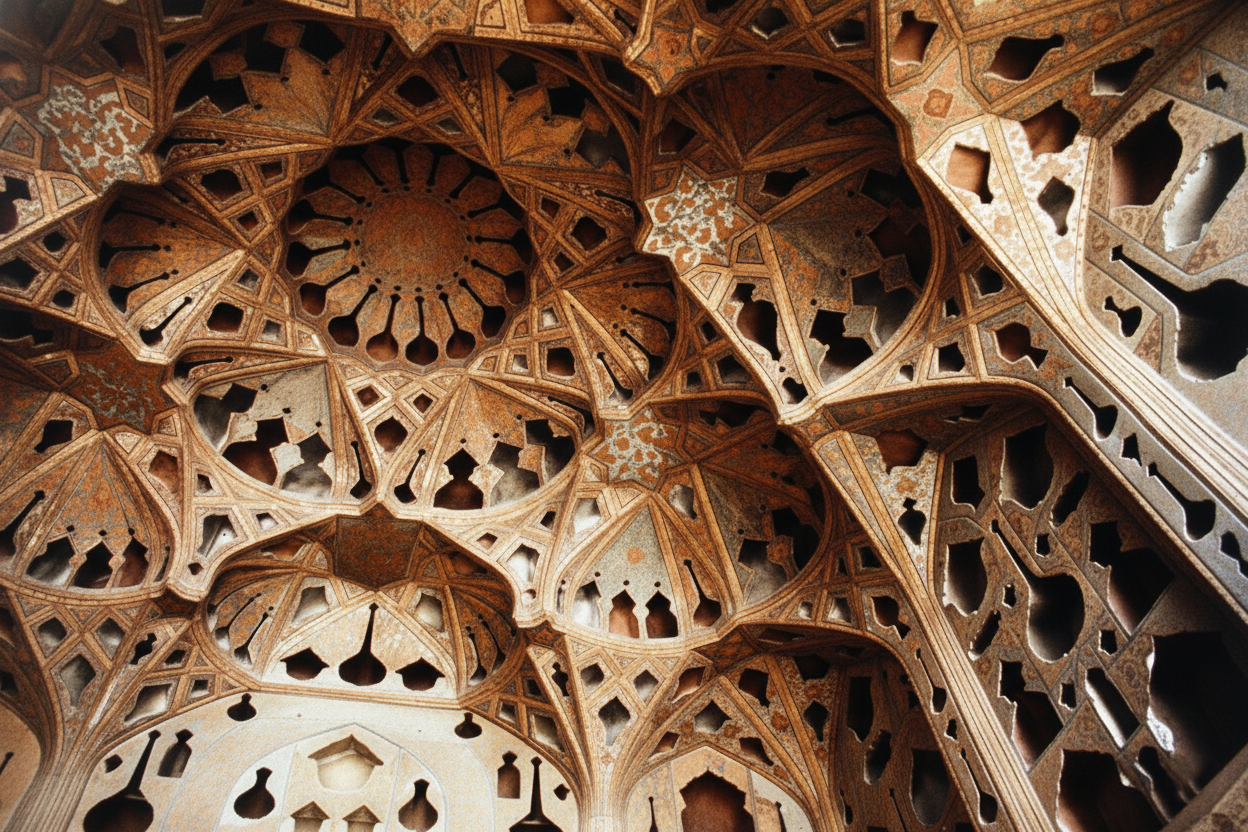
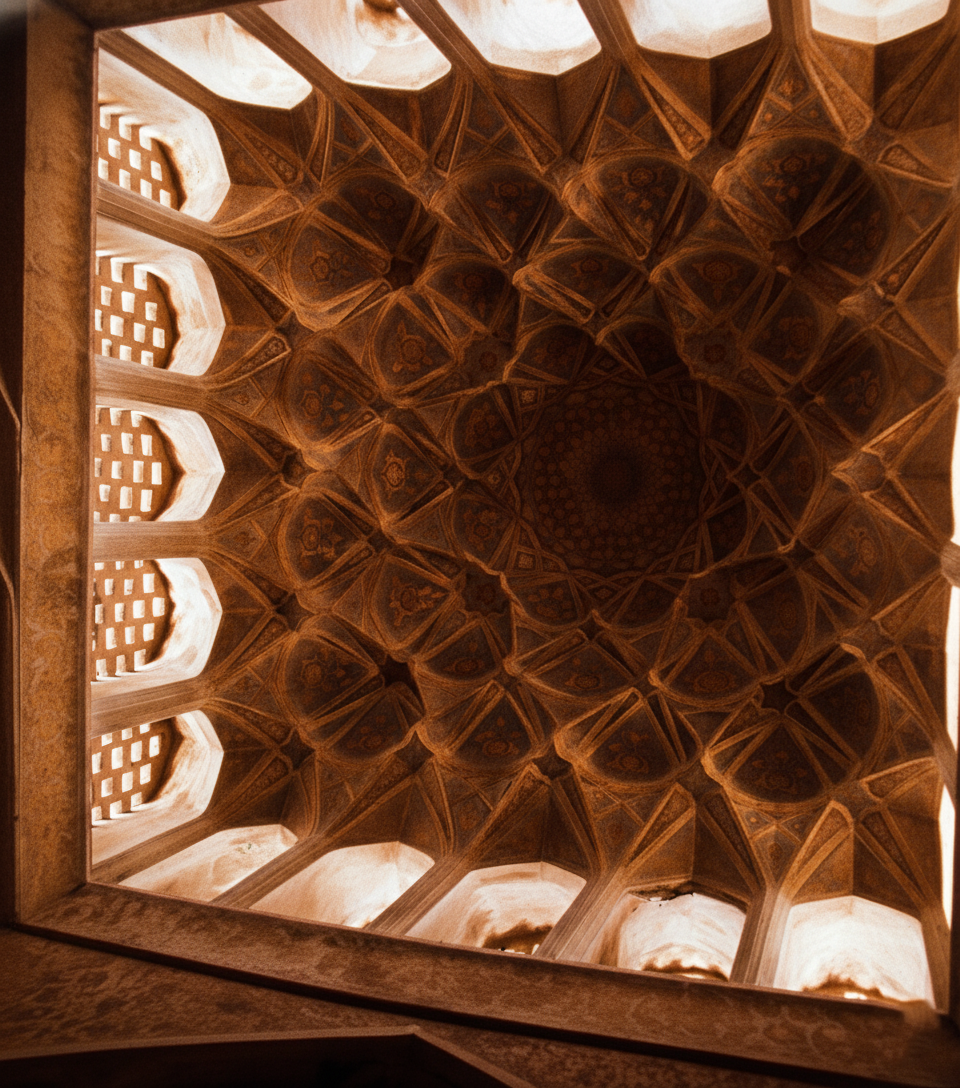
The interior spaces further reflect the palace’s dual political and cultural functions. The lower levels housed administrative rooms, while the upper floors contained reception halls and the famous Music Hall (اتاق موسیقی). The walls of this chamber are carved with hollow stucco niches shaped like vessels and musical instruments, designed to enhance acoustic resonance during musical performances.
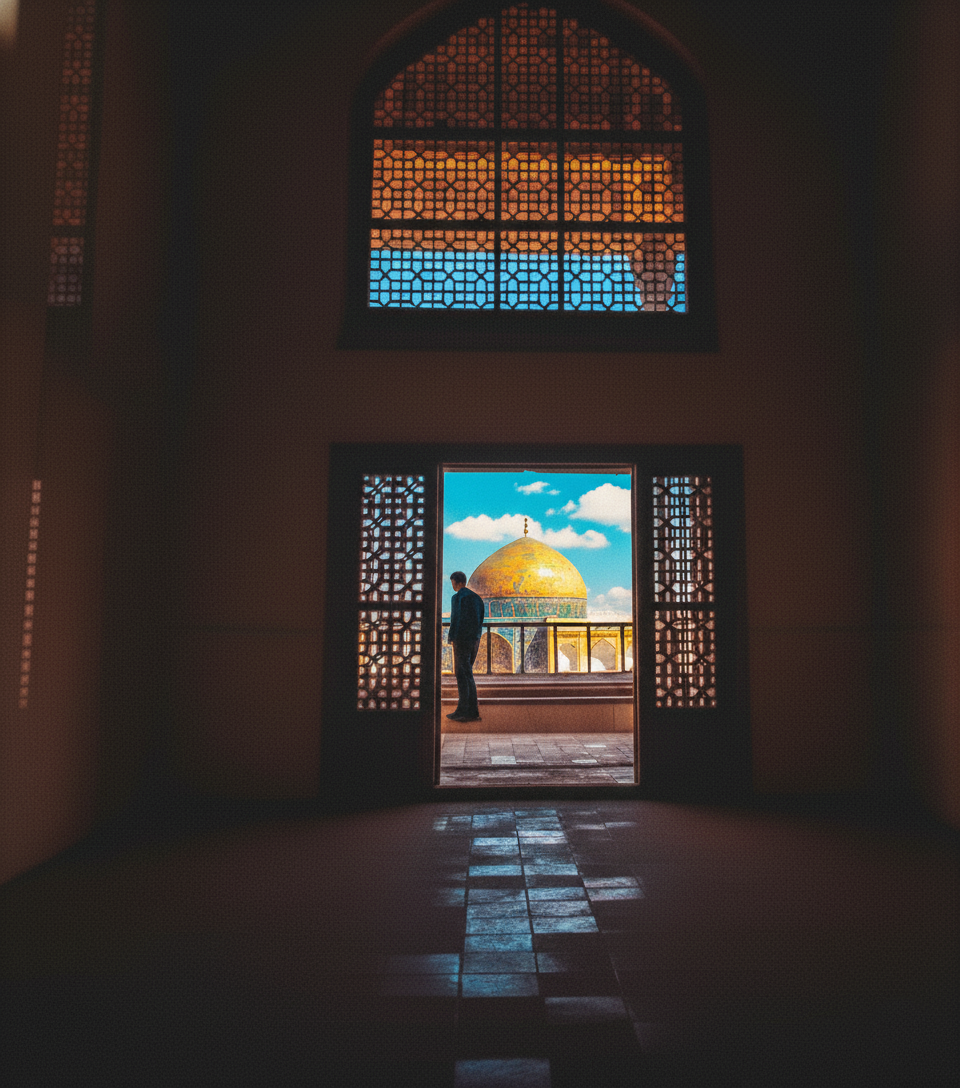
Within the framework of Safavid imperial urban planning, Ali Qapu played a crucial mediating role. The palace stood directly opposite the Sheikh Lotfollah Mosque (مسجد شیخ لطفالله), establishing a symbolic dialogue between royal authority and private royal worship. At the same time, it physically connected the public ceremonial space of Naqsh-e Jahan Square with the royal gardens and palaces along Chahar Bagh Avenue (خیابان چهارباغ) behind it.
Through this spatial arrangement, the Safavid planners organized the capital around a carefully balanced composition of monarchy, religion, and commerce. Together with the Shah Mosque (مسجد شاه / مسجد امام) and the entrance to the Isfahan Bazaar (بازار اصفهان), Ali Qapu formed one of the four architectural anchors of the square, transforming Naqsh-e Jahan into the ceremonial and political heart of the Safavid empire.
